
Sewer Line Repair · Englewood, FL
Sewer Line Repair in Englewood, FL
Camera-verified diagnosis first, always. Licensed master plumber CFC1434139. Emergency service available — call 239-388-3631.
Call Now239-388-3631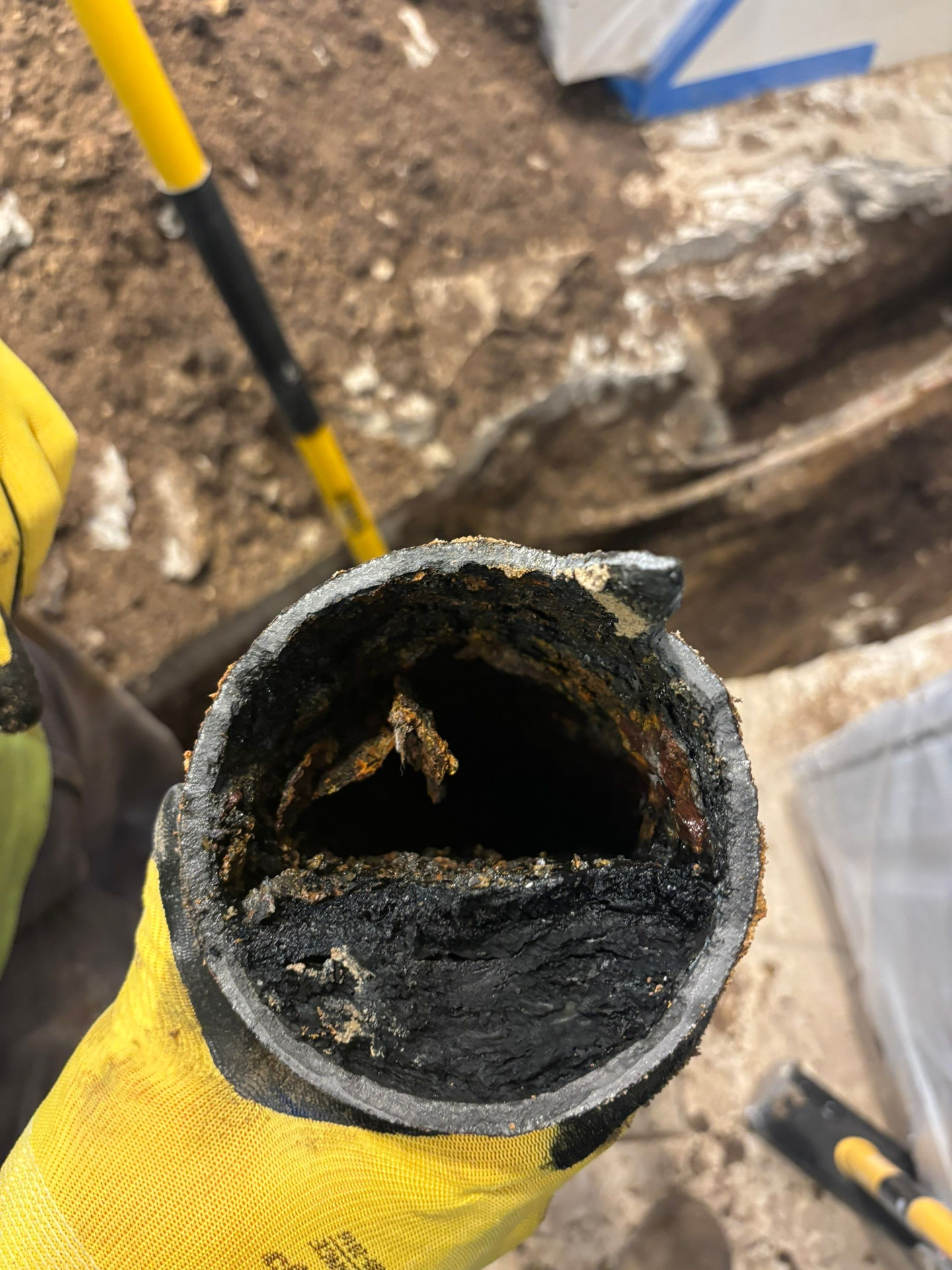
Camera log · one line, 43 feet
What the camera actually found, foot by foot
These are real stills off one inspection, with the footage counter burned into the picture. Nothing staged, nothing borrowed — this is how a failing line reads on camera from the cleanout out to the collapse, including a second belly at 37 feet.
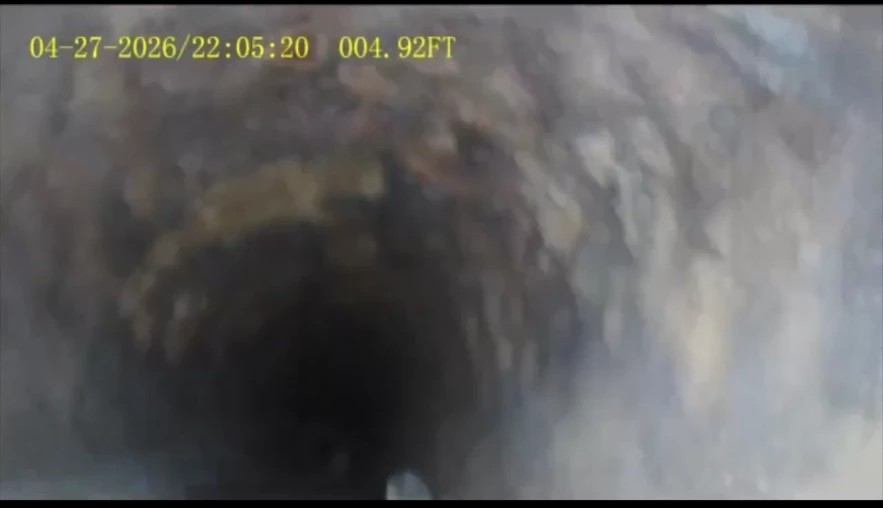 4 ft
4 ftScale building on the pipe wall
Four feet in and the scale is already obvious — the inside of the pipe is no longer smooth. That rough, built-up surface is what catches paper and grease and starts the backups.
I run calls in Englewood regularly, and I’ll tell you something upfront that most companies won’t: Englewood doesn’t have a government. There’s no city hall, no Englewood building department, no mayor. It exists administratively as a handful of ZIP codes split across two counties — roughly two-thirds in Sarasota County, one-third in Charlotte County — with an independent water district running the sewer system in between.
That split isn’t trivia. It determines which office issues your permit, which health department handles your septic system if you have one, and even which side of Manasota Key you’re standing on. A company that treats “Englewood” as one simple service area is guessing at all three.
My name is Mike Reynolds. I’m the owner of Plumbing Detectives LLC and a licensed master plumber, license CFC1434139, based in Venice. Here’s what an Englewood homeowner — whether you’re near the historic Dearborn Street core, out on a canal in Gulf Cove, or on a well and septic on a few acres north of town — needs to know before spending a dollar on sewer work.
No City Hall, Two Counties, One ZIP Code
Englewood Doesn’t Have a Government — It Has Two Counties and a ZIP Code
One longtime local fishing club puts it about as bluntly as it can be put: there is no Englewood government — Englewood exists only as a couple of ZIP codes split between Sarasota County and Charlotte County. ZIP 34223 covers downtown and north Englewood, the historic village core, on the Sarasota County side. ZIP 34224 covers south Englewood and Englewood Beach, on the Charlotte County side. Other nearby ZIPs around Rotonda and Cape Haze fall predominantly in Charlotte County as well.
It gets more specific than that: Manasota Key itself is split the same way as the mainland. The northern end, Manasota Beach, is Sarasota County. The southern end, Englewood Beach and Chadwick Park, is Charlotte County, and Charlotte even treats it as its own separate census place. Two houses a short walk apart on the same key can answer to two different building departments.
Sarasota County side permitting routes through Sarasota County Planning & Development Services — main line (941) 861-5000, with a South County satellite office at the R.L. Anderson Administration Center in Venice. Charlotte County side permitting routes through Charlotte County Building Construction Services, headquartered in Port Charlotte at (941) 743-1201, with a satellite office that’s historically opened in Englewood itself for storm-related permitting surges. We confirm which one applies to your specific parcel — not your ZIP code, and definitely not the word “Englewood” — before we talk permits.
What an Aging, Long-Settled Community Looks Like
What a Long-Settled, Aging Community’s Housing Actually Looks Like
Englewood was originally platted back in 1896 along Dearborn Street and briefly incorporated as its own town in 1925 before later reverting to unincorporated status — which is part of why the historic village core near Dearborn Street carries the oldest housing in the market: modest block construction, small two-bedroom homes, retirement villas.
Census data shows Englewood’s housing dominated by 1960s and 1970s construction — the 1970s alone account for 2,162 homes, the single largest decade cohort in the market. Adding up everything built before 1970 comes to roughly 1,856 homes, and combining that with the 1970s wave puts close to 30% of Englewood’s entire housing stock at pre-1980 construction. I want to be honest about precision here: no source gives an exact “percent built before 1975” figure for Englewood specifically — a reasonable estimate lands around 20% of the stock, but that’s an interpolation from decade-level Census data, not a verified statistic.
One thing that sets Englewood apart from every other market I serve: it has an unusually large share of manufactured and mobile home parks — at least 14 in or around the area. Manufactured homes don’t carry the same under-slab cast iron risk that site-built homes from this era do, since they’re not slab-built, so if you’re in one of these communities, your plumbing risk profile is genuinely different from your site-built neighbor’s.
For everyone in a site-built home from the historic core or the 1960s–70s growth wave: this is squarely the same construction era and cast iron risk window I describe on my Venice Gardens and Bradenton pages. The camera is what confirms it for your specific home.
The Utility That Isn't a County
The Utility That Isn’t a County — Englewood Water District
Since Englewood has no city government, its water and sewer service doesn’t come from a city or even a single county utility. It comes from the Englewood Water District — an independent special taxing district, not part of either county government, covering roughly 44.5 square miles that straddle both Sarasota and Charlotte counties. EWD’s own governance structure reflects the split: five election sub-districts drawn along the county line, three entirely in Sarasota County, one entirely in Charlotte County, one spanning both.
Here’s the number that matters most for this page: as of EWD’s own January 2019 reporting, 87% of EWD water customers also had sewer service — meaning roughly 13% of EWD customers have water but no sewer connection at all. That’s a meaningful share of this market still relying on septic even within the “municipal water” footprint, on top of the private well-and-septic properties on the larger, non-HOA acreage lots in northern Englewood. If you’re not sure which one applies to you, that’s the first thing we confirm, same as we do with jurisdiction.
What the Camera Found
A Real Job From a Home This Age — What the Camera Found
I’ve documented a job in a 1980 South Venice slab home — right at the tail end of Englewood’s largest housing cohort — that shows what decades does to a cast iron drain line from this era. The homeowner’s only symptom was a guest toilet gurgling louder over the course of a week.
The toilet was cemented in — I had to break the bowl for camera access. Within the first ten feet, the camera hit standing water under a bedroom closet in the next room. Past that section, the pipe was bone dry — the water wasn’t flowing, it was pooling in a sag and seeping into the sand through pipe that had rotted from the inside out. Further along, in the kitchen run, the 4-inch trunk line had narrowed to what looked like 2-inch pipe from interior buildup. Near the end of the kitchen the camera could barely pass at all — the line had sunk so badly it was remarkable there hadn’t been a backup yet. When the floor came open, the pipe was more than half full of black, soot-like buildup, with a sagging fitting that had to be seen to be believed.
The camera also showed the last fifteen feet of that run — past the master bath — was still in good condition. So it stayed. That’s the standard I bring to an Englewood home from the historic core or the 1960s–70s growth wave.
Sewer, Septic, and Well Water
Warning Signs — Sewer, Septic, and Well Water
For homes on sewer: a toilet that gurgles when the washing machine or dishwasher runs, slow drains at multiple fixtures at once, recurring clogs in the same spot, sewage odor inside or outside the home, wet or unusually green patches in the yard along the lateral path, and unexplained moisture at the floor in slab homes. In Englewood specifically, backups that get noticeably worse after heavy rain are also worth flagging — EWD’s own lift stations have documented overflow events tied directly to heavy rainfall.
For homes on septic — a real possibility for roughly 13% of EWD customers and additional private parcels in northern Englewood — standing water, spongy soil, or unusually bright green grass over the tank or drainfield are the signs to watch, along with sewage odor near that specific area.
One symptom that’s more distinctive to Englewood than almost anywhere else I serve: rust-colored or discolored water paired with declining water pressure. USGS research documented saline groundwater — chloride levels well above the safe drinking-water threshold — specifically south and east of Englewood, tied to storm-driven tidal inundation. Saline groundwater accelerates corrosion on buried metal pipe, supply and drain both. If you’re on a well in that part of Englewood and you’re seeing both discoloration and pressure loss, that’s worth mentioning when you call, because it points toward a different mechanism than a typical inland Florida corrosion story.
The Camera Comes First
Diagnosis First — The Camera Comes Before the Quote
I will not quote a sewer repair I haven’t seen from the inside — and in a market split across two counties and two utility systems, guessing off the Englewood name specifically is a bad idea here.
Every job starts with a camera inspection, whether it’s a lateral on sewer or the pipe running to a septic tank. I run a camera with a self-leveling head, a distance counter, and a 512 Hz locator — which means I can see the condition of the pipe, measure exactly where each problem is, and mark its location from above. If I see something, I call you over and show you on the screen in real time, then you get a written report of the findings.
That’s a separate service with its own transparent pricing: Camera Inspection & Surface Locate is $325, and the optional recorded-video add-on is +$70 — the full footage is delivered by Google Drive within 24 to 48 hours ($395 total).
Plumbing Detectives LLC Professional Opinion
Almost nobody advertising in Englewood explains the county split to homeowners, even though it’s the single most distinctive fact about doing plumbing work here. Before anyone quotes you a repair or pulls a permit, make sure they’ve confirmed whether your specific parcel is Sarasota County or Charlotte County — and whether you’re actually on sewer or septic, since Englewood Water District’s own numbers show over one in ten of their water customers has no sewer connection at all.
The Honest Decision Tree
Repair, Reline, or Replace — The Honest Decision Tree
Spot repair. When the camera shows an isolated problem — one separated joint, one crushed section, one root intrusion point — in an otherwise sound line, the answer is a targeted repair: open the floor or yard at the marked location, replace the failed section with new PVC at correct pitch, and put everything back.
Trenchless relining (CIPP). Right when the host pipe has internal corrosion and scaling but is still structurally intact and still holding its pitch. Lining doesn’t fix gravity — a bellied section will still hold water under a liner. Since April 2024, Florida code requires a video camera survey both before and after any CIPP relining, on both sides of the county line.
Pipe bursting. A fit where a line needs upsizing or has offset joints but requires clearance for the bursting head. This is a real consideration on the Charlotte County side’s canal-front communities — Grove City, Cape Haze, Gulf Cove, South Gulf Cove — where narrow waterfront lots can make open-cut excavation more disruptive than a trenchless approach.
Excavation and full replacement. When the line has collapsed sections, severe bellies, or buildup so advanced it can’t be restored.
Septic-connected homes. If your Englewood home runs to a septic tank instead of sewer — which, given EWD’s own numbers, is a real possibility even inside their service area — the pipe between your house and that tank is still ours to diagnose and repair, same decision tree as above. We don’t install septic systems themselves; a new tank or drainfield is a licensed OSTDS contractor’s scope, not ours.
Section by Section, Not All or Nothing
How I Replace a Sewer Line — Section by Section, Not All or Nothing
Sometimes the camera can’t get through the worst section. I’m not going to quote work on pipe I haven’t seen. So I give you a price for the section the camera has documented. Once the floor is open and I’ve cleared the bad section, I run the camera upstream and diagnose the next stretch, and tell you honestly whether we should keep going or stop there — the same way I handled the South Venice job, where we stopped once the camera confirmed the remaining fifteen feet was sound.
The white glove approach. A sewer replacement inside an Englewood home means concrete saws, excavation, and spoil. On every interior job: wall protection goes up, floor protection goes down, dust control is in place, and the work area stays clean and contained.
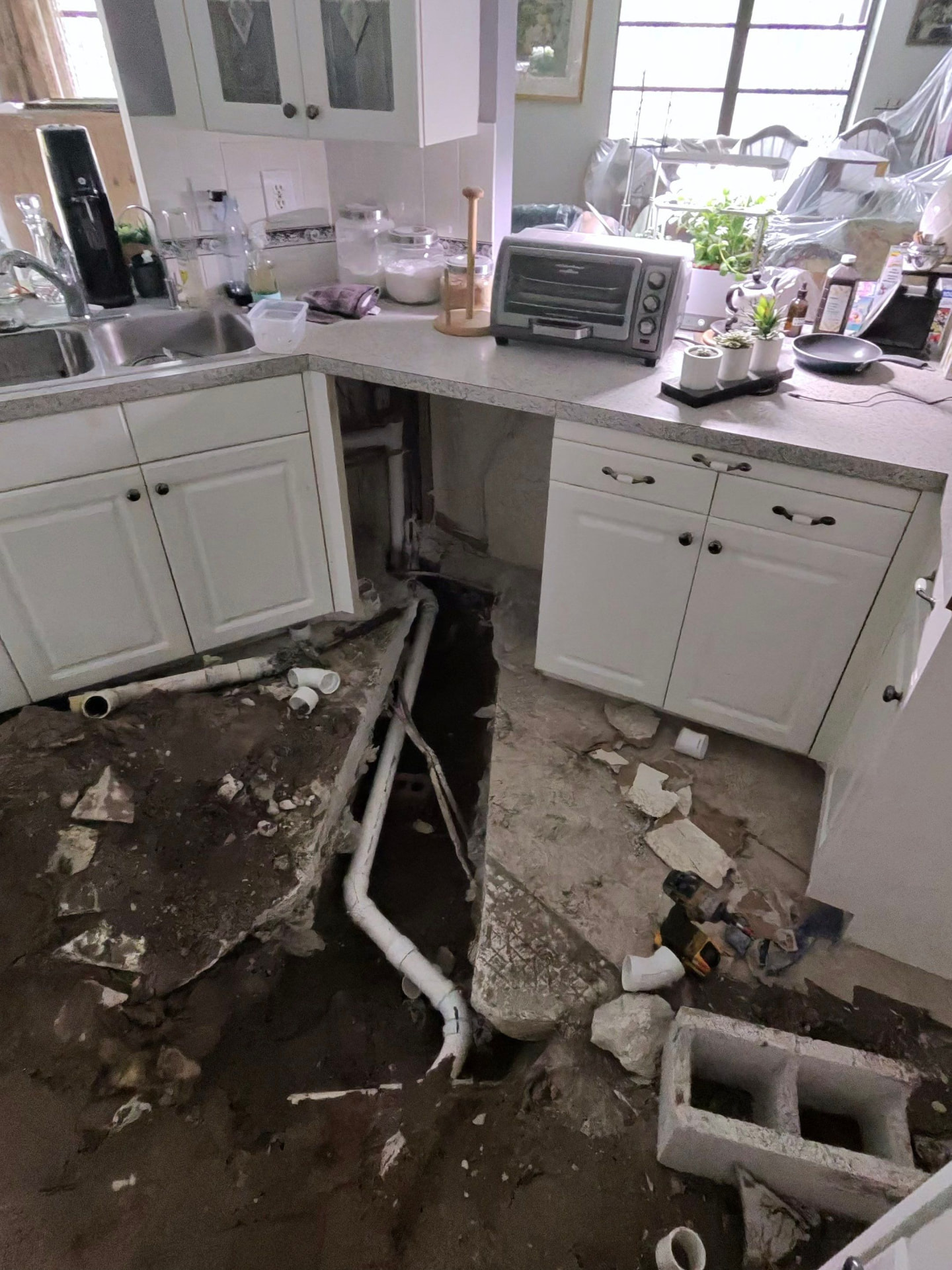
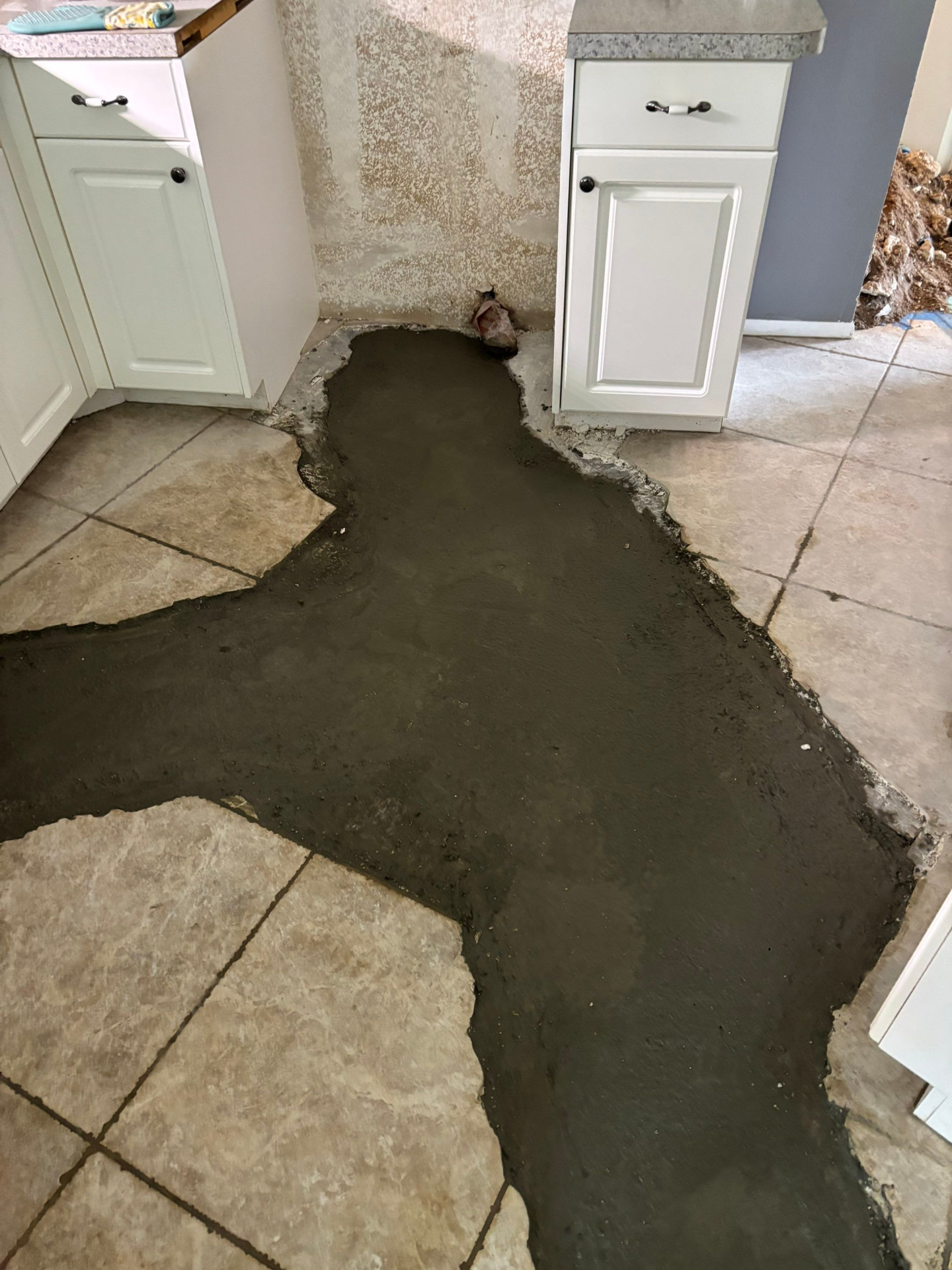
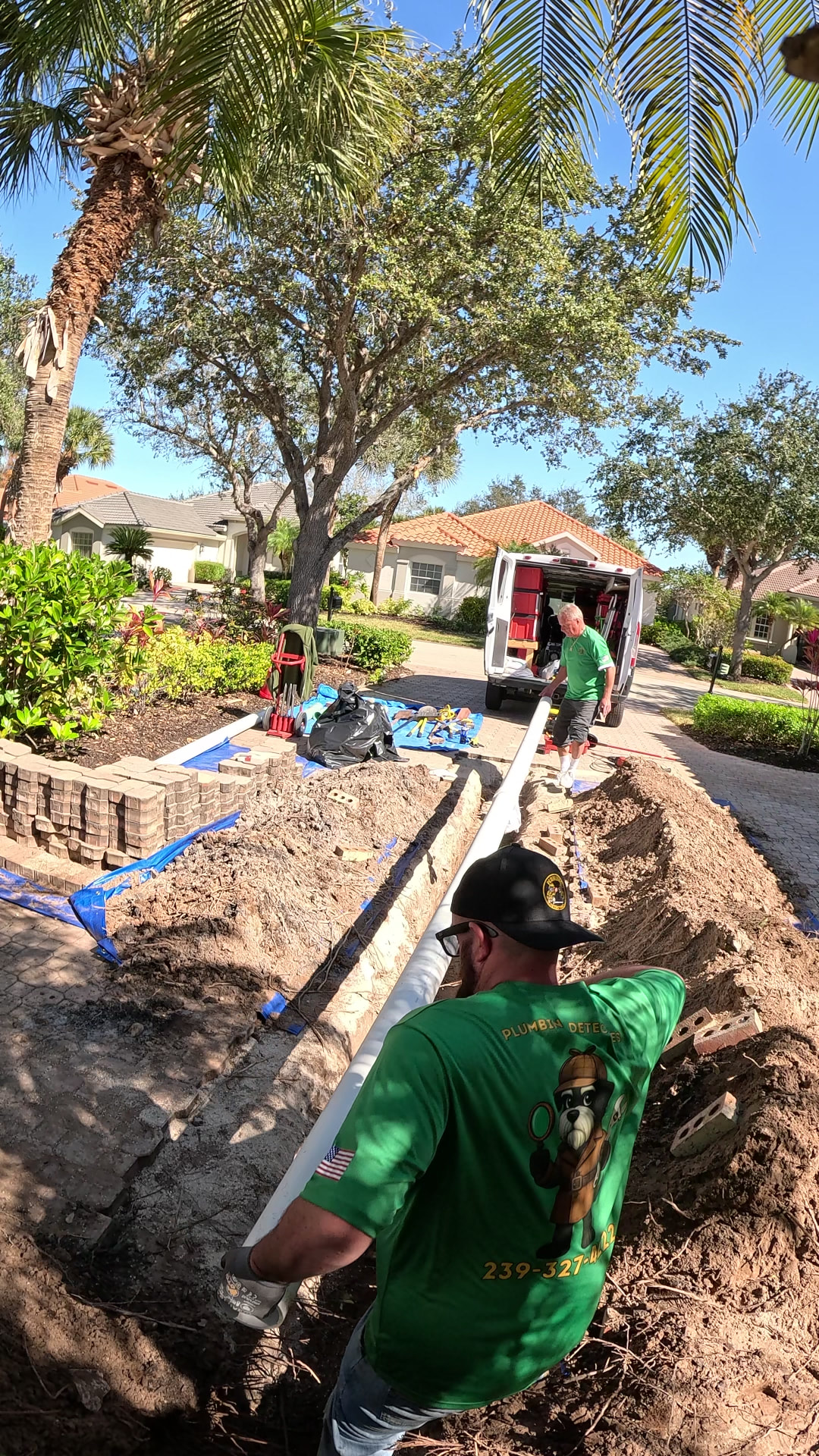
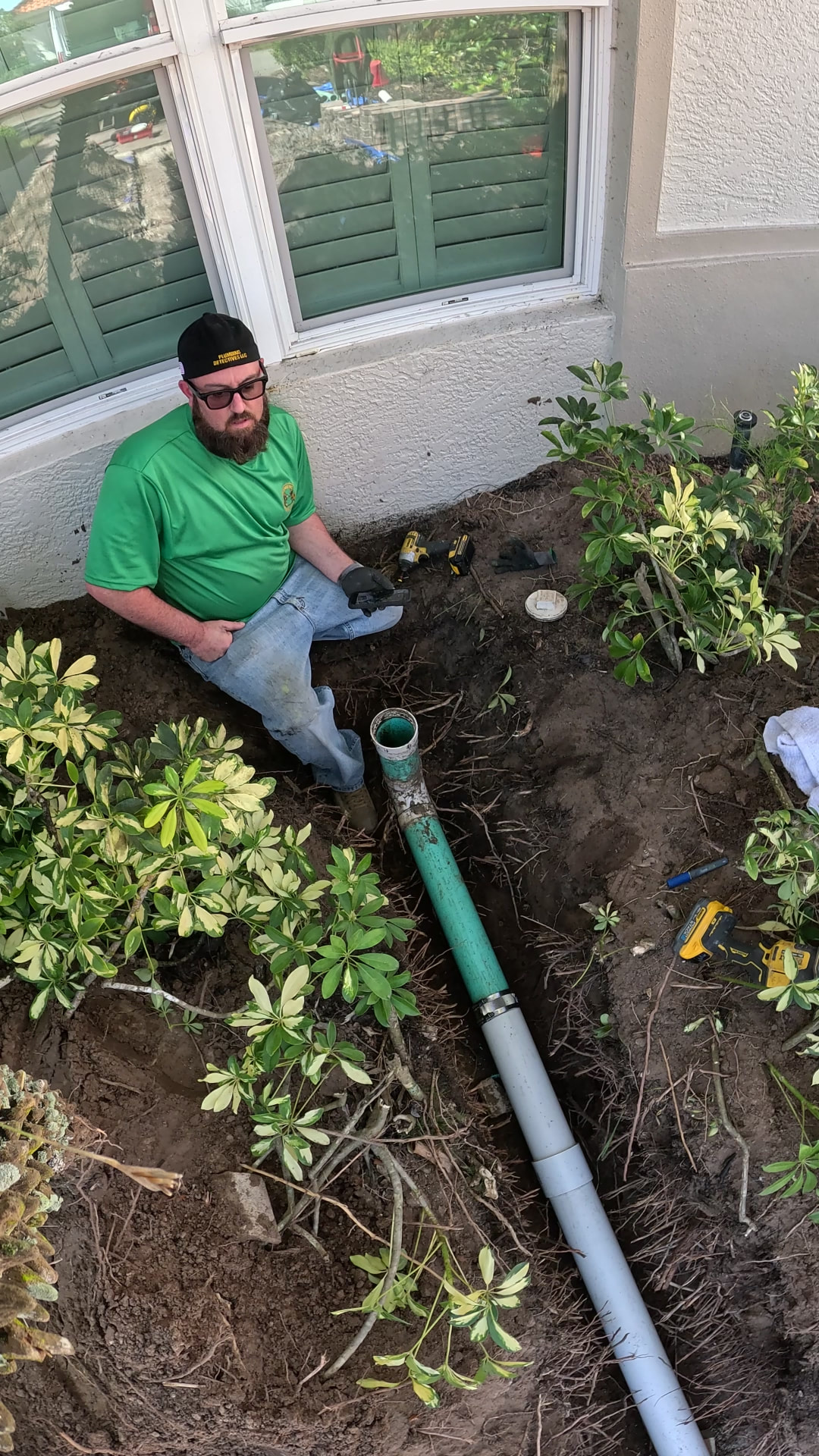
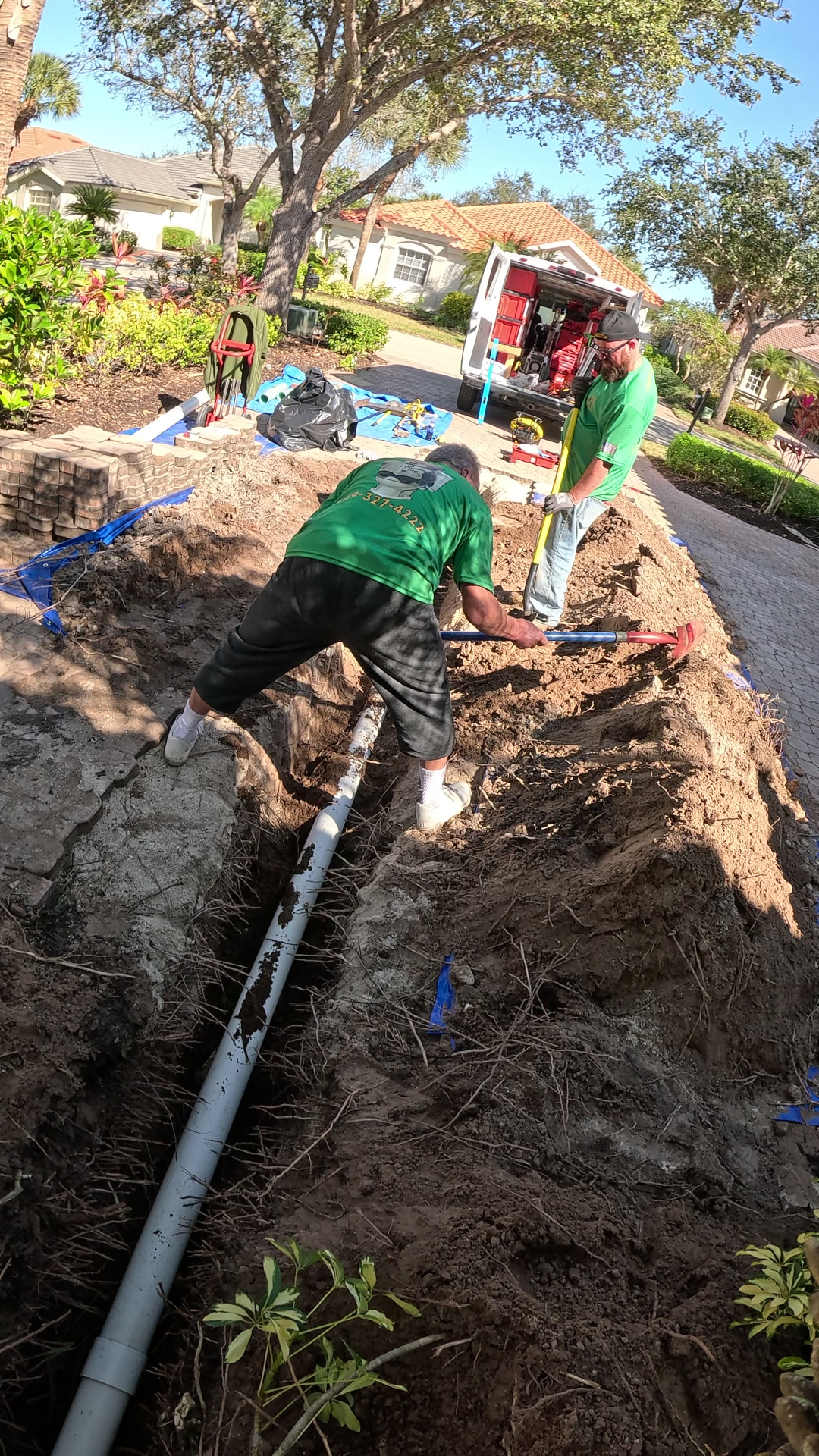
How the new pipe gets supported. Englewood’s coastal, low-lying geography around Lemon Bay and the barrier islands, combined with sandy, poorly-drained soil, is exactly the profile that settles unsupported pipe over time. I tamp the native sand, add bedrock, and tamp again until firm — at least 8 to 9 inches of compacted base under the pipe wherever I have the height — then set cinder blocks or bricks for support where height is tight, checking pitch continuously before backfill goes in.
Cleanouts to code. Every replacement includes cleanouts where the Florida Plumbing Code requires them — at the junction of the building drain and building sewer, at the base of stacks, at horizontal runs over 100 feet, and at direction changes exceeding 45 degrees, on both sides of the county line.
Permit and inspection. This is where Englewood gets genuinely more complicated than anywhere else I serve. Sarasota County side permits route through Sarasota County Planning & Development Services at (941) 861-5000. Charlotte County side permits route through Charlotte County Building Construction Services at (941) 743-1201. We verify jurisdiction by the actual parcel — not the ZIP code, since ZIP boundaries and county lines don’t perfectly align — before pulling a permit on every job.
Gurgling toilet? Backups after heavy rain? Not sure if you’re Sarasota or Charlotte County — or sewer or septic?
Call 239-388-3631. The camera comes first, you see everything I see, and you get a straight answer before anyone talks about opening a floor.
Englewood Context
Repair Method Quick Reference — Englewood Context
| Method | Best For | Not Appropriate When | Typical Regional Cost Range |
|---|---|---|---|
| Spot / Point Repair | One isolated failure in an otherwise sound line | The camera shows failures at multiple points | $800–$5,000 per national data; Florida sewer repairs average $3,430, most homeowners paying $980–$7,350 (CostWhale FL data) |
| Trenchless Relining (CIPP) | Structurally intact pipe with internal corrosion/scale that still holds its pitch | Bellies, sags, or sections out of pitch | $8,000–$20,000 typical Southwest Florida range; roughly $80–$250 per linear foot |
| Pipe Bursting | Structurally failed pipe on a straight run where a new pipe can be pulled through the old path | Tight access, offset joints, or material transitions | Roughly $60–$200 per linear foot nationally; a good fit for narrow canal-front lots on the Charlotte County side |
| Excavation & Replacement | Collapsed, rotted, or severely bellied pipe — restored to new PVC at correct pitch with proper bedding | Rarely wrong when done correctly — the tradeoff is floor/yard access | $12,000–$30,000+ typical for a single lateral; roughly $100–$300 per linear foot |
| Septic Line to Tank (Pipe Only) | A broken, blocked, or failed pipe between the house and an existing septic tank | Not applicable to the tank or drainfield itself | Priced the same as a sewer lateral repair |
| Septic Tank / Drainfield Installation | New systems or full drainfield replacement | This is not our scope | Handled by a licensed OSTDS septic contractor |
All figures are typical published market ranges — not quotes for your property. Every Englewood job starts with confirming county jurisdiction and system type (sewer, septic, or well), then a camera diagnosis, priced section by section, in writing, before any work begins.
Ficus, the Historic Core, and Growth-Era Neighborhoods
Roots — Ficus, the Historic Core, and Englewood’s Growth-Era Neighborhoods
Mature ficus trees are documented across South and Southwest Florida as the most aggressive residential root-intrusion risk, with root systems reaching 30 to 50 feet from the trunk, actively seeking the moisture inside a cracked or joint-separated sewer pipe. The highest-probability areas in Englewood track with housing age: the historic village core near Dearborn Street, platted all the way back in 1896, and the East and South Englewood neighborhoods from the 1960s–70s growth wave — the largest single cohort of Englewood’s housing stock.
Northern Englewood’s larger, non-HOA one-to-five-acre lots near Manasota Key likely carry substantial native tree cover given their rural-lot character, though no confirmed root-intrusion data exists for that specific area. Newer communities — Beachwalk, Boca Royale, Stillwater Shores, and Rotonda West’s newer sections — have younger landscaping and, in many cases, PVC drain lines, both of which reduce near-term root risk.
On the camera, root intrusion looks like a curtain of fine hair at first, then a mat, then a mass that catches everything flowing past it. I’ll give you the same honest answer I give every homeowner who asks if I can just cut the roots out again: I can, with a Spartan 300 machine running a claw head — and they’ll be back, because if roots are inside your pipe, your line is already compromised.
A Charlotte County Data Gap
Soil, Saltwater, and a Charlotte County Data Gap
The Sarasota County side of Englewood sits on the same sandy, poorly-drained soil I describe on my other Sarasota County pages — roughly 87% sand, with a perched seasonal high water table from the Myakka soil series’ hardpan layer 18 to 30 inches down. I want to be straight about the Charlotte County side: no Charlotte-County-specific soil survey was available to confirm whether the same profile applies there. What is documented is that the canal-front communities on that side — Grove City, Cape Haze, Gulf Cove, South Gulf Cove — are built on the reclaimed, dredged waterfront lots typical of 1960s–70s Florida canal development, generally involving fill soil over the natural substrate rather than undisturbed native soil. That’s a different profile from inland native sand, and worth knowing if you’re on one of these canal lots.
The more distinctive documented risk here is saltwater intrusion. USGS research found saline groundwater — chloride concentrations well above the safe threshold — specifically south and east of Englewood, tied to storm-driven tidal inundation. That’s relevant both to well water quality and to accelerated corrosion of buried metal pipe, cast iron and galvanized alike, in the lower-lying parts of this market.
Your Lateral and an Unusual Utility Structure
Who Owns What — Your Lateral, and a Genuinely Unusual Utility Structure
The standard rule applies: you own your sewer lateral — the pipe from your house to the connection with the main — and you’re responsible for keeping it free-flowing and watertight. I’ll be honest that I didn’t find a published Englewood Water District-specific private-lateral ordinance in researching this page — EWD, not Sarasota County or Charlotte County directly, is the operating utility for most of this market, so the standard county ordinance language may or may not apply the same way here. We confirm this directly with EWD when it’s relevant to your job rather than assuming.
If you’re on septic — a real share of this market given EWD’s own 87%-sewer figure, plus additional private well-and-septic parcels in northern Englewood — there’s no utility main on the wastewater side at all. You own and maintain the pipe running from your house to the tank (the part we handle), and the tank and drainfield themselves (installation and major repair, which is licensed OSTDS contractor work, not ours).
Standard homeowners insurance generally treats lateral and septic failures from wear, corrosion, or root intrusion as maintenance issues, not covered perils, and most service line endorsements explicitly exclude septic systems and wells — worth knowing given how many Englewood properties rely on one or both.
Read This Before the Contract
Buying or Selling in Englewood? Read This Before the Contract
Florida Statute 689.301 requires sellers to disclose known defects in a property’s sanitary sewer lateral before executing a sale contract, and Florida’s general disclosure duty covers other known, material defects that aren’t readily observable — including a documented septic failure or a well affected by saline intrusion. I’m not a lawyer and this isn’t legal advice, but if you know of a defect, the obligation exists.
Given that nearly 30% of Englewood’s housing predates 1980, and the market’s median resident age of nearly 67 suggests a lot of long-tenure ownership, 4-point inspections are a routine, recurring event here. A standard home inspection almost never includes a sewer camera inspection or a real septic system evaluation, so a pre-listing scope is cheap insurance either way.
For canal-front and barrier-island properties specifically — Grove City, Cape Haze, Gulf Cove, South Gulf Cove, Manasota Key, Don Pedro Island — the FEMA 50% substantial-improvement rule is a real background risk given this geography’s storm-surge and flood exposure. If a major sewer or septic repair gets bundled into a larger storm-related permit on one of these properties, it can count toward that 50% threshold.
The Part You'll Never See
If I Could Redesign One Thing About Homes This Age
For the drain side of homes from the historic core or the 1960s–70s growth wave, my answer doesn’t change from market to market: none of them were vented the way I’d vent them today.
Homes from these periods were plumbed before modern wet venting was standard, and what I typically find instead is a bathroom group with one vent serving three fixtures. My preference, on the vast majority of the work I do, is the traditional approach: vent each fixture individually. Every fixture with its own air path gives you the best flow, the quietest drainage, and the most serviceable system. So when we’re replacing a section of an older Englewood home’s drain system anyway, the venting gets evaluated too.
What I Find in Englewood Sewer and Septic Work
Common Mistakes I Find in Englewood Sewer and Septic Work
Assuming your ZIP code tells you your county. It doesn’t reliably — Manasota Key itself splits between Sarasota and Charlotte counties, and ZIP boundaries don’t perfectly track the county line.
Treating a septic-connected home as entirely someone else’s job. It isn’t. The pipe running to the tank is exactly the kind of work we camera and repair — only tank and drainfield installation is outside our scope.
Ignoring what saline groundwater does to metal pipe. In the lower-lying parts of Englewood, discolored well water and pressure loss can point toward accelerated corrosion from saltwater intrusion, not just ordinary age.
No camera before the quote. A proposal written from a drain-cleaning visit and a guess, in a market this fragmented, is a guess twice over.
The disappearing video. Camera inspections where the homeowner never receives the footage.
Lining over a belly. Selling CIPP on a line the camera shows is out of pitch. Lining doesn’t fix gravity.
No permit, or the wrong county’s permit. An easy, costly mistake in a market genuinely split between two building departments.
Plumbing Detectives LLC Tips
Before you call anyone about an Englewood sewer problem, confirm your parcel’s county — Sarasota or Charlotte — rather than assuming from your ZIP code or the word “Englewood.” It determines your permit office.
Check your water bill or ask Englewood Water District directly whether your address has sewer service — EWD’s own numbers show roughly one in ten of their water customers doesn’t.
If you’re on a well in the lower-lying parts of Englewood and notice discolored water alongside declining pressure, mention it when you call — it may point toward saline-accelerated corrosion rather than ordinary age.
Before you sign any sewer repair or lining proposal in Englewood, ask for the recorded camera footage with the distance counter visible, and confirm they’ve verified your county and your system type first.
What Ian and Milton Did
Storm Context — What Ian and Milton Did to Englewood’s Sewer Picture
I want to be straight about this section: it’s grounded in documented reporting and EWD’s own records, not my personal storm-repair work in every affected home. Englewood sits at a particularly exposed stretch of the Gulf coast, and it shows in the record.
Hurricane Ian made landfall as a Category 4 storm in September 2022, and pre-landfall forecasts specifically named Englewood as the boundary marker between two storm-surge zones — 5 to 8 feet from mid-Longboat Key to Englewood, 4 to 7 feet from Englewood south to Bonita Beach. National coverage described post-storm Englewood as a “war zone” during initial cleanup, and manufactured-home communities like Alameda Isles were reported among the hardest hit locally.
Hurricane Milton in October 2024 produced the most granular, Englewood-specific spill record of any market I’ve researched: Englewood Water District reported two separate overflow incidents at its critical Lift Station 121 — roughly 200,000 gallons on October 5th and another 100,000 gallons on October 6th, both attributed to heavy rainfall overwhelming the system, contained on-site with no waterways affected. Days later, a manhole overflow at Boca Royale released an estimated 5,000 gallons into a retention pond, and a separate incident sent roughly 2,500 gallons directly into Gottfried Creek. Combined, EWD’s documented Milton-related spillage across these incidents totals roughly 307,500 gallons, all reported to FDEP under the state’s standard threshold.
Two practical takeaways. First, if your Englewood home took on any backup or unusual drainage behavior during or after these storms and hasn’t been inspected since, that’s worth doing now. Second, if you’re on a well in the lower-lying parts of Englewood, storm-driven tidal inundation is the documented mechanism behind saline groundwater intrusion here — worth factoring in if you notice water quality changes after a major storm.
The Differentiator
Why Plumbing Detectives LLC
Englewood is genuinely more fragmented than almost anywhere else I serve — no city government, two counties, an independent water district, and a real mix of sewer, septic, and well properties within a few miles of each other. What I do here: confirm your county and your system type before I talk permits or price, run a camera before I talk price at all, and tell you plainly when a job — a septic tank installation — is outside what I do.
Camera first. Documented findings. Section-by-section honesty. White glove protection of your home. Proper bedding you’ll never see but will never have to think about again. And if you’re on septic, we still run the camera and fix the pipe between your house and the tank — we just don’t install septic systems themselves.
License CFC1434139. Fully insured. We verify Sarasota-County versus Charlotte-County jurisdiction and pull the correct permit before every job. Emergency sewer service available in Englewood and nearby areas — call for priority scheduling.
Answers
Frequently Asked Questions — Sewer Line Repair in Englewood, FL
If you’ve read this far, you understand why Englewood doesn’t get a one-size-fits-all answer — no city government, two counties, an independent water district, and a real mix of sewer, septic, and well properties inside what everyone just calls “Englewood.” You know why jurisdiction gets confirmed before permits, why your system type gets confirmed before a repair plan, and why the camera answers the pipe-material question no ZIP code ever could. If your Englewood home is showing any of the signs on this page, call me at 239-388-3631. The camera goes in first, you see everything I see, and you get the truth before you get a price.
Plumbing Detectives LLC | Venice, FL | License CFC1434139
239-388-3631 | plumbingdetectivesfl.com