
Whole House Repiping · Nokomis, FL
Whole House Repiping in Nokomis, FL
Honest assessment first, always. Licensed master plumber CFC1434139. Copper, polybutylene, and galvanized supply line replacement — call 239-388-3631.
Call Now239-388-3631Most people who call me about a repipe in Nokomis think they already know the answer before I arrive. They’ve had two or three leaks in the past year, they’ve been told by someone that their pipes are old, and they’ve mentally prepared to hear that everything needs to come out. Then I show up, look at the system, and tell them something different.
That’s exactly what happened at a house in Nokomis where the homeowner was convinced they needed a complete repipe after multiple leaks. When I actually inspected the system, I found that several previous repairs had been done poorly and only one section of piping had genuinely failed. A complete repipe wasn’t necessary at that time. The homeowner saved real money — but more than that, they got an accurate answer instead of an expensive one.
That’s why I won’t recommend a whole-house repipe until I understand exactly why the plumbing is failing. Sometimes a homeowner really does need a repipe. Sometimes they need targeted repairs. Sometimes they need someone to undo the damage from previous shortcuts. Diagnosis always comes first. That’s not a slogan. It’s how I actually work.
My name is Mike Reynolds. I’m the owner of Plumbing Detectives LLC and a licensed master plumber, license CFC1434139. I’m based in Venice and I serve the Nokomis market. Here’s what I’d tell you before I ever recommended replacing a single pipe.
The Local Story
What Makes Nokomis Different From the Surrounding Market
Nokomis sits in an interesting position in this market. It’s not as old as downtown Venice Island, not as new as Wellen Park, and it spans a wide enough range of construction eras that the pipe material conversation genuinely varies from address to address.
What I’m finding in Nokomis homes right now is mostly copper, polybutylene, and occasionally PEX in homes that have already been repiped. East of US-41 — the suburban expansion neighborhoods from the 1970s through the 1990s — is where copper and polybutylene are most common. West of US-41, in the older waterfront neighborhoods closer to Casey Key and the Intracoastal, the limited number of homes I’ve looked at have had copper.
The research on this market points to two distinct plumbing profiles based on which side of US-41 you’re on, and that’s worth explaining — not as something I can confirm from firsthand experience on every street, but as useful context for understanding why your home’s plumbing history might be different from your neighbor’s a mile away.
West of US-41 — neighborhoods like Springhill Park, Venetian Gardens, Waterside Acres, Channel Acres, and the waterfront communities near Dona Bay and Casey Key — are primarily older construction, many from the 1950s through the 1970s. These homes are county-only permitting, minimal HOA, and carry the galvanized and early copper risk profile of that era.
East of US-41 — Mission Valley, Sorrento Woods, the Laurel corridor communities, and newer gated development like Toscana Isles, Vicenza, and Aria — spans from 1970s suburban homes into brand-new PEX-standard construction. The 1978 to 1995 window in the eastern neighborhoods is where polybutylene is the primary concern.
Available regional water-quality data suggests parts of Nokomis can have harder water than Venice — measurements in the area range from 15 to 25 grains per gallon compared to the 11 to 12 GPG documented closer to Venice, though hardness can vary depending on the specific utility, well versus municipal supply, seasonal blending, and the individual neighborhood. That hardness matters for every material. It accelerates scale buildup inside copper and galvanized lines. It affects anode rod depletion in water heaters. Hard water can shorten the service life of metal piping compared with national averages, depending on the home’s specific water conditions and maintenance history.
Three Scenarios
What I’m Actually Finding — The Three Material Scenarios
Copper from the 1970s–1990s
This is the material I encounter most in Nokomis. Copper from the late 1970s through the 1990s is now 30 to 50 years old and entering the pinhole leak window in Florida’s water chemistry. Hard water at 15 to 25 GPG deposits mineral scale inside copper pipe, creating rough surfaces at elbows and tees where pitting corrosion concentrates. Sarasota County’s chloramine disinfection adds a slow, continuous chemical attack on the copper interior. Under-slab runs without protective sleeving — common in older Florida construction — are in direct contact with concrete that carries moisture and mineral salts, accelerating corrosion from outside the pipe simultaneously.
Pinhole leaks in copper don’t always fail dramatically. Sometimes it’s a wet spot on a ceiling. Sometimes it’s a water bill that’s inexplicably higher. Sometimes it’s a warm section of tile floor over a hot water line. The first pinhole is a repair. Two or three within a few months is the system telling you something about the rest of the pipe.
One thing I pay attention to beyond the leaks themselves: repeated water hammer. Nokomis homes that have developed a banging or knocking sound in the pipes when a washing machine valve closes or a dishwasher solenoid shuts off often have a related history. The old method for addressing water hammer was to install a tee with a 12-inch capped pipe sticking up inside the wall — essentially a DIY shock absorber. It works until it doesn’t. Those air chambers fill with water over time and lose their effectiveness completely. What’s left is a pipe system with inadequate surge protection, repeated pressure spikes with every fast valve closure, and fittings that have been absorbing that stress for years. By the time I’m in the wall looking at why the copper is failing, I sometimes find one of those old air chambers sitting there full of water — and a string of upstream fittings that have been working harder than they should have been for a decade.
Polybutylene from the 1978–1995 window
The eastern Nokomis neighborhoods that developed during the suburban expansion of the late 1970s through the mid-1990s fall squarely in the polybutylene risk window. Communities in the Sorrento corridor, the Laurel area developments, and parts of the older Kings Gate phases from the late 1980s are candidates. This isn’t confirmed neighborhood-by-neighborhood from my own work in every one of these areas — it’s the pattern the research and the build-year data point to, and it’s worth knowing if your home was built or significantly repaired between 1978 and 1995.
Polybutylene is gray flexible plastic pipe stamped PB2110 along the side. It degrades from the inside when exposed to the chlorine and chloramine compounds in treated municipal water. The pipe looks intact from the outside right up until a fitting fails — and the acetal plastic fittings are what fail first, usually without any visible warning. This is also a material you can check for yourself before calling anyone. Look under your kitchen and bathroom sinks. Look at the pipe coming out of the wall at the water heater connections. Gray flexible plastic with PB2110 on the side is polybutylene.
The insurance angle on polybutylene in Nokomis is real and urgent. Citizens Property Insurance Corporation’s underwriting Rule 206.B declines new coverage for homes over 20 years old with active polybutylene. Since virtually all polybutylene-candidate homes in Nokomis were built between 1978 and 1995 — making them 30 to 48 years old as of 2026 — essentially none would qualify for new Citizens coverage with active polybutylene present. Most private carriers treat it the same way.
Galvanized still possible in older homes
In the oldest Nokomis neighborhoods — the pre-1970 waterfront areas west of US-41 — galvanized supply lines are possible in homes that haven’t been touched since original construction. I’m careful about overstating how commonly I personally encounter active galvanized in this market, because in practice many homes that still had original galvanized have already been through a repipe at some point. But it’s worth checking in any unrepiped home from the 1950s or 1960s. The indicators are the same throughout the market: declining pressure over time, rust-colored water especially first thing in the morning, visible rust staining at threaded fittings under sinks or at the water heater.
Diagnosis vs. Assumption
What Homeowners Usually Think Is Wrong — And What It Actually Is
Most people who call me in Nokomis think they simply have old pipes that all need replacing. That’s a reasonable assumption when you’ve had a few leaks and someone’s told you the home has original plumbing. But it’s frequently not the accurate diagnosis.
Water hammer and the old DIY fix
One of the most common things I find in Nokomis homes is a system that’s been absorbing repeated pressure spikes from water hammer without any effective protection. The historical solution — a tee with a capped pipe sticking up in the wall — looks like a shock absorber and works like one until the air pocket fills with water. Once it’s full it’s just dead pipe, and the hammer goes right back into every fitting it reaches. I’ve found these old air chambers in walls throughout this area. By the time someone calls me about a repipe, the real story is sometimes a pipe system that’s been pounded by water hammer for years because the protection failed silently inside the wall. A properly sized and installed water hammer arrestor at the right locations solves the problem. A repipe doesn’t.
Poor transitions from past repairs
The other pattern I find — and this is important to understand — is a system where previous repairs created new problems. When copper was spliced into an older galvanized system without a proper dielectric fitting at the transition, galvanic corrosion runs at an accelerated rate right at that joint. The two metals in direct contact in the presence of water create an electrochemical reaction that eats the zinc coating off the galvanized side. The more transitions like this in a system, the more failure points exist — not fewer.
I also find SharkBite push-to-connect fittings used as permanent repairs throughout this area. Sometimes it’s a homeowner who did their own repair. Sometimes — and I’m honest about this — it was another plumber who used them for convenience. SharkBite fittings are useful as temporary repairs or in certain specific applications. They’re not the right answer as the permanent solution in a supply line that’s going to be buried in a wall for the next twenty years. When I open a wall and find a run of copper with three or four SharkBite fittings in it from different repair visits, the conversation shifts from “what failed” to “why did nobody address the underlying problem.”
Salt Air & Coastal Homes
The Coastal Question — What Salt Air Does and Doesn’t Do
Nokomis has a meaningful concentration of waterfront and near-coastal homes — Casey Key, Lyons Bay, Dona Bay Shores, the canal communities. The question of what salt air does to plumbing in these areas comes up regularly.
I want to be direct about what I’m comfortable saying and what I’m not.
Outdoor equipment and exposed plumbing near the coast absolutely see more corrosion. Propane tankless water heaters mounted on exterior walls, exterior hose bibs, exposed copper runs in unconditioned attic spaces, gas valves — all of these components in a coastal environment deal with conditions that inland properties don’t. The salt aerosol in the air gets into every gap and every surface. I’ve seen exterior fixtures on waterfront homes that are years older-looking than their installation date suggests.
What I won’t tell you — because I don’t think the evidence supports it strongly enough — is that salt air alone meaningfully shortens the life of copper pipe inside a properly enclosed wall in a Nokomis home. The primary drivers of copper failure in this market are water chemistry and age. If I said “your copper is failing because you live near the water” without strong evidence behind that claim, I’d be telling you something I can’t actually confirm. I’d rather be accurate than impressive.
The Honest Answer
Do You Actually Need a Whole House Repipe?
This question deserves a direct answer broken down honestly.
No — not right now:
The system has had one isolated pinhole leak and a pressure test shows everything else holding. A targeted repair addresses the failure point while I monitor the rest of the system.
A previous repipe was done correctly, completely, and with a permit and inspection on record. The work is documented and the system is PEX or properly installed copper throughout.
The leaks you’re experiencing trace to a specific cause — water hammer that was never properly addressed, a SharkBite fitting from a previous repair that’s now failing, a bad transition joint between two different pipe types — rather than systemic pipe deterioration. Fixing the actual cause costs far less than replacing the entire system.
Maybe — worth a proper assessment:
Copper that’s had two pinhole leaks within the past year, particularly if they’re in different locations. This may or may not indicate systemic failure. A pressure test and visual inspection of accessible sections tells me more than the symptoms alone.
A home built between 1978 and 1995 where the pipe material hasn’t been confirmed. If there’s a possibility of polybutylene and you haven’t had someone verify what’s actually there, that’s a 15-minute check that’s worth doing before an insurance renewal or a home sale.
A system with multiple past repair visits where each visit addressed one failure point without solving the underlying pattern. The history of the repairs tells me as much as the current condition.
Yes — a full repipe is the right answer:
Three or more pinhole leaks in copper within a six-month window. The system is deteriorating across multiple points, not having isolated failures.
Confirmed polybutylene throughout the home. The insurance and resale implications are documented and immediate. Full replacement is the standard answer.
A four-point inspection has flagged the pipe material and triggered a carrier action — non-renewal, coverage restriction, or a premium change tied to plumbing condition.
Repeated leaks over multiple years with different plumbers each addressing one section at a time and no improvement to the overall pattern. At that point you’re paying for ongoing repairs to a system that needs to be replaced.
Not sure which category your Nokomis home falls into? Call 239-388-3631. I’ll assess the system honestly — pressure test, visual inspection, review of the repair history — and give you a straight answer before recommending anything.
Call Now239-388-3631Quick Reference
Pipe Material Quick Reference — Nokomis Context
| Pipe Material | Typical Lifespan | Common Failure Mode | Nokomis Context | Status |
|---|---|---|---|---|
| Copper (Type L) | 50–70 years | Pinhole leaks from interior water chemistry corrosion, accelerated by hard water at 15–25 GPG and unsleeved under-slab runs | Most common material I find in Nokomis homes. 1970s–1990s copper now 30–50 years old. | Entering the pinhole risk window. Evaluate by actual leak pattern and pressure test, not age alone. |
| Polybutylene (PB2110) | 25–40 years (unpredictable) | Internal chloramine degradation, sudden acetal fitting failure with no visible warning | Primary concern for homes built or repaired 1978–1995. Eastern Nokomis suburban neighborhoods are the highest-risk area. | Active insurance liability. Citizens Rule 206.B applies. Full replacement standard. |
| Galvanized Steel | 40–50 years (30–40 in FL) | Internal rust scale narrows diameter, pressure loss, discoloration, eventual wall failure | Possible in unrepiped homes west of US-41 from the 1950s–1960s. Less common than copper in my current experience. | If confirmed: past expected service life in FL water. Replacement recommended. |
| CPVC | 50+ years when installed correctly | Brittleness with age and heat cycling, cracking during repair attempts | May appear in repairs and additions from the 1980s–2000s. | Evaluate carefully before attempting repairs on aging CPVC installations. |
| PEX-A | 50+ years | No documented systemic failure at current installed age in this market | Present in homes already repiped. Current repipe standard. | Scale-resistant, flexible, 25-year manufacturer warranty from Uponor. |
Note: Available regional data suggests parts of Nokomis can have harder water than Venice — 15 to 25 GPG versus Venice’s 11 to 12 GPG — though hardness varies by utility, water source, and neighborhood. Hard water can shorten the service life of metal piping compared with national averages, depending on the home’s specific conditions and maintenance history. A field assessment tells you more than any chart.
Step by Step
The Process — What a Nokomis Repipe Actually Looks Like
Before I write a single number on a quote, I want to understand the home. And before the step-by-step, here’s the timeline at a glance: I can usually get out for the initial assessment within a day or so of your call, depending on the schedule. Once you approve the written quote, most Nokomis repipes get on the calendar within a week or two — sooner when there’s an active leak, a four-point inspection deadline, or an insurance renewal date driving things. The repipe itself takes two days for most single-story Nokomis homes, with water restored by the end of each day.
Here’s what I mean by understanding the home — and here’s a piece of advice I give almost every homeowner before we start.
Before I come out — think about your house. Nobody knows your home better than you do. Think about where you’d like the new piping to run. Think about which walls are hard to access and which aren’t. Think about where you have attic access and where the ceiling is cathedral or vaulted. When I arrive, tell me your ideas. I’ll tell you what’s possible and what isn’t, and together we’ll come up with the cleanest, most practical routing for your specific home. A homeowner who’s thought about it in advance almost always ends up with a better result than one who leaves every decision to the contractor.
Assessment and written estimate. I look at accessible pipe sections — under sinks, at the water heater, anywhere visible. I check the material, the condition, the repair history, and the attic access. Written flat-price estimate provided before any work begins. That number doesn’t change after the job starts without a call to you first. Once the quote is approved, we get you on the schedule — and urgent situations move to the front of it.
The permit. Nokomis is unincorporated Sarasota County. All repipe permits route through Sarasota County Planning and Development Services. The closer permit center for Nokomis residents is the R.L. Anderson Administration Center at 4000 S. Tamiami Trail, Venice, FL 34293. We pull the permit and coordinate all inspections.
The overhead repipe. Virtually every Nokomis home is slab-on-grade. The standard method is an overhead repipe — existing supply lines abandoned in place, new PEX-A routed through the attic and down to each fixture through wall cavities. I specify PEX-A with Uponor ProPEX expansion fittings — the pipe end is expanded, the fitting is inserted, and the tubing’s shape memory contracts it tight around the fitting. It’s a connection that improves over time as the material relaxes into full contact, backed by Uponor’s 25-year limited warranty. At every fixture, the new supply terminates in a pre-fabricated copper stub-out anchored to wood blocking secured to the stud behind the wall. Not floating. Not held in place by the PEX line. A solid, fixed termination at every connection point.
Quarter-turn angle stops at every fixture. Each stub-out terminates with a quality quarter-turn angle stop — the valve under your sink, behind your toilet, at your dishwasher. These are specified on every job. The cheap compression-fit valves that get installed as shortcuts seize in hard water within a few years.
Water hammer arrestors where needed. If the assessment identifies water hammer as a contributing factor — whether from old failed air chambers in the walls or from inadequately protected appliance supply lines — properly sized water hammer arrestors go in at the right locations as part of the job. Not as an afterthought.
Pressure test. Before any wall closes, the full system holds 100 psi for 15 minutes. Every connection verified. No exceptions.
Rough-in inspection. Sarasota County inspector verifies the installation before walls close. That inspection record is your documentation for insurance, resale, and the four-point inspection.
Drywall patching and final walkthrough. Access cuts patched as part of the total scope. Every fixture tested. Final inspection closes the permit.
Plumbing Detectives LLC Professional Opinion
Before you spend money on a repipe, spend time understanding your own house. Look at your access. Think about where you’d like the new piping to run. Nobody knows your home better than you do. When I come out, tell me your ideas. I’ll tell you what’s possible, what isn’t, and together we’ll come up with the cleanest, most practical route for your home. A homeowner who has thought about it in advance almost always ends up with a better result — and a more accurate quote.
Nokomis Home Profile
What It Costs — Nokomis Home Profile
Based on the most detailed publicly available Southwest Florida cost data for this market, a whole-home repipe in Nokomis for a typical single-story slab home runs approximately:
1,200 to 1,800 square feet: $4,500 to $7,500 for PEX-A / $6,000 to $10,000 for copper
1,800 to 2,500 square feet: $6,500 to $10,500 for PEX-A / $8,500 to $14,000 for copper
These are typical market ranges — not guaranteed quotes for your home. Every job gets a written flat-price assessment after the on-site evaluation.
What drives the number in a Nokomis home: fixture count matters as much as square footage. A smaller home with three full baths costs more than a larger home with two. Attic access is the biggest single variable — some homes route cleanly, others require more creative solutions that add time and cost. Older construction in Nokomis’s pre-1980 western neighborhoods often has more compartmentalized layouts that require more access points. I’ll tell you which situation your home is in during the assessment, not after the job starts.
Insurance & Resale
The Insurance and Resale Reality for Nokomis Homeowners
The pipe material question surfaces in Nokomis in two consistent contexts: insurance renewals and home sales. Both are worth understanding before something forces the conversation.
For polybutylene, the situation is clearly documented. Citizens Property Insurance Corporation’s underwriting Rule 206.B declines new coverage for homes over 20 years old with active polybutylene. Given that all Nokomis polybutylene-candidate homes were built between 1978 and 1995, they’re now 30 to 48 years old — essentially none qualify for new Citizens coverage with active polybutylene present. Most private carriers treat it identically.
For galvanized and aging copper, the situation is less uniformly codified but increasingly consequential. Florida insurance advisors consistently describe galvanized pipe and significantly aged copper as materials that lead carriers to increase premiums, add deductibles, restrict water damage coverage, or decline policies outright. The four-point inspection that most Florida carriers require for homes over 20 years old flags pipe material, visible rust at joints, and low pressure as specific plumbing red flags.
For Nokomis waterfront properties — Casey Key, Lyons Bay, Dona Bay Shores — the financial math on a repipe before a sale is particularly clear. When a waterfront property in this market can run from $700,000 into the millions, a $7,000 to $12,000 repipe is a small percentage of transaction value. But it can be the difference between a buyer being able to finance and close on schedule, and the deal falling apart because bound insurance couldn’t be obtained. I’d rather a homeowner know that before they’re three weeks from closing.
After a completed repipe, the documentation your carrier needs: the permit, the final inspection sign-off, the contractor’s invoice specifying the new material, and photographs. Confirm with your carrier in writing what they require before the repipe is scheduled — so you have exactly what they need at completion.
Seasonal Residents
Seasonal Vacancy — What Nokomis Homes Need Before You Leave
Nokomis has a significant seasonal population. Homes that sit vacant for four to six months create a specific set of plumbing problems that most homeowners don’t anticipate until they’re standing in their house in November wondering where the smell is coming from.
The most common complaint when a seasonal resident returns is odor — stale water from plumbing traps that have dried out or from water that’s been sitting in the system for months. It’s often mistaken for a pipe problem or a water quality issue when it’s actually a preparation problem.
Here’s what I recommend before an extended absence:
Have someone flush every fixture periodically — toilets, sinks, showers — to keep the P-traps full and prevent them from drying out and allowing sewer gas in.
Consider installing a whole-house drain-down point if you plan to fully winterize the system. This is a simple valve installation that lets you drain the entire supply system cleanly before leaving, eliminating the risk of standing water in the pipes for months.
Set the water heater to vacation mode rather than leaving it at full operating temperature maintaining a tank of hot water with no one using it.
Turn off the water supply to the home at the main before leaving if you’re not having someone check regularly. A slow drip from a SharkBite fitting or a copper pinhole that no one notices for three months becomes a much larger problem than if it’s caught the week it starts.
These aren’t expensive steps. They’re the difference between coming home to a house that’s ready and coming home to a service call.
What I Find in the Field
Common Repipe Mistakes I Find in Nokomis Homes
Improper galvanized-to-copper transitions. When copper was spliced into an older galvanized system without a proper dielectric union at the transition, the two metals in direct contact create galvanic corrosion right at the joint. I find these throughout the older Nokomis housing stock. Each bad transition is a concentrated failure point in a system that’s already under age-related stress.
SharkBite fittings used as permanent repairs. Push-to-connect fittings have their place — they’re excellent for temporary repairs and for specific low-stress applications. What they’re not is a long-term solution in a supply line that’s going to be inside a wall for the next twenty years. I find them stacked up in systems that have had multiple repair visits where each visit addressed one symptom without solving the underlying problem. Sometimes it was a homeowner repair. Sometimes it was another plumber. Either way, the result is the same — a pipe run with multiple mechanical connection points where there should be clean continuous pipe.
Old, failed water hammer air chambers. The capped pipe sticking up in the wall that was the original “fix” for water hammer. It works until it fills with water. Once full, it’s dead pipe sitting in the wall doing nothing. The system keeps hammering. The fittings keep absorbing the shock. By the time the copper starts showing failures, the hammer has often been a contributing factor for years.
Stub-outs not anchored to blocking. Every fixture connection point — the copper stub-out where the supply line meets the angle stop under a sink or inside a shower wall — needs to be secured to wood blocking fastened to the stud. Without that blocking, the stub-out moves with every valve operation and every water hammer event. Over time those micro-movements stress the connection. I find stub-outs floating in wall cavities, held in place only by the PEX line behind them, on jobs done by contractors who moved fast and moved on.
No pressure test before closing walls. A repipe that wasn’t pressure tested has unknown integrity at every connection point. The first indication of a failed fitting inside a closed wall is water damage. I test every job to 100 psi for 15 minutes. Non-negotiable.
Incomplete polybutylene removal. A partial repipe on a polybutylene system — where visible sections are replaced but sections inside walls, under the slab, or in the attic are left in place — doesn’t resolve the insurance issue and doesn’t eliminate the failure risk. The remaining polybutylene continues to degrade. The insurance carrier doesn’t care that some of it was replaced. Full replacement is the standard for a reason.
Plumbing Detectives LLC Tips
If you’ve had two plumbers come to your Nokomis home in the past two years and each one fixed a leak in a different location, don’t call a third one for the next leak. Call someone to assess the system as a whole. Repeated leaks in different locations are a pattern. Patterns need diagnosis, not patch-after-patch.
If you’re leaving your Nokomis home for the season, turn off the water at the main before you go. A slow drip from a fitting that no one notices for four months is a much bigger problem than one caught the week it starts. That one step costs nothing and prevents a lot.
SharkBite fittings are not a permanent solution for a copper supply line inside a wall. If a previous repair used them and you’re having another leak in a different location, you may have a system that needs to be addressed as a whole rather than one more repair.
Before I arrive for a repipe assessment, think about your home’s layout — where your attic access is, which walls are exterior versus interior, where you’ve had leaks before, and where you’d ideally like the new pipe to run. That conversation makes the assessment faster and usually results in a better plan. Nobody knows your home better than you do.
How I Work
Diagnosis First — The Only Way I Work
I was at a Nokomis house where the homeowner was ready to authorize a complete repipe based on multiple leaks and a general sense that the pipes were failing. When I actually looked at the system, the story was different. Several previous repairs had been done poorly — SharkBite fittings used where they shouldn’t have been, one bad transition between copper and galvanized — and only one section of the actual pipe had genuinely reached the end of its service life. A complete repipe wasn’t necessary at that time. Targeted repairs and corrections cost a fraction of what a full repipe would have.
That’s the case I want every Nokomis homeowner to understand: what looks like a systemic pipe failure is sometimes a history of poor repairs that created new failure points. The diagnosis determines the right answer. The right answer is not always the most expensive one.
I won’t recommend a repipe until I know why the pipes are failing. Sometimes that answer is “the system is deteriorating and needs replacement.” Sometimes it’s “the previous work created the problems you’re now dealing with.” Both of those are honest answers. Only one of them requires a full repipe.
Ready for an honest assessment? I’ll look at the full system — pressure test, visual inspection, repair history review — and tell you what I actually find before recommending anything. Call 239-388-3631.
Call Now239-388-3631The Standard
Why Plumbing Detectives LLC
I named the company Plumbing Detectives LLC because the work starts with figuring out what’s actually wrong. In Nokomis, that matters more than it might seem. The combination of aging copper, possible polybutylene in homes from the 1978 to 1995 window, a history of patch repairs, and hard water that accelerates wear on every material creates a market where the wrong diagnosis is expensive. My job is to get to the right one.
Diagnosis first. Explanation second. Action third.
License CFC1434139. Fully insured. We pull permits through Sarasota County Planning and Development Services.
Documented Work
Repipe Work, Photographed on the Job
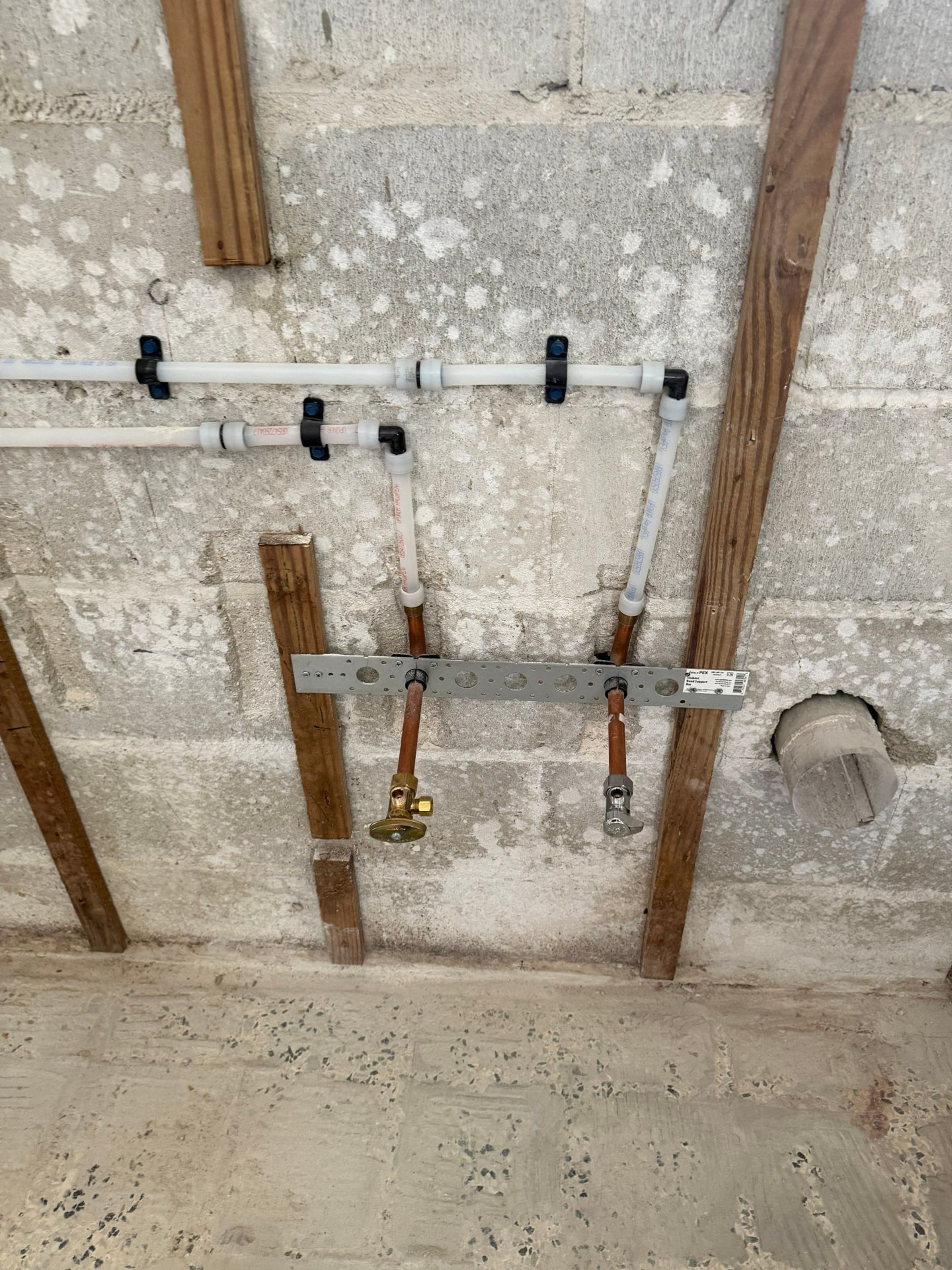
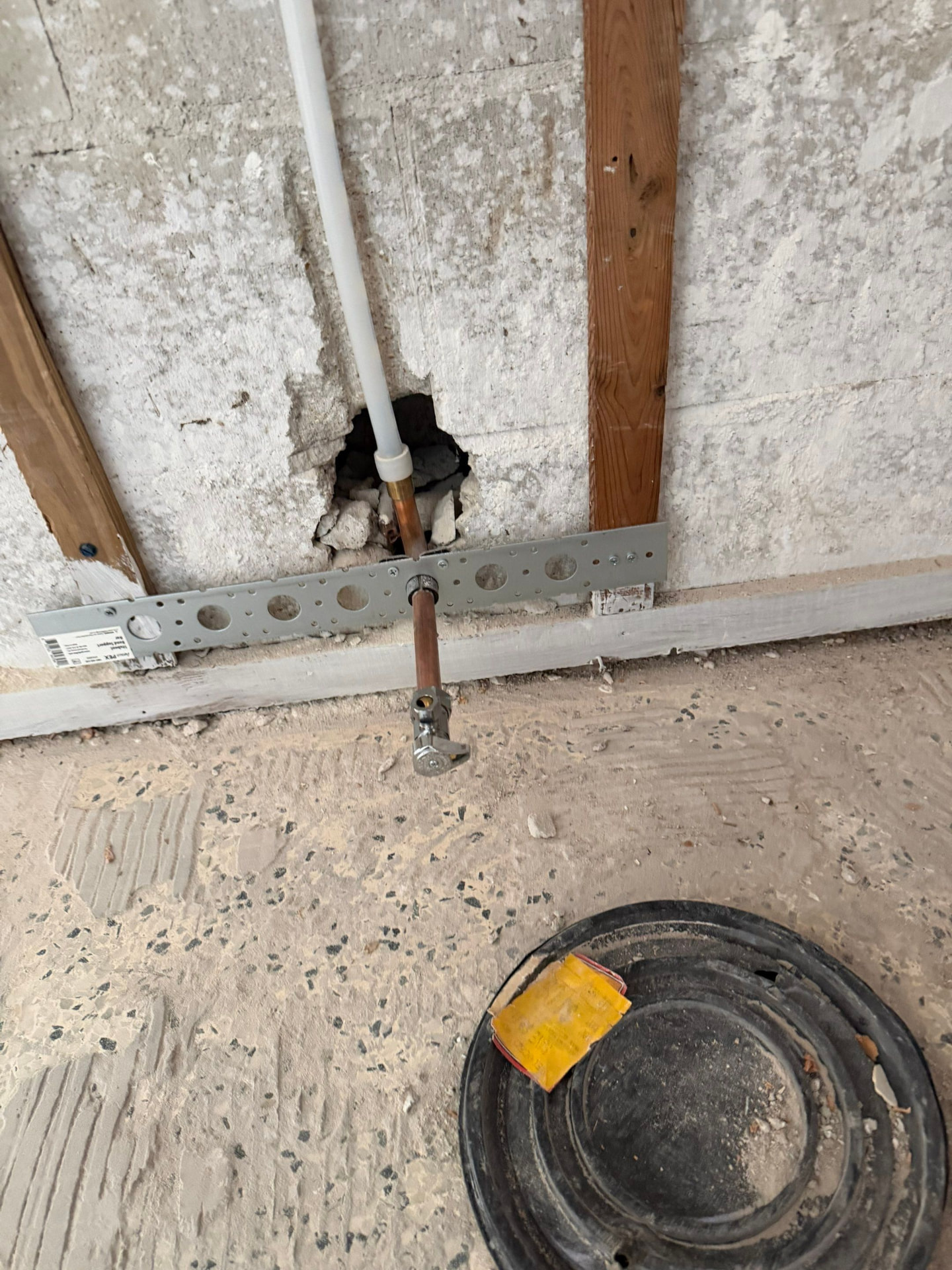
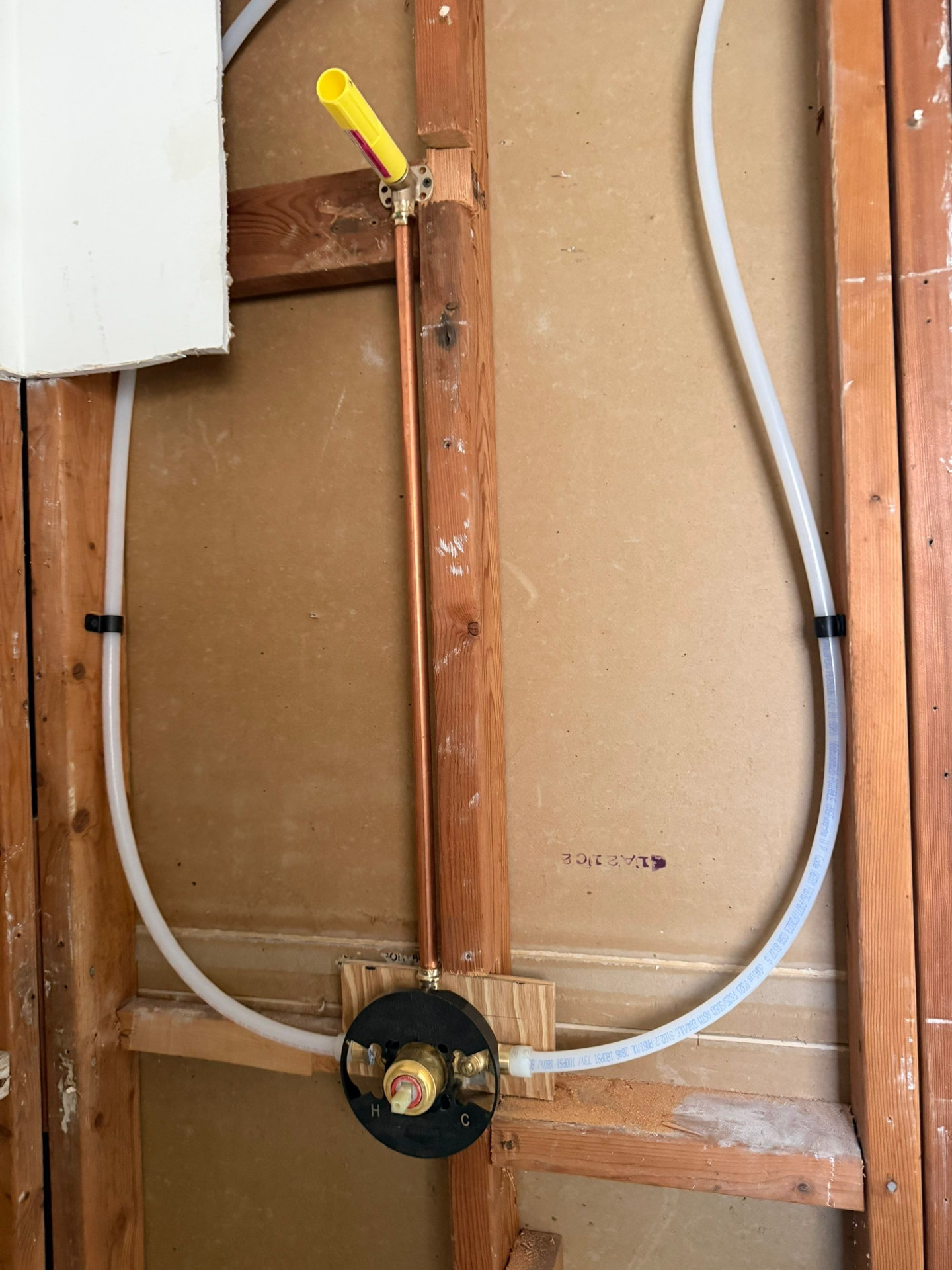
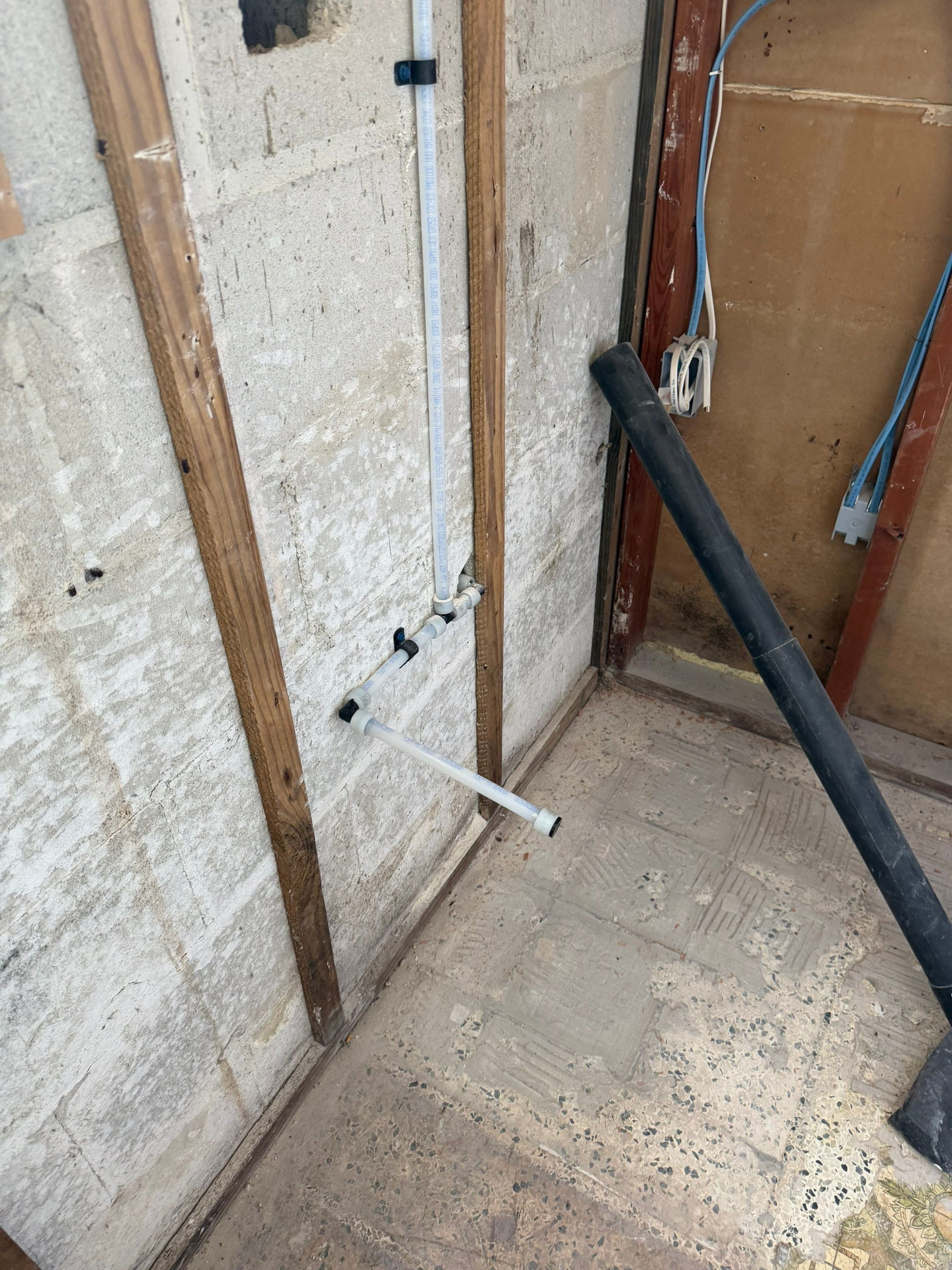
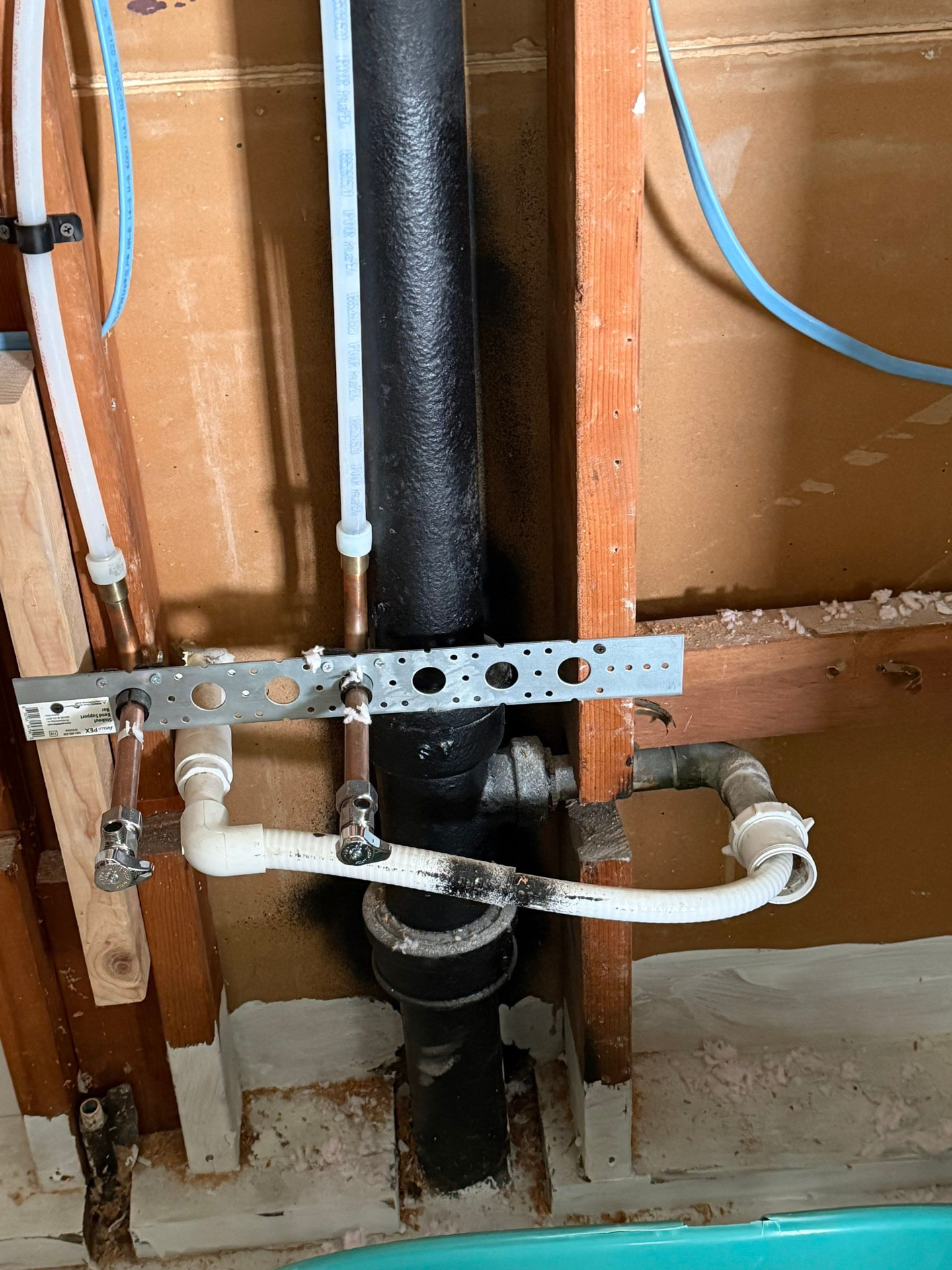
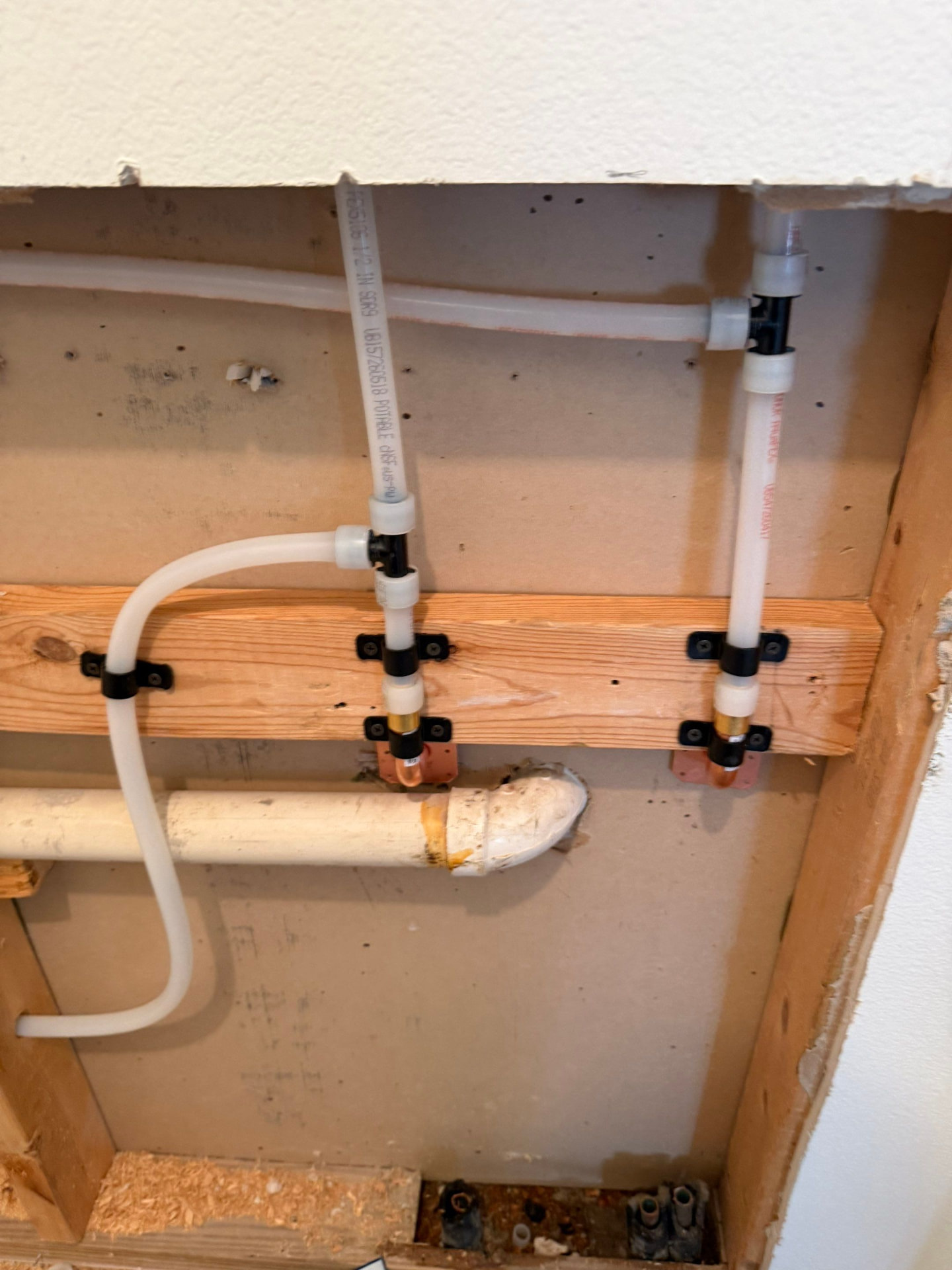
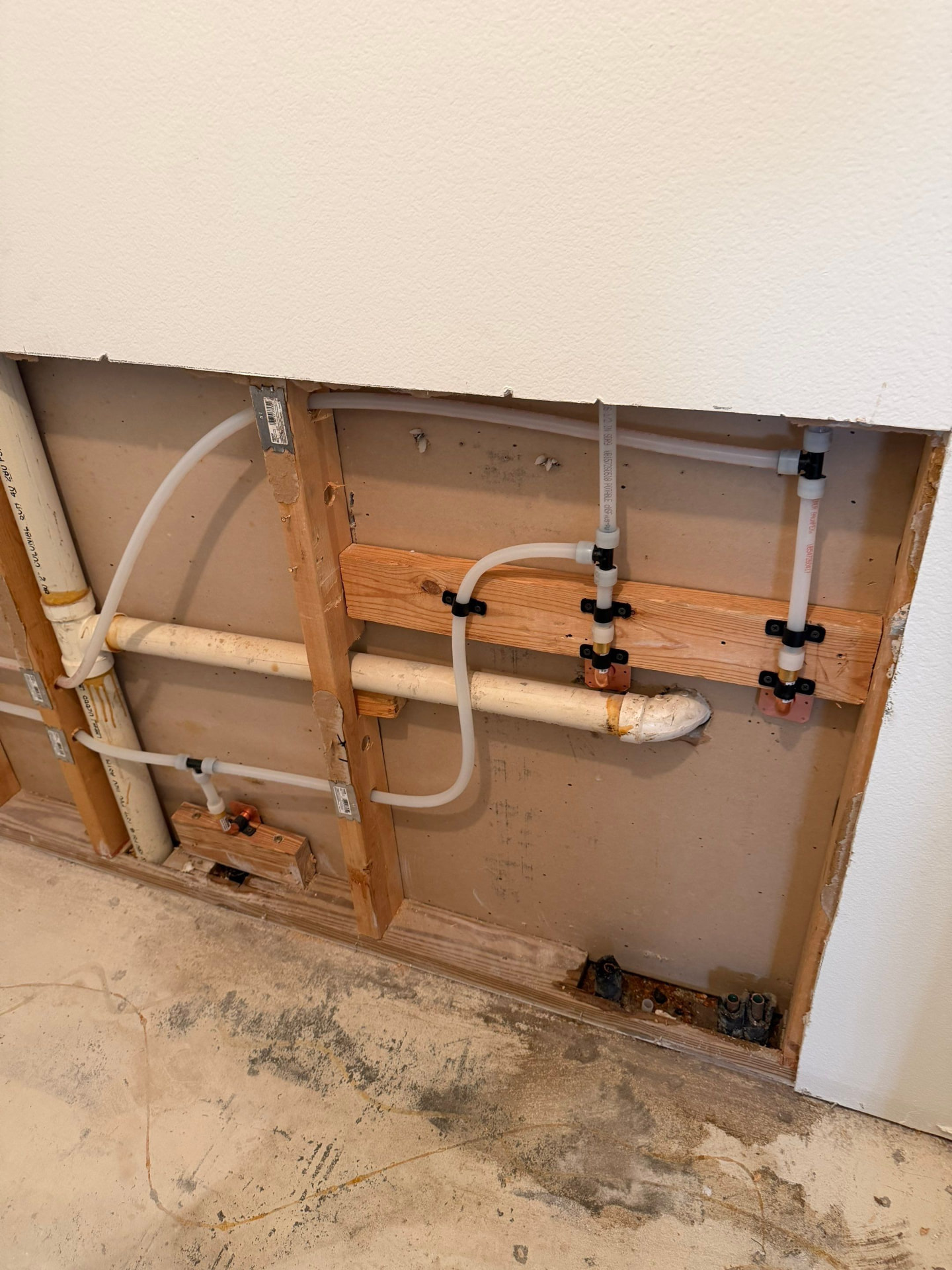
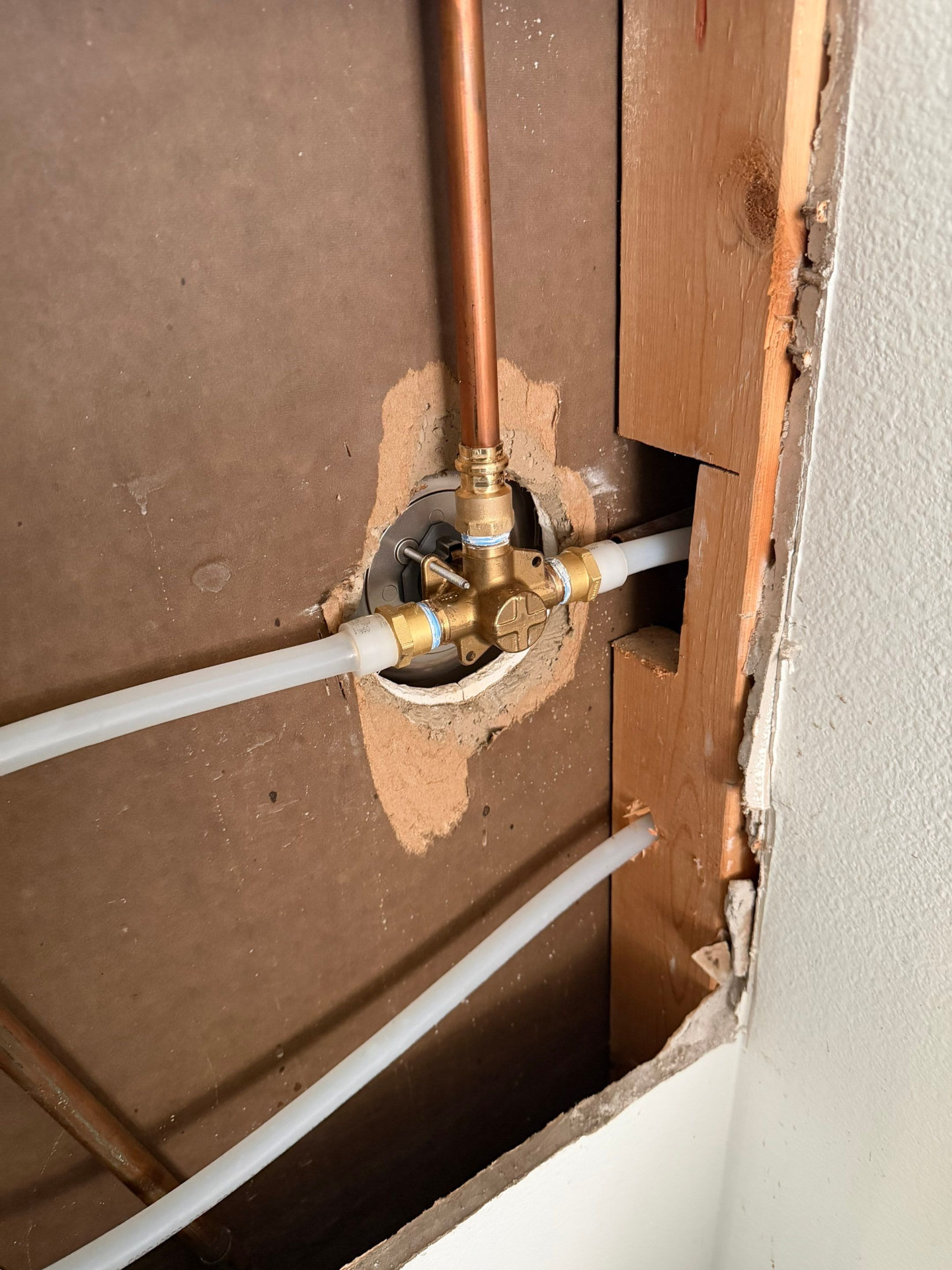
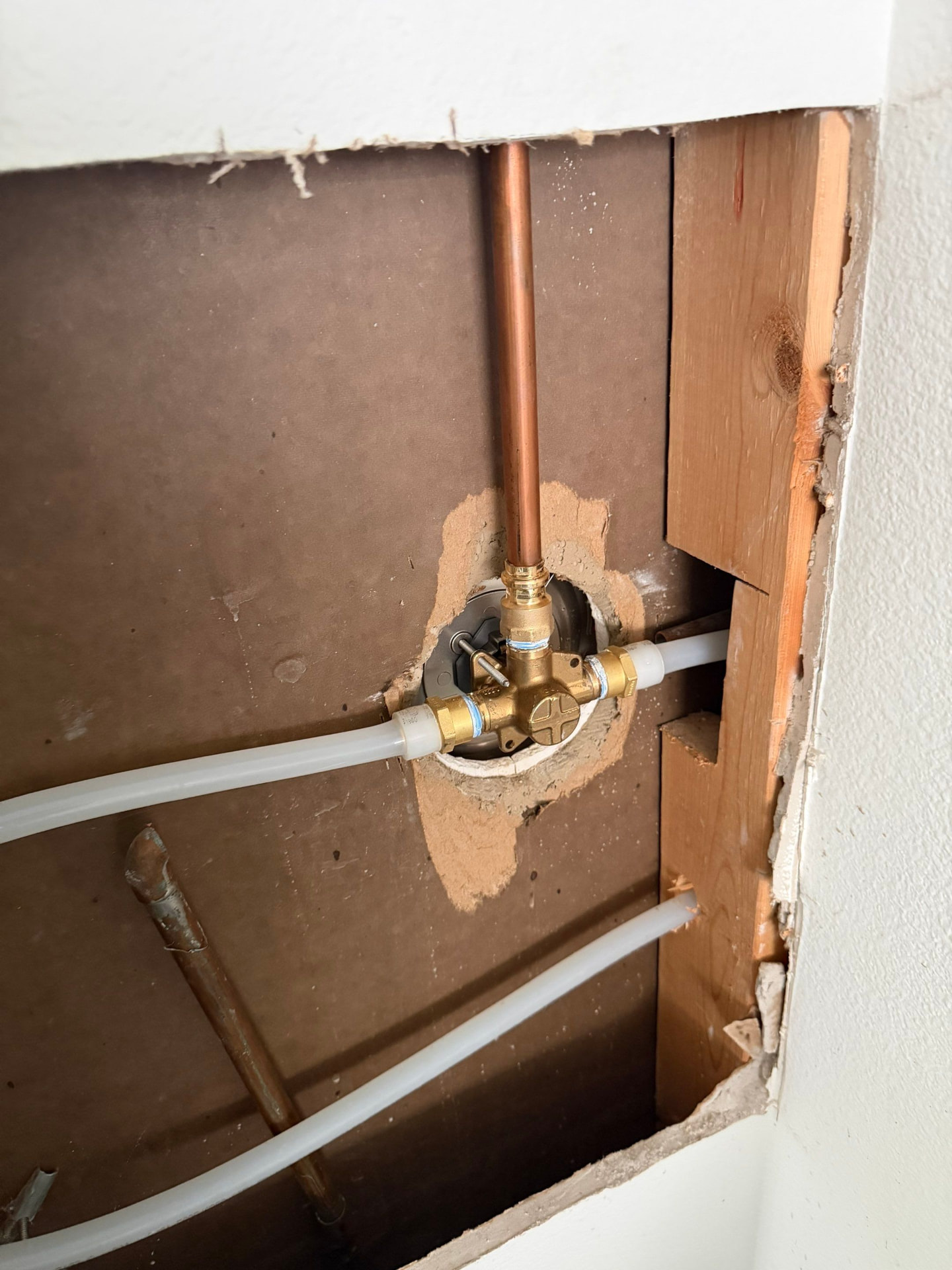
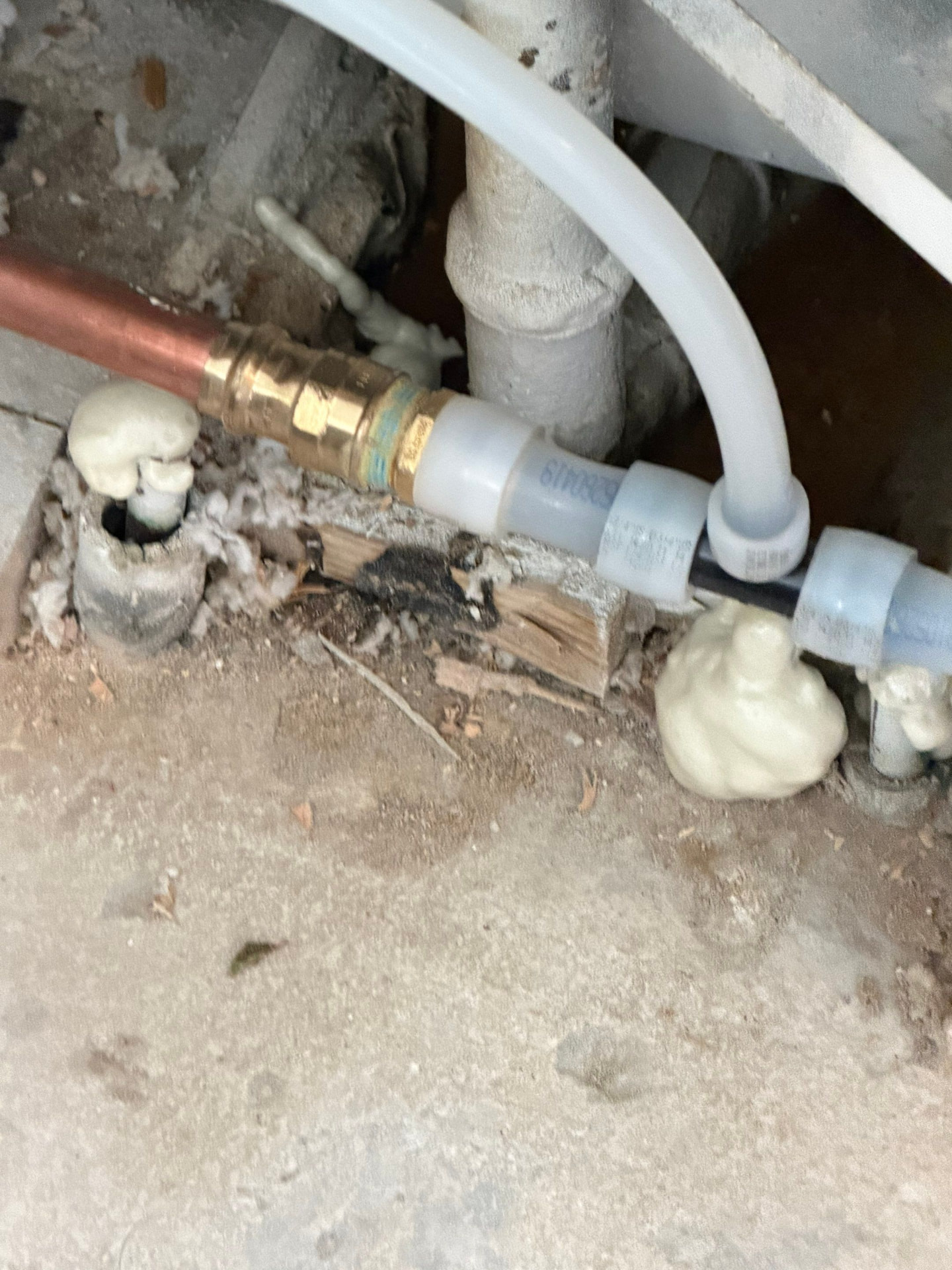
Photos from repipe work performed by Plumbing Detectives LLC. Every Nokomis job is documented from rough-in through inspection.
Answers
Frequently Asked Questions — Whole House Repiping in Nokomis, FL
If you’ve read this far, you now understand whole-house repiping in Nokomis better than most homeowners in this market ever get it explained. You know what the different pipe materials do when they age, why the east-west divide matters, what water hammer actually does to a system over time, and why a repipe isn’t always the answer to a leak. If your home is showing any of the signs on this page — or if you’d simply like an honest assessment of what you actually have — call me at 239-388-3631. I’ll come out, look at the whole system, and tell you exactly what I find before I recommend anything.
Plumbing Detectives LLC | Venice, FL | License CFC1434139
239-388-3631 | plumbingdetectivesfl.com