
Whole House Repiping · Laurel, FL
Whole House Repiping in Laurel, FL
Honest whole-home repipe assessment for manufactured homes, well-water properties, and older conventional construction. Licensed master plumber CFC1434139 — diagnosis first, always. Call 239-388-3631.
Call Now239-388-3631Laurel is one of the markets where honesty matters most. And what I mean by honest is this: I haven’t worked as many homes here as I have in Venice or Nokomis, so I’m not going to tell you things I haven’t personally confirmed. What I will tell you is what I’ve seen, what the research shows, and how I approach a plumbing evaluation in a market like this — where manufactured homes, older well-water properties, and newer gated communities exist within a few miles of each other and each one tells a completely different story.
That variety is the defining characteristic of Laurel. A manufactured home from 1986 on a private well and a 2019 home in Toscana Isles on county water have almost nothing in common from a plumbing standpoint. The pipe materials are different. The water source is different. The failure modes are different. The right question to ask before any work is: what is actually going on in this specific home?
Before I recommend a repipe — before I recommend anything — I evaluate the system. I look at the pipe material, the water source, the repair history, and the actual condition of what’s there. Sometimes the solution is much smaller than a homeowner expects. Sometimes it’s bigger. Either way, the diagnosis comes first. That doesn’t change because the address is in Laurel.
My name is Mike Reynolds. I’m the owner of Plumbing Detectives LLC and a licensed master plumber, license CFC1434139. I’m based in Venice and I serve the Laurel area. Here’s what you need to know before spending a dollar on plumbing in this market.
The Market
What Makes Laurel Different From Every Other Market I Serve
Three things set Laurel apart and all three affect the repipe conversation.
The manufactured home concentration. Laurel’s manufactured and mobile home density is denser than 96.3 percent of U.S. neighborhoods according to NeighborhoodScout. That’s not a footnote — it defines the market. A large portion of the plumbing service calls in this area involve manufactured homes, and manufactured home plumbing is a different job than site-built home plumbing in ways that matter. The pipe materials are different. The access is different. The failure patterns are different. A plumber who treats a manufactured home like a slab-on-grade conventional home is going to miss things.
The well water. Laurel is one of the few markets I serve where well water, not municipal supply, is the dominant water source for a significant portion of the housing stock. This matters because well water is not treated the way municipal water is. Sarasota County Utilities doses corrosion inhibitors, monitors pH, and adjusts alkalinity to protect the pipes it’s serving. A private well delivers whatever the aquifer provides — and in this part of Florida, that often means dissolved iron, hydrogen sulfide, and variable pH levels that can be aggressive toward metal plumbing in ways municipal water isn’t. Every well is different, which is why I never make assumptions about a Laurel well-water property until I’ve evaluated the water and the plumbing together.
The era split. The older manufactured home communities — Palm and Pines, Spanish Lakes, Bay Lake Estates, Royal Coachman — sit within a few miles of newer gated communities like Toscana Isles and Gran Paradiso that were built with current-code PEX plumbing and county water. These are not the same conversation. A manufactured home from 1987 on well water with original polybutylene supply lines needs a completely different assessment than a 2018 home on municipal water that’s unlikely to need a repipe for decades.
In the Field
What I’m Actually Finding — Pipe Materials in Laurel Homes
I want to be direct about what I know from my own work here and what I’m drawing from research, because those are two different things and you deserve to know which is which.
From what I’ve seen in the manufactured homes in this area: polybutylene and CPVC are much more common than copper in the original plumbing systems. That tracks with what I know about how manufactured homes were built during the 1978 to 1995 window. Polybutylene was the low-cost supply material of that era, and it was used extensively in manufactured housing — some estimates suggest roughly half of all polybutylene-piped homes nationally were manufactured units. I would be surprised to find much original copper in a manufactured home from that era unless it’s already been remodeled or partially repiped.
In the older conventional homes — the Sorrento East and Pinebrook South neighborhoods from the 1970s and early 1980s — copper supply lines are the more likely original material, with polybutylene possible in any home or repair done during the 1978 to 1995 window.
In the newer gated communities — Toscana Isles, Gran Paradiso, Calusa Lakes’ post-1995 phases — PEX and CPVC are the current standard. These homes are not near-term repipe candidates unless something specific went wrong during construction.
What I don’t know — and I’m not going to pretend otherwise — is every street in Laurel. If you have a specific home and want to know what’s actually in it, that requires a field assessment, not a generalization about the neighborhood.
Manufactured Home Risk
The Polybutylene Problem in Manufactured Homes — What You Need to Know
Polybutylene is the pipe material that defines the risk profile for a large portion of Laurel’s manufactured home stock. Understanding what it is and how it fails is the most important plumbing education a Laurel manufactured home owner can get.
Polybutylene is gray flexible plastic pipe stamped PB2110 along the side. It was installed nationally from 1978 through approximately 1995, when a class-action settlement ended its manufacture following widespread failures. It was described at the time as the future of residential plumbing — cheaper to install than copper, flexible enough to run without as many fittings, fast to rough-in. The problem revealed itself over years of use: polybutylene degrades from the inside when exposed to the chlorine and chloramine compounds in treated municipal water. The pipe’s interior surface becomes brittle and micro-cracked over time. The acetal plastic fittings — the connection points at every junction — are particularly prone to sudden failure with no visible external warning.
In manufactured homes, polybutylene was used even more extensively than in site-built homes, and there is at least one documented industry claim that ambient temperatures under a manufactured home’s belly wrap are higher than in a slab crawlspace — which would mean the pipe degradation runs faster. I’m flagging this as a claim I’ve seen, not a fact I’ve personally verified, because intellectual honesty matters more than a convincing-sounding detail.
What I can tell you is that any Laurel manufactured home built between 1978 and 1995 with original supply lines should be checked for polybutylene before a major repair, a sale, or an insurance renewal. The check takes about 15 minutes and tells you something critical about the home’s insurability and resale position.
In a manufactured home, polybutylene is actually easier to identify than in a site-built home — more of the supply run is often accessible through cabinetry or the belly area rather than buried in walls. Look under sinks and at the connections to the water heater. Gray flexible plastic with PB2110 on the side is polybutylene.
Water Chemistry
Well Water and Your Pipes — Why This Is Laurel’s Most Important Variable
If your Laurel property is on a private well, the water chemistry is the most important factor in understanding how your plumbing is aging and what material makes sense when repairs or replacement are needed.
Municipal water in the surrounding market is treated specifically to protect the pipes it flows through. Sarasota County Public Utilities adds corrosion inhibitors, monitors pH, and manages alkalinity to reduce the chemical attack on copper and other materials. A private well delivers untreated groundwater — whatever the Floridan Aquifer provides at that specific depth and location.
In Laurel’s well water, what the aquifer often provides is dissolved iron, hydrogen sulfide, and chemistry that can be corrosive to metal plumbing. Florida’s own environmental regulators — the FDEP — specifically identify low pH, alkalinity, dissolved iron, and total sulfide as parameters that must be tested when a well connects to a public water system, precisely because these factors drive “copper pipe corrosion and black water.” That regulatory language tells you something important: the state of Florida recognizes these water chemistry factors as active threats to metal pipe.
Hydrogen sulfide is independently documented as corrosive to metal plumbing and to fittings specifically. It reacts with dissolved iron to form iron sulfide — a black precipitate that stains fixtures, discolors brass, and deposits inside metal pipe. In a galvanized steel pipe that’s already corroding from the inside, iron sulfide deposits add a layer of accelerated degradation. In copper pipe, the same chemistry creates conditions that can drive localized pitting corrosion.
What does this mean practically? It means the repipe material conversation in a Laurel well-water home starts with the water, not with what’s easiest to install. I would not recommend installing copper in a home where the well water chemistry is aggressive toward copper without either treating the water upstream or understanding what the specific chemistry looks like. PEX is non-metallic and does not corrode from chemical attack the way copper or galvanized steel does — which is why it’s often the right answer in a well-water home, but the right answer depends on a water evaluation, not a general rule.
I would also avoid installing new CPVC when better modern materials are available. CPVC becomes brittle with age and heat cycling regardless of water chemistry. For a Laurel well-water property where the long-term maintenance goal is fewer problems, PEX-A is the material I reach for most consistently — but I don’t quote a material before I understand the water.
The Honest Answer
Do You Actually Need a Whole House Repipe?
The most important section on this page. Not every Laurel home needs a repipe. Here’s the honest breakdown.
No — not right now:
A newer home in Toscana Isles, Gran Paradiso, or Calusa Lakes’ post-1995 phases with PEX or current-code CPVC and municipal water. These homes are not near-term repipe candidates unless a specific installation problem has been identified.
A home where the current issue traces to a specific failed fitting, a bad repair from a previous contractor, or a problem that can be addressed with a targeted repair without compromising the integrity of the rest of the system.
A manufactured home where the polybutylene has been confirmed already replaced with PEX and the work was documented and permitted.
Maybe — worth a full assessment:
A manufactured home from the 1978 to 1995 window where the supply material hasn’t been confirmed. This is a 15-minute check that can have significant implications for insurance and resale.
A conventional home from the same era where you’ve had one or two leaks and aren’t sure whether the system is failing broadly or having isolated problems.
A well-water home where the water quality hasn’t been tested recently and you’re not sure what the water chemistry is doing to the pipes.
A home going through a sale, refinance, or insurance renewal where the pipe material question is going to come up during inspection.
Yes — a full repipe is the right answer:
Confirmed polybutylene throughout a manufactured home. This is the insurance and resale situation that most commonly drives the decision in this market. Citizens Property Insurance Corporation’s underwriting Rule 206.B declines new coverage for homes over 20 years old with active polybutylene. Since all Laurel polybutylene-candidate homes were built between 1978 and 1995, making them 30 to 48 years old today, essentially none would qualify for new Citizens coverage with active polybutylene present.
A well-water home with confirmed aggressive water chemistry and galvanized supply lines from the 1970s or earlier. The combination of aging galvanized pipe and corrosive well water chemistry creates conditions where continued point repairs are a false economy.
Repeated leaks — multiple failures in different locations over a short period — in a system where each repair addresses the symptom but nothing has addressed what’s driving the pattern. That’s the point where the economics of repair versus replacement shift.
Not sure what pipe material your Laurel property has or whether it needs attention? Call 239-388-3631. I’ll evaluate the system honestly — including the water source and quality — before recommending anything.
Call Now239-388-3631Quick Reference
Pipe Material Quick Reference — Laurel Context
| Pipe Material | Typical Lifespan | Common Failure Mode | Laurel Context | Status |
|---|---|---|---|---|
| Polybutylene (PB2110) | 25–40 years (unpredictable) | Internal chloramine degradation, sudden acetal fitting failure with no visible warning | Primary concern in manufactured homes built 1978–1995. Also possible in conventional homes repiped or repaired during that window. | Active insurance liability. Citizens Rule 206.B applies. Full replacement standard. |
| CPVC | 50+ years when installed correctly | Brittleness with age and heat cycling, cracking during repair attempts | Common in manufactured homes of the same era as polybutylene. Also used in some conventional construction and repairs. | Evaluate carefully before attempting repairs. Better modern materials available for replacement. |
| Copper (Type L) | 50–70 years | Pinhole leaks from interior corrosion — accelerated by aggressive well water chemistry (low pH, iron, sulfide) | More likely in conventional homes from the 1970s–1980s. Less common in manufactured homes of any era. | Well water chemistry is the critical variable. Evaluate water before specifying copper. |
| Galvanized Steel | 40–50 years (shorter in aggressive well water) | Internal rust scale, pressure loss, discoloration, eventual wall failure — compounded by iron and sulfide in well water | Possible in older conventional homes and some older manufactured housing. Unlikely to still be original and unrepiped at this age. | If confirmed at 50+ years with aggressive well water: replacement strongly recommended. |
| PEX-A | 50+ years | No documented systemic failure at current installed age | Standard material in newer construction and correctly done repipes. Best choice for well-water homes. | Scale-resistant, non-metallic, not subject to galvanic or chemical corrosion. Uponor ProPEX system with 25-year manufacturer warranty. |
Note: Laurel’s well-water properties require water quality evaluation before any material recommendation. The right pipe depends on the water, not just the home’s age.
The Process
What the Repipe Process Looks Like in a Laurel Home
Before the details, here’s the timeline at a glance: I’m based just up the road in Venice, so I can usually get out for the initial assessment within a day or so of your call, depending on the schedule. Once you approve the written quote, most Laurel repipes get on the calendar within a week or two — sooner when there’s an active leak, a four-point inspection deadline, or an insurance renewal date driving the timeline. A conventional site-built repipe takes two days for most single-story homes, with water restored by the end of each day. A manufactured home repipe can often run faster on the drywall side — belly access means less wall cutting — but the total timeline depends on the condition of previous repairs and any skirting work, and I’ll give you an honest schedule for your specific home during the assessment.
The process differs depending on whether the home is a manufactured home or a site-built home, and I want to explain both.
Manufactured homes — belly and cabinet access
Most of the supply lines in a manufactured home are accessible from underneath the home through the belly wrap, or through cabinet and closet access points rather than buried in concrete or enclosed in site-built walls. This is one area where manufactured home plumbing is actually more straightforward to replace than conventional slab construction — the overhead attic reroute that’s standard for a Florida slab home isn’t necessary when you can access the supply runs from below.
Polybutylene to PEX replacement in a manufactured home typically involves removing the belly wrap in sections, replacing the supply distribution lines, installing new quarter-turn angle stops at every fixture, and re-securing the new lines properly — which brings me to one of the most consistent problems I find in manufactured home plumbing.
Unsupported pipe runs under manufactured homes. This is a mistake I find in this type of home more than any other. Pipe simply hanging because someone didn’t want to spend the time crawling underneath long enough to secure it properly. Unsupported pipe vibrates with every pressure change, shifts under the home’s seasonal movement, and creates stress at every fitting. Proper support means pipe anchored to the home’s chassis framing at appropriate intervals — not pipe that bounces when you tap it. I secure every run on every job.
Site-built slab homes — overhead repipe
For Laurel’s conventional homes — Sorrento East, Pinebrook South, the older properties along US-41 — the standard overhead repipe method applies. Existing supply lines are abandoned in place. New PEX-A lines run through the attic and down to each fixture. I specify PEX-A with Uponor ProPEX expansion fittings — the pipe end is expanded, the fitting is inserted, and the tubing’s shape memory contracts it tight around the fitting, a connection backed by Uponor’s 25-year limited warranty. At every fixture, a pre-fabricated copper stub-out secured to wood blocking at the stud provides a solid, anchored termination. Quarter-turn angle stops at every connection. Pressure test to 100 psi for 15 minutes before any wall closes.
The permit. Both manufactured homes and site-built homes in Laurel require a Sarasota County Planning and Development Services plumbing permit for repipe work. Laurel is unincorporated Sarasota County — the closer permit center is the R.L. Anderson Administration Center at 4000 S. Tamiami Trail, Venice, FL 34293. We pull the permit and coordinate inspections for every job.
HOA considerations. Most of Laurel’s older manufactured home communities and conventional neighborhoods operate without a mandatory HOA — permitting is county-only with no architectural review layer. If your address is in Toscana Isles or Gran Paradiso, different rules apply. Interior repipe work that doesn’t alter the home’s exterior generally falls outside those communities’ architectural review scope, but I recommend confirming with your specific HOA before any work begins.
Plumbing Detectives LLC Professional Opinion
Before spending money on a repipe, let me evaluate the entire plumbing system. Don’t assume every leak means the whole house needs new pipes. And in a well-water home, don’t assume the right replacement material is obvious until we understand what the water is actually doing to the existing pipe. The best investment starts with an accurate diagnosis — not the biggest estimate.
Better Design
If I Could Change One Thing About How These Homes Were Plumbed
If I could redesign one thing about how the homes in this market were originally plumbed, it would be this: stop putting water supply piping under concrete slabs whenever possible.
Drain lines have to be under the slab. Gravity requires it — there’s no way around the physics. But water supply lines don’t. Supply lines run under pressure. They can go through an attic, through a wall, through any accessible path that keeps them reachable for the life of the home.
Once supply piping is buried in concrete, every future repair becomes more invasive, more expensive, and harder on the homeowner. A pinhole leak in under-slab copper means leak detection equipment, slab cutting, dust, a displaced family, and a concrete repair — all to fix a problem that would have been a straightforward wall-access repair if the pipe had been routed overhead in the first place.
Better access means easier maintenance, faster repairs, and less damage over the life of the home. For the older homes in Laurel where under-slab supply lines are part of the original construction, the overhead repipe method is the right approach precisely because it solves this problem permanently for the next owner.
Investment
What It Costs — Laurel Home Profile
Cost in Laurel varies more than in most markets I serve because the housing stock varies more. A manufactured home repipe is a different scope than a conventional slab-home repipe, and both are different from each other depending on size, fixture count, and access conditions.
For a conventional site-built slab home in Laurel, the Sarasota market range applies: approximately $4,500 to $7,500 for PEX-A or $6,000 to $10,000 for copper on a typical 1,200 to 1,800 square foot, two to three bedroom, two bath home. These are typical market ranges — not guaranteed quotes. Every job gets a written flat-price assessment after the on-site evaluation.
For a manufactured home, the total is typically lower than a comparable-size slab home — the belly-access method is generally faster and involves less drywall work than an overhead attic reroute. I don’t have a specific verified cost range for manufactured home repiping in this specific market, and I’m not going to invent one. What I can tell you is that we’ll quote the actual job after the assessment, and the quote will cover everything: materials, labor, permit, and any access work required. No line items that appear after you’ve already agreed to the job.
A note for well-water homes: if the scope includes any work at the pressure tank connections, check valves, or the interior plumbing from the pressure tank to the main shutoff, that’s scope beyond a standard municipal-water repipe and we’ll price it and explain it separately.
Insurance & Resale
The Insurance and Resale Reality
Polybutylene is the insurance issue that matters most for Laurel’s manufactured home stock.
Florida’s four-point inspection — required by most carriers for homes over 20 years old — explicitly checks supply pipe material. Polybutylene is a fail condition. Citizens Property Insurance Corporation’s underwriting Rule 206.B declines new coverage for homes over 20 years old with active polybutylene piping. Every Laurel manufactured home from the 1978 to 1995 window that still has original polybutylene is over 30 years old and fails this threshold automatically.
For manufactured homes specifically, pipe material also affects financing. Lenders — including FHA and conventional chattel lenders — commonly require polybutylene replacement as a condition of financing on homes from this era. If you’re planning to sell a manufactured home in Laurel and the buyer needs financing, an undisclosed polybutylene system can stop a transaction before it closes.
After a completed repipe, the documentation your carrier or lender typically needs: the permit, the final inspection sign-off, the contractor’s invoice specifying the new material, and photographs of the old material’s removal and the new installation. We provide that complete documentation package at job completion.
One piece of guidance I give every Laurel homeowner facing this situation: confirm with your specific carrier in writing what they need and whether a completed repipe restores full eligibility before you spend the money. Don’t assume — get it in writing first.
What I Find in the Field
Common Mistakes I Find in Laurel Homes
Improper fittings at transitions. When different pipe materials meet — polybutylene to copper, galvanized to copper, CPVC to PEX — the transition fitting has to be the right fitting for both materials. I find improvised transitions throughout older plumbing systems in this area: wrong fitting types, mismatched threads, connections that hold water initially but create restriction or failure points over time.
SharkBite fittings used as permanent repairs. The same pattern I find throughout this market. Push-to-connect fittings are legitimate tools for specific applications and for temporary work. They’re not the permanent solution inside a supply run that’s going to be in service for twenty years. In Laurel specifically, I find them in manufactured homes where access was difficult and convenience won over proper practice.
Unsupported pipe runs under manufactured homes. Pipe simply hanging under the belly of a manufactured home because nobody wanted to crawl under and secure it properly. This creates ongoing stress at every fitting from vibration and movement. Every supply run needs to be anchored to the chassis framing at proper intervals. There’s no shortcut for this that doesn’t eventually create problems.
Poorly supported stub-outs at fixtures. The same principle applies everywhere — every fixture connection needs a solid anchor. A stub-out that’s not secured to blocking behind the wall moves with every valve operation and every pressure surge. Over time, that movement stresses the connection.
Installing copper without evaluating the water quality. In a well-water home with aggressive chemistry, installing copper without upstream water treatment or without understanding the specific pH, iron, and sulfide levels is specifying the wrong material for the environment. I would not do this, and I flag it as a mistake when I find it in systems I’m evaluating.
Installing new CPVC when better options exist. Chlorinated polyvinyl chloride, usually called CPVC, has a track record as a water supply material. It also becomes brittle with age and heat exposure in ways that PEX does not. When I’m replacing a plumbing system, I specify the best available material for the long-term, not the material that’s already in the truck.
Plumbing Detectives LLC Tips
If your Laurel manufactured home was built between 1978 and 1995 and you haven’t confirmed the pipe material, do that before your next insurance renewal. Pull out a flashlight and look at the supply pipe under the sinks and at the water heater connections. Gray flexible plastic stamped PB2110 is polybutylene. Knowing you have it — or don’t — is the starting point for everything else.
Well water and plumbing are a package deal. If your Laurel property is on a private well and you haven’t had the water tested recently, the water quality test should come before any plumbing repair or material decision. What’s in the water determines what belongs in the pipe.
Pipe hanging loose under a manufactured home is not a minor issue. It creates ongoing stress at every fitting. If you’re under your home for any reason and see supply lines that aren’t properly secured, that’s worth adding to the list when a plumber comes out.
Before authorizing any repipe in a Laurel home, ask for a written flat-price quote that includes permit, inspection, all materials, labor, and access work. Then confirm with your insurance carrier in writing what they need to restore coverage after the job is done. Those two steps before any work starts will save you surprises on both ends.
How I Work
Diagnosis First — In a Market Where Every Home Is Different
Laurel is the market in my service area where the diagnosis-first approach matters most, because the range of what you might be walking into is wider than anywhere else I work. A manufactured home from 1984 on well water with original polybutylene is not the same job as a 1978 conventional home on the same street with copper supply lines and a history of partial repairs. They both need assessment before they need anything else.
I won’t make claims about streets in Laurel that I haven’t personally worked. I won’t invent a story about a house I haven’t been in. What I’ll tell you is that my process is the same here as everywhere: I evaluate the system — the pipe material, the water source and quality, the repair history, the access conditions — before I recommend a single dollar of work. Sometimes the right answer is smaller than what a homeowner expected. Sometimes it’s larger. The answer comes from the evaluation, not from the address.
If you have a Laurel home — manufactured, conventional, or on well water — and you want to know what you actually have and what, if anything, it needs: that’s the conversation I’m set up to have.
The Standard
Why Plumbing Detectives LLC
I named the company Plumbing Detectives LLC because figuring out what’s actually wrong comes before recommending anything. In Laurel, that principle is not optional — the housing stock is too varied and the water conditions are too different from property to property for any other approach to be honest.
If I don’t know something, I tell you I don’t know. If the water quality needs to be evaluated before I can recommend a material, I say that. If a targeted repair is the right answer instead of a full repipe, that’s what I recommend. The diagnosis determines the answer. The answer doesn’t determine the diagnosis.
License CFC1434139. Fully insured. We pull permits through Sarasota County Planning and Development Services.
Documented Work
Repipe Work, Photographed on the Job
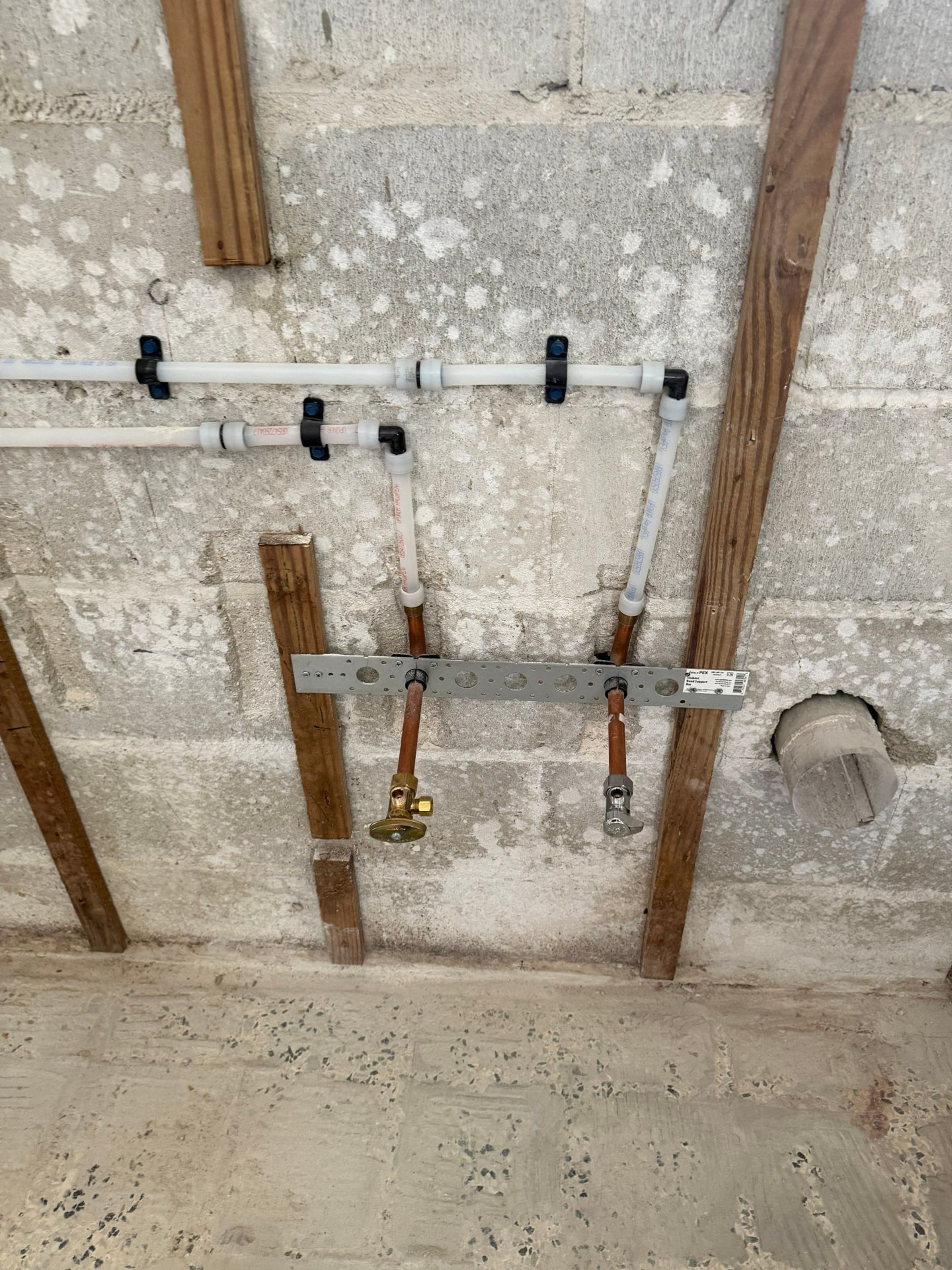
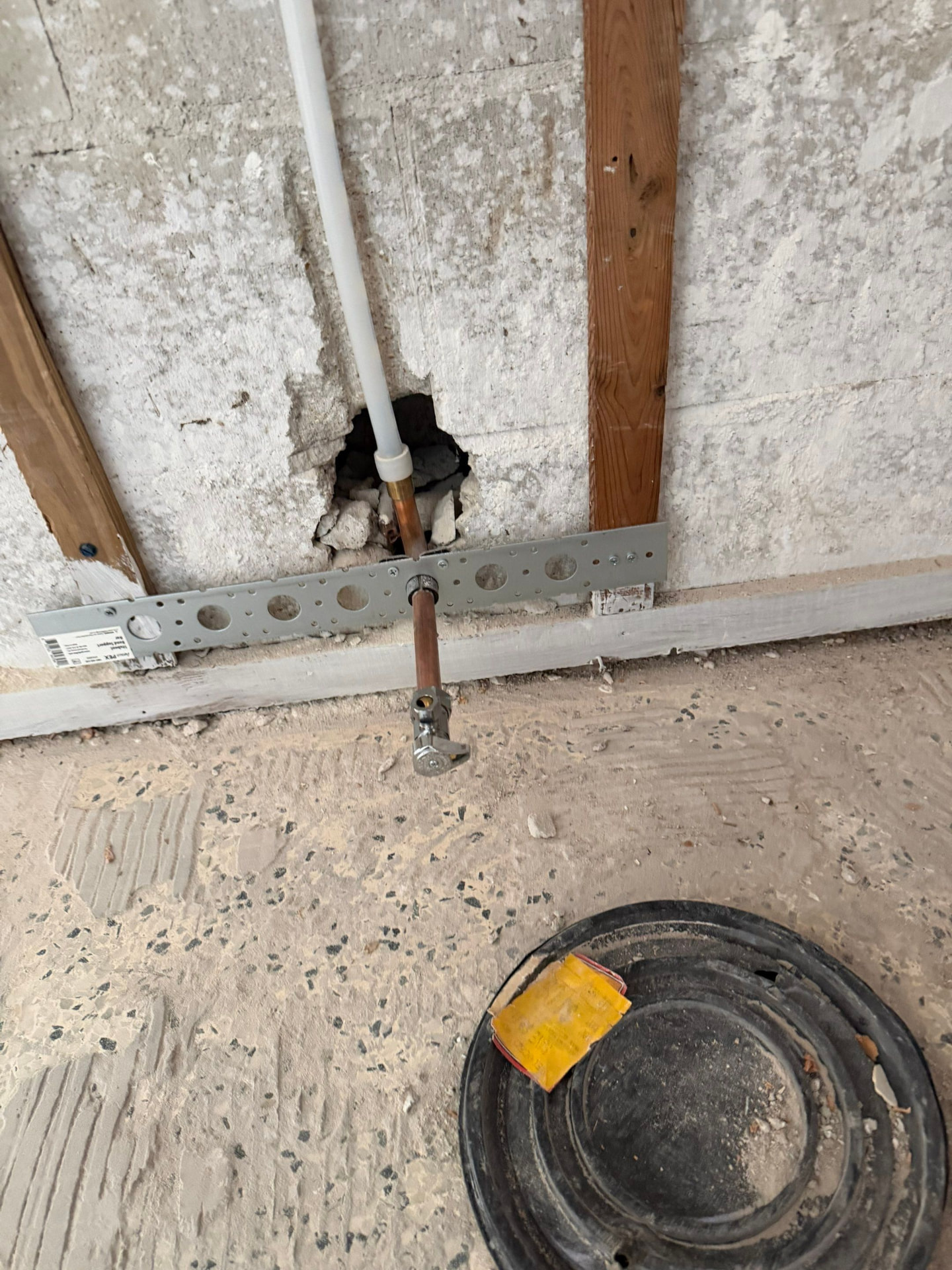
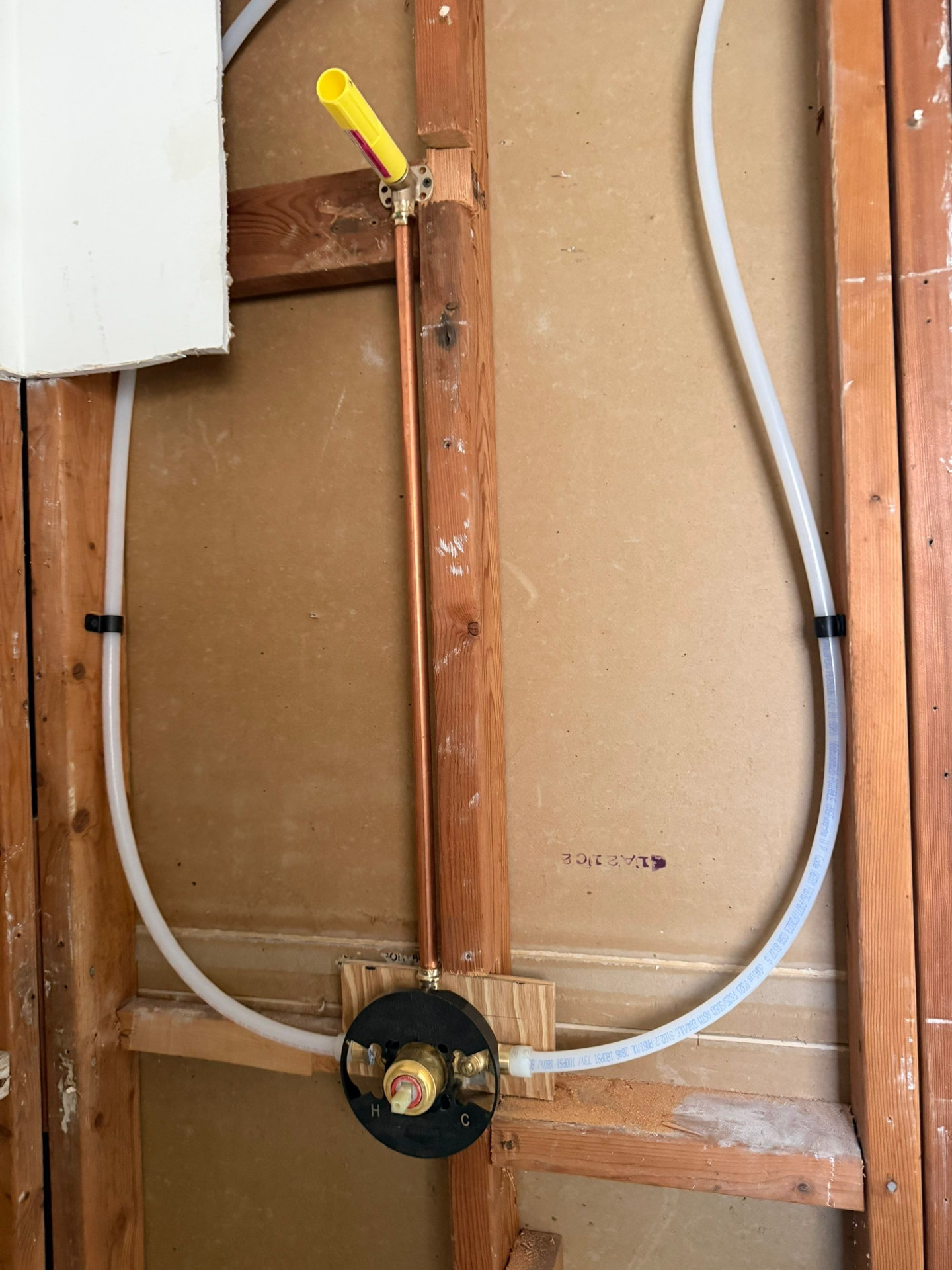
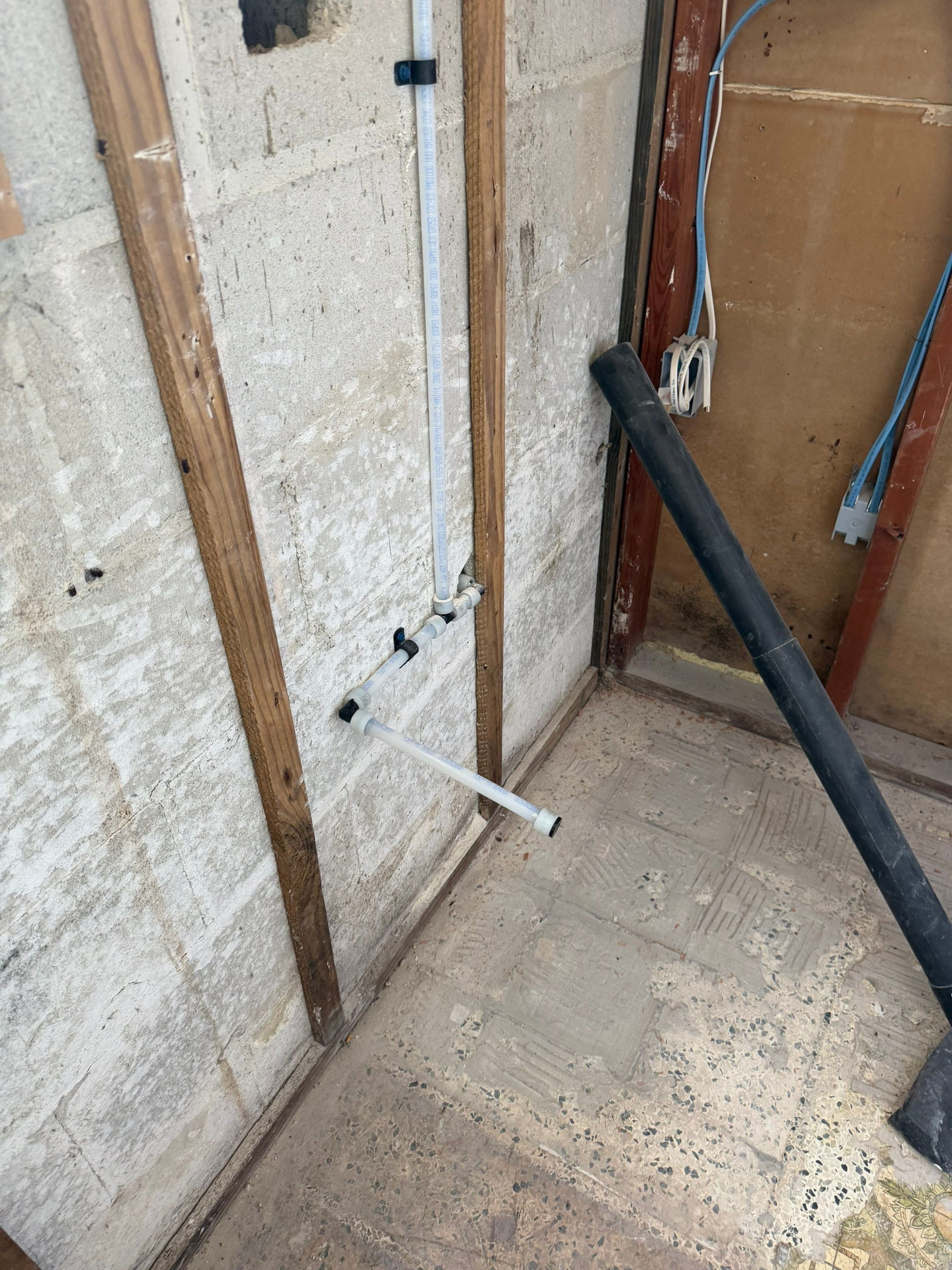
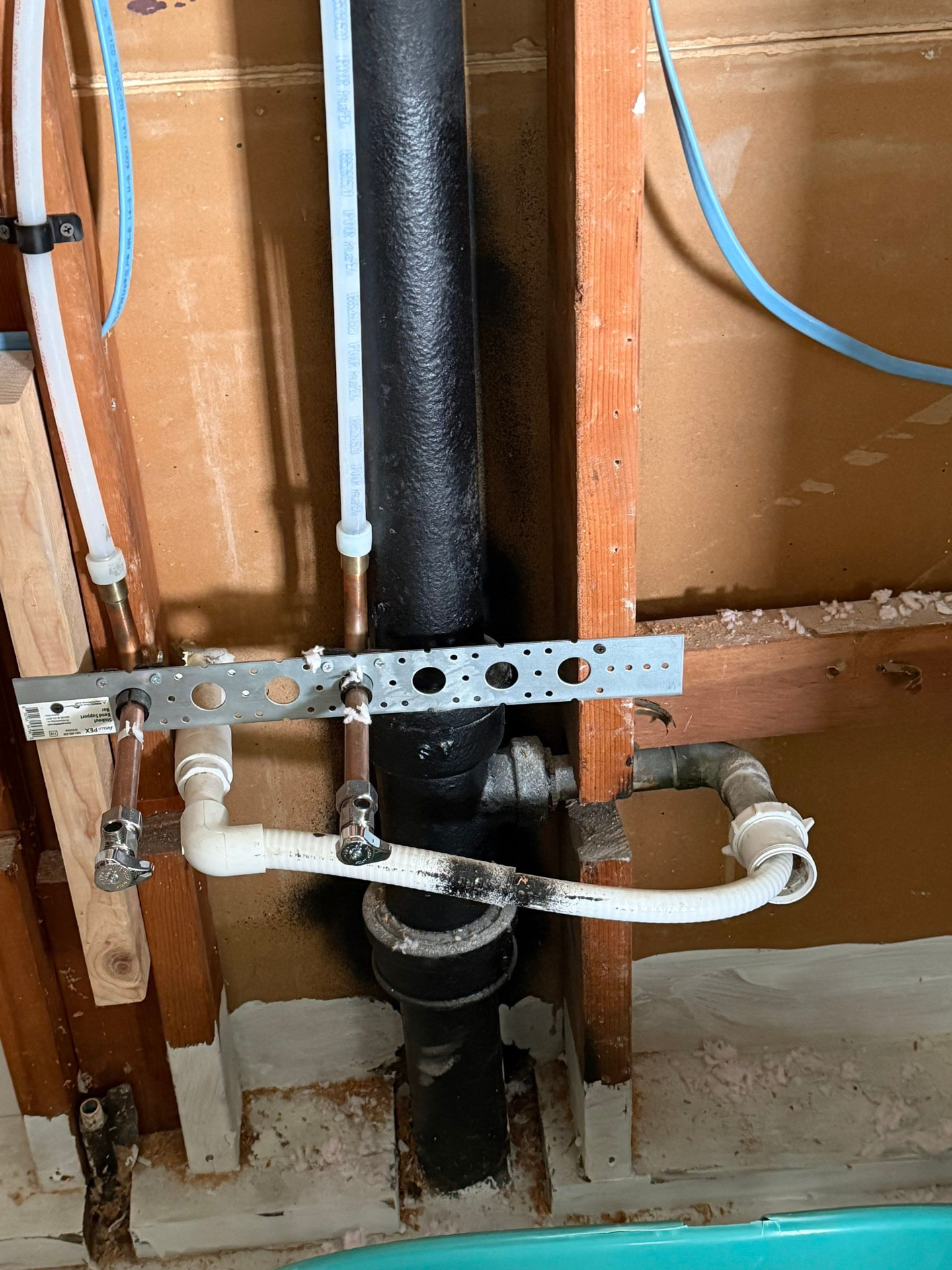
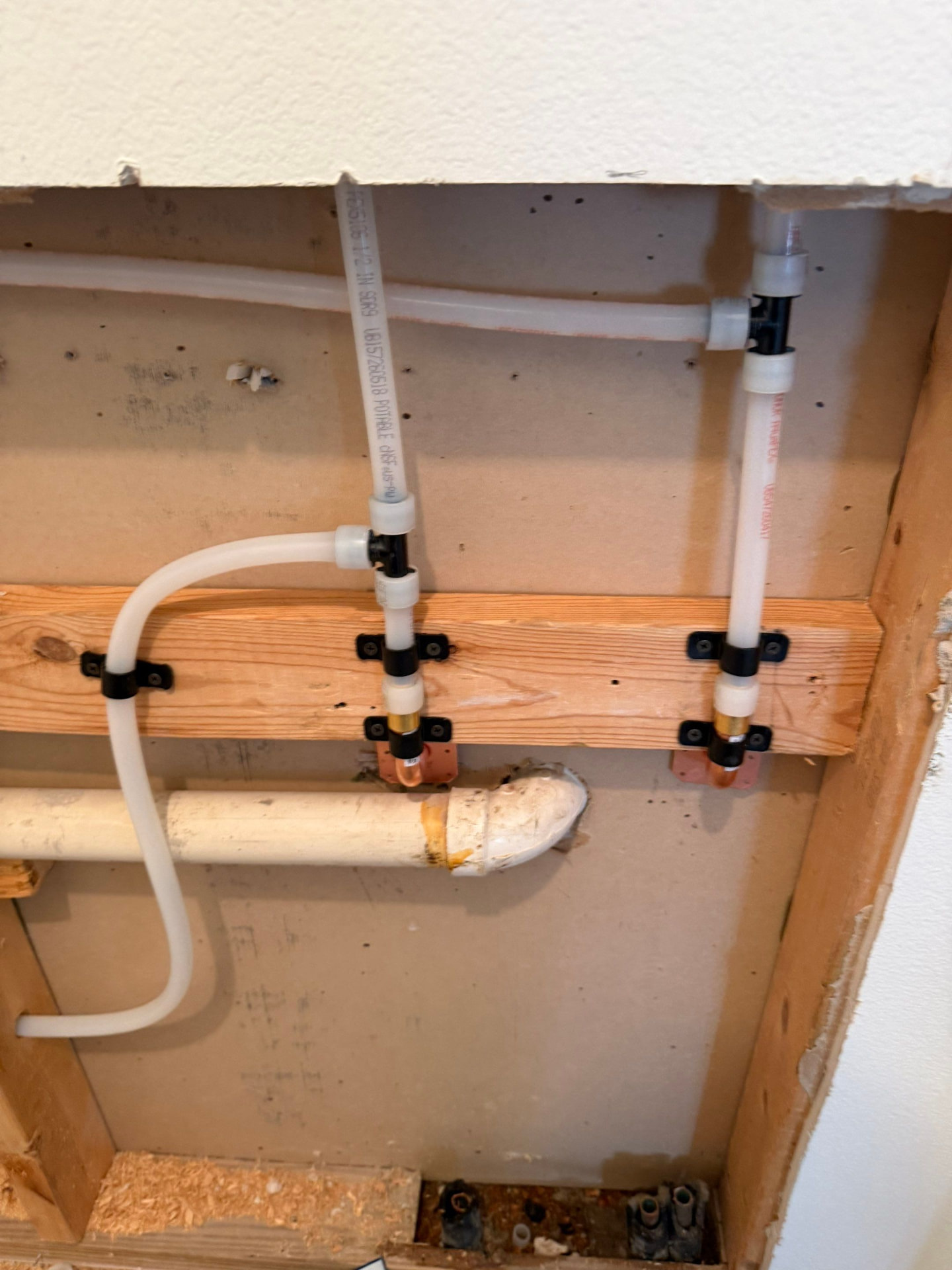
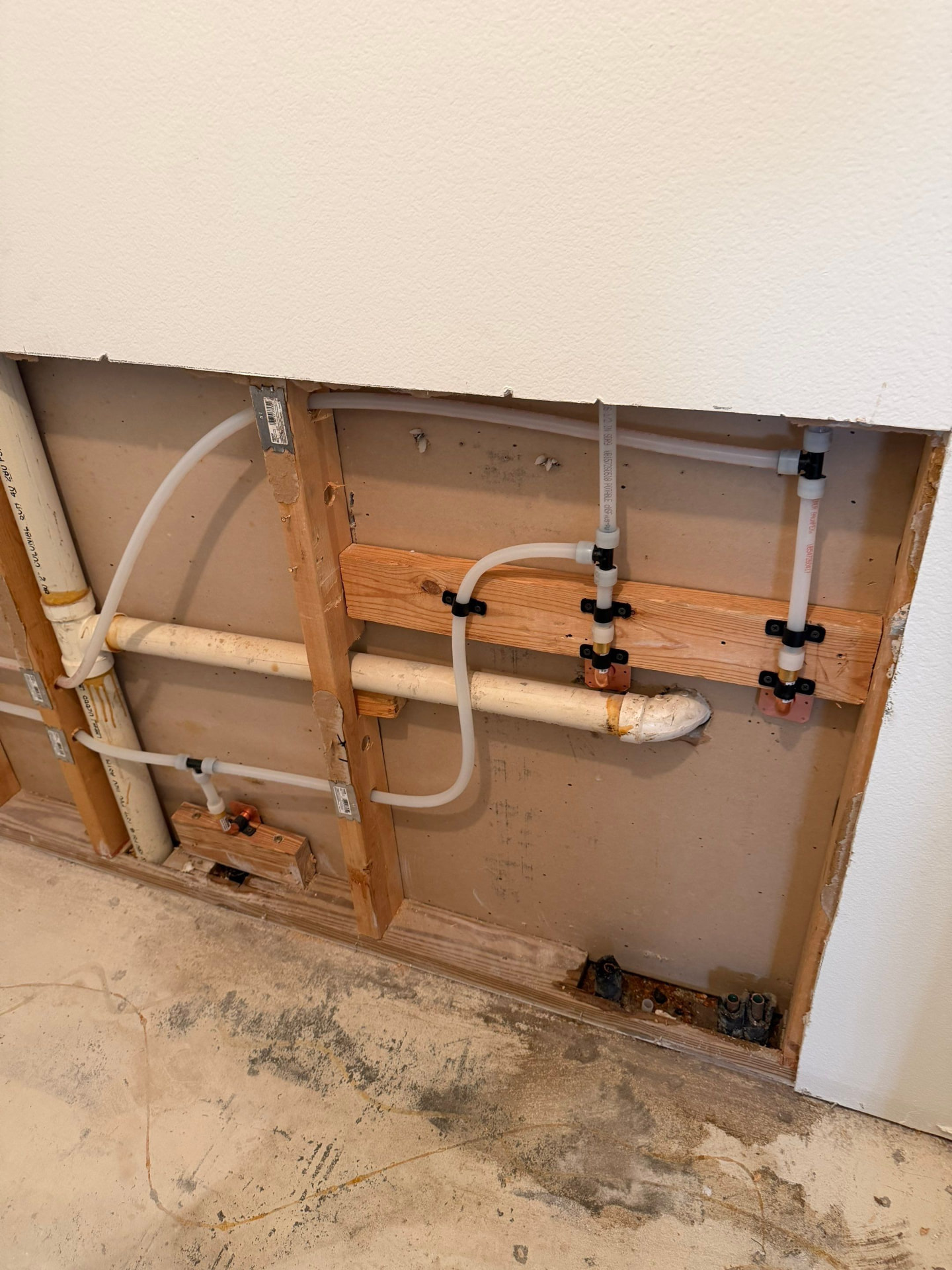
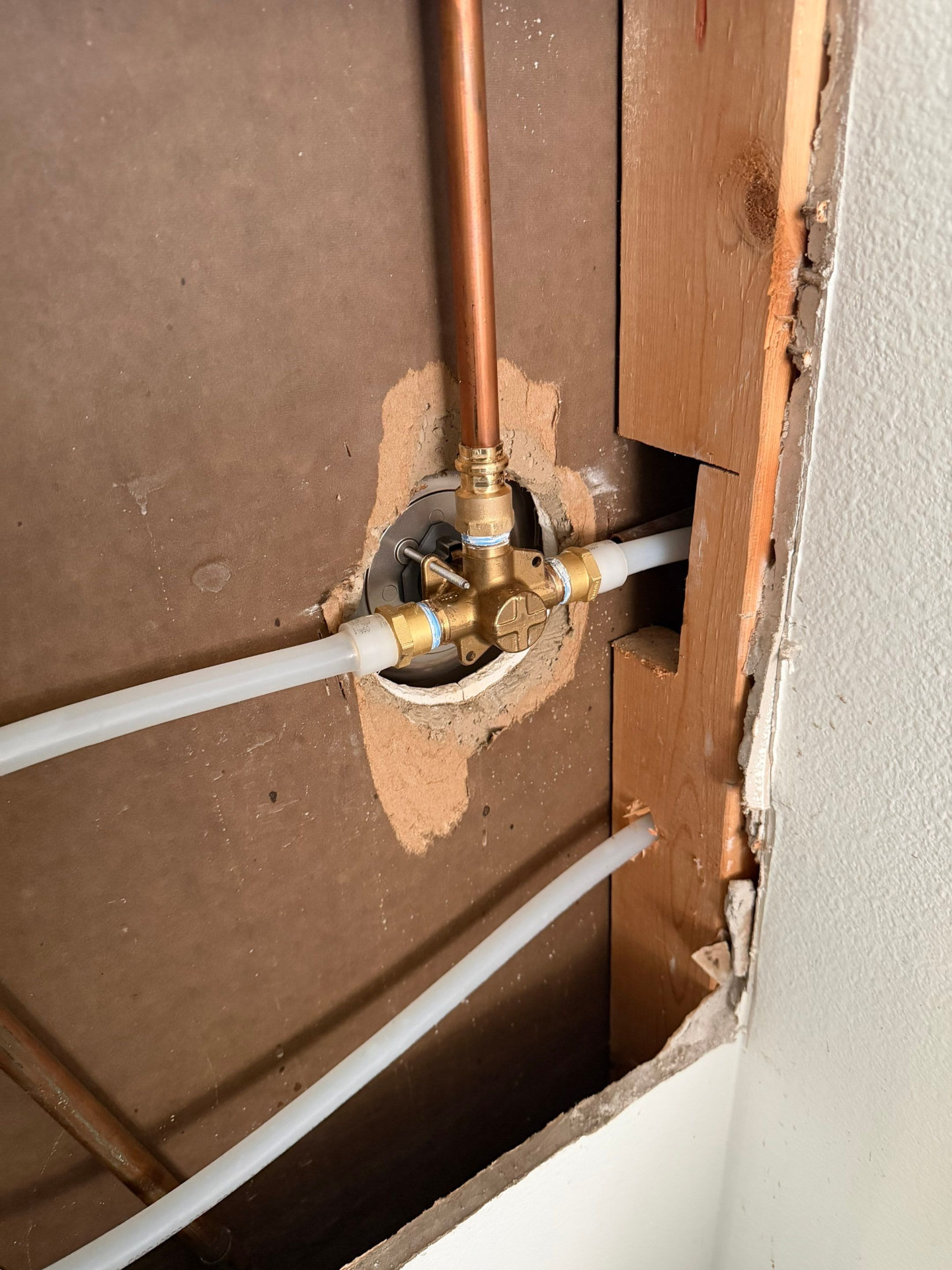
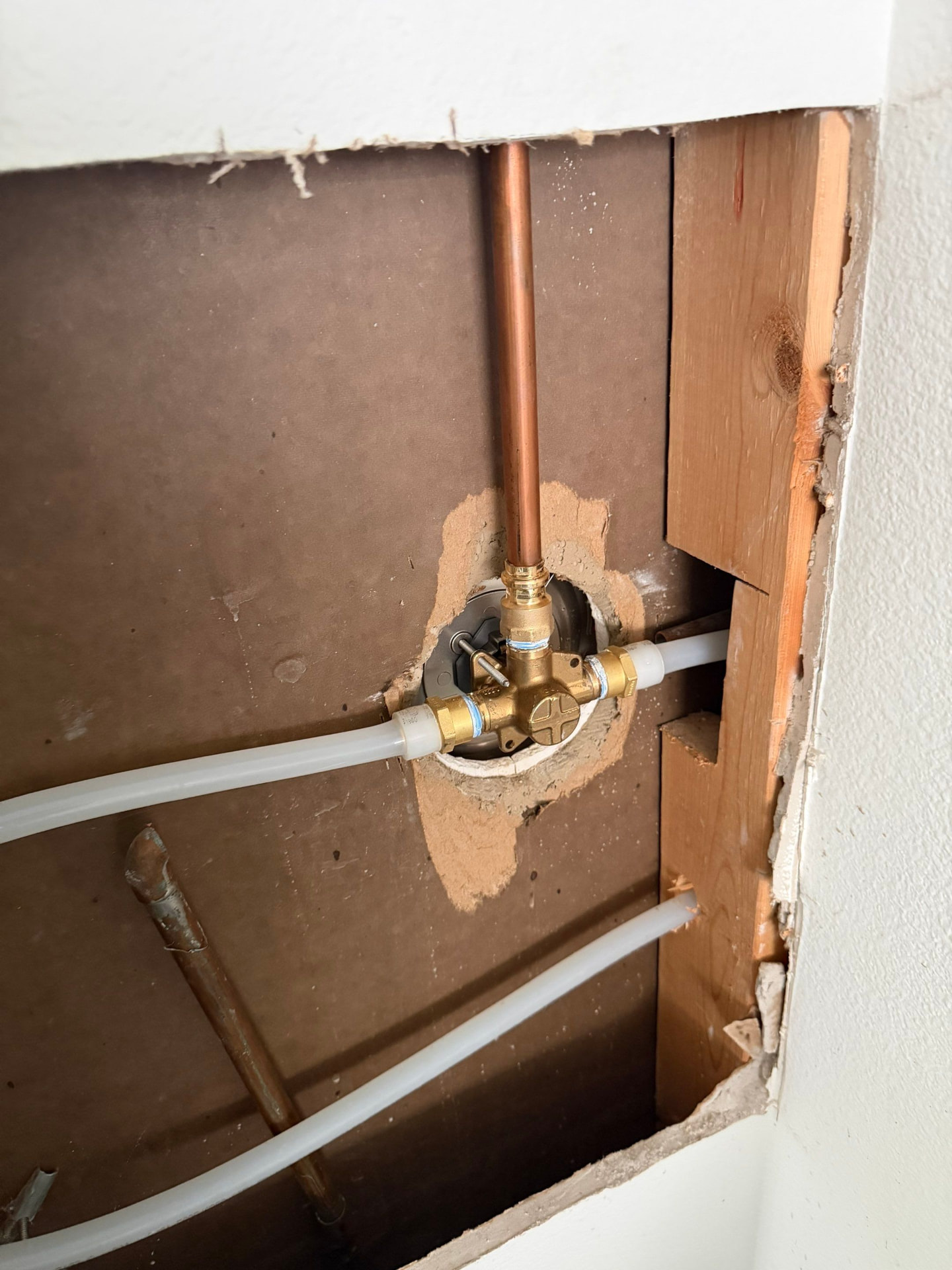
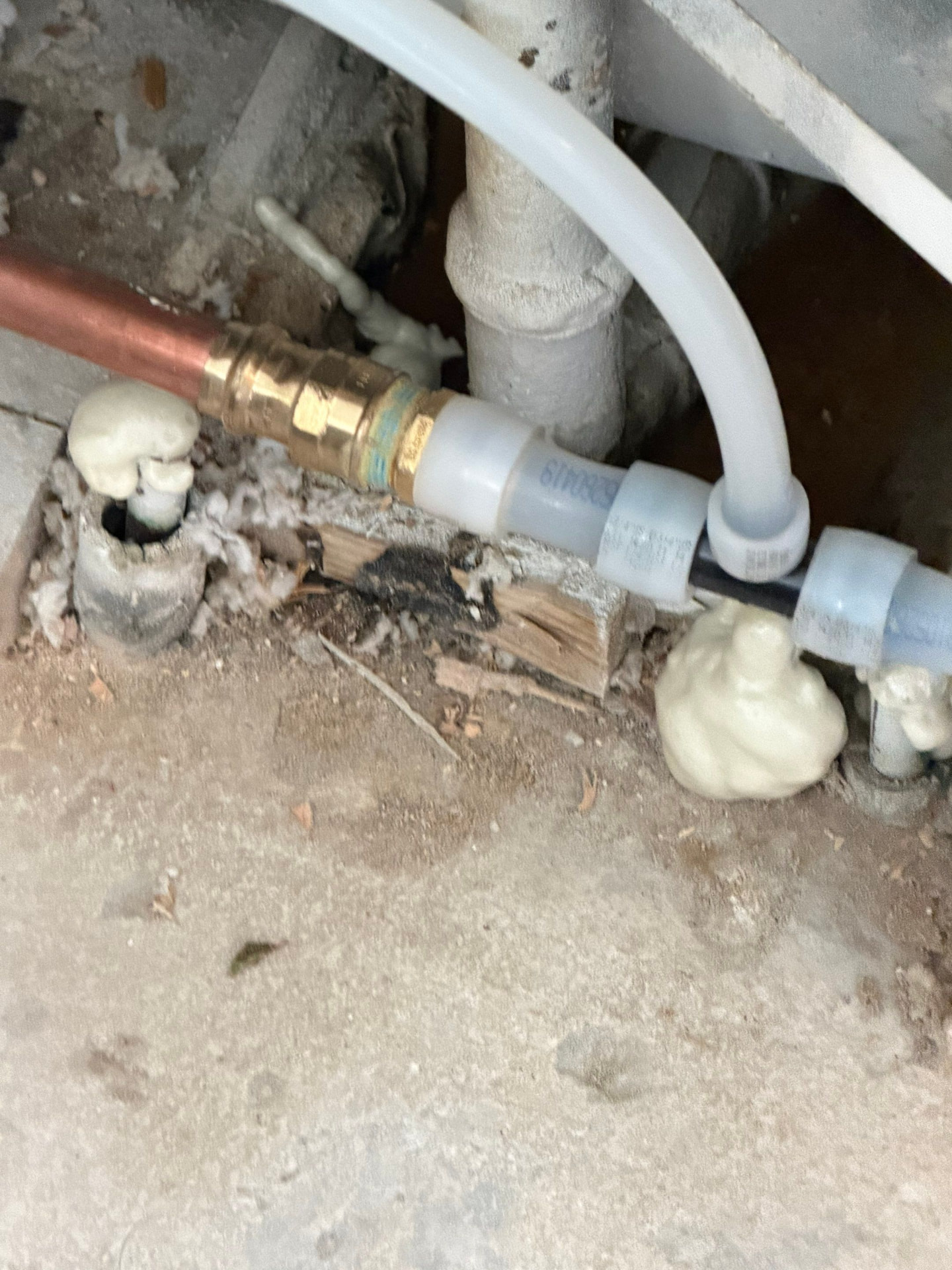
Photos from repipe work performed by Plumbing Detectives LLC. Every Laurel job is documented from rough-in through inspection.
Answers
Frequently Asked Questions — Whole House Repiping in Laurel, FL
If you’ve read this far, you now understand the repiping situation in Laurel better than most homeowners in this market ever get it explained. You know what polybutylene is and why it matters for manufactured homes. You know why well water chemistry has to be part of the conversation before any material is specified. You know what the mistakes look like and how a correct installation is done. If your Laurel property needs an honest assessment — whether it’s a manufactured home with original plumbing, an older conventional home on well water, or anything in between — call me at 239-388-3631. I’ll come out, evaluate the system, and tell you exactly what I find before recommending anything.
Plumbing Detectives LLC | Venice, FL | License CFC1434139
239-388-3631 | plumbingdetectivesfl.com