
Whole House Repiping · Englewood, FL
Whole House Repiping in Englewood, FL
Honest whole-home repipe assessment for conventional homes, manufactured homes, and dual-county properties. Licensed master plumber CFC1434139 — diagnosis first, always. Call 239-388-3631.
Call Now239-388-3631I was doing a water heater installation in an Englewood home recently when something stopped me. The copper piping feeding the water heater was heavily corroded — the kind of green oxidation you’d expect on old outdoor fixtures, not on indoor supply lines. The hose bib on the side of the house was completely shot. The homeowner couldn’t shut the water off at the bib. The only option was to go out to the meter box in the lawn.
The water heater was one part of that story. The rest of the plumbing was telling me something too.
That’s the honest truth about older Englewood homes. The job you called about isn’t always the only job that needs attention. Sometimes the water heater or the repipe is the beginning of a longer conversation about what the plumbing system as a whole is doing — and what it’s been doing for decades without anyone looking carefully at all of it.
I want to be upfront about my experience in this market. I’ve done work in Englewood and I’m actively building my presence here, but I’m not going to tell you I’ve opened hundreds of Englewood walls when I haven’t. What I can tell you is what I’ve seen, what the research shows, and how I think about a market like this — two counties, fourteen manufactured home parks, an unusual water treatment system with a critical nuance that most plumbers get wrong, and a housing stock that ranges from 1950s Florida bungalows to post-hurricane rebuilds.
My name is Mike Reynolds. I’m the owner of Plumbing Detectives LLC and a licensed master plumber, license CFC1434139. I’m based in Venice and registered in both Sarasota and Charlotte Counties. Before you spend a dollar on plumbing in Englewood, here’s what you need to understand.
The Market
What Makes Englewood Different — Two Counties, One Market
Englewood is one of the most operationally complex markets in Southwest Florida, and the complexity starts before you pull a single permit.
The city doesn’t have a city government. There’s no City of Englewood building department. What exists instead are two separate county jurisdictions with an invisible line running between them — Sarasota County to the north and east, Charlotte County to the south and west — and two separate permitting offices, two separate fee structures, and two separate inspection systems serving a community that most people think of as one place.
If your Englewood home is in the Sarasota County portion — the 34223 zip code that covers the Dearborn Street core and the older Lemon Bay neighborhoods — permits run through Sarasota County Planning and Development Services. If it’s in the Charlotte County portion — Rotonda West, Cape Haze, South Gulf Cove, and Englewood Beach in the 34224 zip code — permits run through Charlotte County Building Construction Services at 18400 Murdock Circle in Port Charlotte. Charlotte County’s residential plumbing permit structure runs a flat $90 fee. Sarasota County uses a sliding scale from $50 to $500 depending on project scope.
I’m registered in both counties. I verify which jurisdiction applies to every Englewood job before pulling a permit. This isn’t a detail — it’s the starting point that determines everything about the permitting process for your specific property.
The housing stock is equally split in character. The Englewood that developed along Dearborn Street and the older waterfront communities is 1950s and 1960s construction. The suburban expansion east toward US-41 and the manufactured home corridor along Englewood Road is primarily 1970s through the 1990s. Rotonda West and the Cape Haze communities bring a different architectural era. And the post-Ian rebuilds represent another category entirely — newer construction on older lots, sometimes with modern plumbing and sometimes with the compromises that come from emergency storm recovery.
Water Chemistry
The Water Hardness Truth — What the Numbers Actually Mean
Here’s something that matters for every repipe conversation in Englewood, and it’s something most plumbers get wrong.
You may have heard that Englewood has very hard water — figures in the range of 17 to 25 grains per gallon get cited. Those numbers are real, but they describe the raw groundwater coming out of the Englewood Water District’s wellfields before treatment — not what comes out of your tap.
The EWD runs its source water through a lime softening process before distribution. According to EWD’s own Potable Water Master Plan engineering documents, the finished, treated water leaving the plant averages approximately 78 mg/L — roughly 4.5 grains per gallon. That’s actually in the soft-to-moderately-soft range, well below the 10.5 GPG threshold that defines very hard water.
This distinction matters before any pipe material recommendation. A plumber who tells you your Englewood water is 18 to 25 GPG at the tap is citing raw source water figures, not your treated municipal water. If you’re on the EWD system, your treated water is measurably softer than most of the surrounding Southwest Florida market.
But here’s what I’m actually seeing in the field, and this is where the real world diverges from the water report: the copper piping I looked at in that Englewood home recently was heavily corroded. The kind of green oxidation you associate with decades of exposure. So even if the treated water tests softer on paper, older copper in this market has been accumulating real-world corrosion for forty or fifty years. The condition of the pipe in front of you tells you more than a water hardness number alone.
If your Englewood property is on a private well rather than EWD service, this entire softening discussion doesn’t apply. Private well water in this area draws directly from the aquifer — no lime softening, no treatment to reduce hardness. Have your water tested before any material decision on a well-water property. The chemistry may be very different from your EWD-served neighbor a street away.
In the Field
What I’m Finding — Pipe Materials in Englewood Homes
I want to be clear about what I know from my own work versus what the research shows, because both have value and I’m not going to blur the line between them.
From my own experience in Englewood: the conventional home I did a water heater in recently had copper supply lines. That’s consistent with what the construction-era data suggests for homes from the 1970s and 1980s — copper became the Florida standard as galvanized gave way.
For manufactured homes from the 1990s, I’d expect CPVC as the likely supply material — it was widely used in manufactured construction during that era. For manufactured homes from the late 1970s through the late 1980s, polybutylene is a real possibility. That gray flexible plastic pipe, stamped PB2110 on the side, was used extensively in manufactured housing during that window.
What the research shows for the broader Englewood housing stock, applied from Florida-wide construction era data to Englewood’s documented decade counts:
Homes built before 1970 — approximately 1,856 homes by decade count — are in the galvanized steel and early copper era. Galvanized from this age range in Florida’s environment is at or past its expected service life. A home that hasn’t been repiped since original construction and shows declining water pressure or rust-colored water is telling you something specific.
The 1970s cohort — Englewood’s single largest decade of construction at over 2,100 homes — spans the transition from galvanized to copper to the first years of polybutylene. A 1978 or 1979 home from this cohort could have copper, could have polybutylene in some sections, or could have galvanized in the oldest runs. Build year alone doesn’t answer the question. A visual inspection does.
The 1980s — 567 homes — fall squarely in the polybutylene window. Any manufactured or conventional home from this decade that hasn’t been repiped is a candidate for polybutylene inspection before an insurance renewal or a home sale.
Manufactured Homes
Manufactured Homes — A Different Job, Honestly Explained
Englewood has fourteen manufactured and mobile home parks — Polynesian Village, Shady Haven, Englewood Greens, Holiday Travel Park, Oyster Creek, Alameda Isles, and others. This is one of the highest concentrations of manufactured housing in any market I serve, and I want to explain what a manufactured home repipe actually involves, because it’s genuinely different from a conventional site-built repipe in ways that affect time, access, and cost.
The access is different. In a conventional slab-on-grade home, new supply lines route through the attic and down to each fixture — a clean, relatively predictable overhead repipe. In a manufactured home, the supply lines typically run through the belly area underneath the home, enclosed by the belly wrap that’s part of the home’s construction. Getting to them means crawling underneath, dealing with limited clearance, aging materials, and in many cases — repairs that someone else did before you got there.
Every manufactured home park seems to have someone who’s fixed plumbing for neighbors over the years, often out of genuine helpfulness and a desire to save people money. I respect that intention. But a lot of the time, what I find underneath a manufactured home is a collection of those repairs — SharkBite fittings used as permanent solutions, unsupported pipe runs that move and vibrate with every pressure change, wrong transition fittings where different materials meet. Each one of those was probably a temporary fix that kept the home usable. Over time they become the source of the next problem.
Manufactured home repiping takes more time than people expect, especially when previous repairs compounded the original issue. Skirting removal and reinstallation is typically a separate line item. Belly wrap access requires its own process. The labor profile is different from a conventional home and the pricing reflects that honestly.
I want to address something that matters in this market. Polybutylene tends to get flagged aggressively during insurance and four-point inspections for manufactured home owners — and that’s a real and legitimate concern. What’s frustrating is the inconsistency: some older or more expensive conventional buildings carry plumbing systems that would raise similar questions, but manufactured home owners face the scrutiny more acutely. That’s the reality of the insurance market, and I’m not here to argue with it. What I am here to do is give you an accurate picture of what’s in your home, what it would take to address it, and what your options are — including financing when that’s what makes the work possible.
If you need a repipe but can’t comfortably absorb the full cost at once, financing is available for qualified homeowners. We work with financing options through our payment systems that can make repiping accessible rather than a decision that gets deferred until something fails completely. Ask about it when you call.
Own a manufactured home in one of Englewood’s communities and not sure what pipe material you have or whether it’s creating an insurance issue? Call 239-388-3631. I’ll evaluate the system and tell you what I find before recommending anything.
Call Now239-388-3631Post-Storm
Hurricane Ian — What’s Still in the Walls
Ian did a number on Englewood. The storm surge forecast put 4 to 7 feet of surge on Englewood’s southern areas and 5 to 8 feet further north. The community took a direct hit and the recovery has been ongoing.
Charlotte County recorded 107,303 insurance claims following Ian. Sarasota County recorded 80,977. Since Englewood sits across both counties, its housing stock is represented in both pools. The scale of the damage meant that a significant share of storm-recovery repairs in this community were done under pressure — with the goal of making homes livable again, not necessarily delivering finished-quality plumbing work.
That distinction matters when I’m looking at a home today. Storm-recovery plumbing repairs done quickly under emergency conditions are not always the same thing as permanent-quality plumbing repairs. A patch that holds for two years isn’t the same as a properly installed, permitted supply line that’s designed to last twenty. When I’m in an Englewood home that had water intrusion during Ian and see recent plumbing work, I look carefully at what was done and how.
I’m not comfortable stating as fact that Ian directly accelerated pipe failures in specific Englewood homes — the research is honest that no study has documented a direct causal link between the flooding and a measurable increase in pipe failure rates. What I can say is that saltwater intrusion into wall cavities and around pipe penetrations creates conditions that are corrosive to metal fittings and connections, and that emergency repair work done to restore habitability is worth having evaluated with fresh eyes if it hasn’t been looked at since.
If your Englewood home had water intrusion during Ian and the plumbing work since then was done on an emergency basis, a proper evaluation before the next insurance renewal is worth scheduling.
The Honest Answer
Do You Actually Need a Whole House Repipe?
The answer depends on what’s actually in your home and what it’s doing. Here’s the honest breakdown.
No — not right now:
A home that’s been correctly repiped with PEX or properly installed copper and has documentation of that work. The conversation is over.
A single isolated leak in an otherwise sound system that passes a pressure test. Repair it, monitor it.
A manufactured home from the 1990s with confirmed CPVC that’s functioning correctly and not showing signs of brittleness or joint failure. CPVC isn’t ideal for the long term, but “time to replace everything” and “working fine right now” are different situations.
Maybe — worth a proper look:
A conventional home from the 1970s or 1980s where the pipe material hasn’t been confirmed. Build year tells you the era risk. A 15-minute inspection tells you what’s actually there.
A manufactured home from the late 1970s through the 1980s where you don’t know whether the supply lines are polybutylene or CPVC. The check is simple and the insurance implications of getting it wrong are significant.
A home with two or more pinhole leaks in copper within the past year, or a pattern of recurring failures in different locations. That’s a system conversation, not a spot repair conversation.
A home with post-Ian emergency repair work that hasn’t been evaluated since the recovery.
Yes — a full repipe is the right answer:
Confirmed polybutylene throughout the home. Citizens Property Insurance Corporation’s underwriting Rule 206.B applies. The insurance math at this stage of the market is clear.
Galvanized steel supply lines confirmed in an unrepiped home from the 1960s or earlier. At 60-plus years in Florida’s environment, the pipe is past its service life.
Three or more pinhole leaks in copper within a six-month window. The system is deteriorating across multiple points simultaneously.
A four-point inspection has flagged the pipe material and triggered a carrier action — non-renewal, restricted coverage, or a premium change tied to plumbing condition.
Repeated failures over multiple years where each repair addressed one leak without solving the pattern.
What Goes In
Material — What Goes In and Why
With Englewood’s water situation, I would not recommend copper as the default repipe material. Even on the EWD system where the treated water is measurably softer than much of the surrounding region, the real-world corrosion I’m seeing on older copper in this market tells me the environment is working on the metal in ways that go beyond what the water hardness number alone predicts. For a well-water property, copper becomes even less appropriate without upstream treatment to address the specific chemistry.
My recommendation for most Englewood homes: PEX-A, with water treatment evaluated on a property-by-property basis depending on the water source and the specific chemistry.
PEX-A is non-metallic. It doesn’t corrode from chemical attack. It doesn’t develop pinhole leaks from water chemistry the way copper does. It’s flexible enough to route through the attic and belly-board access points that Englewood’s mix of conventional and manufactured homes requires. I install PEX-A with Uponor ProPEX expansion fittings — the connection uses the tubing’s own shape memory to contract tight around the fitting, and Uponor’s PEX-A system carries a 25-year manufacturer warranty with a documented field performance record in Southwest Florida.
I would also not install new CPVC when better materials are available. Chlorinated polyvinyl chloride, usually called CPVC, becomes brittle with age and heat cycling. For a replacement system that’s meant to last another thirty years in a Florida environment, PEX-A is the more defensible long-term choice.
The honest conversation before any material decision: have your water tested. Not because the EWD system is problematic — it’s been through significant treatment before it reaches your tap — but because if you’re on a private well, or if you have specific questions about your particular service, a water test before a material decision is the right sequence. Don’t choose a pipe material and then think about the water. Think about the water first.
Quick Reference
Pipe Material Quick Reference — Englewood Context
| Pipe Material | Typical Lifespan | Common Failure Mode | Englewood Context | Status |
|---|---|---|---|---|
| Copper (Type L) | 50–70 years | Pinhole leaks from interior water chemistry corrosion and external oxidation — real-world corrosion visible in older Englewood homes despite relatively soft treated tap water | Present in 1970s–1990s conventional homes. Limited in manufactured homes. | Real-world corrosion observed in older installations. Not the recommended default repipe material in this market without water treatment evaluation. |
| Polybutylene (PB2110) | 25–40 years (unpredictable) | Internal chloramine degradation, sudden acetal fitting failure with no visible warning | Primary concern in manufactured homes and conventional homes built or repaired 1978–1995. Oyster Creek Mobile Home Park (built 1981–1985) is one confirmed-age candidate. | Active insurance liability. Citizens Rule 206.B applies. Full replacement standard. |
| Galvanized Steel | 40–50 years (shorter in aggressive well water) | Internal rust scale narrows diameter, pressure loss, discoloration, eventual wall failure | Present in pre-1970 conventional homes, particularly the Dearborn Street area and older Lemon Bay waterfront neighborhoods. | If confirmed at 60+ years unrepiped: past expected service life. Replacement recommended. |
| CPVC | 50+ years when installed correctly | Brittleness with age and heat cycling, cracking during repair attempts | Common in 1990s manufactured home construction. Also possible in repairs from that era. | Functional if in good condition. Not recommended as a repipe material when PEX-A is available. |
| PEX-A | 50+ years | No documented systemic failure at current installed age | Present in correctly done repipes and newer construction. Recommended repipe material for most Englewood homes. | Non-metallic, corrosion-resistant, Uponor ProPEX system with 25-year warranty. Best long-term choice for both EWD and well-water properties. |
Note: EWD treated tap water averages approximately 4.5 GPG after lime softening — significantly softer than the raw source water figures of 17+ GPG that are sometimes cited. Well-water properties in Englewood draw directly from the aquifer with no utility softening and require independent water testing before any material recommendation.
The Process
The Process — What a Repipe Looks Like in Englewood
Before the details, here’s the timeline at a glance: I can usually get out for the initial assessment within a day or two of your call, depending on the schedule. Once you approve the written quote, most Englewood repipes get on the calendar within a week or two — sooner when there’s an active leak, a four-point inspection deadline, or an insurance renewal date driving the timeline. A conventional site-built repipe takes two days for most single-story homes, with water restored by the end of each day. A manufactured home repipe often runs longer because of the belly access and the condition of previous repairs — I’ll give you an honest timeline for your specific home during the assessment, not a generic promise.
Conventional site-built homes — overhead repipe
Assessment, written flat-price estimate, permit through the correct county authority, overhead PEX-A installation through the attic and down to each fixture, copper stub-outs anchored to blocking at every fixture connection, quality quarter-turn angle stops throughout, 100 psi pressure test for 15 minutes before any wall closes, rough-in inspection, drywall patching, final walkthrough. The full sequence described in detail on the Venice repipe page applies here.
The dual-county permit verification is the additional step specific to Englewood. Before we start anything, I confirm which county has jurisdiction over your specific parcel. That takes five minutes and prevents the wrong permit being pulled.
Manufactured homes — belly and access repipe
The process is different. Belly wrap is opened in sections to access the supply runs underneath the home. Old supply lines — whether polybutylene, galvanized, or deteriorated CPVC — are replaced with PEX-A runs secured properly to the chassis framing at required intervals. At every fixture, the supply terminates in a correctly supported connection with a quality quarter-turn angle stop. Belly wrap is restored after inspection. Skirting is reinstalled.
The unsupported pipe runs I find under manufactured homes in this area are one of the most consistent workmanship problems I encounter. Pipe simply hanging because the previous installer didn’t want to spend the time crawling to every anchor point. I secure every run on every job because that’s what the work requires.
Pressure test — both home types
100 psi for 15 minutes before any access point closes. Non-negotiable. This is the step that confirms every connection holds before you can’t see them anymore.
Plumbing Detectives LLC Professional Opinion
Have your water tested before deciding on a repipe material. Don’t let anyone sell you a water treatment system you don’t need, and don’t let anyone install pipe materials without understanding what your water is actually doing. Find the root of the water problem first — whether that’s the EWD’s treated supply, a private well, or simply the age and condition of the existing pipe. The best repipe starts with an accurate diagnosis, not the first estimate you got.
Investment
What It Costs
The most relevant Englewood-specific cost data comes from HEP Plumbing’s Englewood repipe page, which quotes $4,000 to $12,000 for a typical 2 to 3 bathroom home. A Southwest Florida regional cost analysis from Best Plumber USA puts PEX-A repiping at $4,500 to $12,000 for a 1,200 to 2,500 square foot single-story home. These two sources bracket the same range, which gives reasonable confidence that $4,000 to $12,000 reflects the current Englewood market for a standard site-built home.
Manufactured home repiping runs lower in most cases — national cost guides for Florida mobile home repiping put single-wide PEX replacements at approximately $1,500 to $4,000 and double-wide at $3,500 to $7,500. These are Florida-wide figures, not Englewood-specific, and actual cost depends on the home’s layout, the access conditions, the condition of previous repairs, and skirting work required.
All figures are typical market ranges — not guaranteed quotes for your home. Every job gets a written flat-price assessment after the on-site evaluation. That number covers materials, labor, permit in the correct county, quality angle stops at every fixture, pressure test, and any access work required.
Financing is available for qualified homeowners through our payment systems. For manufactured home owners facing a polybutylene repipe that insurance or a sale is requiring, having a financing option can make the difference between getting the work done correctly now or deferring it into a worse situation later. Ask about it when you call.
Insurance & Resale
The Insurance and Resale Reality
The insurance situation in Englewood has two layers that both matter.
The first is polybutylene — the standard Florida-wide situation that applies here as everywhere else. Citizens Property Insurance Corporation’s underwriting Rule 206.B declines new coverage for homes over 20 years old with active polybutylene. Every Englewood home from the 1978 to 1995 construction window is now over 30 years old. The four-point inspection process is the mechanism that surfaces this issue — when an inspector checks the polybutylene box, coverage is typically unavailable in the standard admitted market without full replacement.
The second is Englewood’s specific post-Ian context. Charlotte County and Sarasota County together absorbed nearly 190,000 insurance claims following Ian. The Sarasota County average homeowners insurance premium for a $300,000 dwelling is now documented at approximately $6,800 to $6,900 per year — reflecting how significantly post-Ian market conditions have affected what coverage costs here. In a market where premiums are this elevated and carriers are scrutinizing homes more carefully than before, plumbing condition documentation carries more weight in an Englewood transaction than it might have five years ago.
After a completed repipe, the documentation your carrier needs: the permit with the correct county designation, the final inspection sign-off, the contractor’s invoice specifying the new material, and photographs. Confirm with your carrier in writing what they require before the job is scheduled.
Better Design
If I Could Change One Thing
Water supply lines under concrete slabs. I’d do away with them wherever possible.
Drain lines belong under the slab — gravity requires it and there’s no engineering alternative. Water supply lines don’t have that constraint. They run under pressure and can go anywhere that keeps them accessible for the life of the home.
Once a pressurized water line gets buried in concrete, every future leak becomes more invasive, more expensive, and harder on the homeowner. It means leak detection equipment, slab cutting, dust, displaced furniture, and a concrete repair — all for a problem that would have been a clean wall-access repair if the pipe had been routed overhead in the first place.
This is exactly why the overhead repipe method is the right long-term answer for Englewood’s conventional slab homes. It moves the supply system out of the concrete permanently. The next leak — if one ever develops — is a wall conversation, not a slab conversation.
What I Find in the Field
Common Mistakes I Find
Unsupported pipe runs under manufactured homes. The single most consistent workmanship problem I find in this type of property. Pipe hanging loose under the belly of a manufactured home because the previous installer didn’t want to crawl to every support point. It vibrates. It moves. It stresses every fitting it connects to. Every run needs to be anchored to the chassis framing at the required intervals.
SharkBite fittings as permanent repairs. Push-to-connect fittings belong in temporary repairs and specific low-stress applications. They don’t belong inside a supply run that’s going to be in service for twenty years. I find them stacked up in manufactured homes throughout Englewood — multiple fittings from multiple repair visits, each one addressing the symptom without solving the pattern.
Trying to glue polybutylene pipe. If I open a system and find someone has used solvent cement to try to join polybutylene sections, I know immediately they didn’t understand the material. Polybutylene doesn’t use solvent-welded joints. Trying to glue it is how you create a failure point that looks repaired but isn’t.
Wrong transition fittings. Where different pipe materials meet — copper to CPVC, galvanized to copper, PEX to CPVC — the fitting has to be correct for both materials. I find improvised transitions throughout older Englewood plumbing systems, particularly in homes that have been repaired multiple times over the decades.
Copper specified without evaluating the water. In a market where real-world corrosion is visible on older copper despite relatively soft treated municipal water, defaulting to copper as the repipe material without evaluating the specific home’s water situation is the wrong sequence. Evaluate the water first.
Builder-grade push-pull angle stops left in place. The cheap contractor-grade angle stop with the white round stem that you pull out to close and push in to open. Compression seat. Seizes in this environment. Snaps when someone finally needs it in an emergency. Every repipe I do replaces them with quality quarter-turn angle stops with brass bodies and metal handles.
No pressure test before access points close. A repipe that wasn’t pressure tested to 100 psi for 15 minutes has unknown integrity at every connection. The first sign of a failed fitting behind a sealed access point is water damage. I pressure test every job. No exceptions.
Plumbing Detectives LLC Tips
If your Englewood home is in a manufactured home park and you don’t know whether the supply lines are polybutylene or CPVC, do the check before your next insurance renewal or before listing for sale. Under the sinks and at the water heater connections — gray flexible plastic stamped PB2110 is polybutylene. Fifteen minutes of looking saves the insurance surprise at the worst possible time.
If your property is on a private well rather than EWD service, the water hardness and chemistry is entirely different from your EWD-served neighbors. Have the water tested before any plumbing material decision. The right pipe for your home depends on what’s in your water.
The hose bib on the side of your home is one of the first external fittings to show corrosion in an older Englewood home. If yours is seized, corroded, or can’t shut off reliably, that’s a useful early indicator of what the rest of the plumbing has been dealing with. Don’t ignore it.
If your home had repairs done during the storm recovery after Hurricane Ian, have a licensed plumber evaluate that work before the next insurance renewal. Emergency repairs done to restore habitability are not always the same as permanent-quality installations. The difference matters when a carrier orders a four-point inspection.
How I Work
Diagnosis First — In Every Englewood Home
The water heater is only one part of the story. The rest of the plumbing is telling you something too.
That’s what I was looking at in that Englewood home — a corroded hose bib, green copper oxidation on the supply lines, a water heater that needed replacing, and an owner who now has me coming back to address the exterior valve that couldn’t shut off. Each of those things is connected. The plumbing system in an older home isn’t a collection of independent components. It’s a system that’s been aging at roughly the same rate, in the same environment, for the same number of years.
I don’t decide what needs to be replaced before I understand the whole system. Sometimes the conversation that starts with a water heater ends with a repipe quote. Sometimes it ends with a hose bib replacement and a recommendation to monitor the rest of the copper for another year. The answer comes from looking at the whole picture — not from the symptom that triggered the initial call.
The Standard
Why Plumbing Detectives LLC
I named the company Plumbing Detectives LLC because figuring out what’s actually wrong comes before recommending anything. In Englewood — where the permitting jurisdiction depends on an invisible county line, the water hardness story is more nuanced than most people realize, manufactured home plumbing is its own discipline, and post-Ian repair work is mixed in with original construction — the detective work is not optional. It’s the job.
License CFC1434139. Fully insured. Registered and permitted in both Sarasota County and Charlotte County.
Documented Work
Repipe Work, Photographed on the Job
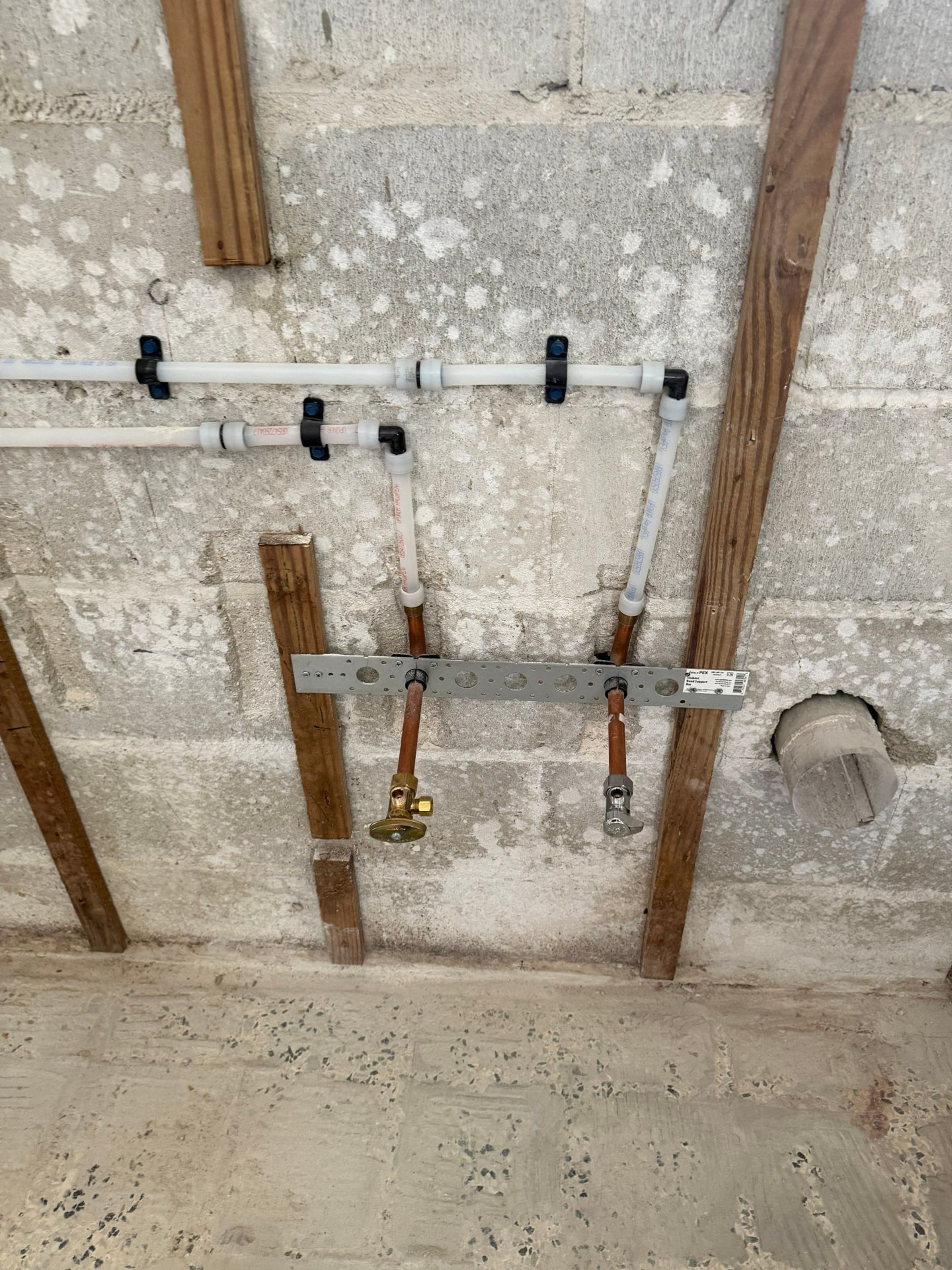
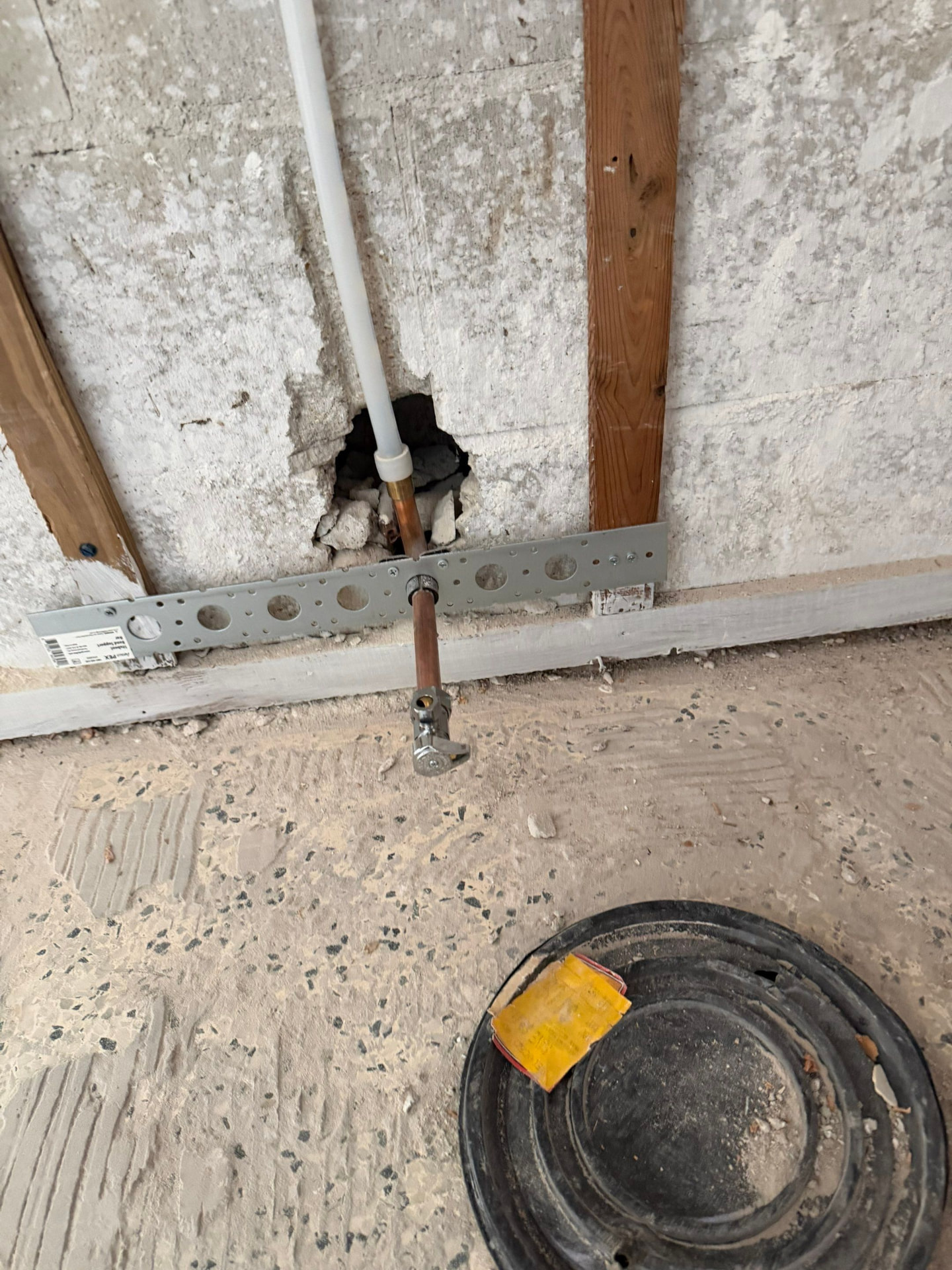
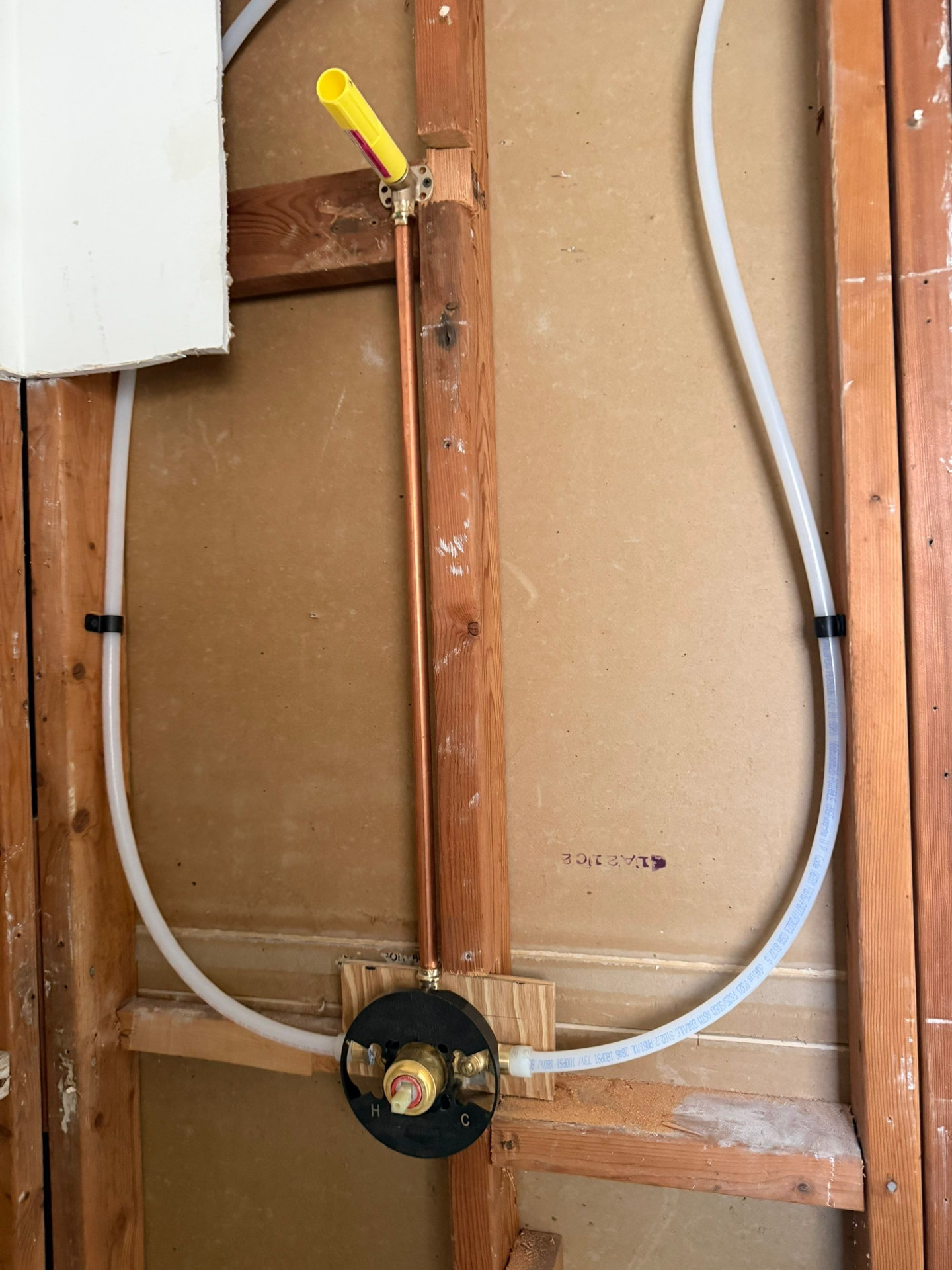
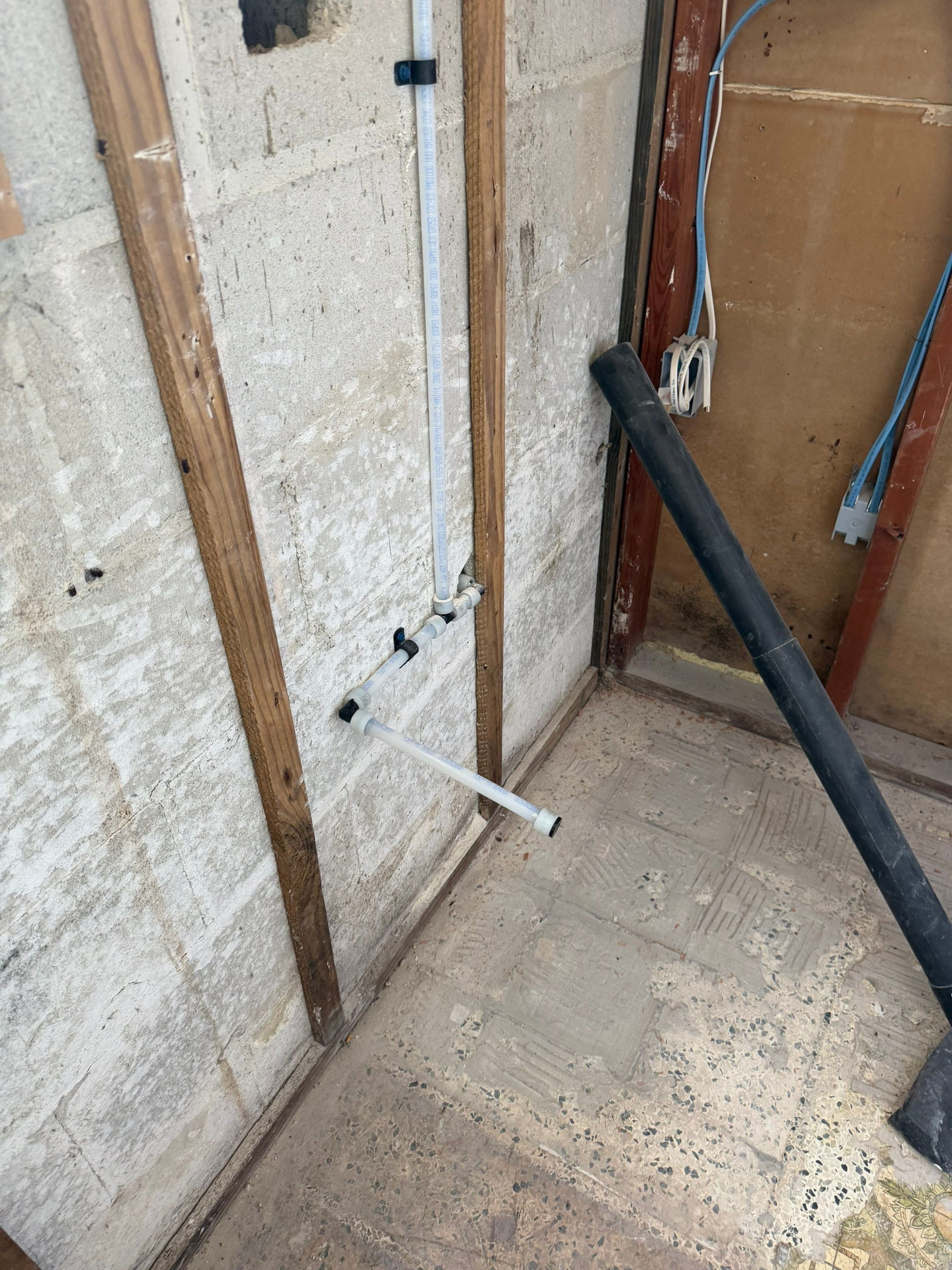
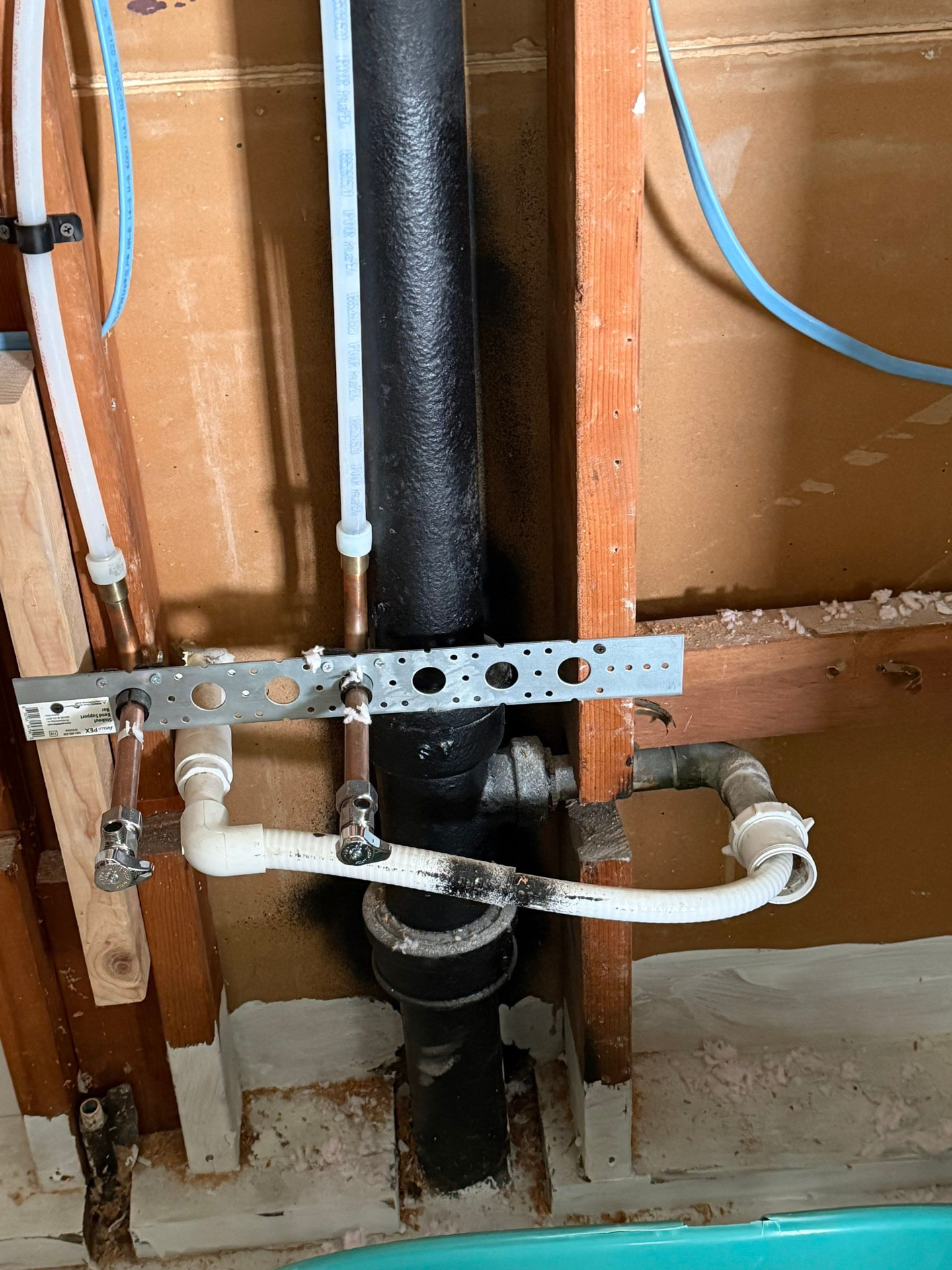
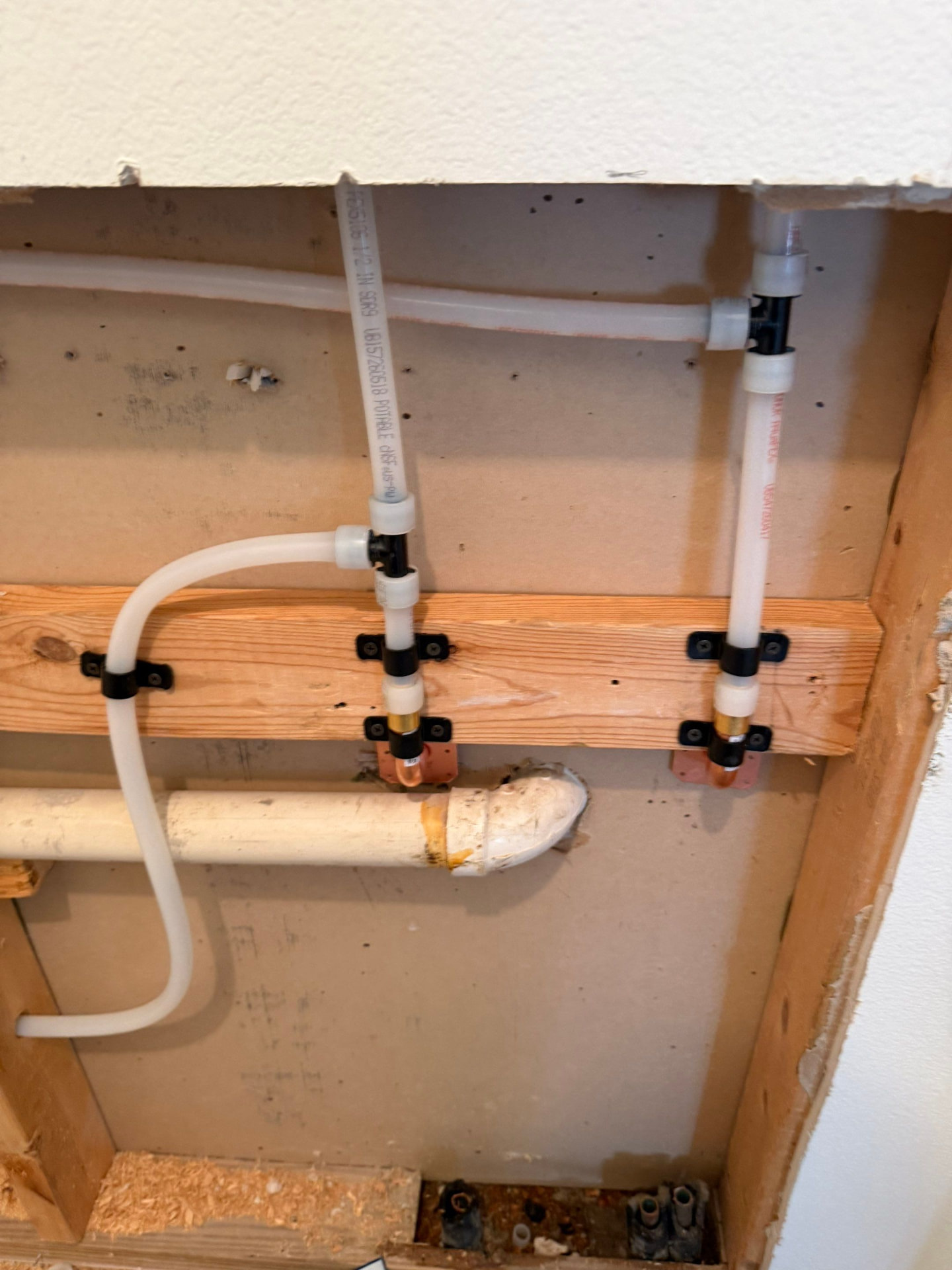
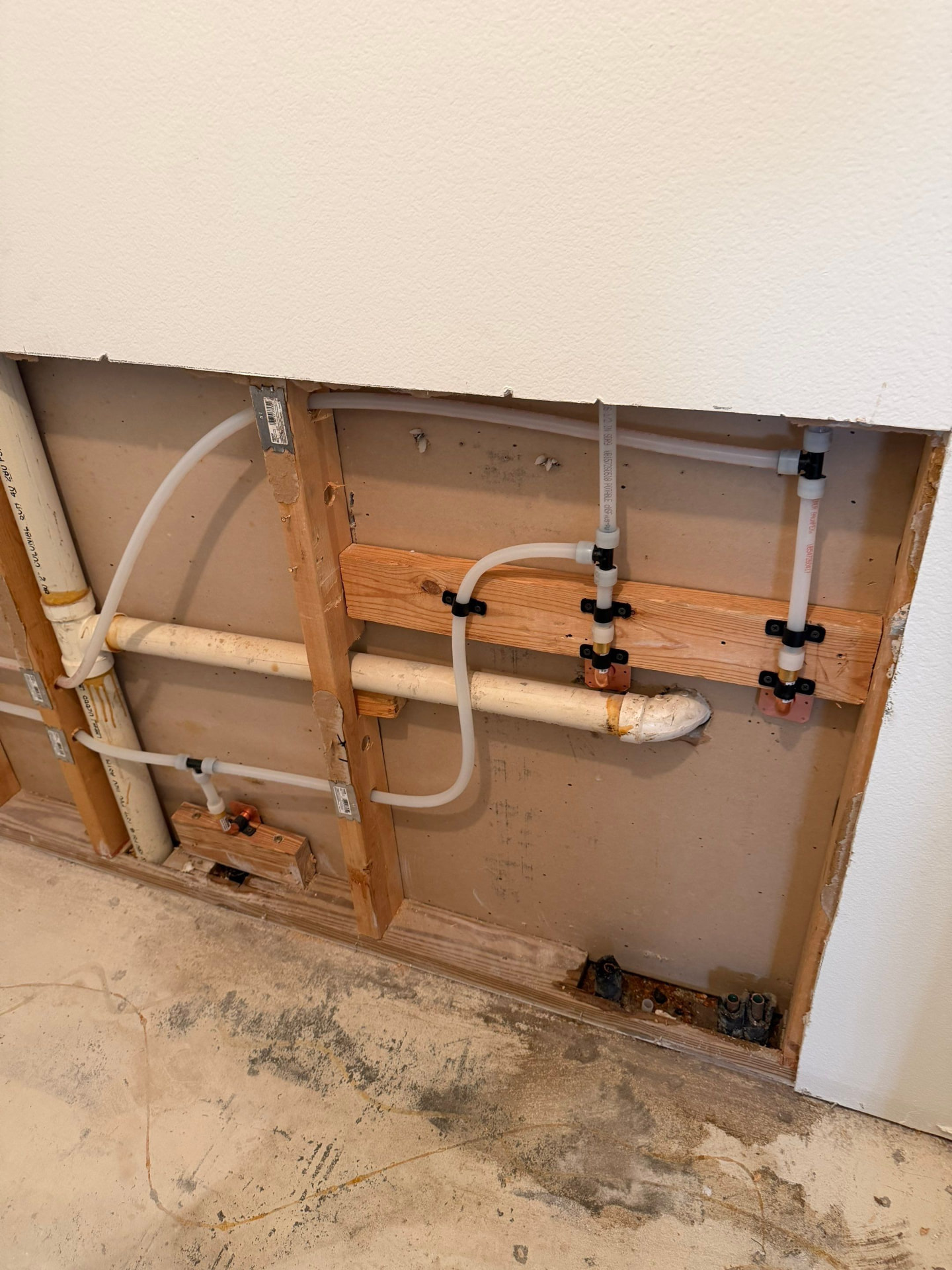
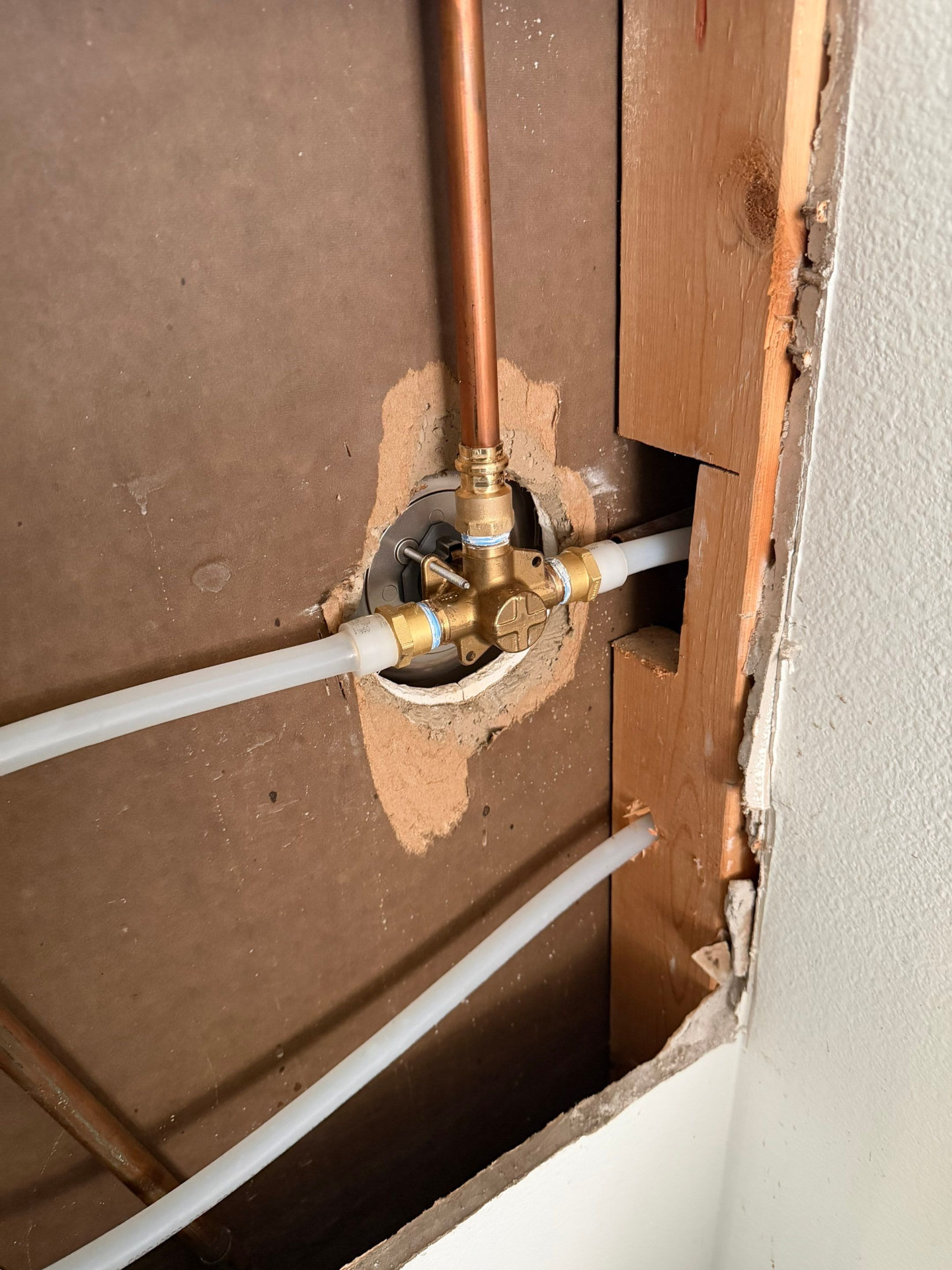
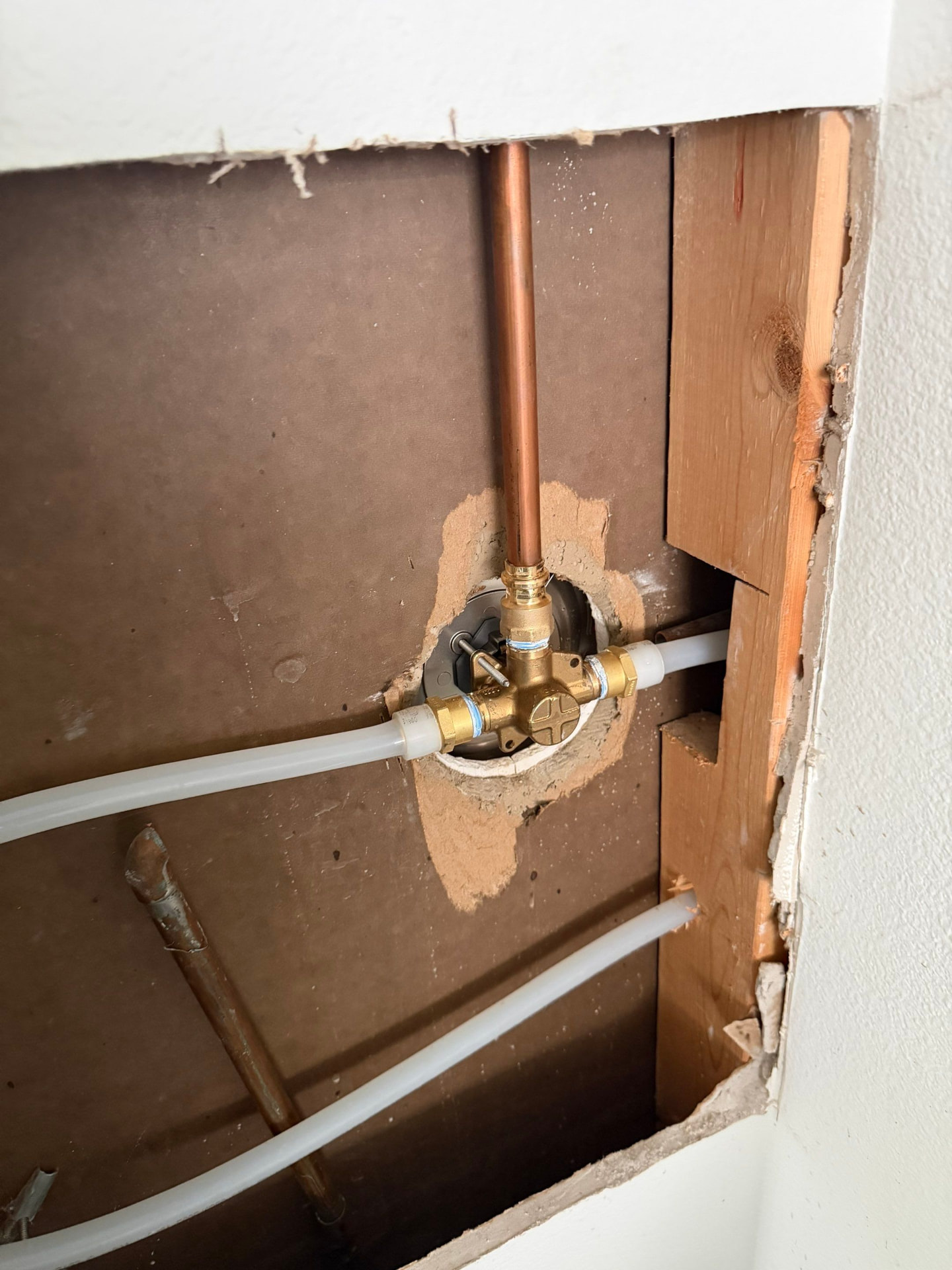
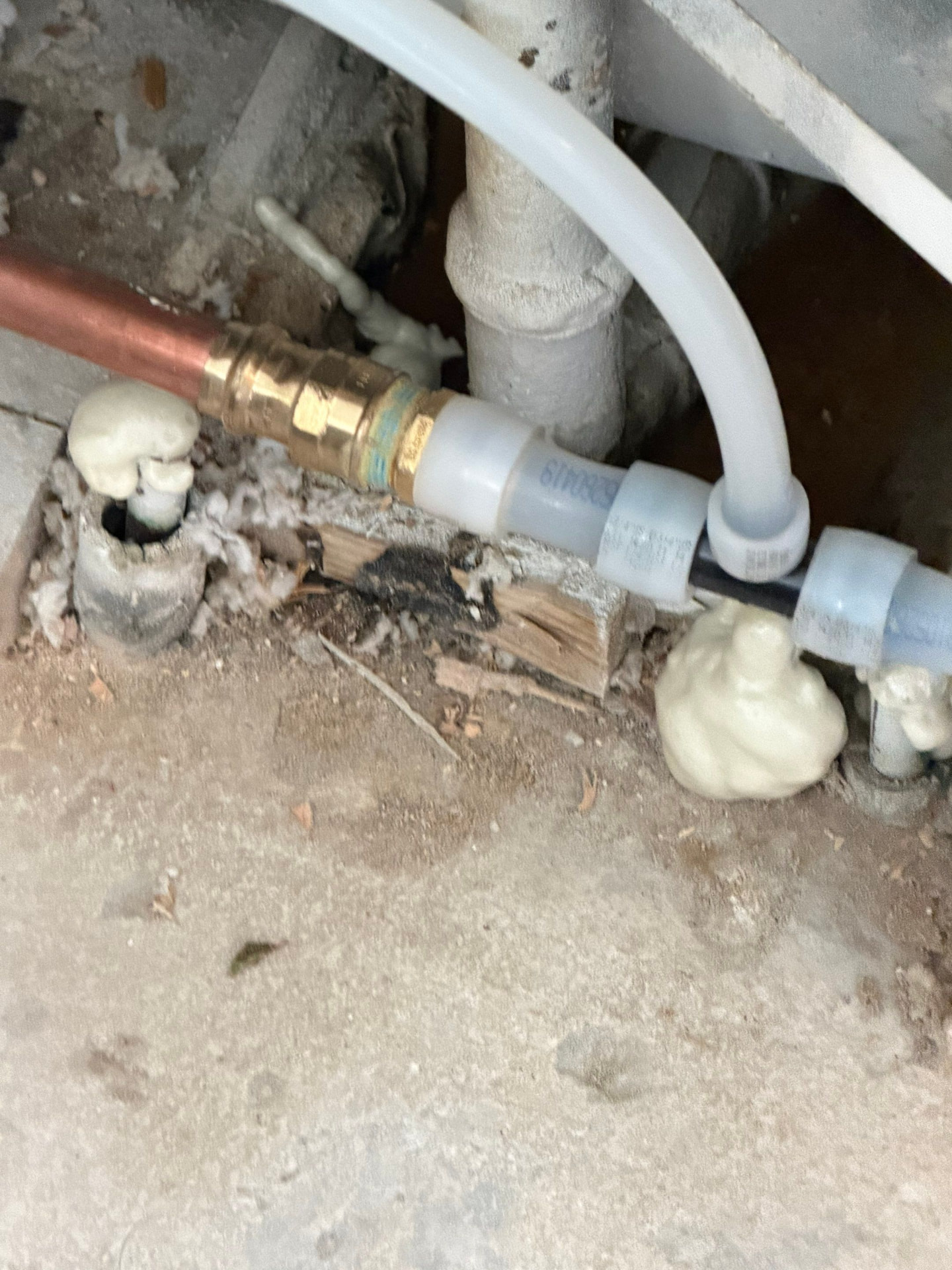
Photos from repipe work performed by Plumbing Detectives LLC. Every Englewood job is documented from rough-in through inspection.
Answers
Frequently Asked Questions — Whole House Repiping in Englewood, FL
If you’ve read this far, you now understand whole-house repiping in Englewood better than most homeowners in this market ever get it explained. You know what the pipe materials are and what era they came from. You know the truth about the water hardness numbers. You know what a manufactured home repipe actually involves. You know what Hurricane Ian may have left behind in storm-recovery repairs. And you know that the water heater is only one part of the story — the rest of the plumbing is telling you something too. If your Englewood home needs an honest assessment, call me at 239-388-3631. I’ll come out, evaluate the system, and tell you exactly what I find before recommending anything.
Plumbing Detectives LLC | Venice, FL | License CFC1434139
239-388-3631 | plumbingdetectivesfl.com