
Whole House Repiping · Bradenton Beach, FL
Whole House Repiping in Bradenton Beach, FL
Barrier island repipe assessment, post-storm plumbing evaluation, and vacation rental property service on Anna Maria Island. Licensed master plumber CFC1434139 — diagnosis first, always. Call 239-388-3631.
Call Now239-388-3631Bradenton Beach is 1.19 square miles of barrier island surrounded by water on both sides — the Gulf of Mexico to the west, Anna Maria Sound to the east. It was 90 to 95 percent destroyed or damaged by the 2024 hurricane season, according to the state’s own CERT damage assessment. The homes that survived are among the oldest on the island. The homes being rebuilt are going up on elevated foundations with new plumbing. And roughly half the island’s housing stock — 881 of 1,769 units per the 2020 Census — is used for short-term vacation rentals.
That combination of factors creates a plumbing market unlike anything else in the nine cities I serve.
When I think about serving Bradenton Beach, the first things that come to mind are the environment and the context. Salt air from two directions. Hard Manatee County water at approximately 15 grains per gallon. A vacation rental economy where a plumbing failure doesn’t just cost a repair bill — it costs cancellations, refunds, and guests calling their property manager from a hotel. And a post-storm island where some homeowners are rebuilding from scratch, some are repairing what survived, and some are trying to figure out what their existing plumbing looks like under walls that may have had water in them.
I want to be honest about where my personal experience in this market stands. I’m actively building my presence on the island. I have not personally worked the storm-damaged homes on this specific street. What I can give you is the honest diagnosis-first approach that applies everywhere I work, applied to what the research and the environment tell me about this specific market.
My name is Mike Reynolds. I’m the owner of Plumbing Detectives LLC and a licensed master plumber, license CFC1434139. I serve Bradenton Beach and Anna Maria Island. Here’s what you need to understand about repiping on this island before spending a dollar.
The Island Environment
What Makes Bradenton Beach Different — The Island Environment
Three factors combine on this island to create a plumbing environment more aggressive than anywhere else in my service area.
Salt air from both sides. Most coastal properties have salt air exposure from one direction. Bradenton Beach is a narrow barrier island with Gulf of Mexico salt spray hitting the west side and Anna Maria Sound exposure on the east. The airborne chloride load that settles on every exposed metal surface — fittings, valves, hose bibs, exterior copper sections, shutoff handles — is continuous and comes from both directions simultaneously. General coastal plumbing documentation confirms that airborne chloride ions degrade protective zinc and copper-oxide coatings faster than inland environments, accelerating external corrosion at exposed components. On a full barrier island this mechanism runs harder than at a mainland coastal property with protected eastern exposure.
Hard county water working from the inside. Manatee County Utilities serves the island with the same supply as mainland Bradenton — documented at approximately 259 mg/L, roughly 15 grains per gallon, in the county’s own 2024 water quality data. That’s well into the very hard range. Hard water deposits mineral scale inside pipe and water heaters, accelerates anode rod depletion, and in combination with the chloramine disinfection that Manatee County uses, creates interior pipe chemistry that accelerates pinhole development in older copper systems. The island’s pipes are being attacked from the outside by salt air and from the inside by hard chloraminated water simultaneously.
Vacation rental usage patterns. A home occupied by rotating guest groups in erratic high-demand cycles — six people arriving Friday, showering simultaneously, then the house sitting empty for three days until the next group — stresses plumbing differently than a primary residence. Property managers confirm that erratic usage accelerates fixture and water heater wear. Slow leaks go undetected between guest turnovers. Emergency repairs get done fast to get the unit back online, sometimes without addressing the underlying cause. Patch repairs multiply. Eventually the owner is paying for the same problem over and over.
Pipe Materials on the Island
What’s in the Walls — Pipe Materials on the Island
Bradenton Beach’s original housing stock dates primarily to the 1950s and 1960s construction boom that followed the 1957 concrete bridge replacement — the moment the island became reliably accessible for residential development at scale.
Pre-1960 — Galvanized steel in the oldest survivors
The Bridge Street area cottages and the oldest surviving island homes date to the 1920s through 1940s. Any unrepiped home from this era has galvanized supply lines that are now 65 to 100-plus years old — well past the 40 to 50 year service life that national plumbing sources cite for galvanized in even moderate environments. On a barrier island with full salt air exposure, the external corrosion at exposed fittings, shutoff valves, and hose bibs runs faster than the mainland equivalent. The internal galvanized story is the same everywhere — rust scale narrowing the bore, pressure declining, water taking on a rust tint — but the external condition on island homes tends to be worse at the junction points.
1960s through 1980s — Copper in the construction boom era
The bulk of surviving island homes were built during this window, consistent with the national transition from galvanized to copper supply lines. This copper is now 45 to 65 years old. On this island, that copper has been exposed to both hard county water pitting from the inside and salt air chloride attack on any exterior sections from the outside. No source provides a specific pinhole-failure timeline for Bradenton Beach copper specifically — that kind of localized data doesn’t exist in published form. What exists is the documented general mechanism and the documented severity of this island’s specific exposure conditions. The combination suggests a more accelerated deterioration profile than comparable-age copper in less exposed inland markets.
1978 through 1995 — Polybutylene possible in this window
No source specifically confirms polybutylene was installed on Anna Maria Island during the 1978 to 1995 window — the island’s specific installation history isn’t in any public record. What is confirmed is that polybutylene was installed in roughly one in five U.S. homes built during this era, heavily concentrated in Sun Belt states including Florida. Given that the island’s housing stock grew through this exact window, presence is plausible and should be checked property by property, not assumed either way.
Post-storm rebuilds — PEX and CPVC under current code
Homes being rebuilt post-Helene and post-Milton are going up under the 2023 Florida Building Code, which effectively limits new construction supply materials to PEX or CPVC. No galvanized, no polybutylene allowed in new work. The rebuilds represent the safest plumbing on the island from a material standpoint — but the FEMA elevation and floodplain requirements for those rebuilds add complexity that affects where plumbing can be routed and where mechanical equipment can be located.
Post-Storm Material Science
PEX-A and Saltwater Flooding — What the Evidence Actually Shows
This is a question I wanted to research carefully before making any claims, because it directly affects material recommendations for an island that’s seen repeated storm surge.
PEX-A tubing — resistant to saltwater submersion.
PEX is cross-linked polyethylene, a non-metallic material. It doesn’t corrode. It doesn’t react chemically with chloride ions. The Plastics Pipe Institute’s technical documentation confirms PEX tubing’s resistance to chemical attack from the chloride compounds present in saltwater. Temporary submersion in saltwater is not a documented failure mode for PEX-A tubing itself. The tubing survives flood events in ways that metal pipe does not.
The metal components — where the real flood risk lives.
This is the part that matters most for post-storm evaluation. Brass fittings, copper stub-outs, stainless clamps, angle stops, and shutoff valves are all vulnerable to saltwater exposure in ways the PEX tubing is not. Standard 304 stainless steel is prone to pitting corrosion in salt-spray and saltwater-contact environments. Brass fittings with zinc content are subject to accelerated dezincification when chloride-rich water contacts them. Copper stub-outs develop accelerated external corrosion at the joint points.
The practical implication for Bradenton Beach homes after storm surge: If your home was flooded and you have a PEX supply system, the tubing itself is likely fine. The metal components connected to it need to be evaluated — fittings, valves, stub-outs, shutoff handles, angle stops. These are the vulnerable parts, and saltwater exposure accelerates their deterioration even when the pipe looks intact.
For barrier island repipe material selection: PEX-A with polymer fittings where possible, 316 stainless where stainless is specified, and quality brass-body angle stops with appropriate alloys. The tubing choice is the starting point, not the whole answer. Every metal component in a barrier island installation needs to be specified for the coastal environment, not just the pipe.
Plumbing Detectives LLC Professional Opinion
Consider everything about the property before choosing a piping material — flood exposure, salt air from both sides, water composition, rental use pattern, access, and what future repairs will look like. On a barrier island, the material choice should fit the environment, not just whatever the contractor likes using. Near the beach, I lean toward PEX-A over copper as the default repipe material. But the tubing is only part of the decision. Every metal component connected to it — fittings, valves, stub-outs — needs to be specified for this environment too.
Flood Zone Compliance
The FEMA 50 Percent Rule — What Island Homeowners Need to Understand
This is one of the most consequential things a Bradenton Beach homeowner can understand before authorizing any repair work, because it affects the scope and cost of everything that happens in a home that sits in a FEMA flood zone — which describes virtually the entire island.
Bradenton Beach sits predominantly in FEMA AE and VE flood zones. The city’s own FEMA 50 Percent Rule documentation explains the rule plainly: if the cost of repairs and improvements to a structure reaches 50 percent or more of the structure’s pre-damage market value within a rolling period, the structure is classified as Substantially Improved or Substantially Damaged. At that threshold, the city requires the structure to be elevated to or above the Base Flood Elevation — and all mechanical equipment, including water heaters, plumbing, bathrooms, and laundry rooms, must be elevated accordingly.
Bradenton Beach’s local flood amendment ordinance under Ordinance No. 21-536 sets freeboard requirements at BFE plus up to 4 feet in certain flood zone classifications — more stringent than the Florida Building Code’s statewide minimum. A repipe on an island home that’s already carrying other storm-related repair costs may push the cumulative total over the 50 percent threshold, triggering elevation requirements that significantly expand the project scope.
On financing and the FEMA threshold: I want to be direct about this. Financing a repipe separately through a consumer financing option does not separate the repair from FEMA’s cumulative cost calculation. FEMA adds up all improvements to a structure within the applicable window regardless of how they’re paid for or whether they’re done under separate contracts. Financing is a tool to help manage cash flow. It is not a mechanism that changes how FEMA calculates the threshold. I won’t suggest otherwise.
A repipe-only project is unlikely to trigger the 50 percent threshold on its own in most Bradenton Beach homes. The concern is when a repipe is part of a larger post-storm renovation — roof, electrical, structural work, and plumbing all happening within the same project or the same calendar window. In that context, understanding where the cumulative total stands before adding the plumbing scope is the right question to ask before the work begins.
The City of Bradenton Beach Building Department at 107 Gulf Dr N is the correct authority to confirm the Substantial Improvement/Damage status for a specific property. Permits run through the city’s Citizenserve portal. Flood-zone-related work triggers additional review fees: a $100 floodplain code compliance inspection, a $75 flood elevation written determination, and a $200 floodplain review with required Elevation Certificate on top of the standard plumbing permit fee of $75 plus $22 per $1,000 of project valuation.
The Honest Answer
Do You Actually Need a Whole House Repipe?
On this island, the answer depends heavily on what the home has been through and what it’s being used for.
No — not right now:
A home that was rebuilt post-storm with new PEX supply lines under the current code. The plumbing conversation for these homes is about installation quality, expansion tank compliance, and whether the metal components were specified for the coastal environment — not about aging pipe at end of life.
A home with an intact, correctly functioning copper system that passes a pressure test and has no pattern of pinhole leaks. On a vacation rental property, one isolated leak is a repair. Two or three in different locations within a season is a different conversation.
Maybe — worth a proper assessment:
A home from the 1970s or 1980s that survived the storms, has copper supply lines, and hasn’t had a full system evaluation since the flooding. The tubing may be fine. The metal components — fittings, valves, angle stops — need to be checked. Saltwater exposure accelerates deterioration even when the pipe looks intact.
A home where the pipe material hasn’t been confirmed and could fall in the 1978 to 1995 polybutylene window. A 15-minute check answers the question before an insurance renewal forces it.
A vacation rental property where the same plumbing section has been repaired multiple times in the past two seasons and the owner is paying for the same problem repeatedly.
Yes — a full repipe is the right answer:
Confirmed galvanized supply lines in an original island cottage that hasn’t been touched since the 1950s or 1960s. At 65-plus years old in a barrier island environment, the pipe is past any reasonable service life.
Confirmed polybutylene throughout the home. Citizens Rule 206.B applies. Full replacement is the standard.
A pattern of pinhole leaks in copper — three or more in different locations within six months — indicating systemic deterioration rather than isolated failures.
A post-storm rebuild where the scope of renovation has triggered the Substantial Improvement threshold and the plumbing system needs to be repositioned above flood elevation as part of the broader project anyway.
If your Bradenton Beach property hasn’t had a plumbing evaluation since the 2024 storms, or if you’re trying to understand what a repipe means for your FEMA flood zone situation, call 239-388-3631. I’ll evaluate the system and give you a straight answer before recommending anything. I cross the bridge. That’s not extra.
Call Now239-388-3631Quick Reference
Pipe Material Quick Reference — Bradenton Beach Context
| Pipe Material | Typical Lifespan | Common Failure Mode | Bradenton Beach Context | Status |
|---|---|---|---|---|
| Galvanized Steel | 40–50 years (shorter in coastal FL) | Internal rust scale narrows bore, pressure loss, discoloration, eventual wall failure — external corrosion at fittings and joints accelerated by salt air | Oldest island cottages, Bridge Street area, pre-1960 survivors. 65–100+ years old in unrepiped homes. | Well past expected service life in all coastal environments. Full replacement strongly recommended. |
| Copper (Type L) | 50–70 years inland (potentially shorter on barrier island) | Pinhole leaks from interior water chemistry corrosion (hard water + chloramines). External chloride attack on any exposed sections. Double-stress environment documented for this island. | 1960s–1980s construction era. 45–65 years old. Hard county water + full barrier island salt air exposure simultaneously. | Evaluate by pressure test and leak pattern. Material fatigue may be more advanced than age alone suggests in this environment. |
| Polybutylene (PB2110) | 25–40 years (unpredictable) | Fails from inside out — looks intact externally while degrading internally from chloramine exposure. Acetal fittings fail without warning. | Plausible in homes built or repaired 1978–1995. Not confirmed by island-specific records — check property by property. | If confirmed: Citizens Rule 206.B applies. Full replacement standard. Insurance automatic decline in most cases. |
| CPVC | 50+ years when installed correctly | Brittleness with age and heat cycling. Cracks during repair attempts. | Possible in repairs and some construction. | Evaluate carefully. Better modern materials available for replacement. |
| PEX-A | 50+ years | No documented systemic failure. Tubing itself resistant to saltwater submersion. Vulnerable points are metal fittings, valves, and stub-outs — not the tubing. | Standard for correctly done repipes and post-storm new construction. Recommended material for this island. | Specify with polymer fittings where possible, 316 stainless where stainless is required, quality brass-body angle stops. Document installation date. |
Vacation Rental Market
Working With Property Managers — A Different Conversation
On a vacation rental island, a significant share of repair decisions flow through property managers rather than directly to owners. Duncan Real Estate, Anchor Down, FVH Property Management, Island Real Estate, AMI Locals, SeaBreeze Vacation, Sato Real Estate, and the other firms managing Bradenton Beach and Anna Maria Island properties are often the first call when something goes wrong — and they’re the ones who have to translate the problem and the cost to an owner who may be in Michigan or Ohio.
When I’m working with a property manager rather than an owner directly, communication matters more than almost anything else. A property manager needs to understand two things clearly: whether the repair I’m recommending is a temporary fix that solves the immediate problem or a real long-term solution that addresses the underlying cause, and what risk remains after the work is done.
If I patch a fitting in a vacation rental and the same section is going to fail again in six months, the property manager needs to know that before they authorize the repair — so they can relay that information to the owner and make an informed decision about whether a bigger-scope solution makes more sense now. Telling a property manager “we fixed it” when what I really mean is “we stopped the leak but the system around it is showing the same pattern” is not the honest answer. It’s the answer that gets me a second call and costs the owner more money.
The financial argument for a proactive repipe on a vacation rental property is straightforward once the math is laid out. A plumbing failure that causes guest cancellations, refunds, and emergency hotel bookings during a peak winter season costs real, quantifiable money — not just the repair bill. When a property manager is recommending to an owner that a proactive repipe during the slow summer season makes sense, that framing is often what changes the decision from “let’s patch it again” to “let’s fix it.”
Island Logistics
What Plumbing Service Actually Looks Like on a Barrier Island
Getting to Bradenton Beach requires crossing the Cortez Bridge. That’s not an obstacle — it’s a logistics consideration that shapes how island service works.
Material deliveries require planning. A whole-home repipe typically requires multiple bridge crossings over a two-day job — materials staged on the mainland, brought over in the right sequence, with tourist-season traffic as the primary timing variable. During named storm events, the Cortez Bridge closes entirely, which is why scheduling repipe work during the off-season window — roughly May through October, when tourist traffic is lighter and the rental calendar has more flexibility — is the practical approach.
The island currently has limited plumbing service availability. The only plumber physically based on Anna Maria Island does not offer weekend coverage based on publicly available information. For a vacation rental property where plumbing failures happen on Friday afternoons when a new rental group is arriving, the gap in weekend availability is a real service problem.
Plumbing Detectives LLC offers weekend service availability for Bradenton Beach and Anna Maria Island. That’s not a sales pitch. It’s a practical answer to a documented gap in this market. We coordinate gate and community access for any gated properties on the island, manage property manager communication, and provide written documentation of every repair scope and what risk remains after completion.
The Process
The Correct Repipe Process for a Bradenton Beach Home
Assessment. Before quoting anything, I want to understand the home’s age, pipe material, storm history, current flood zone classification, and any renovation work already done or in progress. For a post-storm home, the FEMA Substantial Improvement status is part of the conversation before the plumbing scope is defined.
Permit. All plumbing work in Bradenton Beach permits through the City of Bradenton Beach Building Department at 107 Gulf Dr N — applications through the Citizenserve portal. Permit fee: $75 application plus $22 per $1,000 of project valuation. Flood zone work triggers additional fees for floodplain compliance inspection, elevation determination, and Elevation Certificate review. Condo and multi-family properties require a State Licensed contractor — not a Residential License contractor — for all permitted plumbing work. We verify permit requirements before starting anything.
Material selection. PEX-A for the supply lines. Polymer fittings where possible. 316 stainless where stainless is specified. Quality brass-body quarter-turn angle stops at every fixture — not the contractor-grade push-pull round-stem compression stops that seize in this water and salt air environment. The material choices are made for this island’s specific conditions, not as a default.
Copper stub-outs anchored to blocking. Every fixture termination — every sink, toilet, shower valve, tub, dishwasher, washing machine — gets a pre-fabricated copper stub-out secured to wood blocking fastened to the stud. Not floating. Not held in place by the PEX line behind it. A solid, fixed anchor at every connection point.
Pressure test. 100 psi for 15 minutes before any access point closes. Every connection verified. No exceptions.
Documentation. Complete documentation provided at job completion: permit, final inspection approval, contractor invoice specifying pipe material and fitting type and installation date, photographs. On a barrier island where four-point inspections are triggered by the age of nearly every original home, and where Citizens now requires the date of PEX installation on inspection forms, that documentation trail is the homeowner’s or property manager’s protection for every future insurance conversation.
Island Design
If I Could Redesign These Island Homes
Elevate where possible. Keep plumbing tight, accessible, and protected under stilt homes. If saltwater or storm surge damages a low service line coming into the home, that should be a sectional repair — not a whole-house disaster.
The homes being rebuilt on this island today have an opportunity that the original 1950s and 1960s construction didn’t. They’re going on elevated foundations under the current code. If the plumbing is designed with accessibility and isolation in mind — runs that can be sectionally repaired without tearing out the whole system, service points that stay above the flood zone, mechanical equipment elevated out of surge reach — the next storm becomes a different conversation for the homeowner.
Design the system so future damage is isolated, accessible, and repairable. That’s what good plumbing design looks like on a barrier island that has taken a direct hit twice in two weeks.
Investment
What It Costs
No Bradenton Beach or Anna Maria Island-specific repipe pricing exists in any published source — the research was explicit about this gap and I’m not going to fill it with a number I can’t stand behind. What exists is mainland Bradenton regional data and Southwest Florida regional benchmarks.
Mainland Bradenton regional range: PEX repipe $4,000 to $8,000; copper repipe $8,000 to $15,000 for a typical 2 to 3 bathroom home.
Southwest Florida regional range: PEX-A whole-home repipe $4,500 to $12,000 for 1,200 to 2,500 square foot single-story homes.
Four documented factors justify pricing above these mainland benchmarks for Bradenton Beach specifically — not as a published surcharge, but as a realistic reflection of the job conditions: bridge-crossing logistics and potential tourist-season timing delays; an older average housing stock with higher probability of under-slab runs, undocumented prior repairs, and full-scope rather than partial repipe needs; coastal corrosion increasing the likelihood that fittings, valves, and connections beyond the main supply lines also need attention; and vacation rental urgency — a property generating nightly rental income has real, quantifiable cost when it’s out of service.
Every job gets a written flat-price assessment after the on-site evaluation. These are benchmarks, not quotes.
Financing is available for qualified homeowners through our payment systems to help manage cash flow on a larger project. It does not change how FEMA calculates Substantial Improvement thresholds — those are cumulative cost calculations regardless of payment method.
Insurance & Resale
The Insurance and Resale Reality on the Island
The insurance situation in Bradenton Beach carries more practical weight than in almost any other market I serve, for two reasons.
First, essentially every original home on this island is old enough to trigger a mandatory four-point inspection for any new insurance policy or renewal. The oldest stock — 1950s and 1960s construction — is 65 to 75 years old. The 1970s and 1980s homes are 45 to 55 years old. Most Florida insurers require a four-point inspection for homes 25 to 30 or more years old. That describes every unrenovated home on this island. The plumbing section of that inspection documents pipe material, visible condition, and polybutylene presence — and polybutylene identified on that form results in an automatic decline from most carriers.
Second, the post-storm insurance market in Manatee County is stressed. Citizens Property Insurance had 15,459 policies in force in Manatee County as of December 2024, with the county losing 489 policies in that single month. Private carrier options have contracted in coastal Florida generally. For a Bradenton Beach property, obtaining and maintaining insurance coverage is harder than it has ever been in this market — and pipe material condition is one of the variables that carriers are scrutinizing more carefully.
For vacation rental investment buyers — who are increasingly using flood and storm resilience as their primary filter for purchase decisions, per documented post-storm AMI buyer behavior — a confirmed galvanized or polybutylene supply system creates a specific financial problem. A buyer who needs financing needs bindable insurance. A home that can’t get standard insurance because of pipe material can’t be financed conventionally. That’s not a hypothetical. It’s how this market works.
After a completed repipe, retain the permit, the final inspection approval, the contractor’s invoice specifying the new material and installation date, and photographs. Citizens now requires the date of PEX installation on four-point inspection forms. That documentation is your insurance carrier’s evidence that the work was done correctly and when.
What I Find in the Field
Common Mistakes I Find on Barrier Island Vacation Rental Properties
Fast patch repairs done to get the unit back online. This is the pattern that defines the vacation rental plumbing problem. A leak happens. The property manager calls. Someone comes out fast, patches the fitting, gets the water back on, and the unit goes back on the rental calendar. The underlying problem — a failing fitting type throughout the system, a copper run that’s reached the pinhole stage, a galvanized section that’s been slowly corroding for decades — doesn’t get addressed. The same section fails again in six months. The owner pays twice. This is how the “we’ve been repairing the same thing over and over” conversation happens.
SharkBite fittings used as permanent repairs throughout the system. Push-to-connect fittings have legitimate uses in temporary repairs and specific low-stress applications. They’re not the answer in a supply run that’s going to be inside a wall of a vacation rental for the next twenty years in a coastal hard-water environment. I find them stacked up in systems that have been through multiple repair visits, each one addressing the immediate symptom without solving the system-level problem.
Wrong transition fittings. Where different pipe materials meet — where new PEX connects to existing copper, where copper was once spliced into galvanized — the fitting has to be right for both materials. Improvised transitions that hold water initially create failure points that show up later, often when the unit is fully booked.
Contractor-grade push-pull angle stops. The round-stem white-handled compression valves that seize in Manatee County’s hard water and snap when someone finally needs them in an emergency. On a coastal property where the angle stops also deal with salt air corrosion from the outside, these fail faster than the mainland equivalent. Every repipe I do replaces them with quality quarter-turn angle stops with brass bodies and metal handles.
Stub-outs not anchored to blocking. Every fixture connection needs to be secured to wood blocking fastened to the stud. A stub-out that’s floating in a wall cavity, held in place only by the PEX line behind it, moves with every valve operation and every water hammer event. On a vacation rental property with heavy usage cycles, that movement compounds faster than on a primary residence.
Using standard 304 stainless where 316 is required. On barrier island exterior applications — exposed hose bibs, exterior mechanical connections, any stainless used in a salt-air environment — 316 stainless has significantly better chloride resistance than the standard 304 grade. Using 304 in a Gulf-front application because it’s what’s on the truck is a workmanship gap that shows up as premature corrosion.
No pressure test before access points close. A repipe with unknown integrity at every connection. 100 psi for 15 minutes. Non-negotiable.
Plumbing Detectives LLC Tips
If your Bradenton Beach property had any water intrusion during the 2024 storms and you have a PEX supply system, the tubing itself is likely fine. Have the metal components evaluated — fittings, valves, angle stops, stub-outs. Saltwater accelerates deterioration of those components even when the pipe looks intact from the outside.
Before authorizing any repair or renovation work on a Bradenton Beach property, confirm the property’s FEMA Substantial Improvement status with the City of Bradenton Beach Building Department. Understanding where the cumulative repair cost stands relative to the 50 percent threshold before adding plumbing scope is the right question to ask — not after the permits are pulled.
If you’re a property manager recommending a proactive repipe to an owner, the honest framing is this: a peak-season plumbing failure costs more than the repair. It costs cancellations, refunds, and the guest experience damage that shows up in reviews. A proactive repipe scheduled during the slow season eliminates that risk for the next several decades.
The pipe material section of a four-point inspection is mandatory for virtually every Bradenton Beach home when insurance is renewed or a new policy is applied for. Know what material is in your property before the inspector does. If it’s galvanized or polybutylene, that’s the answer to “why is my coverage difficult” — and the starting point for what needs to happen next.
How I Work
Diagnosis First — On an Island, More Than Anywhere
The diagnosis-first approach is the same on Bradenton Beach as everywhere else I work. What changes is the complexity of what the diagnosis has to account for.
The age of the home. The pipe material. The storm history and whether any flooding reached the supply system. The FEMA flood zone status and where the cumulative renovation cost stands. The water source and chemistry. The rental use pattern and what it’s done to the system. Whether any post-storm repairs were done on an emergency basis without full permitted scope.
I’m not going to arrive at a Bradenton Beach property with a recommendation already written. The environment is too specific and the variables are too real for that approach. I’ll evaluate the system, account for the island context, tell the homeowner or property manager exactly what I find and what it means — including what risk remains after any repair I recommend — and let that information drive the decision.
That’s the only way this works on an island that’s been through what Bradenton Beach has been through.
The Standard
Why Plumbing Detectives LLC
I named the company Plumbing Detectives LLC because figuring out what’s actually wrong comes before recommending anything. On a barrier island that’s rebuilding from two back-to-back hurricanes, where half the housing stock is vacation rental, where the only locally based plumbing option doesn’t offer weekend coverage, and where the environment is more aggressive than anywhere else in the nine cities I serve — the detective work matters more than the wrench.
Responsive. Organized. Diagnosis-first. Licensed by the correct jurisdiction. Available when the problem actually happens.
License CFC1434139. Fully insured. We pull permits through the City of Bradenton Beach Building Department.
Documented Work
Repipe Work, Photographed on the Job
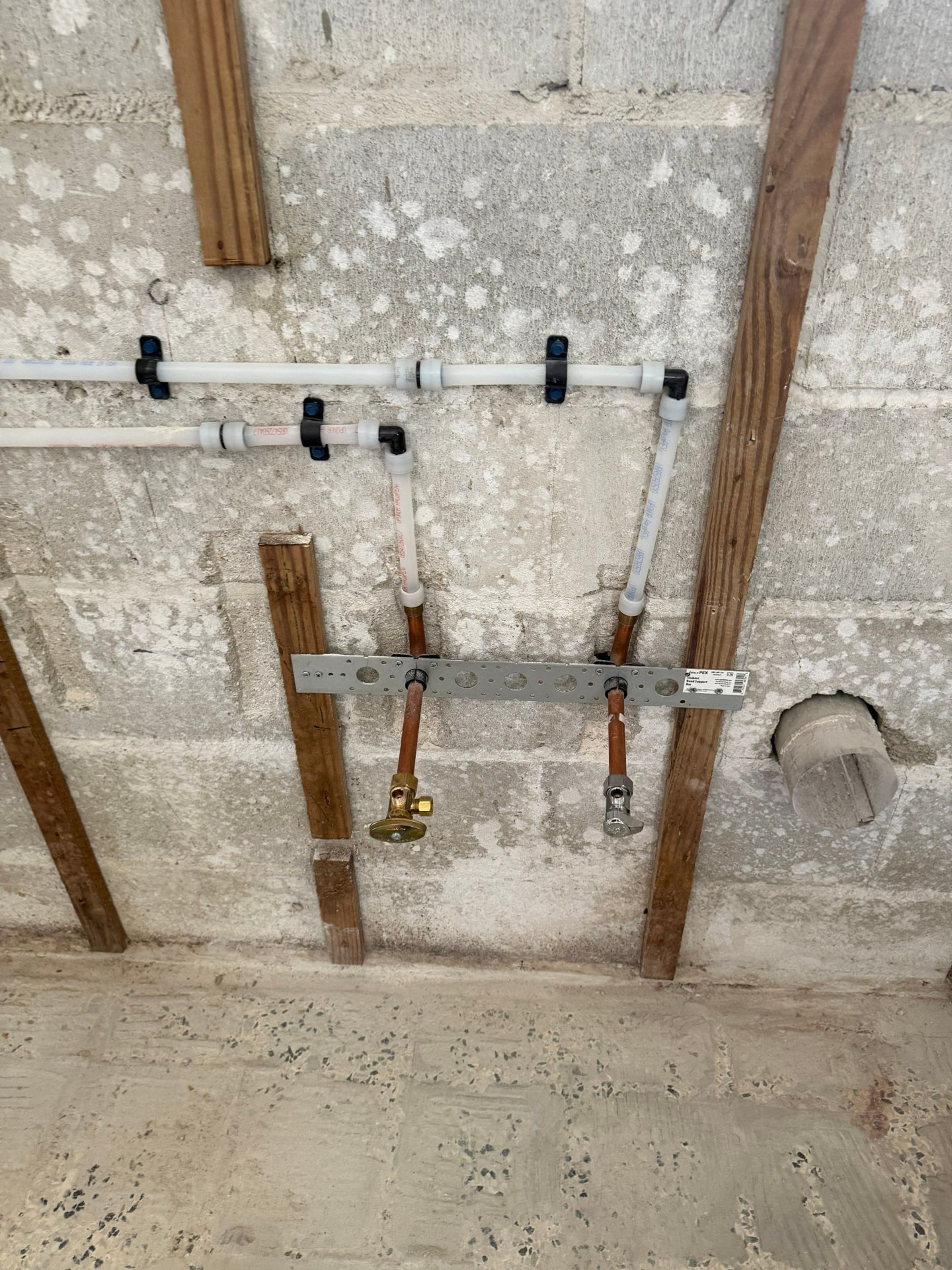
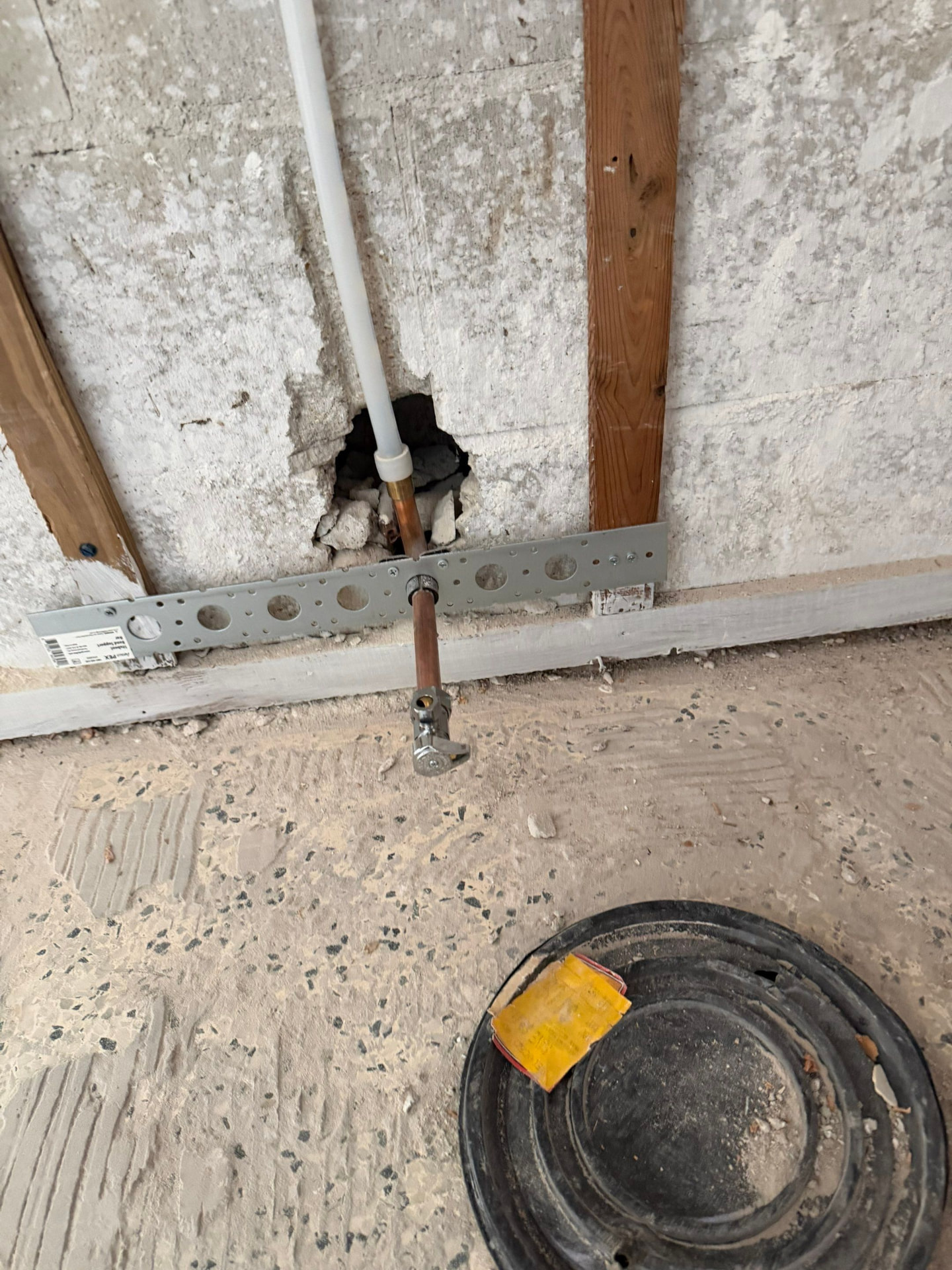
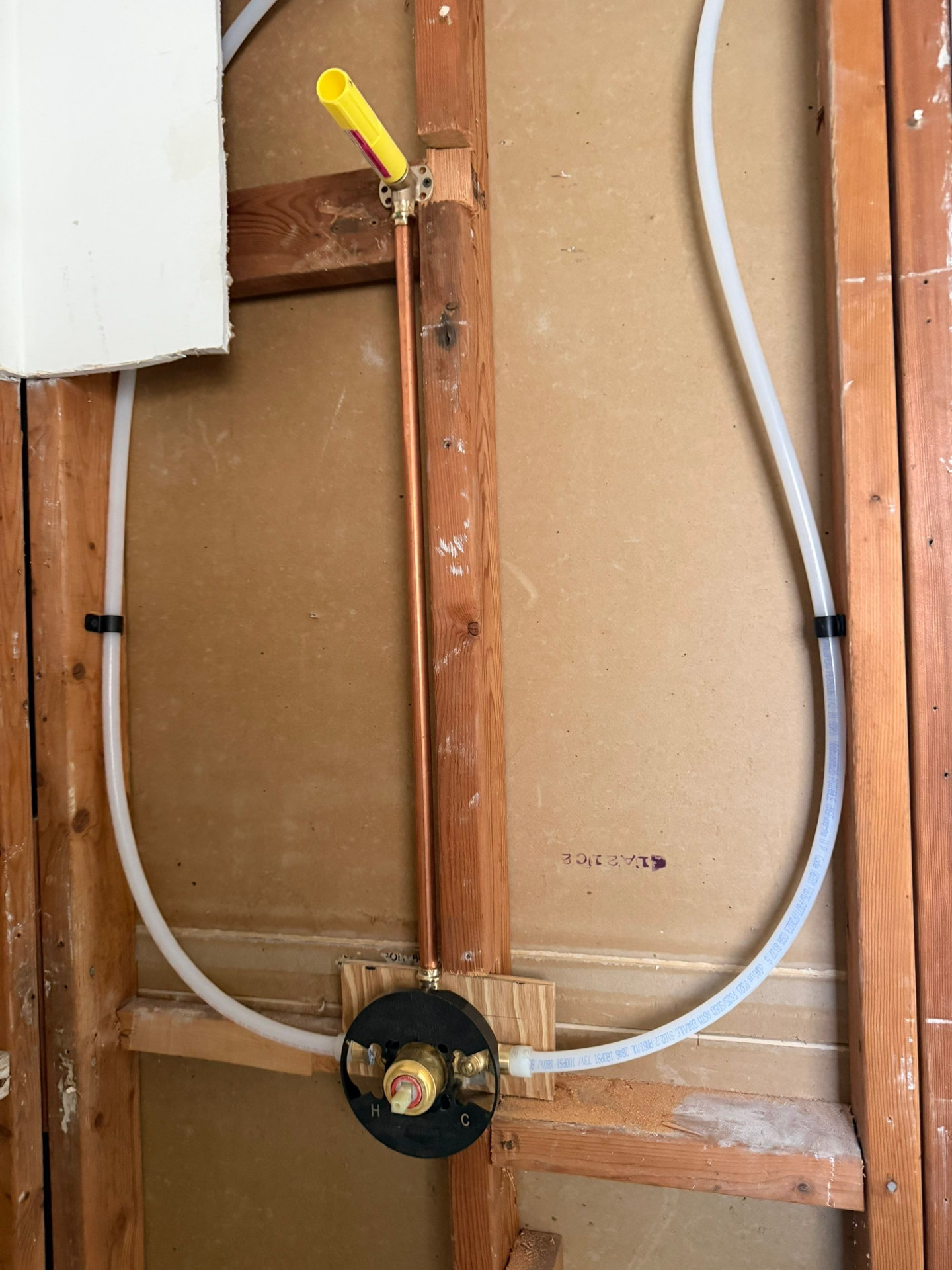
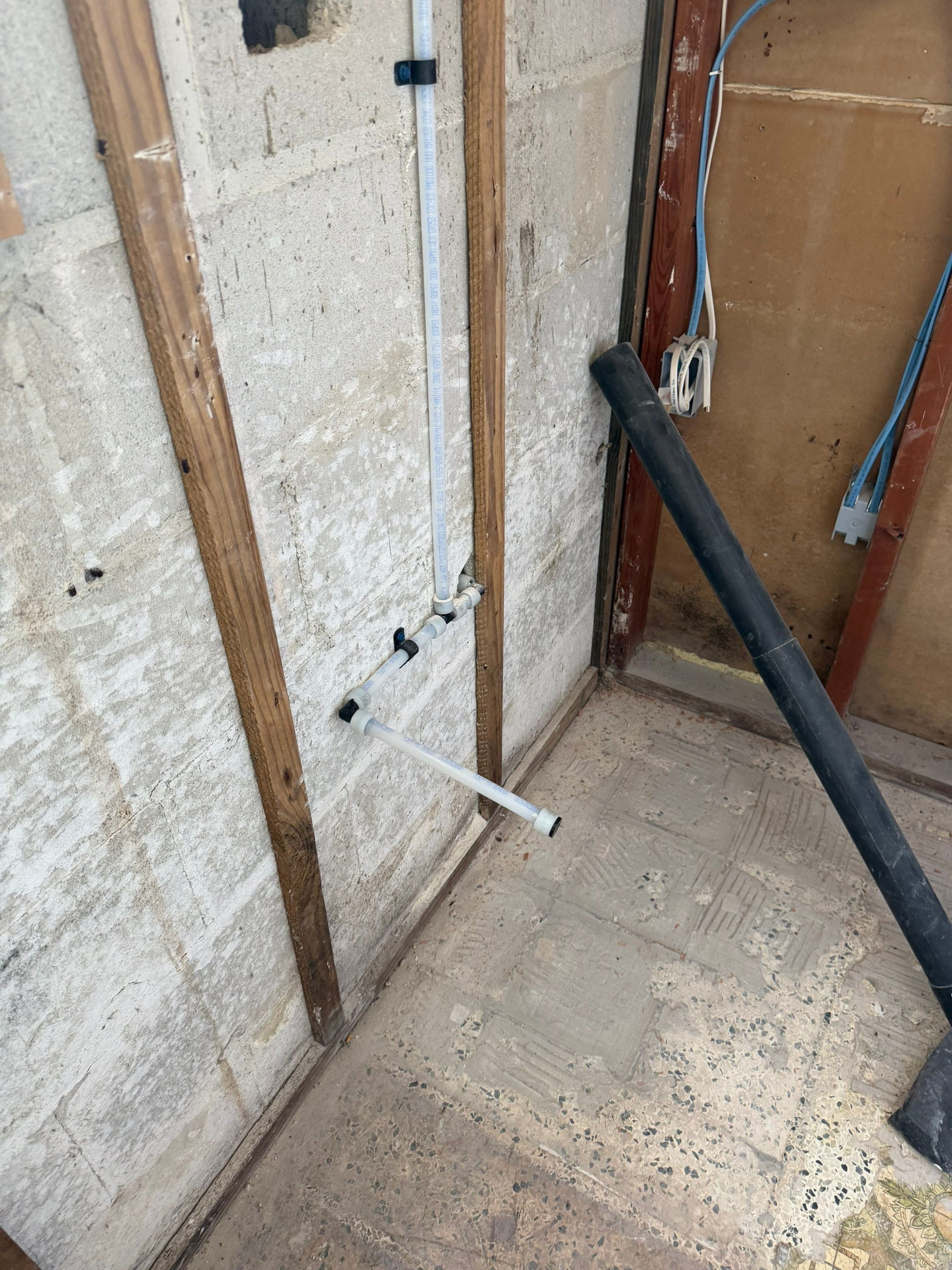
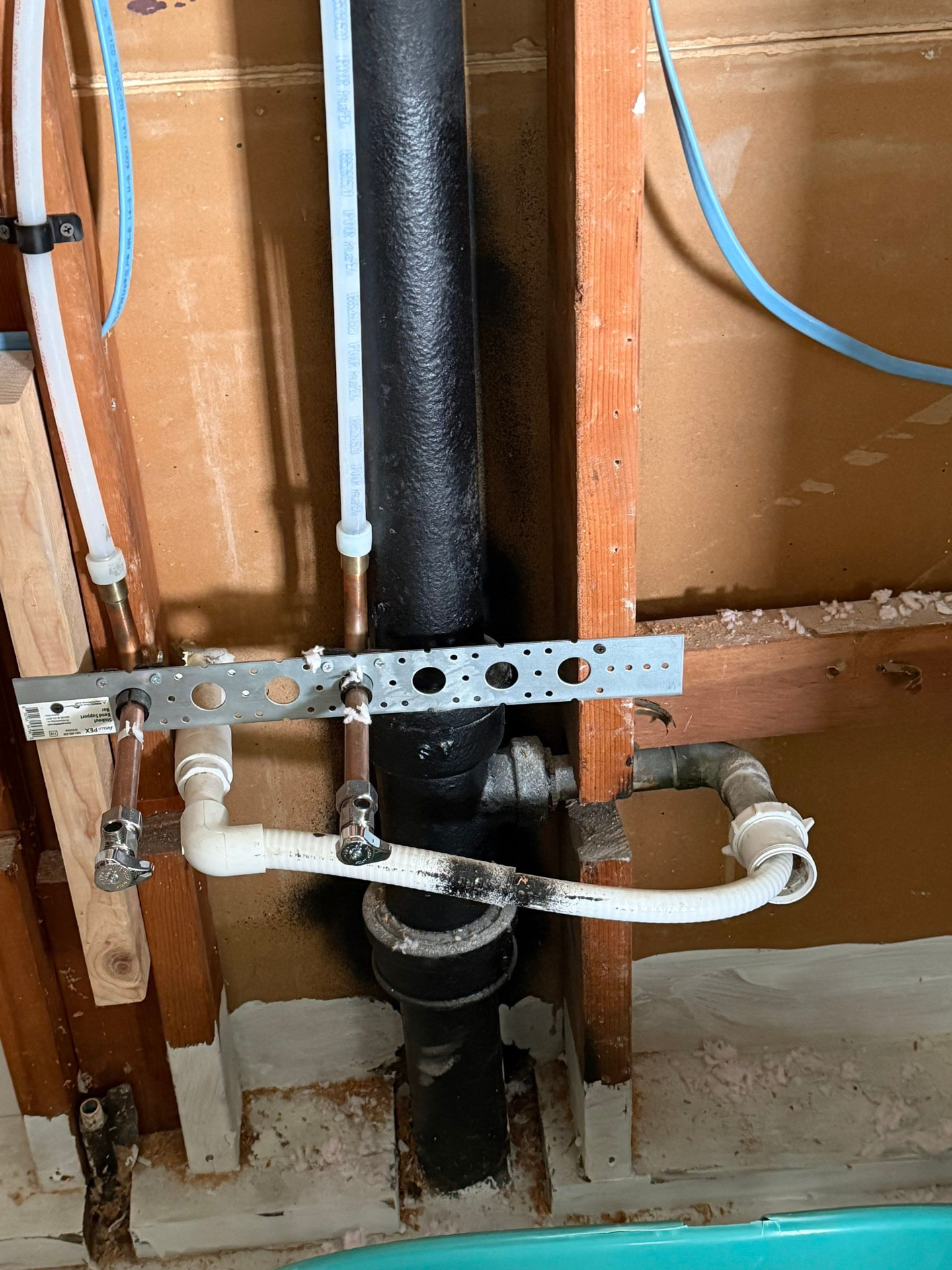
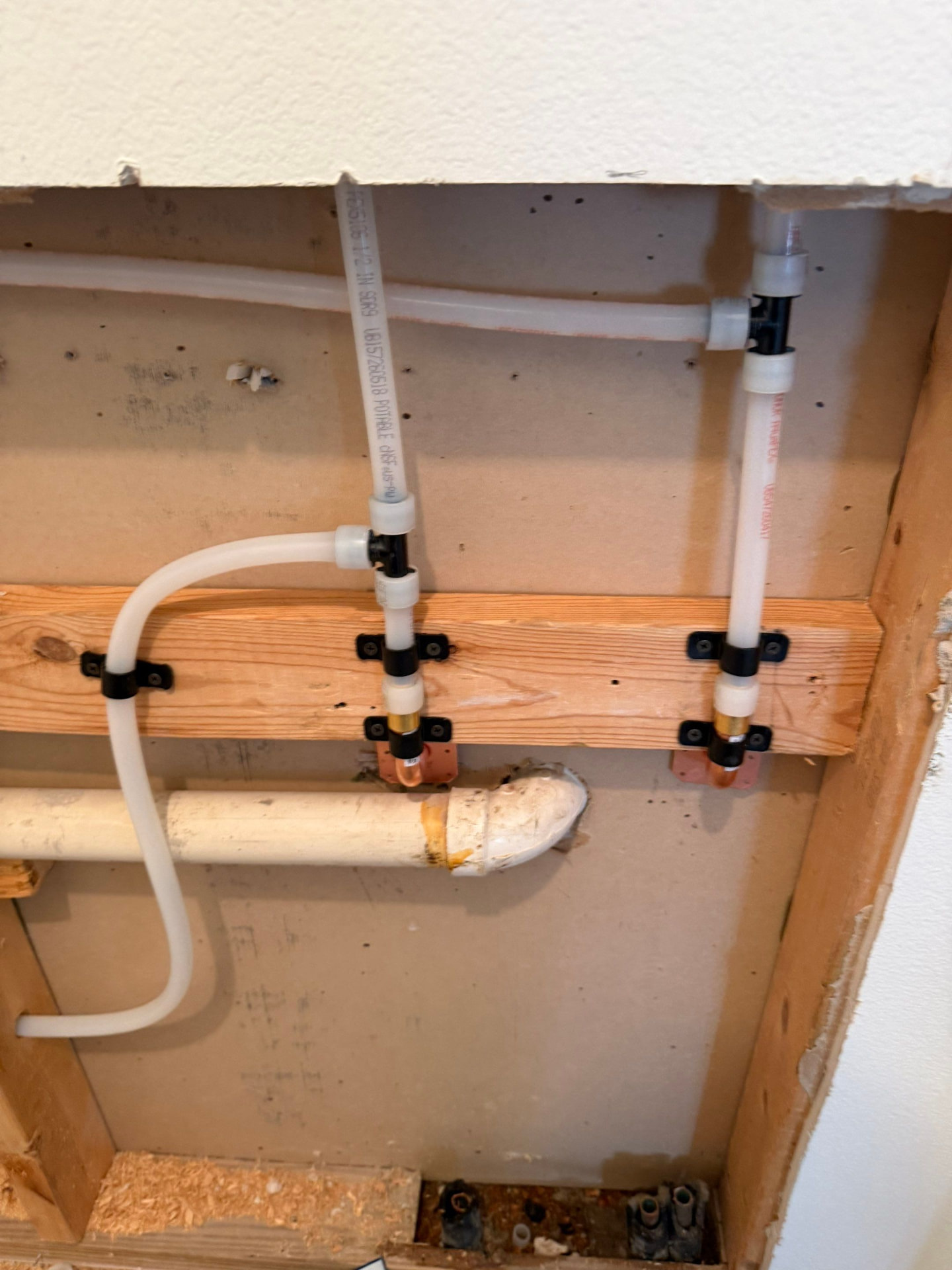
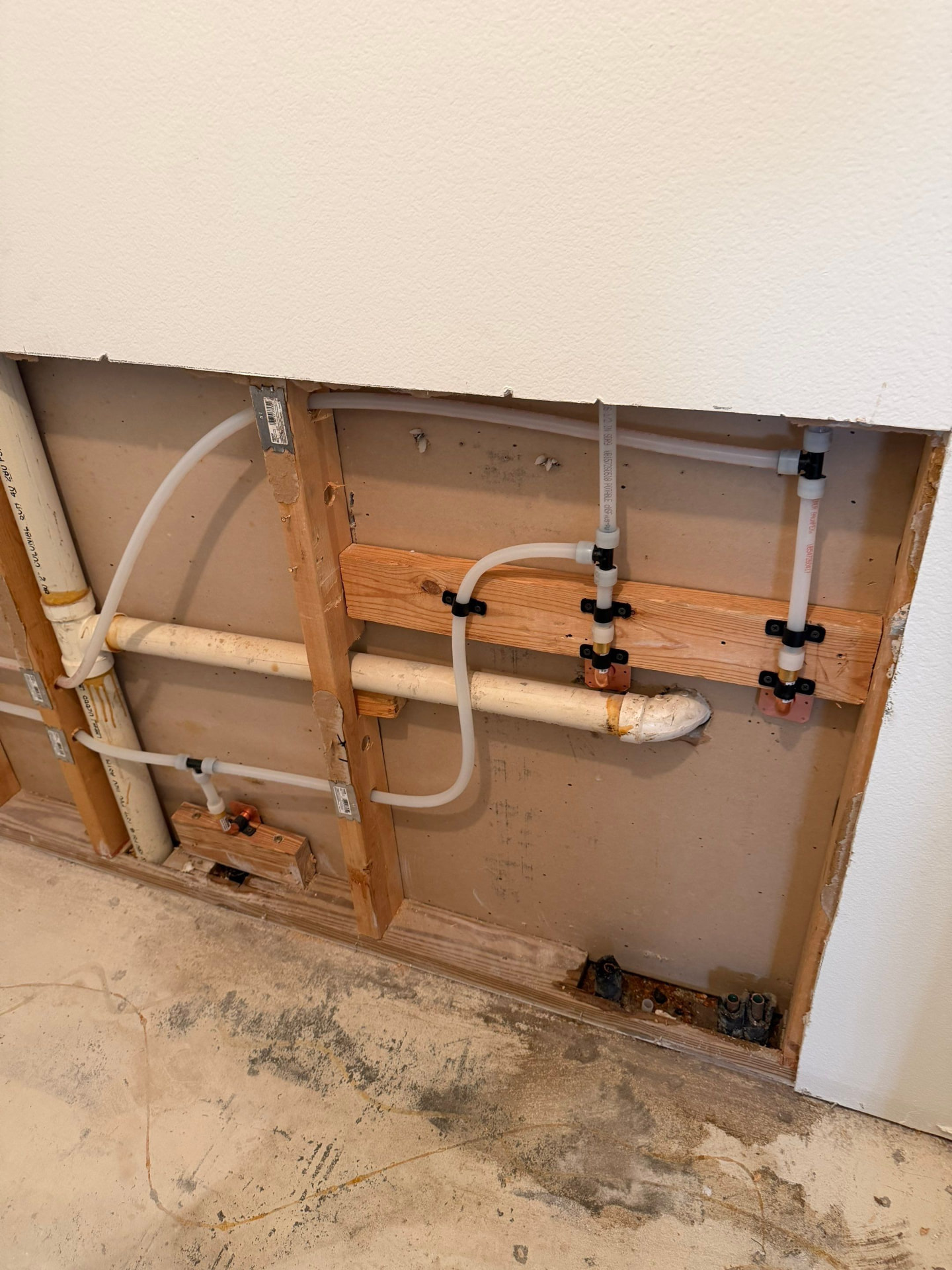
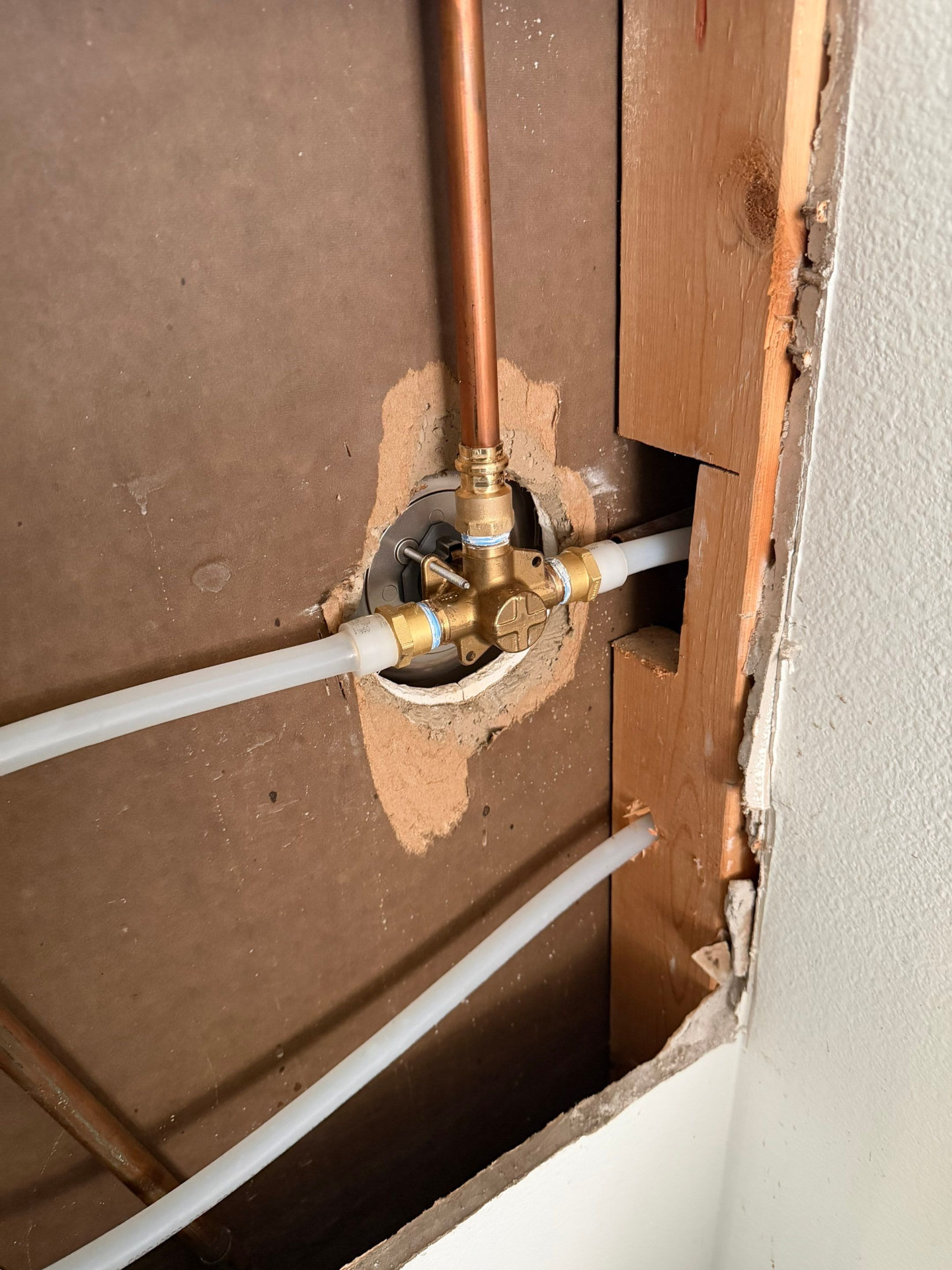
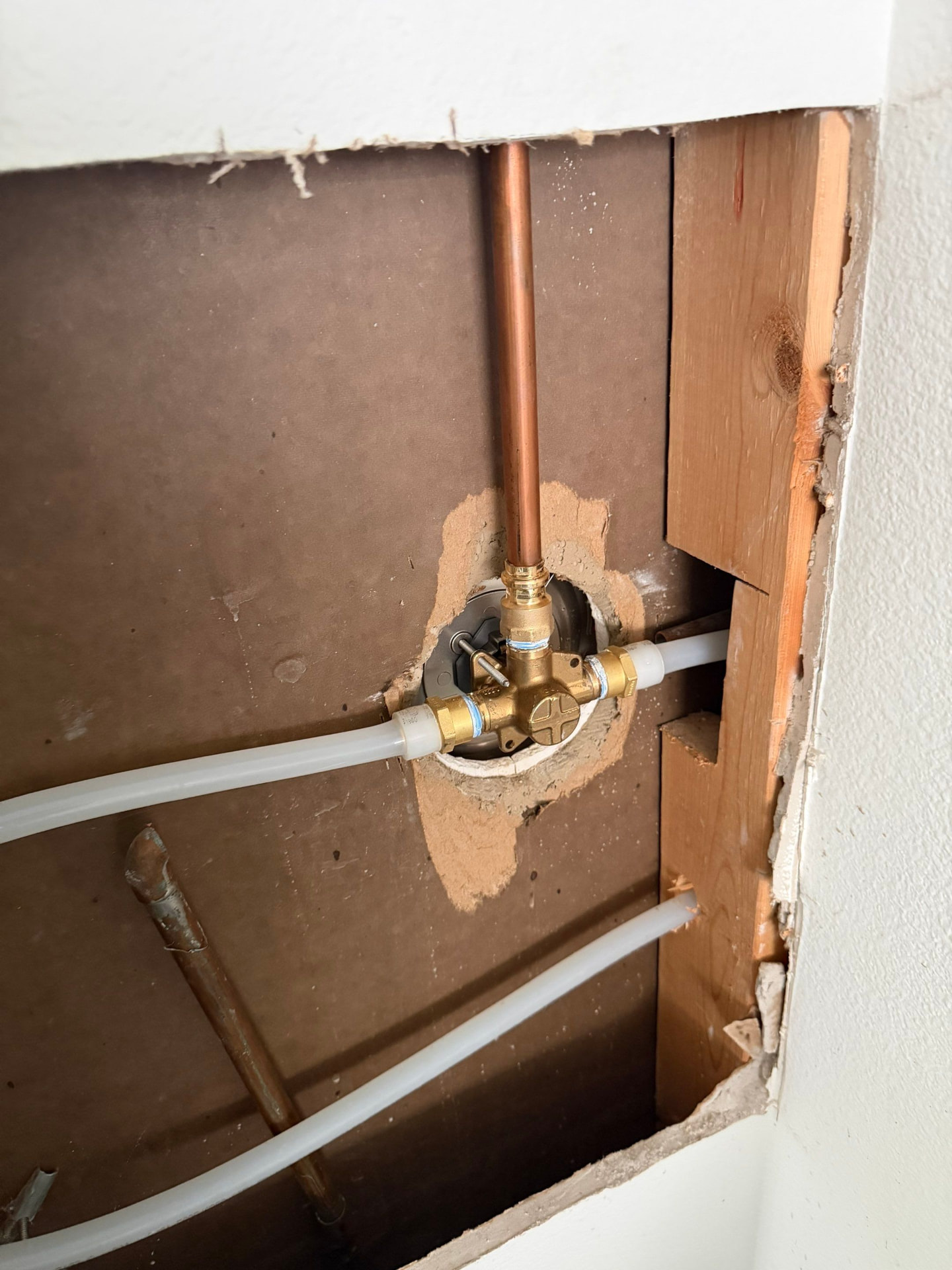
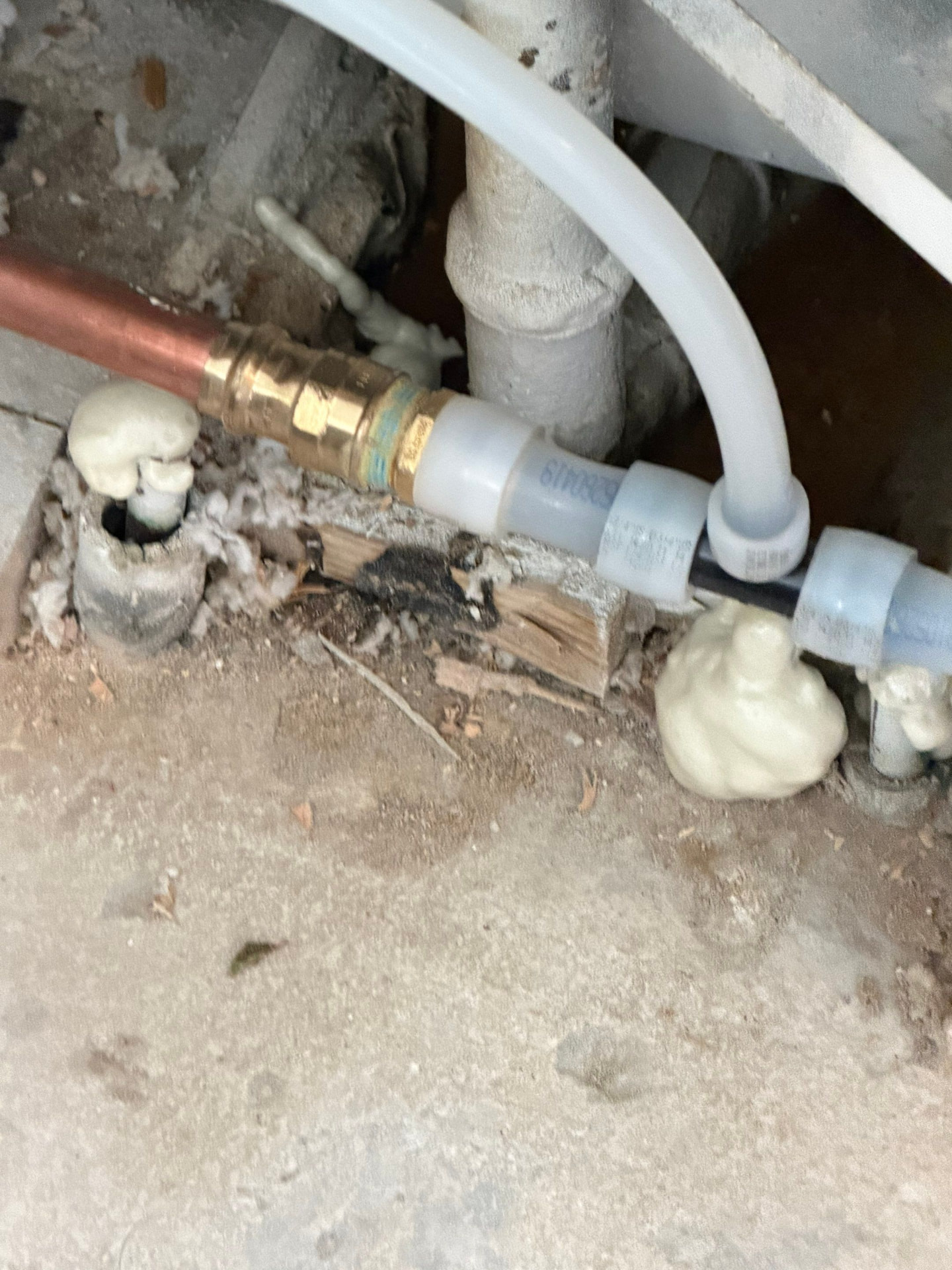
Photos from repipe work performed by Plumbing Detectives LLC. Every Bradenton Beach job is documented from rough-in through inspection.
Answers
Frequently Asked Questions — Whole House Repiping in Bradenton Beach, FL
If you’ve read this far, you now understand whole-house repiping in Bradenton Beach better than most homeowners and property managers on this island ever get it explained. You know what the pipe materials are and what this island’s specific environment does to them. You know what saltwater flooding actually affects in a PEX system versus what it doesn’t. You know what the FEMA 50 percent rule means for your renovation scope. You know why the insurance picture on this island makes pipe material more consequential than it might be elsewhere. And you know that the right plumbing decision for a vacation rental property accounts for more than just the repair cost. If your Bradenton Beach or Anna Maria Island property needs an honest assessment — post-storm, pre-insurance-renewal, mid-renovation, or simply because nobody has looked carefully at the plumbing in years — call me at 239-388-3631. I’ll cross the bridge, evaluate the system, and tell you exactly what I find before recommending anything.
Plumbing Detectives LLC | Venice, FL | License CFC1434139
239-388-3631 | plumbingdetectivesfl.com