
Whole House Repiping · Wellen Park, FL
Whole House Repiping in Wellen Park, FL
Post-warranty plumbing inspection, PEX fitting assessment, and expansion tank compliance for new construction homes. Licensed master plumber CFC1434139 — call 239-388-3631.
Call Now239-388-3631Wellen Park is not a repipe market in the traditional sense. There’s no galvanized steel here. No polybutylene. No cast iron under any slab. Every home in this community was built after 2015, and the plumbing behind the walls is modern PEX or CPVC — materials that are nowhere near the end of their service life.
But here’s what I actually find when I’m working inside these homes.
Cheap builder-grade angle stops under every sink and behind every toilet. PEX stub-outs pushed straight through drywall with no copper stub-outs and no blocking behind them. Expansion tanks missing or improperly charged on closed water supply systems where Florida Building Code has required them since 2007. And in some cases, pipe runs in the attic that are inadequately supported — the kind of work that gets done fast when a crew is roughing in fifty homes on a schedule.
Some of these homes are worth well over a million dollars. What’s behind the walls doesn’t always match what’s in front of them.
I’m not here to sell anyone a repipe they don’t need. The PEX tubing itself is likely fine. The issue in Wellen Park isn’t the pipe — it’s everything around it. The fittings. The valves. The supports. The expansion control. The corners that got cut because the first homeowner would never see them.
The next plumber always does.
My name is Mike Reynolds. I’m the owner of Plumbing Detectives LLC and a licensed master plumber, license CFC1434139. I serve Wellen Park and the surrounding North Port market. Here’s an honest assessment of what the plumbing situation actually looks like in this community.
The Local Story
What Makes Wellen Park Different — A New Construction Market With Old Problems
Every other market I write about is defined by aging infrastructure — galvanized supply lines corroding from the inside, polybutylene fittings degrading from chloramine exposure, copper entering the pinhole leak window after forty or fifty years. Those conversations don’t apply here.
Wellen Park is defined instead by the gap between what a production builder is required to install and what a careful, craftsman-level plumber would choose to install. Those are not always the same thing. Production builders work at scale, with subcontracted plumbing crews operating under tight schedules. The code sets the floor. What gets built is the floor.
The earliest phases of Wellen Park — IslandWalk, Gran Paradiso, Renaissance, Sarasota National, built roughly 2015 to 2020 — are now five to ten years past their closing dates. Florida’s standard builder warranty structure covers plumbing systems for two years after closing. For homes that closed before 2023, that two-year window has fully expired. The one-year workmanship warranty closed even sooner.
What that means practically: any installation gap that wasn’t caught during the warranty period is now the homeowner’s responsibility. A missing expansion tank. An undersized PEX run. A push-to-connect fitting that was installed with a slightly angled cut and has been weeping slowly ever since. These aren’t builder problems anymore. They’re your problems.
The newer phases — Sunstone, Lakespur, Palmera, Brightmore, Everly, Wellen Park Golf & Country Club — are still within or recently past their warranty windows. If you’re in one of these communities and you’ve noticed anything that looks or feels wrong with your plumbing, the warranty conversation needs to happen before the clock expires.
Warranty Windows
The Builder Warranty — What It Covers and What It Doesn’t
Florida’s standard new construction warranty — commonly called a 10-2-1 structure — gives homeowners three layers of protection: ten years on structural defects, two years on major mechanical systems including plumbing, and one year on workmanship and materials. Florida’s Home Warranty Transfer Law, effective July 1, 2025, added a minimum one-year transferable warranty for Building Code-violating defects running from title conveyance — relevant to any Wellen Park home resold within its first year.
Here’s the part that matters for plumbing specifically. A pipe fitting that develops a slow leak is explicitly cited as a covered mechanical-system defect during the two-year window. But the water heater itself — the tank, the elements, the thermostat — is typically covered by the manufacturer’s warranty only, not the builder’s warranty, from the day you close. If the water heater fails in year four, that’s a manufacturer warranty claim, not a builder issue.
What the builder’s warranty covered was installation quality — the supply line connections, the expansion tank, the support of PEX runs, the routing and termination of stub-outs. Once that two-year window closed, any installation shortcut that survived the warranty period is yours to address.
If you believe a defect is a code violation rather than normal wear, Florida Statute 553.84 creates a private right of action for Florida Building Code violations that cause damages. And Florida Chapter 558 establishes a mandatory pre-suit notice-and-cure process for construction defect claims — you must serve written notice of the specific defect to the contractor or builder at least 60 days before filing suit, giving them the opportunity to inspect and offer to remedy. This process is specifically designed for situations where a homeowner believes the defect is the builder’s statutory responsibility rather than an out-of-pocket repair.
I’m not an attorney and I’m not giving legal advice. What I can tell you is that if you have a plumbing issue in a Wellen Park home that’s still within its warranty window, get a licensed plumber to document exactly what they find before the clock runs out.
Code Compliance
The Expansion Tank — Required Since 2007, Still Missing in New Construction
This is the most actionable finding for Wellen Park homeowners, and it’s one I want to be precise about because there’s a code history worth knowing.
Florida Building Code Section 607.3 requires thermal expansion control on any water heating system that’s part of a closed plumbing system. A system becomes closed when a check valve, backflow preventer, or pressure-reducing valve is installed on the supply side — which describes virtually every home on City of North Port Utilities or Sarasota County Public Utilities, meaning essentially every Wellen Park home.
This requirement traces to the 2006 International Residential Code and the 2007 Florida Building Code adoption cycle. It has been continuously in effect through every code edition since, including the current 2023 Florida Building Code, Plumbing, 8th Edition. There is no grandfathering provision. There is no phase-in period. Every Wellen Park home — every single one, from the first IslandWalk units in 2015 to the newest phases closing today — should have been built with compliant thermal expansion control from the day the certificate of occupancy was issued.
Sources: BOAF Interpretation #8103; Palm Beach County BCAB Technical Advisory; howtolookatahouse.com code history documentation.
Yes, I’ve found homes missing expansion tanks. I want to be fair about what that means — the requirement has been in place and the code is clear, but I’m not going to quantify how often it’s missing in Wellen Park specifically because no one has measured that. What I can tell you is that the home inspector community treats a missing expansion device on a closed system as a common, real-world inspection finding nationally. It is a known, recurring compliance gap across the industry.
When the expansion tank is absent, the water that expands with every heat cycle has nowhere to go in a closed system. The pressure cycles against every fitting, every valve, and every connection in the home. Over time it fatigues components. The most visible symptom is a temperature and pressure relief valve that drips — not because the heater is failing, but because the valve is doing exactly what it was designed to do, relieving excess thermal expansion pressure that has nowhere else to go. Replacing the T&P valve without adding an expansion tank is replacing the symptom, not addressing the cause.
The Fitting Question
PEX Fitting Vintage — The Issue Nobody Is Talking About in New Construction
PEX tubing doesn’t corrode. It doesn’t develop pinhole leaks from water chemistry. It doesn’t narrow from internal scale buildup. The tubing itself is one of the most durable materials in residential plumbing.
The fittings connected to it are a different story — specifically, older-generation brass fittings that were widely used in PEX installations from the mid-1990s through approximately 2011.
The failure mechanism is called dezincification. Hard water slowly leaches the zinc from a brass alloy fitting, from the inside out. What’s left is a porous copper-oxide shell that looks intact from the outside but has lost its structural integrity. This is not galvanic corrosion — that’s a different mechanism involving dissimilar metals in contact. Dezincification requires only brass and aggressive water chemistry. No dissimilar metal contact needed. Just time and water.
Three major PEX fitting manufacturers settled national class action lawsuits over this exact defect category. Zurn’s QPEX yellow brass fittings, covering installations from 1995 through 2011, settled for $67.7 million. NIBCO’s CPI/Dura-PEX fittings settled for $43.5 million. Uponor/Wirsbo’s yellow brass fittings — using the CW617N alloy without arsenic, not DZR-rated — settled separately, with a claims period running through approximately 2025 for buildings constructed 2002 or later.
Here’s why this matters for Wellen Park specifically. Construction in this community started in 2015 — four years after the Zurn and NIBCO settlement cutoff dates, but squarely inside the Uponor yellow brass settlement window. And bulk-purchased fitting stock doesn’t carry an expiration date. A plumbing subcontractor roughing in fifty homes in 2016 on a production schedule may have been working from fitting inventory that was purchased before the industry’s transition to DZR-rated alloys.
Current-generation fittings — Uponor ProPEX, Viega PureFlow, Apollo PEX-A, and others — are already DZR-compliant by default, using CW602N, Eco Brass C69300, bronze, or engineered polymer. NSF/ANSI 14 now mandates DZR compliance via ISO 6509 testing for any copper alloy fitting with more than 15 percent zinc in a PEX system. This is the law and the industry standard for new installations.
I personally specify engineered polymer fittings on PEX-A installations. No zinc, no dezincification possible. It’s the right call in this water chemistry and it’s the right call for a system that’s meant to last.
What a Wellen Park homeowner needs to know: nobody can tell from outside the wall whether the fittings in a specific home are old-generation brass or current-generation DZR or polymer. The only way to know is to look. A licensed plumber who knows what CW617N versus CW602N looks like can tell the difference. That’s the starting point for understanding the fitting risk in any specific home.
Water Chemistry
Hard Water on Modern PEX — What It Actually Does
Wellen Park’s water is hard. ZIP code 34287 measures 198 ppm — approximately 11.6 grains per gallon — at the tap, with regional water treatment specialists placing North Port at 18 to 25 GPG in some areas. The Water Quality Association classifies anything above 10.5 GPG as very hard.
Builders do not install whole-home water softeners as standard equipment. It’s not in the base spec. It’s an upgrade, an afterthought, or something a homeowner researches after moving in and noticing the scale on the shower glass, the film on the cooktop, and the white buildup on every fixture.
The scale you’re seeing on those surfaces is the same mineral deposit accumulating inside your water heater, inside your dishwasher, and around every brass valve and fitting in the home. PEX tubing itself resists this buildup in ways that metal pipe doesn’t — the smooth interior doesn’t give minerals the rough surface they need to adhere. But the brass valves, fittings, and shutoffs connected to the PEX are as vulnerable to hard water chemistry as they would be in any other market.
A whole-home water softener is the most practical investment a Wellen Park homeowner can make in the long-term health of every water-using system in the house. Not because the plumbing is failing — it probably isn’t yet. But because addressing the water chemistry now protects every component from accelerating mineral attack that compounds over years.
If you’re considering a tankless water heater upgrade — and many Wellen Park homeowners are, given the energy cost and the seasonal vacancy pattern — hard water and tankless heat exchangers are a combination that requires upstream softening. I won’t install a tankless unit in this market without that conversation.
The Weak Link
The Builder-Grade Angle Stop Problem — Wellen Park Edition
I addressed this in the Sarasota repipe page and it applies here too — but in Wellen Park it hits differently because these are brand new homes.
The standard contractor-grade angle stop installed in production builder homes is a push-pull round-stem compression valve with a white plastic handle. You pull it out to close, push it in to open. It’s installed because it’s fast and cheap. In Wellen Park’s hard water, the internal compression seat deteriorates. The valve stops shutting off completely. And when someone finally tries to use it in an emergency — which is the only time anyone ever reaches for an angle stop — it either won’t close all the way or the handle snaps.
In a home that’s five or seven years old, these valves are already at or approaching the age where they start to fail in this water chemistry. Not because the home is old. Because the valve was cheap.
Every repipe or plumbing service I do includes replacing contractor-grade angle stops with quality quarter-turn angle stops — brass body, metal handle, opens and closes completely with a single 90-degree turn. They cost more. They last significantly longer. And in a market where the home itself is worth several hundred thousand dollars to well over a million, the valve under the sink should not be the weakest link.
The Honest Answer
Do You Actually Need a Whole House Repipe in Wellen Park?
Probably not. And I want to be direct about that.
Just because a home is newer doesn’t mean a repipe is off the table forever — but for most Wellen Park homes right now, the PEX tubing itself is performing as designed. What needs attention is the infrastructure around it.
What most Wellen Park homes actually need first:
Replace the contractor-grade angle stops at every fixture with quality quarter-turn valves. Pressure test the full system. Add water hammer arrestors where fast-closing valves — washing machines, dishwashers — are creating pressure spikes. If there’s attic access, inspect the PEX runs for support spacing, examine the fittings for early signs of dezincification or weeping, and add proper supports where the builder skipped them. Verify the expansion tank exists and is properly sized and charged for the system pressure.
That’s a service call and a follow-up, not a repipe. It tightens up the workmanship. It addresses the code compliance gaps. It protects what’s already there.
When a partial repipe makes sense:
A specific run of PEX or a cluster of fittings showing repeated leaks in one area — a bathroom group, a section of attic routing where fittings were installed with burred cuts or at angles. Replace that section with properly installed PEX-A and engineered polymer fittings. Document what was found and what was replaced.
When a full repipe becomes a conversation:
A confirmed batch defect across the home — multiple fitting failures in different locations within a short window, particularly if they’re the same fitting type and vintage. At that point the question is whether the fittings throughout the home are the same generation and whether a systematic replacement makes more sense than ongoing individual repairs.
A post-warranty code violation — a missing expansion tank, improperly supported runs — that the builder disputes and that may require legal documentation before it can be addressed under warranty.
Plumbing Detectives LLC Professional Opinion
Stop cutting corners. The first homeowner usually never sees what’s behind the walls. The next plumber does. And unfortunately we’re the ones explaining why a million-dollar home has builder-grade workmanship hidden behind finished drywall. A licensed plumber inspection — not an 80-hour home inspector course, a licensed plumber — tells you exactly what’s behind those walls before something fails and forces the conversation.
Permitting
Permitting in Wellen Park — Two Jurisdictions, One Community
Most of Wellen Park sits inside City of North Port limits. Plumbing permits for these addresses run through the City of North Port Building Division at 4970 City Hall Blvd, North Port, FL 34286 — phone 941-429-7044. The dedicated Plumbing Plans Examiner and Inspector is Gary Kromer at gkromer@cityofnorthport.com, 941-628-8336.
Some Wellen Park parcels fall in unincorporated Sarasota County and permit through Sarasota County Building and Development Services instead. The Avelina community is confirmed as being served by Venice Utilities for water and sewer rather than North Port — a reminder that utility jurisdiction and permitting jurisdiction can vary parcel by parcel even within the same named community.
We verify jurisdiction by address before pulling any permit. North Port also offers a private-provider plan review program under Florida Statute 553.791, allowing plan review and inspection to be routed through a private provider like Freedom Code Compliance while the City still issues the permit — useful for expediting a larger-scope job.
A permit is required for repipe work of any scope. Replacing a concealed, defective water supply pipe is classified as new work requiring permit and inspection, not a minor repair exempt from the permit process.
Community Logistics
HOA and Gated Community Logistics
Interior repipe work that doesn’t alter anything exterior generally falls outside the architectural review scope of Wellen Park’s community HOAs. But any exterior-visible plumbing-adjacent work — a water softener installed outside the home, a tankless water heater vent added to an exterior wall, exterior staging of materials during a multi-day job — likely requires prior ARC or ACC review from your specific community’s management company.
Based on how comparable master-planned gated communities in this region handle it, expect to submit a Certificate of Insurance as part of any contractor approval process for gated community access. Gran Paradiso specifically operates a multi-tier ARC structure where sub-community approval precedes master approval — that extends timelines beyond what a single-HOA community requires.
For any gated Wellen Park community — Gran Paradiso, IslandWalk, Esplanade, Sarasota National — I coordinate gate access and any required contractor registration as part of scheduling. It’s a logistics step I build into every job in a gated community.
Investment
What It Costs
No Wellen Park-specific repipe cost data exists in the public record — the research was honest about this gap and so am I. What does exist is Southwest Florida regional pricing from Best Plumber USA, which serves this corridor directly.
For a typical Wellen Park single-family home in the 1,800 to 2,800 square foot range — the Sunstone, Lakespur, Palmera product — a full PEX-A whole-home repipe would fall approximately in the $6,500 to $10,500 range based on regional data. Larger homes or premium product from Esplanade and custom sections would scale from there.
But a full repipe is not the realistic near-term scenario for most Wellen Park homes. The more common and relevant cost categories are:
Expansion tank installation or correction: approximately $350 to $750 for a properly sized and charged tank replacement or addition.
Quality angle stop replacement throughout the home: varies by fixture count, typically $200 to $500 for a standard 3-bedroom, 2-bath home.
Pressure reducing valve replacement: approximately $200 to $700.
Whole-home water softener installation: approximately $500 to $3,000 depending on system type.
Partial PEX run or fitting cluster replacement: quoted per job based on affected fixture count and access conditions.
Every job gets a written flat-price assessment after the on-site evaluation. These are regional reference ranges, not guaranteed quotes.
What I Find in the Field
Common Mistakes I Find in Wellen Park Homes
PEX stub-outs with no copper stub-outs and no blocking. Every fixture connection — under every sink, behind every toilet, at every shower valve — should terminate in a pre-fabricated copper stub-out secured to wood blocking fastened to the stud. What I find instead is PEX pushed straight through the drywall and connected directly to the angle stop with no rigid termination and no anchor. The stub-out flexes with every valve operation. Over time that movement stresses the connection.
Contractor-grade push-pull angle stops throughout. Described above. They’re in essentially every production-built home in this market. They will need to be replaced. The only question is whether you do it proactively or after one fails in an emergency.
Missing or improperly charged expansion tanks. Required by Florida Building Code Section 607.3 since the 2007 code cycle. Every Wellen Park home should have had one from the day the CO was issued. When it’s absent or undersized, the thermal expansion pressure from every heat cycle runs directly into your fittings and valves.
Inadequate PEX support in the attic. PEX supply lines require support at required intervals — every 32 inches on horizontal runs, at every directional change. Long unsupported spans vibrate, sag under their own weight, and create stress at every fitting. This is invisible once the drywall is closed, which is exactly why it gets skipped on production schedules.
Push-to-connect fittings installed without proper insertion depth or pipe preparation. The most common installation-quality failure mode for SharkBite-type fittings is improper insertion depth, angled or burred pipe cuts, or debris in the fitting at time of installation. These hold water initially. They can weep years later as the O-ring degrades or the internal grip teeth lose purchase on a pipe that was never fully seated. This isn’t an inherent material defect — it’s an installation quality issue that a production schedule doesn’t always prevent.
No water softener — nobody mentioned it was needed. The builder didn’t install one because it’s not in the base spec. Nobody told the homeowner they needed one because nobody was incentivized to have that conversation. Now the scale is building on every fixture, inside every appliance, and around every brass valve in the home. It’s not an emergency. But it’s compounding.
Plumbing Detectives LLC Tips
If your Wellen Park home closed before 2023 and you’ve never had a licensed plumber evaluate the system, schedule that evaluation now. The two-year mechanical warranty has expired. Any installation gap that survived the warranty period is your responsibility to address — and finding it before it fails is significantly less expensive than finding it after.
Check whether your home has an expansion tank. It’s on the cold supply line near the water heater — a small cylindrical tank, typically 2 to 5 gallons. If you don’t see one, call a plumber before assuming the system is fine. A missing expansion tank is a code deficiency from the day the home was built.
The white round-stem angle stops under your sinks and behind your toilets are not quality valves. In Wellen Park’s hard water they will seize. Have them replaced with quality quarter-turn angle stops with brass bodies and metal handles the next time a plumber is in your home.
If you’re considering a tankless water heater upgrade, have a water softener conversation first. Hard water and tankless heat exchangers are a combination that requires upstream treatment to perform as rated. I won’t recommend a tankless installation in this market without addressing the water quality question first.
How I Work
Diagnosis First — Even in a New Home
The diagnosis-first approach doesn’t change because the home is new. It changes what I’m looking for.
In an older Venice or Nokomis home I’m looking for galvanized supply lines narrowing from internal corrosion, copper entering the pinhole window, polybutylene that’s going to create an insurance problem. In a Wellen Park home I’m looking at fitting vintage, expansion tank compliance, angle stop condition, PEX support quality, and whether the water chemistry situation has been addressed.
The answer to “what does this home need” is different in every case. A Wellen Park home that’s been well maintained with an expansion tank, quality angle stops, and a water softener may not need anything for years. A Wellen Park home that left the builder with a missing expansion tank, contractor-grade valves, and unsupported PEX runs in the attic has real issues to address — even if the pipe itself is perfectly fine.
I won’t recommend a repipe in Wellen Park without confirming that a repipe is actually what’s needed. Tighten up the workmanship first. Pressure test the system. Address the angle stops and the expansion tank. If the PEX and fittings check out, that may be the entire job.
The Standard
Why Plumbing Detectives LLC
I named the company Plumbing Detectives LLC because figuring out what’s actually wrong comes before recommending anything. In Wellen Park, that means being honest that most homeowners don’t need a repipe — they need someone to look carefully at what the builder left behind the walls and address it correctly.
Have the system inspected by a licensed plumber. Not an 80-hour home inspector course. A licensed plumber who understands how plumbing systems actually work and can tell you what’s code-compliant, what isn’t, and what needs attention now versus what can wait.
That’s the conversation I’m set up to have.
License CFC1434139. Fully insured. We pull permits through the City of North Port Building Division and Sarasota County Building and Development Services depending on your specific address.
Not sure what your Wellen Park home actually needs? Call 239-388-3631. I’ll inspect the system — expansion tank, fittings, angle stops, PEX supports, pressure test — and give you a straight answer before recommending anything.
Call Now239-388-3631Documented Work
Repipe Work, Photographed on the Job
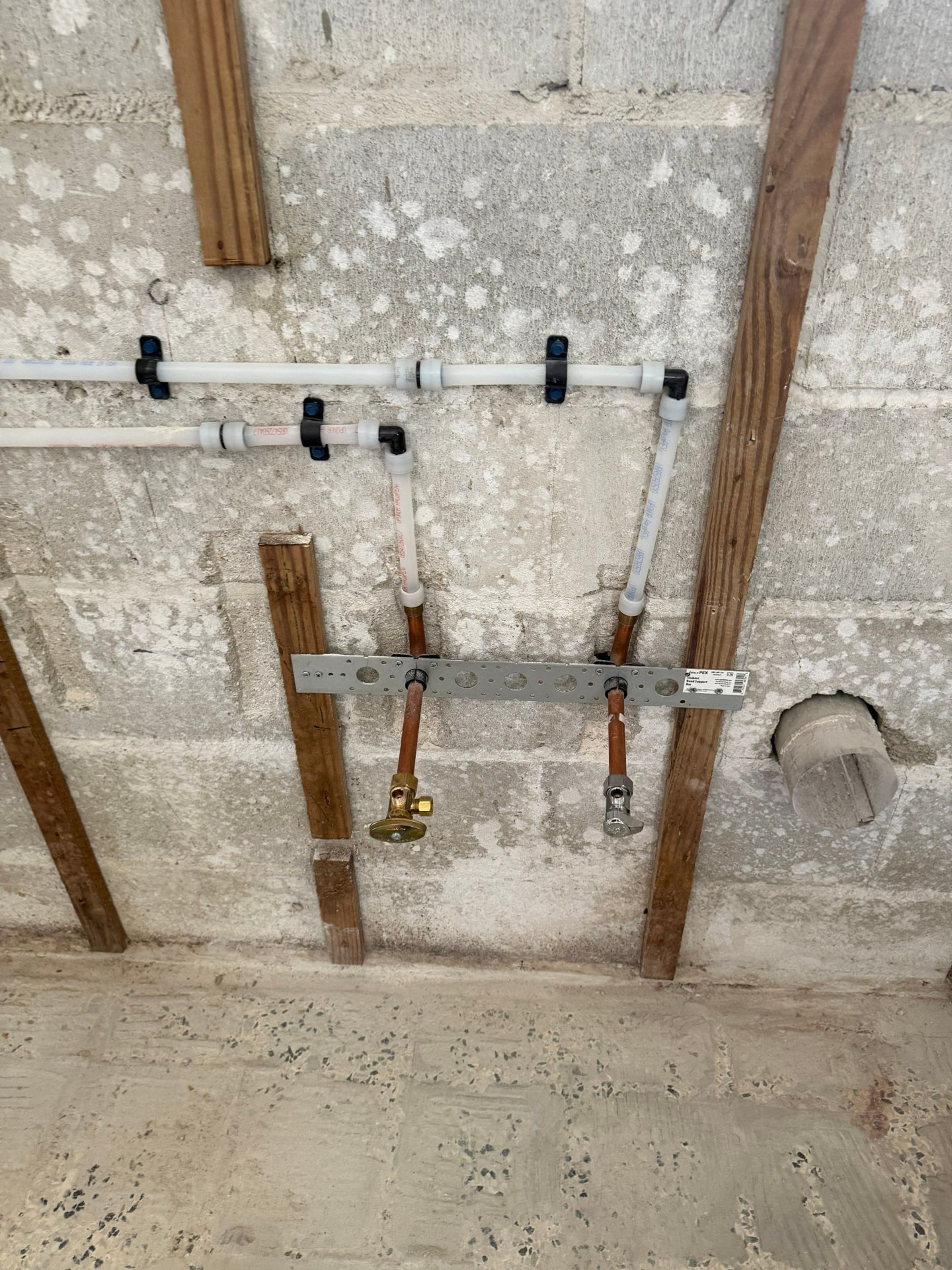
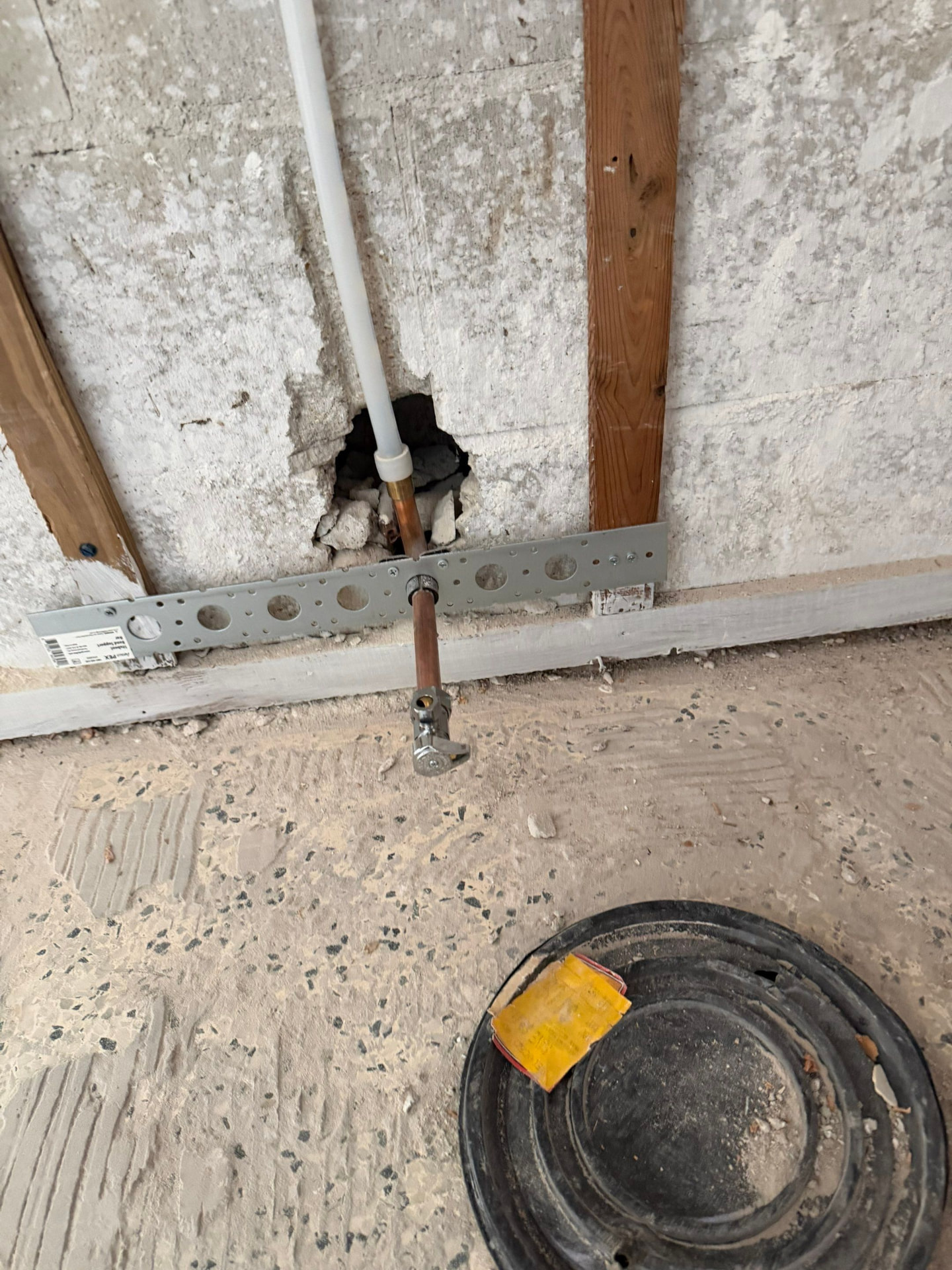
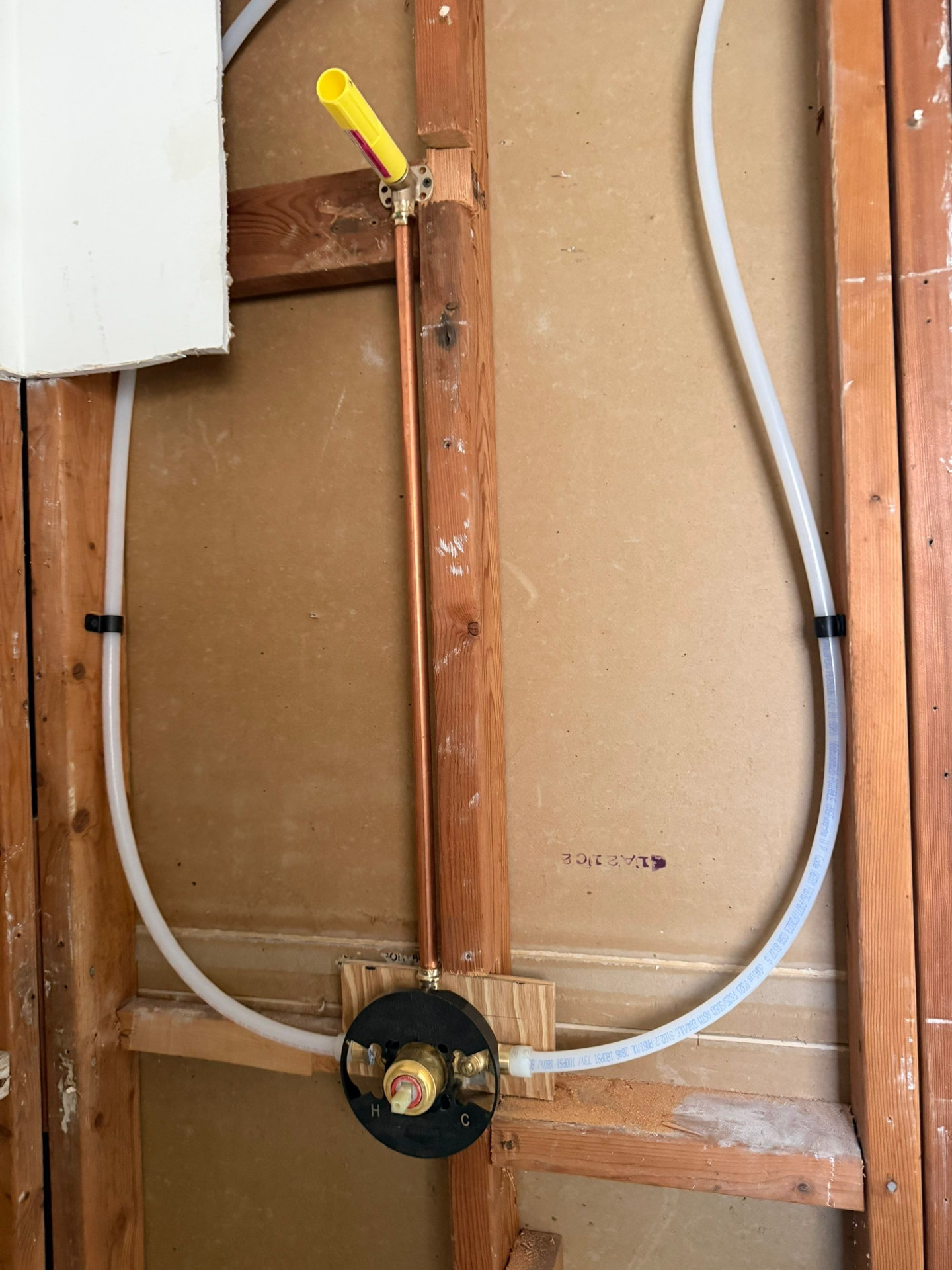
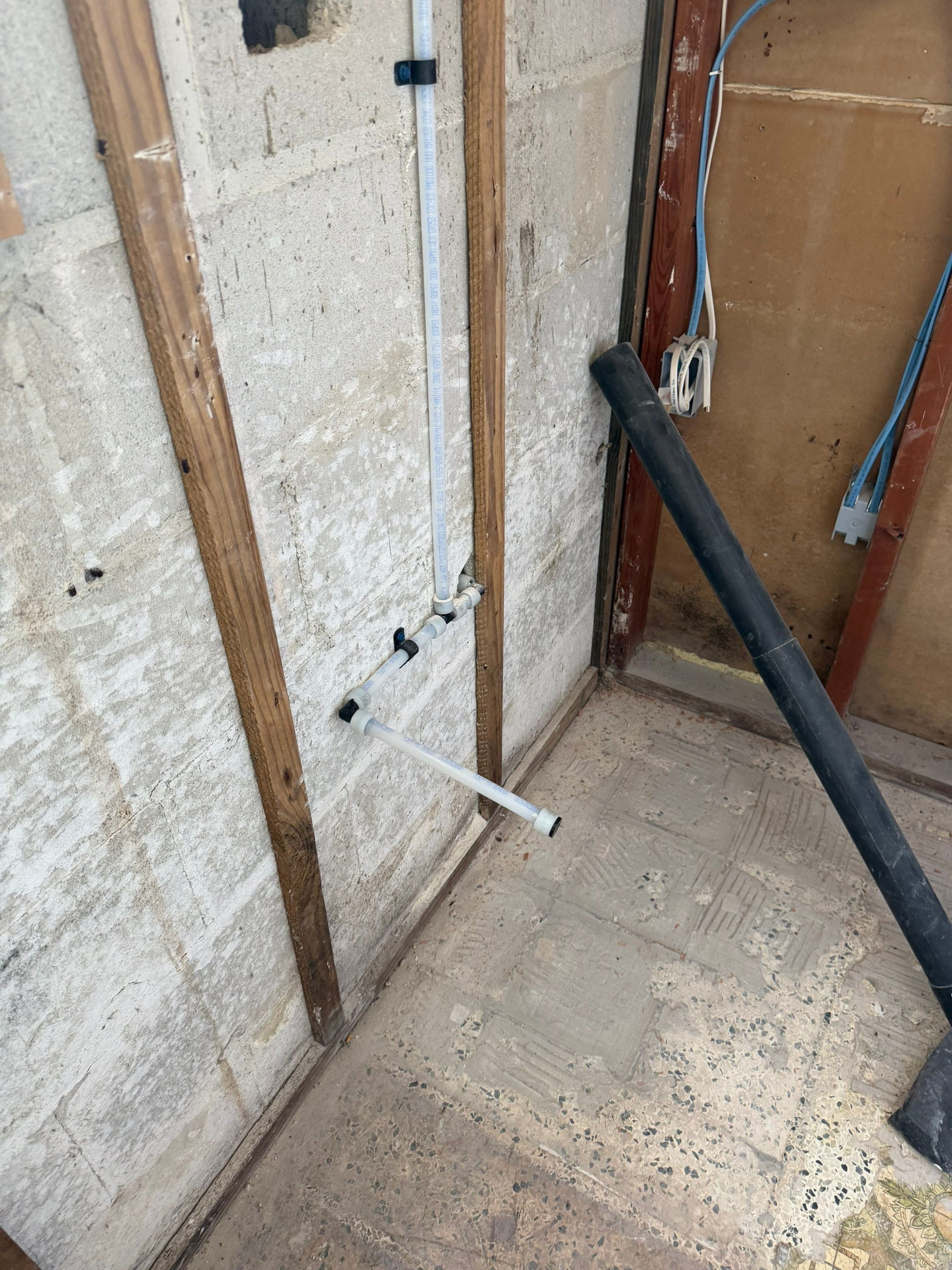
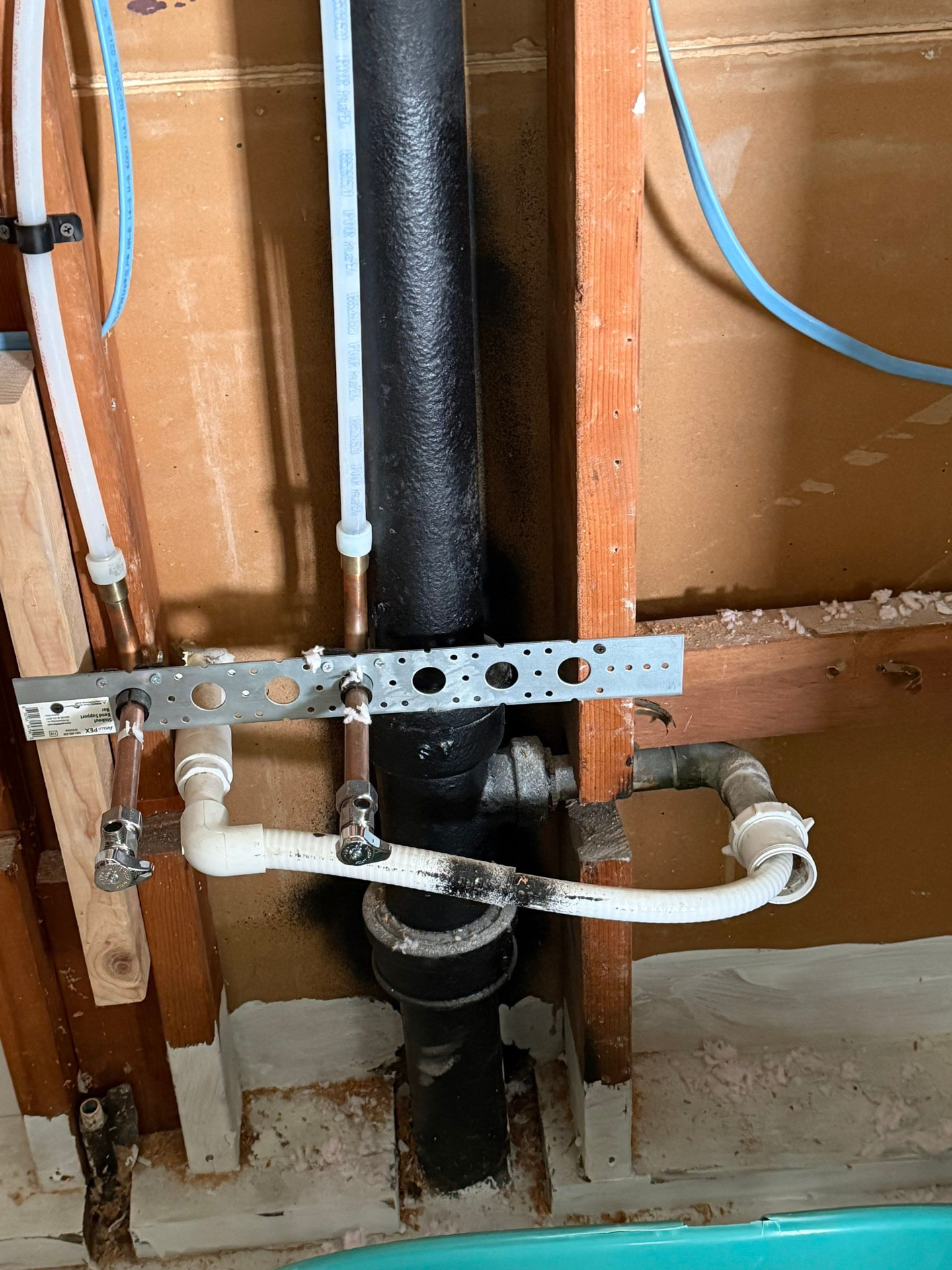
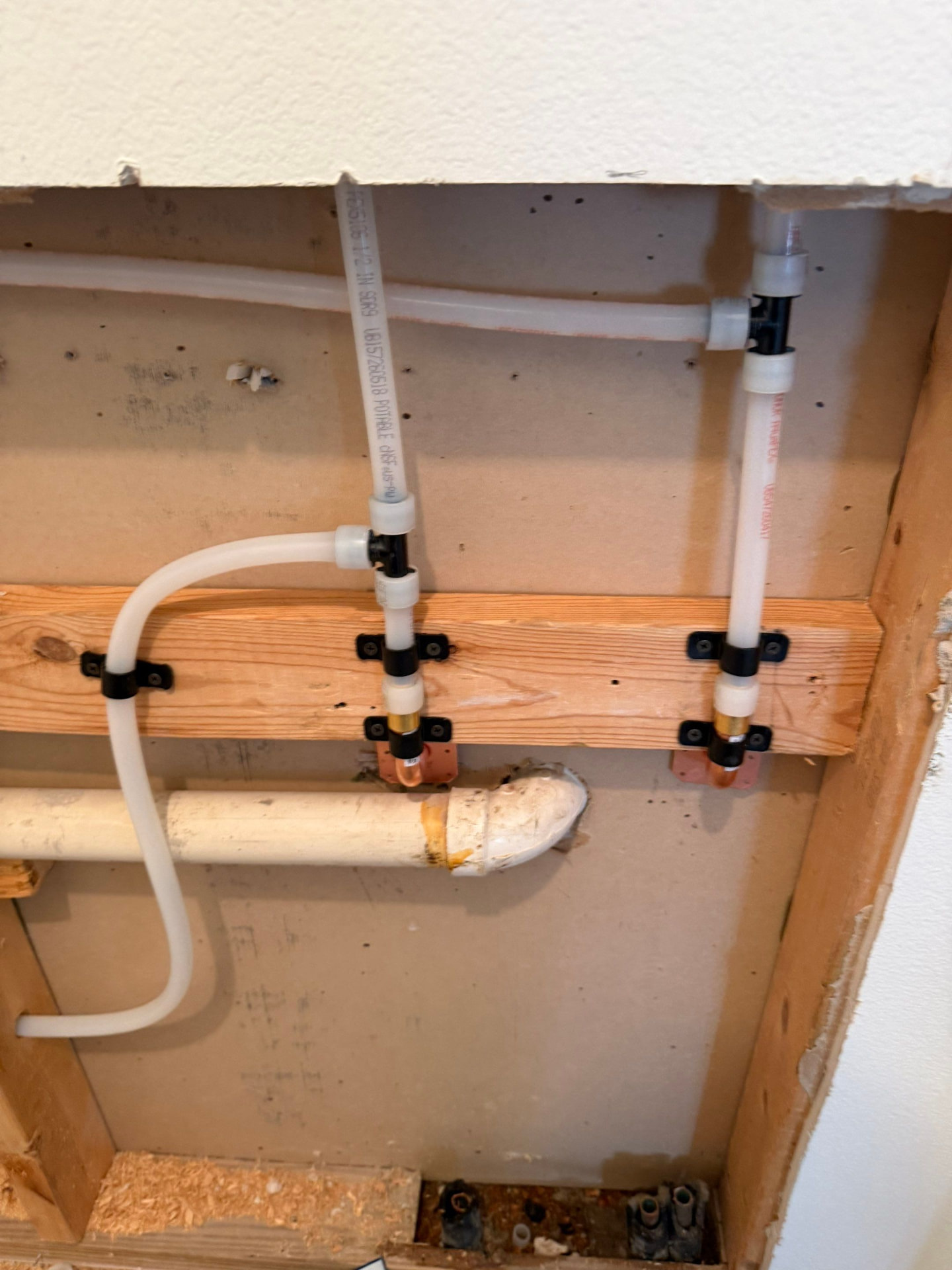
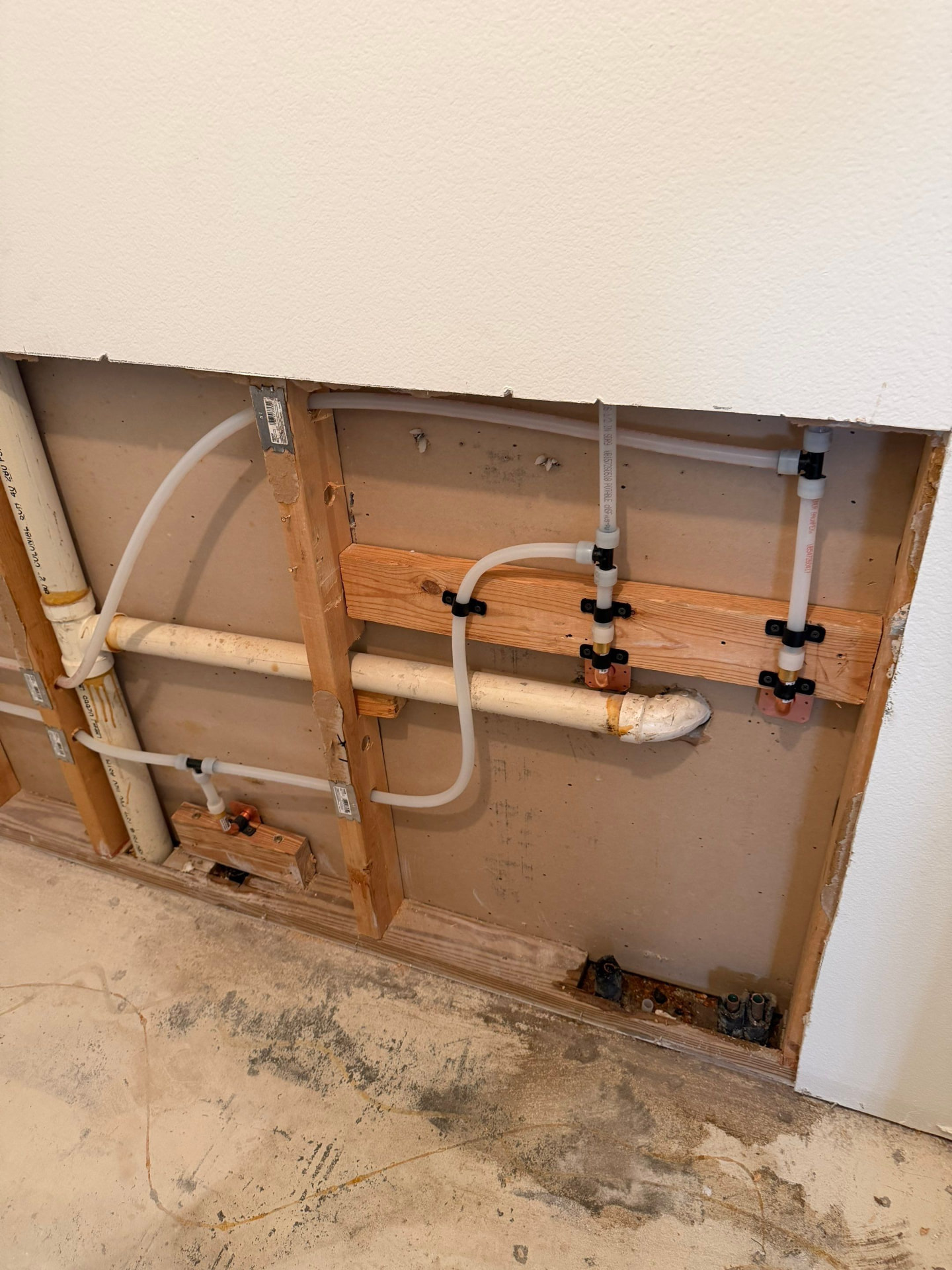
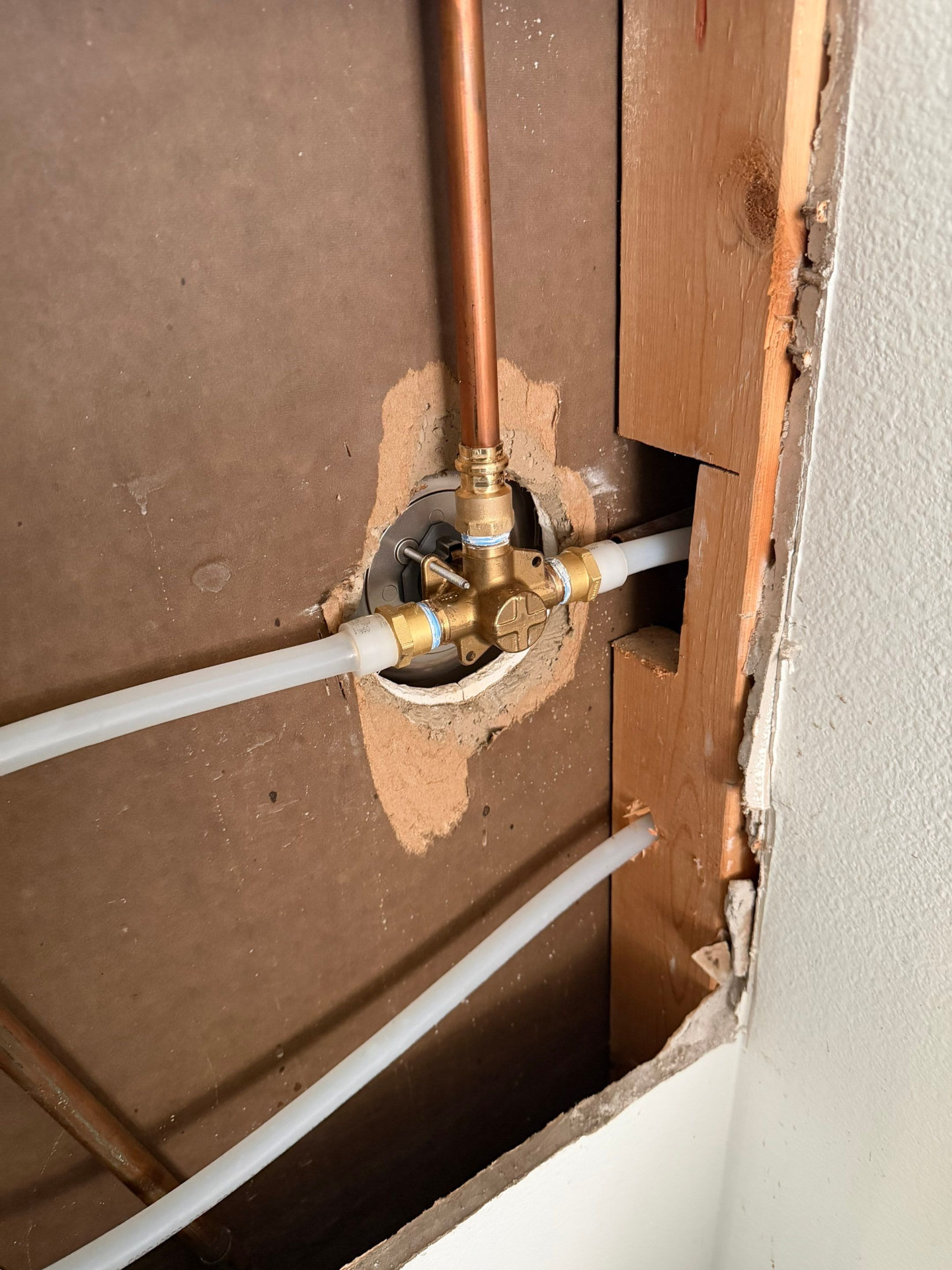
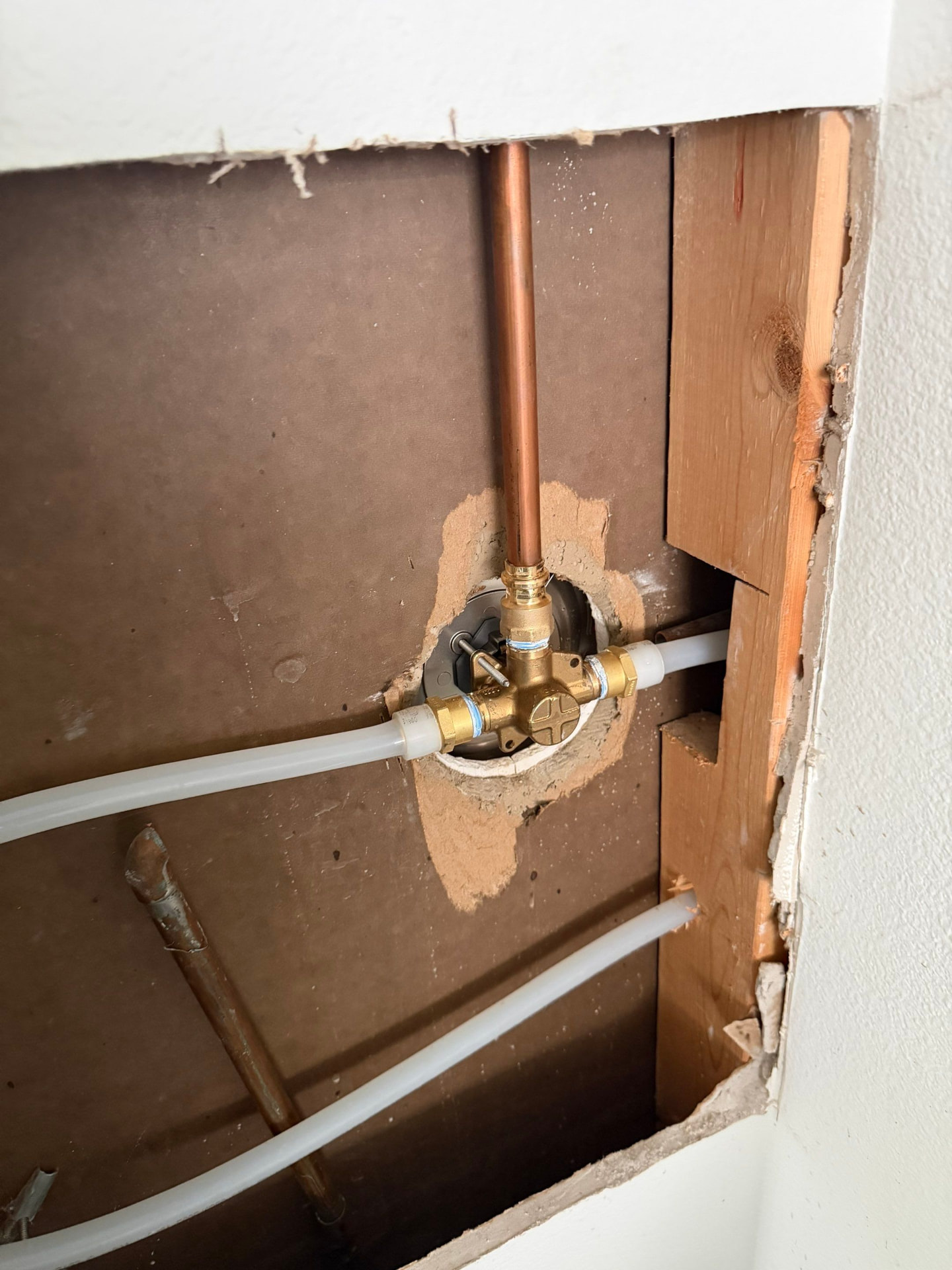
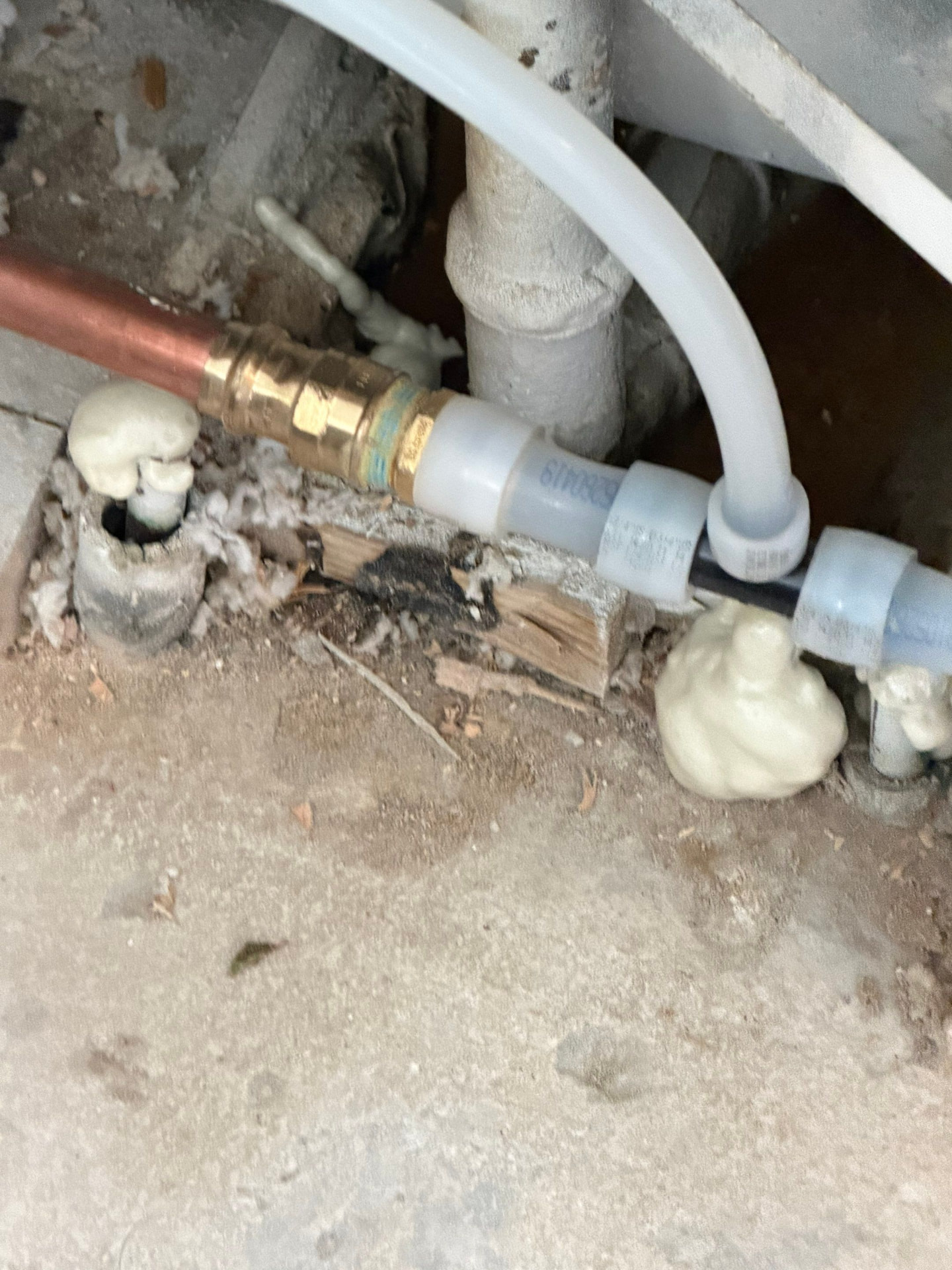
Photos from repipe work performed by Plumbing Detectives LLC. Every Wellen Park job is documented from rough-in through inspection.
Answers
Frequently Asked Questions — Whole House Repiping in Wellen Park, FL
If you’ve read this far, you now understand the plumbing situation in Wellen Park better than most homeowners in this community ever get it explained. You know why the PEX tubing isn’t the problem. You know what the expansion tank requirement is and when it became mandatory. You know what dezincification is and how to find out whether it applies to your specific home. You know what those white angle stops under your sink actually are and why they need to be replaced. And you know that the next plumber always sees what the first homeowner never did. If your Wellen Park home hasn’t had a licensed plumber evaluate the system since you closed, call me at 239-388-3631. I’ll come out, look at the whole picture, and tell you exactly what I find before recommending anything.
Plumbing Detectives LLC | Venice, FL | License CFC1434139
239-388-3631 | plumbingdetectivesfl.com