
Whole House Repiping · Sarasota, FL
Whole House Repiping in Sarasota, FL
Honest assessment first, always. Licensed master plumber CFC1434139. Copper, CPVC, and polybutylene replacement — call 239-388-3631.
Call Now239-388-3631I was working at a commercial property in downtown Sarasota where the copper mains were in perfectly good shape — solid, holding pressure, no issues. But whoever built the tenant space had run CPVC branch lines throughout to save money. The owner assumed the entire plumbing system had failed. After evaluating everything, the real problem was isolated to those cheaper branch lines. The copper mains didn’t need to be touched.
That’s exactly why I don’t recommend replacing anything until I know what’s actually failing.
Sarasota is a big market with a wide range of housing — historic bungalows in Laurel Park and Burns Court from the early 1900s, postwar ranch homes in Gulf Gate Estates and South Gate from the 1950s and 1960s, newer gated communities in Palmer Ranch, and a substantial downtown condo and high-rise inventory that operates by a completely different set of rules than a single-family home. The pipe material in any given building depends on when it was built and what decisions were made along the way — sometimes by builders who were careful, and sometimes by whoever was trying to get the job done cheapest.
My job is to figure out what’s actually in the walls, what’s actually failing, and what the right answer is for that specific home or building. Not the answer that replaces the most pipe. The right answer.
My name is Mike Reynolds. I’m the owner of Plumbing Detectives LLC and a licensed master plumber, license CFC1434139. I’m based in Venice and I serve the Sarasota market. Here’s what I’d tell you before recommending a dollar of repipe work.
Three Markets in One City
What Makes Sarasota Different — Three Markets in One City
Most cities have one repipe conversation. Sarasota has three, and they’re genuinely different from each other.
Single-family homes — the majority of the work
This is the standard residential repipe. One homeowner, one home, a permit through either the City of Sarasota or Sarasota County depending on the parcel’s jurisdiction, a two-day job, and a flat-price quote that covers everything. The pipe materials vary by era — copper in homes from the 1970s through the 1990s, polybutylene possible in anything from the late 1970s through 1995, CPVC in some construction and repairs, PEX in the newer stuff and anything already repiped.
Condominiums and high-rises — a different job entirely
You’re not just dealing with one homeowner anymore. You’re coordinating with building management, the maintenance department, neighboring units, and sometimes the people living below because any mistake affects more than one family. Communication becomes just as important as the plumbing. A unit-level repipe — replacing the branch lines inside one owner’s space — is a manageable residential-adjacent job. A riser replacement — the vertical common-element supply or drain stacks serving multiple units per floor — is a different category of work that involves the association, potentially an engineering firm, a board vote, and a phased multi-floor execution. I’m clear about which scope I’m being asked to perform and what that actually involves.
The jurisdictional split — City versus County
This matters for permitting and most homeowners don’t know it exists. Properties inside the City of Sarasota permit through the City of Sarasota Building and Zoning Division at 1575 2nd Street, 2nd Floor — phone 941-263-6494. Properties in unincorporated Sarasota County permit through Sarasota County Planning and Development Services. Palmer Ranch is entirely unincorporated county — it doesn’t split between the city and Venice. Siesta Key is actually split: the northern portion falls inside city limits while the majority of the island is unincorporated county. I verify jurisdiction before pulling any permit. The address alone doesn’t tell you which authority governs the work.
The Field Picture
What I’m Actually Finding in Sarasota Homes
It’s a mix — and the mix depends heavily on when the home was built and what’s happened to it since.
Copper
Copper is the most common material I find in homes from the 1970s through the 1990s. Copper from this era is now 30 to 50 years old. In Sarasota’s water — treated with chloramines and carrying the residual hardness of the Floridan Aquifer — copper in this age range is in the pinhole development window. The failure isn’t always sudden. Most of the time it starts as one pinhole that gets repaired, then another six months later, then another. People assume the whole system is shot. Sometimes it is. Sometimes it’s a localized section of pipe that’s reached the end of its service life while the rest of the system still has years left.
CPVC
Chlorinated polyvinyl chloride, usually called CPVC — shows up throughout Sarasota’s housing stock in a way I find surprising. It appears in original construction in certain eras, in renovations, and in repairs. I was working in a coffee shop on Main Street where the copper mains were in fine shape but the branch lines running to the fixtures were CPVC — somebody built out that tenant space and chose the cheaper material for the branch lines. The owner thought the whole system had failed. It hadn’t. The CPVC branch lines were the problem; the copper mains were fine. CPVC becomes brittle as it ages, and it becomes especially brittle in Florida’s temperature swings. The biggest mistake I see with CPVC is someone trying to repair it themselves — they cut into the pipe and it cracks six inches from the cut because the whole run is already stressed. That attempted repair becomes a bigger problem than the original leak.
Polybutylene
Polybutylene is the material I’m looking for in any Sarasota home built or significantly repaired between 1978 and 1995. I’ve mentioned before — gray flexible plastic, PB2110 stamped along the side. In homes from the 1980s, particularly in neighborhoods that developed heavily during that decade, polybutylene is a real possibility. Sarasota County added more housing units in the 1980s than in any other decade in its history — meaning the polybutylene-era housing footprint here is unusually large.
Newer construction
1990s construction is what I’m mentally categorizing as soon as I see the building age. If it’s built in the 1990s, I’m expecting copper or possibly polybutylene. Either is possible. Newer construction is usually PEX, and when a home has already been correctly repiped, it’s PEX.
Something Worth Naming
The Builder-Grade Angle Stop Problem — Something Worth Naming
I want to address something I see constantly in Sarasota’s newer contractor-built homes that doesn’t get talked about enough.
Beyond the pipe material, one of the most consistent problems I find in production-built homes from the past two decades is the shut-off valve at each fixture. The standard builder-grade angle stop — the valve under your sink, behind your toilet, feeding your dishwasher — is often a compression-type valve with a white plastic handle that you pull out to close and push in to open, or a cheaply made push-pull mechanism with a plastic body. These are not quality valves. They’re installed because they’re inexpensive and fast. In Sarasota’s hard water, the internal seat corrodes, the valve loses its ability to shut off completely, and in some cases the handle snaps when someone finally tries to use it in an emergency — which is exactly the worst time for a valve to fail.
The correct standard is a quarter-turn angle stop with a brass body and a metal handle. It opens and closes completely with a single 90-degree turn. It holds pressure reliably. It doesn’t seize in hard water the way a compression valve does. Every repipe I do includes quality quarter-turn angle stops at every fixture connection. When I’m in a home that has the original builder-grade valves and the homeowner asks what they should know, this is one of the first things I mention — not because it’s the biggest issue, but because it’s the most predictable future service call if nothing is done about it.
What I’m Comfortable Saying
The Coastal Corrosion Question — What I’m Comfortable Saying
Sarasota has a significant concentration of waterfront and near-coastal properties — Siesta Key, Lido Key, Bird Key, Golden Gate Point, the bayfront neighborhoods of Indian Beach–Sapphire Shores and Hudson Bayou. The question of whether salt air accelerates plumbing deterioration in these areas comes up, and I want to give you an honest answer rather than a convenient one.
For outdoor equipment and exposed plumbing near the water — propane tankless units mounted on exterior walls, exposed piping, hose bibs, gas valves, any external fitting sitting in the open — yes, the coastal environment absolutely takes its toll. I can see the difference in how quickly exterior components deteriorate near the water compared to an inland property. That’s real.
For copper piping inside the walls of a well-built home? I’m not comfortable telling you that salt air alone is significantly shortening the life of your interior supply lines. Flooding is a different story. Constant moisture intrusion is a different story. But ambient salt air reaching inside an enclosed wall cavity and meaningfully accelerating copper pipe failure? I’d rather be accurate than impressive, and I’m not comfortable making that claim without stronger evidence.
What I am comfortable saying: the pipe materials that fail in Sarasota’s waterfront neighborhoods fail for the same reasons they fail everywhere else in this market — age, water chemistry, and the quality of the original installation. The environment can be a contributing factor on exterior components. Inside the walls, the water chemistry and the pipe age are the primary drivers.
Municipal Water vs. Private Well
The Slab Leak Difference — Municipal Water vs. Private Well
Here’s something that doesn’t get talked about enough in Sarasota, and it came from a conversation I’ve had more than once with homeowners who had no idea.
If your Sarasota home is on city water and you have a slab leak — a supply line failing inside or under the concrete slab — you’ll usually know something is wrong relatively quickly. Your water bill will tell you. A leak running continuously, even a slow one, shows up as an unexplained spike in your monthly bill. That’s a trigger. You call someone. The problem gets found.
If your property is on a private well and you have a slab leak, there is no monthly water bill. The meter doesn’t tell you anything. The first sign might be water appearing where it shouldn’t — a wet area on the floor, moisture coming up through a slab crack, unexplained damage to a wall or cabinet. Or it might be a gradual loss of pressure that you notice and try to explain away. In some cases the leak runs for weeks or months before anyone connects the dots.
That’s a meaningful difference that homeowners on well water in the outer Sarasota area should understand. A slab leak on a well-water property doesn’t give you the same early-warning system that a municipal water connection does. The only protection is periodic pressure testing and paying attention to the signs — wet spots where there shouldn’t be wet spots, pressure changes, increased pump cycling, or damage appearing without a visible cause.
The Honest Answer
Do You Actually Need a Whole House Repipe?
I would never recommend a repipe based only on the age of a home. The age of the pipe matters. The condition of the pipe matters. The water treatment situation matters. Every house is different. Here’s the honest breakdown.
No — not right now:
One isolated pinhole leak in copper that otherwise passes a pressure test. Repair it. Monitor the system.
A CPVC branch line that cracked during a homeowner repair attempt — the rest of the CPVC in the home may still have years of useful life left, or it may not. That determination requires seeing the whole system, not just the failed section.
A home where the pipe material has already been replaced with PEX and the work was permitted, inspected, and documented. That conversation is over.
A newer home that has the standard builder-grade angle stops at the fixtures but no indication of pipe failure. The angle stops may need replacement eventually. The supply lines don’t.
Maybe — worth an honest assessment:
Copper from the late 1970s through the 1990s that’s had two pinhole leaks in different locations within the past year. That’s a pattern. A pressure test and a look at the visible pipe sections tell me whether it’s systemic or isolated.
A home built or significantly repaired between 1978 and 1995 where the pipe material hasn’t been confirmed. A 15-minute check under the sinks and at the water heater connections answers the polybutylene question before an insurance renewal or a home sale forces it.
Recurring CPVC failures in an older system — the pipe is becoming brittle with age. Each repair risks cracking the pipe further. At some point the ongoing repair cost and disruption exceeds the cost of a systematic solution.
Yes — a full repipe is the right answer:
Confirmed polybutylene throughout the home. The Citizens Property Insurance Corporation Rule 206.B is a hard, written underwriting rule. Most private carriers treat it as an automatic decline. Full replacement is the standard answer and there isn’t a good workaround.
Three or more pinhole leaks in copper within a six-month window. The system is deteriorating at multiple points, not having isolated failures. The economics of ongoing repair versus permanent solution have shifted.
A four-point inspection has flagged the pipe material and triggered a carrier non-renewal or premium action. Now it’s a business decision.
Not sure where your Sarasota home falls? I’ll assess the system — pressure test, visual inspection, pipe identification — and tell you what I actually find before recommending anything.
Call Now239-388-3631Quick Reference
Pipe Material Quick Reference — Sarasota Context
| Pipe Material | Typical Lifespan | Common Failure Mode | Sarasota Context | Status |
|---|---|---|---|---|
| Copper (Type L) | 50–70 years (potentially shorter near coast on exterior) | Pinhole leaks from interior water chemistry corrosion — chloramine treatment, hard water, and unsleeved under-slab runs are primary drivers | Most common material in homes from the 1970s–1990s. Now 30–50 years old in much of the housing stock. | In the pinhole risk window. Evaluate by leak pattern and pressure test, not age alone. |
| Polybutylene (PB2110) | 25–40 years (unpredictable) | Internal chloramine degradation, sudden acetal fitting failure with no visible warning | Present in homes built or repaired 1978–1995. Sarasota County's 1980s housing boom was the largest single decade of growth — PB footprint here is significant. | Active insurance liability. Citizens Rule 206.B applies. Full replacement standard. |
| CPVC | 50+ years when installed correctly | Brittleness with age and heat cycling; cracks during repair attempts rather than at the defect; branch lines often fail before mains | Common in original construction and in repairs across multiple eras. Branch lines are a particular concern. Evaluate mains separately from branch lines. | Aging CPVC becoming increasingly brittle. Evaluate carefully before attempting repairs. Don't assume mains and branches are in the same condition. |
| Galvanized Steel | 40–50 years (30–40 in FL) | Internal rust scale narrows diameter, pressure loss, discoloration, eventual wall failure | Possible in unrepiped homes from the 1950s–1960s historic core (Laurel Park, Burns Court, older mainland neighborhoods). Less common today in my experience. | If confirmed at this age in FL water: past expected service life. Replacement strongly recommended. |
| PEX-A | 50+ years | No documented systemic failure at current installed age | Current repipe standard. Present in newer construction and in correctly done repipes. | Scale-resistant, non-metallic, 25-year manufacturer warranty from Uponor. Best choice for most Sarasota homes. |
Note: Lifespans are general guidelines, not guarantees. Sarasota’s water chemistry — chloramine treatment and residual hardness from the Floridan Aquifer — and coastal environment accelerate wear on all metal and older plastic pipe materials compared to softer-water, inland markets. A proper field assessment tells you more about your specific home than any general table.
Start to Finish
What a Correct Repipe Looks Like in a Sarasota Home
Before the details, here’s the timeline at a glance: I can usually get out for the initial assessment within a day or so of your call, depending on the schedule. Once you approve the written quote, most Sarasota repipes get on the calendar within a week or two — sooner when the situation is urgent, like an active leak, a four-point inspection deadline, or an insurance renewal date. The repipe itself takes two days for most standard single-family Sarasota homes, with water restored by the end of each day.
Assessment first. Before I quote anything, I evaluate the age of the home, the pipe material, the water quality situation, and the access conditions. Only after I understand all of those do I recommend what makes sense. Don’t decide on the repair before we figure out what’s actually wrong. Once the quote is approved, we get you on the schedule — and urgent situations move to the front of it.
The permit. City of Sarasota properties: permit through the City’s Building and Zoning Division, 1575 2nd Street, 2nd Floor, Sarasota, FL 34236 — phone 941-263-6494, email CityPermits@sarasotafl.gov. Sarasota County properties: Sarasota County Planning and Development Services, 870 Apex Road, Sarasota, FL 34240 — phone 941-861-5000. We verify the jurisdiction before pulling any permit. Both offer over-the-counter expedited permit processing for single-trade plumbing work.
The overhead repipe. Sarasota’s single-family homes are overwhelmingly slab-on-grade construction. The standard method is an overhead repipe — existing supply lines abandoned in place, new PEX-A routed through the attic and down to each fixture through wall cavities. I specify PEX-A with Uponor ProPEX expansion fittings — the pipe end is expanded, the fitting is inserted, and the tubing’s shape memory contracts it tight around the fitting. It’s a connection that actually improves over time as the material relaxes into full contact, and it’s the system most serious repipe work in the Southwest Florida market is built on. At every fixture, the supply terminates in a pre-fabricated copper stub-out anchored to wood blocking secured to the stud. Solid. Fixed. Not floating.
Quality angle stops at every fixture. Quarter-turn angle stops with brass bodies and metal handles at every sink, toilet, and appliance connection. Not the white-handled builder-grade push-pull valves that seize in hard water and snap in emergencies. Quality valves specified on every job.
Pressure test. Before any wall closes, the full system holds 100 psi for 15 minutes. Every connection verified. No exceptions.
Rough-in inspection, drywall patching, final walkthrough. All included in the scope. The permit closes with a final inspection. Complete documentation provided for your insurance carrier.
Plumbing Detectives LLC Professional Opinion
Access is one of the biggest factors in choosing the right repipe approach — and material choice matters just as much. A lot of homeowners moving here from up north naturally prefer copper because that’s what they grew up with. I understand that. I grew up with copper too. But Florida water chemistry is different from what most of these homeowners experienced up north. Unless you’re willing to invest in proper water treatment, PEX-A is usually the better long-term choice for a Sarasota home. Don’t choose a material because it’s familiar. Choose the one that’s right for your house.
A Different Set of Rules
The Condo and High-Rise Situation in Sarasota
Sarasota has a large and growing condo inventory — downtown bayfront towers, Siesta Key, Lido Key, Bird Key, Golden Gate Point. These buildings represent a plumbing service market that operates by a completely different set of rules than a single-family home.
The key distinction is scope. An in-unit repipe — replacing the branch lines within one owner’s space — is a residential-scale job that requires coordination with building management, scheduling around neighbors, and awareness that the water shutoff for your unit may affect the units below you. Communication becomes just as important as the plumbing itself.
A riser replacement — the vertical supply or drain stacks that serve multiple units per floor as a common element — is a different category entirely. This involves the association, typically engineering oversight, a phased multi-floor execution, and under Florida’s post-2022 condo reform law, it’s now tied to the Structural Integrity Reserve Study (SIRS) requirement. As of December 31, 2024, condo associations in buildings three stories or taller can no longer vote to waive or underfund reserves for plumbing as a reserve component. Boards that were deferring plumbing capital planning indefinitely can no longer do that legally. Older towers near the coast — which means most of Sarasota’s downtown and barrier-island high-rise stock — fall under the 25-year coastal milestone inspection trigger rather than the 30-year inland trigger, because they sit within three miles of the coastline.
What this means practically: if you’re a unit owner in a Sarasota condo with aging plumbing, the reserve study and milestone inspection process your association is now required to complete may surface the plumbing picture more clearly than anything else. If you’re a board member or property manager dealing with an aging riser system, that’s a conversation worth having with a plumber who understands the scope difference between unit work and common-element work.
Sarasota Market
What It Costs — Sarasota Market
Based on the most detailed publicly available Sarasota-specific cost data, whole-home repipe pricing in this market runs:
Single-story home, PEX-A: approximately $4,500 to $9,500
Two-story home, PEX-A: approximately $7,500 to $14,500
Copper adds roughly 30 to 50 percent over PEX pricing
A ProMatcher cost report specific to Sarasota puts a 1,500 square foot PEX repipe in the $4,044 to $5,228 range — useful as a benchmark for a smaller single-family home.
These are typical market ranges — not guaranteed quotes for your home. Every job gets a written flat-price assessment after the on-site evaluation. That number covers materials, labor, permit, quality angle stops at every fixture, copper stub-outs anchored to blocking, pressure test, and drywall patching for access cuts. No line items that appear after you’ve agreed to the job.
What drives the number in Sarasota: fixture count matters more than square footage in some cases. Attic access conditions are the biggest single variable. A home with a straightforward single-story attic routes quickly and cleanly. A home with vaulted ceilings, a multi-story layout, or limited attic clearance requires more time and creative routing. I’ll tell you which situation your home is during the assessment.
The One Fix
If I Could Change One Thing
If I could redesign one thing about how Sarasota homes were originally plumbed, it would be this: stop putting water supply lines under concrete slabs.
Drain lines belong there. Gravity leaves no choice — waste has to flow downhill, and in a slab-on-grade home that means the drain lines go under the concrete. There’s no way around that.
Water supply lines don’t have that constraint. Supply lines run under pressure. They can go through an attic, through a wall, through any accessible path that keeps them reachable for the life of the home. The moment a supply line gets buried in concrete, every future repair becomes more invasive, more expensive, and more disruptive to the homeowner. A pinhole leak in an under-slab supply line means leak detection equipment, slab cutting, dust, displaced furniture, and a concrete repair — all to fix something that would have been a two-hour wall-access repair if the pipe had been routed overhead.
Access saves homeowners money. It saves them disruption. It saves them the conversation about whether to repair or reroute that comes every time an under-slab line fails. The overhead repipe method is the right answer for Sarasota slab homes precisely because it solves this problem permanently — moving the supply system out of the concrete and into an accessible overhead route for the life of the home.
What I Find in the Field
Common Repipe Mistakes I Find in Sarasota Homes
Wrong transition fittings. Where different pipe materials connect — copper to CPVC, copper to PEX, galvanized to copper — the fitting has to be right for both materials. I find improvised transitions throughout Sarasota’s older housing stock and in repair work done over the decades. Wrong fitting types, mismatched threads, connections that hold water initially but create restriction or failure points over time.
Poor pipe support. Some plumbers think because it’s plastic they can throw it in the wall and walk away. To me that’s a shame. It takes the pride out of what it means to be a plumber. Support the pipe correctly. Anchor it at the required intervals. Build it so the next plumber opens the wall twenty years from now and says whoever did this actually cared. I have that standard on every job I do.
Builder-grade angle stops left in place. The white-handled compression-type angle stops that came with the house. They seize in Sarasota’s hard water. They don’t shut off fully when you need them to. And they snap when someone finally tries to use them in an emergency. Every repipe I do replaces them with quality quarter-turn angle stops with brass bodies and metal handles.
Stub-outs not anchored to blocking. Every fixture stub-out — the copper termination where the supply line meets the angle stop — needs to be secured to wood blocking fastened to the stud behind the wall. Without that blocking, the stub-out moves with every valve operation and every pressure event. Over time that movement stresses the connection. I find stub-outs floating in wall cavities on work done by contractors who moved fast and moved on.
Replacing everything without diagnosing what’s actually failing. The downtown Sarasota coffee shop situation I described at the top of this page. Copper mains were fine. CPVC branch lines were the problem. Replacing the mains would have been wasted money. Diagnosis comes first.
No pressure test before walls close. A repipe that wasn’t pressure tested has unknown integrity at every connection. The first sign of a failed fitting inside a closed wall is water damage. I test every job to 100 psi for 15 minutes. Non-negotiable.
Plumbing Detectives LLC Tips
If your Sarasota home was built between 1978 and 1995 and you haven’t confirmed the pipe material, do that before your next insurance renewal. Look under the kitchen and bathroom sinks. Gray flexible plastic stamped PB2110 is polybutylene. Fifteen minutes under the sinks tells you something critical about your home’s insurability.
If your home is on a private well rather than city water and you suspect a slab leak, you won’t get the water bill warning that city water customers get. Watch for wet spots where there shouldn’t be any, unexplained pressure loss, increased pump cycling, or damage appearing without an obvious cause. Those are your early warning signs.
The white-handled builder-grade angle stops under your sinks and behind your toilets are not quality valves. They seize in Sarasota’s hard water and they fail when you need them most. Ask your plumber to replace them with quality quarter-turn angle stops with brass bodies whenever you’re having other plumbing work done.
Before I arrive for any repipe assessment, think about your access. Where is the attic entry? Which rooms have vaulted or cathedral ceilings? Where have you had leaks before? That information helps me develop the cleanest, most practical routing plan for your home before I even touch a tool.
Insurance & Resale
The Insurance and Resale Reality
Polybutylene is the clearest insurance issue in Sarasota’s housing market. Citizens Property Insurance Corporation’s underwriting Rule 206.B declines new coverage for homes over 20 years old with active polybutylene piping — and since all Sarasota polybutylene-candidate homes from the 1978 to 1995 window are now 30 to 48 years old, essentially none qualify for new Citizens coverage with active polybutylene present. A 2026 Florida market four-point inspection calculator describes polybutylene as an “automatic decline” in the standard admitted carrier market — not a negotiable condition, an automatic one.
For aging copper, the situation is less uniformly codified but increasingly consequential. Florida’s four-point inspection — required by most carriers for homes 25 to 40 or more years old depending on the carrier — documents pipe material and condition. Visible rust, discolored water, and low pressure are specific plumbing red flags that can trigger underwriting action. Cast iron drain lines at 50-plus years old are described as a conditional decline in the current market.
For Sarasota condo owners specifically, the SIRS and milestone inspection framework creates a new layer of mandatory plumbing disclosure. Associations are required to make inspection reports accessible to prospective buyers and retain them for 15 years. For a buyer or unit owner, the plumbing reserve funding status is now a checkable, mandatory disclosure item rather than something that comes up only if the seller volunteers it.
After a completed repipe, the documentation your carrier needs: the permit, the final inspection sign-off, the contractor’s invoice specifying the new material, and photographs. Confirm with your carrier in writing what they require before the job is scheduled.
How I Work
Diagnosis First — Always
I don’t decide on the repair before I understand the problem. That’s the one thing I’d tell every Sarasota homeowner calling about plumbing.
Let me evaluate the age of the house. Let me evaluate the pipe material. Let me evaluate the water quality situation. Let me evaluate the access. Only then do we decide what makes the most sense — and sometimes what makes the most sense is not what the homeowner assumed they needed before I arrived.
I was at a downtown Sarasota commercial property where the owner was ready to replace everything. The copper mains didn’t need to be touched. The CPVC branch lines were the problem, and fixing those branch lines resolved the issue. That’s the difference between a diagnosis and an assumption.
The Standard
Why Plumbing Detectives LLC
I named the company Plumbing Detectives LLC because the work starts with figuring out what’s actually wrong. In Sarasota — where the housing stock runs from 1920s bungalows to brand-new high-rises to mid-century ranch homes to 1980s boom-era construction — the diagnosis matters more than the prescription. I’d rather spend twenty minutes understanding a system before recommending anything than spend two minutes recommending something expensive that doesn’t address the actual problem.
I’d rather be accurate than impressive. That’s not a marketing line. It’s how I work.
License CFC1434139. Fully insured. We pull permits in both City of Sarasota and Sarasota County jurisdictions.
Documented Work
Repipe Work, Photographed on the Job
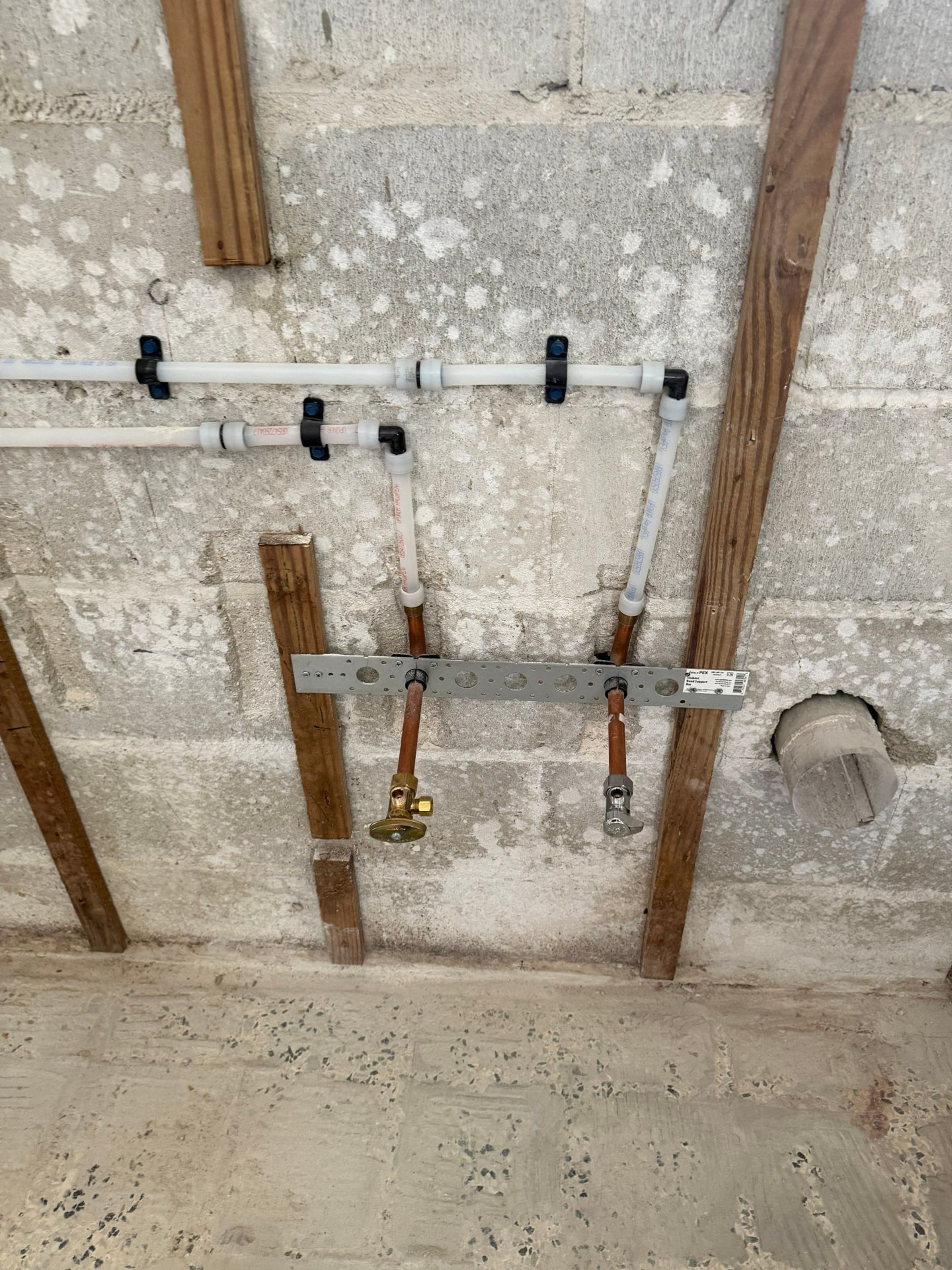
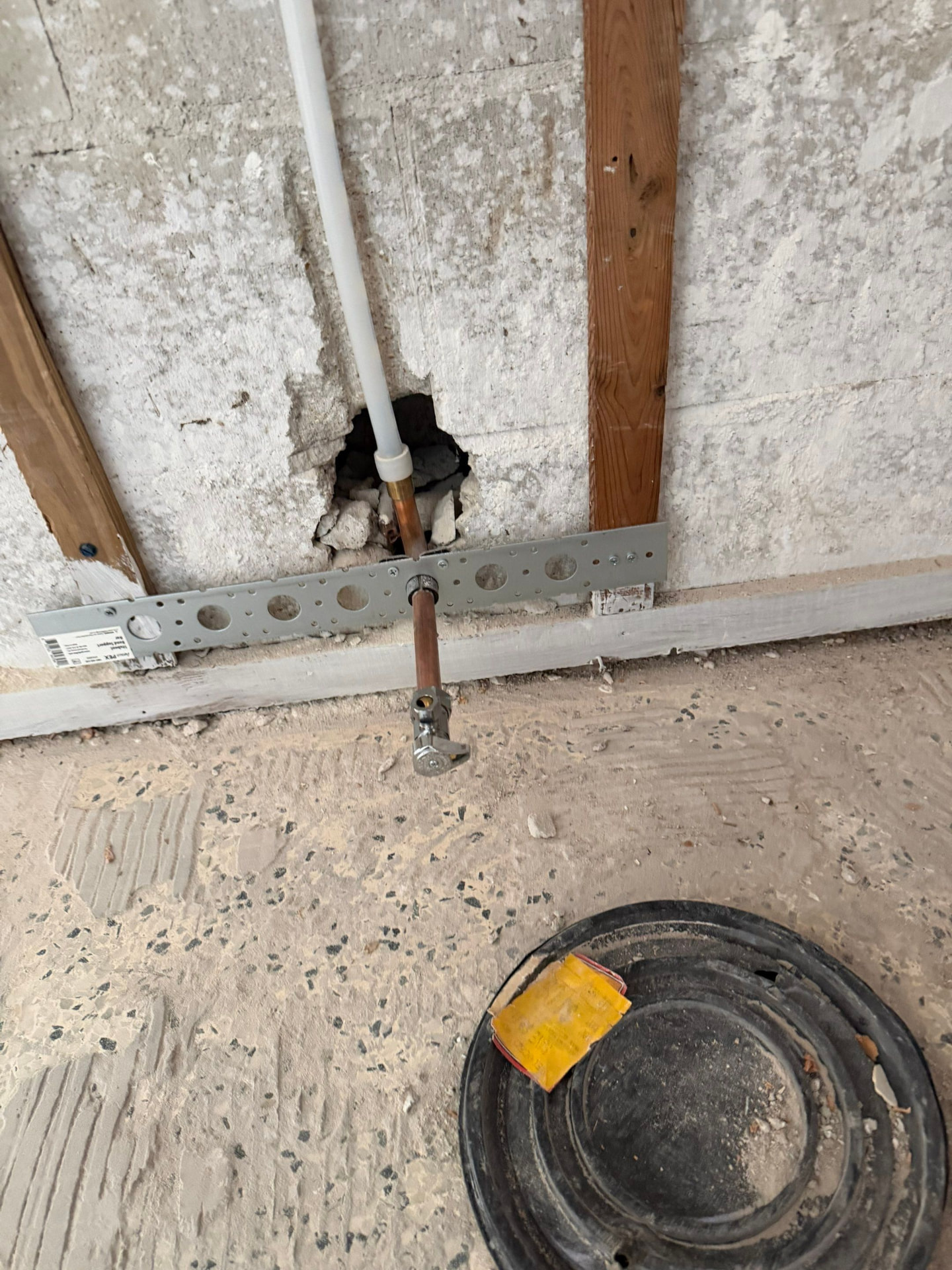
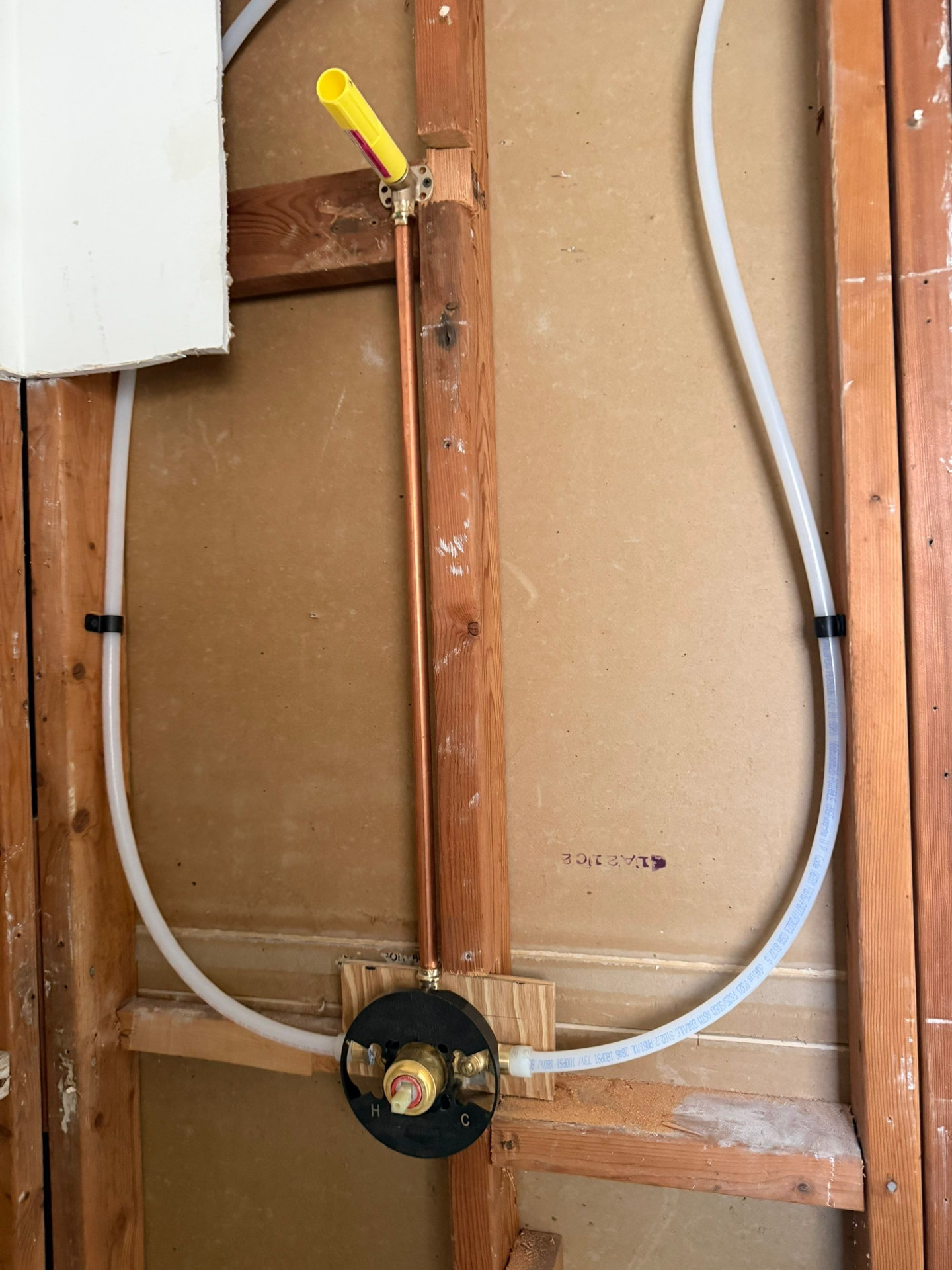
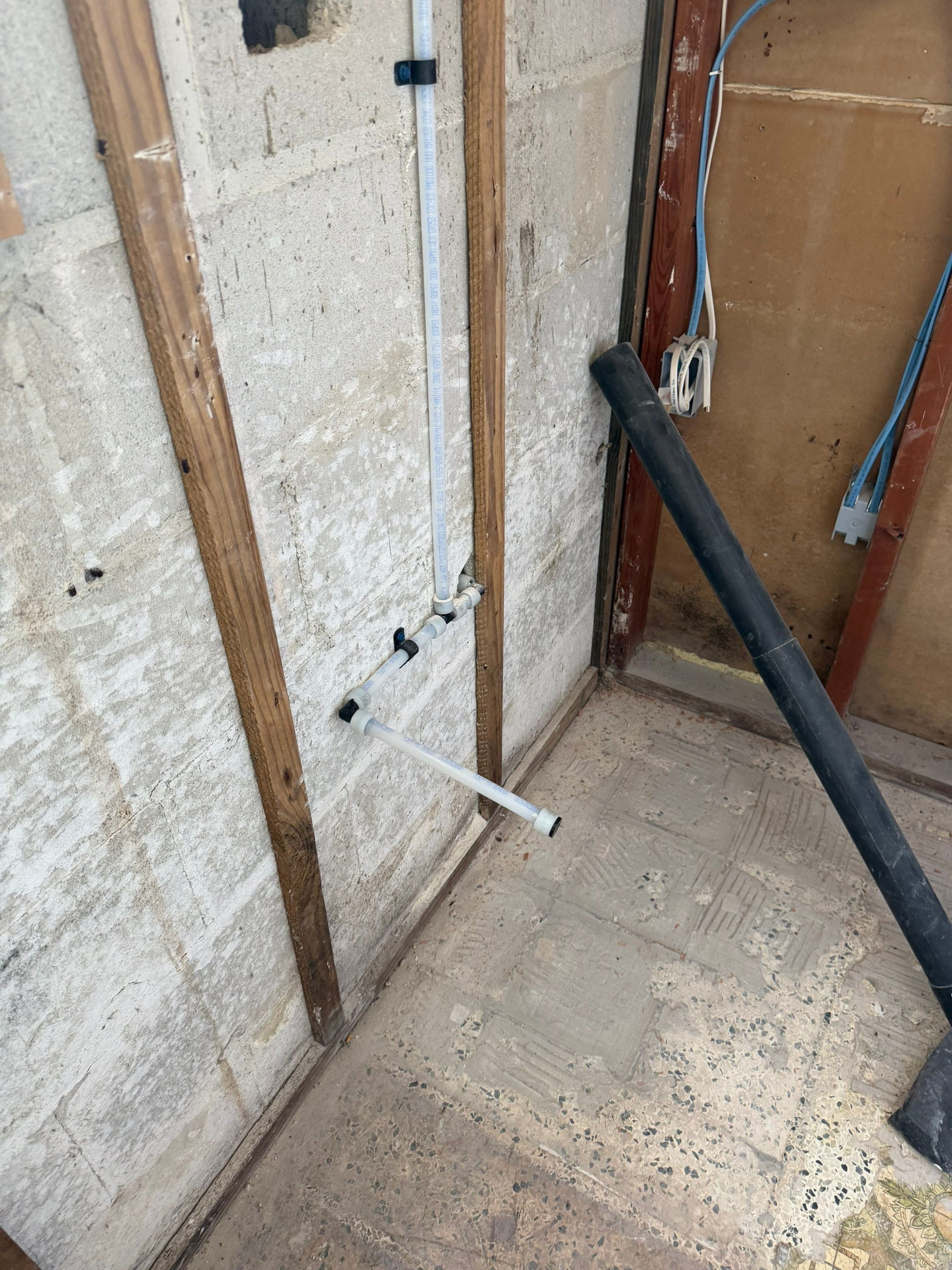
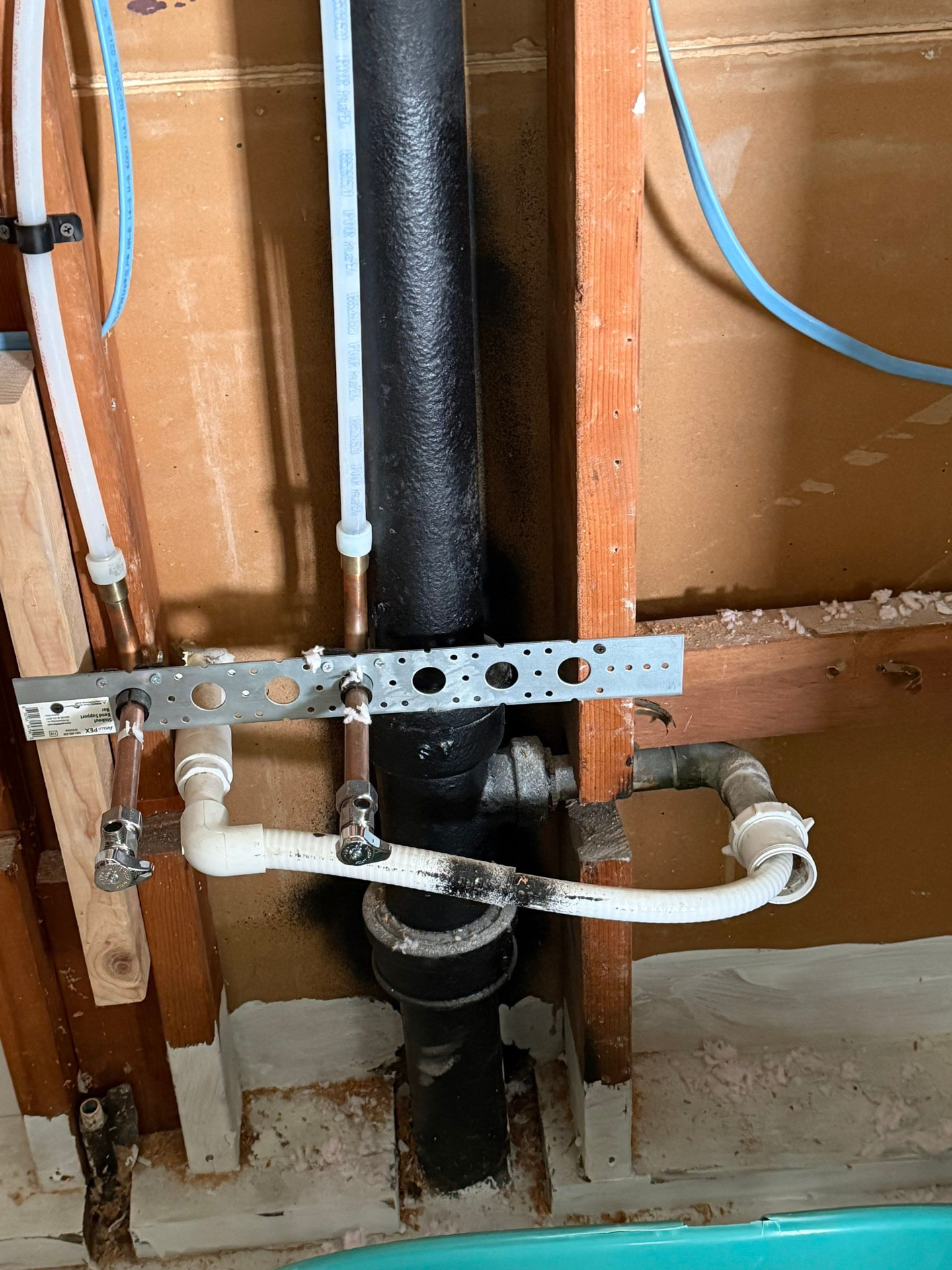
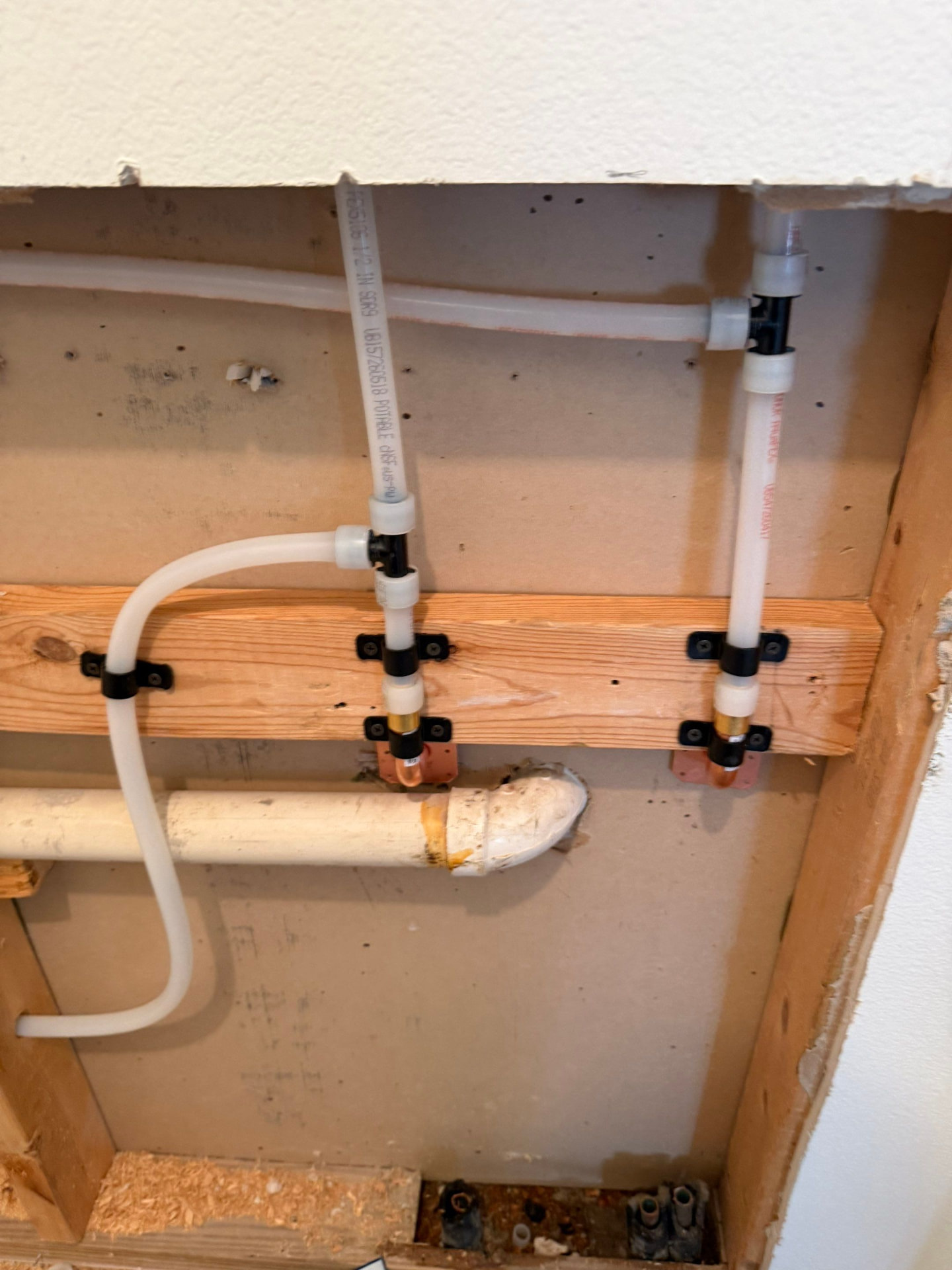
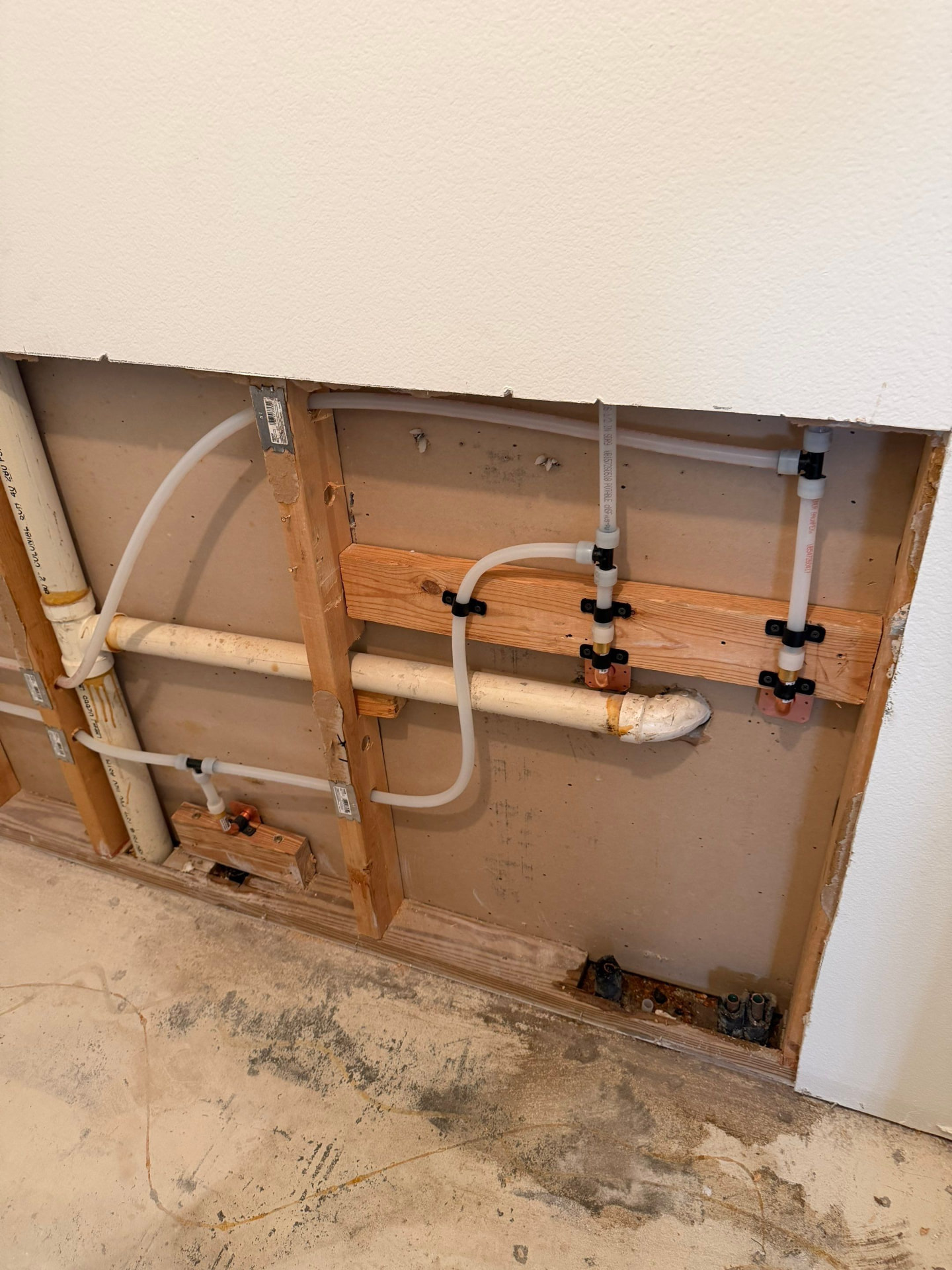
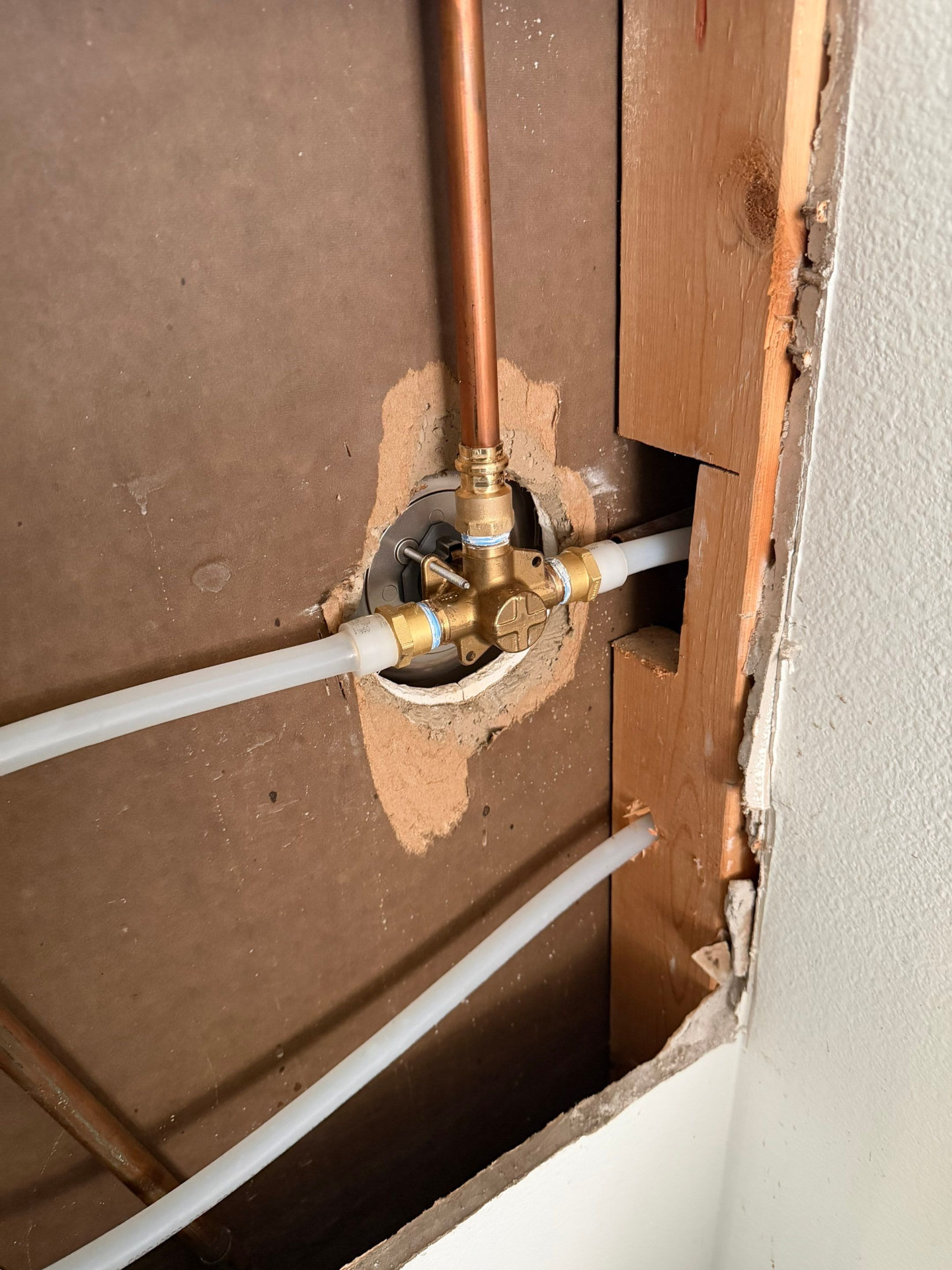
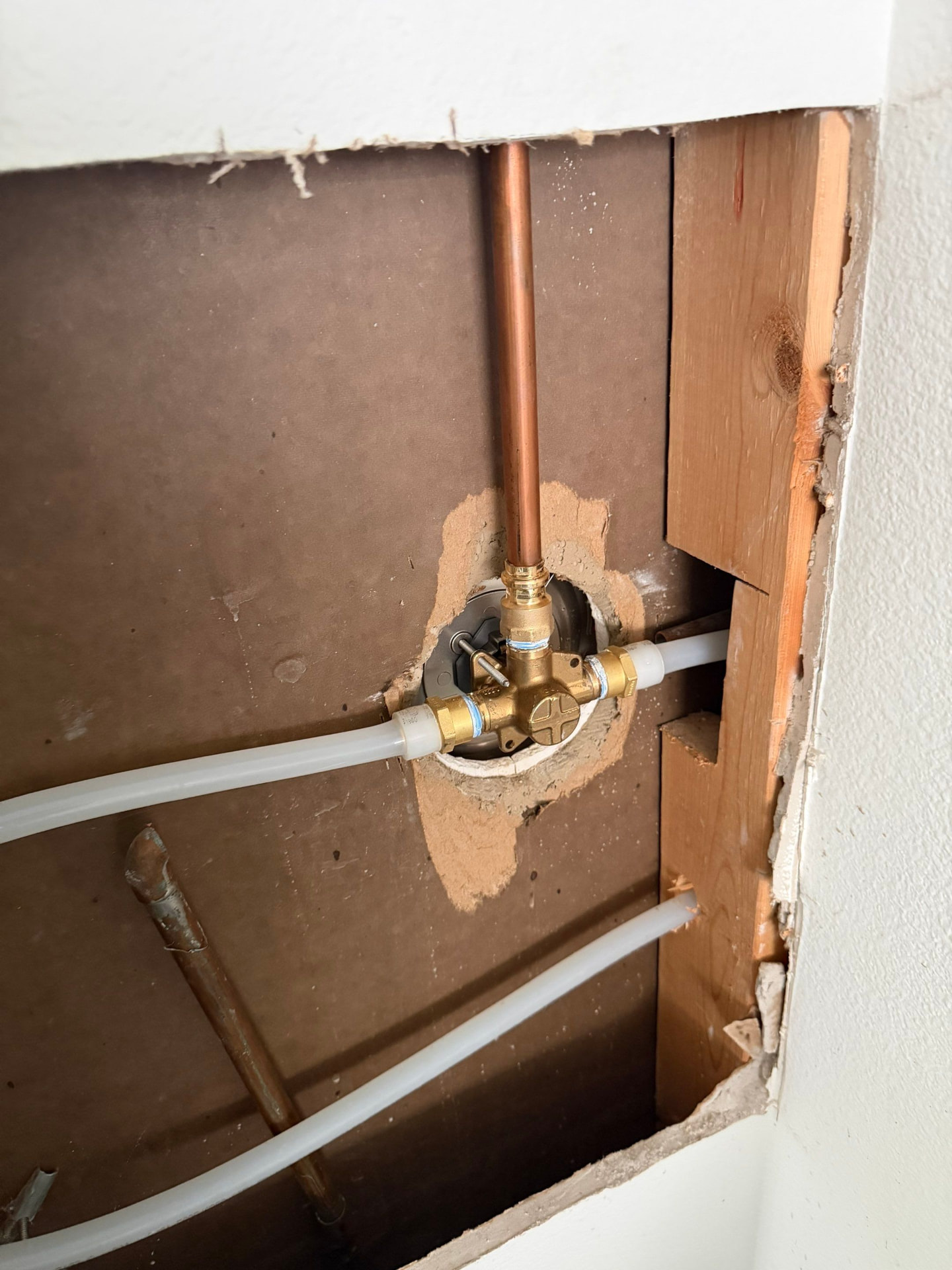
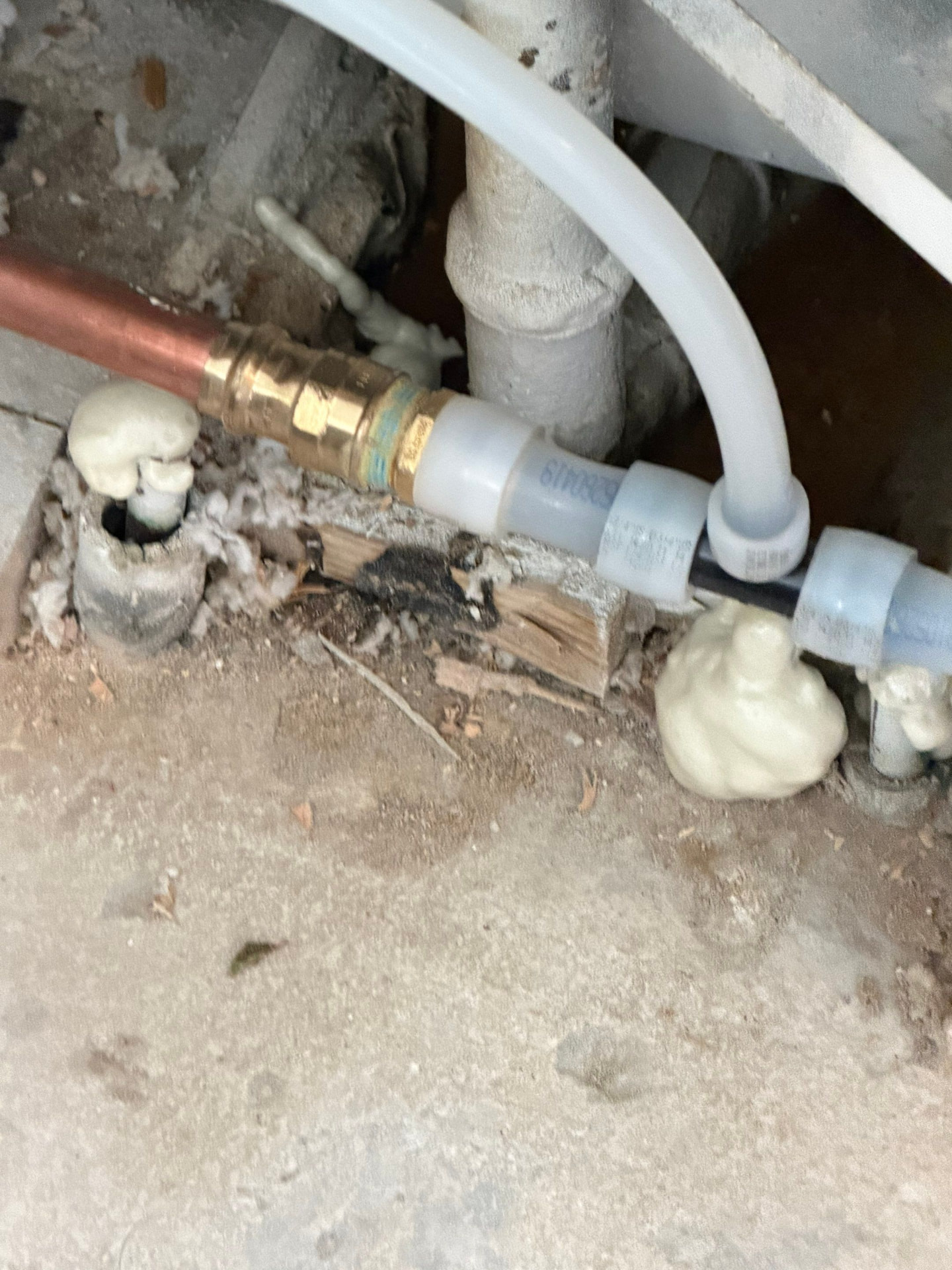
Photos from repipe work performed by Plumbing Detectives LLC. Every Sarasota job is documented from rough-in through inspection.
Answers
Frequently Asked Questions — Whole House Repiping in Sarasota, FL
If you’ve read this far, you now understand whole-house repiping in Sarasota better than most homeowners in this market ever get it explained. You know what the pipe materials are, what they do when they age, how the coastal question actually breaks down, why slab leaks on well water are a different problem than slab leaks on city water, and why the condo market operates by a completely different set of rules than a single-family home. If you’d like an honest assessment of what your Sarasota home or unit actually needs, call me at 239-388-3631. I’ll come out, evaluate the system, and tell you exactly what I find before recommending anything.
Plumbing Detectives LLC | Venice, FL | License CFC1434139
239-388-3631 | plumbingdetectivesfl.com