
Whole House Repiping · Venice Gardens, FL
Whole House Repiping in Venice Gardens, FL
Honest assessment first, always. Licensed master plumber CFC1434139. Aging copper, galvanized, and polybutylene replacement — call 239-388-3631.
Call Now239-388-3631I live in Venice Gardens. My home is on Chestnut Road, inside the same four boundary roads — Center Road, US-41, Briarwood Road, Bal Harbour Drive — that define this neighborhood. I work in homes here. I know the housing stock. And what I’m actually seeing in Venice Gardens right now is old copper.
The neighborhood was built between 1956 and 1972. Sarasota County’s own neighborhood plan documents the average construction year as 1969 — that’s the galvanized steel era in Florida, and yes, original galvanized is possible in homes that have never been touched. But in practice, most homes in Venice Gardens that still had original galvanized supply lines have already had a repipe at some point over the past few decades. What’s left behind in a large share of these homes is the copper that replaced it — 1970s and 1980s copper that’s now 40 to 50 years old and entering the pinhole leak window.
There’s also a polybutylene question. For homes that had work done between 1978 and 1995 — a repair, a partial repipe, a room addition — polybutylene may have come in during that window. It’s worth checking.
The repipe conversation in Venice Gardens today isn’t a single-material story. It’s a home-by-home story that starts with understanding what’s actually in the walls of your specific house.
My name is Mike Reynolds. I’m the owner of Plumbing Detectives LLC and a licensed master plumber, license CFC1434139. I’m not going to recommend a repipe until I know what I’m looking at. That’s how I work here and everywhere else.
The Local Story
What Makes Venice Gardens Different From the Broader Venice Market
Venice Gardens is a neighborhood of roughly 1,500 single-family homes built by one developer across 34 recorded plats in a single 16-year window. There are no newer pockets, no mixed eras, no gated communities from the 2010s sitting next to 1950s ranch homes. What you see on Gardenia Road is roughly what you see on Glen Oak Road and Pomelo Drive and Shamrock Boulevard — single-story concrete block construction, slab-on-grade foundations, homes that are now between 50 and 70 years old.
That uniform age is the defining plumbing fact about this neighborhood. Not the specific pipe material — that varies by what’s been done to each individual home over the decades. The age is the constant. And 50 to 70 years is past the expected service life of the supply materials used during the original construction era, and it’s approaching or within the risk window for the copper that replaced those original lines in homes that were repiped in the 1970s and 1980s.
Venice Gardens also sits three miles inland from the coast. That distinction matters for copper specifically. A regional repipe specialist notes that copper corrodes faster within five miles of the coast due to salt air exposure. Venice Gardens doesn’t carry that coastal acceleration factor the same way Venice Island or the waterfront communities do. The copper risk here is driven by age and water chemistry — Sarasota County’s moderately hard treated water at roughly 120 to 125 mg/L — not by proximity to the Gulf.
The neighborhood is also overwhelmingly owner-occupied, with many long-tenure residents who have lived in the same home for decades. That ownership pattern means some homes have been well maintained and repiped at the right time. Others have had nothing done since the original construction. Without looking, you genuinely don’t know which situation you’re in.
Three Scenarios
What’s Actually in Your Walls — The Three Scenarios
In my experience working in homes in this neighborhood, most Venice Gardens homes fall into one of three supply line situations. Knowing which one you’re in is the starting point.
Scenario 1: Aging copper from a past repipe
This is the most common situation I encounter in Venice Gardens. The original supply lines — whether galvanized or something else — were replaced at some point in the 1970s or 1980s, and that copper is now 40 to 50 years old. In Florida’s water chemistry, copper in this age range is in the pinhole development window. The hard water deposits scale inside the pipe. Chloramine treatment, which Sarasota County uses for disinfection, can contribute to interior pipe corrosion over time — though the county does dose orthophosphate as a corrosion inhibitor, which helps. Under-slab sections of copper that were laid without protective sleeving are particularly vulnerable, because they’re in direct contact with concrete that carries moisture and mineral salts.
Pinhole leaks in copper don’t always announce themselves loudly. Sometimes it’s a wet spot on the floor. Sometimes it’s a water bill that’s higher than it should be. Sometimes it’s a warm area on a tile floor near a hot water line. The first pinhole is a repair. The second and third within a short window is a conversation about whether the system as a whole is deteriorating.
Scenario 2: Galvanized supply lines still in place
I want to be honest about this one. The homes in Venice Gardens that still have original galvanized supply lines from the 1956 to 1972 construction era are in the minority at this point — most homes that needed a repipe have already had one. But galvanized is not impossible, particularly in homes where the same family has been there for decades without any plumbing work. If your home has never had a repipe and you notice declining water pressure, rust-colored water in the morning, or visible rust staining at fittings under sinks or at the water heater, galvanized is worth evaluating.
Galvanized steel supply pipe corrodes from the inside. The zinc coating that originally protected the steel depletes over decades, and rust builds up as a scale on the interior wall, narrowing the pipe’s internal diameter and restricting flow. By the time visible symptoms appear, the pipe has been corroding for years. The first pinhole in a galvanized system that’s 60 or 70 years old is a sign about the entire system, not just that one spot.
Scenario 3: Polybutylene from a repair or partial repipe
If your home had plumbing work done between 1978 and 1995 — a leak repaired, a section replaced, a room added — there’s a possibility that polybutylene was used in that work. Polybutylene was widely installed in Florida during that window. It’s a gray flexible plastic pipe stamped PB2110 on the side. It looks fine from the outside. The problem is that it degrades from the inside when exposed to the chlorine and chloramine compounds in treated municipal water, and its acetal plastic fittings are prone to sudden failure with no visible warning.
Polybutylene in a Venice Gardens home is unlikely in the original construction since the last plat was recorded in 1972, six years before polybutylene came into use. But it’s very possible in repairs and additions done during the 1978 to 1995 window. Many Venice Gardens homeowners don’t know whether the work done on their home years ago used polybutylene or copper. It’s worth checking.
Inside the Pipe
Why Copper Fails — What’s Happening Inside the Pipe
Most homeowners think of copper as a permanent material. It isn’t. It’s a long-lasting material that has specific failure mechanisms in Florida’s water chemistry, and 40 to 50 year old copper in this market is at the age where those mechanisms become visible.
Pinhole leaks in copper develop at points of interior corrosion. The process is driven by the water’s chemistry — dissolved minerals, disinfection compounds, pH — reacting with the copper interior. In Sarasota County’s moderately hard water, mineral scale deposits on the interior of copper pipe over time, creating a rough surface at which corrosion concentrates. Under-slab copper runs in direct contact with concrete are particularly vulnerable because the concrete environment adds external corrosion pressure from outside the pipe simultaneously.
One of the most common things I find in older Venice Gardens homes is copper that looks perfectly intact from the outside but has one or two pinhole leaks that have been repaired, and evidence that more are developing. The pipe surface externally gives almost no indication of what’s happening at the interior corrosion points.
An important distinction that affects how I read a copper failure: there’s a difference between Type L copper — the residential standard for potable supply — and Type M copper, which has a thinner wall and is designed for heating systems, not potable water supply. Homes where Type M was incorrectly installed for potable supply will show pinhole failures earlier than expected given the pipe’s age. If you’ve had repeated pinhole leaks on copper that’s not that old, the pipe type is worth looking at.
The repair-versus-repipe threshold I use as a starting point: one pinhole leak in otherwise sound copper is a repair. Two or three within a six-month window suggests the system is deteriorating broadly, not failing at isolated points. At that threshold the math on ongoing repairs versus a whole-system solution shifts. I’ll tell you honestly where your home falls when I look at it.
The Honest Answer
Do You Actually Need a Whole House Repipe?
This is the most important section on this page. Not every Venice Gardens home needs a repipe right now. Here’s how I think about it.
No — not right now:
The home has a documented, permitted repipe with PEX on record — either from a previous owner or your own work — and it was done correctly with proper inspections. The galvanized or older copper is gone. This conversation doesn’t apply to your home.
The copper is 40 to 50 years old but has had no pinhole leaks and a pressure test shows no issues. Aging copper isn’t automatically failing copper. I want to see what it’s actually doing before recommending replacement.
One isolated pinhole leak in copper that is otherwise holding pressure well. A targeted repair may be the right answer while monitoring the rest of the system.
Maybe — worth a closer look:
Copper that’s had one or two pinhole leaks within the past year. This may or may not indicate systemic failure. A pressure test and visual inspection of accessible sections tells me more than the symptom alone.
A home where some plumbing work was done during the 1978 to 1995 window and you’re not sure what material was used. A 15-minute assessment answers that.
Declining water pressure in a home with no documented repipe history. Could be the supply lines, could be something simpler. Worth evaluating before spending money.
A home coming up for sale or insurance renewal where the four-point inspection question about pipe material is going to come up.
Yes — a full repipe is the right answer:
Three or more pinhole leaks in copper within a six-month window. The system is deteriorating, not having isolated failures.
Active polybutylene throughout the home. The Citizens Property Insurance Corporation underwriting Rule 206.B makes this a documented insurance liability. Most private carriers treat it the same way. Full replacement is the standard recommendation.
Galvanized supply lines confirmed in a home that hasn’t been repiped — true original galvanized at 60 to 70 years old in Florida’s water is past any reasonable service life extension.
A four-point inspection that has flagged the pipe material and triggered a carrier non-renewal or a significant premium change.
Repeated spot repairs over the past few years and the pattern is continuing. At some point the ongoing repair cost and disruption exceeds the cost of a permanent solution.
Not sure what’s in your Venice Gardens home or whether it needs attention? I’ll assess the system honestly — pressure test, visual inspection of accessible sections, review of any repair history — and give you a straight answer. Call 239-388-3631. I’m already in the neighborhood.
Call Now239-388-3631Quick Reference
Pipe Material Quick Reference — Venice Gardens Context
| Pipe Material | Typical Lifespan | Common Failure Mode | Venice Gardens Context | Status |
|---|---|---|---|---|
| Copper (Type L) | 50–70 years | Pinhole leaks from interior water chemistry corrosion, accelerated by hard water and unsleeved under-slab runs | Most common material in homes repiped during 1970s–1980s. Now 40–50 years old. | Entering the pinhole risk window. Evaluate by actual leak pattern, not age alone. |
| Galvanized Steel | 40–50 years (30–40 in FL) | Internal rust scale narrows diameter, pressure loss, discoloration, eventual wall failure | Unlikely to still be original and unrepiped, but possible in homes with no plumbing history. | If confirmed present at 60–70 years old in FL water: replacement strongly recommended. |
| Polybutylene (PB2110) | 25–40 years (unpredictable) | Internal chloramine degradation, sudden acetal fitting failure with no visible warning | Possible in any repair or addition done 1978–1995 on an original Venice Gardens home. | Active insurance liability. Citizens Rule 206.B applies. Full replacement standard. |
| CPVC | 50+ years when installed correctly | Brittleness with age and heat cycling, cracking during repair attempts | May appear in 1980s–2000s repair sections. | Evaluate carefully before attempting repairs on aging installations. |
| PEX-A | 50+ years | No documented systemic failure in this market at current installed age | Current repipe standard. What a correctly done repipe uses today. | Scale-resistant, flexible, 25-year manufacturer warranty from Uponor. |
Note: Every Venice Gardens home has its own history. What’s in your walls depends on the original construction and every repair or repipe that’s happened since. A field assessment — not a chart — gives you the real answer.
Step by Step
What the Repipe Process Looks Like in a Venice Gardens Home
Venice Gardens homes are single-story concrete block on slab-on-grade foundations — the ideal setup for the overhead repipe method that’s standard across Southwest Florida.
Before the step-by-step, here’s the timeline at a glance: since I live in the neighborhood, I can usually get out for the initial assessment within a day or so of your call, depending on the schedule. Once you approve the written quote, most Venice Gardens repipes get on the calendar within a week or two — sooner when there’s an active leak, a four-point inspection deadline, or an insurance renewal date driving things. The repipe itself takes two days for most homes here, with water restored by the end of each day.
Assessment and written estimate. Before I quote anything I look at accessible pipe sections — under sinks, at the water heater, anywhere visible. I check the material, the condition, the repair history, and the attic access. I provide a written flat-price estimate that covers materials, labor, permit, and drywall patching. That number doesn’t change after the job starts without a call to you first. Once the quote is approved, we get you on the schedule — and urgent situations move to the front of it.
The permit. Venice Gardens is unincorporated Sarasota County. All repipe permits route through Sarasota County Planning and Development Services at the R.L. Anderson Administration Center, 4000 S. Tamiami Trail, Venice, FL 34293. Sarasota County offers VuSpex virtual inspection for plumbing trades, which can shorten the inspection cycle. We pull the permit and coordinate all inspections.
Day one — running the new lines. Existing supply lines are abandoned in place. New PEX-A lines run through the attic and down to each fixture location. I specify PEX-A with Uponor ProPEX expansion fittings — the pipe end is expanded, the fitting is inserted, and the tubing’s shape memory contracts it tight around the fitting. It’s a connection that improves over time as the material relaxes into full contact, backed by Uponor’s 25-year limited warranty. At every fixture — every sink, toilet, shower valve, tub, dishwasher, washing machine, and ice maker line — the supply terminates in a pre-fabricated copper stub-out. That stub-out is sweated copper on the PEX connection side, rigid copper on the fixture side, and anchored to wood blocking fastened to the stud behind the wall. Solid. Immovable. Not floating in a wall cavity.
Quarter-turn angle stops at every fixture. Each stub-out terminates with a quality quarter-turn angle stop — the valve under your sink, behind your toilet, at your dishwasher. This is what gives you individual shutoff at every fixture without turning off the whole house. Quality angle stops are specified on every job. Cheap compression-fit angle stops seize in Venice Gardens’ hard water within a few years. The right valve now saves a service call later.
Pressure test. Before any wall closes, the entire new system holds 100 psi for 15 minutes. Every connection is verified. No exceptions.
Rough-in inspection. Sarasota County inspector verifies the installation before walls close. That inspection record is your documentation — for your insurer, for a future sale, for the four-point inspection.
Drywall patching. Access cuts patched as part of the total job. Not a separate contractor for you to manage.
Final inspection and walkthrough. Every fixture tested. Final inspection closes the permit. Complete documentation package provided.
Plumbing Detectives LLC Professional Opinion
A repipe quote that doesn’t include the permit, the pressure test, the copper stub-outs anchored to blocking at every fixture, the quality angle stops, and the drywall patching in one total number is not a complete quote. These aren’t optional. They’re what a correct installation requires. Get one number that covers all of it from every contractor you compare — that’s the only honest basis for comparison.
Venice Gardens Home Profile
What It Costs — Venice Gardens Home Profile
Venice Gardens’ typical home — single-story, 1,200 to 1,800 square feet, two to three bedrooms, two baths — matches the size category for which the most detailed Southwest Florida repipe cost data exists.
Typical market range for this profile: approximately $4,500 to $7,500 for PEX-A, or $6,000 to $10,000 for copper. These are ranges, not a guaranteed quote. Every home gets a written flat-price assessment after the on-site evaluation.
A sample breakdown for a 1,600 to 2,000 square foot, three-bedroom, two-bath home: PEX-A pipe and fittings $900 to $1,500; quality angle stop replacements at all fixture locations $200 to $400; labor for a two-day crew $3,200 to $5,000; permit and inspections $200 to $400; drywall patching for access cuts $300 to $700. Total in that range: approximately $4,800 to $8,000 for PEX-A.
What drives the number in a Venice Gardens home specifically: fixture count matters as much as square footage — a 1,400 square foot home with three full baths costs more than a 1,600 square foot home with two. Attic access is the biggest single variable. Some Venice Gardens homes have generous attic clearance; others have low-pitch rooflines with limited space that require more time and creative routing. I’ll tell you which situation your home is during the assessment.
Insurance & Resale
The Insurance and Resale Reality for Venice Gardens Homeowners
The pipe material question comes up in Venice Gardens in two contexts: insurance renewals and home sales. Both are worth understanding before a problem surfaces.
For polybutylene specifically, the insurance situation is clearly documented. Citizens Property Insurance Corporation’s underwriting Rule 206.B declines new coverage for homes over 20 years old with active polybutylene piping. Most private carriers treat a four-point inspection that identifies polybutylene as grounds for automatic decline or non-renewal. If your home had repair work done between 1978 and 1995 and you discover polybutylene was used, this is the immediate conversation.
For aging copper and galvanized, the situation is less uniformly codified but increasingly real. Florida insurance advisors describe galvanized and significantly aged copper as materials that lead carriers to increase premiums, add deductibles, restrict water damage coverage, or decline coverage outright for older homes. The four-point inspection form that carriers require documents pipe material, visible rust at joints, discolored water, and low pressure as specific plumbing red flags.
After a completed repipe the documentation your carrier needs: the permit, the final inspection sign-off, the contractor’s invoice specifying the new material, and photographs of the new pipe. Confirm with your specific carrier what they require before scheduling the repipe — so you have exactly what they need ready at completion.
For a home sale in Venice Gardens, where many buyers are retirees getting four-point inspections done as a matter of course, the pipe material question comes up at the inspection. A documented, permitted repipe removes it as an obstacle.
What I Find in the Field
Common Repipe Mistakes I Find in Venice Gardens Homes
When I evaluate a repipe that someone else did in a Venice Gardens home, these are the problems I find most often.
Stub-outs not anchored to blocking. Every fixture connection — the copper stub-out where the supply line meets the angle stop under a sink, behind a toilet, inside a shower wall — needs to be fastened to wood blocking secured to the stud. Without that blocking, the stub-out is held in place by the PEX line alone. Every valve operation, every water hammer event, every bump under the cabinet moves it slightly. Over time that movement stresses the connection. I find stub-outs floating in wall cavities on jobs that were done quickly with no blocking installed.
Cheap angle stops at fixture locations. Quarter-turn angle stops are the standard. Compression-fit stops chosen for cost seize in Venice Gardens’ hard water within a few years — exactly when you need to shut off a fixture in an emergency. Quality angle stops are specified on every job I do.
Inadequate pipe support spacing. PEX supply lines need support brackets at required intervals — every 32 inches on horizontal runs, at every directional change. Long unsupported spans vibrate, sag, and create water hammer. This is invisible once walls close, which is exactly why it gets skipped on rushed work.
No pressure test before closing walls. The most serious omission. A repipe that wasn’t pressure tested has unknown integrity at every connection point. The first evidence of a failed fitting in a closed wall is water damage. I pressure test every job to 100 psi for 15 minutes before anything closes.
Incorrect transitions between pipe types. Where new PEX connects to existing copper that’s being retained — at a manifold or at a fixture — the transition fitting must be correct for both materials. I find improvised transitions with wrong fitting types and mismatched threads that hold water initially but create restriction or leak points later.
Buried fittings. Every connection point in a repipe must be accessible or in an approved location. I find fittings buried in patched wall sections with no access panel. This is a code violation and a maintenance problem on every future service call.
Partial repipe that left problem sections in place. This is specific to Venice Gardens homes where some copper was replaced and some wasn’t. If the sections showing pinhole failures were replaced but the under-slab runs were left in place, the slab leak risk remains. A partial repipe that doesn’t address the whole system defers the problem rather than solving it.
Plumbing Detectives LLC Tips
If your Venice Gardens home had plumbing work done sometime between 1978 and 1995 — a repair, a section replaced, an addition — check the pipe material in those sections specifically. Look for gray flexible plastic stamped PB2110. That’s polybutylene, and it carries the insurance implications described above regardless of how old the home itself is.
If your copper supply lines have had one or two pinhole leaks in the past year, don’t just patch and move on without thinking about it. Get a pressure test done on the whole system. One pinhole is a repair. A pattern is a conversation about the system as a whole. Knowing which one you have costs almost nothing and determines your next move.
Rust-colored water in the morning, particularly from hot water taps, is not a city water quality issue. It’s standing water that sat in a corroding pipe overnight picking up rust particles. If you’re seeing it, it’s the pipe telling you something.
If you’re planning to sell your Venice Gardens home, have a plumber evaluate the pipe material before listing — not after the buyer’s inspection flags something. Understanding what you have lets you make a business decision about disclosure, repair, or price, rather than reacting to a buyer’s inspector’s report at the worst possible moment in the transaction.
Ten Minutes Under the Sinks
How to Get a Starting Read on Your Pipe Material Before Calling
You don’t need a plumber to have a rough idea of what’s in your home. Ten minutes under sinks and at the water heater tells you a lot.
Under the kitchen and bathroom sinks. Look at where the supply lines connect to the angle stops at the wall or floor. The pipe coming out of the wall is usually the original supply material. Copper is orange-brown rigid metal. Galvanized is silver-gray rigid metal, often with visible rust staining at joints. Gray flexible plastic is either polybutylene (check for PB2110 stamp) or PEX (usually red for hot, blue for cold, no PB stamp).
At the water heater. The pipes at the top of the water heater are typically the most accessible supply sections in the home. The material there is usually a reliable indicator of the system throughout.
Any visible pipe in the garage, utility room, or attic. If your garage has any exposed supply lines, their condition tells you something about what’s inside the walls.
Documentation. If you have any permits from past plumbing work, the permit type and date can help establish what was done and when. A Sarasota County permit with a repipe or plumbing scope from the 1980s or 1990s tells me something about what’s likely in the walls. No permit from that era tells me something different.
Seasonal Residents
Returning Home After Time Away — What Venice Gardens Seasonal Residents Need to Know
Venice Gardens has a significant seasonal population. A meaningful share of residents spend months up north and return to their homes in the fall. If that describes you, the plumbing conversation that matters most isn’t a repipe — it’s what happens to a supply system that sat idle for months and whether it’s ready to be put back into full use.
Stagnant water and odors. When a home sits with no water flowing through the supply lines for several months, the water standing in the pipes — and in every P-trap under every drain — stagnates. When you return and turn on the first faucet, you may notice a stale smell or off-taste from the hot water side especially. In most cases this clears after running the system. In a home with an aging copper supply system or a depleted anode rod in the water heater, the off-taste can be more persistent and points to something worth having checked.
Exercise the valves. The quarter-turn angle stops under your sinks and behind your toilets were not designed to sit in one position for six months and then work perfectly in an emergency. If you haven’t exercised those valves — opened and closed them through their full range — before leaving or shortly after returning, do it. A valve that hasn’t moved in years seizes. A seized valve in a plumbing emergency is a serious problem.
Check for leaks before you settle in. Before unpacking and resuming normal life, walk the home and look for any signs of moisture — under cabinet bases, at the base of toilets, at the water heater connections, anywhere a slow drip could have been running for weeks unnoticed. A slow drip that starts in June and nobody catches until November is a much bigger problem than a slow drip caught the week it starts.
Whole-house drain-down before you leave. If you’re planning to be away for more than a few months and want to eliminate the risk of any slow leak going undetected, the most reliable option is a whole-house drain-down — turning off the main, draining the supply system completely before departure, and restoring pressure on return. A licensed plumber can install a proper drain-down valve that makes this clean and straightforward. It removes the standing water risk, the stagnation risk, and the undetected-leak risk in one step.
This is the kind of plumbing maintenance that doesn’t get talked about enough in Venice Gardens. It’s not dramatic. It’s not a repipe. But it’s what protects a home — and the plumbing investment inside it — through the months when nobody’s watching.
How I Work
Diagnosis First — In the Neighborhood I Live In
I won’t recommend a repipe in Venice Gardens without understanding what the system is actually doing in that specific home. The neighborhood’s age tells me the conversation is worth having. It doesn’t tell me what the right answer is for your house.
I’ve assessed Venice Gardens homes where the copper was 45 years old and holding well — the pressure test came back clean, no leaks, no symptoms. The right answer was monitoring, not replacement. I’ve assessed others where the copper showed a clear pattern of developing failures and the math on ongoing repairs versus a permanent solution was obvious. I’ve found polybutylene in sections of homes where nobody knew it was there.
Each home has its own story. My job is to read that story honestly and give you an accurate answer — not the answer that generates the largest invoice.
The Standard
Why Plumbing Detectives LLC
I named the company Plumbing Detectives LLC because the work starts with figuring out what’s actually wrong — not with selling the most expensive solution. In Venice Gardens, where I live and work, that means not assuming every home has the same problem just because the neighborhood was built in the same era. The era tells me what questions to ask. The assessment tells me the answers.
Diagnosis first. Explanation second. Action third.
License CFC1434139. Fully insured. We pull permits through Sarasota County Planning and Development Services.
Permits & Code
Professional Work Done Right
Venice Gardens is unincorporated Sarasota County. All repipe permits route through Sarasota County Planning and Development Services at the R.L. Anderson Administration Center, 4000 S. Tamiami Trail, Venice, FL 34293. All work is performed to the 2023 Florida Building Code, Plumbing, 8th Edition, with required rough-in and final inspections. We coordinate all permits and inspections as part of every job.
Documented Work
Repipe Work, Photographed on the Job
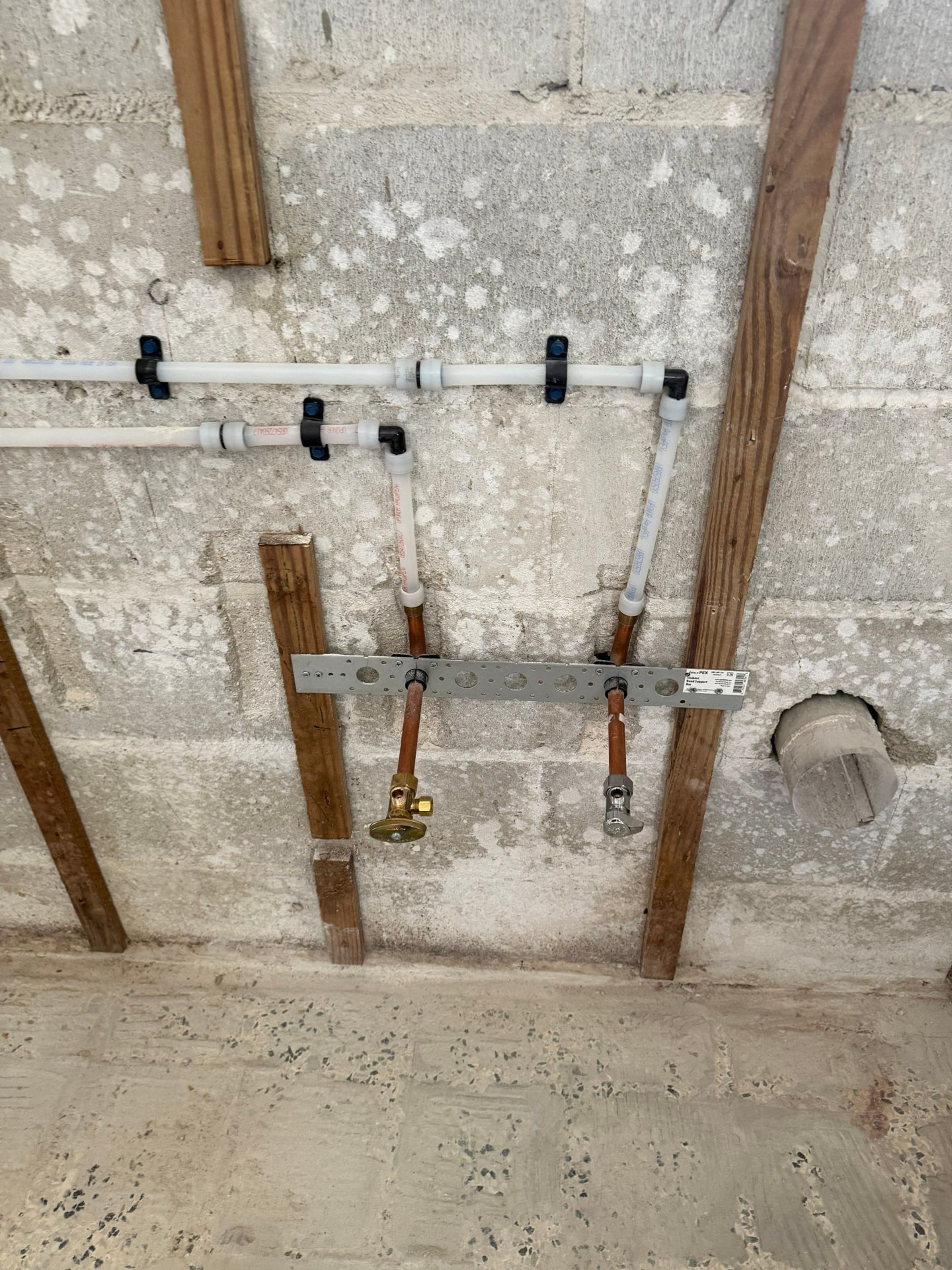
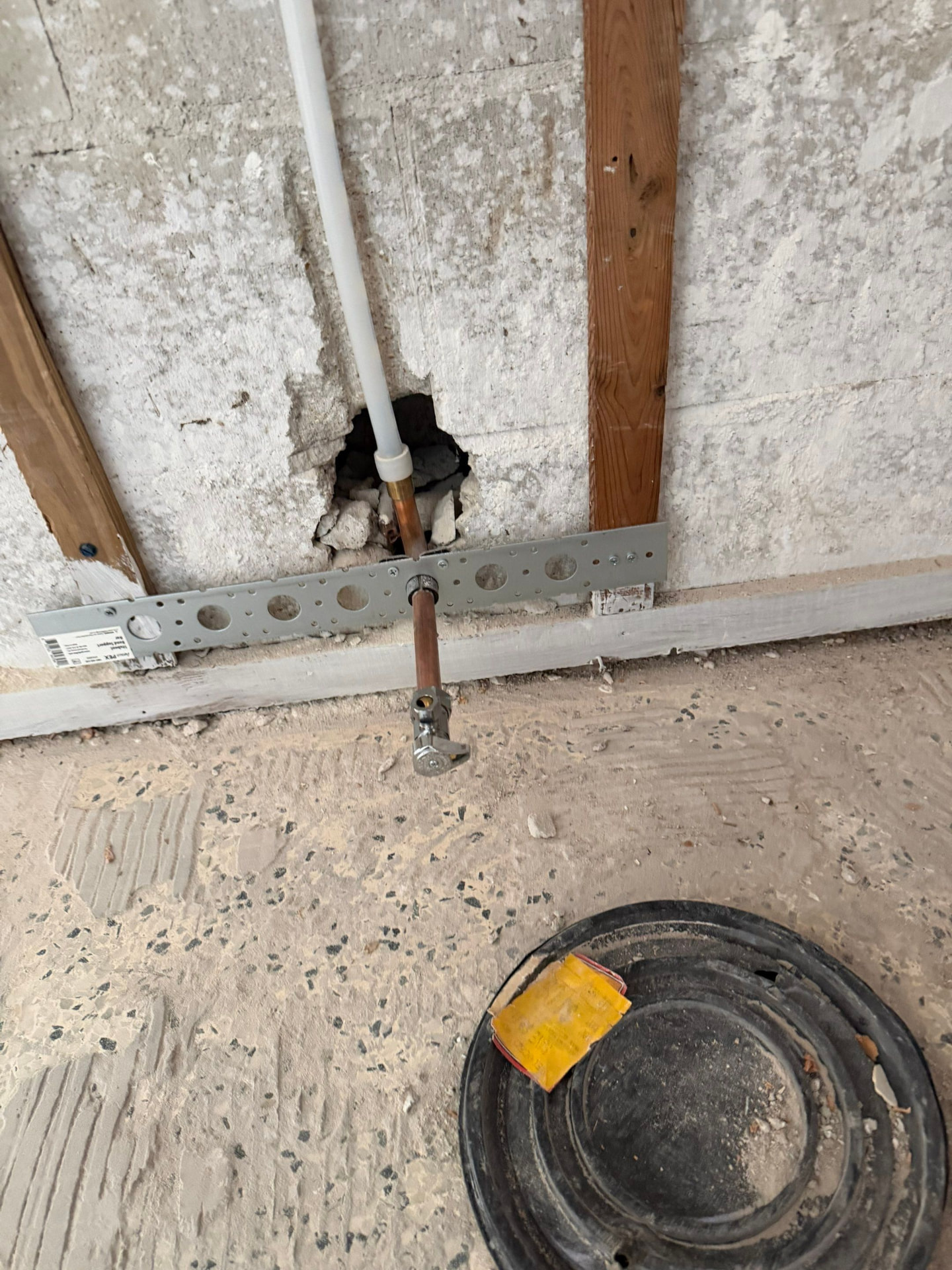
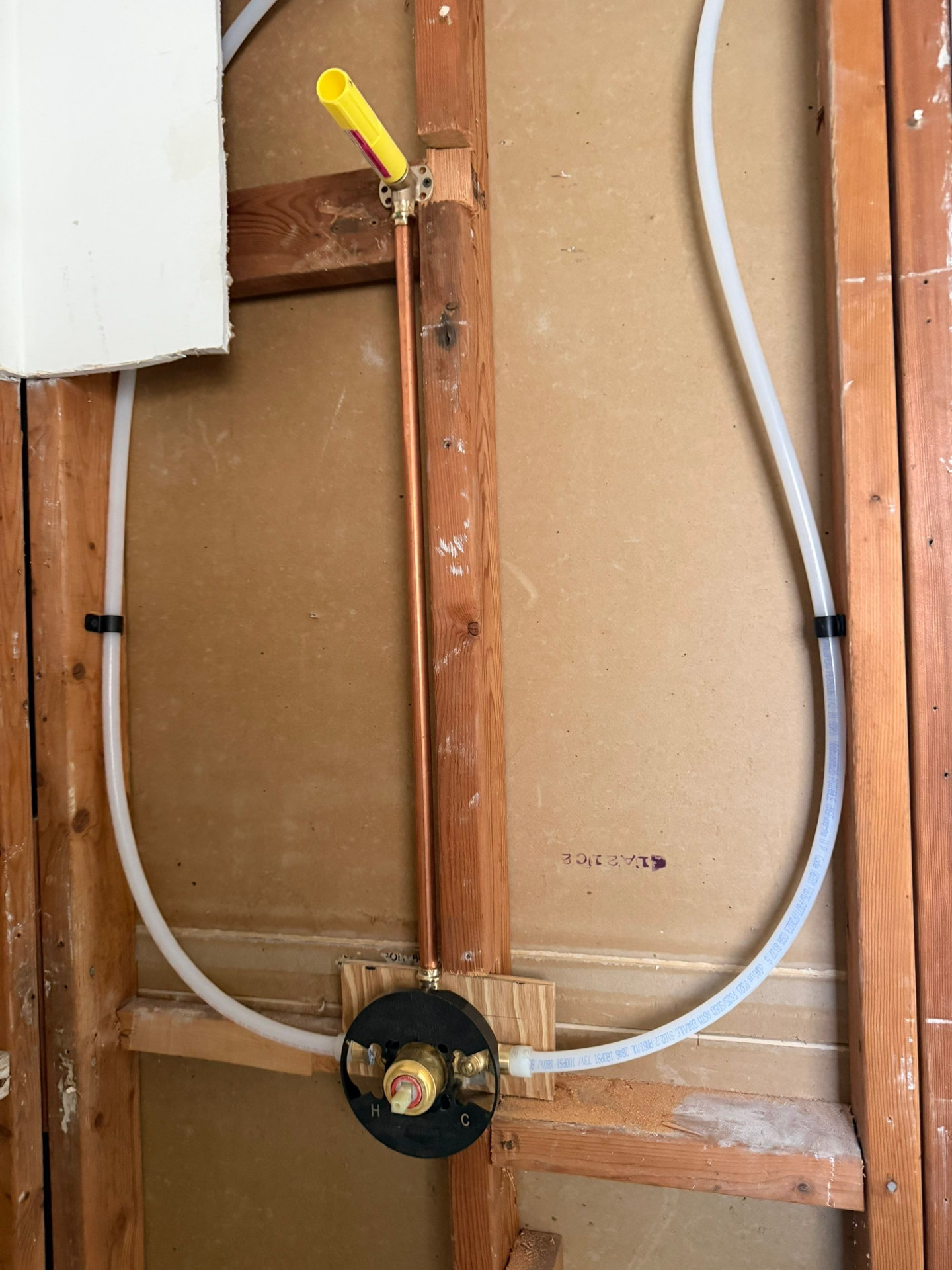
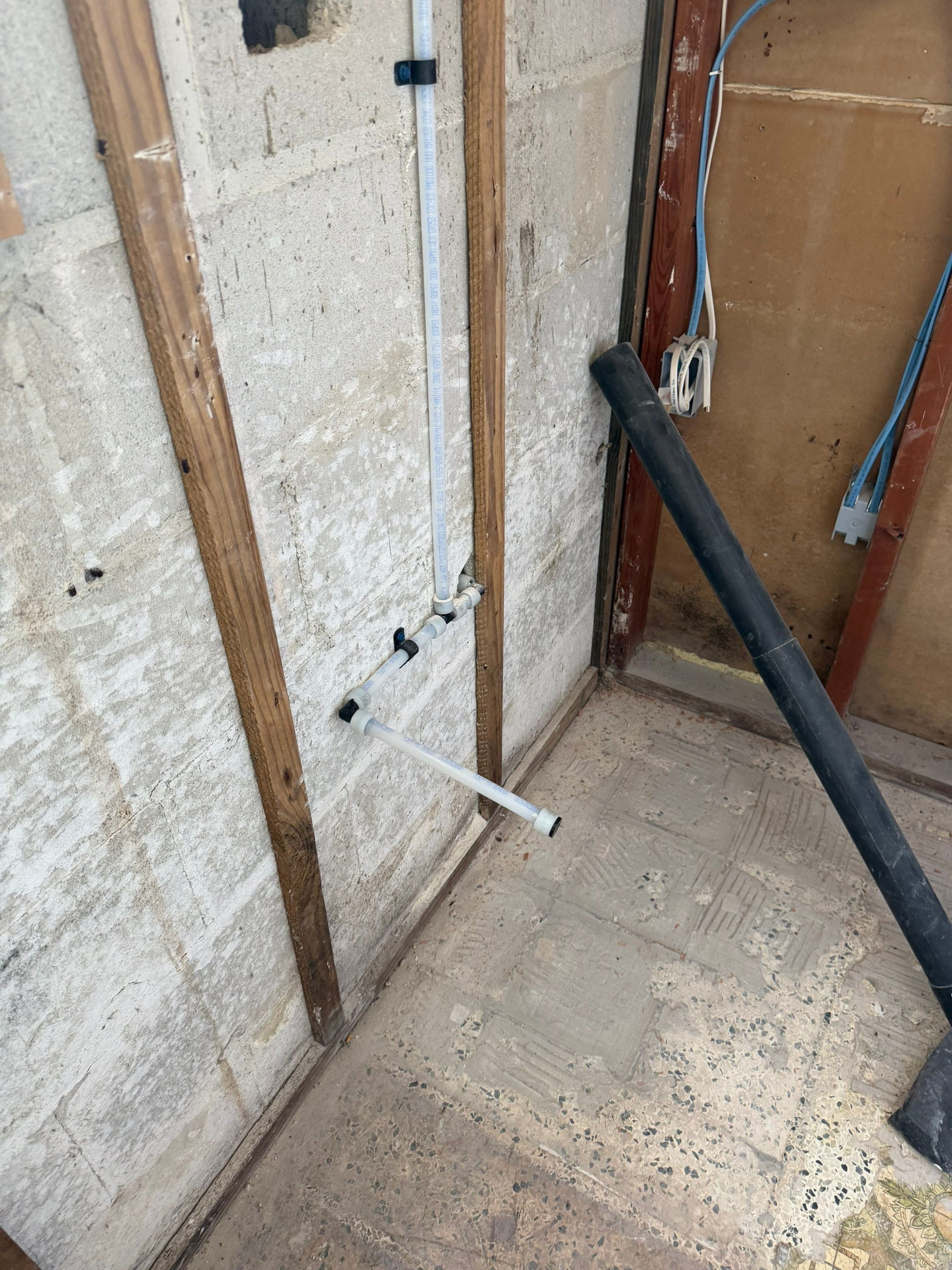
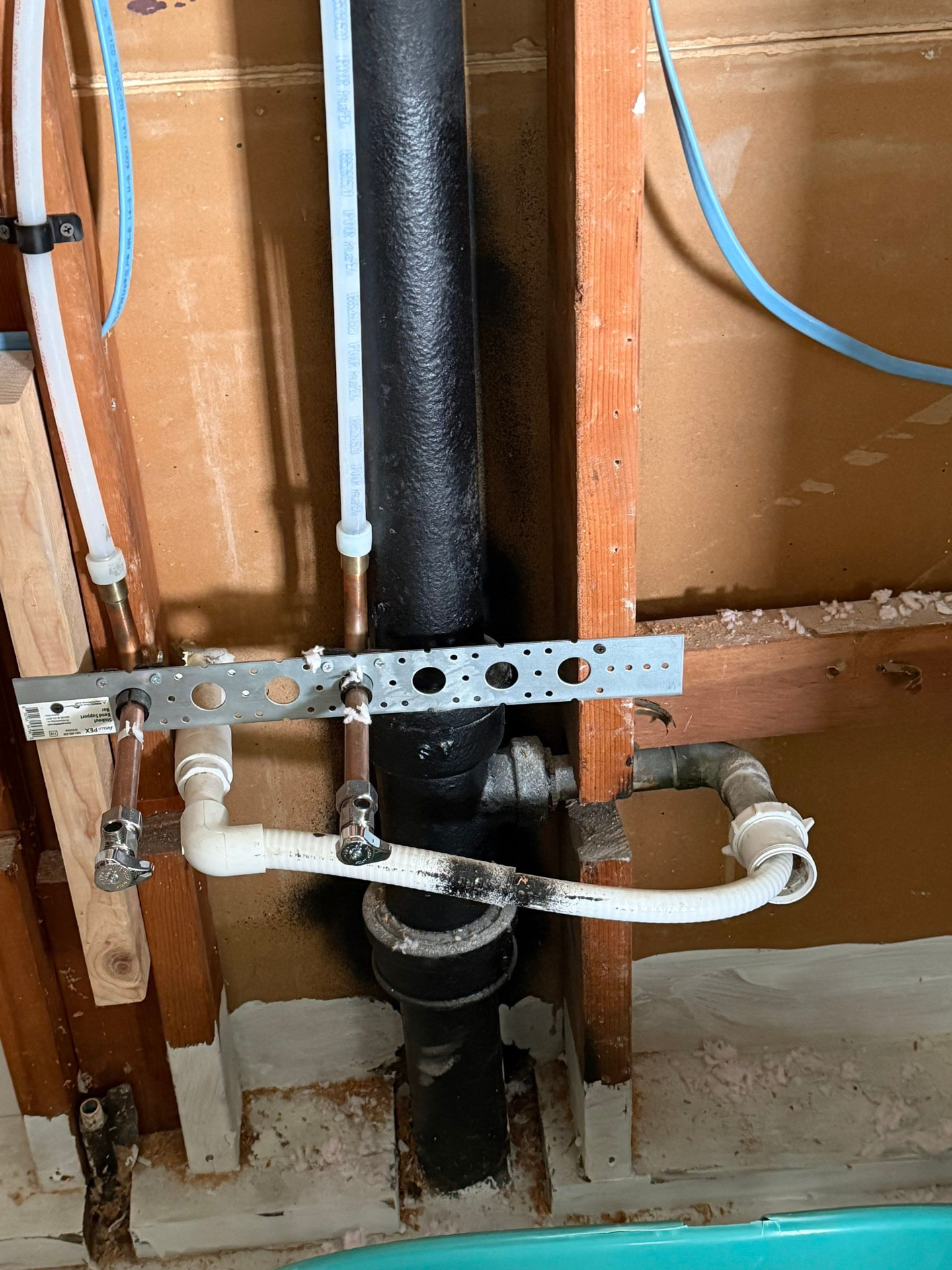
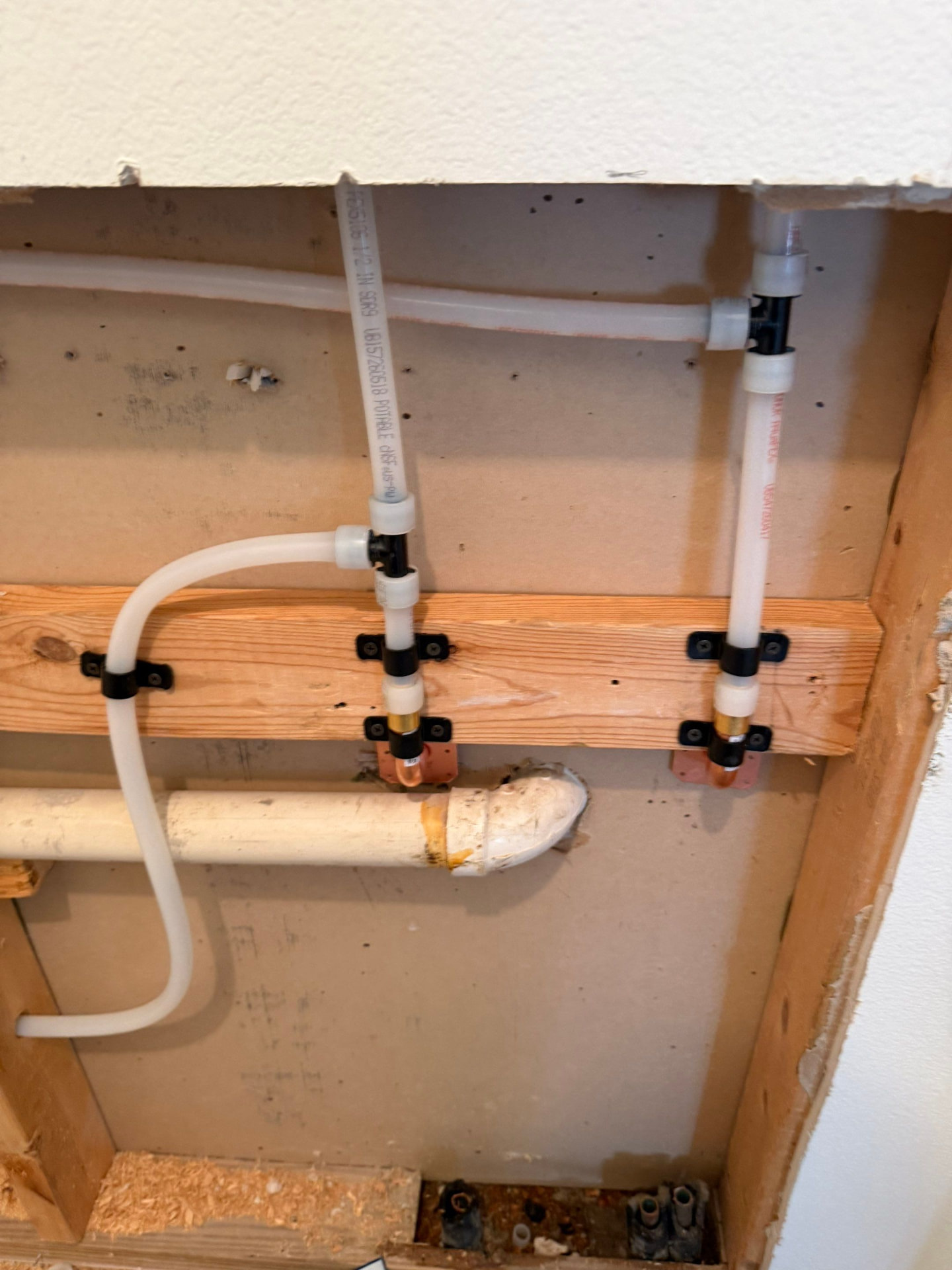
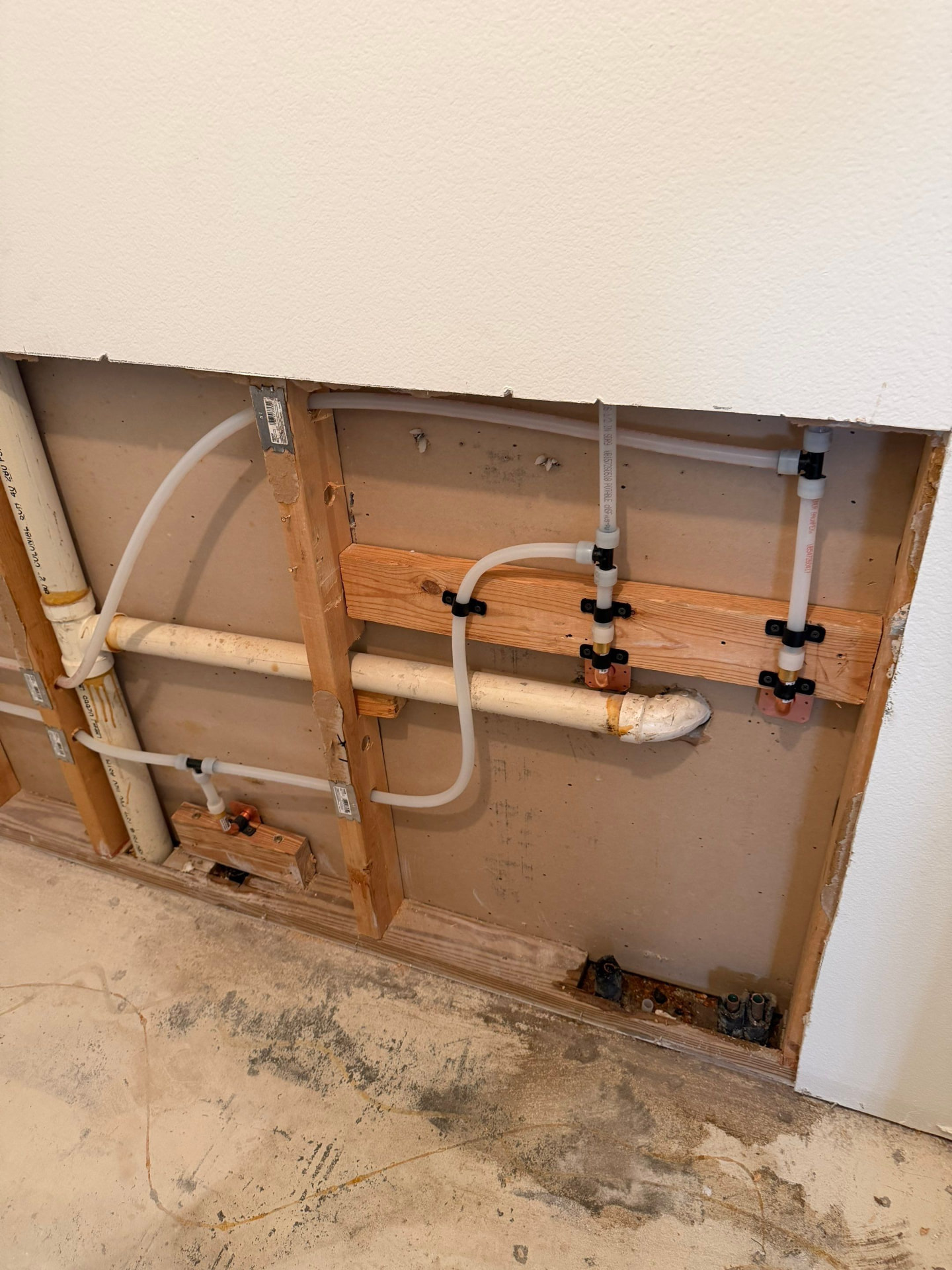
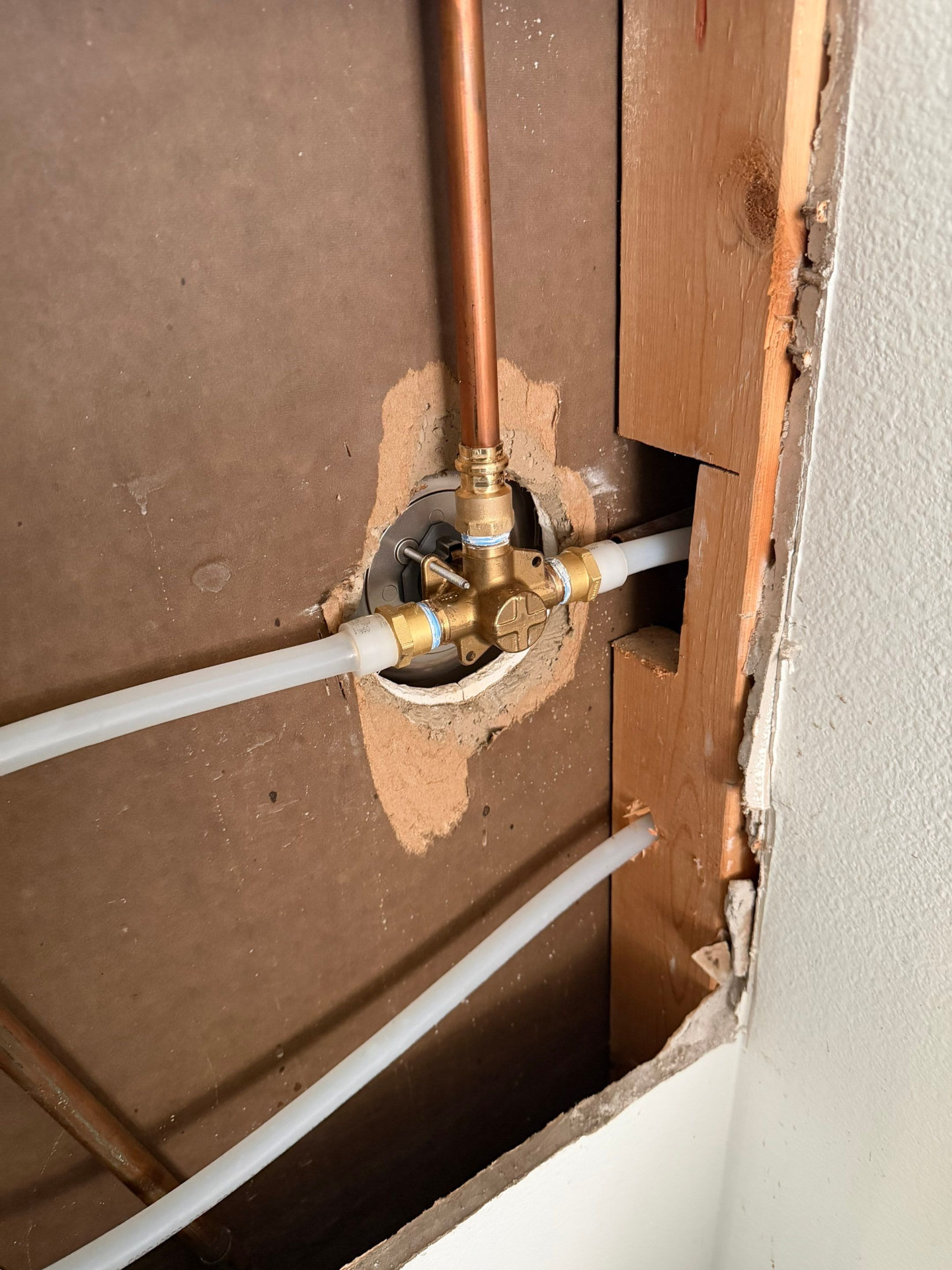
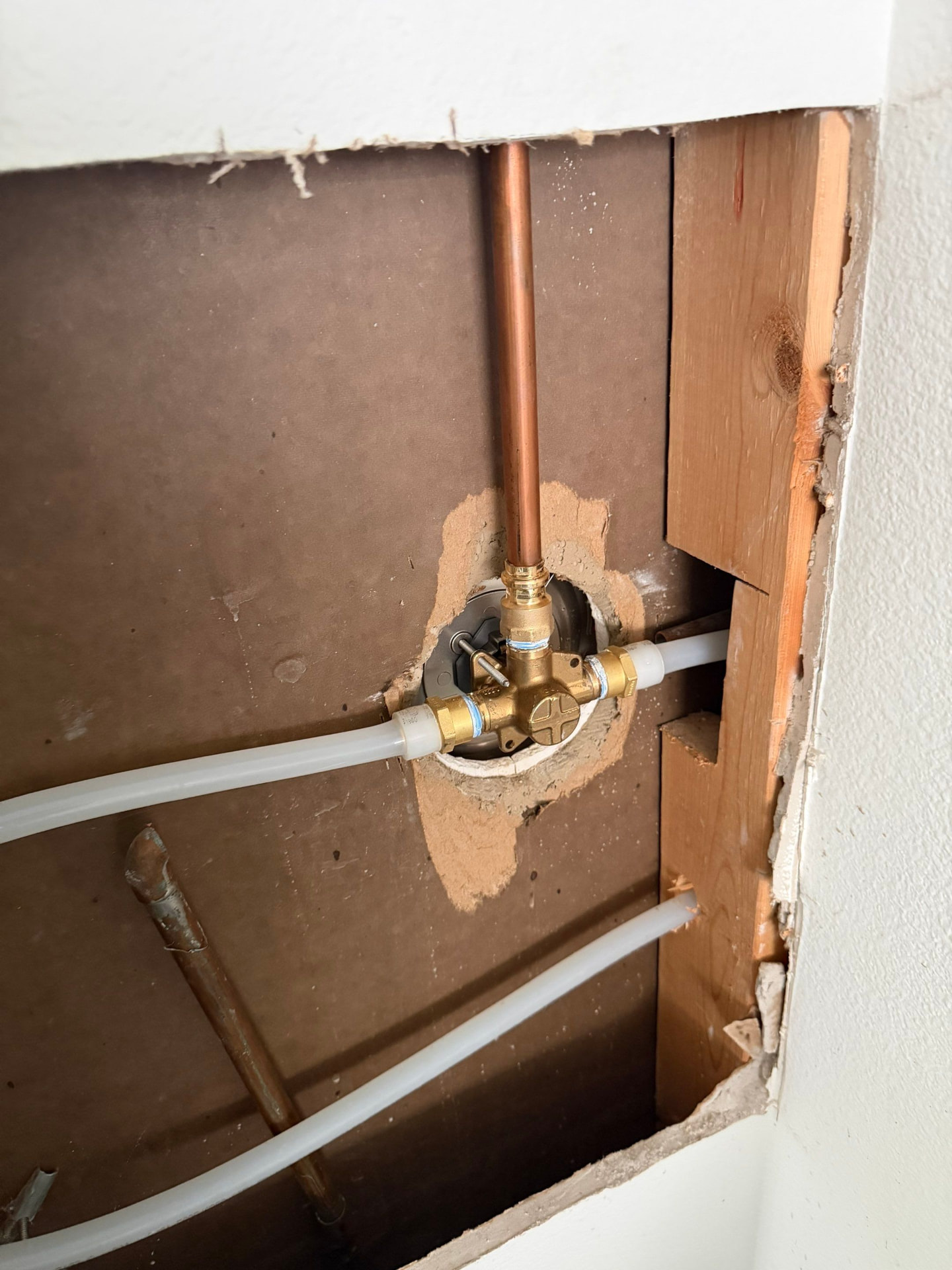
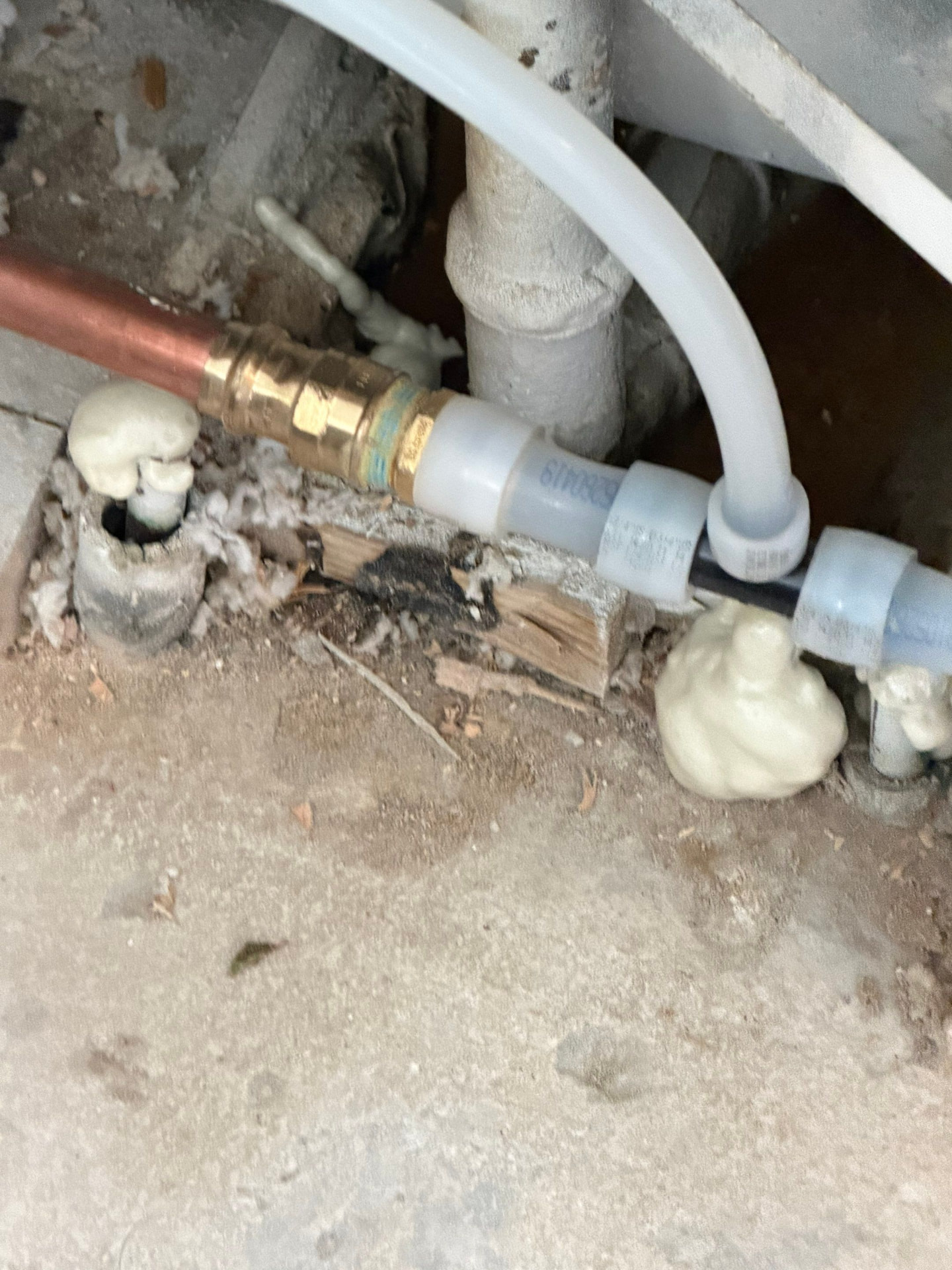
Photos from repipe work performed by Plumbing Detectives LLC. Every Venice Gardens job is documented from rough-in through inspection.
Answers
Frequently Asked Questions — Whole House Repiping in Venice Gardens, FL
If you’ve read this far, you now understand the repiping situation in Venice Gardens better than most homeowners in this neighborhood ever get it explained. You know what the different pipe materials do when they age. You know what the warning signs look like. You know what the process involves and what it costs. And you know the person writing this page lives on Chestnut Road. If your home is showing any of the signs described above — or if you simply want an honest answer about what your supply lines are actually doing — call me at 239-388-3631. I’ll come out, look at the system, and tell you exactly what I find before I recommend anything.
Plumbing Detectives LLC | Venice, FL | License CFC1434139
239-388-3631 | plumbingdetectivesfl.com