
Water Softeners & Water Filtration · Sarasota, FL
Water Softeners & Water Filtration in Sarasota, FL
Chloramine-rated catalytic carbon, honest sizing from your tested water. Licensed master plumber CFC1434139.
Call Now239-388-3631Here’s the question I ask Sarasota homeowners who tell me they already bought a whole-house filter and their water still tastes like a swimming pool: “Does your filter use catalytic carbon, or standard carbon?” Almost nobody knows — and that one spec is usually the whole story. Sarasota’s utilities disinfect with chloramine, not plain chlorine, and chloramine walks straight through the standard carbon filters sold in big-box stores. The filter isn’t broken. It was never built for this water.
I’m Mike Reynolds — owner of Plumbing Detectives LLC, licensed master plumber, CFC1434139, based in Venice and working across Sarasota. Water treatment here is a chemistry problem before it’s an equipment problem, and this page walks through what’s actually in Sarasota water, why so much off-the-shelf equipment underperforms in it, what each system genuinely does, and how a properly sized install gets designed — with the math on the quote where you can check it.
The Chemistry
What’s Actually in Sarasota Water
Sarasota supply comes from more than one system — the City of Sarasota runs its own utility, Sarasota County Public Utilities serves large surrounding areas with regionally blended supply — but the fundamentals are shared:
It starts hard. Every source in this region draws from or blends with groundwater that’s spent geologic time dissolving the Floridan Aquifer’s limestone. Published hardness figures for the greater Sarasota area span roughly 12 to 23 grains per gallon depending on the system, the blend, and the year — and the industry scale tops out at “very hard” above 10.5. Even after utility treatment, hardness isn’t something municipal plants remove; it arrives at your meter intact.
It’s disinfected with chloramine. Both major suppliers use chloramine — chlorine bonded with ammonia — because it stays active in the distribution pipes longer than free chlorine. Good for the utility’s disinfection mandate; stubborn for your filtration. Chloramine is the reason for the swimming-pool taste that survives cheap filters, and the reason media selection matters more here than in most of the country: it takes catalytic carbon to break it down effectively.
Some areas add wrinkles. Older neighborhoods east of the Trail, pockets toward Fruitville and out east carry private wells with the usual well suspects — sulfur, iron, occasionally tannins. And barrier island and bayfront homes sit on supply runs where water sits warm in long distribution lines, which doesn’t change the chemistry but does concentrate the taste complaints.
Because the published numbers genuinely vary by system and year, we don’t quote off a website: every estimate starts with a free in-home water test — hardness, chlorine/chloramine, iron, TDS, and pH at your own tap. Equipment gets selected from your numbers, not a regional average.
The Damage
What This Water Is Doing to a Sarasota Home
Water heaters scale first and fastest. Heat pushes dissolved calcium out of solution, so it deposits exactly where water gets hot — tank floor, elements, anode rod. The popping, rumbling water heater is the sound of sediment boiling; the early tank death is the bill. It’s why every water heater we install gets the Corro-Protec powered anode upgrade, and why softening upstream protects the whole hot-water side.
Valve cartridges seize years early. Sarasota service work is full of scaled Delta, Moen, and Kohler cartridges that would have lasted a decade in softer water. The valve is the one part you can’t reach without opening the wall — hard water attacks it anyway.
Appliances pay the quiet tax. Dishwashers, washing machines, ice makers, coffee equipment — anything with small passages, solenoids, or heating elements accumulates the same mineral load. Cloudy glassware and spotted fixtures are the visible fraction.
And the taste tax is daily. Chloramine’s pool-water note in coffee, in cooking, in every glass — that’s the filtration side of the problem, separate from hardness, and it’s the one most Sarasota homeowners have already tried and failed to fix with the wrong carbon.
The Equipment
The Equipment, Honestly — What Each System Does and Doesn’t Do
Catalytic carbon filtration fixes the chloramine problem — and only that problem. Our Safety Zone WHF series runs catalytic coconut shell carbon, the media grade that actually breaks chloramine down. Two configurations: WHF-NE non-electric (no power, no drain — install, forget, replace media in five to seven years) and WHF-A automatic backwashing (power and drain required, self-rinses on schedule to extend media life). Filtration removes the taste, odor, and chlorine chemistry. It removes zero hardness.
A salt-based softener removes the hardness — and only that. The Safety Zone WC series (WC-100 through WC-500-150, metered, brine tank included) runs the only process on this page that physically takes calcium and magnesium out of your water: ion-exchange resin captures them, then flushes them down the drain during regeneration. Metered control matters — regeneration happens based on your actual usage, not a timer, which keeps salt consumption efficient.
The COMBO is usually Sarasota’s right answer, because Sarasota has both problems. Chloramine and very hard water together is precisely the pairing the COMBO systems exist for: catalytic carbon first — fixing taste and protecting the softener’s resin from oxidant damage, which extends resin life by years — then softening behind it. Two-tank builds for larger homes, single-tank space savers where the garage is tight.
The RO-4 finishes the drinking tap. Under-sink reverse osmosis, own faucet, quick-change cartridges — bottled-water quality at the kitchen sink, and the complete answer to the softened-water sodium question for anyone on a restriction.
Salt-free conditioners — the Crown5 we carry, and the heavily marketed Halo 5 — do not soften. Template-assisted crystallization changes how minerals crystallize so scale adheres less; the minerals stay in the water, and a hardness test reads the same after treatment as before. Effective range is generally cited around 10 GPG and below — Sarasota runs past that. The Halo 5 deserves its own sentence because so many people ask: it’s a legitimate multi-stage filtration system with a salt-free conditioning stage. Good at chlorine, taste, odor. Not a softener — its own materials acknowledge the minerals remain. The fair comparison is Halo 5 versus our COMBO: both filter; the COMBO also removes the hardness.
Plumbing Detectives LLC Professional Opinion
Two specs expose almost every bad water treatment quote in Sarasota. One: “Is the carbon catalytic?” — because standard carbon against this county’s chloramine is a filter in name only. Two: “Show me the grain capacity and the sizing math against my tested hardness.” A legitimate installer answers both in under a minute. A product-first sales operation changes the subject. And if anyone pitches a salt-free system as the cure for hard water here, ask them to put the post-install hardness number in writing — that request has ended more high-pressure pitches in living rooms than any other sentence I know.
The Math
How We Size a System — The Actual Math
Daily grain load = people × ~75 gallons per person per day × tested hardness. A four-person Sarasota household at 18 GPG: 4 × 75 × 18 = 5,400 grains a day, 37,800 a week — landing in the WC-250 class with healthy margin. A downtown condo couple sizes smaller; a six-bath home east of I-75 sizes up. The bathroom-count shorthand on spec sheets (WC-100 for 2 baths, WC-150 for 3, up the line) tracks because bathrooms track household size — but your quote gets built from the formula with your tested number in it, on paper. Undersized systems regenerate constantly and eat salt; oversized systems waste money and sit too long between cycles for resin health.
Local Context
Condos, HOAs, and Sarasota’s Housing Mix
Sarasota’s housing stock complicates treatment in ways Venice’s mostly doesn’t, and it’s worth being straight about what fits where.
Condos and high-rises: whole-house treatment usually isn’t yours to install — the supply belongs to the building. What is yours: the RO-4 under the kitchen sink, which needs no exterior equipment and delivers the drinking-water fix entirely inside your unit. For hot-water-side scale in a condo, the conversation is your water heater and its anode, not a softener you can’t legally connect.
Deed-restricted communities and HOAs: exterior equipment placement (garage vs. outdoor pad, screening requirements) sometimes needs association sign-off. We’ve dealt with it; raise it early and it’s paperwork, not a problem.
Single-family on county or city supply: the full menu applies — and the older ranch stock in neighborhoods like Gulf Gate and South Gate mostly predates softener loops, meaning we cut the main and build the connection under license, same standard as every install on this site.
East-county wells: full chemistry test first, pre-treatment train built to the results — sulfur, iron, and tannins each get their own stage ahead of the softener, in the right order, or the resin pays for the shortcut.
The Work
Installation — What a Proper Job Looks Like
The tee order is the design. Irrigation and hose bibs come off before treatment — you don’t buy salt capacity to soften a lawn. Kitchen cold can bypass the softener or feed the RO-4. Carbon ahead of resin, always. Treated water on to the heater and the house.
Placement gets engineered for Florida. Garage heat and direct UV kill valve heads early; placement, shade, and service clearance get planned, not improvised.
Air gaps on every drain line. Regeneration discharge and brine overflow run as two separate lines, each with a code-required air gap — the same cross-connection protection I’ve written about at length on this site. A drain line jammed straight into a standpipe is a contamination path wearing a zip tie.
License and permit, same standard as everything here. Cutting the potable main is plumbing work under CFC1434139, permitted where the city and county require it. A treatment company that waves that off is telling you exactly who’s showing up to cut your water line.
Plumbing Detectives LLC Tips
Pool-water taste surviving your existing filter? Check the media spec — if it doesn’t say catalytic carbon, it’s fighting chloramine with the wrong tool, and no cartridge swap fixes that.
Unscrew a faucet aerator and look at the screen — the white crust is your hardness in person, and it’s the free five-second before/after test for any treatment install.
Condo owner? Skip the whole-house sales pitch entirely — the RO-4 at the kitchen sink is the upgrade that’s actually yours to make, and it’s the most affordable item in the lineup.
On a sodium restriction? Softened water adds only a modest amount, but the clean answer is a kitchen cold bypass or RO at the drinking tap — softened house, unsoftened glass.
Pricing
What This Costs — Honest Context
Equipment spans a real range — catalytic carbon filtration, salt softening, COMBO filtration-plus-softening systems, salt-free conditioning, and the RO-4 at the kitchen sink all carry different investment levels depending on capacity, features, and what your specific install requires.
What I won’t do is publish a price range on this page and lock myself into a number before I’ve seen your home, your tested water, and your access situation. A number on a website isn’t a quote — it’s either a lowball designed to get the phone to ring or padding to cover every worst case at once. Neither one is honest.
What I will do: start every estimate with the free in-home water test, walk you through the sizing math for your actual household, and show you the equipment tiers that genuinely fit your situation — with real pricing, in writing, before you spend a dollar. Call 239-388-3631 and we’ll get you your actual numbers.
Why Us
Why Plumbing Detectives LLC
Sarasota has no shortage of water treatment sellers — national dealer networks, franchise operations, commission crews working leads lists. What’s scarce is the overlap this work actually needs: a licensed master plumber who understands why chloramine dictates the carbon spec, tests your water personally, shows the sizing math, cuts the main under his own license and permit, routes every drain with a proper air gap, and services what he installs. Camera-documented sewer work, code-compliant installs, one phone number, one license on the job: CFC1434139. Fully insured.
Related Sarasota work: whole-house repiping in Sarasota.
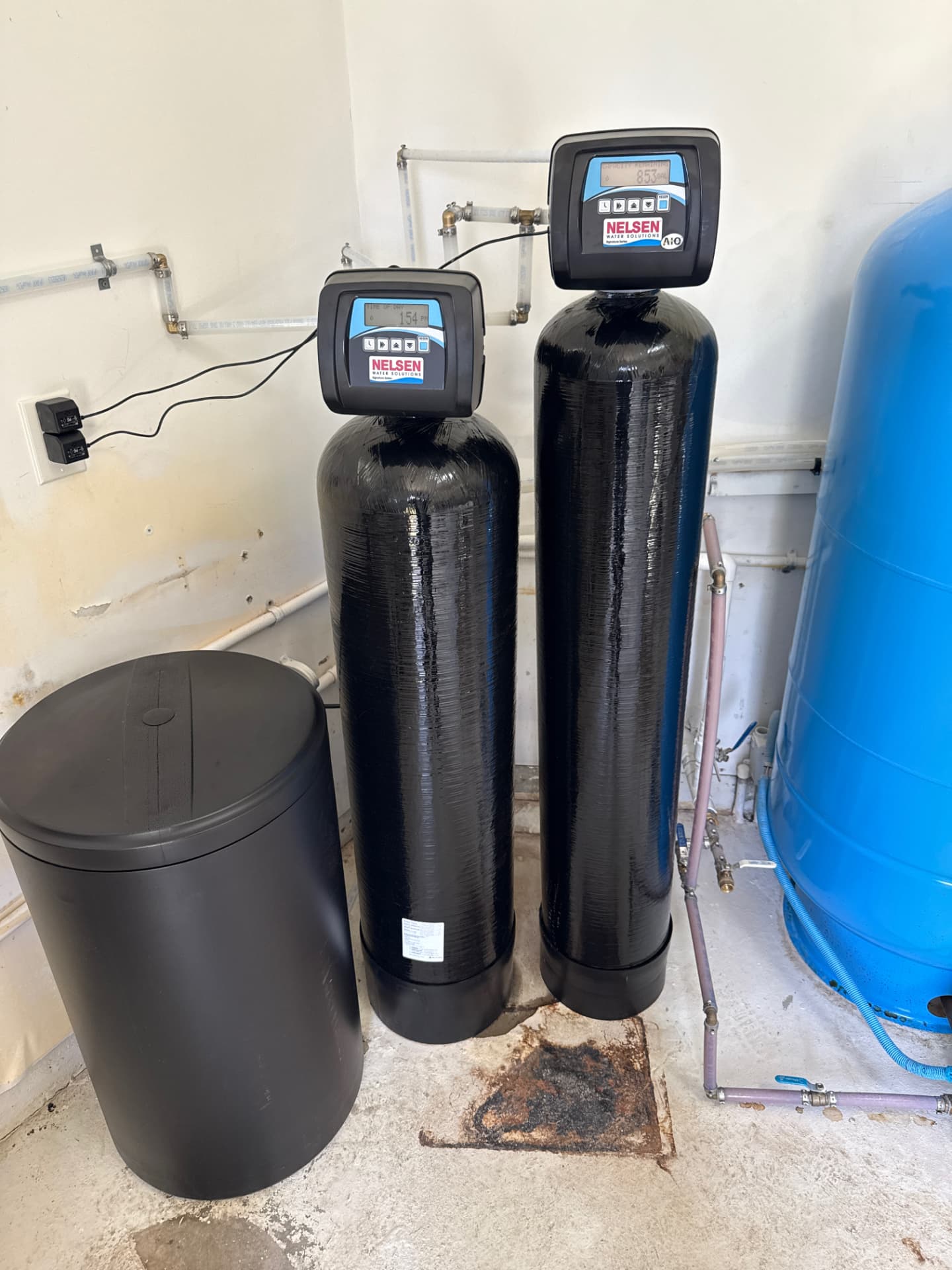
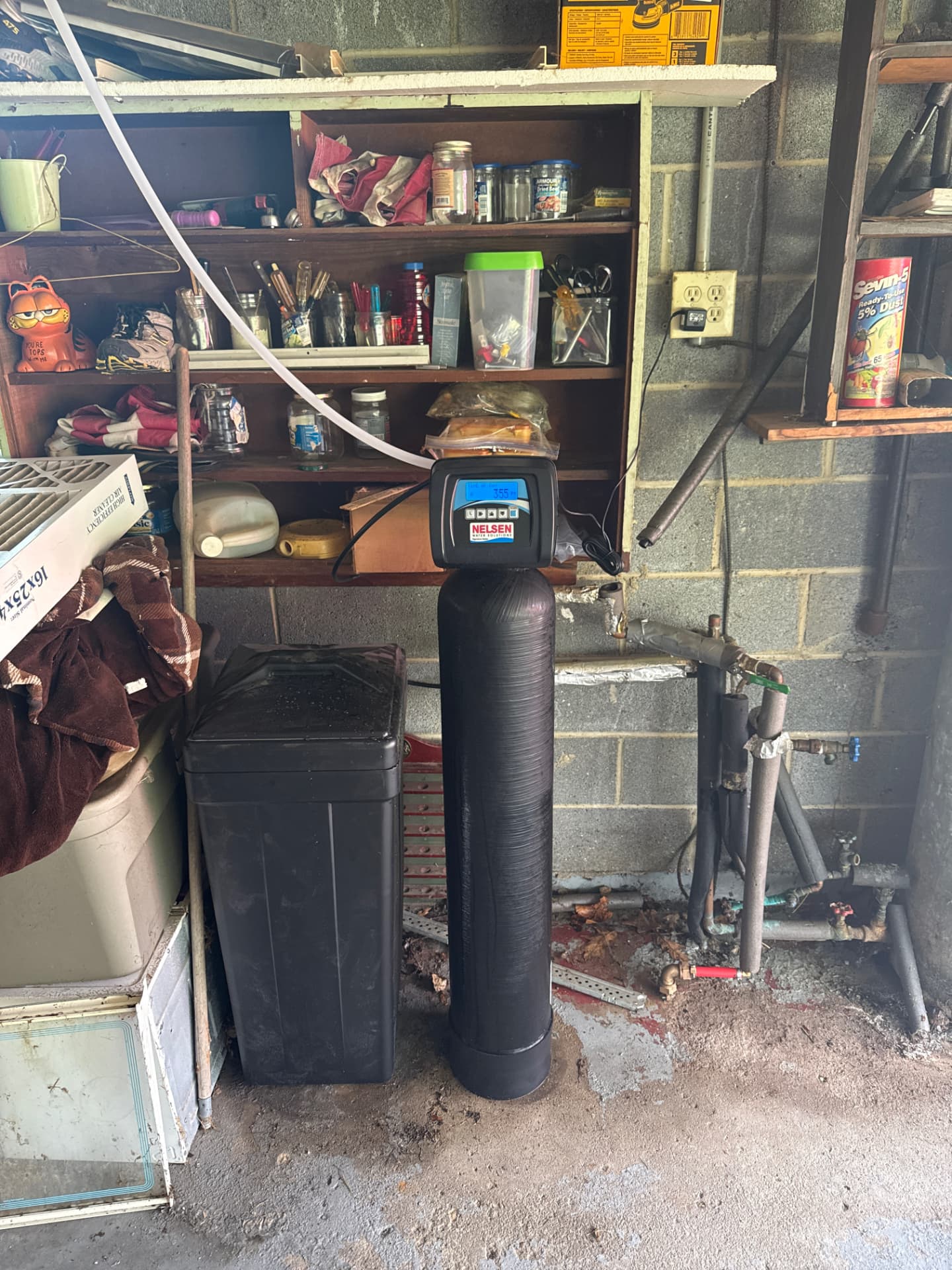
Photo slots awaiting Mike’s job-site images.
Answers
Frequently Asked Questions — Water Treatment in Sarasota, FL
If you’ve read this far, you can already out-question most of the water treatment industry in this town. You know why the pool taste survives cheap filters and which carbon actually beats chloramine. You know what a softener removes, what salt-free systems don’t, what the sizing math looks like, and which option is actually yours to install if you live in a condo. When you’re ready for your own numbers, call 239-388-3631 — free water test at your tap first, the math and the tiers second, and no equipment conversation until you’ve seen both.
Plumbing Detectives LLC | Venice, FL | License CFC1434139
239-388-3631 | plumbingdetectivesfl.com
Serving Sarasota, Venice, South Venice, Nokomis, Laurel, Osprey, Englewood, Wellen Park, North Port, Bradenton, and Bradenton Beach.