
Water Softeners & Water Filtration · Nokomis, FL
Water Softeners & Water Filtration in Nokomis, FL
Well water or county supply — sized to your tested water, septic-safe installs. Licensed master plumber CFC1434139.
Call Now239-388-3631Nokomis is where the water treatment conversation gets more complicated than the sales brochures admit — because Nokomis isn’t one water system. Drive from Laurel Road down to Albee Farm and you’ll cross homes on Sarasota County utility water, homes on private wells, homes on county sewer, and homes on septic — sometimes on the same street. The right treatment system for one of those houses is the wrong one for its neighbor, and the companies quoting equipment over the phone without asking which one you are get it wrong constantly.
I’m Mike Reynolds — owner of Plumbing Detectives LLC, licensed master plumber, CFC1434139, based right down the road in Venice. I install and service water treatment across Nokomis and Laurel, and this page covers what’s actually in Nokomis water depending on your source, what each type of equipment genuinely does, and the two questions — well or county water, sewer or septic — that decide everything before a single tank gets picked.
The Chemistry
Nokomis Water — Two Different Stories on the Same Street
If you’re on Sarasota County utility water (zip 34275, most of the newer subdivisions and areas along the main corridors): your water arrives treated, blended from the county’s regional supply, and disinfected with chloramine — chlorine bonded to ammonia. Chloramine is more persistent than plain chlorine, which is exactly why the county uses it, and also why the basic carbon filters from the box store barely dent it. Removing it takes catalytic carbon. Hardness on county supply runs firmly in the “very hard” range — published area figures span roughly 12 to 23 grains per gallon depending on source and year, and everything above 10.5 is at the top of the industry scale.
If you’re on a private well — and big stretches of Nokomis and Laurel are, especially the older plats and acreage east of the Trail: nobody has treated your water before it hits your pressure tank. Well chemistry around here commonly stacks several problems at once: hardness from the same limestone aquifer everyone draws from, sulfur (hydrogen sulfide — the rotten egg smell), iron that stains fixtures and driveways orange, and in some wells tannins that tint water tea-yellow. Each of those needs its own treatment stage, in the right order — and a bare softener dropped onto a problem well is how resin beds get destroyed.
Because of that split, we never quote Nokomis equipment from a zip code. Every estimate starts with a free in-home water test — hardness, chlorine/chloramine, iron, TDS, pH at your tap, and for well homes a harder look at sulfur and tannins. Your equipment gets picked from your numbers.
The Damage
What This Water Does to a Nokomis Home
Same mechanisms I document all over this site — hard and mineral-heavy water working on every wetted part in the house:
Water heaters take the worst of it. Heat drives dissolved calcium out of solution, so the scale forms fastest exactly where the water gets hot — the tank floor, the elements, the anode rod. It’s why the popping-and-rumbling water heater is such a common Nokomis service call, and why every tank we install gets the Corro-Protec powered anode upgrade. On sulfur wells there’s a second effect: the rotten-egg smell often concentrates in the hot water specifically, because the magnesium anode feeds the reaction — a distinction that saves homeowners from buying whole-house treatment for what’s actually a water heater fix.
Valve cartridges, fixtures, and appliances age fast. Shower cartridges scale and seize years ahead of schedule, aerators pack with white crust, dishwashers and ice makers accumulate the same deposits. On iron wells, add orange staining in toilets and tubs that no amount of scrubbing permanently beats — because the source is the supply, not the housekeeping.
On septic properties, untreated problems compound. More soap and detergent use (hard water kills lather), more cleaning chemicals fighting iron stains — all of it ends up in the septic tank. Getting the water right reduces what goes down the drain in the first place.
The Equipment
The Equipment, Honestly — Matched to Which Nokomis You’re In
On county water, the usual right answer is filtration + softening together. A salt-based softener — our Safety Zone WC series, metered, sized from 2-bath villas to large homes — is the only thing on this page that actually removes hardness: ion-exchange resin trades the calcium and magnesium out of the water and flushes them down the drain during regeneration. Ahead of it goes catalytic carbon — our WHF series, in non-electric (no drain, no power, media swap every 5–7 years) or automatic backwashing versions — which strips the county’s chloramine and, just as important, protects the softener resin from oxidant damage. Resin behind carbon lasts years longer. The COMBO systems package both, two-tank for bigger homes or single-tank space savers for tight garages.
On well water, the treatment train gets built to the test results. Sulfur needs oxidation/filtration designed for H2S. Iron above threshold needs handling before the softener, or it fouls the resin. Tannins are why the WC-150-TANNIN variant exists. The order of operations is the whole job on a well system — pre-treatment, then softening, each stage sized to what your specific well produces. This is exactly the work that separates a plumber who understands the chemistry from an installer with one product to sell.
The RO-4 answers the drinking-water question on either supply. Under-sink reverse osmosis with its own faucet — on well homes it’s also the belt-and-suspenders answer for the kitchen tap, polishing whatever the whole-house train handles down to bottled-water territory.
Salt-free conditioners — including the Crown5 we carry, and the heavily-advertised Halo 5 — do not soften water. They condition it: template-assisted crystallization changes how the minerals crystallize so scale sticks less. The hardness stays in the water — test before and after and the number doesn’t move — and their effective range is generally cited around 10 GPG and under, which this area’s water exceeds. The Halo 5 specifically is a legitimate multi-stage filtration system with a salt-free conditioning stage — good at chlorine, taste, and odor, but not a softener, and its own materials acknowledge the minerals remain. The fair comparison is Halo 5 vs. our COMBO. On septic properties where brine discharge is genuinely impractical, salt-free is an honest option — with the trade-off stated plainly, not buried.
Plumbing Detectives LLC Professional Opinion
In Nokomis, any water treatment quote that arrives before someone asks you “well or county water?” and “sewer or septic?” is a template, not a design. Those two answers change the equipment list, the discharge plan, and the price — and on well homes, skipping the full chemistry test before installing a softener is how a system gets ruined by a small amount of dissolved iron. Demand the test, demand the sizing math, and demand to know where the regeneration discharge is going. Any installer who can’t answer all three on the spot is learning on your house.
The Nokomis Detail
Septic and the Brine Question — The Nokomis-Specific Install Detail
A huge share of Nokomis and Laurel homes run on septic — and every salt softener flushes brine during regeneration. Florida’s Department of Health has recommended against routing softener brine into septic systems since 2016: the salt load stresses the drain field and the tank’s biology. That’s not a reason to skip softening — it’s a design requirement. On our septic installs, the regeneration discharge gets routed to a dedicated dry well or another approved alternative, planned and priced in the original quote. The failure mode I fix for other people’s installs is the opposite: brine line quietly tied into the house drain, discovered two years later when the septic guy asks why the drain field’s struggling.
Metered regeneration matters double on septic — the WC series regenerates on actual usage rather than a timer, which means fewer cycles, less brine, less water. Right-sizing the system (below) cuts it further.
The Math
Sizing — The Math You Should See on Your Quote
People × ~75 gallons/day × your tested hardness = daily grain load; times seven for the weekly regeneration target; round up to the tank that covers it with margin. A four-person Nokomis household testing 20 GPG: 4 × 75 × 20 = 6,000 grains/day → 42,000/week → the WC-250 class. A retired couple in a 2-bath home lands at WC-100/150; a well home with iron in the mix sizes after pre-treatment is accounted for. The bathroom-count shorthand on spec sheets tracks household size fine, but the formula is what your quote gets built from — with your tested number plugged in, shown on paper. Undersized systems burn salt regenerating constantly; oversized ones waste money and sit too long between cycles for resin health.
The Work
Installation — What a Proper Nokomis Job Looks Like
The tee order is the design. Irrigation and hose bibs tee off before treatment — nobody pays salt capacity to soften a lawn. Kitchen cold can bypass the softener (or feed the RO-4). Carbon ahead of resin. Treated water to the heater and the house. On well systems, the pre-treatment stages slot in ahead of all of it, in test-determined order.
Older Nokomis homes rarely have a softener loop. The 1990s-and-newer builds often have a pre-plumbed loop in the garage; the older plats mostly don’t, which means cutting the main and building the connection — licensed plumbing work on a slab home, not a sales subcontractor’s afternoon.
Well homes: placement works around the pressure tank. Treatment goes downstream of the pressure tank, with service clearance — and Florida garage heat and UV get planned around, because valve heads baked in direct sun die young.
Air gaps on every drain, no exceptions. Softener discharge and brine overflow are separate lines, each with a proper air gap — the same cross-connection protection I’ve written about at length. Direct-piped drains are a code violation and a contamination path.
License and permits, same as everything on this site. Cutting the potable line is plumbing work under CFC1434139, permitted where the county requires — and any treatment outfit that shrugs that off is telling you who’s actually showing up.
Plumbing Detectives LLC Tips
Rotten-egg smell in hot water only = water heater anode reaction, not a whole-house problem. In both hot and cold = supply-side sulfur, likely the well. That one sniff test routes hundreds of dollars to the right fix.
Orange stains that come back a week after scrubbing are dissolved iron oxidizing in the fixture, not a cleaning failure. Treat the supply, not the toilet.
On septic and unsure where your softener drains? Follow the thin discharge line from the valve head. If it disappears into the house plumbing, that conversation is overdue.
Buying in Nokomis? Get the answers to well-vs-county and sewer-vs-septic in writing before closing — they change your treatment budget by thousands, in both directions.
Pricing
What This Costs — Honest Context
Equipment spans a real range — carbon filtration, salt softening, COMBO filtration-plus-softening systems, salt-free conditioning, and the RO-4 at the kitchen sink all carry different investment levels depending on capacity, features, and what your specific install requires. Well homes range wider still, because the pre-treatment train depends entirely on what the test finds — a clean well needing only softening prices very differently than a well carrying sulfur and iron together.
What I won’t do is publish a price range on this page and lock myself into a number before I’ve seen your home, your tested water, and your access situation. A number on a website isn’t a quote — it’s either a lowball designed to get the phone to ring or padding to cover every worst case at once. Neither one is honest.
What I will do: start every estimate with the free in-home water test, walk you through the sizing math for your actual household, and show you the equipment tiers that genuinely fit your situation — with real pricing, in writing, before you spend a dollar. Call 239-388-3631 and we’ll get you your actual numbers.
Why Us
Why Plumbing Detectives LLC
Water treatment in Nokomis mostly gets sold two ways: treatment companies with commission salespeople and one product line for every house, or plumbers who’ll hang a softener but can’t explain why your well needs iron handling ahead of the resin or what chloramine does to carbon media. We’re the overlap — a licensed master plumber who stocks the equipment, runs the water test personally, designs the treatment train to your chemistry, routes the discharge correctly on septic, and services what he installs. One phone number, one license on the work: CFC1434139. Fully insured.
Related Nokomis work: water heater installation in Nokomis.
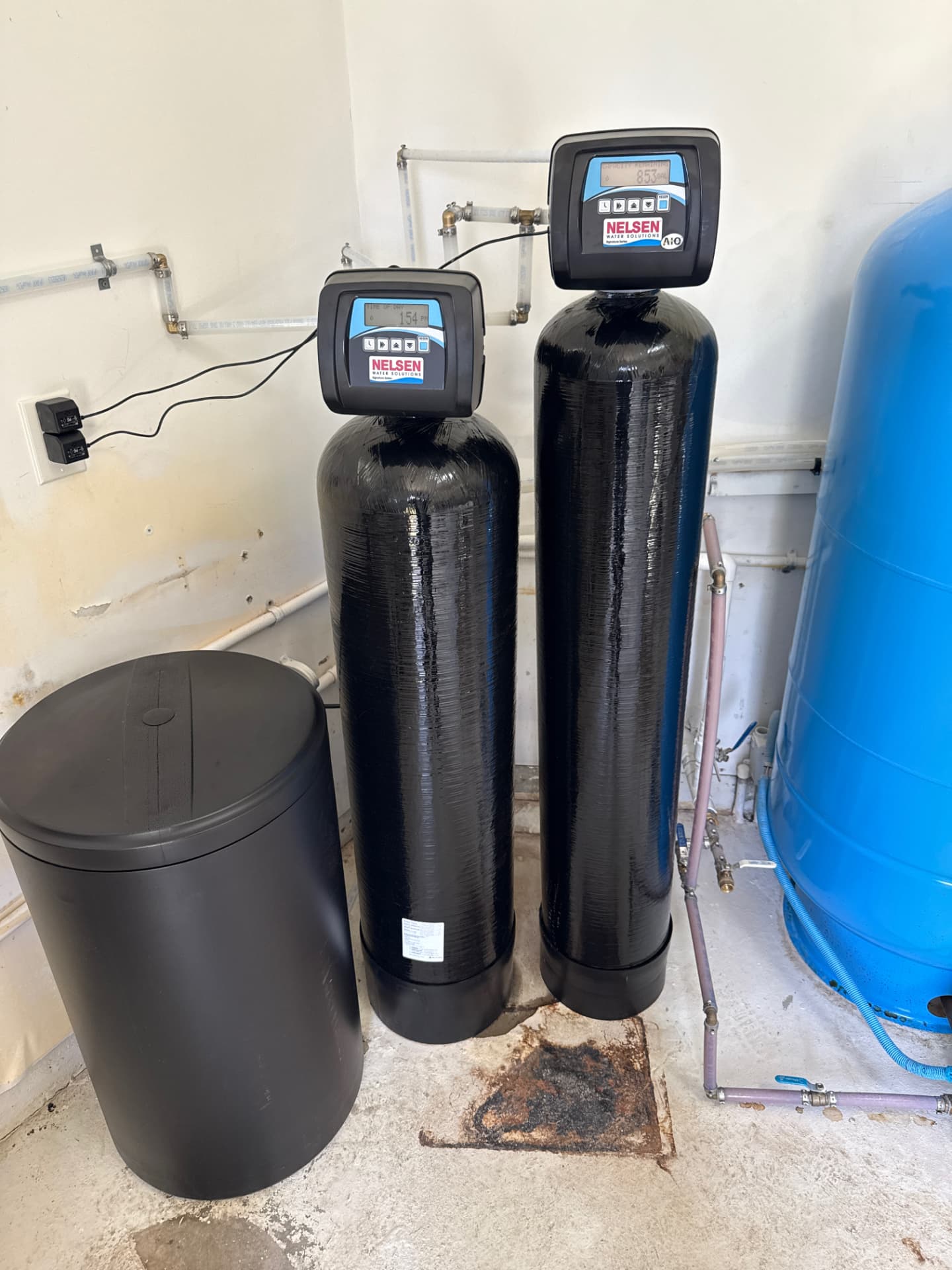
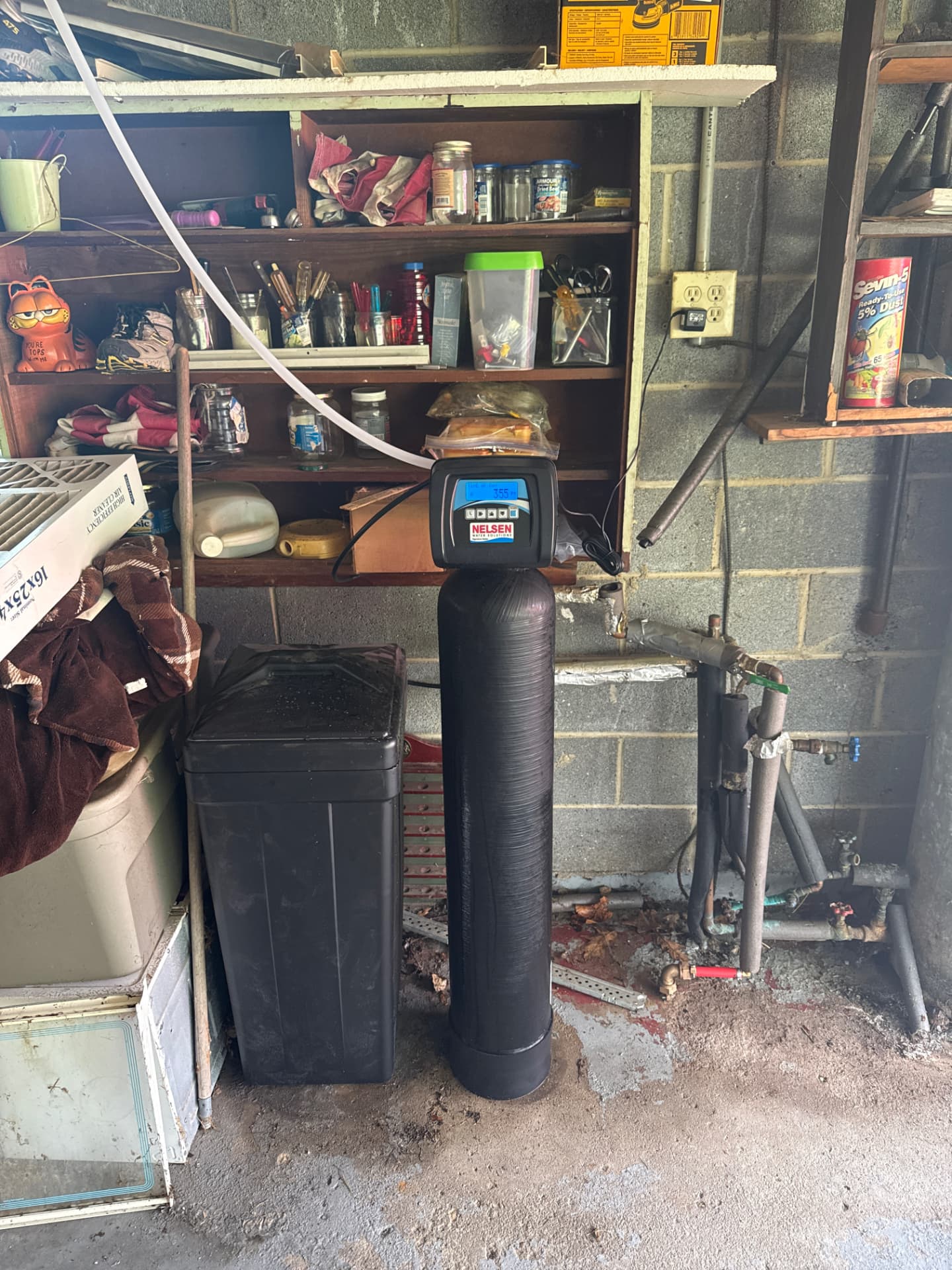
Photo slots awaiting Mike’s job-site images.
Answers
Frequently Asked Questions — Water Treatment in Nokomis, FL
If you’ve read this far, you know the two questions that decide everything about water treatment in Nokomis — well or county, sewer or septic — and you know what each answer changes: the chemistry, the equipment order, the discharge plan, the price. You know what a softener removes, what salt-free systems don’t, and which smell means the water heater instead of the well. When you want your own numbers, call 239-388-3631 — the free water test at your tap comes first, the math and the tiers come next, and nothing gets sold before you’ve seen both.
Plumbing Detectives LLC | Venice, FL | License CFC1434139
239-388-3631 | plumbingdetectivesfl.com
Serving Nokomis, Laurel, Venice, South Venice, Sarasota, Osprey, Englewood, Wellen Park, North Port, Bradenton, and Bradenton Beach.