
Water Softeners & Water Filtration · Laurel, FL
Water Softeners & Water Filtration in Laurel, FL
Sized to your actual water test, not a sales pitch. Licensed master plumber CFC1434139.
Call Now239-388-3631Here’s a call I get a lot from Laurel: “my water smells like rotten eggs and I don’t know if it’s dangerous.” It’s usually not dangerous — it’s hydrogen sulfide, naturally occurring in the Floridan Aquifer’s anaerobic pockets, and it shows up constantly in this corridor because most of Laurel isn’t on a utility at all. It’s on a private well. That one fact changes almost everything about how I approach a water treatment quote here, compared to a customer in downtown Venice.
My name is Mike Reynolds — owner of Plumbing Detectives LLC, licensed master plumber, CFC1434139, based in Venice and serving Laurel regularly. This page is the honest version of the conversation: what’s actually in Laurel’s water depending on which side of the well/utility line you’re on, what each type of equipment really does and doesn’t do, and how we size a system to your house instead of selling you the biggest tank on the truck.
The Chemistry
What’s Actually in Laurel Water
Laurel is an unincorporated community between Nokomis and Englewood along the US-41 corridor — it has no city government and no city utility. That means your water situation depends entirely on which side of the well/utility line your address falls on:
Private wells — the majority of Laurel homes. By most estimates, somewhere around 9 out of 10 Laurel properties draw their own water straight from the Floridan Aquifer with no utility treatment at all. Published county-level data puts raw groundwater hardness in this part of Sarasota County around 390 ppm, or roughly 22.8 grains per gallon — solidly in “very hard” territory (the industry scale calls anything over 10.5 GPG “very hard,” so this is more than double the threshold). Well water here also commonly carries hydrogen sulfide (the rotten-egg smell), iron, and manganese on top of the hardness — more on that below.
Sarasota County Public Utilities — the rest of Laurel. Some parcels within Laurel are served by the same countywide system that serves parts of Venice and Sarasota — regionally blended groundwater, treated at the county plant and disinfected with chloramine. Finished water here typically comes in closer to 120–125 mg/L (7.0–7.3 GPG) — still hard, but a very different starting point than raw well water. And that same word matters here that matters everywhere else on this site: chloramine is far more stubborn than plain chlorine, and cheap carbon filters barely touch it. Removing it properly takes catalytic carbon — more on that below.
I’ll be straight with you on something else: the two big water-hardness databases don’t agree with each other on Laurel, and one of them doesn’t return a number for this ZIP code at all. That’s not unusual for a community this small and this rural — it just means nobody’s website number beats a test at your actual tap. Every estimate I give starts with an in-home water test — hardness, chlorine/chloramine, iron, TDS, and pH — at your kitchen sink, in front of you, whether you’re on a well or on county water.
The Damage
What Very Hard Water Is Doing to Your House Right Now
This isn’t a scare pitch — it’s the same mechanism I write about across this site, showing up in a different room each time.
Your water heater is ground zero. Dissolved calcium comes out of solution when water gets heated. Inside your tank, that means a growing layer of scale on the bottom (that popping, rumbling sound) and accelerated wear on the anode rod — which is exactly why every water heater we install gets the Corro-Protec powered anode upgrade. On a well running 22 GPG, that scale accumulation happens faster than almost anywhere else in our service area.
Your valve cartridges die young. Delta, Moen, Kohler — doesn’t matter. In water this hard, shower cartridges scale up and fail years earlier than the same part would almost anywhere else in the country.
Your appliances age in dog years. Dishwashers, washing machines, ice makers — anything with a solenoid valve, a heating element, or small water passages accumulates the same scale. Cloudy glasses and white spots are the visible tip of it.
If you’re on a well, iron adds a second layer of damage — reddish-brown staining on fixtures, tubs, and laundry, and iron buildup inside pipes and appliance components over time.
The Equipment
The Equipment, Honestly — What Each System Does and Doesn’t Do
A salt-based softener removes hardness. Nothing else does. The tank is filled with resin beads charged with sodium. As water passes through, calcium and magnesium grab onto the resin harder than sodium does, knock the sodium off, and stay behind. When the resin fills up, the control valve runs a regeneration cycle, flushing the resin with brine to reset it. Our line is the Safety Zone WC series, metered systems sized from 2-bathroom homes to 8-bathroom estates. Metered matters — it regenerates based on actual water used, not a dumb timer, which is what keeps salt use efficient.
Iron and sulfur need their own stage — a softener alone isn’t enough. If your Laurel well is showing iron, sulfur, or both (extremely common here), an oxidizing filter has to sit ahead of the softener, or the iron will foul the resin bed over time. This is the multi-stage setup I install most often in Laurel — an iron/sulfur oxidizing filter feeding into a Safety Zone WC softener, sized to your actual test numbers. If bacteria shows up in your well test, UV treatment gets added to that same train.
Whole-house carbon filtration removes chlorine, chloramine, taste, and odor. It does not touch hardness. If you’re on Sarasota County Public Utilities, our Safety Zone WHF series uses catalytic coconut shell carbon — the media grade that actually breaks down chloramine. Two versions: the WHF-NE (non-electric, no drain, no power) and the WHF-A (automatic backwashing, needs power and a drain, extends media life).
The COMBO does both in one footprint — filtration ahead of softening, which protects the softener’s resin from chlorine or iron damage and fixes taste/odor at the same time. This is usually the right answer for a Laurel well with iron, sulfur, and hardness all in the mix.
The RO-4 handles the drinking water question. An under-sink reverse osmosis system with its own faucet — the honest answer to the sodium question (below), and for well customers, an extra layer of confidence at the one tap you actually drink from.
Salt-free “conditioners” — including the Crown5 we carry — reduce scale sticking. They do not soften. The minerals stay in your water; test it after treatment and the hardness number reads the same. Their sweet spot is moderate hardness, generally cited around 10 GPG and below. Laurel’s well water runs more than double that. I’ll sell you a Crown5 where it genuinely fits, but I won’t tell you it does what a softener does, because it doesn’t.
Straight Answer
“What About the Halo 5?” — The Honest Answer
A lot of homeowners out here ask about the Halo 5 by name. Here’s what it actually is: a multi-stage whole-house filtration and conditioning system — multiple carbon stages for chlorine, taste, and odor, plus a salt-free conditioning stage for scale.
Here’s what it is not: a water softener. The conditioning stage inhibits scale adhesion but removes zero hardness from the water. In water running 20+ GPG off a Laurel well, that means iron staining, spotting, and mineral load all stay essentially where they were, even while the filtration side is doing genuinely useful work.
So when someone asks me “Halo 5 or a softener?” on a Laurel well, my answer is: those aren’t the same product, and on water this hard, a Halo 5 alone won’t touch the iron or the hardness. The fair comparison is Halo 5 versus our COMBO — both filter; the COMBO also actually removes the hardness and handles the iron/sulfur train ahead of it.
Plumbing Detectives LLC Professional Opinion
Before you sign anything for a water treatment system in Laurel — from us or anyone else — demand two numbers: your hardness tested at your tap, and the grain capacity of the system being quoted, with the sizing math shown. If you’re on a well, add a third: has anyone actually tested for iron, sulfur, and bacteria, or are they just guessing off a hardness number? A softener alone doesn’t fix what a Laurel well usually has going on.
The Math
How We Size a System — The Actual Math
Daily grain load = people in the home × roughly 75 gallons per person per day × your tested hardness in GPG. A four-person Laurel household on a well testing at 22.8 GPG: 4 × 75 × 22.8 = 6,840 grains per day. Multiply by seven for a weekly regeneration target — about 47,900 grains — and select from the Safety Zone WC lineup at the higher end of the range, verified against your actual test rather than assumed off the county estimate. A retired couple in a 2-bath home lands smaller; a well with heavy iron in the mix needs pre-treatment capacity added ahead of the softener math, not folded into it.
The bathroom-count shorthand on spec sheets tracks because bathrooms roughly track household size — but the formula is what we actually quote from, using your tested number, not a website average.
Local Context
Laurel Wells, Septic, and What Nobody Tells You
If you’re on a well in Laurel — and most of you are — two things change from a straightforward softener quote.
Well water needs a chemistry workup first. Hydrogen sulfide, iron, and manganese are all common in this part of the aquifer, and each one affects equipment selection. Iron fouls softener resin if it’s over threshold without pre-treatment; sulfur needs its own oxidation approach. A softener dropped onto untreated well water with high iron is a service call waiting to happen. Test first, stack the treatment train in the right order, then size. If your well test also shows bacteria, that’s worth taking seriously — Laurel sits in the Alligator Creek/Dona Bay watershed, which state water quality reports flag for septic-related nonpoint pollution. That doesn’t mean your well is contaminated; it means testing for it directly is worth doing rather than assuming either way.
Septic changes where the regeneration discharge goes. Laurel has a high concentration of septic systems, and unlike some other parts of Sarasota County, there’s no sewer-expansion program on the books here — the Phillippi Creek Septic Replacement Program doesn’t reach Laurel. That means if you’re on septic in Laurel, you’re on septic for the long haul, and the brine question isn’t a temporary inconvenience — it’s permanent. Florida’s Department of Health has recommended against routing softener brine into septic systems since 2016 — the salt load is hard on the drain field and the tank biology. That doesn’t mean no softener — it means the discharge gets routed properly (a dedicated dry well or approved alternative) and that routing is designed into the quote from day one. For septic homes where discharge routing is impractical, a salt-free Crown5 or a filtration-only approach earns an honest look — with the hardness trade-off explained plainly, not papered over.
The Work
Installation — What a Proper Job Looks Like
The tee order is the design. Irrigation and outdoor hose bibs tee off before the treatment equipment — you don’t pay salt and capacity to soften your lawn or your sprinklers. The kitchen cold line can bypass the softener so drinking water stays untreated (or feeds the RO-4). Iron/sulfur pre-treatment goes first in the line, then softening, then the rest of the house.
Laurel’s housing stock skews older — median build year in the 1983–1990 range — which raises a second issue worth checking while I’m already on site: homes built between 1978 and 1995 are squarely inside the polybutylene supply-pipe window, and Citizens Property Insurance will not cover a home with polybutylene plumbing. A 4-point inspection that flags it can trigger a 30-day cancellation notice. It’s a five-minute check while I’m already under the house or in the utility closet for a water treatment install.
Florida garages and well houses are brutal on equipment. Heat and UV degrade valve heads and tanks left in direct sun. Placement, shading, and drainage all get planned, not improvised — and for well systems, so does protecting the pressure tank and pump wiring from the same treatment footprint.
Drains get air gaps. Period. The softener’s regeneration discharge and the brine tank overflow are two separate lines, each with a proper air gap — that’s backflow protection 101. A drain line jammed directly into a standpipe or dry well with no gap is a code violation and a contamination path, especially relevant on a property that’s also drinking its own well water.
Permits: water treatment installation that cuts into the potable supply is plumbing work under my license, permitted where Sarasota County requires it — same standard as everything else on this site. If a treatment company tells you no permit or license is involved in cutting your line, that tells you who they’re planning to send.
Plumbing Detectives LLC Tips
Rotten-egg smell in hot water only? That’s usually the water heater anode reacting, not your supply. Smell it in both hot and cold? That’s the well, and it needs an oxidizing filter, not just a softener.
Unscrew a faucet aerator and look at the screen. White crust is hardness; reddish staining is iron. Either one, in person, tells you what you’re actually dealing with.
On a doctor-ordered sodium restriction? Softened water adds only modest sodium, but the clean answer is a kitchen cold bypass or the RO-4 at the sink.
Buying a house in Laurel? Ask three questions before closing: well or county water, septic or sewer, and what year it was built. If it’s 1978–1995, get the supply pipe checked before you find out from your insurance company instead.
Pricing
What This Costs — Honest Context
Equipment spans a real range — iron/sulfur pre-treatment, salt softening, COMBO systems, salt-free conditioning, and the RO-4 at the kitchen sink all carry different investment levels depending on capacity, features, and what your specific well or utility connection requires.
What I won’t do is publish a price range on this page and lock myself into a number before I’ve seen your home, your tested water, and your access situation — especially on a well, where iron and sulfur can change the whole scope. What I will do: start every estimate with the free in-home water test, walk you through the sizing math for your actual household, and show you the equipment tiers that genuinely fit your situation — with real pricing, in writing, before you spend a dollar. Call 239-388-3631 and we’ll get you your actual numbers.
Why Us
Why Plumbing Detectives LLC
Most water treatment in this market is sold by treatment companies — commission salespeople, subcontracted installs, equipment priced like a car, and a generic pitch that doesn’t distinguish a Laurel well from a Venice city connection. Most plumbers, meanwhile, will install a softener but can’t tell you why your well needs an oxidizing filter ahead of it or why chloramine needs catalytic carbon.
We’re the overlap: a licensed master plumber who stocks the equipment, does the water test personally, shows the sizing math, and services what he installs. Camera-documented diagnostic work, code-compliant installs, one phone number. License CFC1434139. Fully insured.
Related Laurel work: Slab Leak Detection in Laurel, FL and Sewer Line Repair in Laurel, FL.
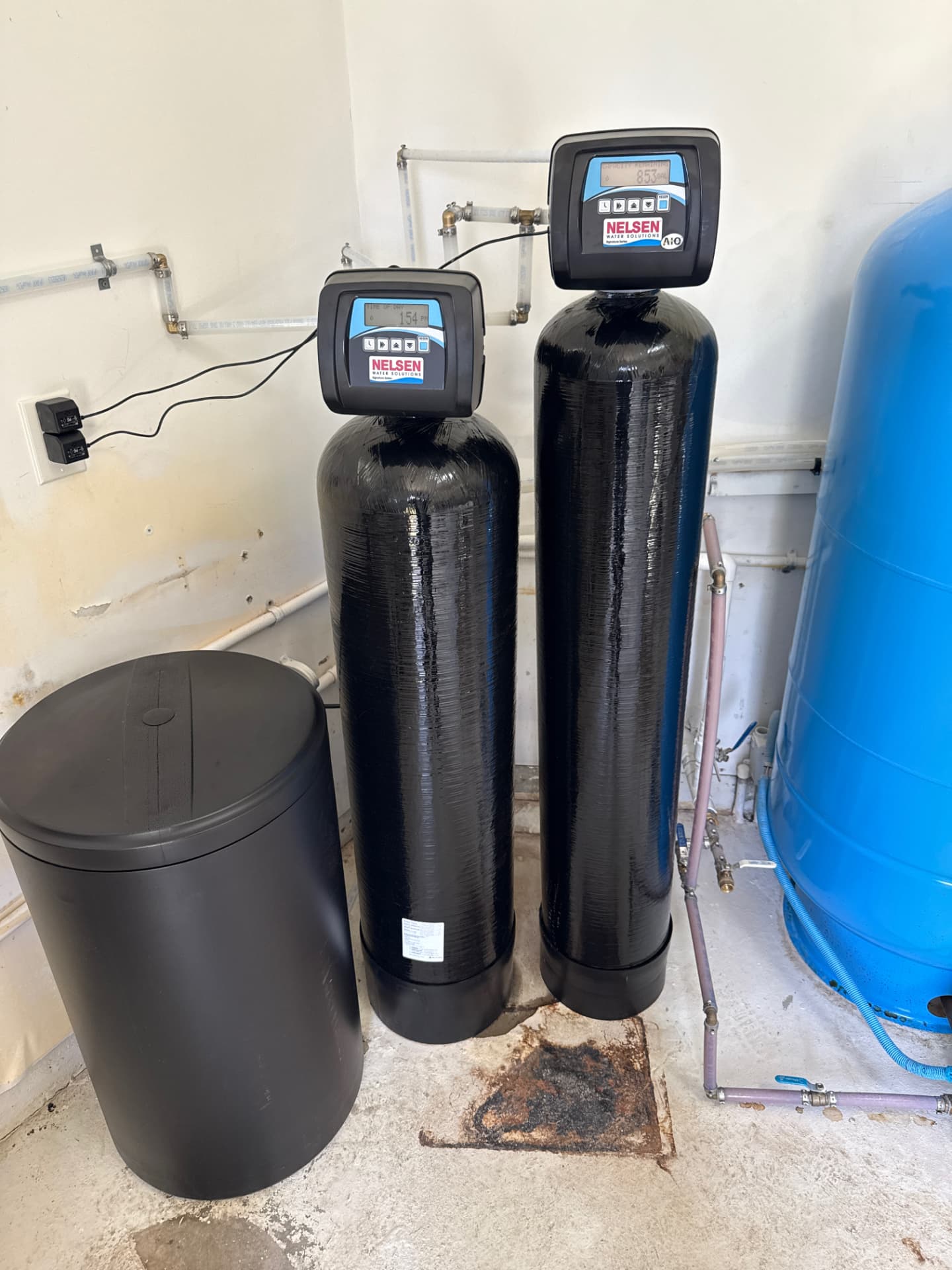
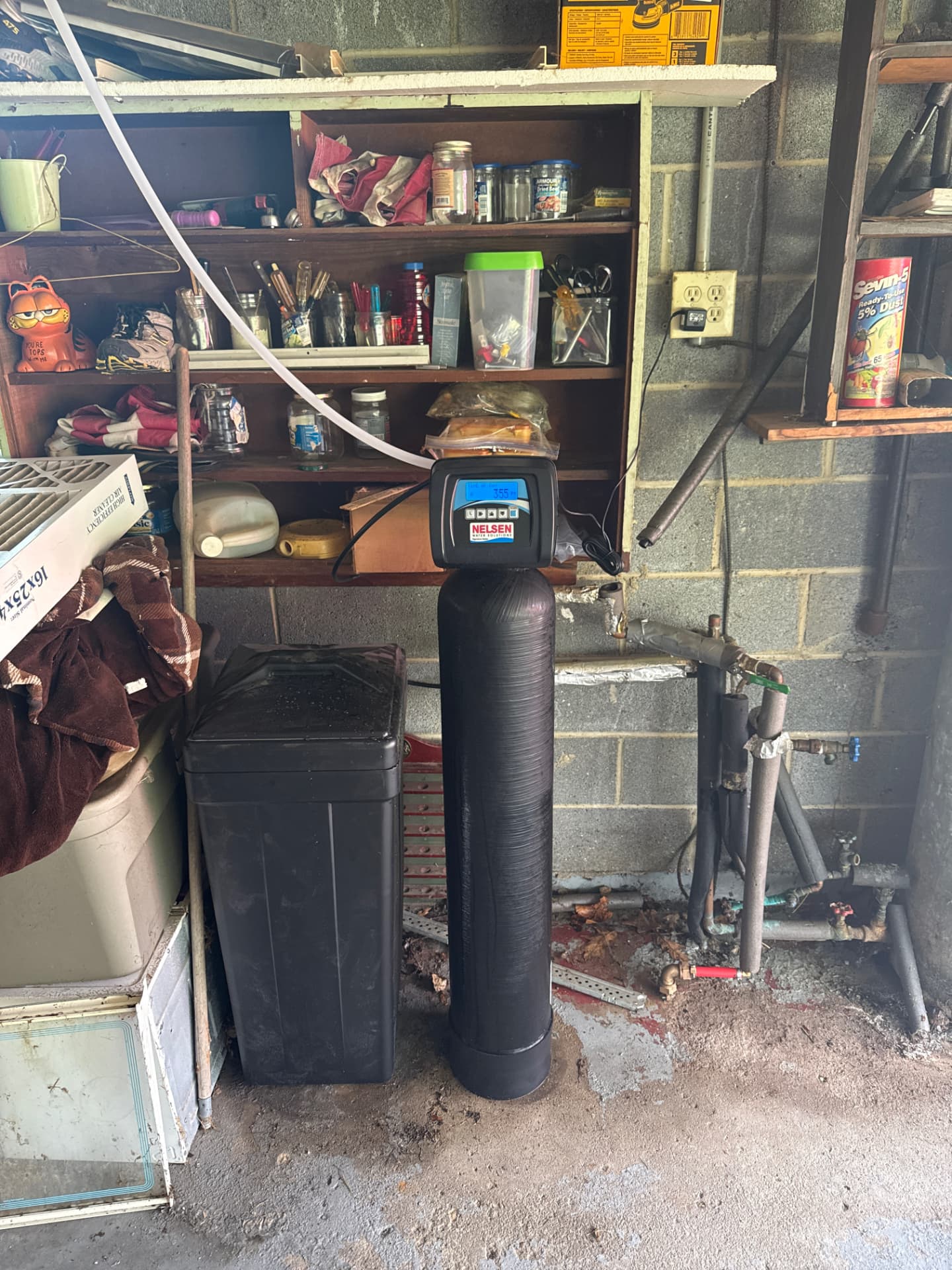
Photo slots awaiting Mike’s job-site images.
Answers
Frequently Asked Questions — Water Softeners in Laurel, FL
If you’ve read this far, you know more about Laurel’s water than most people selling treatment systems in this market — why the well/utility split matters, what a softener actually removes versus a salt-free conditioner, why iron and sulfur need their own stage, and why septic changes the install. If you want your actual numbers, call 239-388-3631 and we’ll start with the free water test.
Plumbing Detectives LLC | Venice, FL | License CFC1434139
239-388-3631 | plumbingdetectivesfl.com