
Water Heater Installation · Sarasota, FL
Water Heater Installation in Sarasota, FL
Some of the hardest municipal water in the state. A housing stock that spans a full century. Diagnosis first, always. Licensed master plumber CFC1434139.
Call Now239-388-3631Sarasota has a reputation for culture, art, and some of the most expensive real estate on Florida’s Gulf Coast. What it’s less known for — but what matters a great deal to the plumbing systems in those homes — is that it also has some of the hardest municipal water in the state. The same limestone geology that creates the springs and aquifers people travel here to see dissolves calcium and magnesium into the water supply at levels that, despite City and County treatment processes, remain high enough to shorten the life of water heaters, clog fixtures, and accelerate corrosion in plumbing systems that weren’t designed with this water chemistry in mind.
Sarasota is also a market where the housing inventory spans a full century. The historic Laurel Park bungalows and Mediterranean Revival cottages near downtown were built in the 1920s. The mid-century ranch homes filling Gulf Gate Estates and South Gate went up in the 1950s and 1960s. The first downtown high-rise condos came in the 1970s and 1980s. Palmer Ranch started in the 1980s and is still developing. And right now, another wave of luxury towers is rising along the bayfront — the Waldorf Astoria Residences, the Ritz-Carlton, One Park, and more than twenty other projects in various stages of completion. That range matters because a water heater serving a 1925 Laurel Park cottage and a water heater serving a 2024 bayfront penthouse are completely different conversations.
My name is Mike Reynolds. I’m the owner of Plumbing Detectives LLC and a licensed master plumber, license CFC1434139. When I’m called to a Sarasota home, the first thing I do is figure out what kind of home I’m actually in — its age, its water source, its pipe materials, and what the previous installations have looked like. That context tells me far more than the make and model number of the water heater does.
Water Chemistry
What Sarasota’s Water Actually Does to a Water Heater
Sarasota County water is frequently cited as among the hardest in the nation — a notable distinction given that both the City of Sarasota and Sarasota County Public Utilities operate treatment facilities specifically designed to reduce that hardness before it reaches your tap. Even after treatment, independent testing consistently places Sarasota-area water in the 10 to 25 grains per gallon range, depending on the specific zone and the blend of source water being used. The Water Quality Association classifies anything above 10.5 grains per gallon as very hard. Most of Sarasota sits above that threshold.
The treatment process helps. The City runs its water through reverse osmosis and ion exchange. The County treats brackish groundwater at the Carlton Water Treatment Plant. What comes out of your tap is measurably better than the raw source water, which has been measured at approximately 1,120 mg/L before treatment — some of the highest raw hardness in Florida. But treated Sarasota water still comes out at roughly 120 to 125 mg/L, still classified as hard, still carrying enough dissolved mineral load to work against your plumbing equipment over time.
Here’s what that means inside a water heater. Every gallon of water entering the tank carries dissolved calcium and magnesium. When that water heats up, those minerals fall out of solution and settle to the bottom of the tank as a chalky, white sediment layer. The same material you see as scale on your showerhead or around your faucet aerators is accumulating on the floor of the tank, out of sight, year after year. Water treatment industry data specific to the Sarasota market indicates that hard water can reduce water heater efficiency by up to 48 percent and shorten appliance lifespan by 25 to 30 percent compared to the rated performance in softer water.
The practical consequence is a water heater that runs harder, uses more energy, and reaches the end of its useful life earlier than the manufacturer intended — not because it was poor quality equipment, but because it was working in water conditions that accelerate wear.
One of the most common questions I get from Sarasota homeowners is whether the water is making their plumbing fail faster. The honest answer is yes, in specific ways. A $3,000 water heater in Sarasota’s water without annual maintenance and without proper anode rod protection will not perform like a $3,000 water heater in a softer water market. The equipment is the same. The environment is not.
Market Context
Why Sarasota Is Different From Every Other Market I Work In
Several things about Sarasota as a plumbing market don’t exist in the same combination anywhere else in Sarasota County.
The age and variety of the housing stock. Sarasota has more than three thousand homes built before 1940 — a full century old now — alongside active construction of luxury towers priced above ten million dollars. The 1970s peak construction decade added more than forty thousand housing units countywide. The 1980s added another forty thousand. All of that mid-century and late-century housing is now in the age range where plumbing infrastructure makes decisions necessary rather than optional. Cast iron drain lines under the slab in homes built before 1972 are at or past their expected service life. Galvanized supply lines in the oldest homes have been corroding from the inside since before most homeowners were born. Copper supply lines installed in the 1970s and 1980s are in the age window where pinhole leaks become a pattern rather than an isolated event.
The downtown condo market. Sarasota has more than fifty existing condominium buildings downtown, and more than twenty additional towers currently under construction or in the development pipeline. The older towers — some built in the 1970s and 1980s — were constructed with cast iron vertical risers that are now the same age as the cast iron under-slab drain lines in the single-family neighborhoods. A failed riser in a high-rise is not a contained event. I’ve studied cases where a single cast iron riser section failure flooded multiple units below the failure point before it was caught. Water heater installations in high-rise condominiums involve considerations that don’t exist in single-family work — HOA approval processes, shutoff coordination for shared riser systems, and the specific requirements of commercial-grade plumbing systems in luxury towers.
The barrier island environment. Siesta Key, Lido Key, Bird Key, St. Armands, Golden Gate Point — these neighborhoods sit in salt air that is more aggressive than what exists even a few miles inland. Water heaters in coastal Sarasota homes are not just dealing with hard water from the inside. They’re dealing with salt-laden air attacking the relief valve, the top fittings, and every exposed metal component from the outside. A unit that delivers twelve years of reliable service in an inland Gulf Gate home may show significant external deterioration at eight or nine years on Siesta Key. This is not a complaint about the equipment. It’s a realistic assessment of what coastal environments do to metal components that weren’t designed for indefinite saltwater air exposure.
The seasonal vacancy pattern. The Southwest Florida region — of which Sarasota is the cultural and economic center — accounts for a disproportionate share of the state’s snowbird population. Roughly a quarter of Sarasota’s housing sits vacant for extended periods. Seasonal homeowners on Bird Key, in The Landings, in Palmer Ranch communities, along the bayfront — they’re gone for five or six months, often with the water heater left powered but with no hot water being drawn. During that idle period, sediment settles harder, anode rods deplete against standing water, and nobody is there to notice a weeping T&P valve or a slowly corroding fitting. The first indication of a problem is sometimes a discolored first shower after returning from New York or Chicago in November.
If you’re a seasonal Sarasota homeowner and you haven’t had your water heater serviced before a long vacancy, a pre-departure check and return inspection are worth scheduling. Call 239-388-3631 and we’ll set it up around your calendar.
Neighborhoods
Understanding Sarasota’s Housing by Neighborhood — Why It Matters for Your Plumbing
I’ve inspected water heaters in nearly every type of Sarasota home and the neighborhood tells me most of what I need to know before I arrive. Here’s how I think about the major areas of the market.
The historic neighborhoods — Laurel Park, Burns Court, Alta Vista, Hudson Bayou, Indian Beach-Sapphire Shores. These are homes built primarily in the 1920s and 1930s, some now a full century old. They are beautiful and they are maintained by homeowners who care about them deeply. They are also homes where the original plumbing infrastructure was never designed to last a hundred years. Cast iron drain lines. Galvanized supply lines in many cases. Water heaters that may be sitting on plumbing connections that were installed decades before the homeowners bought the property. When I work in a Laurel Park home or on a Burns Court bungalow, I’m doing a full assessment of what’s feeding the water heater and what’s downstream of it, not just looking at the unit itself. These neighborhoods frequently need whole-home repipe conversations, not just water heater conversations.
Gulf Gate Estates and South Gate. Mid-century construction, 1950s through 1970s. Some of the most popular and most densely settled older residential neighborhoods in the city. Slab foundations. Cast iron under-slab drain lines that are now 50 to 70 years old in many homes. Copper supply lines that are entering the age range where pinhole leaks are a realistic concern. Water heaters in these neighborhoods are often sitting on original copper connections to galvanized tank nipples — the installation shortcut I’ll explain in detail below — and many were installed without expansion tanks. Gulf Gate and South Gate are among the highest-density repipe and cast iron sewer relining markets in Sarasota, and a water heater service call here frequently opens a broader conversation about what else the house needs.
The Meadows, Palmer Ranch, Siesta Key, Bird Key, The Landings. A range of construction eras from the 1970s through the 2000s, including gated communities, golf course communities, and waterfront properties. This is Sarasota’s established affluent market — homes in the $800,000 to $3 million range where the expectation is that work gets done correctly and completely. I’ve inspected water heaters in Palmer Ranch homes that looked like they needed replacement but only required a sediment flush, a new anode rod, and a corrected expansion tank installation. The equipment was fine. The maintenance history and the installation weren’t. In these neighborhoods especially, a proper diagnosis before recommending replacement is not just honest practice — it’s what the homeowner’s investment deserves.
Downtown condominiums — the Quay, the bayfront, Golden Gate Point, and the emerging towers. For homeowners in the existing towers — particularly those built in the 1970s and 1980s — the water heater conversation takes place within a building management context. Many older downtown towers are operating on original cast iron riser systems that require HOA-level decision making rather than individual unit repair. Individual unit water heaters in high-rise buildings are typically electric, often compact in size to fit utility closet footprints, and subject to HOA approval processes for replacement. I work within those parameters and I know how to coordinate the shutoffs and building access that high-rise work requires.
Siesta Key specifically. Siesta Key is a vacation rental market as much as a residential market, and that creates a specific plumbing wear pattern. High guest turnover, inconsistent maintenance oversight, and salt air corrosion that is more aggressive than anywhere else in the Sarasota market combine to accelerate fixture and water heater wear. I’ve worked in Siesta Key rentals where the water heater was nominally within its service life but showed external corrosion at the fittings that made it clear the coastal environment had done more damage than the age sticker suggested. Units on the Key need more frequent inspection than inland properties, not less.
Installation Quality
Why Most Water Heaters in This Market Are Installed Wrong — And Why It Costs More in Sarasota
This is a section I include in every market I write about because it’s the most important thing most homeowners don’t know about their water heater installation. In Sarasota specifically, it’s more consequential than in softer water markets because the water chemistry amplifies the damage from an incorrect installation.
Every tank water heater comes from the factory with galvanized steel nipples threaded into the hot and cold ports at the top of the unit. The nipples are standard across every manufacturer. The problem is what a lot of installers do with them next.
In a home with copper supply lines — which describes most of Sarasota’s older single-family housing stock — the common shortcut is to thread a copper fitting directly onto those galvanized nipples. It looks like a complete installation. It holds water. But it creates a condition called galvanic corrosion that begins the moment water contacts the joint and never stops.
Let me explain this in plain terms because it’s worth understanding. Copper and galvanized steel are dissimilar metals with very different electrochemical properties. When two dissimilar metals make physical contact in the presence of water — which conducts tiny electrical currents — one metal begins to dissolve into the other. In a copper-to-galvanized connection, the zinc coating on the galvanized nipple is the material that dissolves. It happens atom by atom, invisibly, inside the threaded joint. There’s no rust on the outside. No drip. No warning. Just steady electrochemical dissolution at the exact point where the water heater connects to your home’s plumbing.
The electrochemistry is documented. Copper sits at plus 73 millivolts on the activity scale. Zinc sits at minus 927 millivolts. That is roughly a 1,000 millivolt potential difference driving the corrosion reaction — twenty times above the threshold where meaningful corrosion begins. The same water chemistry that makes Sarasota’s hard water hard also makes it a more effective electrolyte, which means the galvanic reaction runs faster here than it would in softer water. A connection that might show visible deterioration at year eight in a softer market can show it sooner in Sarasota.
Insert brass as a transition fitting and the potential drops to roughly 140 millivolts — an 86 percent reduction in the corrosive driving force. Brass sits between copper and galvanized steel on the electrochemical scale and serves as the buffer.
Here’s exactly what a correct installation looks like in a copper plumbing home.
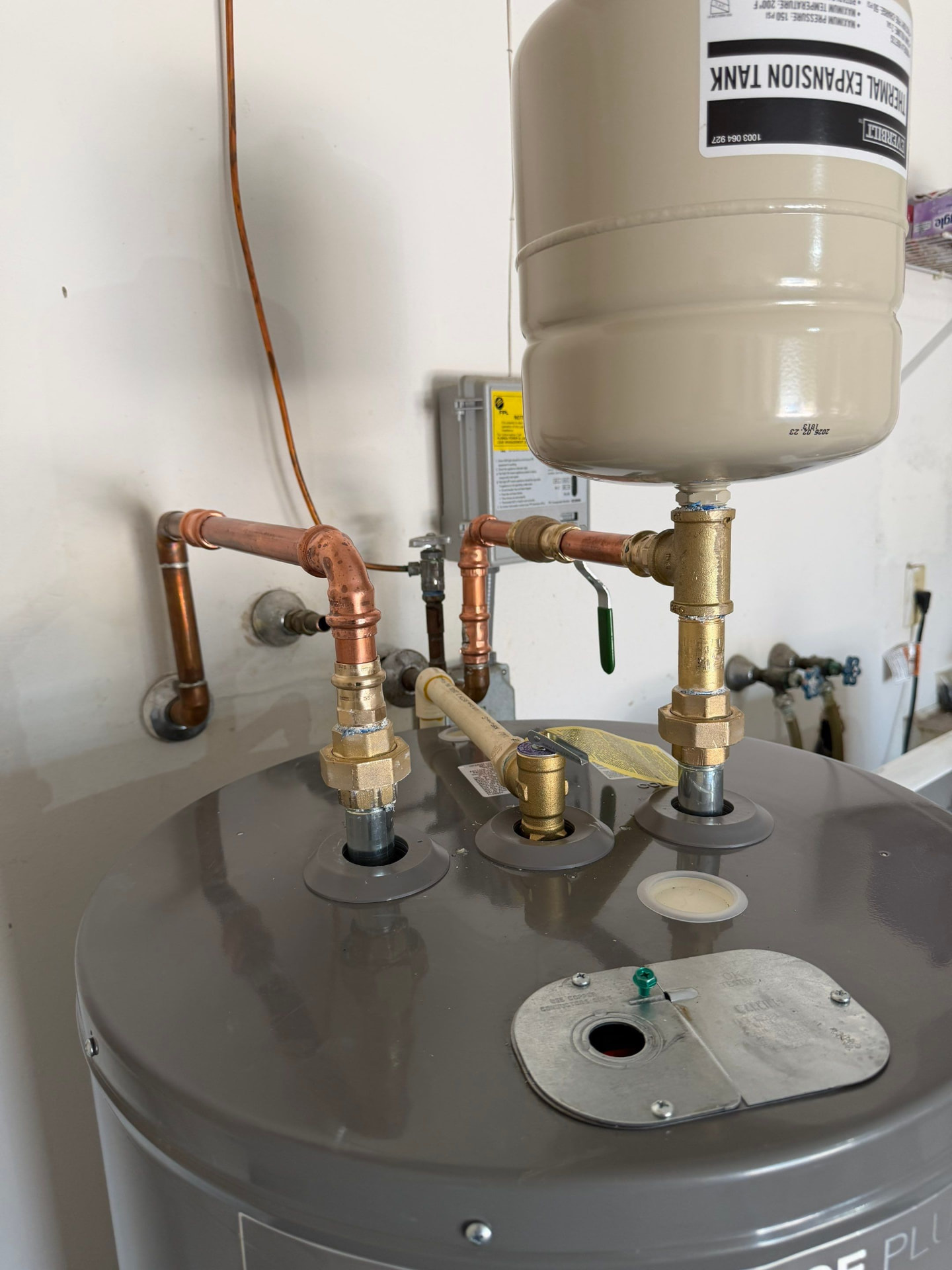
Cold side: A brass female union threads directly onto the galvanized cold nipple at the top of the tank. A brass nipple runs into the other side of the union. A brass tee threads onto the brass nipple — the expansion tank connects off the top port of that tee. Out of the side port, a copper male adapter makes the transition from brass to copper pipe. From there, copper pipe runs to a ball valve shutoff and continues to the cold supply line. The galvanized nipple never touches copper directly. The full sequence is galvanized nipple — brass union — brass nipple — brass tee — copper male adapter — copper pipe. Brass buffers every point of transition.
Hot side: A brass female union threads onto the galvanized hot nipple. A copper male adapter threads into the union’s other side, and copper pipe continues from there. Galvanized nipple — brass union — copper male adapter — copper pipe.
I use unions on both sides. A union is a three-piece fitting that disconnects with a wrench. A coupling requires cutting pipe. Every installation I do is built with the future service call in mind, not just the current one. In a Sarasota home with a premium water heater in a finished utility space, a union disconnection is a clean, professional break. A pipe cut is a mess that adds cost and disruption to what should be a straightforward replacement.
For homes with CPVC supply lines — common in some Palmer Ranch and Gulf Gate homes that were repiped at some point — the specific fittings change but the principle is identical. No improvising at the connection points.
Plumbing Detectives LLC Professional Opinion
In a market like Sarasota — hard water, coastal salt air in many neighborhoods, high-value homes where a water leak is never just a plumbing problem — the installation details matter more than almost anywhere else. I’ve worked in homes where the previous plumber did a competent installation except for one thing: copper directly on galvanized at the tank connections, and no expansion tank. That single shortcut was quietly shortening the life of a premium water heater that had been installed in a premium home. The homeowner had no idea. If your water heater wasn’t installed with brass transition fittings and an expansion tank, it’s worth knowing.
Expansion Tank
The Expansion Tank — Required in Sarasota and Often Missing
Whether you’re on City of Sarasota Utilities or Sarasota County Public Utilities, your home is on a closed plumbing system. A backflow prevention device on the service line prevents water from flowing back toward the municipal supply — which is the right thing for protecting the water supply, and which creates a specific requirement for your water heater installation.
When water heats up it expands — about two percent in volume from cold to the temperature a water heater maintains. In a closed plumbing system, that expanded water has nowhere to go. Without an expansion tank to absorb it, the pressure from every heat cycle pushes against every fitting, every valve, every connection, and every appliance in the system. Over months and years that repeated pressure cycling fatigues components in ways that aren’t visible until something fails.
The most common symptom I find is a temperature and pressure relief valve that’s been dripping. The T&P valve is designed to open if system pressure or temperature reaches dangerous levels — it’s a safety device, not a routine pressure relief mechanism. When it starts dripping, the instinct is to replace it. In many Sarasota homes I’ve looked at where the T&P valve had been replaced once or twice with no improvement, the actual cause was a missing expansion tank. The new valve does the same thing as the old one because the underlying cause hasn’t been addressed.
An expansion tank is a small cylindrical vessel that mounts on the cold supply line near the water heater. It contains a rubber bladder with air on one side. Thermal expansion compresses the air bladder instead of pressurizing your plumbing. It’s sized to the specific system. Every correct water heater installation in Sarasota includes one.
Anode Rod
Protecting a Premium Water Heater — The Anode Rod and the Corro-Protec Upgrade
Inside every tank water heater is a sacrificial anode rod. Most homeowners have never heard of it. It’s the single most important maintenance component in the tank, and in Sarasota’s hard water it depletes faster than the equipment manufacturer’s documentation assumes.
The concept is straightforward. The anode rod is a metal rod suspended inside the tank — typically magnesium in standard factory-installed units — whose electrochemical properties attract the corrosive attack of the water to itself and away from the steel tank walls. It corrodes so the tank doesn’t have to. When the rod is consumed, the protection ends and the tank walls become the target.
In Sarasota’s water — hard, chloramine-treated, with mineral content that remains elevated despite utility treatment — a standard magnesium anode rod depletes faster than in softer water markets. A rod that might last five to seven years in a softer water environment may be significantly depleted in three to four years here. When it’s gone, the tank’s corrosion resistance goes with it. The hard water that’s been entering the tank since installation continues doing what hard water does, now without anything absorbing the damage.
I’ve inspected water heaters in Sarasota homes that were six or seven years old and showed internal corrosion that shouldn’t appear on equipment that age. In every case, the anode rod had been consumed well before — sometimes years before — and nobody had been monitoring it. The tank wasn’t defective. It was unprotected.
We offer an upgrade to the Corro-Protec powered titanium anode rod on every installation. It works on a different principle than a sacrificial rod. Rather than depleting, it uses a small impressed electrical current — less than three dollars per year in electricity — to actively repel corrosion from the tank walls. Titanium doesn’t corrode. It doesn’t deplete. The manufacturer backs it with a 20-year warranty.
For a high-quality water heater in a premium Sarasota home — whether that’s a Bird Key waterfront residence, a Palmer Ranch estate, a downtown condo, or a carefully maintained Gulf Gate home — a Corro-Protec upgrade is the most practical long-term protection investment available at the time of installation. I’ll tell you honestly whether it makes sense for your specific situation. It’s not the right answer for a tank at the end of its service life. On a new installation in Sarasota’s water chemistry, it’s a meaningful investment.
Common Problems
Mistakes I Commonly Find on Water Heater Installations in Sarasota
When I’m called for a second opinion or to look at a failing water heater in Sarasota, these are the problems I find most often. I include this not to criticize other installers but because homeowners in this market invest significantly in their homes and deserve to know what correct installation looks like.
Copper directly on galvanized. The most common installation error across this entire market. No brass transition fittings at the tank connections. In Sarasota’s hard water the galvanic corrosion this creates runs faster than in softer water markets. I find it on handyman swaps, unpermitted installs, and on work done by companies that prioritize speed over craft.
Missing expansion tank. Every home on City of Sarasota or Sarasota County Public Utilities is on a closed plumbing system. An expansion tank is required on every replacement water heater. Missing expansion tanks show up across this market — the symptom is a T&P valve that keeps being replaced without improvement.
No unions on hot and cold sides. Couplings instead of unions. Means cutting pipe on the next replacement. In a finished utility space in a Sarasota home, cutting pipe adds time, mess, and disruption that a two-dollar union fitting would have prevented.
Wrong unit size for the application. A 40-gallon replacement in a household that ran a 50-gallon because the smaller unit was available. A standard residential tank in a large Palmer Ranch or Bird Key home with multiple simultaneous showers and high hot water demand. Unit sizing is a real question in Sarasota’s larger homes and it deserves a real answer.
Tankless unit recommended without addressing incoming water quality. Sarasota’s hard water is particularly aggressive toward the heat exchangers in tankless water heaters. A tankless unit installed without upstream water softening in Sarasota’s water is a unit that will scale up faster than its rated performance assumes. I’ll discuss this honestly when the situation warrants it.
Standard electric unit in a high-ceilinged utility space without checking available clearances and HOA requirements. Condo and high-rise installations have specific constraints that don’t apply to single-family work. These need to be known before the unit is purchased, not discovered after it arrives.
Plumbing Detectives LLC Tips
If you’re replacing a water heater in a Sarasota home that’s more than 10 years old and you haven’t had it serviced in that time, take a moment before scheduling the replacement to ask whether a diagnostic visit makes more sense first. I’ve been called to Sarasota homes where the homeowner was scheduled for a new water heater and the existing unit needed a sediment flush, a new anode rod, and a corrected expansion tank. The unit had years of life remaining. The installation was the problem, not the equipment.
Options
Water Heater Options for Sarasota Homes
When replacement is the right call, the conversation about what to put in depends on the home, how it’s used, and the homeowner’s priorities. In Sarasota’s range of housing types, this conversation genuinely varies.
Tank water heaters are the right choice for most Sarasota single-family homes. We install Bradford White and Rheem — two brands I trust in Florida’s climate. Available in natural gas, propane, and electric configurations. For most Sarasota homes already on natural gas, a 50-gallon gas tank unit is the standard replacement. For larger homes with higher hot water demand — multiple simultaneous showers, large soaking tubs, high-flow fixtures that come with luxury renovations — a larger unit or a dual-heater setup may make more sense than a single standard-size replacement.
Tankless water heaters heat water on demand with no stored tank. They’re a genuinely strong option for Sarasota’s seasonal homes — no energy cost maintaining 50 gallons of hot water for six months of vacancy. They’re also the logical choice for larger Sarasota homes where the demand for hot water exceeds what a single tank can reliably deliver. The critical consideration in Sarasota specifically is the incoming water quality. Hard water scales tankless heat exchangers. A tankless installation in Sarasota’s water without upstream softening or filtration is not going to perform the way the manufacturer’s efficiency ratings suggest. I’ll discuss this honestly and help you understand what a tankless installation in your specific home actually requires. For more on tankless-specific considerations, see our tankless water heater page.
Heat pump water heaters are the most energy-efficient electric option and they perform particularly well in Florida’s climate, where the warm ambient air they draw heat from is available year-round. For Sarasota homeowners converting away from gas, adding to a coastal home where gas isn’t already plumbed, or looking for the lowest long-term operating cost, heat pump water heaters are worth a serious conversation.
High-rise and condominium water heater replacements. Downtown condo and high-rise unit water heater replacements involve considerations that don’t apply to single-family work. Compact unit dimensions to fit utility closet footprints. HOA approval and coordination requirements. Building shutoff protocols for shared riser systems. Access restrictions in occupied buildings. I’m familiar with these parameters and I work within them.
Maintenance
Annual Maintenance — Especially Important in Sarasota’s Hard Water
The data on Sarasota’s water chemistry is clear: hard water reduces water heater efficiency by up to 48 percent and shortens appliance lifespan by 25 to 30 percent compared to softer water markets. That’s not a theoretical concern. That’s the actual difference between a water heater that runs to its rated service life and one that fails years early.
Annual maintenance is the direct countermeasure. Flushing the sediment that accumulates at the bottom of the tank. Inspecting and replacing the anode rod when it’s depleted — which in Sarasota’s water may be more frequently than the standard guidance suggests. Testing the T&P relief valve to confirm it opens and reseats correctly. Checking every fitting and connection for early signs of corrosion or weeping. Verifying the expansion tank is properly charged.
For the premium water heaters that belong in premium Sarasota homes — Bradford White Defender, Rheem Gladiator, Navien or Rinnai tankless units — annual maintenance is part of protecting a significant investment. These units are built to last 15 to 20 years in appropriate conditions. Appropriate conditions in Sarasota means managed sediment, a healthy anode rod, and correct installation fundamentals.
We offer a maintenance plan for Sarasota homeowners, including a seasonal service for snowbirds. Pre-departure: sediment flush, anode rod inspection, T&P valve test, vacation mode setting. Return service: system reactivation, full inspection, water quality check. For the Sarasota homeowner who is not here for half the year, this is the most practical investment in the plumbing system they can make.
Diagnosis First
Diagnosis First — Always, and Especially in Sarasota
A water heater replacement in Sarasota is a meaningful expenditure. Premium units, correct installation materials, and proper accessories in a market where permits are required and the work needs to be done correctly add up to a number that deserves to be spent on an actual problem rather than a misdiagnosed one.
I’ve worked in Sarasota homes where the homeowner was told they needed a new water heater and the existing unit was fine. I’ve found tripped thermal cutoffs that a five-minute reset resolved. I’ve found depleted anode rods and heavy sediment accumulation on tanks that had years of remaining service life. I’ve found T&P valve weeping that was caused by a missing expansion tank, not a failing heater. I’ve found installation errors on five-year-old tanks that were causing performance problems the homeowner attributed to the equipment.
In every one of those situations, replacing the water heater would have spent real money solving a problem the existing unit didn’t have. That’s not how I operate.
When I look at a water heater in Sarasota I want to know the age and maintenance history, the water source and any treatment in place, what the connections look like at the top of the tank and whether the installation was done correctly, the anode rod condition, the sediment level, the T&P valve status. In a seasonal home I also want to know how long it sat idle and whether anything unusual developed during the vacancy.
Once I have that picture I’ll tell you what I actually found and what the real options are. Sometimes replacement is clearly the right answer — when the tank is corroded internally, well past its realistic service life in Sarasota’s water, or when multiple components are failing simultaneously. I’ll say so directly and explain why. What I won’t do is recommend replacement without looking first.
Wondering whether your Sarasota water heater needs replacing or just servicing? I’ll assess the whole system — connections, anode rod condition, sediment level, expansion tank, T&P valve — and give you a straight answer before I recommend anything. Call 239-388-3631.
Warning Signs
Signs Your Sarasota Water Heater Needs Attention
These are the things I’d want you to call about rather than wait on.
The unit is more than 10 years old with no maintenance history. In Sarasota’s hard water, a decade-old water heater that’s never been flushed and has never had the anode rod checked is an unknown quantity. It may have years of life left. It may not. A diagnostic visit tells you which and costs far less than an emergency replacement.
You’re running out of hot water faster than you used to. Sediment accumulation reduces the effective usable volume of the tank. In Sarasota’s hard water this happens faster than in softer water markets. This is a maintenance issue in many cases, not a replacement issue.
Hot water from the tap has a slightly metallic taste or faint discoloration from the hot side only. Internal corrosion from a depleted anode rod is transferring into the water supply. This is a time-sensitive finding — the corrosion process is already underway.
Moisture, staining, or any sign of dampness at the base of the unit or at the top connections. A slow seam leak or a weeping fitting. In a Sarasota home with finished flooring and interior millwork, water damage from a slow leak compounds quickly. Don’t wait.
The T&P relief valve is dripping. Call before replacing it again. If it’s been replaced before and the new one is doing the same thing, there’s an underlying cause — usually a missing expansion tank — that the valve replacement didn’t address.
White deposits, green staining, or moisture at the connection fittings on top of the tank. Early indicators of galvanic corrosion at the connections. Worth assessing even if the unit is performing normally.
Rumbling, popping, or banging during heat cycles. Sediment. Start with a flush and evaluate from there.
Plumbing Detectives LLC Tips
If you’re in a downtown Sarasota condo and your building was constructed before 1990, ask your HOA or building manager when the cast iron riser lines were last inspected or relined. Individual unit water heater maintenance is worth doing regardless — but if the building’s shared infrastructure is deteriorating, that’s a larger conversation happening at the HOA level that affects every unit in the building.
If your Siesta Key property is a vacation rental and you’re managing maintenance remotely, a water heater inspection should be on the annual calendar regardless of how old the unit is. Coastal salt air, high guest turnover, and hard water are three independent factors working against the equipment simultaneously. The useful inspection interval here is shorter than on an inland owner-occupied property.
If your Sarasota home has premium fixtures — high-flow rainfall showers, large soaking tubs, commercial-grade kitchen faucets — the hot water demand those fixtures create may exceed what a standard 50-gallon tank can reliably deliver during peak usage. Before replacing a failing water heater with the same unit, it’s worth discussing whether the demand profile of the home has changed since the original equipment was sized.
Our Approach
Why Plumbing Detectives LLC
I named the company Plumbing Detectives LLC because too many homeowners are sold expensive repairs or replacements before anyone takes the time to understand what’s actually wrong. In a market like Sarasota — where the homes are valuable, the water is hard, the plumbing infrastructure spans a full century, and the seasonal vacancy pattern creates problems that don’t announce themselves — that diagnostic step matters. My job is to find out what’s actually going on, explain it in plain English, and let you make an informed decision about what to do next.
I’m a licensed master plumber. Not a franchise. Not a dispatcher sending whoever’s closest. When you call Plumbing Detectives, you get someone who has looked at plumbing systems in enough contexts to know what correct installation looks like, what this market’s specific conditions do to equipment over time, and what the difference is between a water heater that needs replacing and one that needs maintenance. I’ll tell you which one you have before I recommend a course of action.
License CFC1434139. Fully insured.
Permitting
Professional Installation Done Right
Sarasota is one of the few markets in Southwest Florida with two entirely separate permitting authorities operating side by side. The City of Sarasota Building and Permitting Division handles permits for properties inside city limits. Sarasota County Building Division handles permits for the unincorporated county — which includes most of Gulf Gate, Palmer Ranch, Siesta Key, and the eastern parts of the Sarasota market. These are different departments with different fee schedules, different inspection contacts, and different portals. A Sarasota mailing address does not tell you which jurisdiction you’re in.
We verify jurisdiction for every job before pulling permits. If your project requires a permit and inspection, we’ll explain exactly what’s involved before work begins. You won’t find out about requirements mid-job.
Every installation we complete follows applicable Florida Building Code requirements for the specific property and jurisdiction, including expansion tank requirements, T&P discharge routing, and drain pan specifications.
Documented Work
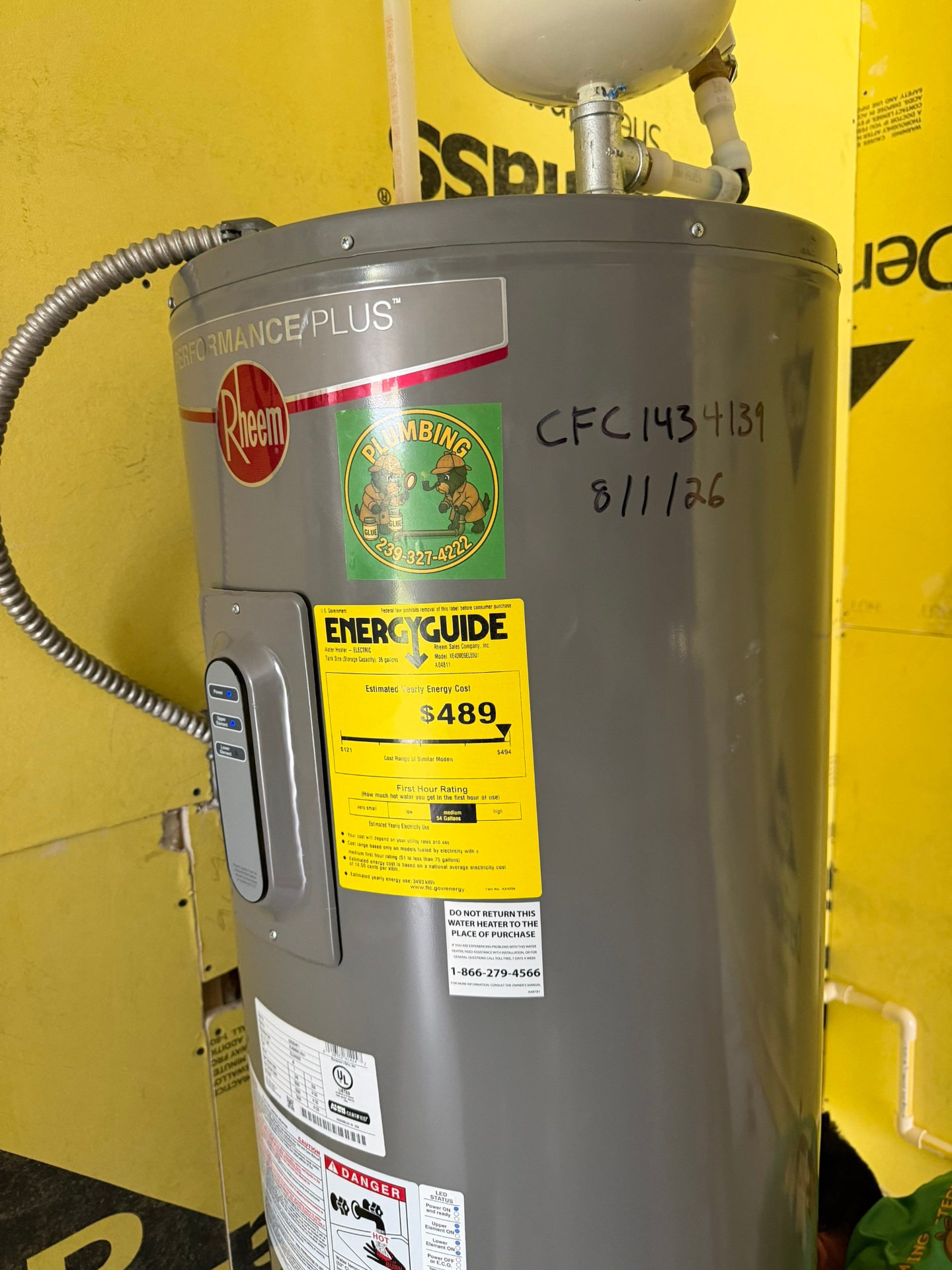
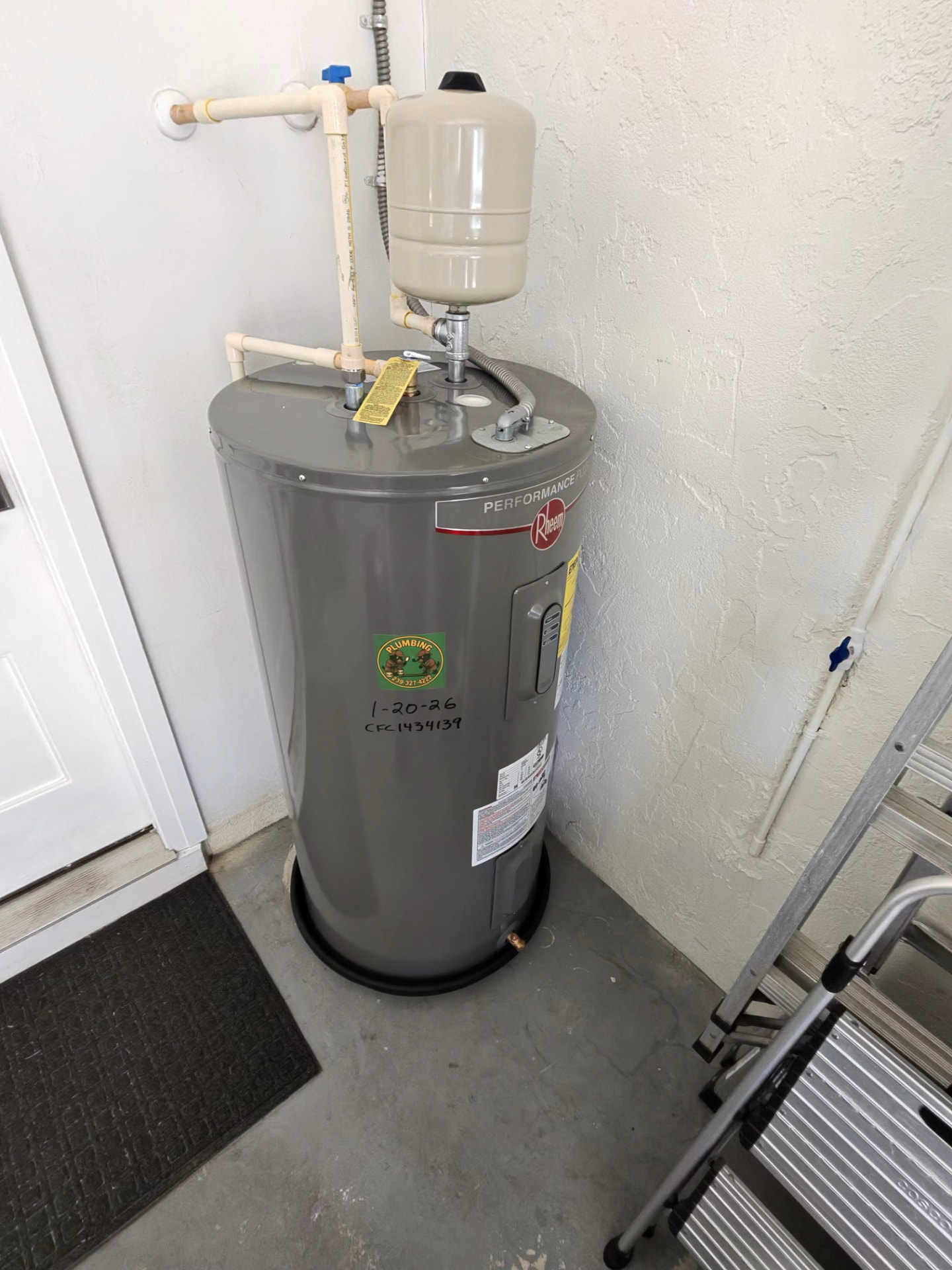
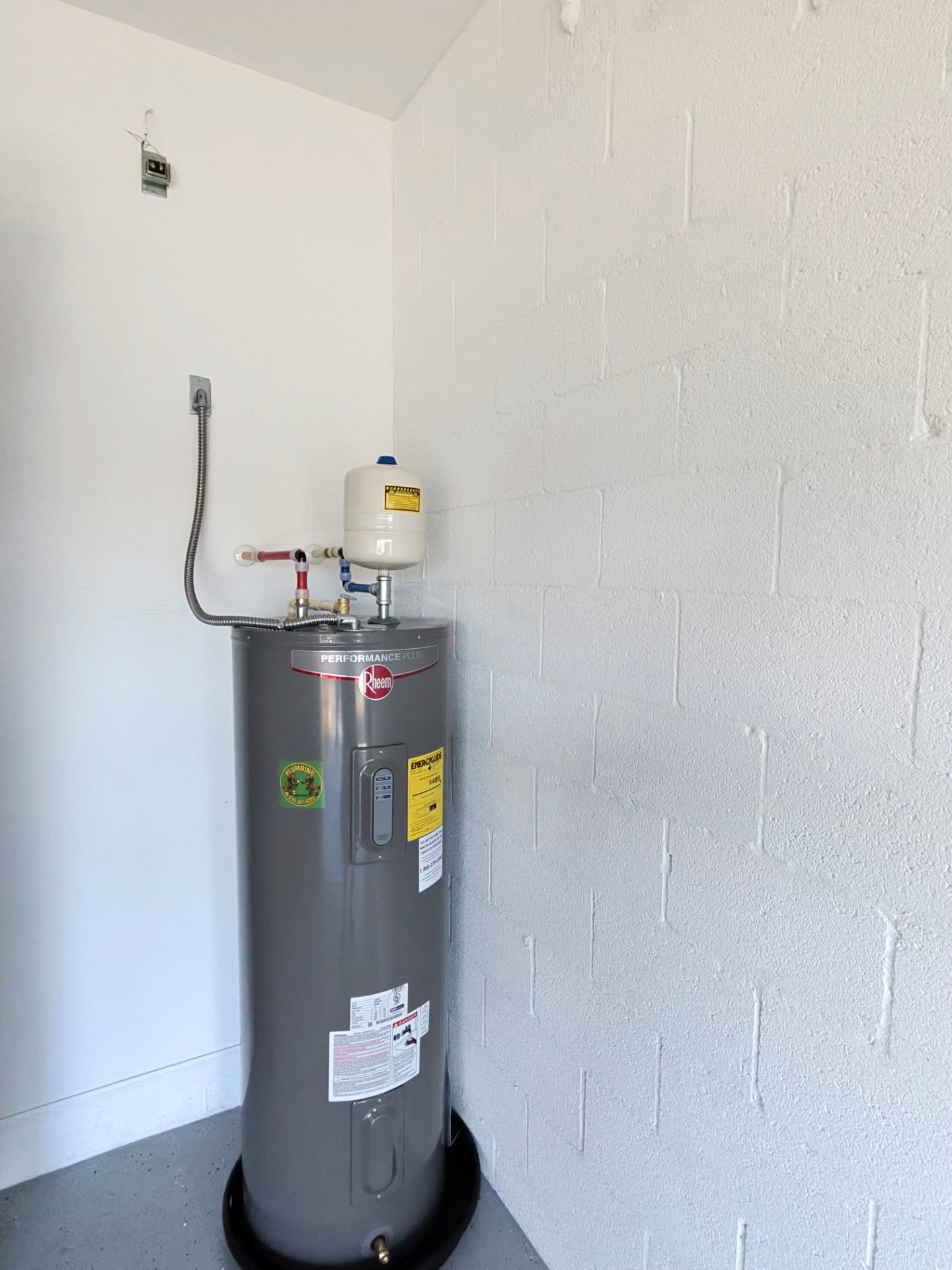
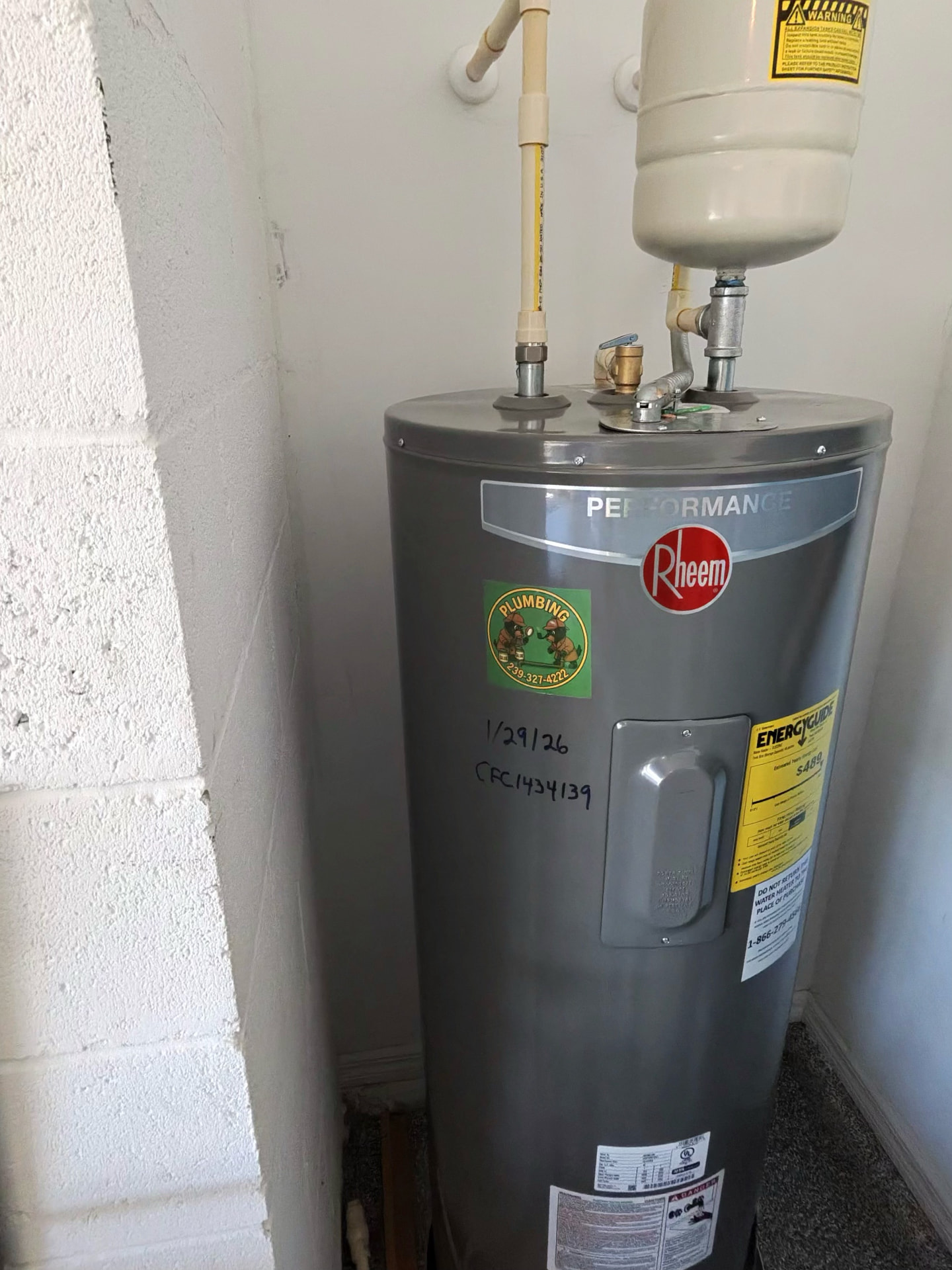
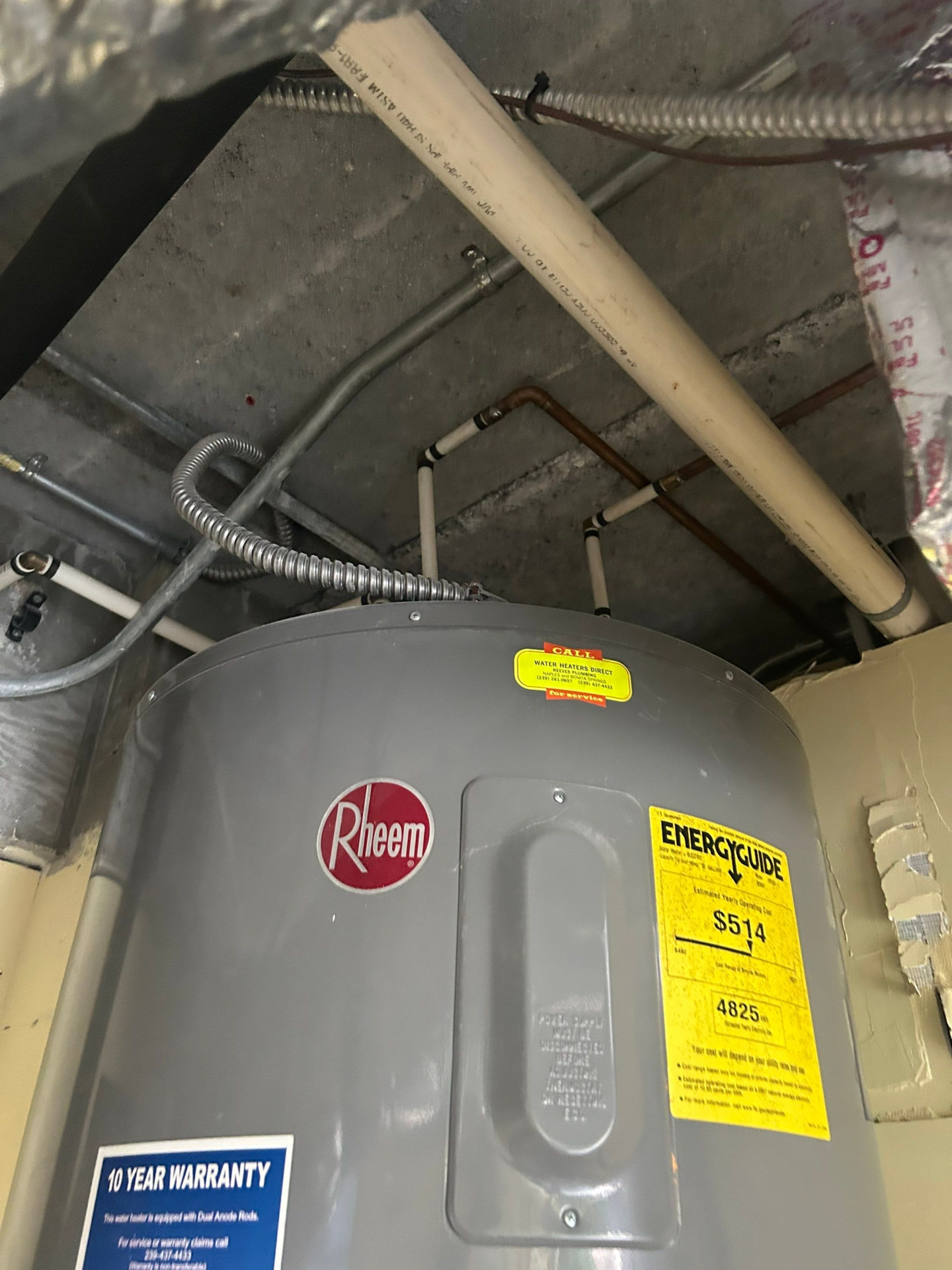
Water Heater Installs, Photographed on the Job
Answers
Frequently Asked Questions — Water Heater Installation in Sarasota, FL
If you’ve read this far, you now know more about water heaters in Sarasota than most homeowners in this market — and you understand why the hard water, the housing age, the coastal environment, and the specific neighborhood all matter before any recommendation gets made. If your water heater is showing any of the signs described on this page, or if you’d simply like to know what shape yours is actually in, call me at 239-388-3631. I’ll come out, look at the whole system, and tell you exactly what I find before I recommend anything.
Plumbing Detectives LLC | Venice, FL | License CFC1434139
239-388-3631 | plumbingdetectivesfl.com