
Slab Leak Detection · Sarasota, FL
Slab Leak Detection in Sarasota, FL
Pulsar 2000 line tracing, thermal imaging, moisture mapping, acoustic pinpointing. Slab leaks, aging copper, condo documentation. Licensed master plumber CFC1434139.
Call Now239-388-3631The Bottom Line: Thermal Leak Detection & Diagnostic in Sarasota — $295. Full Documentation Package with thermal images, written report, and a complete Meta smart glasses POV inspection video delivered in 24–48 hours — $375 (as of mid-2026). Sarasota carries the oldest housing stock in our entire service area — 31% of homes built between 1940 and 1969, median build year in the mid-1970s — which means the largest inventory of at-risk pipe anywhere we work: pre-1985 copper described by local specialists as statistically near end-of-life, polybutylene from the boom years, galvanized in the oldest pockets, and some of the hardest water in the region at 227 PPM. If your Sarasota home is losing water somewhere you can’t see, the age of the pipe is the reason and the evidence is the cure.
My name is Mike Reynolds. I’m the owner of Plumbing Detectives LLC, a licensed master plumber — license CFC1434139 — based in Venice and serving the Sarasota market. Plumbing Detectives LLC’s work has been featured on AP News, Apple News, Business Insider, MarketWatch, and Yahoo Finance.
I’ve written elsewhere about a downtown Sarasota commercial job where the owner was convinced the entire plumbing system had failed — and the diagnosis proved the copper mains were fine while cheap CPVC branch lines were the actual problem. That’s the Sarasota leak story in miniature: the oldest, most varied housing stock in this region produces the most mysterious leaks, and the difference between an evidence-based diagnosis and an assumption is measured in thousands of dollars. Here’s how I find hidden leaks in this market, what it costs, and what you walk away holding.
Why Here
Why Sarasota Produces More Hidden Leaks Than Anywhere We Work
The oldest pipe inventory in the region. Nearly a third of Sarasota’s housing was built between 1940 and 1969, and the median home dates to the mid-1970s. That means galvanized steel still hiding in pre-1960s pockets like the older mainland neighborhoods, copper from the 60s–80s now 40 to 60 years old and squarely in the pinhole window — local repipe specialists describe pre-1985 copper here as statistically near end-of-life — and polybutylene flagged throughout the 1978–1995 stock. Old pipe doesn’t fail loudly. It fails as a pinhole under a slab, a weeping fitting inside a wall, a drip above a ceiling — invisibly, for months.
The hardest water in our service area. Parts of Sarasota test at 227 PPM — firmly in the very-hard range, and harder than Venice. That chemistry is the engine behind the copper pinhole epidemic: scale deposits create rough interior surfaces where pitting concentrates, and the pipe fails from the inside at exactly the age Sarasota’s stock has now reached.
Slab construction plus patchwork history. Sarasota’s single-family stock is overwhelmingly slab-on-grade with supply runs in or under the concrete, and sixty years of repairs by different hands leaves mixed-material systems — copper spliced to galvanized, CPVC branches on copper mains, transition fittings that hold for years and then weep. I find these transition-point leaks constantly in this market, and they almost never show themselves where they occur.
The condo dimension — where documentation becomes the whole game. Sarasota’s downtown towers, barrier island condos, and bayfront buildings produce a specific kind of leak problem: water crossing unit boundaries. When a leak from one unit damages another, the who-pays question lands in Florida’s condominium framework — and those disputes turn on documented evidence of where the water originated. A timestamped thermal report with images, a written finding, and a POV inspection video is exactly the documentation that conversation requires. No competitor in this market offers condo-specific thermal documentation. This page is me offering it.
And the storm and flood context is live right now. Hurricane Milton produced the largest insured losses of the entire 2024 season nationally in this corridor, and recent storms — including Debby — pushed significant water into Sarasota-area homes. The universal lesson: when water enters a home, documented evidence of what got wet, where, and when is worth its weight in gold later. Homes that flooded and were never scanned may still be carrying hidden moisture today.
The Method
How I Actually Find It — Trace, Then Percolate, Then Listen
Every tool I use answers one specific question. None of them do everything, and I’ve never met a single instrument that replaces the other three.
I run a Mileseey TR20 professional thermal imaging camera, a moisture meter, a Pulsar 2000 line tracer, and geophone acoustic listening equipment — in that order, as one system, on every leak call I run. Named equipment, honestly positioned, the same way I name the Plumber’s Vision system on my sewer pages and Uponor ProPEX on my repipe pages. Sarasota has the most crowded leak detection market in our service area — companies advertising acoustic, thermal, electronic, moisture meters — and to their credit, one local outfit even publishes pricing. But look closer at the equipment claims and you’ll find almost nobody names a specific instrument or explains what each one actually proves. I do.
Thermal imaging finds the neighborhood. The TR20 sees temperature, not water. Wet drywall evaporates and reads cooler than the dry wall around it. A hot supply line leaking under a slab paints a warm plume on the floor above. Hot water leaks are its best case and image clearly. Cold water leaks can read faintly or, depending on depth and flooring, not at all.
A moisture meter confirms what the camera thinks it’s seeing. A thermal image can look like a leak and just be warm for some other reason. The moisture meter reads actual water content before anything else happens.
The Pulsar 2000 traces the exact pipe, not the whole slab. Once I’ve got a general area, I clamp a lead to the target line — the cold-water outlet at the water heater and a fixture stub-out in the suspect zone, for example — and energize just that branch. The wand follows the signal along the pipe’s actual route, and I tape-mark that exact corridor.
Then I make it talk, and the geophones pinpoint the exact spot. With the line isolated and drained, compressed air agitates the water and saturated soil or slab material around a leak into a far louder, more distinct disturbance. Two geophone heads a few feet apart along the traced line, listening for where the sound is loudest and even in both ears — that point is directly above the leak.
One cut, not a search pattern. Before anything gets opened, I scan for rebar, post-tension cable, and conduit so the cut doesn’t create a second problem. Then it’s one core drill or a small opening at the marked spot — not a trench, not a series of test holes.
And the honest limits, because this section is the whole brand: when the full sequence still doesn’t give enough evidence, we don’t guess — we pressure test to isolate the losing line or make one small, targeted opening exactly where the remaining evidence points. I don’t carry tracer gas, and I won’t pretend to. What I carry, I name; what each tool proves, I show you; what it can’t prove, I say out loud. Ask any company you’re comparing one question: “How do these tools work together?” A real answer sounds like a sequence. A vague answer is a tool list wearing a sales pitch.
Published, In a Market Where Almost Nobody Publishes
What It Costs
Thermal Leak Detection & Diagnostic — $295
Mileseey TR20 thermal scan, full visual plumbing inspection, targeted imaging of every suspect area, Pulsar 2000 tracing and geophone pinpointing when thermal alone doesn’t close the case, findings explained on site with you at the screen, written findings report, and a straight recommendation: repair, reroute, pressure test, further investigation, or monitor.
Thermal Leak Detection + Documentation Package — $375
Everything above, plus the complete inspection video recorded from my point of view on Meta smart glasses, the full thermal image package, and photo documentation — delivered to your Google Drive within 24 to 48 hours, guaranteed, or the documentation upgrade is refunded.
(Pricing as of mid-2026.) Sarasota’s market runs roughly $200–$600 — standard detection around $200–$500, slab-leak work quoted at $300–$600 by the local benchmark. Mine sits in the honest middle with something nobody else here delivers: a point-of-view video of your own inspection. For a Sarasota condo owner facing a boundary dispute, a homeowner building an insurance file, or a buyer scoping a 1968 ranch before closing — that documentation outlasts and outvalues the scan itself.
Plumbing Detectives LLC Professional Opinion
If you own a Sarasota home built before 1985 and you’ve never had a leak — you’re not immune, you’re early. Pre-1985 copper in this water is statistically near end-of-life, and the first pinhole almost always happens where you can’t see it. The cheapest moment to find a hidden leak is before the flooring buckles: an unexplained bill movement, a warm spot, a musty note in one room. In this housing stock, those aren’t quirks. They’re the pipe raising its hand.
The Process
Step by Step — And What Happens When the Leak Is Found
The investigation runs the same disciplined sequence everywhere I work: the symptom conversation, a visual inspection first (sometimes the mystery is a running flapper — you’ll hear that instead of a scan pitch), then thermal imaging, moisture verification, Pulsar 2000 tracing, and geophone pinpointing as needed to close the case, with you watching the whole time. Plain-language explanation of what the evidence shows and doesn’t. Then the written report and honest options.
When it’s a slab leak in Sarasota’s aging stock, the decision tree matches my repiping pages exactly: an isolated failure in an otherwise sound system can justify a targeted repair; a slab leak in 50-year-old copper usually earns my real recommendation — reroute the line overhead rather than cutting concrete to patch a system failing from the inside. Pressurized supply lines don’t belong under slabs. And when this is the second or third pinhole, that’s not a leak problem anymore — it’s the system talking, and the conversation moves to my Sarasota whole-house repiping page, where the full repair-versus-repipe honesty lives.
When it’s a condo, the finding comes with the documentation the situation actually requires: where the water originated, timestamped, imaged, and on video. Unit-boundary disputes are won and lost on exactly that evidence.
Any repair requiring a permit gets one — City of Sarasota Building and Zoning Division or Sarasota County Planning and Development Services, depending on your parcel, verified before work begins.
Plumbing Detectives LLC Tips
The free test before any call: shut every fixture off, read your meter, wait two hours with no water use, read it again. Movement means water is leaving the system. In a pre-1985 Sarasota home, that two-hour test is the single highest-value diagnostic dollar you’ll never spend.
Condo owners: if a leak has crossed — or might cross — a unit boundary, get documentation before repairs erase the evidence. Once the wall is patched and dried, proving where the water originated becomes somebody’s word against somebody’s insurance adjuster.
Buying in Sarasota’s older neighborhoods? A thermal scan alongside your inspection is a few hundred dollars against the region’s most statistically at-risk pipe inventory. The standard home inspection doesn’t include one — I bought a home in this county recently and mine didn’t either.
If your home took water during Debby, Milton, or any of the recent storms and was dried out without ever being scanned, hidden moisture may still be in the walls. It shows up later as odor and mold. One non-destructive scan settles the question and documents the answer.
Why Us
Why Plumbing Detectives LLC
Sarasota’s leak detection market is the most crowded in our service area — everyone advertises “advanced equipment,” and almost nobody explains what each piece actually does or proves. That’s a tool list, not a method. I run thermal imaging, a moisture meter, the Pulsar 2000 line tracer, and geophone acoustic detection as one integrated sequence — trace the line, percolate the leak, listen for the exact spot — because that’s what actually narrows a Sarasota leak down to one small cut instead of a guess with a jackhammer attached. That same diagnosis-first philosophy is why I run camera inspections on every sewer line before recommending a repair — you locate the problem, then you cut. Licensed, documented, evidence-verified leak detection and sewer work under one company. License CFC1434139. Fully insured.
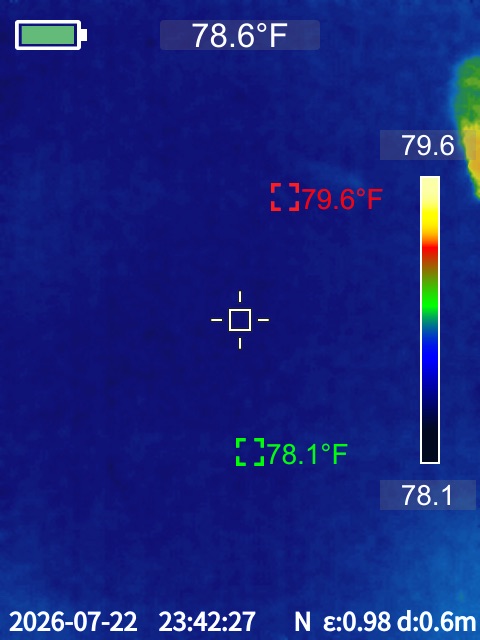
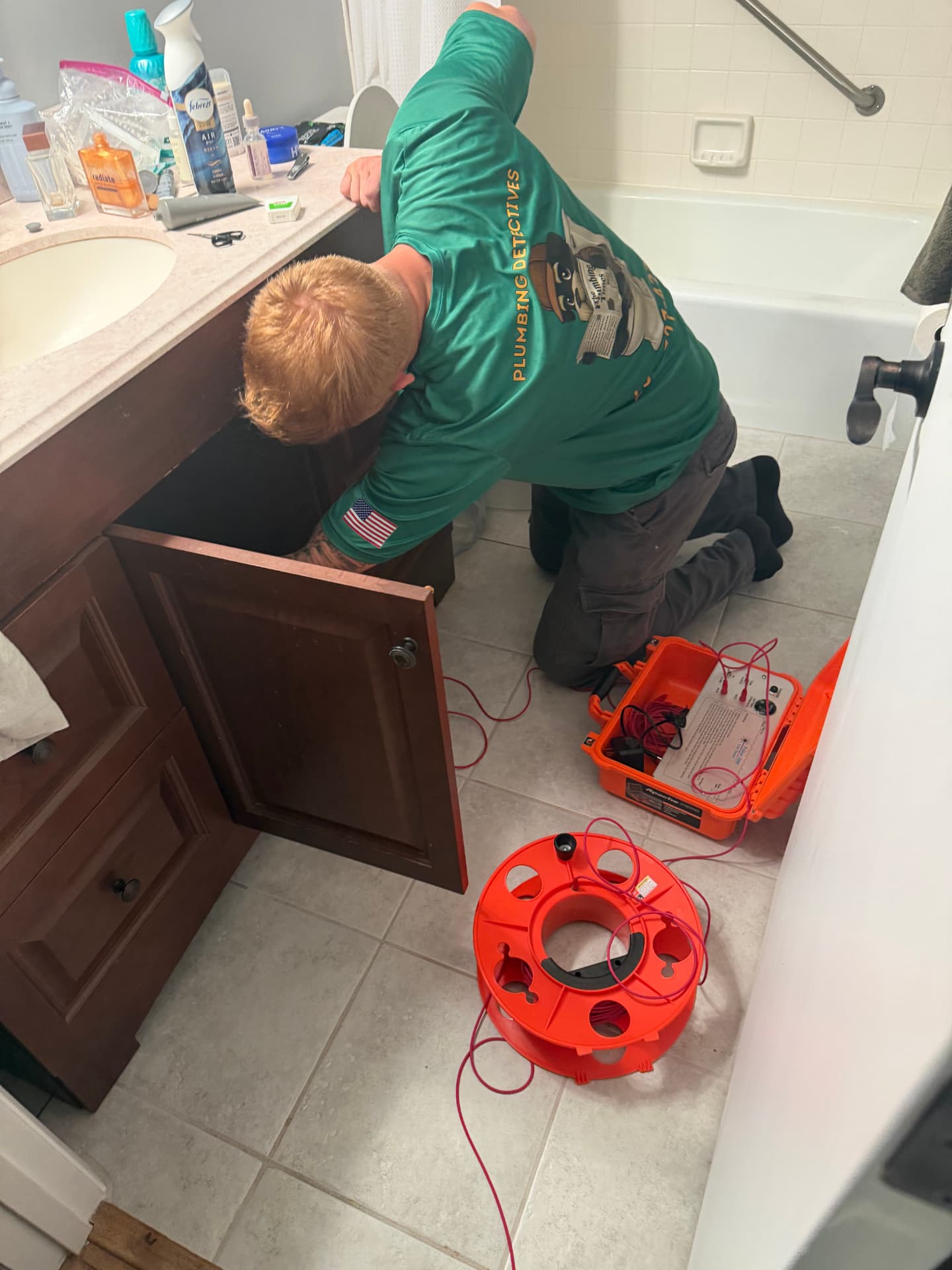
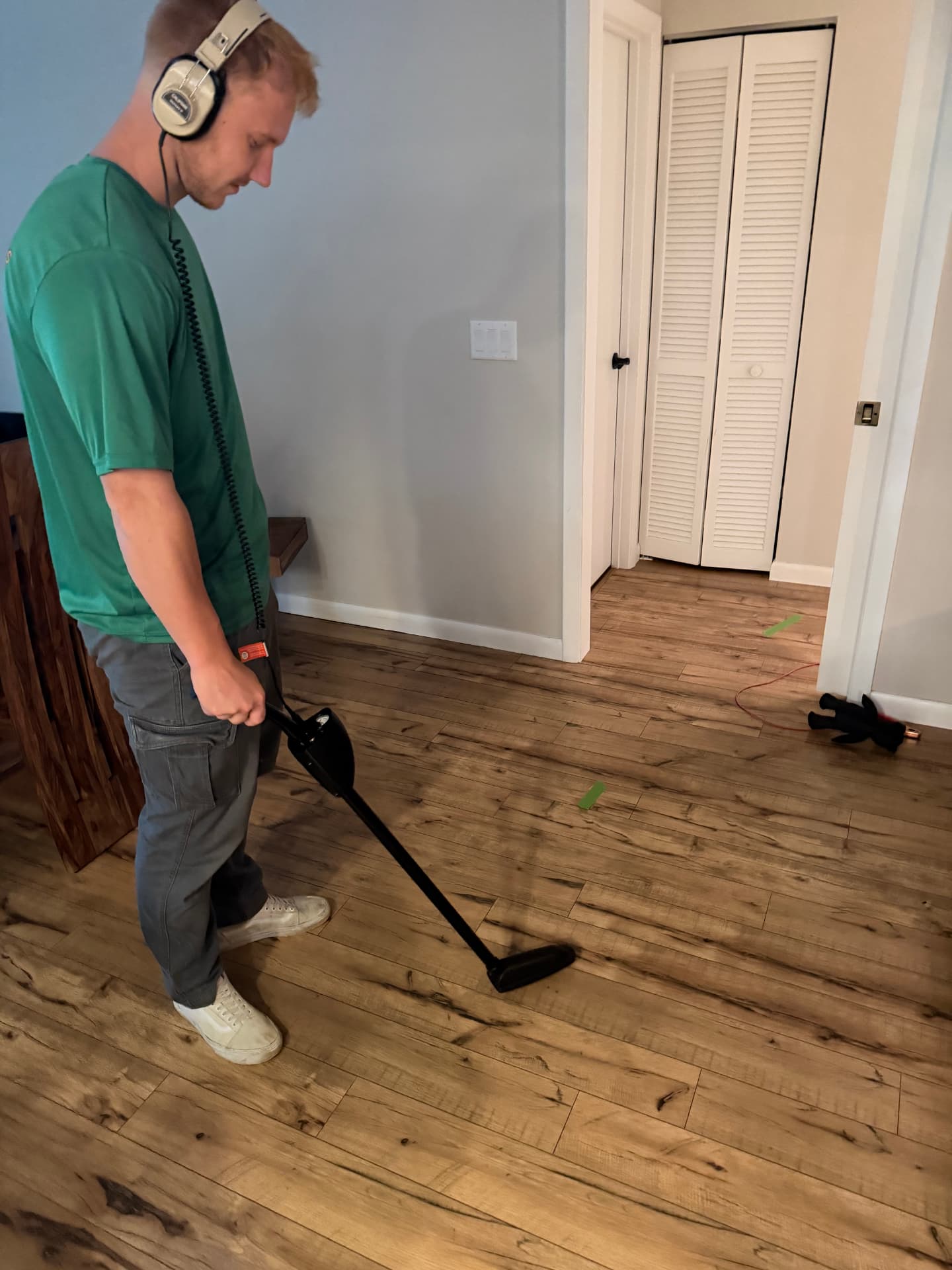
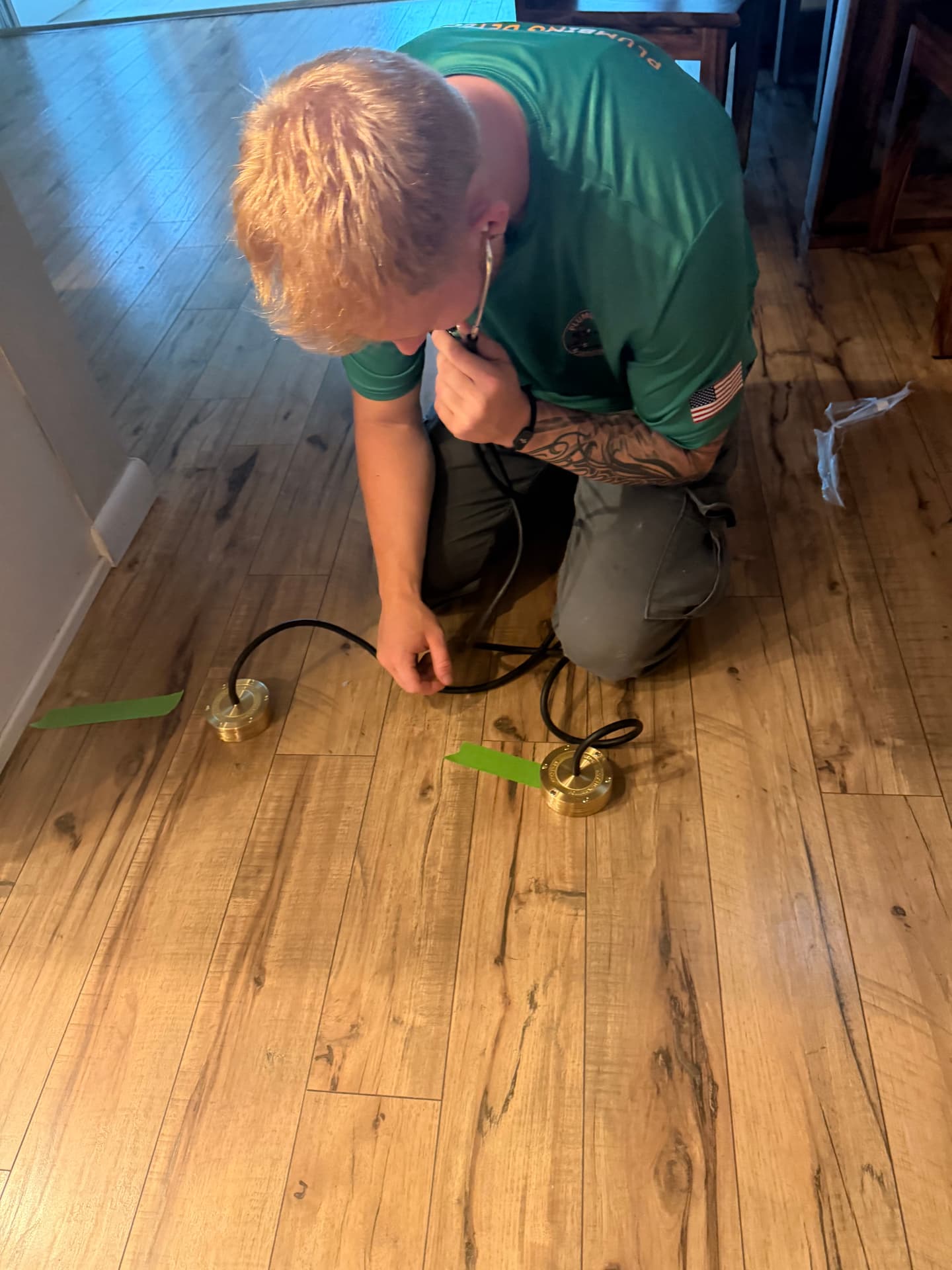
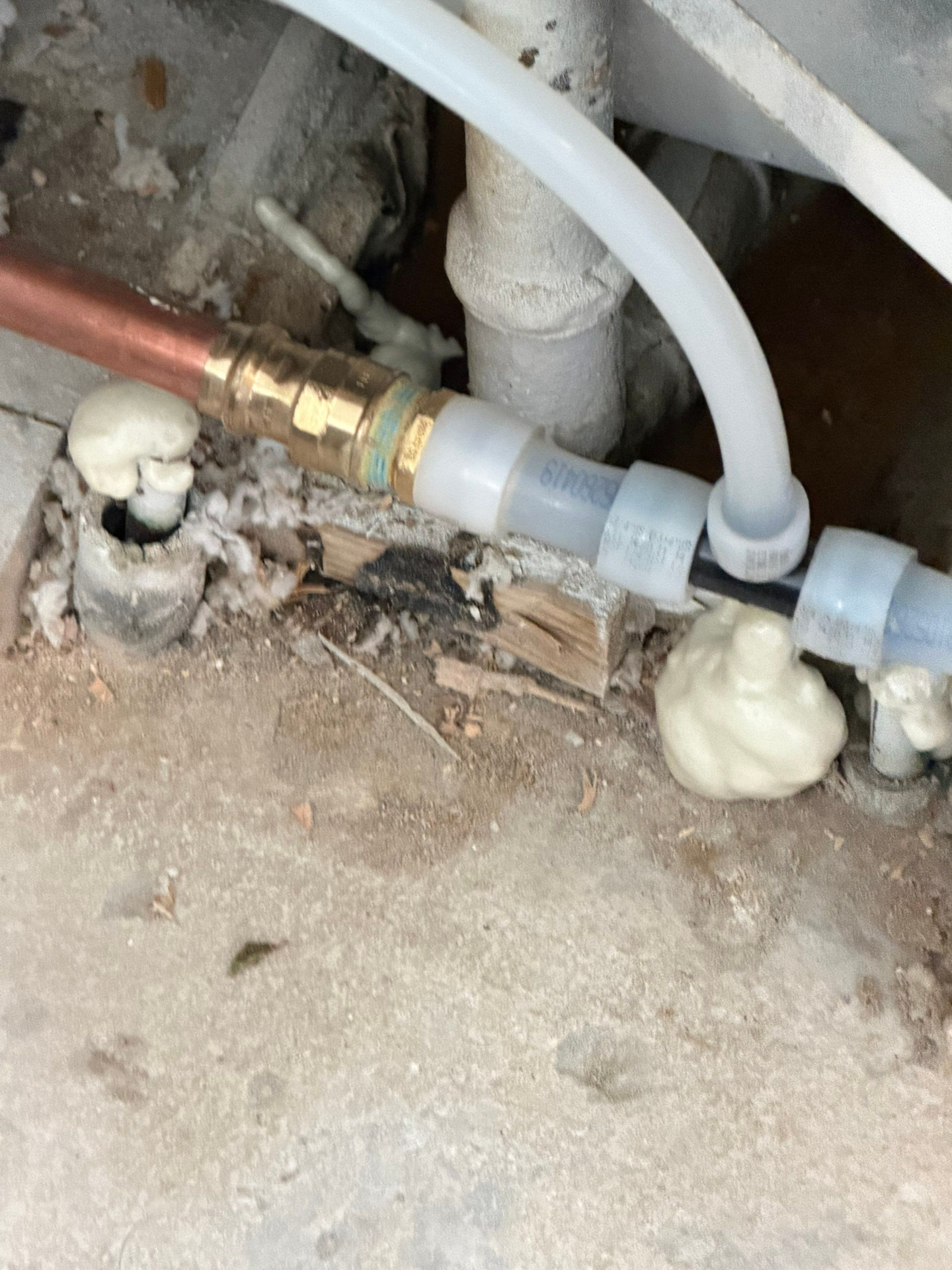
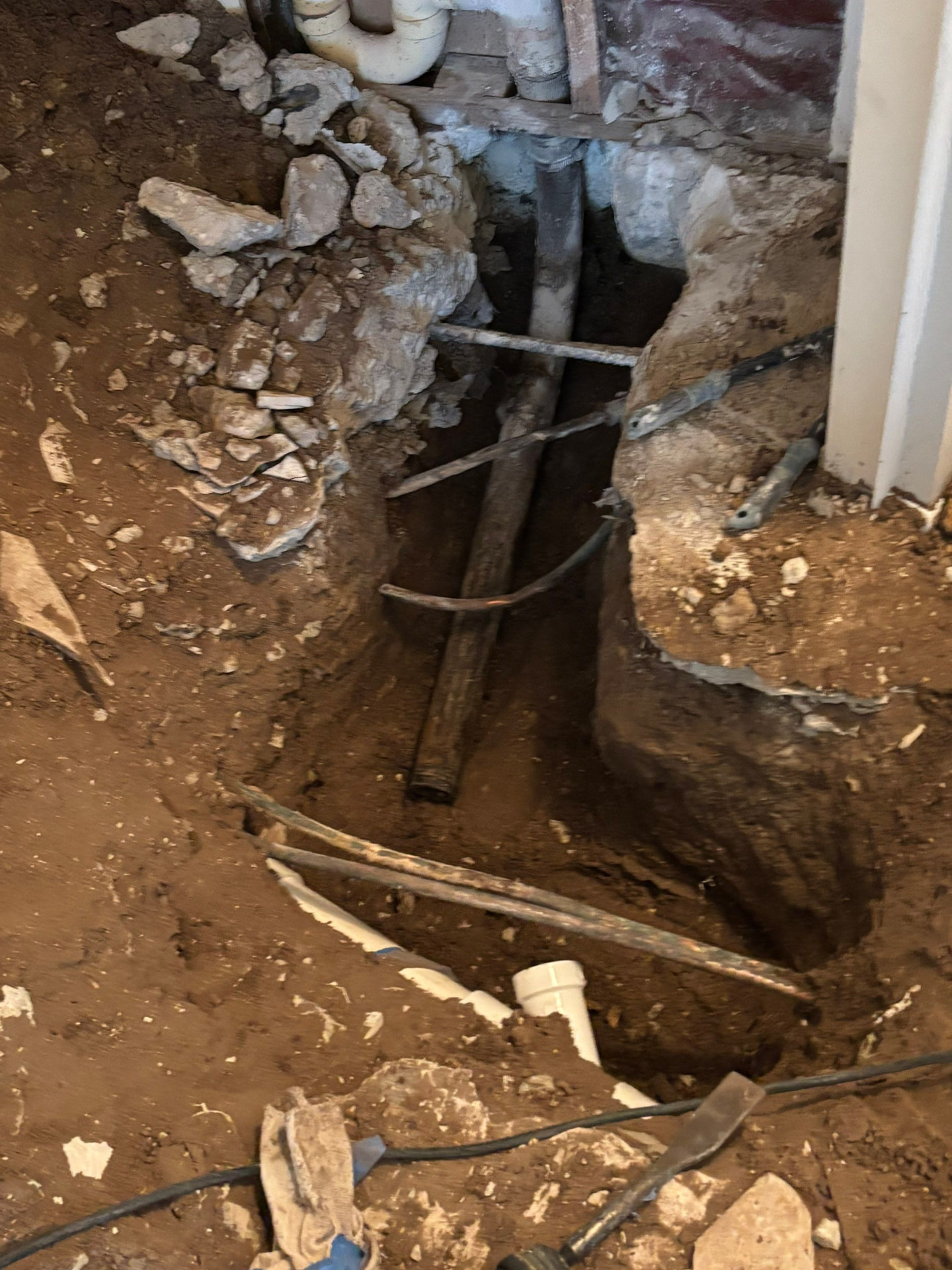
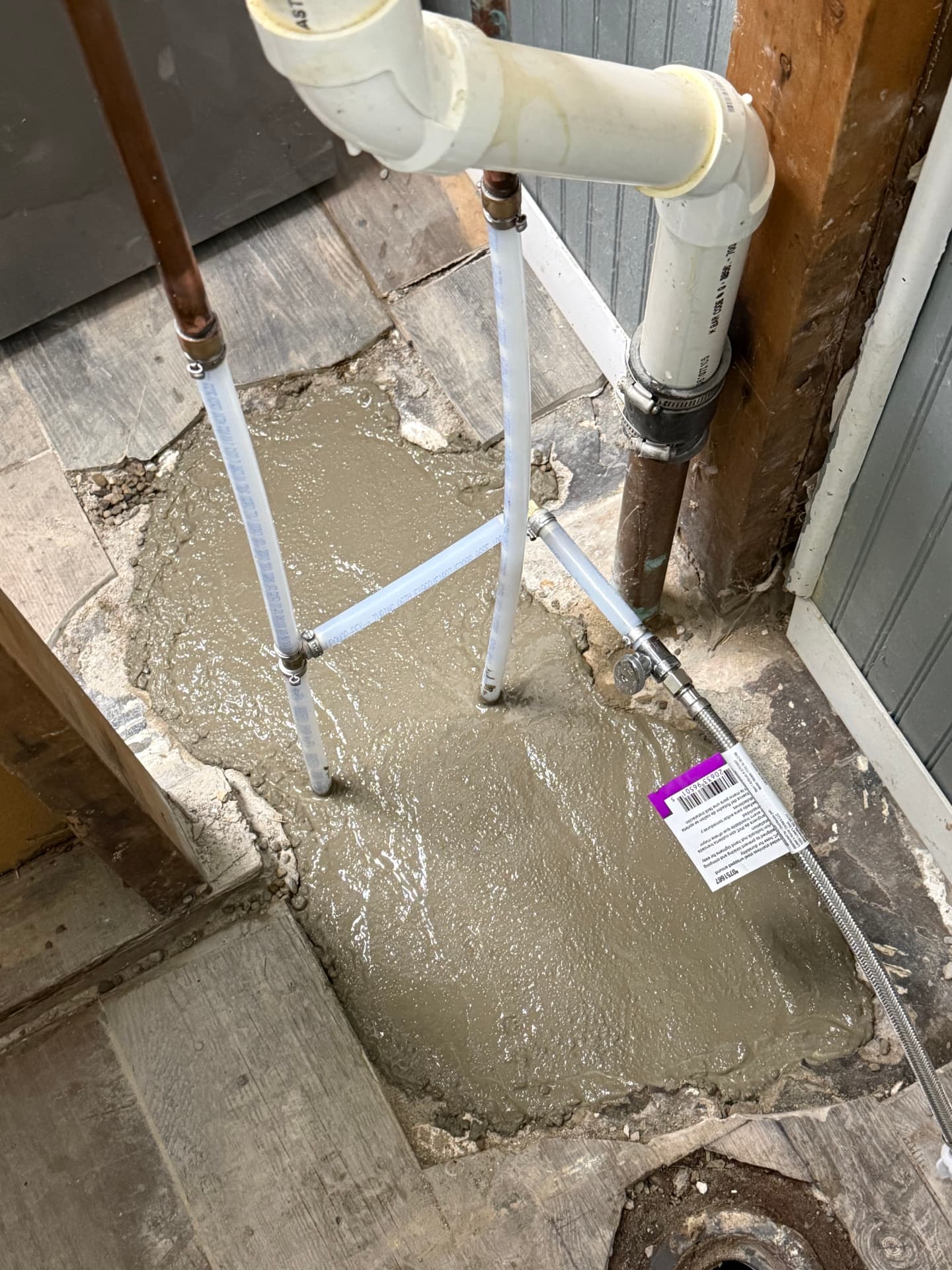
Photo slots awaiting Mike’s job-site images.
Answers
Frequently Asked Questions — Slab Leak Detection in Sarasota, FL
If you’ve read this far, you understand hidden leaks in Sarasota better than most homeowners ever get them explained — why the oldest housing stock in this region plus the hardest water makes invisible failures a statistical certainty, why trace-percolate-listen finds what a single camera can’t, why condo leaks are documentation problems before they’re plumbing problems, and why the evidence is worth more than the scan. If your bill moved, your floor is warm, your ceiling is staining, or water is crossing a boundary it shouldn’t — call me at 239-388-3631. The equipment comes out, you see everything I see, and you get the truth in writing before anyone talks about opening anything.
Plumbing Detectives LLC | Venice, FL | License CFC1434139
239-388-3631 | plumbingdetectivesfl.com