
Sewer Line Repair · Sarasota, FL
Sewer Line Repair in Sarasota, FL
Camera-verified diagnosis first, always. Licensed master plumber CFC1434139. Emergency service available — call 239-388-3631.
Call Now239-388-3631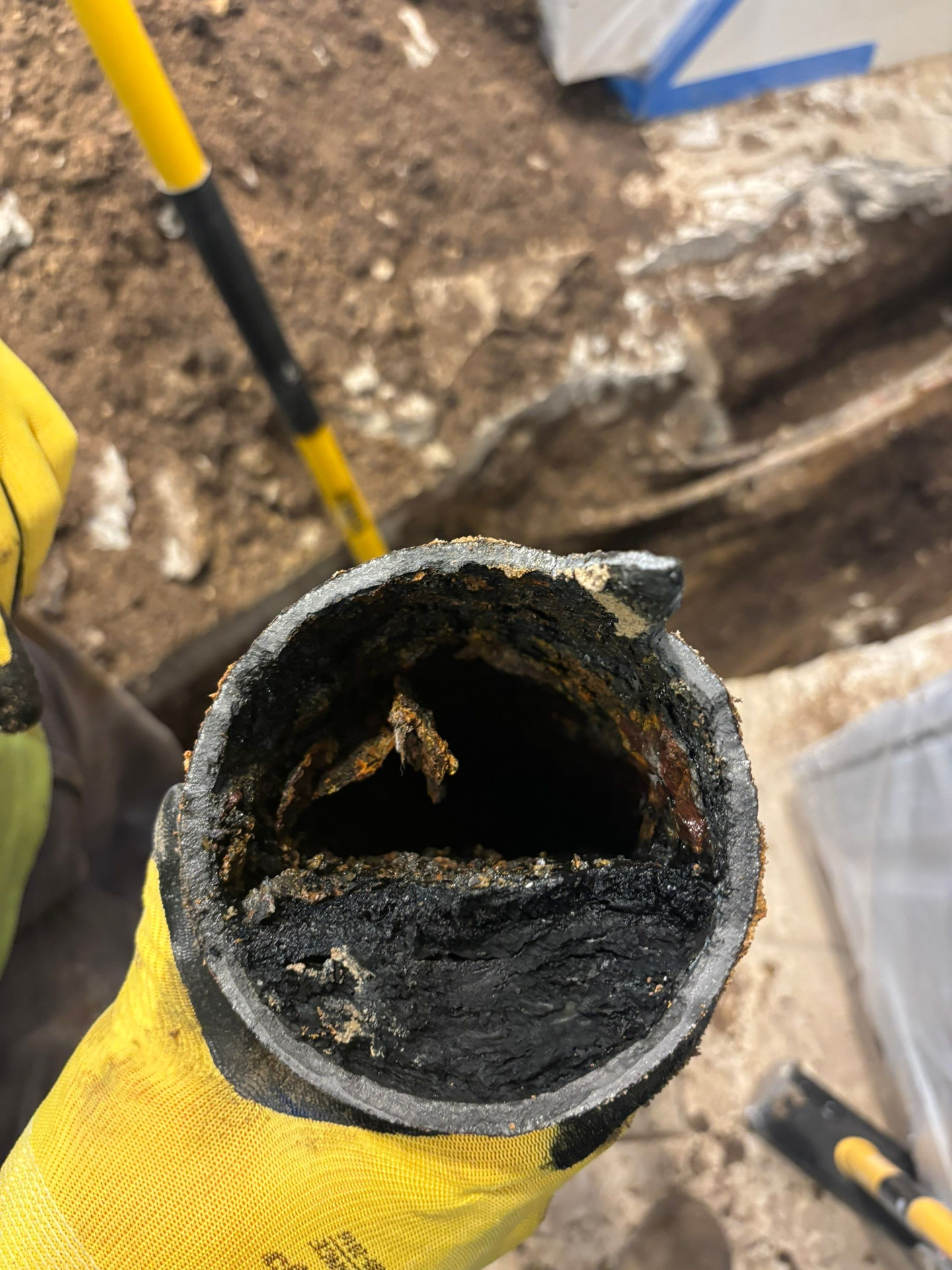
Camera log · one line, 43 feet
What the camera actually found, foot by foot
These are real stills off one inspection, with the footage counter burned into the picture. Nothing staged, nothing borrowed — this is how a failing line reads on camera from the cleanout out to the collapse, including a second belly at 37 feet.
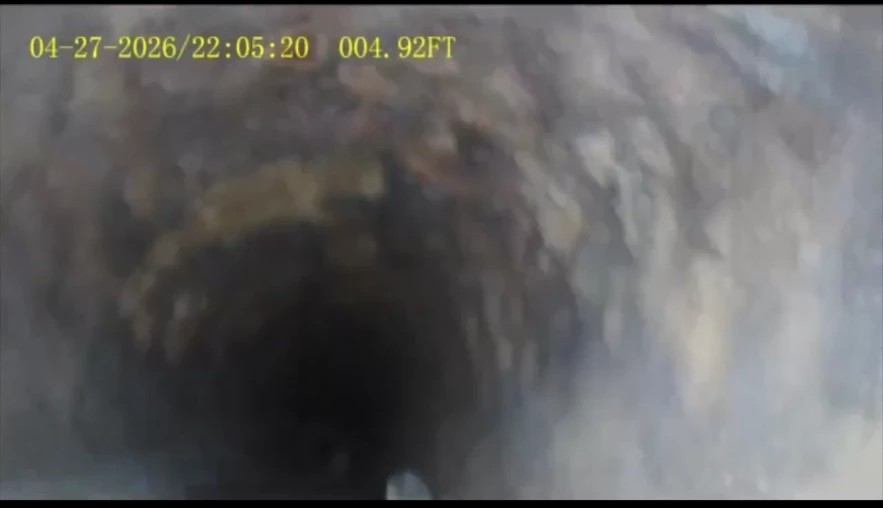 4 ft
4 ftScale building on the pipe wall
Four feet in and the scale is already obvious — the inside of the pipe is no longer smooth. That rough, built-up surface is what catches paper and grease and starts the backups.
I run calls in Sarasota regularly, but I’ll say something here I won’t pretend otherwise on: I’m not from Sarasota, and Sarasota isn’t one place. It’s a full city with its own government sitting inside a county that shares its name, wraps around it, and runs its own separate utility and permitting system. And the housing stock inside that boundary spans more than a century — 1920s Mediterranean Revival mansions in Laurel Park, 1950s ranch homes in South Gate, and 1980s downtown condo towers, sometimes within a mile of each other.
That combination — two governments, one name, a hundred years of construction — is what makes Sarasota different from every other market I serve. A company that quotes a Sarasota sewer job the same way everywhere in the “Sarasota” mailing area is either missing which permit office to call, or missing which century the pipe under your slab came from. Often both.
My name is Mike Reynolds. I’m the owner of Plumbing Detectives LLC and a licensed master plumber, license CFC1434139, based just south in Venice. Here’s what a Sarasota homeowner — whether you’re in a 1920s bungalow, a Gulf Gate ranch, or a downtown high-rise — needs to know before spending a dollar on sewer work.
City and County, Same Name
Sarasota Isn’t One City — It’s a City and a County Wearing the Same Name
A Sarasota mailing address doesn’t tell you which government has jurisdiction over your plumbing permit. The incorporated City of Sarasota runs its own Development Services / Building & Zoning Division. Unincorporated Sarasota County — which includes most of Siesta Key, Palmer Ranch, Gulf Gate, and the eastern and southern parts of the county — runs a completely separate Building Division, with its own fee schedule, its own phone number, and its own inspectors.
That split isn’t a technicality. City permit fees run a flat $45 base plus $5 per fixture for new work, with alterations and repairs closer to $75. County permits are valuation-based — a $100,000 renovation in unincorporated county territory can carry $1,100 to $2,300 in permit fees alone. Get the wrong office and you can lose weeks waiting on a permit application that was never going to be approved by that department in the first place.
I’ve noticed something in researching this market: very few plumbing companies advertising in Sarasota actually explain this distinction to homeowners. Most just say “Sarasota” and move on. I’d rather tell you up front that the first thing my crew does on any Sarasota job is confirm which government has jurisdiction over your address — through the Sarasota County Property Appraiser or the municipal boundary lookup — before we ever talk about permits or price.
A Hundred Years of Pipe
What a Century of Construction Actually Looks Like Under Sarasota’s Streets
The City of Sarasota’s own Comprehensive Plan Housing Element states that 76% of the city’s housing stock is more than 20 years old, and as far back as the year 2000, 31% of it was already 40-plus years old. Summing the pre-1970 construction cohorts from the city’s own year-built table — homes built in 1939 or earlier, the 1940s, 1950s, and 1960s — comes out to roughly 51% of all City of Sarasota housing units built before 1970. Add the 1970s, and you’re at roughly 76% of the city’s stock built before 1980.
That’s not evenly distributed. A few specific pockets carry most of the oldest and highest-risk pipe:
The 1900s–1930s historic core. Laurel Park, Burns Court, Alta Vista, Hudson Bayou, and Indian Beach–Sapphire Shores were built in this window — genuinely the oldest housing in the market, old enough that cast iron drain-waste-vent piping is the expected default, not a possibility. Homes this old sometimes need more than a lateral repair — the interior drain stack itself, not just the run to the street, can be original cast iron nearing a full replacement rather than a spot fix.
The 1950s–1960s ranch expansion. Gulf Gate Estates and South Gate are the defining mid-century neighborhoods here — South Gate alone has more than 2,000 single-family ranch homes from this era. This is the same cast iron risk window I describe on my Venice Gardens sewer line repair page, just under a different neighborhood name.
Downtown condo towers, 1970s–1980s. Many of Sarasota’s downtown high-rises date to this window and still run on original cast iron vertical risers serving stacked units. I’ll cover this separately below, because it’s a genuinely different kind of failure than a single-family lateral.
I want to be honest about one more thing: a widely repeated claim in the regional trenchless industry states flatly that “all homes in Sarasota County built before 1972 have cast iron drain pipes under the slab.” That’s a vendor talking point, not a property-by-property verified fact. It’s probably directionally right for this era of construction — but I’ve opened enough floors to know “probably” isn’t a number I’ll quote off of. The camera settles it.
What the Camera Found
A Real Job From a Home This Age — What the Camera Found
I’ve documented a job in a 1980 South Venice slab home — right in the same construction window as Sarasota’s ranch-era neighborhoods like Gulf Gate Estates and South Gate — that shows what four to five decades does to a drain line from this era. The homeowner’s only symptom was a guest toilet gurgling louder over the course of a week.
The toilet was cemented in — I had to break the bowl for camera access. Within the first ten feet, the camera hit standing water under a bedroom closet in the next room. Past that section, the pipe was bone dry — the water wasn’t flowing, it was pooling in a sag and seeping into the sand through pipe that had rotted from the inside out. Further along, in the kitchen run, the 4-inch trunk line had narrowed to what looked like 2-inch pipe from interior buildup. Near the end of the kitchen the camera could barely pass at all — the line had sunk so badly it was remarkable there hadn’t been a backup yet. When the floor came open, the pipe was more than half full of black, soot-like buildup, with a sagging fitting that had to be seen to be believed.
The camera also showed the last fifteen feet of that run — past the master bath — was still in good condition. So it stayed. Roughly three-quarters of that home’s drain system was replaced; the sound section was left alone. That’s the standard I bring to a Sarasota ranch home from this same era.
For Sarasota’s older 1920s–1930s historic homes specifically, I’ll be straight with you: I don’t have a documented job from a home that old to show you yet. What I can tell you is that homes this age are past the point where “if” the interior drain stack needs attention becomes “when” — and the camera is the only honest way to find out how much of the system is still sound.
A Different Kind of Failure
The Downtown Condo Riser Problem
Sarasota has more than 50 downtown condo buildings, with 20-plus more in the current development pipeline. A meaningful number of the older towers date to the 1970s and 1980s and still run on their original cast iron vertical risers — the stacked drain pipe running floor to floor behind the walls, serving every unit above and below.
Riser failure is a different animal than a single-family lateral failure. A burst cast iron bathroom riser doesn’t just affect one unit — a documented Sarasota HOA case involved exactly that: a ruptured riser flooding three units below the failure point. On the camera, the warning signs are the same corrosion patterns I see anywhere — rust, cracking, thinning pipe walls, leaking — but the consequence of waiting is multiplied by every unit stacked underneath the failure.
If you’re on an HOA board or you own a unit in one of these older towers, this is worth raising proactively rather than waiting for a failure: a camera inspection of the riser system, documented for the whole board to see, is a very different conversation than an emergency call after a unit three floors down has water damage. Riser work isn’t priced the same way as a single-family lateral — access, unit count affected, and HOA coordination all factor in — so this is a scope we evaluate project by project rather than off a per-foot number.
What Your House Is Telling You
Warning Signs — House, Condo, and Septic
For single-family homes on sewer: a toilet that gurgles when the washing machine or dishwasher runs, slow drains at multiple fixtures at once, recurring clogs in the same spot, sewage odor inside or outside the home, wet or unusually green patches in the yard along the lateral path, backups during heavy rain, and unexplained moisture at the floor in slab homes.
For condo and HOA units: interior or exterior corrosion, rust, cracking, or thinning pipe walls visible on camera, leaking, ruptures, frequent clogging, sewer backups, slow drains, foul smells, and — a sign that surprises people — pest intrusion, since roaches and rodents can enter through a breached riser pipe.
Sarasota County still has an estimated 45,000-plus septic tanks countywide, roughly half of them inside the county’s own utility service area, concentrated most heavily around the Phillippi Creek watershed and other unincorporated pockets. If you’re on one of these, some symptoms point to the tank or drainfield itself — unusually green or lush grass over the drainfield, standing water in that specific spot — and that’s outside our scope; we don’t install or service tanks and drainfields. But a backup or odor closer to the house often means a broken or blocked pipe between the house and the tank, and that’s exactly what we camera-diagnose and repair, same as any sewer lateral.
The Camera Comes First
Diagnosis First — The Camera Comes Before the Quote
I will not quote a sewer repair I haven’t seen from the inside — and in a market spanning a hundred years of construction and two separate jurisdictions, guessing off a neighborhood name is a worse idea here than almost anywhere else I work.
Every job starts with a camera inspection, whether it’s a single-family lateral, a condo riser, or the pipe running to a septic tank. I run a camera with a self-leveling head, a distance counter, and a 512 Hz locator — which means I can see the condition of the pipe, measure exactly where each problem is, and mark its location from above. If I see something, I call you over and show you on the screen in real time, then you get a written report of the findings.
That’s a separate service with its own transparent pricing: Camera Inspection & Surface Locate is $325, and the optional recorded-video add-on is +$70 — the full footage is delivered by Google Drive within 24 to 48 hours ($395 total). In Sarasota, the camera is what actually tells me whether your home needs a spot repair, a partial replacement, or a full drain-stack replacement — not the decade your neighborhood was platted.
Plumbing Detectives LLC Professional Opinion
Sarasota gets marketed as one market, and it’s really several: a 1920s historic district, a 1950s ranch belt, downtown condo towers, and unincorporated county pockets still on septic — each with a different risk profile and, in the City-versus-County case, a genuinely different permit office. Before anyone quotes you a Sarasota sewer repair, make sure they’ve confirmed your jurisdiction and run a camera — not priced you off the ZIP code. And if anyone proposes lining your pipe, Florida code now requires a video camera survey before and after — ask to see it.
The Honest Decision Tree
Repair, Reline, or Replace — The Honest Decision Tree
Spot repair. When the camera shows an isolated problem — one separated joint, one crushed section, one root intrusion point — in an otherwise sound line, the answer is a targeted repair: open the floor or yard at the marked location, replace the failed section with new PVC at correct pitch, and put everything back.
Trenchless relining (CIPP). Right when the host pipe has internal corrosion and scaling but is still structurally intact and still holding its pitch — a good fit for a lot of Sarasota’s older single-family stock where the pipe hasn’t collapsed. Lining doesn’t fix gravity — a bellied section, common in this sandy, high-water-table soil, will still hold water under a liner. Since April 2024, Florida code requires a video camera survey both before and after any CIPP relining.
Pipe bursting. A fit where a line needs upsizing or has offset joints, but requires clearance for the bursting head — a real consideration in dense downtown lots and older platted neighborhoods with tight setbacks like Laurel Park or Burns Court.
Excavation and full replacement. When the line has collapsed sections, severe bellies, or buildup so advanced it can’t be restored. For Sarasota’s oldest homes specifically, this sometimes means more than a lateral — a full interior drain-stack replacement, closer in scope to a whole-house repipe than a single lateral swap, if the camera shows the cast iron is failing throughout rather than at one point.
Condo riser work. Evaluated project by project given access, unit count, and HOA coordination — see the section above.
Septic-connected homes. If your Sarasota-area home runs to a septic tank instead of sewer, the pipe between your house and that tank is still ours to diagnose and repair, same decision tree as above. We don’t install septic systems themselves — a new tank or drainfield is a licensed OSTDS contractor’s scope, not ours.
Section by Section, Not All or Nothing
How I Replace a Sewer Line — Section by Section, Not All or Nothing
Sometimes the camera can’t get through the worst section. I’m not going to quote work on pipe I haven’t seen. So I give you a price for the section the camera has documented. Once the floor is open and I’ve cleared the bad section, I run the camera upstream and diagnose the next stretch, and tell you honestly whether we should keep going or stop there — the same way I handled the South Venice job, where we stopped once the camera confirmed the remaining fifteen feet was sound.
The white glove approach. A sewer replacement inside a Sarasota home means concrete saws, excavation, and spoil — more delicate still inside a historic Laurel Park or Burns Court home, or a downtown condo unit. On every interior job: wall protection goes up, floor protection goes down, dust control is in place, and the work area stays clean and contained. Everything is documented in photos and video.
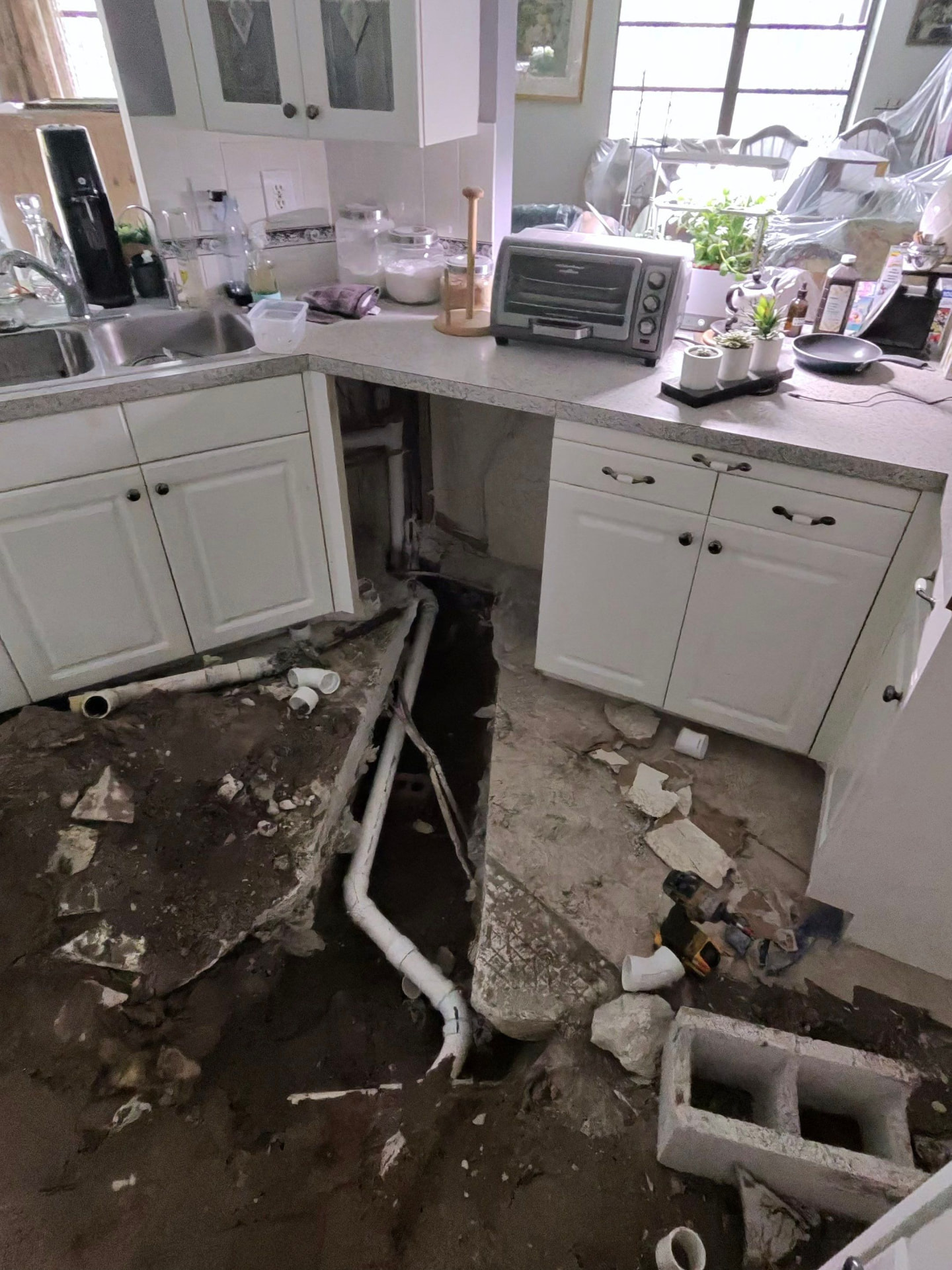
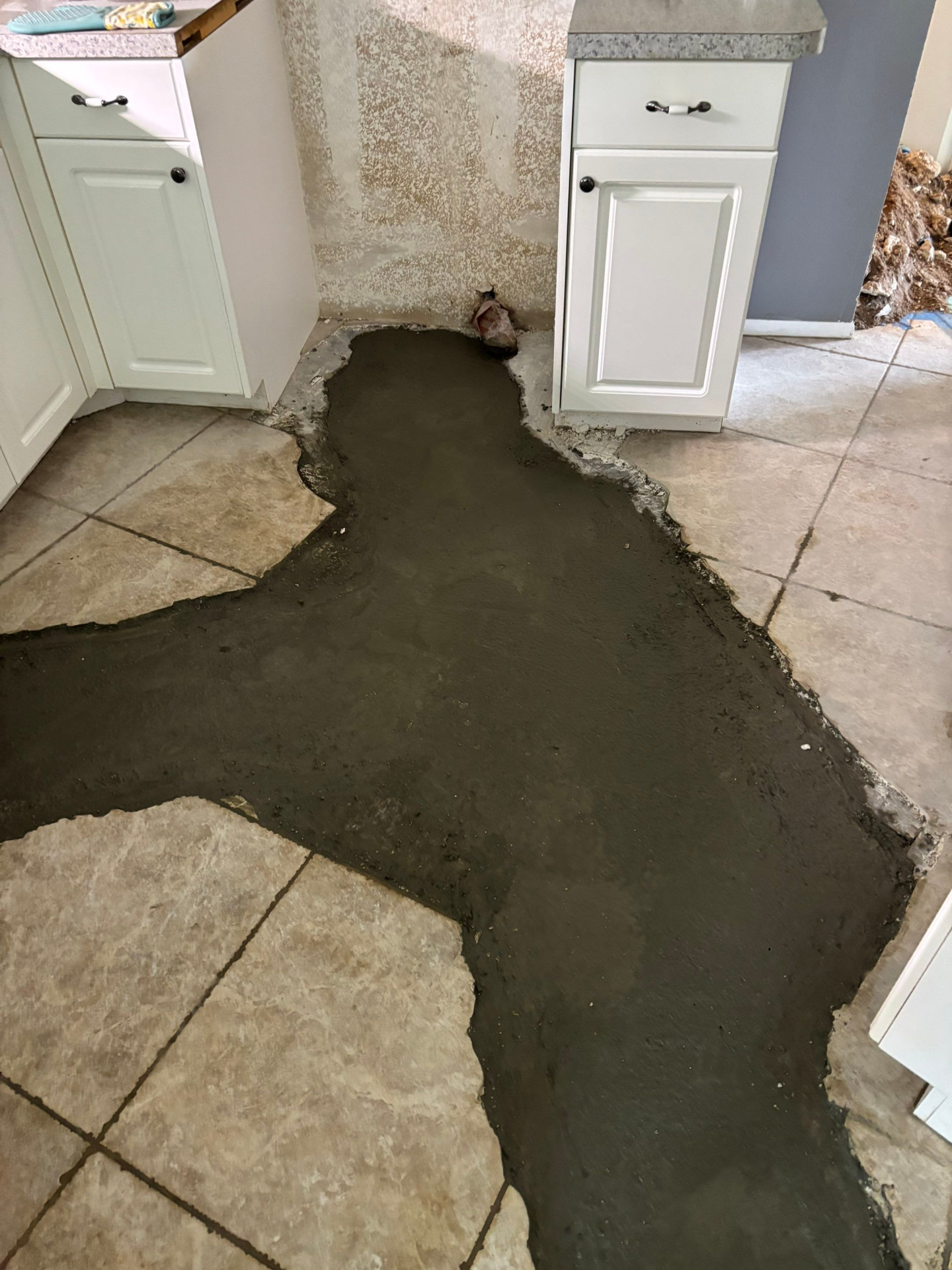
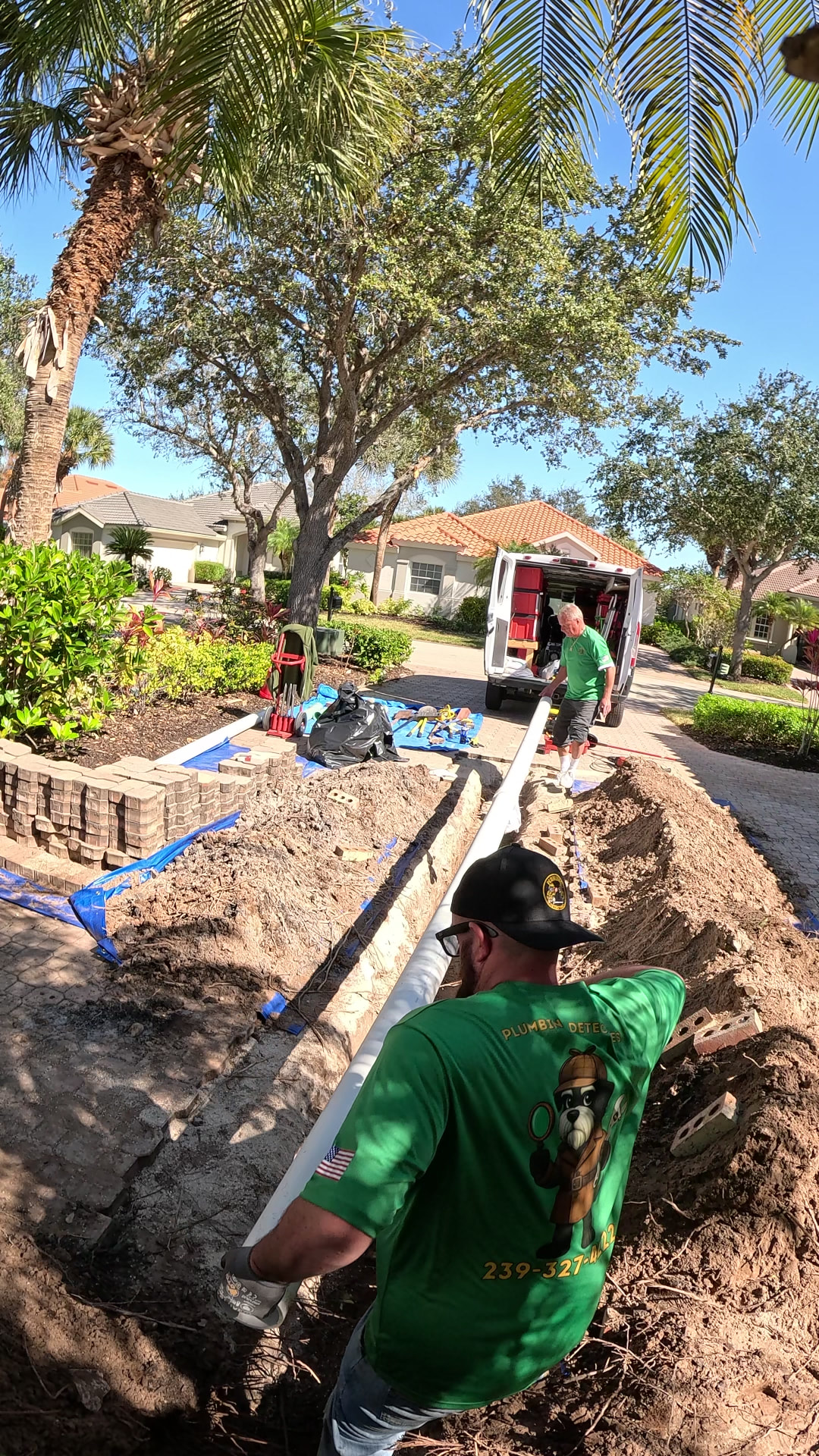
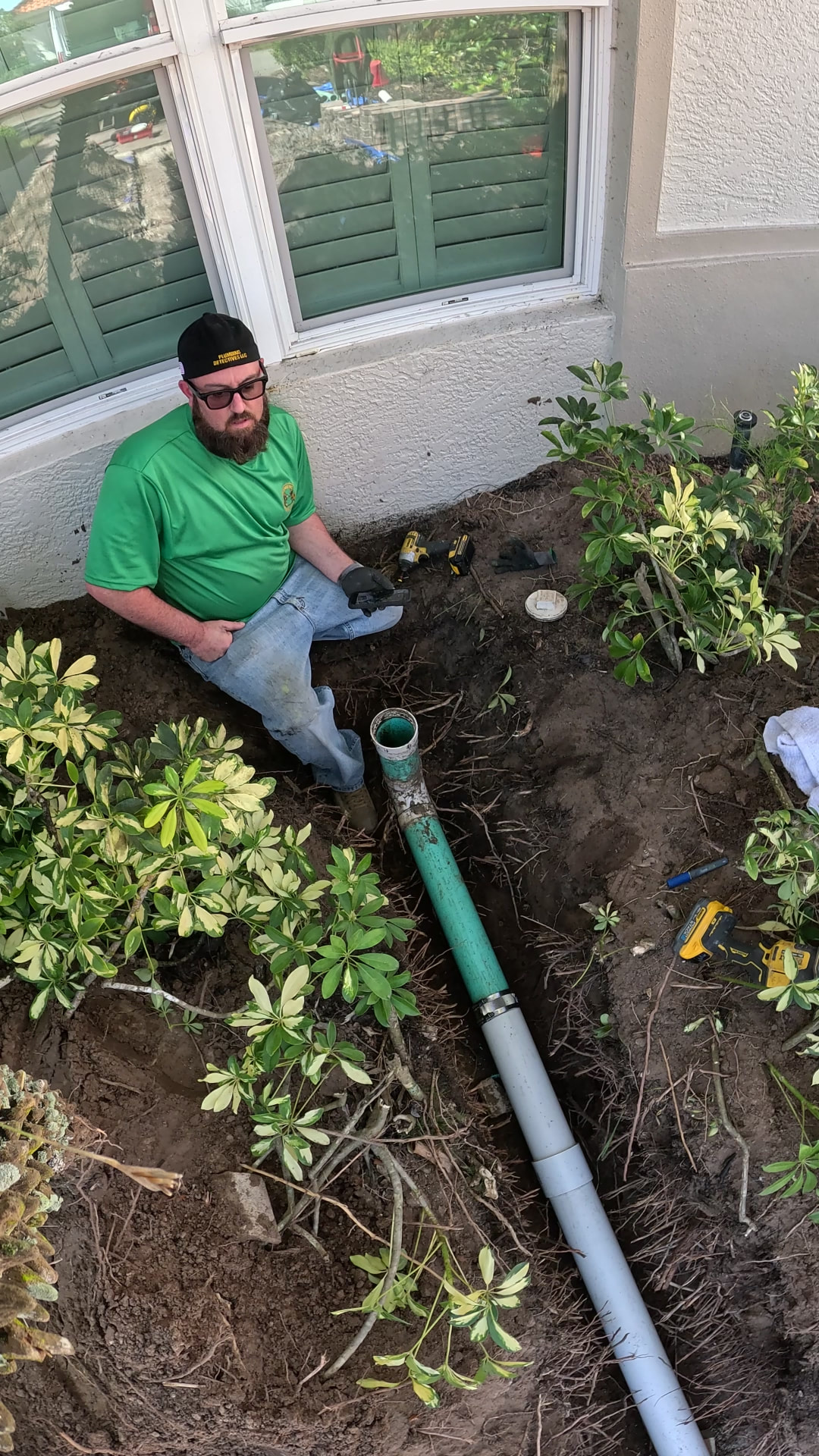
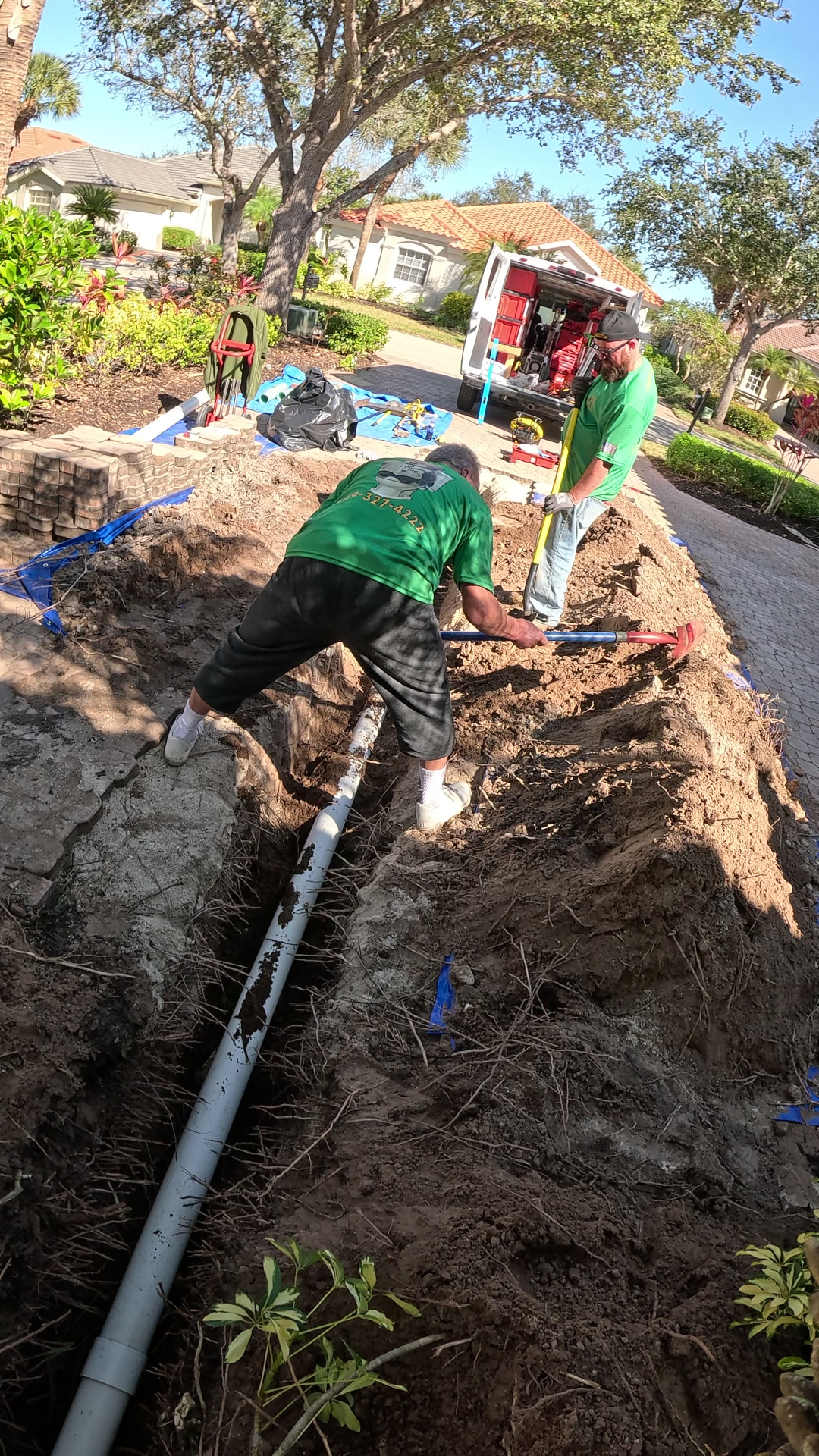
How the new pipe gets supported. Sarasota County soil runs roughly 87% sand, and despite that high sand content is classified poorly drained because of a high water table and an impermeable layer underneath — the Myakka soil series, Florida’s official state soil, has a hardpan layer roughly 18 to 30 inches down that creates a perched seasonal high water table. Near the coast and barrier islands — Siesta Key included — that water table can rise to within a few feet of the surface during wet season. Excavation in this soil frequently fills with groundwater fast enough to require dewatering before pipe work can even begin. I tamp the native sand, add bedrock, and tamp again until firm — at least 8 to 9 inches of compacted base under the pipe wherever I have the height — then set cinder blocks or bricks for support where height is tight, checking pitch continuously before backfill goes in.
Cleanouts to code. Every replacement includes cleanouts where the Florida Plumbing Code requires them — at the junction of the building drain and building sewer, at the base of stacks, at horizontal runs over 100 feet, and at direction changes exceeding 45 degrees.
Permit and inspection. This is where the City-versus-County split matters most. If your address is in the incorporated City of Sarasota, permits route through City of Sarasota Development Services at (941) 263-6494. If you’re in unincorporated Sarasota County — most of Siesta Key, Palmer Ranch, Gulf Gate, and the eastern and southern county — permits route through the Sarasota County Building Division at (941) 861-3281. We verify jurisdiction before pulling a permit on every job, not after.
Gurgling toilet? Recurring backups? Not sure if you’re City or County — or sewer or septic?
Call 239-388-3631. The camera comes first, you see everything I see, and you get a straight answer before anyone talks about opening a floor.
Sarasota Context
Repair Method Quick Reference — Sarasota Context
| Method | Best For | Not Appropriate When | Typical Regional Cost Range |
|---|---|---|---|
| Spot / Point Repair | One isolated failure in an otherwise sound line | The camera shows failures at multiple points | $800–$5,000 per national data; Florida sewer repairs average $3,430, most homeowners paying $980–$7,350 (CostWhale FL data) |
| Trenchless Relining (CIPP) | Structurally intact pipe with internal corrosion/scale that still holds its pitch | Bellies, sags, or sections out of pitch | $8,000–$20,000 typical Southwest Florida range; roughly $80–$250 per linear foot |
| Pipe Bursting | Structurally failed pipe on a straight run where a new pipe can be pulled through the old path | Runs with tight access for the bursting head — common in dense historic-district lots | Roughly $60–$200 per linear foot nationally |
| Lateral Excavation & Replacement | Collapsed, rotted, or severely bellied lateral — restored to new PVC at correct pitch with proper bedding | Rarely wrong when done correctly — the tradeoff is floor/yard access | $12,000–$30,000+ typical for a single lateral; roughly $100–$300 per linear foot |
| Full Interior Drain-Stack Replacement | Older homes (1920s–1960s) where cast iron is failing throughout the system, not at one point | The camera shows only isolated failure — a full replacement would be overkill | Larger-scope project closer to a whole-house repipe in scale; priced after full camera diagnosis |
| Condo/HOA Riser Replacement | Failed or failing vertical cast iron risers in multi-story buildings | Not applicable to single-family laterals | Priced per project based on access, unit count affected, and HOA coordination |
| Septic Line to Tank (Pipe Only) | A broken, blocked, or failed pipe between the house and an existing septic tank | Not applicable to the tank or drainfield itself | Priced the same as a sewer lateral repair |
| Septic Tank / Drainfield Installation | New systems or full drainfield replacement | This is not our scope | Handled by a licensed OSTDS septic contractor |
All figures are typical published market ranges — not quotes for your property. Every Sarasota job starts with confirming jurisdiction and system type, then a camera diagnosis, priced section by section, in writing, before any work begins.
Ficus, Oaks, and the Oldest Canopy
Roots — Ficus, Oaks, and Sarasota’s Oldest Canopy
Mature ficus trees — Ficus benjamina and Ficus microcarpa — are documented across South and Southwest Florida as the most aggressive residential root-intrusion risk, with root systems reaching 30 to 50 feet from the trunk, actively seeking the moisture inside a cracked or joint-separated sewer pipe. Large live oak canopies are also a defining feature of Sarasota’s oldest neighborhoods, and oak roots are a nationally recognized intrusion risk for aging cast iron and clay laterals.
The pattern to watch for tracks directly with housing age: mature landscaping takes decades to establish, so the oldest neighborhoods — Laurel Park, Burns Court, Alta Vista, Hudson Bayou, Indian Beach–Sapphire Shores — carry the oldest, largest root systems alongside their oldest pipe. Gulf Gate Estates and South Gate, with 60-to-70-year-old landscape trees over 1950s–1960s cast iron, carry a similar risk from a different era. Newer construction — Palmer Ranch subdivisions, downtown high-rises, master-planned communities — has young landscaping paired with PVC drain lines, which sharply reduces near-term root risk.
On the camera, root intrusion looks like a curtain of fine hair at first, then a mat, then a mass that catches everything flowing past it. I’ll give you the same honest answer I give every homeowner who asks if I can just cut the roots out again: I can, with a Spartan 300 machine running a claw head — and they’ll be back, because if roots are inside your pipe, your line is already compromised. Cutting is maintenance on a failing line, not a fix.
The Ground Sarasota Sits On
Soil, Water Table, and Salt Air
Sandy, poorly-drained soil with a high seasonal water table is repeatedly cited by local plumbing companies as a direct contributor to slab leaks, bellied sewer laterals, and accelerated joint separation across this market — the same mechanics I describe for my other Sarasota County pages, just under Sarasota’s specific soil profile. Coastal humidity and salt air add a second layer of risk near Sarasota Bay, the Gulf, and the barrier islands — Siesta Key, Lido Key, Longboat Key, St. Armands, Bird Key — accelerating corrosion on both cast iron and copper pipe.
Sarasota County itself has documented this at a systemwide level: the county is under a regulatory Consent Order requiring flow monitoring, manhole inspections, smoke testing, and CCTV work because inflow and infiltration — groundwater and stormwater entering cracked sewer pipe — is a chronic, confirmed problem tied to these same soil and water table conditions. The county has spent roughly $27 million over seven years lining 126 miles of pipe with CIPP, covering about a third of the system, with another $17 million planned over the next four years. That’s not a reason to worry about your own line specifically — it’s confirmation that the conditions driving lateral failure in Sarasota are documented at the county level, not just anecdotal.
Your Lateral and a 120-Day Clock
Who Owns What — Your Lateral, the Government’s Main, and a 120-Day Clock
Whether you’re City of Sarasota or unincorporated County, the same basic rule applies: you own your sewer lateral — the pipe from your house to the connection with the main — and you’re responsible for keeping it free-flowing and watertight. The utility owns and maintains only the main itself.
Sarasota County’s private sewer lateral ordinance has real teeth worth knowing about: if a defect is suspected, a CCTV camera inspection is required, and once a notice of defect is issued, the property owner has 120 days to complete repairs using a licensed contractor. That’s not an open-ended “get to it eventually” situation — it’s a clock that starts running the moment the county documents a problem.
If you’re on septic, there’s no county main on the wastewater side, but ownership still splits: you own and maintain the pipe running from your house to the tank (the part we handle), and the tank and drainfield themselves (installation and major repair, which is licensed OSTDS contractor work, not ours).
Standard homeowners insurance generally treats lateral and septic failures from wear, corrosion, or root intrusion as maintenance issues, not covered perils. A service line endorsement — typically $30 to $80 a year, with $10,000 to $25,000 in coverage per occurrence — is usually available as a separate add-on, though most of these policies explicitly exclude septic systems. Given that homes built before 1970 make up over half of City of Sarasota’s housing stock, and mature root systems sit within 20 feet of a lot of those laterals, a service line endorsement is worth a real look here.
Read This Before the Contract
Buying or Selling in Sarasota? Read This Before the Contract
Florida is a buyer-beware state generally, but sellers must disclose known material defects that aren’t readily observable — a known failing sewer lateral or documented cast iron failure falls under that obligation. I’m not a lawyer and this isn’t legal advice, but if you know of a defect, the obligation exists.
Given that a majority of City of Sarasota housing predates 1980, 4-point inspections are a routine, frequent event in this market — most Florida insurers require one on homes over roughly 30 to 40 years old, and aging cast iron drain systems are a common item flagged during them, sometimes affecting coverage or renewal. A standard home inspection almost never includes a sewer camera inspection, so a pre-listing scope — or a septic evaluation where applicable — is cheap insurance before you list or close.
For condo buyers specifically: ask the HOA directly whether the building’s risers have been camera-inspected, and whether any riser failures or related special assessments are on record. A cast iron riser failure a few floors up is a building-wide problem that can show up as a special assessment on your unit even if your own bathroom never floods.
The Part You'll Never See
If I Could Redesign One Thing About Homes This Age
For the drain side of homes from this era — whether it’s a 1920s Laurel Park bungalow or a 1960s Gulf Gate ranch — my answer doesn’t change: none of them were vented the way I’d vent them today.
Homes from these periods were plumbed before modern wet venting was standard, and what I typically find instead is a bathroom group with one vent serving three fixtures. My preference, on the vast majority of the work I do, is the traditional approach: vent each fixture individually. Every fixture with its own air path gives you the best flow, the quietest drainage, and the most serviceable system. So when we’re replacing a section of an older Sarasota home’s drain system anyway, the venting gets evaluated too.
What I Find in Sarasota Sewer Work
Common Mistakes I Find in Sarasota Sewer Work
Guessing the wrong permit office. Quoting or scheduling Sarasota work without first confirming City versus County jurisdiction — an easy, costly mistake given how the boundaries actually run.
Treating a septic-connected home as entirely someone else’s job. It isn’t. The pipe running to the tank is exactly the kind of work we camera and repair — only tank and drainfield installation is outside our scope.
Pricing off the vendor talking point instead of the camera. “Every pre-1972 Sarasota home has cast iron” is a useful starting assumption, not a diagnosis. The camera confirms it, or doesn’t.
Unsupported pipe. When I camera a Sarasota line another company already “fixed” and find it bellying again, I’d bet money nobody accounted for this soil’s water table.
No camera before the quote. A proposal written from a drain-cleaning visit and a guess, in a market spanning a century of construction, is a guess twice over.
The disappearing video. Camera inspections where the homeowner — or the HOA — never receives the footage.
Lining over a belly. Selling CIPP on a line the camera shows is out of pitch. Lining doesn’t fix gravity.
Ignoring a riser until it fails. On older downtown condo buildings, treating riser corrosion as a someday problem instead of getting the whole stack camera-inspected before the unit below yours floods.
Plumbing Detectives LLC Tips
Before you call anyone about a Sarasota sewer problem, confirm whether your address is City of Sarasota or unincorporated County — it determines who issues your permit and what it costs.
If you’re in Laurel Park, Burns Court, Alta Vista, Hudson Bayou, or Indian Beach–Sapphire Shores, budget for the possibility that a “sewer repair” turns into a full interior drain-stack evaluation given the age of these homes — the camera will tell you which one you actually need.
If you sit on an HOA board for an older downtown building, request a riser camera inspection proactively. It’s a very different conversation than an emergency call after a unit below yours has water damage.
Find your main cleanout and confirm the cap is present and sealed — a surprising number of older Sarasota homes were never fitted with one.
What the Storms Did
Storm Context — What Ian, Milton, and the Years Since Did to Sarasota’s Sewer Picture
I want to be straight about this section: it’s grounded in documented reporting and county records, not my personal storm-repair work in every affected home. Sarasota has taken direct hits from both Hurricane Ian in 2022 — which pushed 10 to 15 feet of storm surge into the metro area and devastated waterfront barrier-island communities — and Hurricane Milton in 2024.
Milton alone knocked out power to the majority of Sarasota County Public Utilities’ roughly 800 lift stations, producing 33 minor spills and 3 larger ones for a countywide total near 146,660 gallons — including a 94,000-gallon force-main break at Palms Plaza and a 126,000-gallon spill at the Venice Gardens Water Reclamation Facility. The Englewood Water District, which serves parts of southern Sarasota County, reported roughly 300,000 combined gallons from overflows at a single lift station over two consecutive days. Aggregate reporting on Milton’s spillage across the county approaches or exceeds 366,000 gallons.
Here’s the part every Sarasota homeowner should sit with: this isn’t over. In March 2026 — more than a year after Milton — roughly 14,000 gallons of raw wastewater spilled into Sarasota Bay from a city park after a concrete vault over an air-release valve shifted due to soil erosion the city attributed directly to the 2024 hurricanes. A February 2025 investigative feature described how storm rain and surge from Hurricanes Debby, Helene, and Milton “seeped into the region’s aging sewer lines through cracks and breaks, overwhelming systems never built for such deluges.” Expect more of this pattern, not less, as more storm-stressed infrastructure surfaces its damage over time.
Two practical takeaways. First, if your Sarasota home or building took on any backup or unusual drainage behavior during or after these storms and hasn’t been inspected since, that’s worth doing now. Second, the FEMA 50% substantial-improvement rule applies in both City and County — some Zone VE coastal Sarasota properties received “Substantially Damaged” determinations after Helene and Milton, triggering full code-compliance requirements including plumbing system replacement.
The Differentiator
Why Plumbing Detectives LLC
Sarasota has a lot of plumbing companies in it — national chains, multi-generation local firms, and a genuine cluster of trenchless specialists. I’m not going to tell you I’m the only option here. What I can tell you is what I actually do differently: I confirm your jurisdiction before I talk permits, I run a camera before I talk price, and I’ll tell you plainly when a job — like a septic tank installation — is outside what I do, instead of stretching to take it anyway.
Camera first. Documented findings. Section-by-section honesty. White glove protection of your home. Proper bedding you’ll never see but will never have to think about again. Condo and HOA riser evaluation and replacement, coordinated with your board. And if you’re on septic, we still run the camera and fix the pipe between your house and the tank — we just don’t install septic systems themselves.
License CFC1434139. Fully insured. We verify City versus County jurisdiction and pull the correct permit before every job. Emergency sewer service available in Sarasota and nearby areas — call for priority scheduling.
Answers
Frequently Asked Questions — Sewer Line Repair in Sarasota, FL
If you’ve read this far, you understand why Sarasota doesn’t get a one-size-fits-all answer — it’s a city and a county sharing a name, with housing spanning a century and a downtown condo market with its own failure mode entirely. You know why jurisdiction gets confirmed before permits, why the camera answers the pipe-material question instead of the decade on your deed, and why a riser failure three floors up is everyone’s problem below it. If your Sarasota home, condo, or septic-connected property is showing any of the signs on this page, call me at 239-388-3631. The camera goes in first, you see everything I see, and you get the truth before you get a price.
Plumbing Detectives LLC | Venice, FL | License CFC1434139
239-388-3631 | plumbingdetectivesfl.com