
Water Softeners & Water Filtration · Lakewood Ranch, FL
Water Softeners & Water Filtration in Lakewood Ranch, FL
Licensed Master Plumber · CFC1434139 · BBB Accredited
Call Now — Free In-Home Water Test239-388-3631Every water treatment page for Lakewood Ranch says the water is hard. Not one of them tells you how hard, or where the number came from. Here’s the number: Manatee County’s own 2025 water quality data puts total hardness between 106 and 279 milligrams per liter — that’s 6.2 to 16.3 grains per gallon, using the county’s own conversion. The top of that range is genuinely hard water. The bottom is barely worth softening. And your house gets both, at different times of year, from the same tap. That’s the whole Lakewood Ranch story, and it’s why I test before I quote.
I’m Mike Reynolds, owner of Plumbing Detectives LLC, a licensed master plumber — CFC1434139. I unscrew the aerator on your kitchen faucet, run a hardness test on the counter, and tell you what’s actually coming out of your pipes that day. Then I tell you what, if anything, to do about it. Lakewood Ranch water isn’t dirty — the county had zero violations in 2025. It’s hard, it’s chloraminated, and it swings with the season. Those are three different problems, and a master plumber sizes for all three.
The Utilities
First — Which Water Are You On?
Lakewood Ranch is one community on two utilities, and nobody else tells you this.
Manatee County Utilities serves the great majority of the villages — Summerfield, Edgewater, Riverwalk, Country Club, Greenbrook, Country Club East, The Lake Club, Del Webb, Lorraine Lakes, Esplanade, Cresswind, Mallory Park, Indigo, Star Farms, and the rest north of the county line. Everything on this page about hardness, chloramine, and seasonal swing is Manatee County data.
Sarasota County Public Utilities serves Waterside and the Lakewood Ranch South villages. Sarasota County chloraminates too and reported full compliance for 2025, but its finished-water hardness isn’t published in a form I’ll quote off a website. If you’re in Waterside, the in-home test is the number — I’m not going to borrow Manatee’s.
Braden River Utilities — the one you didn’t know you had — supplies irrigation water to most of Lakewood Ranch. It’s a separate, non-potable system owned by the developer, fed by reclaimed water and surface sources. That matters more than it sounds, and I’ll come back to it.
The Chemistry
What’s Actually in Lakewood Ranch Water
Manatee County’s water is a blend, and that’s the key to everything. About a third comes from seven Floridan aquifer wells 1,200 feet deep in eastern Manatee, piped thirteen miles to the plant, where it gets aerated, lime-softened, and filtered. About two-thirds comes from the Lake Manatee reservoir — surface water — treated with carbon, biological filtration, coagulation, and sedimentation. The two streams are blended, corrosion-adjusted, and sent to your house.
Here’s what the county measured in 2025:
Total hardness: 106–279 mg/L as CaCO₃ — 6.2 to 16.3 grains per gallon. Up from a 259 mg/L maximum in 2024.
Total dissolved solids: 110–280 mg/L. Up from 254 in 2024.
Chloramines: 3.3 ppm running annual average, range ND–5.3 ppm. Chlorine plus ammonia — not free chlorine.
Sulfate: up to 150 ppm. Alkalinity: 20–61 mg/L. Chloride: 18–20 ppm. Sodium: 13–15 ppm.
MCL violations: zero. Every regulated contaminant came in under its limit.
Why the range is so wide. The blend ratio of lime-softened well water to lake water shifts through the year. When the plant leans on the wells, your water is softer; when it leans on the lake, it’s harder. That’s why a Lakewood Ranch homeowner can test at 7 grains in one month and 15 in another, and why a timer-based softener is the wrong tool here — it’ll waste salt in the soft months and run out of capacity in the hard ones. Metered regeneration, sized to the peak, is the only honest design for this water.
Why it tastes different than Venice. Venice is essentially straight aquifer water. Lakewood Ranch is mostly lake water, and lake water has seasons — the musty, earthy taste-and-odor events residents post about every summer are algae and organics in the reservoir, not a failure at the plant. Chloramine handles the microbes; it doesn’t do much for the taste. Carbon does, and I’ll get to which carbon.
The chloramine problem specifically. Manatee disinfects with chloramine because it’s more stable in long distribution mains than free chlorine. The trade-off: chloramine doesn’t off-gas like chlorine, it lingers, and it’s noticeably harder to remove. Standard granular activated carbon — the stuff in most whole-house filters and every pitcher — is mediocre against it. Catalytic carbon is built for it. If a filter proposal for a Lakewood Ranch home doesn’t say “catalytic,” it wasn’t designed for this water.
Sources: Manatee County 2025 Water Quality Report and the county’s Utilities Department water quality information.
The Damage
What Hard Water Is Doing to Your House
At the 16-grain peak, every gallon that runs through your house carries about a quarter-gram of dissolved calcium and magnesium. A family of four moves roughly 300 gallons a day. Do the year: that’s around 25 pounds of rock passing through your fixtures, appliances, and water heater annually — and some of it stays.
Water heater. Scale settles on the bottom of a tank heater and on the heat exchanger of a tankless. Every millimeter of scale is insulation between the burner or element and the water. The heater runs longer, costs more, and dies younger. Eight-to-twelve-year tank life in soft water is routinely five to seven here. In a Lakewood Ranch home built in the early 2000s, you may be on your third heater — the water is why.
Fixtures and glass. The spotted shower enclosures, the crusted showerheads, the white ring at the base of every faucet — that’s the calcium coming back out of solution every time the water dries. On the premium fixtures that come standard in this market, it’s a maintenance job that never ends.
Pipes. Scale constricts flow in old copper and galvanized. In CPVC-era homes it’s less about blockage and more about the water heater and fixtures — but if you’re repiping, the new system deserves better water than the one that just failed (see below).
Skin, hair, laundry, dishes. Hard water and soap make a curd instead of a lather. More detergent, dull laundry, filmy glasses, dry skin after every shower. This is the complaint that actually gets people to call — and it’s real.
None of this is a safety issue. Manatee County water is safe to drink. This is comfort, maintenance, and appliance life — and I’m going to sell it to you as exactly that, not as a scare.
The Equipment
The Equipment, Honestly
I install Safety Zone Water Systems — a Florida line built for Florida water — and I’m going to tell you what each piece does and, more importantly, what it doesn’t.
WC-series metered softeners (WC-100 through WC-500-150). This is what actually removes hardness — ion exchange, calcium and magnesium out, a small amount of sodium in. The WC line scales by household: WC-100 for a two-bath home, WC-150 for three, up through the WC-500-150 for eight-bath estates. Every one is metered — it regenerates on gallons used, not on a timer — which is the feature that matters in a water supply that swings from 6 to 16 grains through the year. Brine tank included.
WHF-NE and WHF-A catalytic coconut-shell carbon. Whole-house filtration for chloramine, taste, and odor. The WHF-NE is non-electric with a five-to-seven-year media life; the WHF-A is the backwashing version. Catalytic carbon — not standard GAC — because this is chloraminated lake water. This is the unit that fixes the summer musty taste and protects the softener resin from oxidant damage. It does not remove hardness. Zero. Anyone who tells you a carbon filter “softens” is selling you the wrong tank.
COMBO systems. Catalytic carbon ahead of the softener, in a single footprint or two tanks. For a Lakewood Ranch garage, this is usually the right answer: the carbon protects the resin from chloramine, the softener handles the hardness, and you get both in the space one unit takes. This is the fair comparison to the salt-free products below — not softener-vs-conditioner, but COMBO-vs-conditioner.
RO-4 under-sink reverse osmosis. The kitchen tap. Dedicated faucet, storage tank, quick-change cartridges you can swap yourself without a service call. It removes what carbon and softening don’t — dissolved solids, trihalomethanes (the disinfection byproduct family that comes with chloraminated surface water), and the sodium the softener adds. Manatee’s incoming sodium is only 13–15 ppm, so the “salt in my water” concern is about the softener, not the source — and the RO-4 at the tap ends it. It needs 40 psi minimum feed pressure, which I check at the estimate; that’s a five-second gauge reading that DIY buyers skip and then wonder why the tank fills slow.
Crown5 salt-free conditioner. I stock it and I’ll install it — for the right house. A salt-free conditioner doesn’t remove hardness; it changes the crystal structure of the minerals so they’re less likely to stick. It works in the roughly 10-grains-and-below range and does nothing for soap curd, dry skin, or spotting. At Lakewood Ranch’s 16-grain peak, it’s the wrong tool for most homes. If your in-home test comes in at 7 and stays there, we can talk. If it’s 14, I won’t sell it to you.
Straight Answer
Straight Answer on the Halo 5
You’ve seen it advertised. It’s a salt-free, multi-stage filtration and conditioning unit with a lot of marketing behind it. Here’s the honest read: the filtration stages are real and reasonable. The “conditioning” stage does not remove hardness — same physics as every salt-free product, magnetic or otherwise. Your water tests at 16 grains going in and 16 grains coming out. If your complaint is taste and odor, it’ll help. If your complaint is spotted glass, scaled heaters, and soap that won’t lather, it will not, and no amount of stages changes that.
The fair comparison is Halo 5 versus a COMBO system: both filter, but only one of them softens. In a county whose own data hits 279 mg/L, that’s the difference between a product that addresses the problem and one that addresses the marketing.
Plumbing Detectives LLC Professional Opinion
If your builder left a softener loop in the garage and offered you their unit as an upgrade, don’t assume it was sized for your house. Builder-package softeners are usually a single model across every floor plan — a 2,000-square-foot two-bath and a 3,100-square-foot four-bath get the same tank. In a water supply that peaks at 16 grains, the small one regenerates constantly, eats salt, and still lets hardness through on heavy days. The loop is a gift. The unit on it is a question.
The Math
The Math — Sizing a Lakewood Ranch Home
The formula isn’t secret: people × 75 gallons per person per day × hardness in grains = grains per day. Multiply by seven for a weekly regeneration target, then match it to a system with capacity to spare.
For a typical Lakewood Ranch household, sized to Manatee’s 2025 peak so the system works in the hard months, not just the easy ones:
Family of four, 16.3 gpg: 4 × 75 × 16.3 = 4,890 grains/day → about 34,000 grains/week.
Five people, entertaining, 16.3 gpg: 5 × 75 × 16.3 = 6,100 grains/day → about 43,000 grains/week.
Same family of four at a mid-year 10 gpg: 3,000 grains/day → 21,000/week — which is exactly why metered regeneration matters. The same house has two different loads.
What that means in equipment. A 3,100-square-foot Lakewood Ranch home with three or four bathrooms sits mid-line in the WC series — the model matched to that bath count, with real headroom over the weekly number. The entry-level 32,000-grain unit that gets priced in every online cost survey is undersized for this water at the peak: it’ll regenerate every couple of days, burn salt, and pass hardness on the heavy weeks. Oversizing has its own cost — a tank that regenerates too rarely isn’t good for the resin. The in-home test plus the head count is how I land it, and I’ll show you the arithmetic on your counter.
Local Context
Lakewood Ranch Specifics — HOAs, Irrigation, Villages, and the Snowbird Question
Will your HOA allow it? Lakewood Ranch has forty-plus villages under the master association, and many of them — Esplanade’s community design standards spell it out — treat water softeners the same as generators and AC units: at least 10 feet from the front corners of the house, not in side setbacks or easements without an Architectural Control Committee waiver, and screened from the street and neighbors by landscaping or fencing matching the unit’s height. Greenbrook requires screening of above-ground mechanical equipment. Every village writes its own standards, so check yours. This is the practical reason I install in the garage whenever there’s a loop or I can build one: inside the garage, it’s your call, not the ACC’s, and the equipment is out of the sun and the storm. An outdoor tank is an architectural change; a garage tank is a plumbing job.
Your irrigation is probably already separate. In most of Lakewood Ranch, the sprinklers run on Braden River Utilities — the developer’s non-potable system fed by reclaimed and surface water. It never touches the softener, because it never touches your house water. Your lawn, your landscaping, and your irrigation bill are unaffected. Where irrigation is on a county meter instead, I bypass it ahead of the softener — plants don’t want softened water and it’s wasted capacity. Either way, I’ll show you exactly which hose bibs are on which side of the loop before I build it.
Which village, which era. The mid-1990s-through-2000s villages — Summerfield, Edgewater, Riverwalk, Country Club, Greenbrook — are the CPVC-era homes, and they’re the ones where the softener conversation usually comes up alongside a repipe (next section). The 2010s-and-newer villages — Lorraine Lakes, Esplanade, Cresswind, Del Webb, Star Farms, Waterside — are PEX homes where the builder typically left a softener loop and sold the unit as an option. Those homes don’t need a repipe; they need a system sized for the house instead of for the floor plan.
No septic complication. Unlike South Venice or Nokomis, Lakewood Ranch is on county sewer. Softener brine discharge goes to the sanitary line and that’s the end of it — no drainfield routing to design around.
If you’re here November through April. About one in five Lakewood Ranch homes is seasonal, and no one writes the softener instructions for leaving. Here’s the protocol: before you go, run a manual regeneration so the resin is clean and the brine tank is full, then put the unit in bypass or vacation mode so it isn’t cycling on a house that uses no water. Shut the main if you’re shutting the house. When you come back, take it out of bypass, run one regeneration, and flush the RO tank — the first fill after five months tastes like the storage tank, not the water. If you’d rather not think about it, a pre-season service visit is a phone call.
Repiping?
Repiping? Do Both at Once.
If your Lakewood Ranch home is in one of the 1995–2008 villages and you’re replacing brittle CPVC, the day the new PEX-A system goes in is the day to put a softener on it. The trunk is open, the water heater tie-in is open, the garage wall is open. Adding the softener loop and the carbon tank is a couple of hours on a job that’s already permitted and already there — versus a second mobilization later. And the logic is simple: the same 16-grain water that scaled the old heater starts working on the new one the minute the water comes back on. Whole-House Repiping Lakewood Ranch.
One honest note on water heaters. Softened water is slightly more aggressive on a tank heater’s sacrificial anode rod — the manufacturers say so in their own bulletins. It’s real, and it’s why every water heater I install gets a powered titanium anode instead of a magnesium rod that softened water eats faster. Softener plus powered anode is the combination; softener alone on an old rod is half the answer. If your home is still under a builder plumbing warranty, we check the warranty terms before adding treatment equipment.
The Work
The Installation
Order matters. The tee comes off the main after the meter and backflow device and before anything else. Carbon first, then softener, so the resin never sees full-strength chloramine. Irrigation bypassed ahead of both where it’s on the house meter. Then the softened, filtered water feeds the water heater and the house.
The loop. If your builder left one, I use it. If not, I build one in the garage with quarter-turn brass-body isolation valves and a bypass, so the system can be serviced — or bypassed for a snowbird season — without touching the rest of the house.
Garage heat. A Lakewood Ranch garage hits 100°F-plus in summer. Softener control heads and RO membranes are rated for it; the salt in the brine tank isn’t, which is why I set the brine tank where it stays dry and tell you to use solar salt or pellets, not rock, so it doesn’t bridge in the humidity.
Air gaps. Every drain line — softener regeneration and RO reject — terminates with a code-required air gap to the sanitary drain. No direct connection, no backflow path into your treatment system.
Permits. Adding a treatment system to the potable supply is permitted plumbing work — Manatee County Development Services for most villages, Sarasota County Planning and Development Services for Waterside. I pull it and I schedule the inspection.
Pressure. I gauge your static and flow pressure before I specify anything. The RO-4 needs 40 psi; a big house on a long county run can come in low, and that’s a conversation before install, not after.
Plumbing Detectives LLC Tips
Look in your garage for a pair of capped stub-outs near the water heater. That’s a builder softener loop — it means the hard part is already done.
If the summer water smells musty, that’s the lake, not your pipes. Catalytic carbon fixes it; a softener alone won’t.
Use pellet or solar salt, never rock salt, and never fill the brine tank more than two-thirds — Florida humidity bridges salt and starves the regeneration.
Leaving for the season? Regenerate, bypass, go. Coming back? Un-bypass, regenerate, flush the RO tank.
Pricing
What It Costs — Context, Not a Quote
I don’t quote off a web page because I haven’t tested your water or counted your bathrooms yet. But I won’t hide behind “call for pricing” either. Installed, in this market: a whole-house catalytic carbon filter lands in the mid-$1,000s. A properly sized metered softener for a Lakewood Ranch home runs from the mid-$2,000s into the mid-$3,000s depending on the WC model your household needs. A COMBO system — carbon plus softener — runs higher than either alone and less than both separately. The RO-4 is the most affordable piece of the whole system and the one most people notice first.
What you’ll spend to run it: a 40-pound bag of salt every four to eight weeks, call it $100–$150 a year for a full-time household; RO cartridges you change yourself; carbon media that lasts five to seven years on the non-electric unit. Against that, put the water heater you don’t replace at year six, the detergent you stop overbuying, and the glass you stop scrubbing.
The “starting at $800” numbers you’ll see around this market are for undersized units on the small end of the range. In a 3,100-square-foot house on 16-grain water, that unit isn’t a bargain; it’s a salt subscription.
Why Us
Why Plumbing Detectives LLC
Most of what ranks for water treatment in Lakewood Ranch is a water-treatment sales company, not a plumber. I’m a licensed master plumber — CFC1434139, BBB accredited — which means the loop, the bypass, the air gaps, the pressure check, the permit, and the water heater on the other end of the softener are all my trade, not an add-on. I quote from the county’s own numbers and your own kitchen tap, I’ll tell you when a salt-free unit is the wrong tool, and I’ll tell you when your builder’s softener is fine and you don’t need me. Repiping, water heaters, and sewer work in Lakewood Ranch are the same phone number. Whole-House Repiping Lakewood Ranch · Water Heater Installation Bradenton · Sewer Line Repair Bradenton. Fully insured.
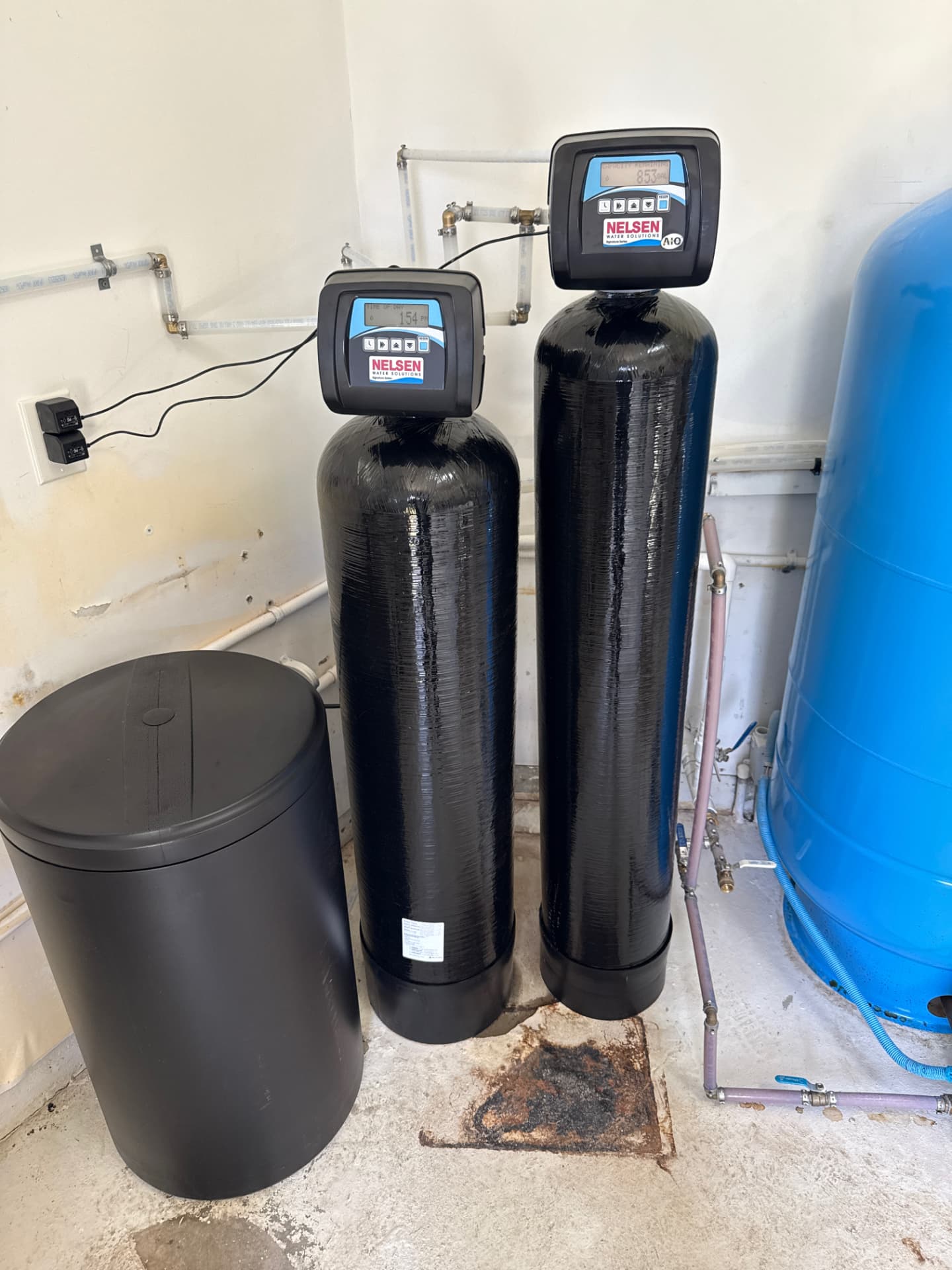
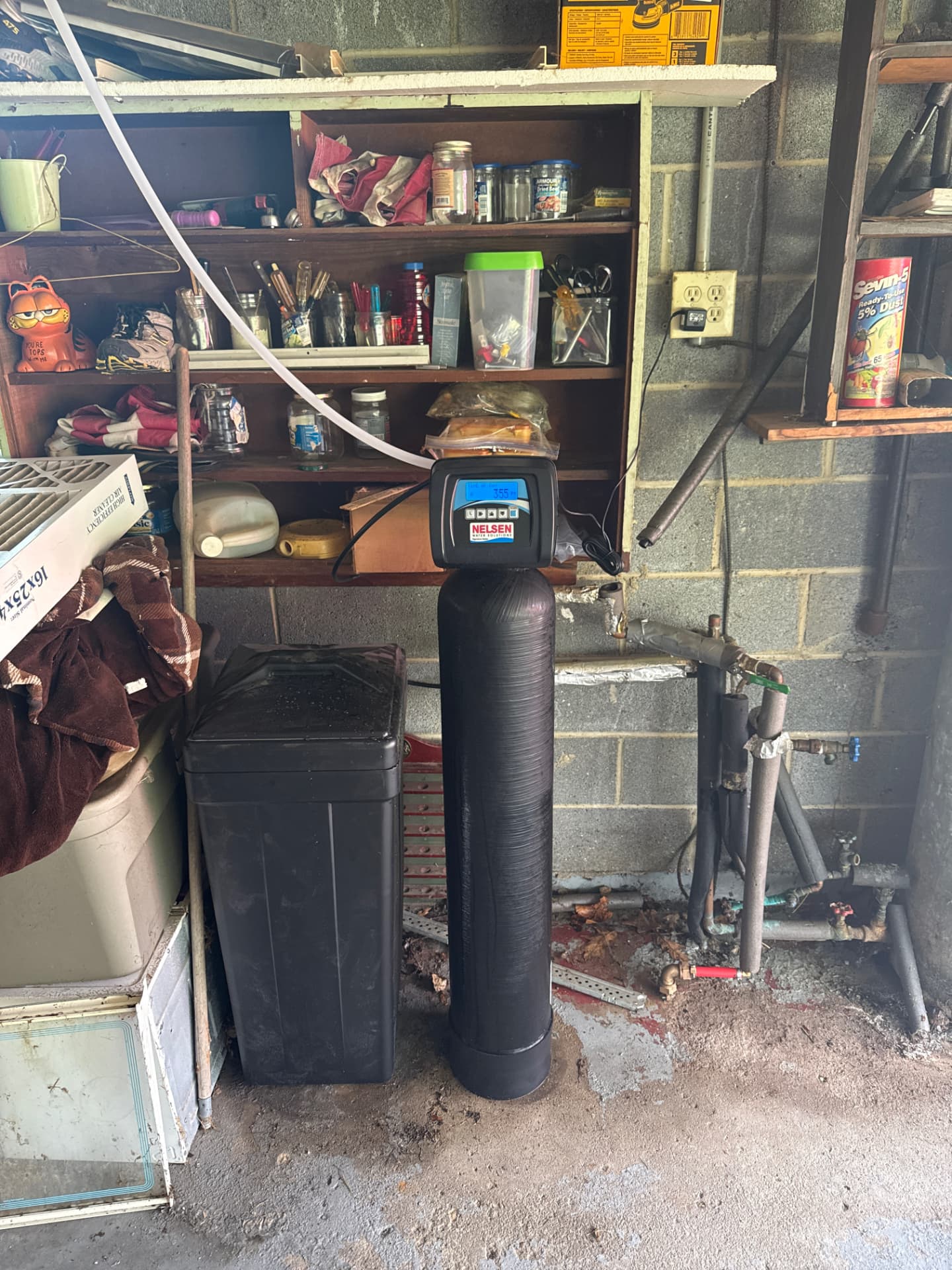

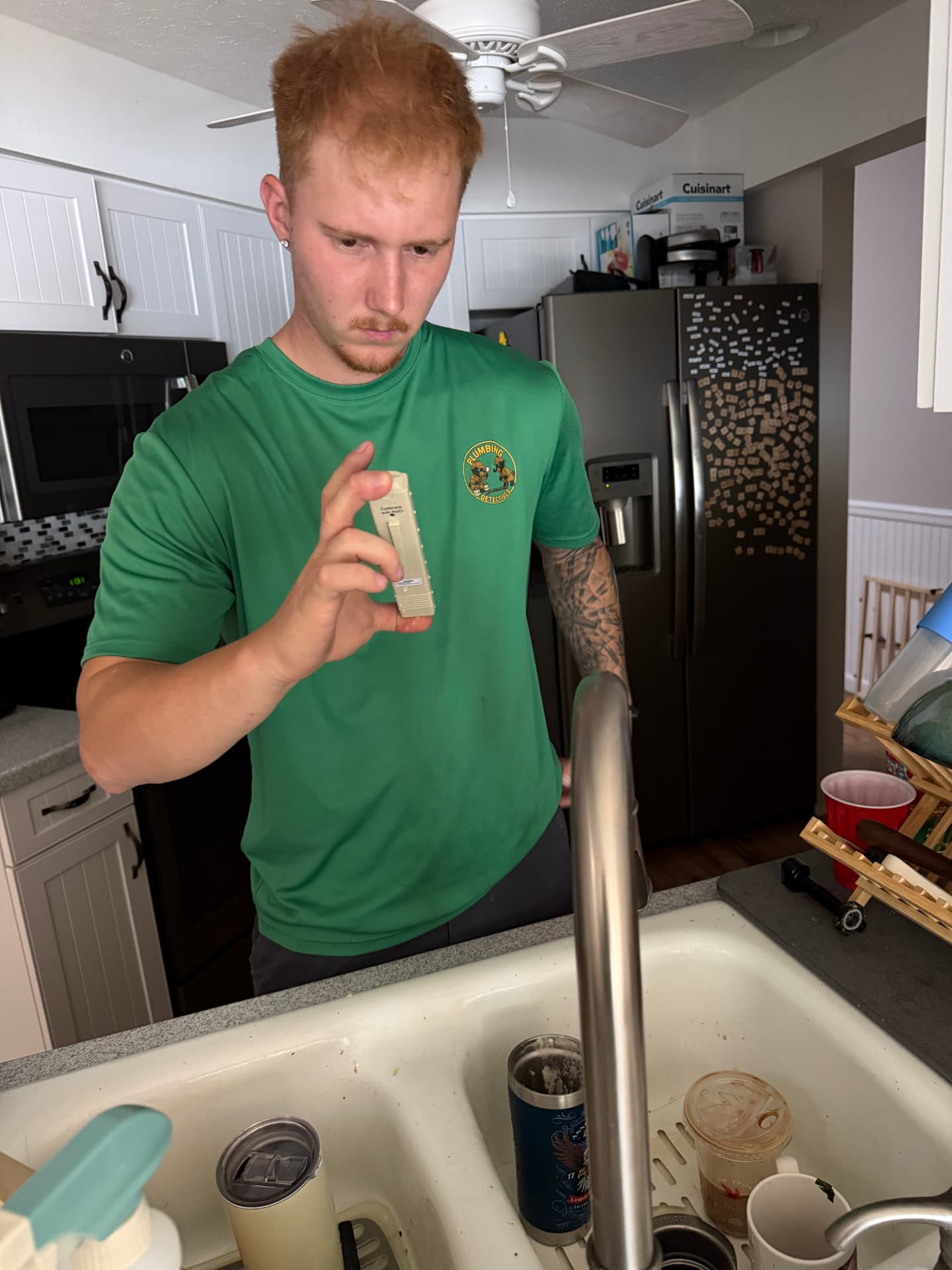
Photo slots awaiting Mike’s job-site images.
Answers
Frequently Asked Questions — Water Softeners in Lakewood Ranch, FL
Lakewood Ranch water is safe, hard, chloraminated, and seasonal — and the right system for it is a metered softener sized to the peak, catalytic carbon ahead of it, and an RO at the tap, installed in the garage where your HOA can’t object and the sun can’t reach. That’s the whole recommendation, and it starts with a free test at your kitchen sink. Call 239-388-3631. I’ll tell you what your water is doing that day, and I’ll tell you if you don’t need anything at all.
Plumbing Detectives LLC | Venice, FL | License CFC1434139 | BBB Accredited
239-388-3631 | plumbingdetectivesfl.com
Serving Lakewood Ranch, Bradenton, Sarasota, Venice, Venice Gardens, Nokomis, Laurel, Englewood, Wellen Park, and Bradenton Beach.