
Whole House Repiping · Lakewood Ranch, FL
Whole-House Repiping in Lakewood Ranch, FL
Licensed Master Plumber · CFC1434139 · BBB Accredited. CPVC replacement with PEX-A — overhead reroute, no slab cutting.
Call Now239-388-3631A few Saturdays ago I did an estimate on a 3,100-square-foot home in Lakewood Ranch. Three leaks in a couple of years — every one of them on the hot side, every one of them under the slab. Three separate repairs by three separate people, three separate holes cut in the floor, and the homeowner had stopped asking “can you fix it” and started asking “can you replace all of it.” The pipe was cream-colored plastic gone tan, darkest at the water heater. CPVC, original to the house.
I’m Mike Reynolds, owner of Plumbing Detectives LLC, a licensed master plumber — CFC1434139. That house isn’t unusual. It’s what Lakewood Ranch is in 2026. The first village broke ground in 1994. The homes built from then through the late 2000s were almost universally plumbed in CPVC, and CPVC in Florida service conditions commonly starts turning brittle in its second or third decade — hot side first, and in a slab home, the hot side you can’t see. Every repipe page in this market is still written about polybutylene and galvanized steel, materials that were mostly gone before the first village opened. This page is about the pipe that’s actually in your walls and under your floor.
The Timeline
Why Lakewood Ranch Has a CPVC Problem in 2026
Lakewood Ranch is young enough that people assume its plumbing is fine. Run the dates.
Summerfield — first village, construction began February 1994, opened 1995; homes built roughly 1994–2000.
Edgewater — opened 1996.
Country Club — opened 1997; homes built roughly 1997–2016, with the earliest streets pushing thirty years old.
Riverwalk — opened 1999.
Greenbrook — opened 2000–2001; the bulk of its single-family homes built around 2002–2008.
Waterside, Star Farms, Azario, and the newer villages — 2016 onward, a different era and mostly a different pipe.
Between the 1990 and 2010 censuses, Lakewood Ranch added roughly 6,500 housing units. That window — mid-1990s through the late 2000s — is exactly when CPVC became the default supply pipe in Florida production homebuilding, right after polybutylene disappeared. Lab testing on CPVC projects a service life of fifty years at rated temperature and pressure. What Florida plumbers actually see is different: CPVC that went in flexible in 2001 is often glass-brittle today, and the failure window most of us cite from experience is fifteen to twenty-five years. A 2003 Greenbrook home is twenty-three. A 1996 Summerfield home is thirty.
What I can’t tell you from a website is which pipe is in a specific house — no builder publishes that, and I won’t attribute CPVC to a builder by name. What I can tell you is what era-typical means here, and I confirm it in person by reading the printed markings on the pipe at the estimate. It takes thirty seconds.
The Chemistry
What’s in Lakewood Ranch Water — and What It Does and Doesn’t Do to CPVC
Lakewood Ranch straddles two utilities, and both disinfect with chloramines — chlorine plus ammonia. Manatee County, which serves the great majority of the villages, draws from the Lake Manatee reservoir and averages about 3.3 ppm chloramine. Sarasota County, which serves the Waterside side, has chloraminated for fifty years.
Here’s where I’m going to be more careful than the guy who tells you “the chlorine ate your pipes.” CPVC’s manufacturers state plainly that the material is immune to chlorine and chloramine in drinking water, and their warranties cover it. I’m not going to contradict a manufacturer on the internet. What independent failure analysis actually shows — and what I see on the truck — is that aged CPVC in Florida fails from a combination, not a single cause:
Time and heat on the hot side. Two-plus decades of hot disinfected water is a documented oxidative-aging path. The hot line is always the first to go — which is why three-for-three on that Lakewood Ranch estimate were hot-side leaks.
Attic and slab temperatures. Florida attics routinely run past 130°F in summer, and a hot line buried in a slab sits in a heat sink that never cools off. Twenty years of that is twenty years of aging.
Stress at every glued fitting. Pipe and fitting expand and contract at slightly different rates, and any pipe installed clamped tight or slightly bent carries stress that makes it exponentially more sensitive to chemical attack. This is why aged CPVC cracks at fittings rather than pinholing mid-run.
Construction chemicals. Thread sealants, cutting oils, firestop, some insulation, even excess solvent cement drips inside the pipe — all documented environmental-stress-cracking agents for CPVC. Whatever touched the pipe in 2001 is still in the equation.
Over-temperature events. CPVC’s pressure rating falls toward zero as water approaches 210°F. In a closed system — and every Lakewood Ranch home with a backflow device is one — a water heater without an expansion tank can push near-boiling water back into the cold side. There’s a published DOE failure analysis of a Florida CPVC burst caused by exactly that.
The honest summary: chloraminated water alone won’t crack CPVC. Twenty-five years of hot chloraminated water, a 130°F attic, a stressed fitting, and no expansion tank will. That’s the Lakewood Ranch combination.
Warning Signs
How to Tell Your CPVC Is Getting Close
Color. New CPVC is cream. Aging CPVC goes tan, then brown — darkest near the water heater and in the attic. The printed marking on the pipe is the definitive ID; if it says CPVC, it’s CPVC.
It snaps during small work. The classic story: someone turns the shutoff behind a toilet and the pipe breaks off in the wall. Or a plumber replaces an angle stop and the stub cracks. Pipe that snaps under normal handling has reached the brittle stage system-wide, not just at that spot.
Weeping at glued joints. Hairline cracks, a crust of mineral residue, or a damp ring at a fitting means seepage has started.
A warm spot on the floor. Hot-side CPVC under the slab doesn’t announce itself with a puddle at first — it shows up as a tile that’s warm underfoot, a water heater that runs more than it used to, or a water bill that climbed with no explanation. That’s a slab leak, and in this housing stock it’s usually the hot line.
Straight-line cracks along the pipe. A longitudinal crack with no obvious starting point is a manufacturing or stress-cracking signature, not damage.
One distinction worth understanding: polybutylene fails by pinholes. Aged CPVC fails by cracking. A crack can put more water on your floor in an hour than a pinhole leaks in a week — which is why CPVC failures in Lakewood Ranch so often come with a restoration company’s truck in the driveway.
The Diagnosis
Three Leaks — Is the Whole System Done?
Usually, yes — and here’s the reasoning, not just the sales pitch. Every foot of pipe in a production-built home went in the same week, from the same material lot, and has aged under the same water, the same heat, and the same pressure ever since. One brittle failure in original single-installation CPVC is effectively a system-wide diagnosis; the second and third are confirmation. Failure analysis says the same thing in engineering language: any failure driven by stress and chemistry will recur unless the stress is removed, and you can’t remove twenty-five years.
There’s a second reason that’s specific to the slab. When the leaks are under the floor, every “repair” is a jackhammer, a hole in your tile, and a spot fix on a line that’s brittle for its entire length. The three holes in that Lakewood Ranch floor bought the homeowner a couple of years each. A fourth hole would have bought the same. At some point the repair money is better spent taking the whole hot side out of the slab for good — which is exactly what a repipe does.
But I’ll say the other half too, because it’s true and because I’ve published it before: not every CPVC leak means the whole system is gone. On a Sarasota commercial job, the copper mains were solid and holding pressure and the problem was limited to cheaper CPVC branch lines. The question isn’t “how many leaks” — it’s where they are and how the pipe behaves. Repeated hot-side slab leaks, or pipe that cracks when a stop valve is turned, means the system is brittle end to end. One branch in one wet wall, I’ll tell you that instead. The estimate is free and the diagnosis is honest either way.
The Work
How We Repipe a Lakewood Ranch Slab Home
Every home in these villages is slab-on-grade. Drains have to stay below the slab because they run on gravity. Pressurized supply lines don’t — so we don’t cut concrete. The old supply piping, hot and cold, is abandoned in place and the new system goes overhead, permanently moving your water lines out of the slab and into a route you can actually get to. No more warm spots. No more holes in the tile.
The sequence:
- Cap and abandon the existing lines. No jackhammer, no floor damage.
- Run new PEX-A mains across the attic in a trunk-and-branch distribution — not a wall of individual home runs that doubles the footage for no reason.
- Drop lines down interior walls to each fixture, with small access openings high on the wall near the fixture. None in the floor.
- Tie in at the incoming main, the water heater, and every hose bib.
- Pressure test at 100 psi for 15 minutes before a single wall is closed.
- County inspection, then patch and texture-match every opening.
What actually goes in your walls — and why:
Uponor AquaPEX PEX-A with ProPEX cold-expansion fittings and the manufacturer’s 25-year warranty. PEX-A is the most flexible, most crosslinked PEX made — it bends around corners instead of needing a fitting at every turn, which matters because fewer concealed joints is the entire lesson of CPVC. Expansion fittings are full-bore, with no O-ring to age. A kinked section repairs with heat instead of a coupling.
Anchored copper stub-outs at every fixture. This is the detail that separates a repipe from a re-run. At each sink, toilet, and appliance, we set a bracket that spans stud to stud, transition the PEX to a copper stub-out, and anchor that stub to the bracket. Your angle stop mounts on a rigid piece of copper that can’t flex, wobble, or pull loose — not on a PEX tail hanging in the wall cavity. Remember the shutoff that snapped off in the wall? This is the reason that never happens again.
Quarter-turn brass-body angle stops on every one of those stubs.
Not PEX-B with crimp barbs. PEX-B is code-legal and plenty of outfits use it. The largest PEX class-action settlement in the country involved PEX-B tubing with insert fittings and stainless clamps, and crimp barbs narrow the bore at every joint. The letters aren’t a quality grade — both meet the same pressure standards — but for a concealed system I’d rather install the one with the better fitting.
Not push-to-connect fittings behind walls. They’re certified for it and the code allows it. We still don’t build a whole-house repipe on an O-ring you can’t see. Push-fit is for accessible repairs and transitions; that’s a workmanship standard, not a code rule, and you’ll know which fittings are in your walls.
Chlorine resistance you can read off the pipe. Every coil of PEX-A we install is printed PEX 5106 — the 5 is the highest chlorine-resistance category there is, tested under ASTM F2023 for continuous hot-water service against water far harsher than either county delivers. On chloraminated water, that printed rating — not a brochure claim — is what protects the new system for the next fifty years.
An expansion tank on the water heater, per Florida Building Code Section 607.3, because your home is a closed system and thermal expansion with nowhere to go is exactly what burst the CPVC in that DOE case.
If a customer wants copper instead: Type L only. Never Type M.
Timeline for a 3,000–3,500 sq ft single-story home: two to three working days of pipe work, with water restored at the end of every working day, plus the inspection. Vaulted ceilings, tight attic access, and two-story layouts extend it, and I’ll tell you that at the estimate rather than on day two.
Permits
Permits — Two Counties, One Community
Lakewood Ranch spans two counties, and your permit goes to whichever one your parcel is in — not your mailing address.
Manatee County covers most of the villages — Summerfield, Edgewater, Country Club, Riverwalk, Greenbrook, and the newer development north of the county line. Manatee lists “re-pipe” by name as work requiring a building permit and a licensed contractor. The permit runs through Manatee County Development Services, whose Building Division office is physically in Lakewood Ranch at 9000 Town Center Parkway. Inspections can be done on-site or virtually.
Sarasota County covers Waterside and the villages south of the line. Repipes are permitted through Sarasota County Planning and Development Services, with virtual inspection available.
The permit is a line item on our estimate, not a vague “permits and fees” bucket, and the passed inspection is part of what you get at the end — for reasons the next section explains.
Plumbing Detectives LLC Professional Opinion
If your Lakewood Ranch home is over twenty years old and you’ve had two CPVC leaks, don’t wait for the third to decide. The third one is the one that happens while you’re at your daughter’s in Ohio for a week — and a crack, unlike a pinhole, doesn’t wait for you to get home. The repipe is the same price before the flood as after it. The difference is the flood.
Insurance
Insurance, Your 4-Point Inspection, and What Documentation Actually Helps
Does insurance pay for the repipe? Almost never. Florida carriers cover sudden, accidental water damage — the crack and what it ruined — and exclude wear, deterioration, and maintenance. Replacing worn-out pipe is maintenance. What insurance does care about is what the repipe does for your insurability, and that’s where Lakewood Ranch homeowners are about to feel it.
The 4-point inspection. Citizens requires a 4-point inspection on every home over twenty years old, where an inspector records the age, type, and condition of your plumbing, and Citizens says evidence of leaks should be repaired before you even apply. Citizens has a written rule refusing new coverage on 20-plus-year-old homes with polybutylene. It does not have one for CPVC — I’m not going to tell you it does. But a CPVC system with three documented slab-leak repairs is exactly what that inspection form exists to surface, and other carriers are already asking about CPVC in homes past twenty. Summerfield crossed that line years ago. Country Club is crossing it now. Greenbrook is next.
Report fast, document first. The most common Florida policy exclusion for water damage is loss from seepage over fourteen or more days — and a Florida appellate court has held that language still covers the first thirteen days. Translation: the day you find a leak, photograph everything before anyone touches it, shut the water off, report the claim, and don’t tear anything out until the adjuster has seen it. Keep the failed pipe section — it’s the only thing a failure analyst can actually test.
What we hand you. A written, dated condition report for each leak — location, material, failure mode, photos — plus the repipe permit and the passed inspection. That’s the evidence package a 4-point inspector, a renewal underwriter, or a future claim will ask for, and nobody else in this market is putting it in writing.
One more honest note: there is no open CPVC settlement fund a Lakewood Ranch homeowner can claim from today. The old polybutylene fund is history, the Kitec window closed in 2020, and the live CPVC litigation has produced no reported settlement. If someone tells you otherwise, ask for the claim form.
Plumbing Detectives LLC Tips
- 💡 Find a cream or tan plastic pipe under a sink and read the printing on it. If it says CPVC and the house is from the 1990s or 2000s, you know what you’re dealing with.
- 💡 Never force an old CPVC shutoff. If it doesn’t turn easily, stop — that’s the valve that snaps off in the wall.
- 💡 A warm tile with no floor heat is a hot-side slab leak until proven otherwise. Check your water heater’s run time and your bill before you chalk it up to the sun.
- 💡 Photograph a leak before you mop it. You can’t take the “before” picture after the drywall’s in a dumpster.
Pricing
What a Lakewood Ranch Repipe Costs — Published
The same numbers I publish for Sarasota apply here, because it’s the same work: a single-story PEX-A repipe runs $4,500 to $9,500, and a two-story home runs $7,500 to $14,500. A 3,000-to-3,500-square-foot single-story slab home with three or four bathrooms, a laundry, an ice maker, and two hose bibs typically lands in the upper half of the single-story range. Copper adds roughly 30 to 50 percent. What moves the number is fixture count, attic access, and ceiling height — not square footage by itself.
What’s in the price, plainly: the permit and inspection, the pressure test, the expansion tank, anchored copper stub-outs and new angle stops at every fixture, and patching and texture-matching every access opening. What isn’t: paint. Every repipe quote in this market handles drywall differently and most don’t say so, which is why two quotes for the same house can be $2,000 apart and neither one is lying. Ask every bidder the same question: “Is patch, texture, and paint in this number?”
While We’re There
Do the Water Heater at the Same Time
A 2001–2008 Lakewood Ranch home is on its second or third water heater — tank units average eight to twelve years, and hard, chloraminated water doesn’t help. The repipe is the one day the water heater tie-in, the shutoffs, and the thermal-expansion control are all already open. If the heater is past eight years, replacing it in the same visit costs less than a separate call and gives you a system that was all installed at once, correctly, by one contractor — the exact opposite of how it got here. No obligation; I’ll tell you the heater’s age and condition at the estimate.
Why Us
Why Plumbing Detectives LLC
Every repipe page serving Lakewood Ranch is written about polybutylene and galvanized pipe — materials that were mostly gone before the first village opened. We’re a licensed master plumber — CFC1434139, BBB accredited — who reads the printing on your pipe before quoting, explains the actual failure mechanism instead of blaming the water, installs PEX-A with expansion fittings on anchored copper stub-outs and tells you why, tests at 100 psi before closing a wall, and hands you the documentation your insurer is going to ask for. Repipes in Sarasota and Bradenton, slab leak detection, water heaters, and water softeners are all one phone number. Whole-House Repiping Sarasota · Whole-House Repiping Bradenton · Slab Leak Detection Bradenton · Water Heater Installation Bradenton · Water Softener Bradenton. Fully insured.
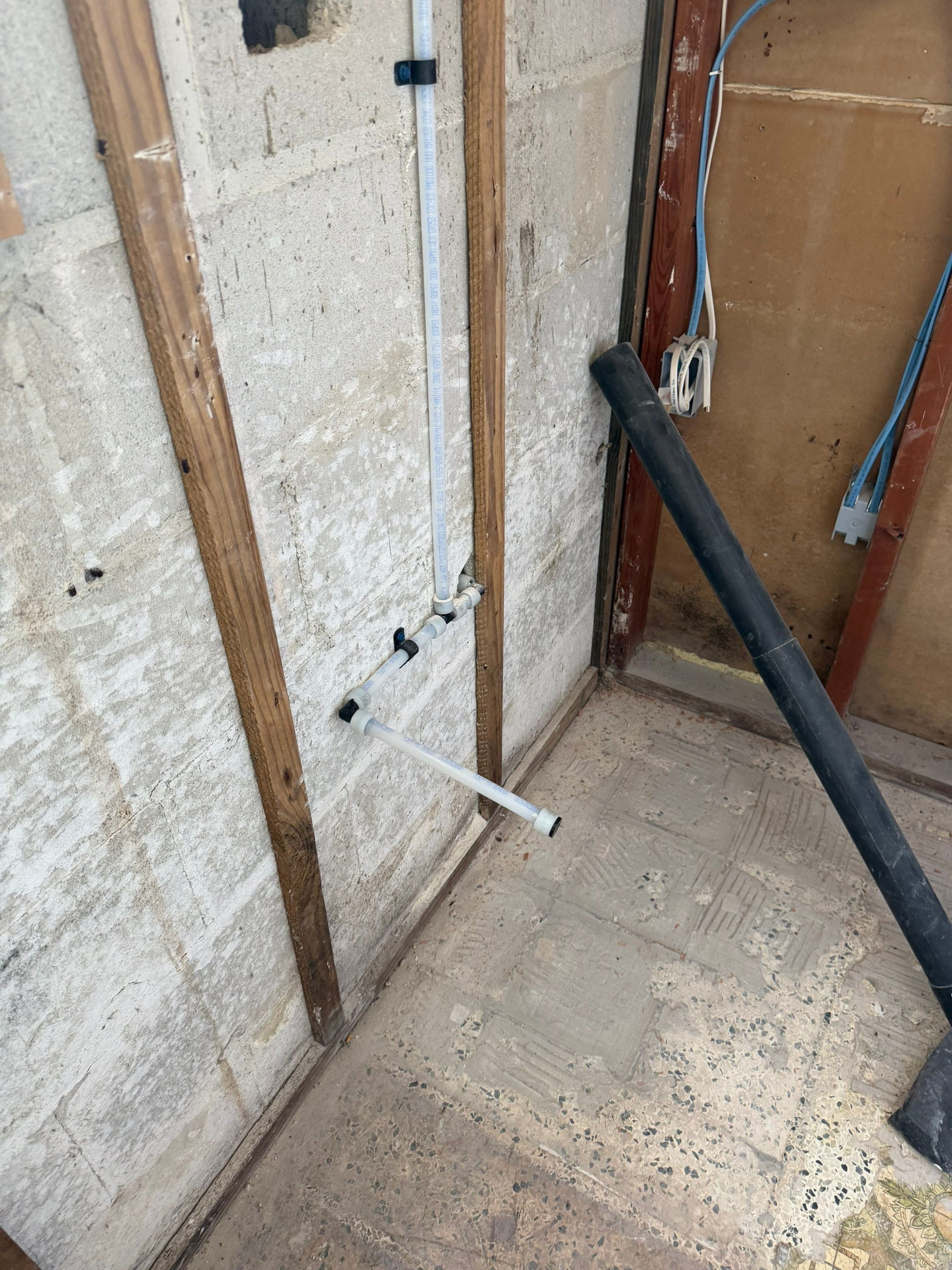
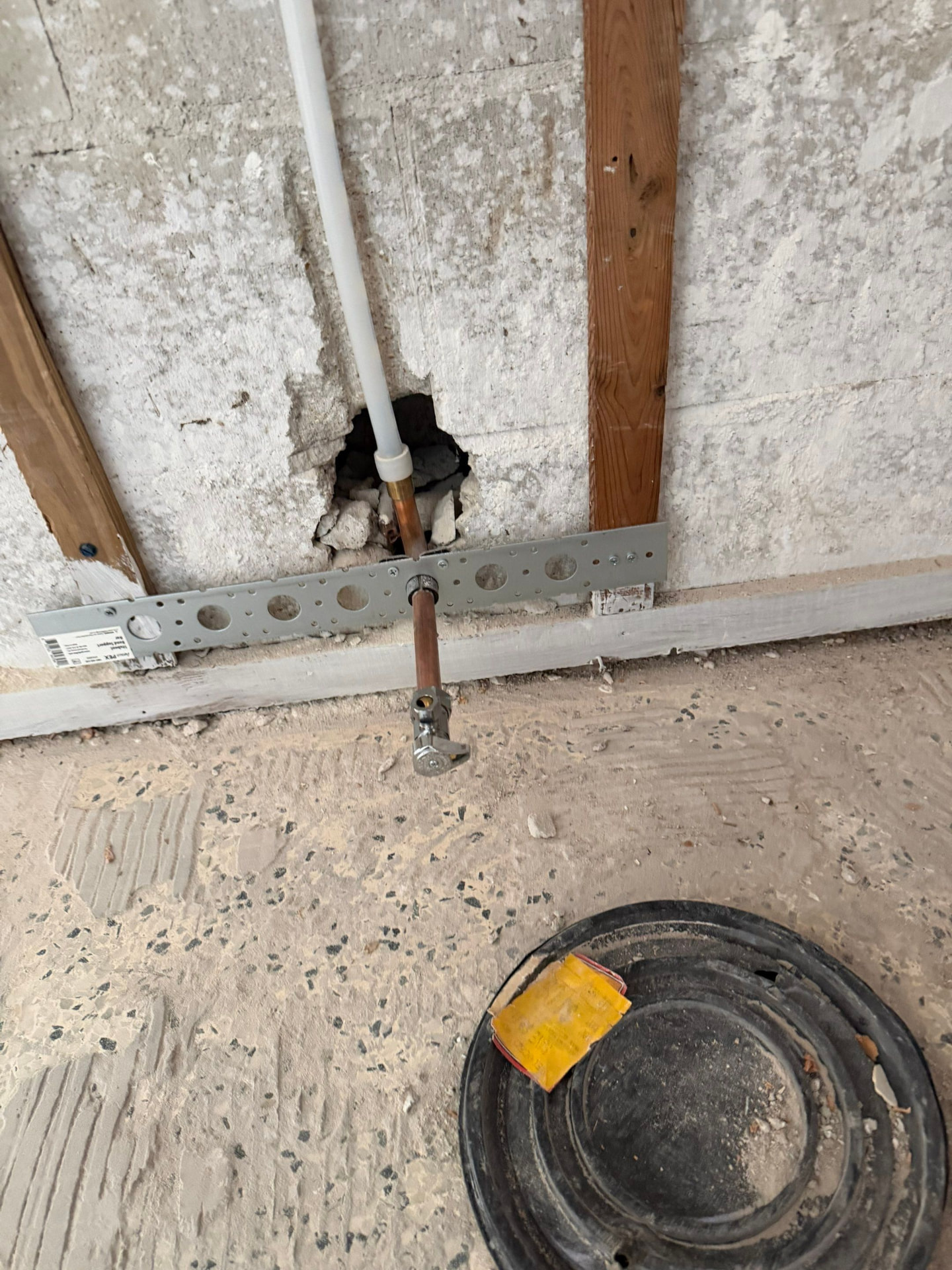
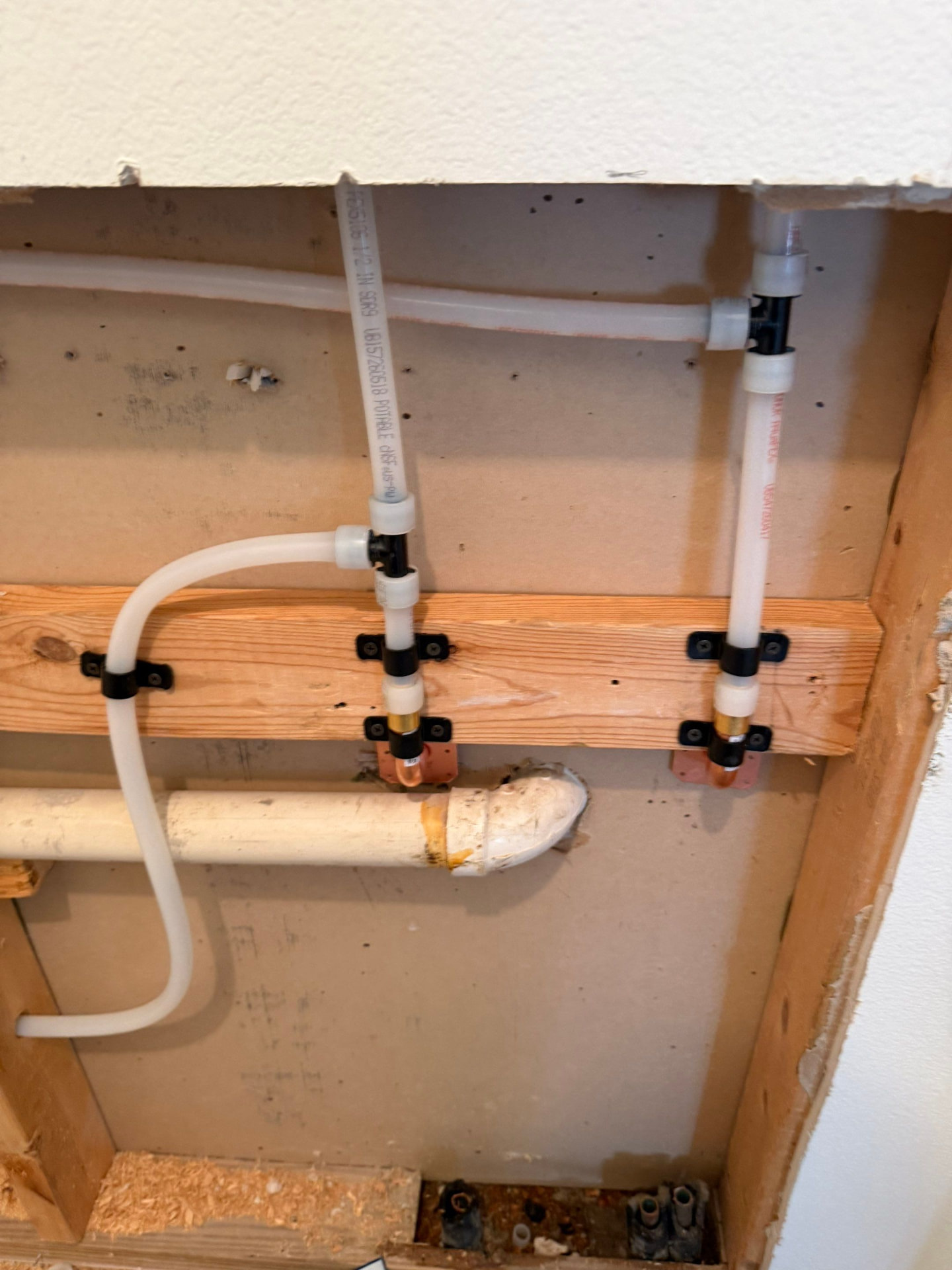
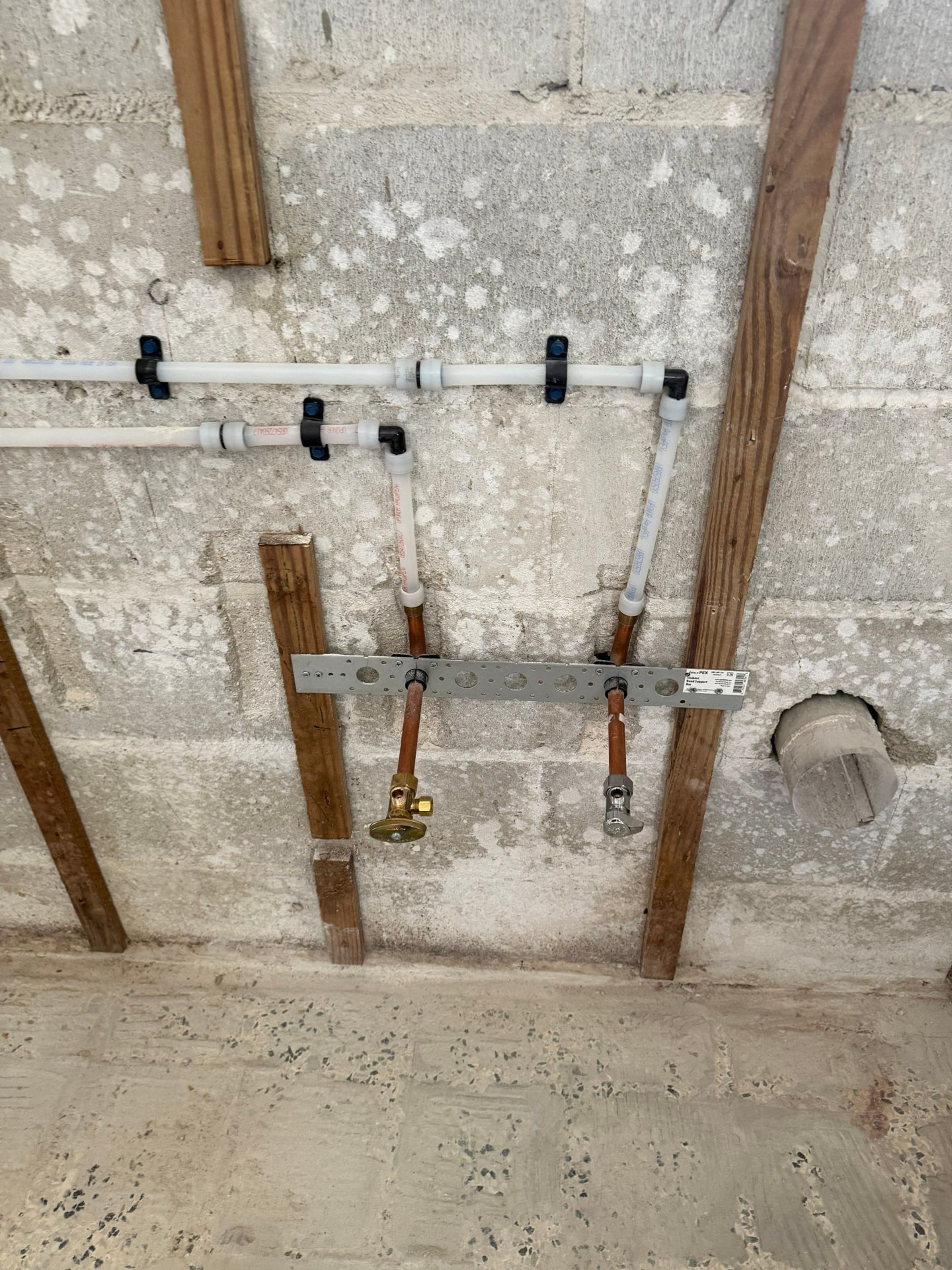
Photo slots awaiting the Lakewood Ranch estimate images — cracked CPVC and the “CPVC” pipe print.
Answers
Frequently Asked Questions — Repiping in Lakewood Ranch, FL
Lakewood Ranch was built in the CPVC era, and the CPVC era is ending on schedule — hot side first, under the floor, where you can’t see it coming. If your home is in Summerfield, Edgewater, Country Club, Riverwalk, or Greenbrook and you’ve already had a leak, the question isn’t whether the pipe is aging — it’s whether you replace it on a Tuesday you chose or a Saturday it chose for you. Call 239-388-3631. I’ll read the pipe, tell you what it is, and give you a number you can compare line by line.
Plumbing Detectives LLC | Venice, FL | License CFC1434139 | BBB Accredited
239-388-3631 | plumbingdetectivesfl.com
Serving Lakewood Ranch, Bradenton, Sarasota, Venice, Venice Gardens, Nokomis, Laurel, Englewood, Wellen Park, and Bradenton Beach.