
Water Softeners & Water Filtration · Bradenton, FL
Water Softeners & Whole-House Water Filtration in Bradenton, FL
Two water systems, one city name — sized to your tap test. Licensed master plumber CFC1434139.
Call Now239-388-3631A homeowner in Palma Sola handed me a letter from the City of Bradenton last year — the one about the city’s water service line inventory — and asked me a fair question: “If I put in a water softener, does that take care of the lead thing?” The honest answer is no. A softener doesn’t touch lead. And that’s the problem with how water treatment gets sold in Bradenton: a city with two different water utilities, a 120-year-old plumbing footprint in some neighborhoods and brand-new PEX in others, a documented lead action-level exceedance in 2022, and secondary-standard exceedances for sulfate and dissolved solids in the city’s own report — and most of what’s being sold here is a one-size tank with a generic “Florida water is hard” pitch.
My name is Mike Reynolds — owner of Plumbing Detectives LLC, licensed master plumber, CFC1434139, based in Venice. Bradenton is a regular run for me: repipes, sewer lines, slab leaks, and water treatment, and I’ve pulled plumbing permits through the City of Bradenton’s system. This page is the honest version of the conversation for this market: which water you’re actually on, what’s in it according to the utilities’ own reports, what each piece of equipment does and doesn’t do, and how a system gets sized to your house instead of to a sales quota.
The Chemistry
What’s Actually in Bradenton Water — Which Bradenton?
The first thing I ask on a Bradenton water call is not “how hard is your water.” It’s “who sends you the bill?” Because “Bradenton” is two water systems, and they are not the same.
City of Bradenton Utilities serves the incorporated city — downtown, the River District, most of West Bradenton, Palma Sola, Samoset. Established in 1903, it’s one of the older municipal water systems in the region. The city blends purified surface water from the Lake Manatee Reservoir on the Manatee River with groundwater from seven aquifer storage-and-recovery wells in the Floridan Aquifer, treats it at the plant on Natalie Way, and disinfects with chloramines and hypochlorite, with chlorine dioxide documented at the plant as well.
Manatee County Utilities serves unincorporated Manatee County — which is most of what people call “greater Bradenton”: Bayshore Gardens, Lakewood Ranch, Parrish, the whole eastern expansion. In 2024 the county delivered an average of 34 million gallons a day of Lake Manatee surface water and 17.5 million gallons a day of deep groundwater from seven wells roughly 1,200 feet into the Floridan Aquifer in eastern Manatee County. The groundwater side is aerated, lime-softened, and filtered before it’s blended with the treated surface water — which is why county tap water is meaningfully softer than the raw aquifer. Disinfection is chloramines, confirmed in the county’s 2024 report at a maximum of 3.2 ppm.
Here’s what that means for hardness. Websites will tell you every Manatee County ZIP reads 147.9 mg/L, about 8.6 grains — that’s a county-wide USGS median, the same number for 34201 through 34221. Another aggregator will tell you 84 mg/L, under 5 grains, weighting the surface-water side. The most defensible number for Manatee County Utilities customers, drawn from the county system’s own reported data, is around 138 mg/L — roughly 8.1 grains per gallon. That’s squarely “hard” on the industry scale (7 to 10.5 GPG). Not the 20-plus-grain water Venice’s city customers get; not soft either. Enough to scale a water heater over its life and crust every aerator in the house.
For City of Bradenton customers, the city’s report doesn’t state hardness directly. What it does state is more useful for our purposes: sulfate measured between 249 and 489 ppm against a secondary standard of 250, and total dissolved solids between 424 and 512 ppm against a secondary standard of 500 — both flagged in the city’s own 2023 report as exceeding the secondary standard. Those are aesthetic standards, not health standards, and I’ll say that plainly. But they describe exactly what city customers tell me: minerally, slightly salty-tasting water, spotting on everything, and a strong case for whole-house filtration on top of any softening.
Both systems are surface-water dominant, which brings the last piece: Lake Manatee gets seasonal algal blooms, and the county publishes its own fact sheet on the taste and odor that come with them. If your water tastes earthy some months, that’s the reservoir, not your plumbing — and it’s a carbon question, not a softener question.
And then there’s the part of Bradenton that’s on neither system: private wells in the rural east — Myakka City, parts of Parrish, the large-lot subdivisions that predate county water extensions. Raw Floridan Aquifer water, no utility treatment, and iron and hydrogen sulfide common enough that the treatment train has to be built in a specific order or the softener is ruined in a year.
Three different waters under one city name. Which is why every estimate starts with an in-home test at your kitchen tap — hardness, chloramine, iron, TDS, and pH, in front of you — and the equipment gets sized to your number.
The Damage
What Hard Water Is Doing to Your House Right Now
At 8 grains, this is the same mechanism I write about across this site, on a Bradenton timeline.
Your water heater is ground zero. Dissolved calcium comes out of solution when water is heated, so scale collects on the tank bottom — the popping and rumbling — and the anode rod wears faster. It’s why every water heater we install gets the Corro-Protec powered anode upgrade. Add the city system’s elevated dissolved solids and you’ve got a tank working harder every year it survives.
Your valve cartridges and appliances scale on schedule. Shower cartridges, dishwasher solenoids, ice makers, washing machine inlet screens. Bradenton homes tend to be bigger than what I see in Venice — more bathrooms, more fixtures, more appliances — so there’s simply more of this happening in the house at once.
Your fixtures spot and your glassware clouds. City customers especially: 400-plus ppm of dissolved solids leaves a residue on every surface water dries on. This is the one people notice first and misdiagnose most — it’s not just hardness, it’s total mineral load, and a softener alone only addresses part of it.
Your skin and laundry feel it. Soap curds instead of lather, stiffer towels, more detergent. Not a plumbing failure. The daily tax.
And the thing a softener does not fix: lead. In August and September 2022, three of ten taps sampled in the City of Bradenton system exceeded the federal action level of 15 parts per billion for lead. By the 2023 report the 90th-percentile result was back down to 2 ppb, and the city is conducting a full service line inventory — that’s the letter Palma Sola homeowners got. I’m not going to overstate this: it was an action-level exceedance, remediation is underway, and the current numbers are low. But lead comes from the pipes and solder inside old homes and old service lines, not from the lake, and no whole-house softener or carbon filter is certified to remove it. If you’re in a pre-1986 Bradenton home, the answer is a point-of-use filter certified to NSF/ANSI 53 for lead at the drinking tap — the RO-4 covers it — and, honestly, a look at what the supply lines are made of.
The Equipment
The Equipment, Honestly — What Each System Does and Doesn’t Do
Four technologies get sold under one banner. In Bradenton the right stack depends on which of the three waters you’re on and how old the house is.
A salt-based softener removes hardness. Nothing else does. The tank holds resin beads charged with sodium. Calcium and magnesium in your water grab the resin harder than sodium does, knock the sodium off, and stay behind — the hardness physically leaves the water. When the resin fills, the control valve runs a regeneration cycle, usually around 2 a.m., flushing the resin with brine from the salt tank and sending the captured minerals to the drain. Our line is the Safety Zone WC series (WC-100 through WC-500-150) — metered systems, brine tank included, sized from 2-bathroom homes to 8-bathroom estates. Metered means it regenerates on actual water used, not a timer. Bradenton is where the top half of that range actually gets used: 4- and 5-bath homes in Lakewood Ranch and east Bradenton size up not just on grains but on flow — more on that in the math section.
Whole-house carbon filtration removes chloramine, chlorine, taste, and odor. It does not touch hardness. Our Safety Zone WHF series uses catalytic coconut shell carbon — the grade that actually breaks down chloramine, which both Bradenton utilities use. Two versions: the WHF-NE (non-electric, no drain, no power; install it and change media in five to seven years) and the WHF-A (automatic backwashing, needs power and a drain, extends media life). In Bradenton, carbon is doing real work on three fronts: chloramine, the seasonal Lake Manatee algae taste, and the disinfection byproducts that come with chloraminating surface water — the county’s 2024 report shows haloacetic acids at 46.2 ppb against a limit of 60 and trihalomethanes at 50.2 against a limit of 80. Legal, and among the higher numbers I see in the region. Carbon reduces both.
The COMBO does both — and for Bradenton municipal customers it’s usually the right answer. Carbon ahead of the softener in one system: the carbon handles chloramine, taste, and byproducts and shields the resin; the softener takes out the hardness. Two-tank COMBO for larger homes — which is most of them here — single-tank all-in-one where the garage is tight. For a county-water home at 8 grains with chloramine and seasonal taste, or a city-water home with the added dissolved-solids load, this addresses the chemistry instead of half of it.
The RO-4 handles the drinking water question — and in Bradenton, the lead question. Under-sink reverse osmosis with its own faucet, quick-change cartridges, a storage tank, optional mineral cartridge. It removes sodium from softened water, strips the byproducts and radium that show up at trace levels in both utilities’ reports, and it’s the point-of-use lead answer for older homes. In a pre-1986 house in Palma Sola, the River District, or Bayshore Gardens, I’d put the RO-4 in before the softener if the budget only stretched to one.
Salt-free “conditioners” — including the Crown5 we carry — reduce scale sticking. They do not soften. Template-assisted crystallization changes the hardness minerals’ crystal structure so scale adheres less to pipes and heating elements. The minerals stay in your water; test it afterward and the hardness reads the same. No salt, no drain, no power. Their sweet spot is moderate hardness, generally cited around 10 GPG and below, and Bradenton’s treated municipal water at 8-ish grains sits inside that window — so unlike in Venice, the Crown5 is a legitimate option here for someone who wants scale reduction without salt, particularly on septic in the unincorporated county where brine routing is a design problem. It does not reduce the city system’s dissolved solids, and it does nothing for lead. I’ll sell you one where it fits and tell you plainly what it won’t do.
Straight Answer
“What About the Halo 5?” — The Honest Answer
Bradenton homeowners ask about the Halo 5 by name — the marketing is everywhere. Here’s what it is: a multi-stage whole-house filtration and conditioning system. Several carbon stages for chlorine, taste, and odor — legitimately good at that — plus a salt-free conditioning stage for scale.
Here’s what it is not: a water softener. The conditioning stage is the same category of technology as the Crown5 above — it inhibits scale adhesion but removes zero hardness. Halo’s own materials acknowledge the minerals remain.
In Bradenton’s 8-grain municipal water, conditioning has a real effect and the filtration is doing useful work, so I’m not going to tell you it does nothing. What I’ll tell you is what it’s not addressing: it isn’t lowering the city system’s 400-plus ppm of dissolved solids, it isn’t removing hardness, and it isn’t certified for lead. The fair comparison is Halo 5 versus our COMBO — both filter the whole house; the COMBO also actually removes the hardness, and the quote shows you the sizing math. If someone pitched you a Halo 5 as the fix for hard water, ask them to test hardness after installation and put the expected number in writing.
Plumbing Detectives LLC Professional Opinion
In Bradenton, before you sign for any water treatment system, ask the salesperson two questions. First: “Am I on City of Bradenton or Manatee County water, and what’s the difference for this quote?” If they don’t know or say it doesn’t matter, they haven’t read either utility’s report. Second, if your home was built before 1986: “What in this system is certified to reduce lead?” If the answer is “the softener” or “the whole-house filter,” that is wrong, and you should hear it from me before you hear it from a lab result. A softener is for scale. Lead is a point-of-use and a pipe-material problem. Anyone who blurs those two to close a sale is not the person you want cutting into your main line.
The Math
How We Size a System — The Actual Math
Sizing isn’t a mystery, and Bradenton adds a second dimension to it that Venice mostly doesn’t.
Daily grain load = people in the home × roughly 75 gallons per person per day × tested hardness in GPG.
A four-person household on Manatee County water testing at 8.1 GPG: 4 × 75 × 8.1 = about 2,430 grains per day. Multiply by seven for a weekly regeneration target — roughly 17,000 grains — and a WC-100- or WC-150-class unit covers it comfortably on a metered valve.
Now the Bradenton version. A six-person household in a 4-bath Lakewood Ranch home at the same 8.1 grains: 6 × 75 × 8.1 = 3,645 grains per day, about 25,500 a week — that’s a WC-150 on grains. But here’s where the bathroom-count shorthand on the spec sheet (WC-100 for 2 baths, WC-150 for 3, WC-250 for 4, and up) earns its keep: a softener has a flow rating too. Run three showers, a dishwasher, and a washing machine at 7 a.m. through a tank sized only on grains, and the pressure drop tells you about it. In the bigger Bradenton homes, the fixture count pushes the tank size up independent of the hardness number. That’s a conversation I have in the house, counting fixtures, not off a form.
And the third Bradenton case: an east-county well home testing at 20 grains with iron. 4 × 75 × 20 = 6,000 grains a day, 42,000 a week — WC-250 territory — and the iron has to come out ahead of the softener or the resin fouls. Different water, different train, same city name.
Undersized systems regenerate constantly and burn salt; oversized systems waste money and regenerate too rarely for resin health. Sized right on both grains and flow, you buy salt a few times a year and forget it’s there.
Local Context
Bradenton Specifically — 120 Years of Pipe, Two Utilities, and the Well Country East
Bradenton is the most varied plumbing market I work in. Where your house sits changes what I’m looking at before I quote water treatment.
Palma Sola and the old west side (34209). Some of the oldest housing infrastructure in Bradenton — homes from the 1920s through the 1940s alongside mid-century builds on the peninsula between the bay and the Gulf. In houses this age, galvanized steel supply lines, cast iron drains, and lead solder at copper joints are the norm, not the exception, and the city’s own service line inventory is going house to house here precisely because of it. Before a softener goes into a 1935 Palma Sola bungalow, I want to know what the supply lines are. Galvanized sheds rust into new resin; softened, lower-mineral water is more aggressive toward old joints. Sometimes the honest first conversation is a repipe, and the softener comes after.
Old Manatee, the River District, downtown (34205, 34208). Early-20th-century stock mixed with 1950s–70s residential. Same pre-1986 solder caution; galvanized in the pre-1970 homes. This is City of Bradenton water — the sulfate and dissolved-solids side of the ledger.
Bayshore Gardens (34207, unincorporated). A planned 1950s community on Manatee County water with 60-to-70-year-old copper and, in places, aging infrastructure the county has targeted for rehabilitation. Strong filtration candidates; supply lines worth a look.
Central Bradenton (34205, 34208, 34209, 34210). Every era, but this is the polybutylene belt: the 1980s–90s subdivision boom — Tara, Peridia, Greenfield Plantation and their neighbors — landed squarely in the 1978–1995 window when gray polybutylene supply pipe was installed everywhere. Polybutylene doesn’t “might fail,” it fails, and chloraminated water accelerates it. If I find PB in a house, the water treatment quote comes with a repipe conversation, because there’s no point protecting a water heater behind pipe that’s on borrowed time.
East Bradenton and Lakewood Ranch (34201, 34202, 34211, 34212). Newer construction, PEX supply, softener loops pre-plumbed in the garage. Here the pipes aren’t the issue — the water is. These are the customers motivated by chloramine taste, the seasonal algae, and the byproduct numbers in the county report, and they’re the big-house, high-fixture-count sizing case from the math section.
Palmetto and Ellenton (34221). Older Palmetto stock along the river mixed with newer development up the US-41 corridor. Manatee County water; mixed pipe eras — I check.
Then the well country. East of the county water extensions — Myakka City, parts of Parrish, rural east Bradenton — private wells on raw Floridan Aquifer water. Iron and hydrogen sulfide are common enough out here that I treat every well quote as a chemistry workup first: iron above threshold fouls softener resin without pre-treatment, sulfur needs its own oxidation and filtration stage, and the order of the treatment train is the whole job. And most of these homes are on septic, which changes where regeneration brine goes — Florida’s Department of Health has recommended against routing softener brine into septic systems since 2016, so the discharge gets a dedicated dry well or approved alternative, designed into the quote from day one. Any installer who doesn’t ask “sewer or septic?” before quoting a softener east of I-75 hasn’t done this here.
The Work
Installation — What a Proper Job Looks Like
The tee order is the design. Irrigation and outdoor hose bibs tee off before the treatment equipment — in a Lakewood Ranch lot with a real irrigation system, that’s a large share of your water and you don’t pay salt and capacity to soften it. The kitchen cold line can bypass the softener so drinking water stays unsoftened, or feeds the RO-4. Carbon goes ahead of the softener. Then the treated line feeds the water heater and the rest of the house. Wrong tee order is the most common defect I find in handyman installs.
Loops depend on the era. Lakewood Ranch and east Bradenton construction almost always has a pre-plumbed softener loop in the garage, which makes the connection straightforward. Palma Sola, the River District, Bayshore Gardens — no loop, which means cutting the main and building the connection, and on an 80-year-old house with galvanized or early copper that is exactly the work you want a licensed plumber doing under his own license, not a water-treatment salesman’s subcontractor.
Florida garages are brutal on equipment. Heat and UV degrade valve heads and tanks in direct sun. Placement, shading, and drainage get planned, not improvised.
Drains get air gaps. Period. The regeneration discharge and the brine tank overflow are two separate lines, each with a proper air gap — backflow protection 101, the same cross-connection principle I’ve written about elsewhere on this site. A drain line jammed into a standpipe with no gap is a code violation and a contamination path.
Permits: cutting into the potable supply is plumbing work under my license, permitted where the City of Bradenton or Manatee County requires it — same standard as every other service on this site. I’ve pulled permits through the City of Bradenton’s system and know the process. If a treatment company tells you no license or permit is involved in cutting your main line, that tells you exactly who they’re planning to send.
Plumbing Detectives LLC Tips
Look at your water bill. “City of Bradenton” and “Manatee County Utilities” are two different systems with two different reports, and the right equipment stack is different for each. That’s the first question, before hardness.
Built before 1986? Nothing that installs on your main line is certified for lead. A softener protects your water heater; an NSF/ANSI 53 filter or the RO-4 at the kitchen tap protects your family. Those are two purchases, not one.
Gray flexible plastic pipe under the sink with a copper crimp ring? That’s polybutylene, and it’s in a lot of 1980s–90s central Bradenton subdivisions. Talk to me about the pipe before we talk about the water.
East of the county water lines and on a well: don’t let anyone install a softener before an iron and sulfur test. A bare softener dropped on high-iron well water is a service call within the year.
Pricing
What This Costs — Honest Context
Equipment spans a real range: whole-house catalytic carbon filtration starts around the mid-$1,000s installed at the small end; properly sized salt softeners run in the mid-$2,000s to mid-$3,000s range; COMBO filtration-plus-softening systems run higher; the RO-4 at the kitchen sink is the most affordable single upgrade in the lineup. The Bradenton-specific notes: larger homes with high fixture counts size up on flow, which moves softener numbers toward the top of that range; well homes east of the county lines add iron or sulfur pre-treatment and septic discharge routing on top; and in a pre-1986 home the RO-4 is the line item I’d protect first if the budget is tight.
What I won’t do is quote your house off this page. The number depends on which utility you’re on, your tested water, your home’s size and age, what the supply lines are made of, and whether there’s a loop. The estimate starts with the free in-home water test — call 239-388-3631. You’ll see your numbers, the sizing math, and the equipment tiers side by side before you decide anything.
Why Us
Why Plumbing Detectives LLC
Most water treatment in Bradenton is sold by treatment companies — commission salespeople, subcontracted installs, equipment priced like a car, and one hardness number for the whole county. Most plumbers, meanwhile, will install a softener but can’t tell you why chloramine needs catalytic carbon, what the city’s sulfate number means, or why a softener doesn’t help with the letter the city sent you about lead.
We’re the overlap: a licensed master plumber who stocks the equipment, does the water test personally, shows the sizing math, knows the difference between the two utilities’ reports, cuts the main line under his own license and permit, and services what he installs. If your Bradenton house needs more than a softener — polybutylene or galvanized replaced with Uponor PEX-A, a cast iron drain line camera-inspected, a slab leak found before it takes the floor — that’s one phone number too. Slab Leak Detection in Bradenton · Whole-House Repiping in Bradenton · Sewer Line Repair in Bradenton. License CFC1434139. Fully insured.
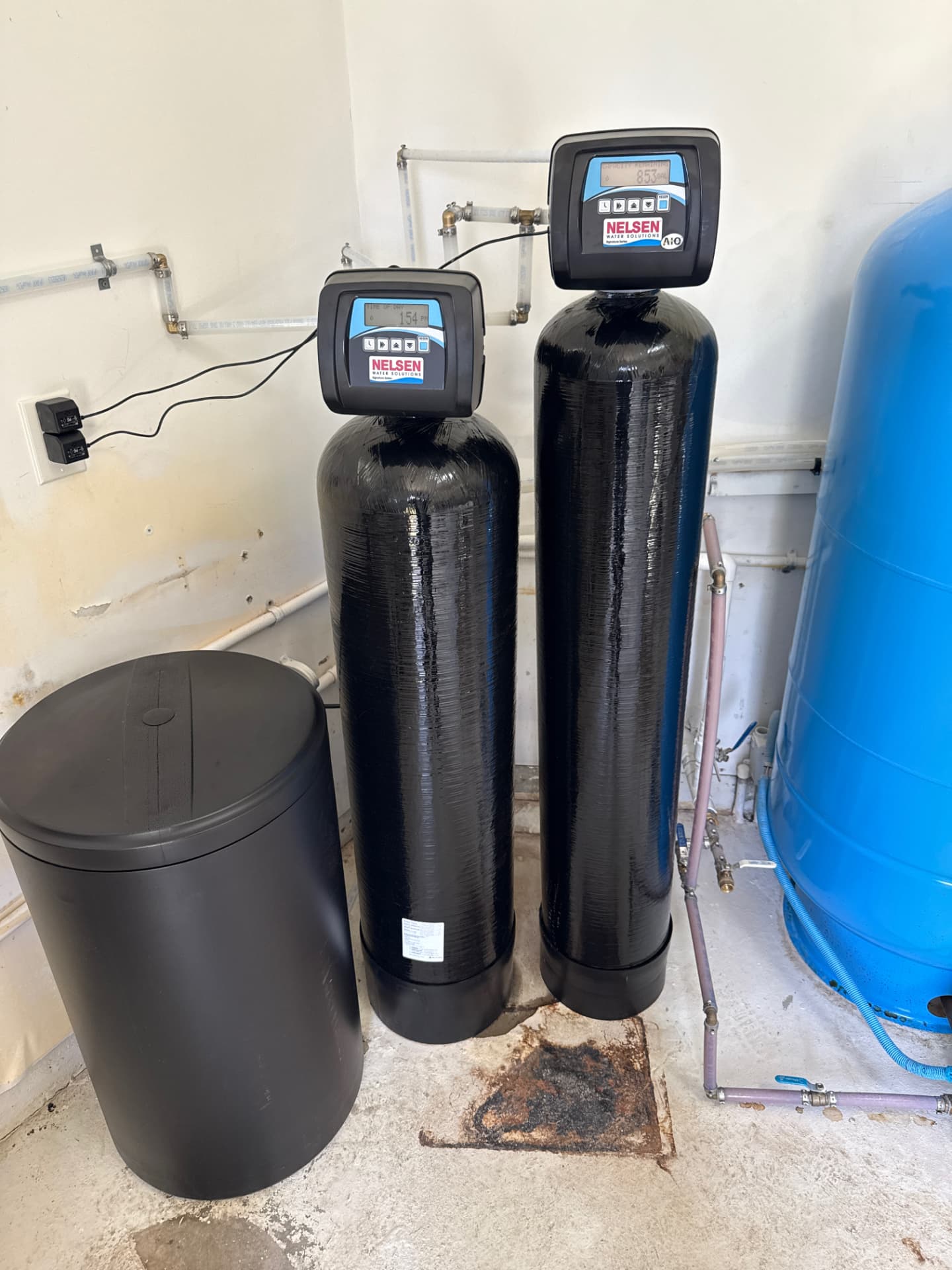
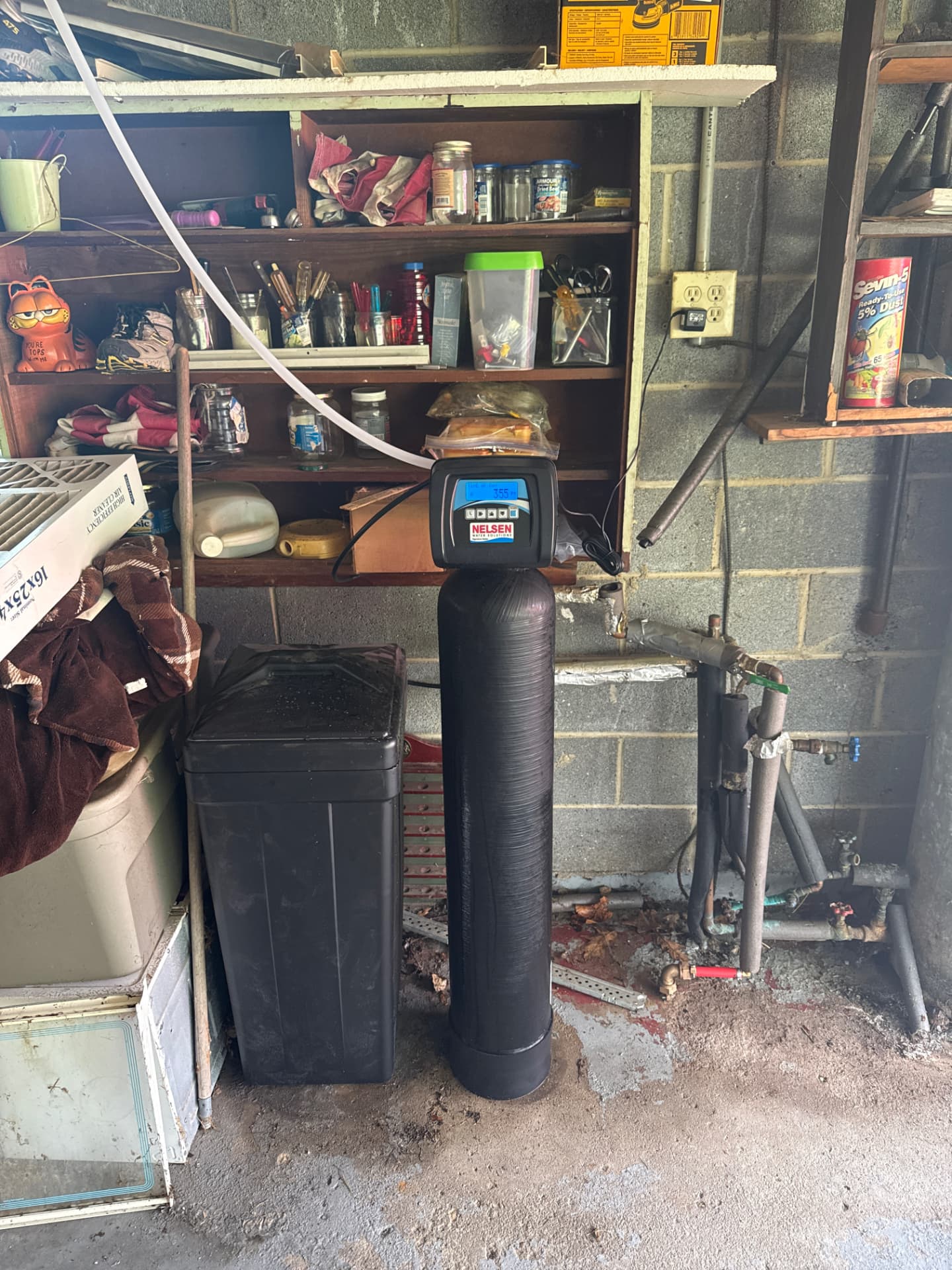

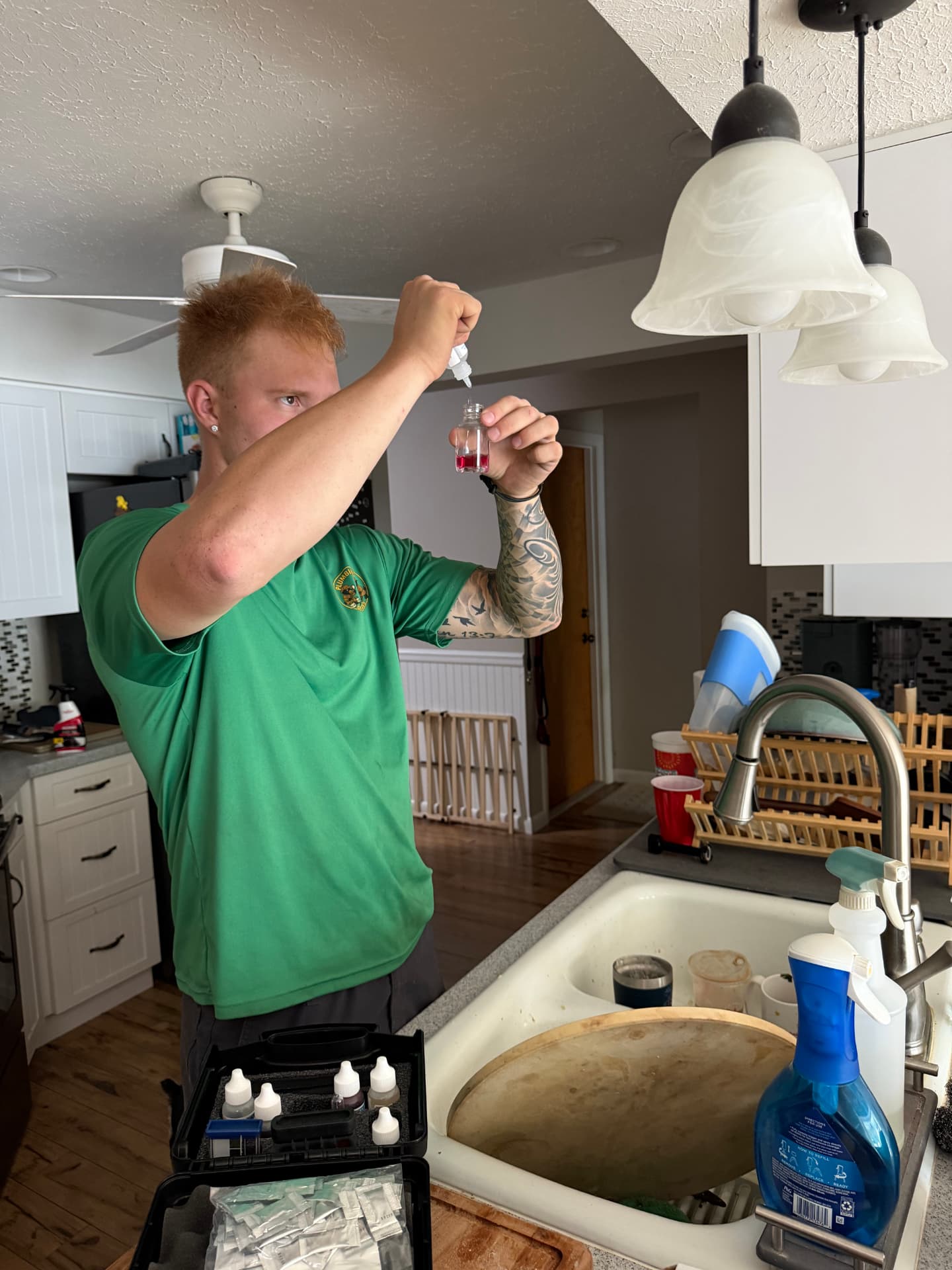
Photo slots awaiting Mike’s job-site images.
Answers
Frequently Asked Questions — Water Softeners in Bradenton, FL
If you’ve read this far, you know more about Bradenton water than most people selling treatment systems here: that “Bradenton” is two utilities with two different reports, that the county’s treated water runs about 8 grains, that the city’s sulfate and dissolved solids are a filtration argument, that chloramine needs catalytic carbon, that the seasonal taste is the reservoir, and that no softener on earth addresses the lead letter. If you want your actual numbers — hardness, chloramine, iron, TDS, at your own kitchen tap — call 239-388-3631 and we’ll start with the free water test. You’ll see the math, the tiers, and the honest answer for your specific house before you spend a dollar.
Plumbing Detectives LLC | Venice, FL | License CFC1434139
239-388-3631 | plumbingdetectivesfl.com
Serving Venice, Venice Gardens, South Venice, Nokomis, Laurel, Sarasota, Englewood, Wellen Park, North Port, Bradenton, and Bradenton Beach.