
Water Heater Installation · Venice, FL
Water Heater Installation in Venice, FL
Diagnosis first, always. We explain what’s wrong before we recommend anything. Licensed master plumber CFC1434139.
Call Now239-388-3631I’ve pulled apart enough water heaters — in New York commercial buildings and Florida homes — to know that most of them don’t fail because the tank was bad. They fail because of what was done to them during installation — wrong fittings, missing components, no protection against the specific conditions in this market. Venice is a place where the water is hard, the air near the coast carries salt, and a large share of the housing stock is old enough that the original plumbing was never designed to last as long as people expect it to. When I show up to look at a water heater, I’m not just looking at the unit. I’m looking at the whole picture — the connections, the water source, the age of the home, what the previous installer did or didn’t do. That’s what tells me whether you need a replacement or whether there’s something more specific going on.
My name is Mike Reynolds. I’m the owner of Plumbing Detectives LLC and a licensed master plumber, license CFC1434139. I trained in New York, I’ve worked on plumbing systems in buildings most plumbers never see, and for the past several years I’ve been based here in Venice doing residential and light commercial work throughout Sarasota County. This is the market I work in every single day, and the page you’re reading is what I’d tell you if I were standing in your garage.
Water Quality
What Venice’s Water Actually Does to a Water Heater
Most homeowners think of their water as just water. In Venice, it’s worth understanding that the water coming out of your tap is working against your plumbing equipment in ways you can’t see.
The water supply here — whether you’re on City of Venice Utilities or Sarasota County Public Utilities — runs between 12 and 18 grains per gallon of hardness depending on where in the service area you are. To put that in context, water above 10.5 grains per gallon is classified as very hard. Most of Venice is above that threshold. Zip code 34285 specifically has been measured at 11.6 grains per gallon. It’s not the hardest water in Sarasota County — North Port pushes past 18 to 25 grains per gallon — but it’s hard enough to significantly affect your water heater and your supply lines over time.
Here’s what hard water actually does. Dissolved calcium and magnesium enter your water heater with every gallon of water. When water heats up, those minerals fall out of solution and settle at the bottom of the tank as a white, chalky buildup called sediment. It’s the same mineral scale you see on your showerhead or around your faucet aerators — just accumulating inside the tank where you can’t see it. After a few years without maintenance you can have an inch or more of this scale sitting at the bottom of the tank, and that layer of mineral buildup acts as insulation between the burner and the water. The heater has to work harder and run longer to heat the same amount of water. Energy efficiency drops. The tank lining takes more heat stress. The lifespan shortens.
One of the most common things I see when I arrive at a Venice home is a water heater that sounds like a coffee percolator during a heat cycle — a low rumbling or popping noise that the homeowner has learned to live with. That noise is steam and superheated water forcing its way through a crust of sediment at the bottom of the tank. The unit isn’t in danger of exploding, but it is telling you that it hasn’t been flushed in years and it’s working a lot harder than it should be. An annual flush addresses this before it becomes a bigger problem. We’ll get to that.
Hard water also affects a component inside the tank that most homeowners have never heard of — the anode rod. Think of the anode rod as a bodyguard for the inside of your tank. It’s a metal rod suspended in the water whose entire purpose is to corrode so the steel tank walls don’t have to. It draws the electrochemical attack to itself, sacrifices itself, and buys your tank years of additional life. Standard factory anode rods are made of magnesium, and magnesium depletes faster in hard water and in water with elevated sulfate content — both of which describe Venice’s water supply. A rod that might last five to seven years in softer water can be gone in three to four years here. When the rod is spent and nobody replaces it, the tank walls become the next target. That’s when you start seeing rust-colored water and premature tank failure.
I’ve replaced water heaters in Venice Gardens and South Venice that were only eight or nine years old — well short of their expected lifespan — and in nearly every case the anode rod had been consumed years earlier and nobody had touched the unit since installation. The tank didn’t fail because it was cheap. It failed because it was never maintained.
There’s one more water quality issue specific to Venice that I want to address because it gets misdiagnosed constantly. If your hot water smells like rotten eggs but your cold water smells fine, most people assume they have a water quality problem and start looking at filtration systems. I’ve been called to homes where homeowners had already spent several hundred dollars on filtration equipment that did nothing for the smell. In almost every case, the explanation is the magnesium anode rod reacting with sulfates in the water supply — and this happens on city water, not just well water. The fix is a rod swap that costs fifty to a hundred dollars in parts. If you have this problem, call me before you buy a filtration system. Nine times out of ten it’s the rod.
Not sure what’s going on with your water heater? I’ll look at the whole system — water quality, connections, anode rod condition, sediment level — and tell you exactly what I find before I recommend anything. Call 239-388-3631 or request a diagnostic visit online.
Home Age
How the Age of Your Home Changes the Conversation
Venice has an unusually wide spread of home ages for a market its size, and the plumbing conversation is different depending on what era your home was built in. This is something I factor in before I even walk through the door.
On the Island and in Venice Gardens and South Venice, I work in homes from the 1940s through the 1980s. These are the neighborhoods where the original plumbing infrastructure is old enough to tell a story. In Pelican Pointe, Waterford, and Plantation I’m mostly in 1990s and early 2000s construction. In Wellen Park, Islandwalk, and Gran Paradiso I’m in homes built within the last ten years. Each of those scenarios requires a different starting point.
In the older homes — anything built before the mid-1970s on Venice Island, in Venice Gardens, or in the original South Venice subdivisions — the supply lines are often galvanized steel. Here’s what galvanized steel pipe does over time. The zinc coating that protected the steel from corrosion gradually breaks down. Rust builds up on the inside of the pipe, restricting the diameter of the pipe itself. You get declining water pressure, rust-colored water, and eventually leaks. When a customer in one of these older neighborhoods calls me about low hot water pressure or rusty hot water, the water heater is usually the first thing they suspect. In my experience, it’s almost never the water heater. It’s the galvanized supply lines feeding it. A new water heater installed on old failing galvanized supply lines is a short-term fix on a long-term problem. I’ll tell you that upfront rather than sell you a heater that’s going to underperform because of what’s feeding it. If the galvanized supply situation is serious enough, a whole-house repipe is the real answer — and I’ll explain why if that’s what I find. See my Venice whole-house repiping page for the full picture on galvanized and copper supply line replacement.
Homes from the late 1970s through the mid-1990s — Jacaranda West, Pinebrook South, Gulf View Estates, Chestnut Creek — frequently have copper supply lines. Copper is a good material, but Venice’s water chemistry creates a specific problem with it. The water here is soft enough in some ways and acidic enough in others to cause what are called pinhole leaks — tiny corrosion points in copper pipe that develop into drips and then slow leaks. A single pinhole leak is a repair. Two or three pinhole leaks within a short window is a pattern, and a pattern in copper plumbing is often the beginning of a larger problem. I’ve been called to homes in this era of Venice construction where the homeowner was patching pinhole leaks every few months. At some point the ongoing repair cost exceeds the cost of a PEX repipe, and I’ll tell you when we’ve crossed that line. The water heater on a copper system that’s starting to develop pinholes is usually fine on its own — but it’s worth knowing what the supply system looks like before you invest in a new tank. My Venice repipe page covers the copper pinhole pattern in detail.
In newer construction — Venetian Golf & River Club, Sarasota National, and the communities out in Wellen Park — supply lines are PEX or CPVC and the water heater risk profile is genuinely different. These homes don’t have the cast iron slab leak exposure or the galvanized supply problems I see in older Venice neighborhoods. In these homes the conversation shifts. We’re talking about efficiency, capacity, whether the current unit is the right size for how the home is being used, and whether the installation was done correctly when the home was built — because even new construction sometimes has installation shortcuts.
Coastal & Seasonal
Salt Air, Seasonal Vacancy, and the Things That Age a Heater Before Its Time
Two things in Venice accelerate water heater wear that you don’t see as prominently in inland Florida markets: coastal air and seasonal vacancy.
If you’re on Venice Island, near Casey Key, or in any waterfront neighborhood along the Intracoastal, salt air corrosion is real and it’s specific. I’m not talking about surface rust on the outside of the tank — I’m talking about what happens to the temperature and pressure relief valve, the anode rod access point, the metal fittings at the top of the unit, and the connections themselves. These components weren’t designed for indefinite exposure to a salty, humid coastal environment. Garage-mounted water heaters are the most vulnerable. A unit that might deliver 14 years of service in a temperature-controlled indoor utility closet can be showing serious deterioration at 9 or 10 years in a Gulf Coast garage. I’ve pulled coastal garage heaters apart that looked years older than their age stickers suggested. The salt air was doing more damage than the water was.
The snowbird situation is something I deal with constantly in this market and it creates a specific set of problems most plumbing companies don’t talk about. A significant portion of Venice — homes in South Venice, Pelican Pointe, on the Island, in Venice Gardens — sits vacant from May or June through October or November. During those months the water heater is often left powered but with no hot water being drawn. That might sound harmless. It isn’t.
A water heater that runs normal usage cycles gets the sediment at the bottom stirred up regularly, which actually slows the rate of compaction. A heater that sits idle for months lets that sediment settle and compact into a denser layer. Meanwhile the anode rod continues its electrochemical work regardless of whether hot water is being used — it’s reacting with the standing water in the tank, not with water flowing through. In a hard water environment with a magnesium rod, four to six months of idle time can deplete a rod that was already partially used. Nobody’s home to notice. When the owners return from Massachusetts or New York in November and take that first shower, they don’t know the anode rod has been gone since August and the tank lining has been absorbing the corrosive attack for two months.
A seasonal resident in Venice Gardens called me because their hot water had a metallic taste on their first morning back. The heater was seven years old and looked fine from the outside. When I pulled the anode rod it came out as a thin wire — the magnesium was completely consumed. The tank interior had already started showing early pitting. We replaced the rod, flushed the tank, and got another several years out of the unit. If they’d waited another season, that conversation would have been about a new water heater.
If you’re a seasonal resident, two service calls — one before you leave and one when you return — are the most practical investment you can make. Before departure: anode rod check, sediment flush, T&P valve test, vacation mode setting. On return: bring it back online properly, check for anything that developed during the vacancy, and make sure the water quality is right before you’re cooking and showering with it. It’s not expensive and it’s not complicated. It’s just scheduled maintenance for the way your home actually gets used.
Installation Quality
Why Most Water Heaters in This Market Are Installed Wrong — And What That Costs You
This is the section most plumbers don’t include on their website because it requires explaining something that makes a lot of existing installations look bad. I think you deserve to know it because it directly affects how long your equipment lasts and whether the money you spend on a new water heater actually buys you what you paid for.
Let me start with the basics. Every tank water heater comes from the factory with short threaded pipe stubs — called nipples — at the top of the unit, one on the hot side and one on the cold side. These nipples are made of galvanized steel, meaning the steel was coated with zinc to protect it from corrosion. They’re standard across virtually every manufacturer. The problem is not the nipples themselves. The problem is what happens when a plumber threads copper pipe or a copper fitting directly onto those galvanized nipples with nothing in between.
To understand why that’s a problem, you need to understand a basic concept called galvanic corrosion. Don’t let the technical term put you off — the concept is simple. Different metals have different electrochemical properties. When two dissimilar metals make physical contact in the presence of water, a chemical reaction occurs between them. Water is an electrolyte — it conducts the tiny electrical currents that drive this reaction. The more reactive metal in the pairing begins to dissolve into the water. This reaction is slow, invisible, and completely silent. There’s no rust stain, no drip, no odor. It just happens, steadily, inside the joint.
In a direct copper-to-galvanized connection, the zinc coating on the galvanized nipple is the reactive metal. Copper sits at plus 73 millivolts on the electrochemical scale. Zinc sits at minus 927 millivolts. That’s roughly a 1,000 millivolt difference — about twenty times above the threshold where meaningful corrosion begins. The zinc starts dissolving from the moment the water is turned on. When the zinc is gone, bare carbon steel is exposed to the same attack, and carbon steel corrodes faster than zinc did. Eventually the nipple fails. Sometimes it’s a slow seep. Sometimes it’s a sudden failure. Either way the water heater that was supposed to last 12 to 15 years has been working on a corroding joint since day one.
I’ve replaced water heaters in Venice that failed at seven or eight years old — well before their expected lifespan — and when I pulled the old connections apart the nipple was nearly eaten through. Not from the outside. From the inside, at the threaded interface, exactly where galvanic corrosion concentrates. The tank itself was fine. The installation killed it.
The correct answer is brass. Brass is an alloy of copper and zinc, and it sits between those two materials on the electrochemical scale at approximately minus 67 millivolts. When you insert a brass fitting as a transition between the galvanized nipple and the copper pipe, you reduce the galvanic driving force by roughly 86 percent. You don’t eliminate the reaction entirely — no fitting completely eliminates it — but you slow it to a rate that the joint can handle for the life of the installation.
Here’s exactly what a correct installation looks like on a copper plumbing system, because I think you should know what to look for on your own water heater.
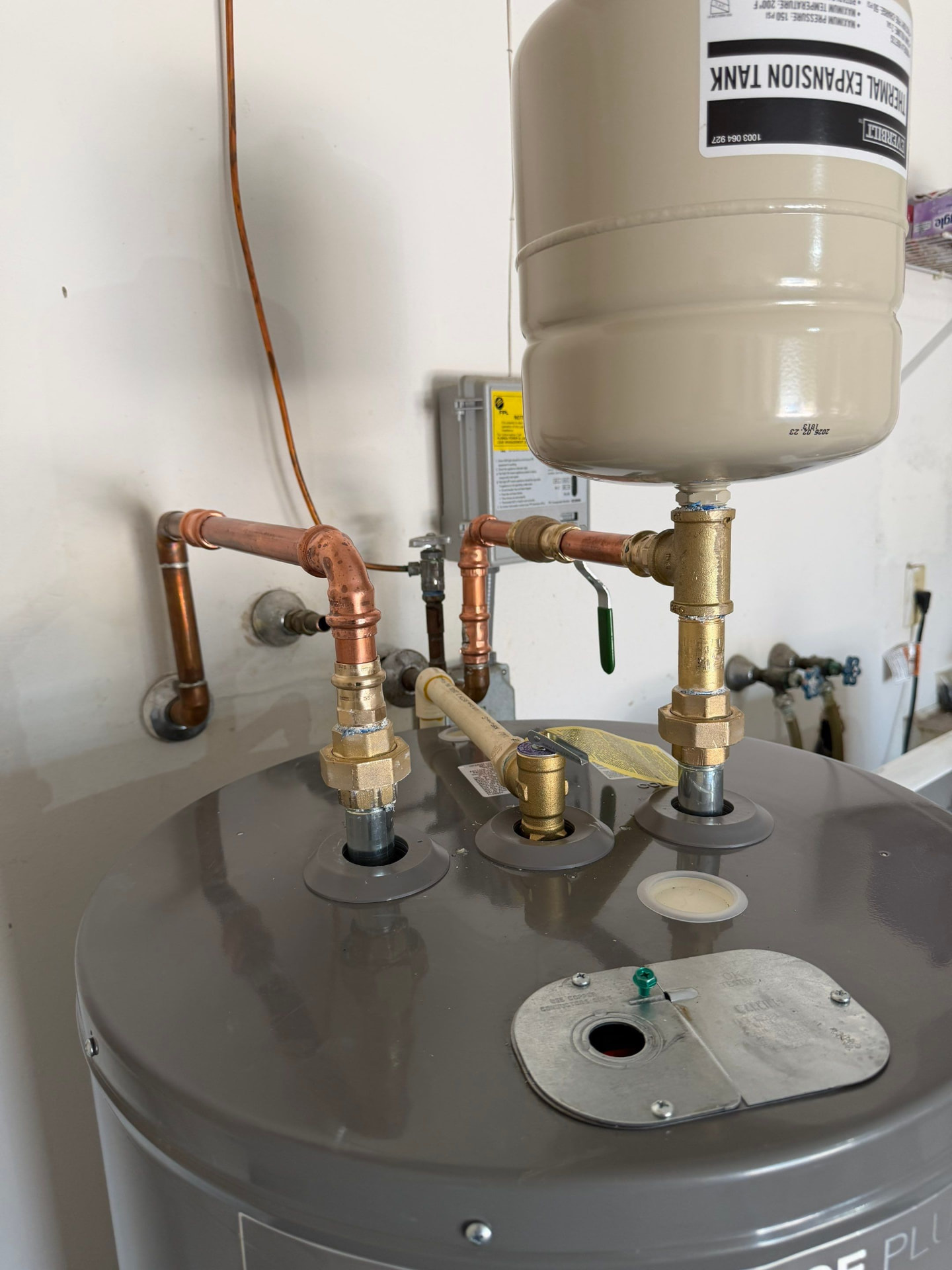
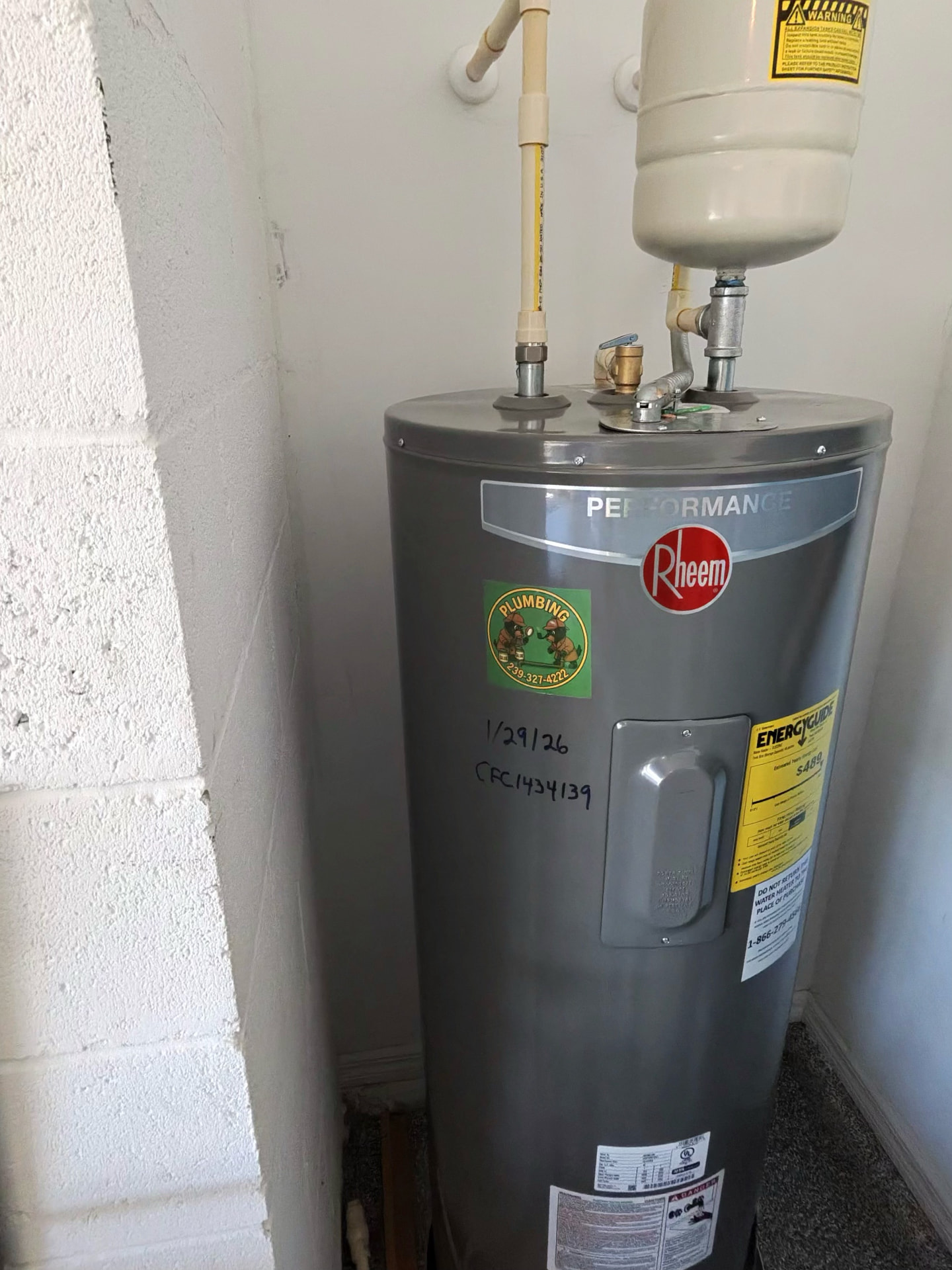
On the cold side: a brass female union threads directly onto the galvanized cold nipple at the top of the tank. A brass nipple runs into the other side of that union. A brass tee threads onto the brass nipple — the expansion tank connects off the top port of that tee. Out of the side port of the tee, a copper male adapter makes the transition from brass to copper. From there, copper pipe connects to a ball valve shutoff and continues to the cold supply line. The galvanized nipple never touches copper directly. The full sequence is galvanized nipple — brass union — brass nipple — brass tee — copper male adapter — copper pipe. Brass serves as the buffer throughout the transition.
On the hot side: a brass female union threads directly onto the galvanized hot nipple. A copper male adapter threads into the other side of the union, and copper pipe continues from there to the distribution system. The sequence is galvanized nipple — brass union — copper male adapter — copper pipe.
I use a union on both the hot and cold sides — not a coupling. Here’s why that matters for you as the homeowner. A union is a fitting that can be disconnected with a wrench. A coupling requires cutting pipe. When this water heater eventually needs to be replaced — whether that’s in 12 years or 15 years — the next plumber can break either connection cleanly without cutting into your copper lines. A union costs about two dollars more than a coupling. Most installers skip them on both sides because it saves a few minutes. I use them on both sides every time because the right way is the right way.
For homes with CPVC supply lines — which is common in some of the older Venice homes that were repiped at some point — the specific fittings change but the principle is identical. Every transition from the galvanized tank nipple to whatever supply pipe is in your home goes through the correct approved transition fitting for that pipe type. No improvising at connection points.
Want to know if your current water heater was installed correctly? I can look at the connections in about five minutes and tell you exactly what’s there. If there’s a problem, I’ll explain it before I touch anything. Call 239-388-3631.
Expansion Tank
The Expansion Tank — What It Is and Why It’s Not Optional
Here’s something most homeowners don’t know about their plumbing system. When your water heater heats the water in the tank, the water expands — about two percent in volume from cold to hot. That expanded water has to go somewhere.
In older plumbing systems, it could push back toward the municipal supply line. In virtually every home on public water in Florida today, it can’t — there’s a backflow prevention device between your meter and your home that stops water from flowing back toward the street. That device is there to protect the municipal supply from contamination, and it does its job. But it creates what’s called a closed plumbing system, and in a closed system, thermally expanded water has nowhere to go. The pressure has to absorb somewhere. Without an expansion tank, it pushes against every fitting, every valve, every connection, and every appliance in your plumbing system — including the water heater itself — every single time the unit runs a heat cycle.
Over months and years, that repeated pressure cycling fatigues fittings. It stresses valve seats. And it causes the temperature and pressure relief valve on the water heater to do something it wasn’t designed to do regularly — drip or discharge to relieve the excess pressure. When a T&P valve starts weeping, most homeowners assume the valve is defective and replace it. Sometimes that’s true. But one of the most common things I find in Venice is a weeping T&P valve on a system with no expansion tank. The replacement valve does the same thing. The cycle repeats. Nobody identifies the real cause.
An expansion tank is a small cylindrical vessel — typically two gallons — that mounts on the cold supply line near the water heater. It contains a rubber bladder with air on one side. When thermal expansion increases pressure in the system, the expanded water compresses the air bladder instead of stressing your plumbing. The pressure is absorbed. The system stays in balance. In our installation sequence the expansion tank connects off the top of the brass tee on the cold side — right at the heater, exactly where it should be, sized to the specific system pressure.
I’ve been called to homes where handyman water heater installations had been sitting for years with no expansion tank, no brass transitions, and no T&P discharge pipe routed correctly. One home in South Venice had a weeping T&P valve that had been dripping into a bucket under the heater for two years before the homeowner called me. The valve wasn’t the problem. The entire installation needed to be redone correctly. Every Plumbing Detectives installation includes a properly sized expansion tank on homes with closed plumbing systems. It’s not an add-on. It’s part of the job.
Anode Rod
Protecting Your Tank Long Term — The Anode Rod and the Corro-Protec Upgrade
I mentioned the anode rod earlier in the context of water quality and the rotten egg smell. I want to go a little deeper here because it’s the single most important maintenance item on a tank water heater and the one most often neglected.
The concept behind a sacrificial anode rod is straightforward. Inside your water heater tank, the steel walls are in constant contact with water. Water is corrosive, especially hard water like what we have in Venice. Without protection, the steel would corrode and the tank would fail relatively quickly. The anode rod is a metal rod — typically magnesium or aluminum-zinc — that is suspended vertically in the tank through a hex fitting at the top. Because of its electrochemical properties, it attracts the corrosive attack to itself and away from the tank walls. It literally sacrifices itself to protect the steel. That’s where the name comes from.
The problem is that it does its job so well it eventually runs out. A magnesium rod in Venice’s hard water can be significantly depleted in three to four years. When it’s gone, the tank walls are next. I’ve pulled rods out of tanks in this market that were nothing more than a thin calcium-coated wire — the magnesium had been completely consumed. The homeowner had no idea because nobody had ever opened the access fitting and looked.
On every installation, I offer an upgrade to the Corro-Protec powered titanium anode rod. This is a fundamentally different approach to anode protection. Instead of a sacrificial rod that depletes, the Corro-Protec runs a small impressed electrical current through a titanium rod — less than three dollars per year in electricity — that actively repels corrosion from the tank walls rather than absorbing it. Titanium doesn’t corrode and doesn’t deplete. The manufacturer backs it with a 20-year warranty.
For Venice’s specific conditions — hard water, sulfate chemistry that causes the rotten egg smell with magnesium rods, seasonal vacancy periods where the rod is reacting with standing water for months at a time — the Corro-Protec is a practical long-term protection upgrade. I’m not going to tell you it’s right for every situation. If your tank is already old and close to the end of its life, it doesn’t make sense. But on a new installation or a tank with good remaining life, it can meaningfully extend the service life of the unit. I’ll tell you honestly whether it’s worth it for your specific situation.
Maintenance
Annual Maintenance — The Math That Most Homeowners Haven’t Done
Most homeowners don’t think about their water heater until it stops working. I understand that — it’s a background appliance that does its job silently until it doesn’t. But in Venice specifically, the math on maintaining a water heater versus ignoring it is pretty clear.
A water heater in this market that receives annual maintenance — sediment flush, anode rod inspection and replacement when needed, T&P valve test, connection check, expansion tank pressure verification — routinely reaches 14 to 16 years of service life on good equipment. The same unit neglected runs 8 to 10 years in Venice’s water conditions before problems become unavoidable. The cost of the annual maintenance visits over the life of a properly maintained heater is a fraction of the cost of replacing the unit years early. The $15 anode rod that gets replaced at the right time is the reason the tank runs to 15 years instead of 9. The sediment flush that happens every year is the reason the lower heating element doesn’t overheat and burn out at year seven.
Annual water heater maintenance includes: flushing the sediment from the bottom of the tank through the drain valve, pulling and inspecting the anode rod and replacing it if it’s more than 50 percent depleted, testing the T&P relief valve to confirm it opens and reseats correctly, inspecting every connection at the top of the unit for early signs of corrosion or weeping, and checking the expansion tank pressure and pre-charge.
It’s not a lengthy visit. It’s a scheduled annual call that catches the small issues before they become expensive ones.
We offer a maintenance plan for Venice homeowners — including a seasonal program specifically designed for snowbirds. Pre-departure: anode check, sediment flush, valve test, vacation mode. Return inspection: bring the system back online properly, check for anything that developed during the vacancy, water quality check. If you leave the home unoccupied for several months every year, this is the most cost-effective plumbing service you can invest in.
Interested in a maintenance plan? Whether you’re a year-round Venice resident or a snowbird who wants the home looked after before you leave and when you return, call us at 239-388-3631 and we’ll set something up that fits how you use the house.
Diagnosis First
Diagnosis First — Always
I want to be straightforward about something. Water heater replacement is a decent revenue item for a plumbing company. A lot of companies lead with replacement because replacement pays well. I don’t lead with replacement because I don’t think that’s honest, and I don’t think it serves the customer.
I’ve been called to homes in Venice where a homeowner had already been quoted a new water heater by someone else. In a significant number of those cases, the existing unit didn’t need to be replaced. I’ve found tripped reset buttons that a five-minute fix resolved. I’ve found anode rods that needed a swap. I’ve found missing expansion tanks causing T&P valve issues that were being blamed on the heater itself. I’ve found galvanic corrosion at the connections that had nothing to do with the tank’s remaining service life. In every one of those situations, replacing the water heater would have cost the homeowner a thousand dollars or more for a problem that had a different solution.
That doesn’t mean I never recommend replacement. When a tank is corroded internally, when the bottom is pitting out, when the unit is past its realistic service life in this market and showing multiple problems, replacement is absolutely the right call and I’ll tell you so clearly. But I will not recommend replacement without first understanding what’s actually going on.
When I look at a water heater I want to know: How old is the unit and what’s its maintenance history? What does the water source look like for this property — municipal, well, which utility? What are the connections at the top telling me about the quality of the original installation? Is the T&P valve weeping and if so why — is it the valve or the system? What does the sediment situation look like — can I hear it, feel it when I tap the bottom? What is the anode rod condition? Is the expansion tank properly charged and sized?
Once I have answers to those questions I can tell you what you actually have and what the real options are. Sometimes that’s a new water heater. Sometimes it’s a service call that extends the life of the existing unit by several years. I’ll tell you what I find and explain my reasoning. You make the decision with full information.
Plumbing Detectives LLC Professional Opinion
A water heater doesn’t fail in a vacuum. It fails because of the water it sits in, the fittings it was connected with, and whether anyone maintained it. The tank is rarely the first thing to go — the anode rod, the connections, and the expansion tank almost always fail first. Diagnose those before you replace the unit, and you’ll either save the replacement or know with certainty that it’s the right call.
Options
Water Heater Options for Venice Homes
When replacement is the right answer, here’s how I think through what to put in. This isn’t a one-size-fits-all decision.
Tank water heaters are the right call for most Venice residential applications. We install Bradford White and Rheem — two brands I trust in Florida’s climate. They’re available in natural gas, propane, and electric configurations and in a range of sizes from 30 to 80 gallons. For most homes in Venice Gardens, South Venice, or on the Island that are already on natural gas, a 40 or 50 gallon gas tank unit is the straightforward replacement choice. Electric tank units make sense where gas isn’t already in the home or where the homeowner prefers not to add a gas line.
Tankless water heaters heat water on demand. There’s no stored tank of hot water to maintain — when you open the hot tap, cold water flows through the unit, gets heated instantly, and arrives at the fixture. They’re more energy efficient over time, they don’t run out of hot water no matter how many showers run back to back, and they make particular sense for Venice’s seasonal homes. If a home sits empty from June through November, there’s no point paying to keep 50 gallons of water hot for six months. A tankless unit on standby costs almost nothing. The tradeoff is higher upfront cost and sometimes a gas line upgrade or dedicated electrical circuit to support the higher instantaneous demand. I’ll tell you what your home specifically needs before I recommend one. For more detail on tankless options, take a look at our tankless water heater page.
Heat pump water heaters are the most efficient electric option on the market. Rather than using electric resistance to generate heat directly, they pull heat from the surrounding air and transfer it to the water — which uses dramatically less electricity for the same result. Florida’s warm ambient temperatures make this technology work well here year-round. For homes converting away from gas, for Wellen Park new construction where all-electric is the preference, or for anyone focused on energy efficiency and long-term operating cost, heat pump water heaters are worth a serious conversation.
Warning Signs
Signs Your Water Heater Needs Attention
These are the things I’d want you to call about rather than wait on — not because I’m trying to generate service calls, but because in almost every case, addressing these early costs less than addressing them after they’ve progressed.
The unit is more than 10 years old and has never been serviced. In Venice’s hard water, a decade-old tank that’s never been flushed and has never had the anode rod checked is an unknown quantity. It may have years of life left. It may be close to the end. A diagnostic visit tells you which, and it costs far less than an emergency replacement when the tank fails.
You’re running out of hot water faster than you used to. Sediment accumulation reduces the effective usable volume of the tank. If your 50-gallon unit used to serve your household comfortably and now it doesn’t, sediment is the most likely explanation. This is a maintenance issue, not necessarily a replacement issue.
The hot water smells like rotten eggs. As I explained earlier, this is almost always the anode rod in Venice’s water. Call before you buy a filtration system.
You see rust-colored water from the hot tap only. If the cold water is clear but the hot water is discolored, the corrosion is happening inside the tank. The tank is failing internally and replacement is likely the right call — but I still want to look at it before recommending that.
There’s moisture, rust staining, or any sign of dampness around the base of the unit. A slow seam leak or a weeping connection at the base. Don’t wait on this one. Slow water damage is expensive and it compounds fast.
You hear rumbling, popping, or banging during heat cycles. Sediment at the bottom of the tank. Start with a flush and evaluate from there.
The T&P relief valve is dripping or has discharged recently. Could be the valve itself at end of life. Could be a missing or improperly charged expansion tank. Could be a problem with system pressure. I need to look at the whole system to give you an accurate answer. If this is happening, don’t just replace the valve without understanding why it’s activating. A new valve on the same uncorrected system will do the same thing.
You see white deposits, green staining, or any dampness at the connections on top of the tank. This is the visual indicator of galvanic corrosion at the connection fittings — exactly the installation problem I described earlier. It’s worth having checked even if the unit is otherwise functioning.
Plumbing Detectives LLC Tips
If your hot water smells like rotten eggs but your cold water is fine, don’t buy a filtration system. It’s almost always the magnesium anode rod reacting with sulfates in Venice’s water — a rod swap costs a fraction of what filtration equipment does.
If you’re a snowbird, schedule two service calls a year — one before you leave and one when you return. The anode rod keeps reacting with standing water the entire time you’re gone, and a months-long vacancy is exactly when a depleted rod goes unnoticed.
Look at the top of your water heater. If you see copper pipe threaded directly onto the galvanized nipples with no brass fitting in between, you have a galvanic corrosion problem working silently against the joint. It’s worth having checked before it fails.
A weeping T&P valve is usually not a valve problem — it’s a system problem, most often a missing or undercharged expansion tank. Replacing the valve without finding the cause just buys you a few weeks before the new one weeps too.
Permitting
Professional Installation Done Right
Every installation we complete follows applicable plumbing requirements for your specific property and jurisdiction. Venice is one of the few markets in Southwest Florida where two separate permitting authorities operate side by side — the City of Venice Building Department handles permits for homes inside city limits, and Sarasota County Building and Development Services handles homes in the unincorporated areas that include parts of North Venice, South Venice, and surrounding neighborhoods. These are different departments with different fee schedules, different permit portals, and different inspection contacts. I know the difference and I route permits correctly the first time.
If permits or inspections are required for your specific property, I’ll explain exactly what’s involved before work begins. You won’t find out about additional requirements after the job is already started.
License CFC1434139. Fully insured. We know the difference between a job done right and a job done fast.
Documented Work
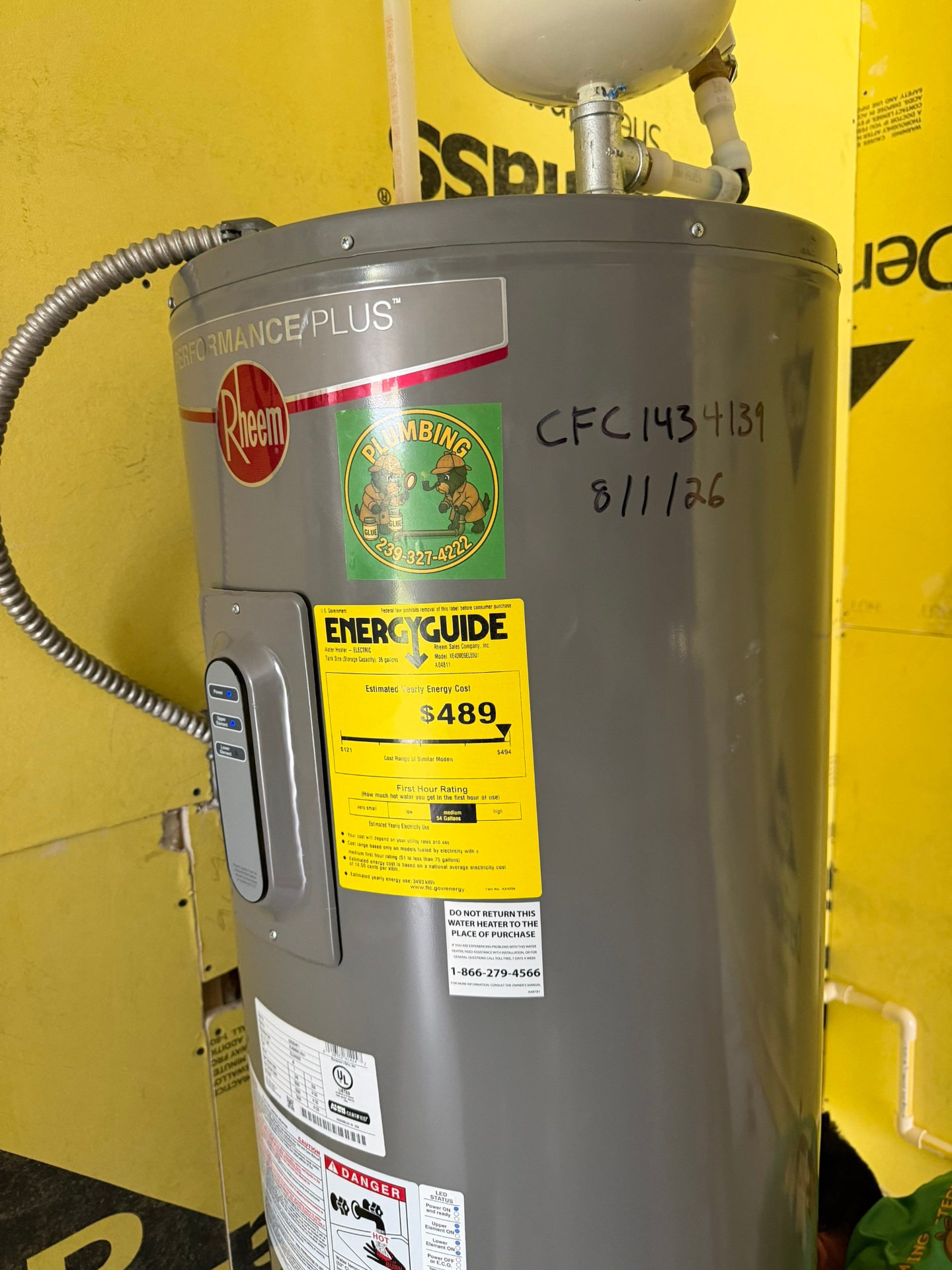
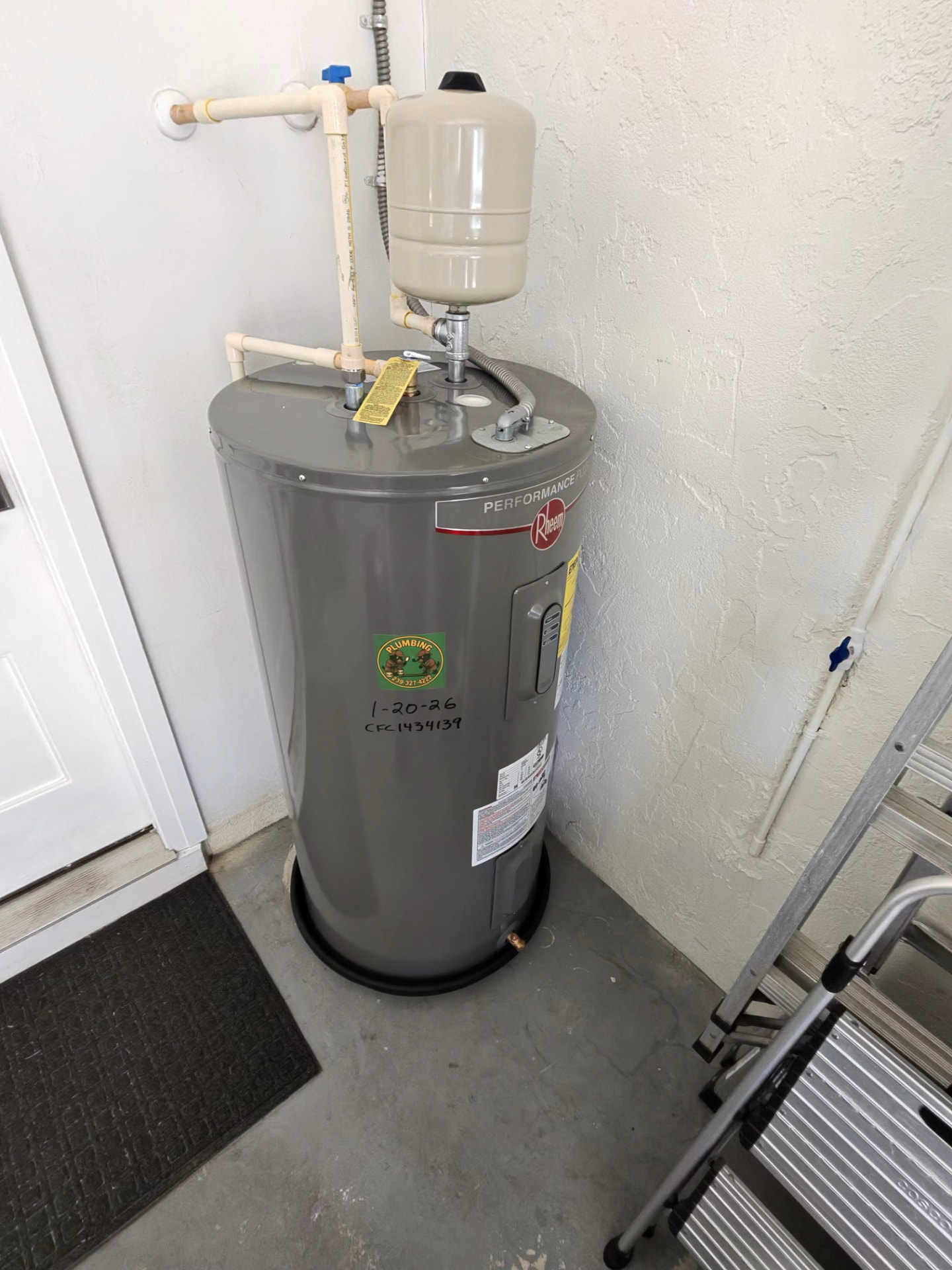
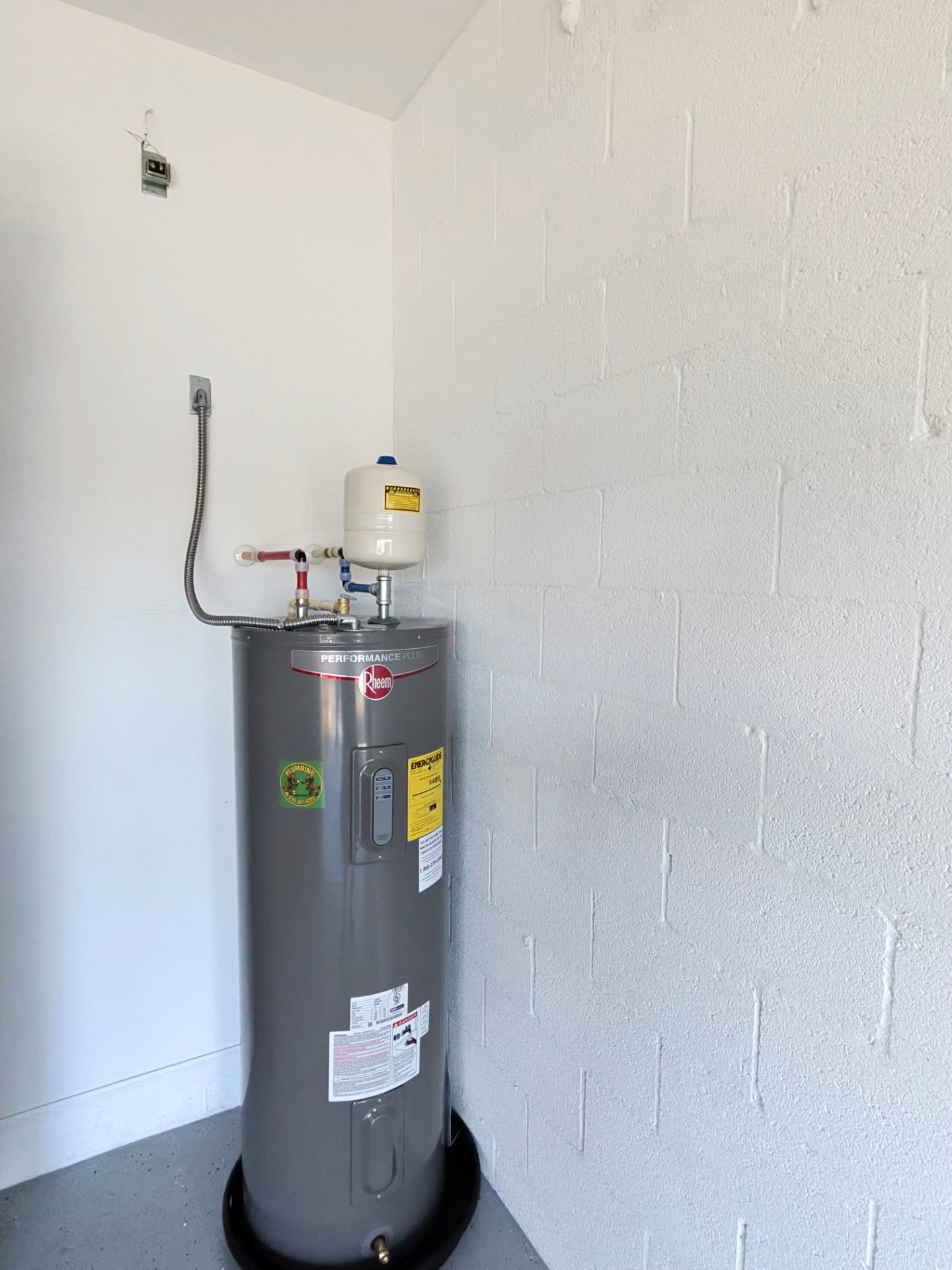
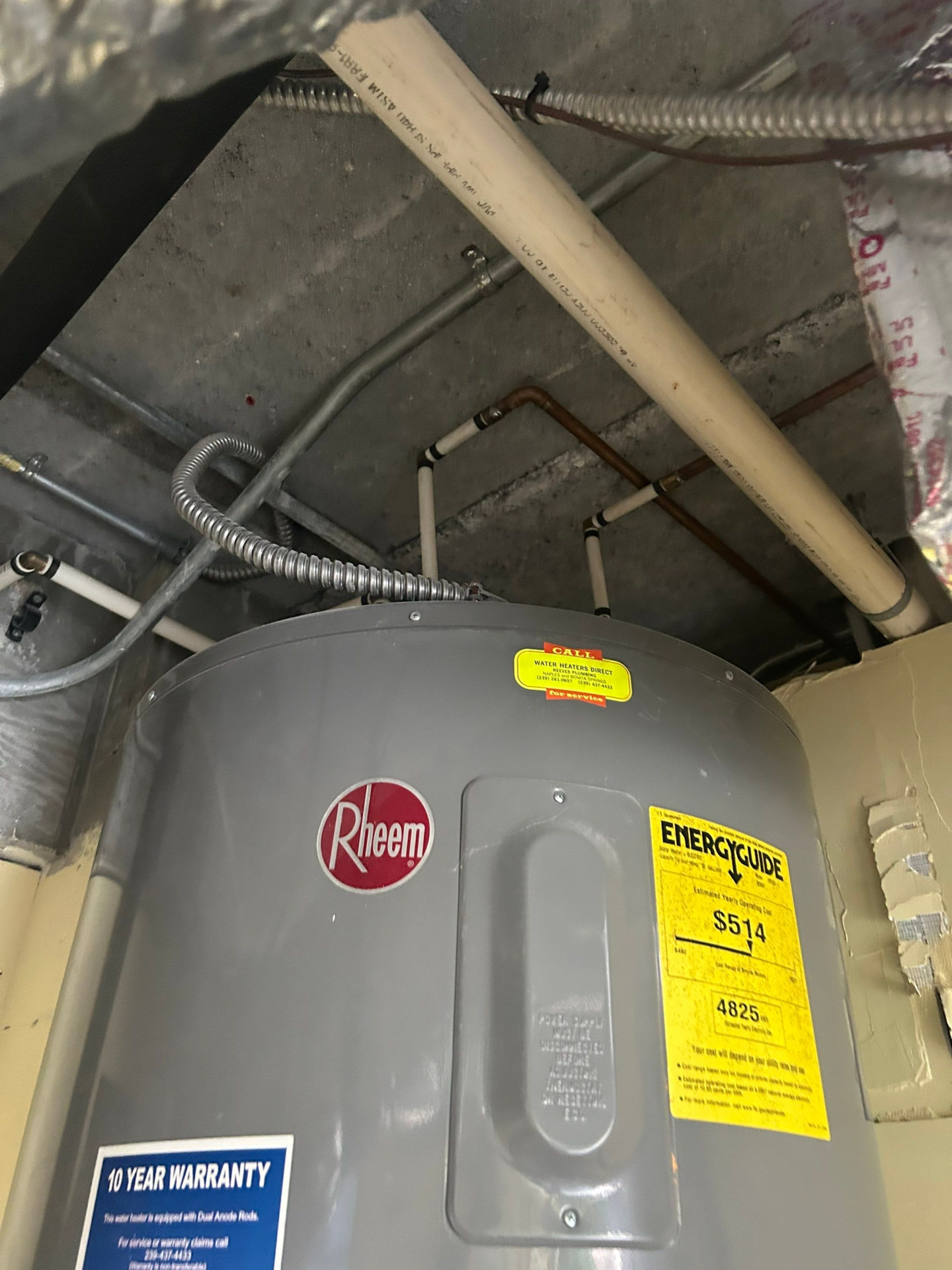
Water Heater Installs, Photographed on the Job
Service Areas
Water Heater Installation Service Areas
Answers
Frequently Asked Questions — Water Heater Installation in Venice, FL
If you’ve read this far, you now know more about water heaters in Venice than most homeowners — and probably more than a few plumbers. If your water heater is showing any of the signs described above, or if you just want to know what shape yours is actually in, call me at 239-388-3631. I’ll come out, look at the whole system, and tell you exactly what I find before I recommend anything. No pressure. No guessing. Just a straight answer from someone who works in this market every day.
Not sure whether yours should be repaired or replaced? Read Water Heater Replacement in Venice, FL for the signs that decide it.
Plumbing Detectives LLC | Venice, FL | License CFC1434139
239-388-3631 | plumbingdetectivesfl.com