
Every November the same thing happens across Venice. A car with northern plates pulls into a driveway, the owner turns the key, and the house has been sitting with its water off since April. Most of the time everything is fine. Some of the time it isn't, and the difference between a small fix and a ruined floor is what happens in the first hour.
I'm Michael Reynolds, owner of Plumbing Detectives LLC here in Venice. Returning seasonal residents are a big part of our winter, and the calls I get follow a pattern: a toilet leaking at the base, a house that smells like a sewer because nobody ran water for months, water that tastes or smells off, and water heater complaints where maintenance history turns out to be a big part of what I'm investigating. This checklist is what I actually look at when I walk into one of these homes, backed by what the CDC, the EPA, and the water heater manufacturers publish about plumbing that sat idle.
One thing up front: this is a list of checks to start in your first hour home. It is not a promise that every house, heater, filter, or well can be made ready in an hour. Some of these steps start now and finish later.
What happens to plumbing that sits
Water that doesn't move changes. The CDC's guidance on reopening buildings explains that stagnant water can have low or undetectable disinfectant residual and can sit at temperatures that favor the growth of Legionella and other bacteria that live in the slime inside pipes and fixtures. The EPA adds a point that's relevant in Southwest Florida: in warm climates, even cold-water lines can support Legionella growth when the water itself stays around 80°F for extended periods. That makes water temperature relevant here, though it doesn't tell us the temperature inside any particular home's pipes.
That's a risk condition, not a diagnosis. Most healthy people who are exposed don't get sick, and nothing here says your water is contaminated. It says water left standing since April may have changed in quality, and you should follow the flushing steps, the equipment restarts, and any utility advisory before you use it.
The rest of the house changes too. The water in drain traps can evaporate during a long absence, and the CDC lists sewer gas entering through dry traps as a reopening hazard. Rubber parts in toilets age. Hoses behind the washer get a few more months on them. And if any line stayed supplied with water, a small leak could run unnoticed the whole time nobody was home.
Before you touch anything: stop conditions
A few situations take you off this checklist entirely.
If you smell gas, leave. Don't flip switches, don't look for the source. Peoples Gas tells customers to get out, then call 911 and the gas company from a safe distance.
If your home is on a private well and there's any chance the well or pump was flooded during a storm, the EPA says to stay away from the pump, don't drink or wash with the water, and have a well contractor disinfect the system before power goes back on. That is not a flushing job.
For shared equipment in a condo or multi-unit building — shared water heaters, risers, a fire sprinkler supply — confirm with management who is authorized to operate it. Don't change shared water or fire-protection controls without that authorization.
And if you find an active leak, an unsafe condition, or equipment you can't identify, pause. That's the whole point of checking first.
The first-hour checklist
First-Hour Checklist
- Confirm who supplies your water and whether there's an advisory.
- Find out what was shut off, and how.
- Walk the house before pressure comes back.
- Restore the customer-operated supply cautiously, with someone watching for leaks.
- Flush the cold water first.
- Verify the heater is full before it gets power.
- Flush the hot side only after the heater is ready.
- Refill every drain trap.
- Check the toilets.
- Inspect appliance connections before you run them.
- Give the water treatment its own check.
- Look outside.
- Handle a private well separately.
- Start the meter check if you're on metered service.
01Confirm who supplies your water and whether there's an advisory.
City of Venice, Sarasota County, Englewood Water District, and Manatee County are separate utilities with separate rules, and your mailing address doesn't tell you which one you're on. If you had service locked for the season, Sarasota County's seasonal form puts the responsibility on you to call and have it restored. Check the utility's site for any boil-water or service advisory before you run water. An active advisory overrides everything below.
02Find out what was shut off, and how.
Who turned the water off? Was the water heater breaker pulled? Was the heater drained? Was the softener put in bypass? If you don't know, assume nothing. Rheem and Bradford White are explicit that an electric tank cannot be powered until it's full with the cold inlet open, so "the breaker is off" is not a reason to flip it back on.
03Walk the house before pressure comes back.
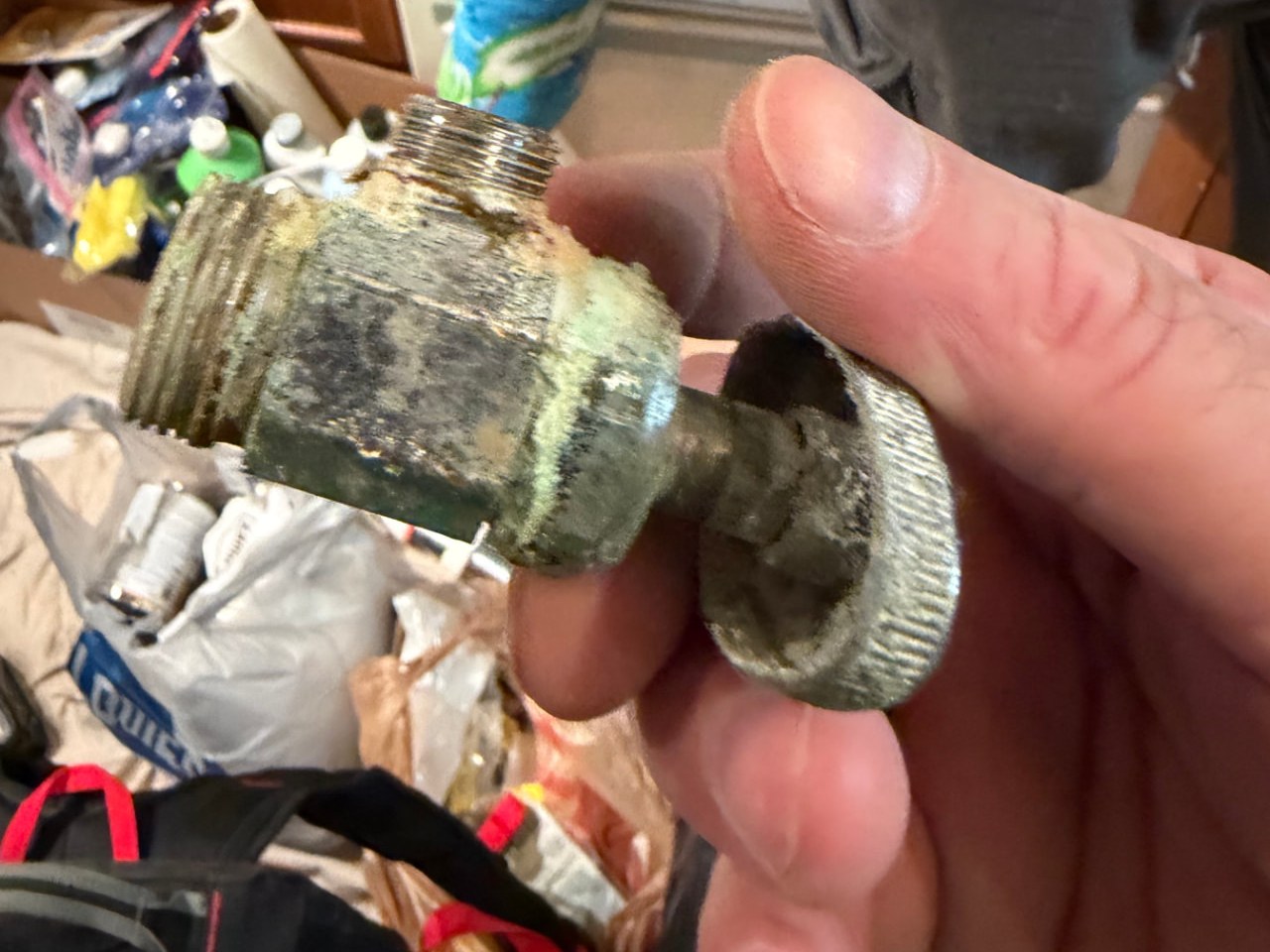
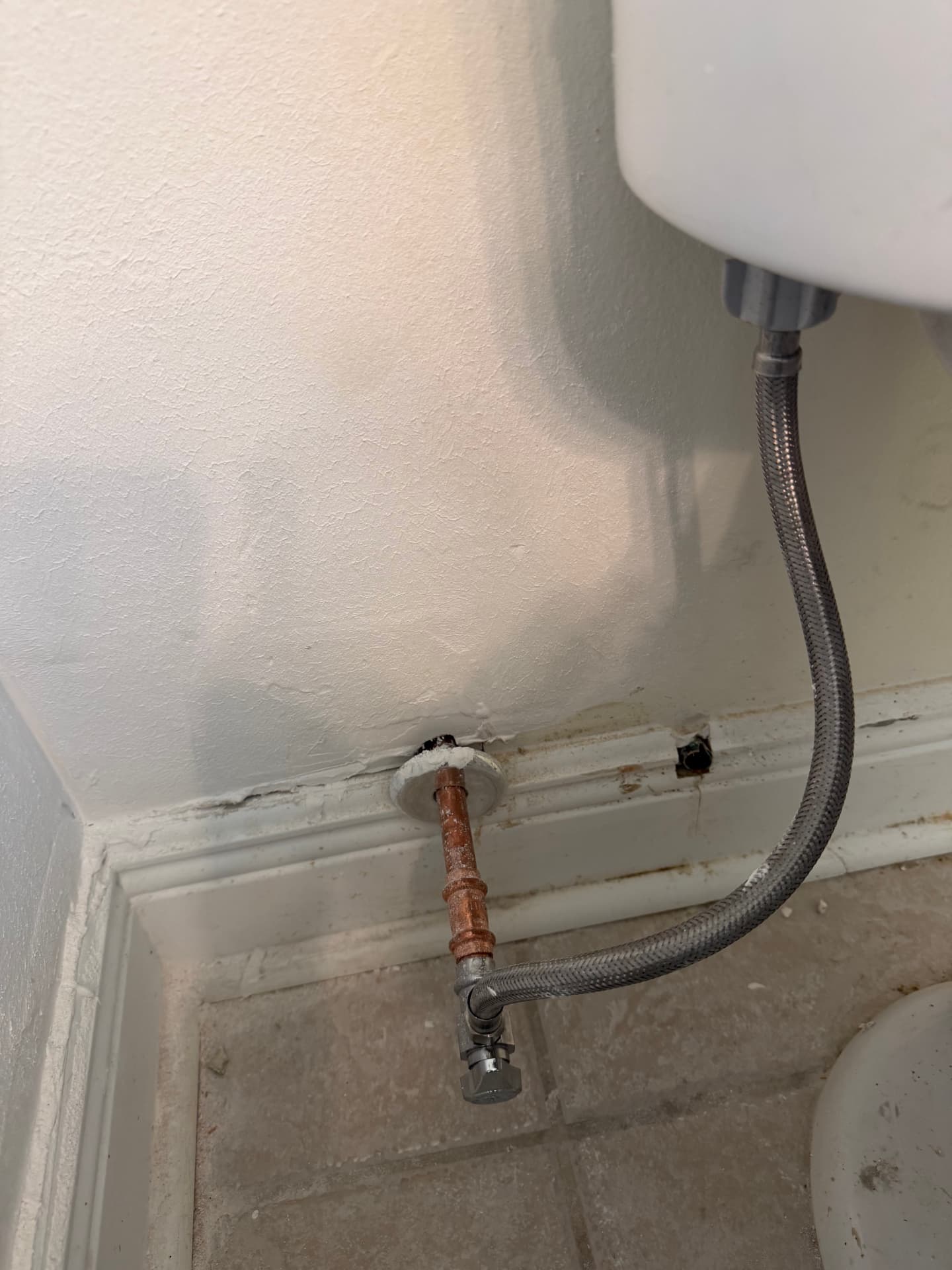
This is what I do on every return call. I open every cabinet, feel under every sink, and check every angle stop. I put a flashlight around the base of each toilet. And I smell. Staining, corrosion, a cracked washer hose, moisture around the water heater — those are warning signs that something needs investigating, not a diagnosis of what failed or when. If a valve is green and crusted, I don't force it.
04Restore the customer-operated supply cautiously, with someone watching for leaks.
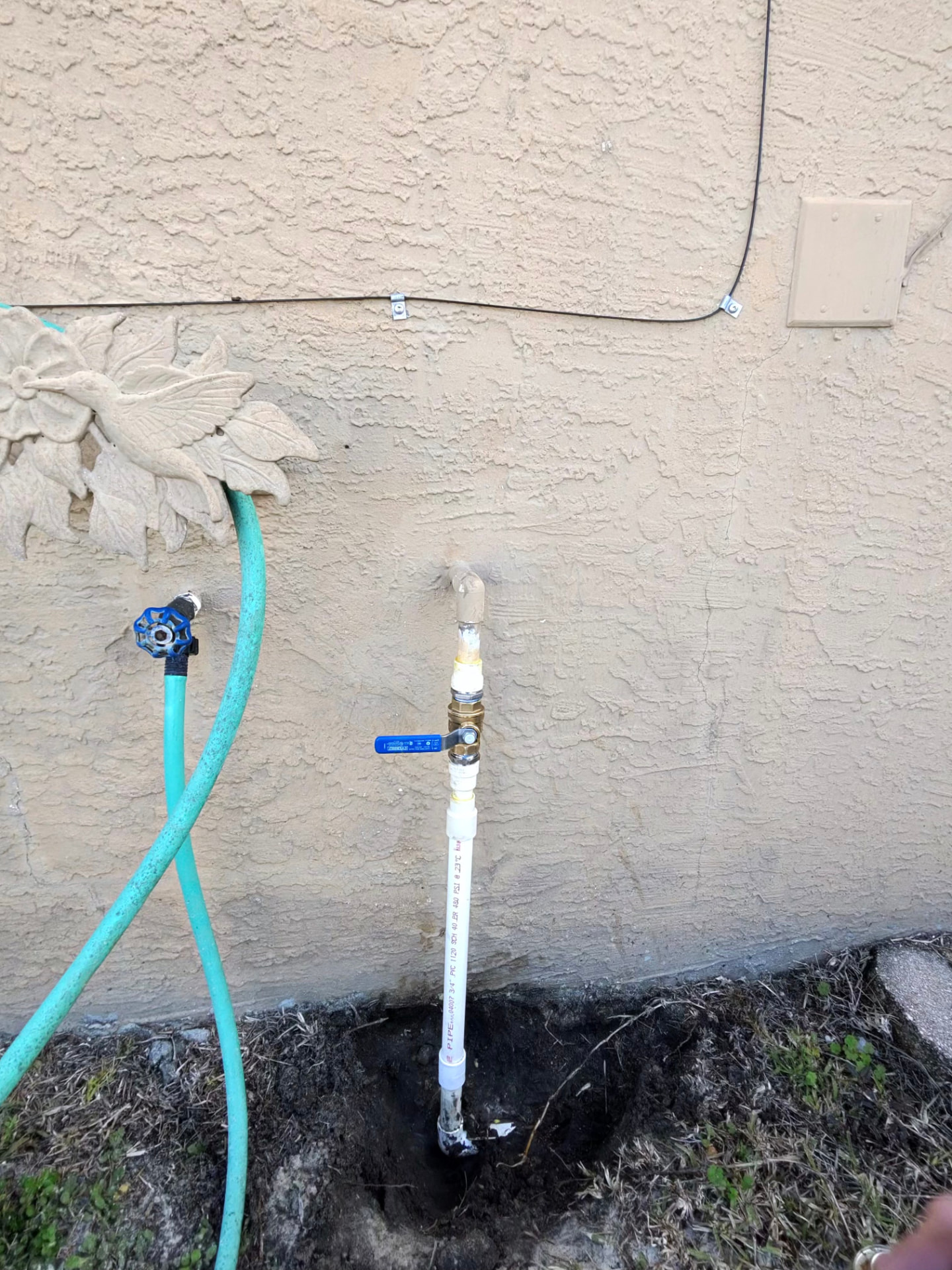
Here's my own procedure on a return visit: I crack the house-side valve partway and hold it there while I walk the house. With two of us on the job we're on radios, so the moment one of us sees water, the other shuts it down promptly. When I'm alone, the homeowner becomes my second set of hands: they stand at the valve on the phone with me while I check. It's also how they learn their own house. Identify the customer-operated domestic shutoff and confirm any utility restrictions before operating anything near the meter — never operate a utility lock or the utility's meter valve.
05Flush the cold water first.
The CDC advises two minutes of cold-water flushing for fixtures unused for a week or more; it does not say that certifies a six-month-vacant home's water as safe. The EPA says the same thing — cold before hot — and for whole-house flushing recommends starting at the fixture nearest where water enters and working outward, minimizing spray. My own diagnostic sequence runs the other direction: I pull the aerator at the farthest fixture first and work back through the house, running each line at least five to seven minutes on a timer, because I'm doing two jobs at once — clearing stagnant water and confirming every trap and fixture actually works. That's my process, not the EPA's method. Hot water comes after the heater checks below.
06Verify the heater is full before it gets power.
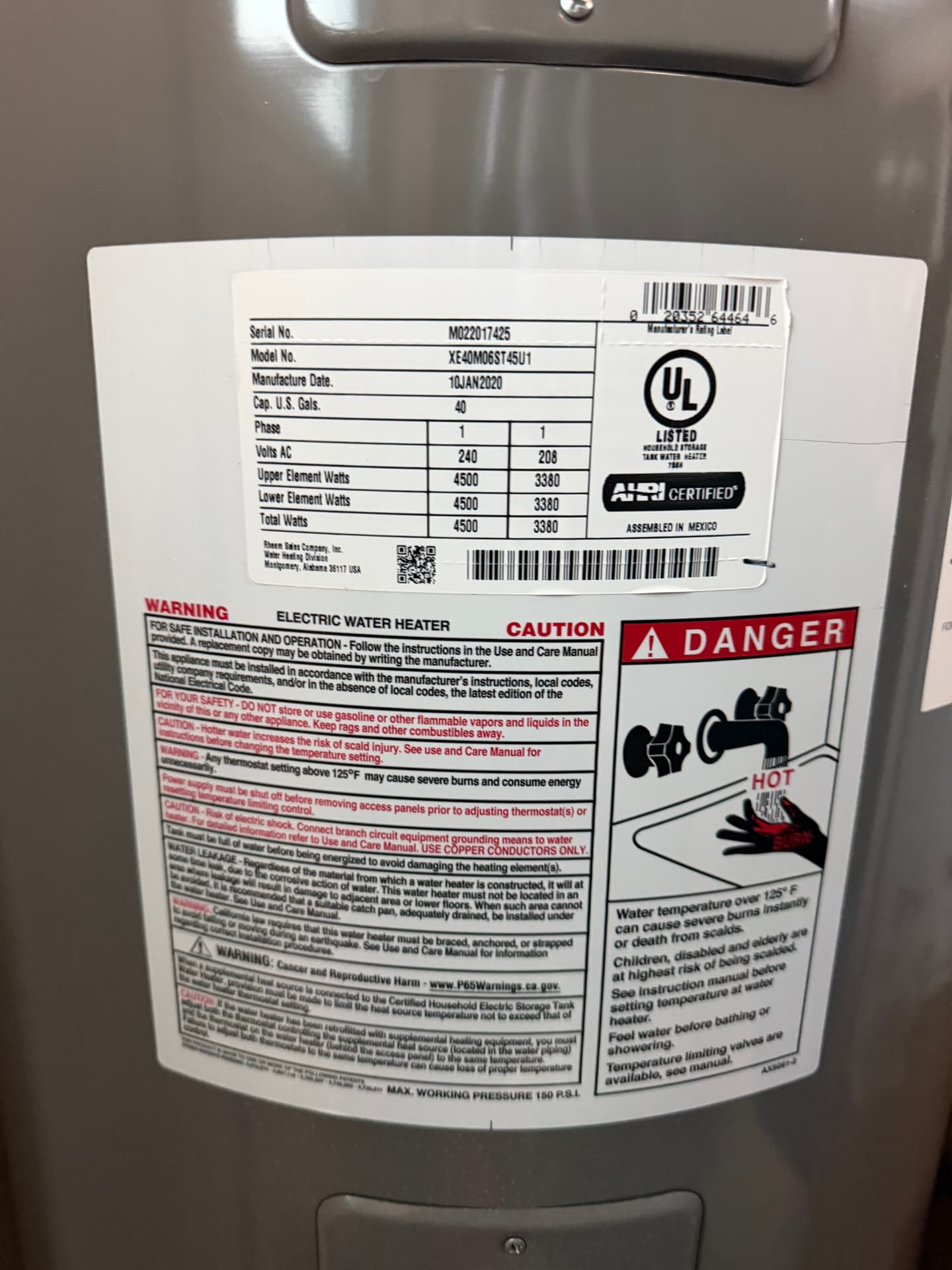
Manufacturer manuals require a full tank with the cold inlet open before an electric heater is energized, confirmed by a steady stream from a hot faucet (A.O. Smith specifies a full stream for three minutes on its model). Rheem and A.O. Smith both also warn that hydrogen gas can build up in a hot-water system that hasn't been used for two weeks or more, and both direct you to run a kitchen hot faucet for several minutes before using any electrical appliance connected to the hot water, with no smoking, open flame, or other ignition source nearby. If you don't know the heater's history or condition, that's a call to a plumber, not a guess.
07Flush the hot side only after the heater is ready.
Hot water takes time, so this step starts in the first hour and finishes later. Run the hot at each fixture until it comes through hot. Don't stand in a shower spray to do it, and don't turn the thermostat up as a shortcut to "sanitize" the system — the CDC notes that storage temperatures of 130–140°F can kill Legionella but sharply raise scald risk, and recommends thermostatic mixing at the tap when storage runs above 120°F. On a visit I check both the heater setting and the delivered temperature at the fixtures, including whatever anti-scald protection the house has.
08Refill every drain trap.
Every sink, shower, tub, floor drain, and toilet has a water seal that keeps sewer gas out. During a long absence, unused traps can lose that seal through evaporation. Most of the "it smells like a sewer" calls I get from returning residents turn out to be exactly this, and running water at every fixture fixes it. If the smell persists after every trap is refilled, something else is going on and it needs a diagnosis, not a candle.
09Check the toilets.
Look at the base — stains, moisture, or soft flooring around the toilet need investigating, and on a return call that leads me to check the toilet seal along with other possible leak sources. Then do the EPA's dye test: a few drops of food coloring in the tank, wait ten minutes without flushing, and if color shows in the bowl, the toilet has a leak that needs diagnosis. Flush right away afterward so it doesn't stain.
10Inspect appliance connections before you run them.
Washer hoses, the dishwasher supply, and the refrigerator ice-maker line. The Insurance Institute for Business & Home Safety recommends inspecting washer hoses for cracks and wear and replacing them every three to five years. Dump the old ice. Don't start the dishwasher or washer on hot until the heater steps above are done.
11Give the water treatment its own check.
If you have a softener, carbon filter, or reverse-osmosis unit, it has its own restart. A full-looking brine tank can be a salt bridge — a crust over empty space — so salt in the tank doesn't prove the softener is making brine. RO systems have model-specific non-use instructions; Pentair's RO-2550 manual, for example, specifically says not to freeze its membrane. Follow the manual for your installed system, or have it checked. On these visits I change the salt and test the water upstream of the unit, then work back through it to isolate where a reading goes wrong. Don't mix chemicals or follow a generic bleach recipe off the internet.
12Look outside.
Hose bibs, irrigation, and any backflow device at the meter. You're looking for visible leaks or damage; that's a visual check, not a certified backflow test. If you're on City of Venice water, the City took over responsibility for backflow devices on its system in 2018; the City's program excludes fire sprinkler systems and initial installation and testing for new construction, so confirm responsibility for your particular device.
13Handle a private well separately.
If you're in South Venice, Nokomis, or Laurel you may be on a well. Listen for a pump that cycles rapidly, check the pressure gauge, look for leaks, and leave the pressure switch and electrical alone. The Florida Department of Health in Sarasota County recommends testing well water for bacteria and nitrates at least annually and provides sample kits; the Venice office is 941-861-3310. If well water smells different after an absence, identify the source and assess whether testing or treatment service is needed — smell alone doesn't establish safety either way.
14Start the meter check if you're on metered service.
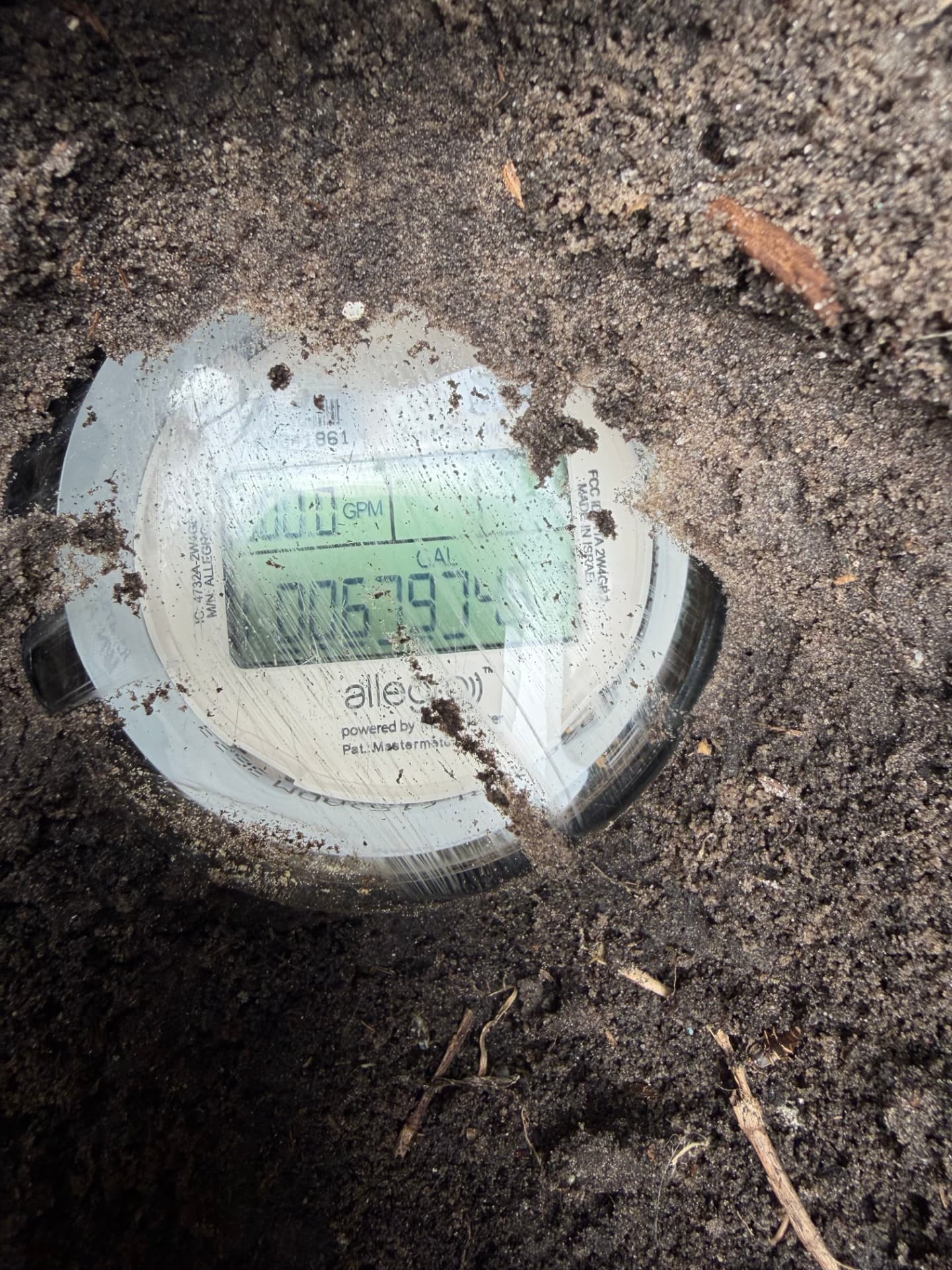
Once you've finished flushing and nothing is using water, read your meter. Come back in two hours. If it moved, you probably have a leak or an unaccounted water use — a toilet, the irrigation, a softener regenerating, or a concealed line. On a visit I narrow it down one shutoff at a time: close the toilet valve, check the meter; close the irrigation, check the meter; and so on. This step starts in your first hour and finishes later, and it tells you something is using water, not where. Private-well homes usually have no utility meter, so this step doesn't apply there.
Pause if you find a leak, an unsafe condition, an unclear shutdown, or equipment you cannot identify.
The Venice homeowner who caught it before he got home
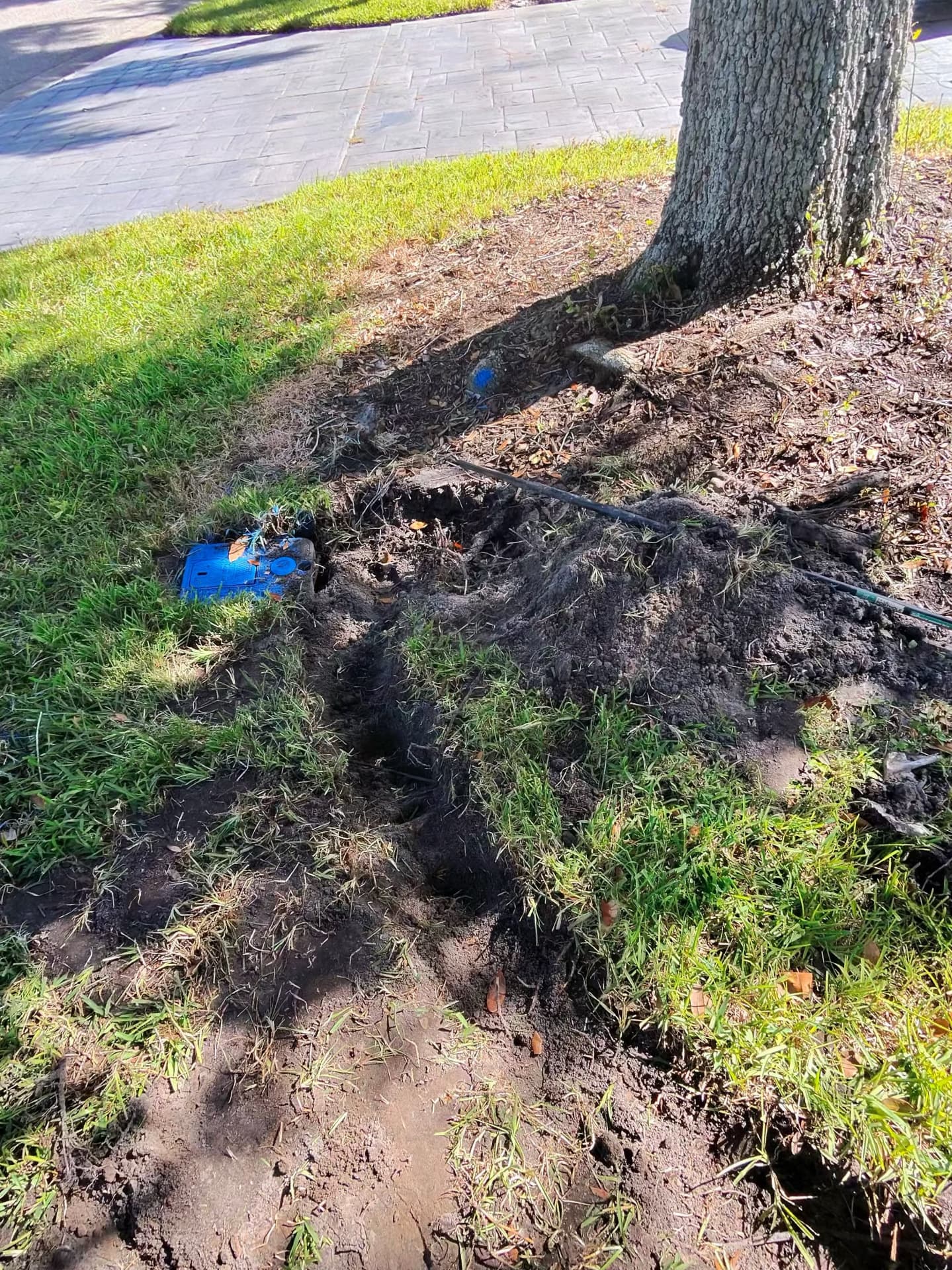
Last week I was at a house near Capri Isles Boulevard in Venice. The owner had been away for the season, and before he got back he knew something was wrong: his water was shut off at the house, but his meter was running.
He knew because of an app. If you're a City of Venice water customer, the City offers a service called EyeOnWater, which the City's own site describes as an app that "allows you to connect to your City of Venice water utility account" to see your usage and "detect leaks." The City says it is "powered by Badger Meter in association with the City of Venice," and the City's walkthrough video covers setting up leak alerts. It gives you access to your utility account's water-use data on your phone, so you can see consumption when the house is supposed to be using nothing.
What we found was three leaks on the main water line between the meter and the house, with tree roots involved — the meter sits right next to a big oak. The alert led him to investigate before he returned, instead of finding out when he walked in.
If you're on City water, set the app up before you leave in the spring. If you're a Sarasota County or Englewood customer, ask your utility whether it offers something similar. I'm only confirming it for the City of Venice.
Flushing the pipes is not the same as restarting the heater or the filter
This is where I see people go wrong. They run every faucet for a few minutes and figure the house is back. Three systems need their own attention.
The water heater, as covered above, needs to be verified full before power, needs its hydrogen precaution honored, and needs its age considered. I look at the install date on every tank I touch. Sometimes I have to be honest with a homeowner: I'll flush it and test the elements and thermostats, and it will probably work, but its age and condition are reasons to talk about the risk of future failure, and that's your call to make with real information. On my own calls, sediment that wasn't flushed before departure is behind more of the complaints I hear than the anode rod people tend to blame, so I check both. Whether a powered anode upgrade makes sense depends on the age of the tank. One note on my own practice: as a plumber I have ways of confirming a tank is full that involve the relief valve, but that's a professional step with hot-discharge safety considerations — homeowners should use the manufacturer's hot-faucet method.
Water treatment equipment is model-specific. Instructions from one softener or RO manufacturer don't transfer to another. Find your manual or have it checked.
And odors — if a sulfur smell is only on the hot side, the water heater is where I start investigating. If it's hot and cold on a well, I start with the water source and treatment. If the odor is in the room rather than the water, I check drain seals and other possible sources.
Know your utility before you come back
City of Venice offers a vacation lock/unlock meter authorization — one turn-off and one turn-on per calendar year at no charge, with base charges continuing. Sarasota County offers a seasonal shutoff with two days' notice (subject to scheduling) and requires you to request restoration when you return; the County's Water Division specifically includes seasonal residences in its guidance on water that has sat unused and links the EPA's restoration checklist. Englewood Water District offers one turn-on and one turn-off per year with 48 hours' notice and recommends you have a working customer valve in the off position before the scheduled date. Manatee County publishes no seasonal rate and bills base charges on locked meters; if you're a Manatee customer, call their customer service for current procedures.
Identify the customer-operated domestic shutoff and confirm your utility's restrictions before operating anything near the meter. Do not operate utility locks or shutoffs.
What to set up before you leave again
The first question I ask is whether you have a home watch service. If you do, give them a written plan: what may be turned on, what stays off, how the water heater precautions are maintained, and how traps get replenished — not an improvised restart each visit. If you don't have home watch, here's what I'd want in the plan before departure: the water heater addressed per its model and condition (for an electric tank that typically means flushed and breaker off; tankless and gas units have their own shutdown steps), the house-side main closed, the washer valves closed, and the drain traps protected so they don't dry out. For that last one, there's a product made for it: propylene-glycol plumbing antifreeze, the kind labeled for potable water systems and RV, marine, and home plumbing — never automotive antifreeze. Recochem's Plumbing Antifreeze label, for example, directs that for a seasonal home you add 250 mL (about 8.8 oz) to each sink and tub trap and 1 liter to each toilet bowl and tank. Up north I used it against freezing; here the point is that in my experience it holds a trap seal through a long absence better than plain water does. Follow the label on the product you buy, and if you're on septic, check with the manufacturer first — the labels I've read don't address it.
UF/IFAS's guidance for seasonal homes recommends keeping humidity down with periodic air conditioning and servicing the HVAC before you go; the Insurance Institute for Business & Home Safety recommends turning off the ice maker before a vacation. Those aren't plumbing, but they're the same problem: a house that sits needs a plan.
Leak sensors and automatic shutoff valves are worth a conversation. I've installed several brands; the homeowner gets the alert, so make sure someone local can act on it when you're in Michigan. And ask your insurance agent how your policy treats unoccupied periods. Some policies require that water be shut off and the system drained during extended absences. I don't give insurance advice, but I've seen the aftermath of people who didn't ask.
Seven questions I get every November
How long should I run the water after my house sat empty for months?
The CDC advises two minutes of cold, then hot until it feels hot, for fixtures unused a week or more; it doesn't say that certifies a six-month-vacant house. The EPA notes flushing time depends on your plumbing's layout. When I asked City of Venice Utilities directly on November 9, 2026, their water plant operations supervisor, Jim Anderson, suggested running the taps about five minutes after a long absence — a verbal suggestion, not a published standard. On a visit I run each line five to seven minutes and work from the farthest fixture back.
Cold or hot first?
Cold. The EPA says so explicitly, and the heater needs to be confirmed full and safe before the hot side gets flushed anyway.
Can I run hot and cold at the same time to save time?
The CDC describes separate stages — fully cold, then fully hot — including on single-handle faucets. Follow that order.
Should I turn the water heater off or use vacation mode when I leave?
UF/IFAS recommends off for absences over a month. Whether your heater has a vacation mode, and what temperature it holds, varies by model even within one brand. Follow your heater's manual, and never leave an electric tank powered with its water supply off.
Why does the house smell like sewer after I've run the water?
Dry traps are one cause I often find, and refilling them is the usual fix when that's what it is. If it persists after every fixture has run, it needs a diagnosis. If what you smell could be gas rather than sewer, leave, call 911, and then call the gas utility from a safe location.
What about filters and RO systems that sat unused?
Follow the installed system's manual. Instructions for one brand don't apply to another; Pentair's RO-2550 manual, for instance, says not to freeze its membrane. If you don't have the manual, have the system checked.
Should I shut off the main before I leave, and what about sprinklers?
Close the house-side main for domestic water. Irrigation may be on a separate arrangement with your utility — Venice's seasonal form asks whether to keep irrigation on. Never shut off a fire sprinkler supply, and never operate the utility's meter valve.
When to call
If you run this list and find a leak, an odor that won't clear, a heater you're not sure about, or a meter that keeps moving, that's what the $99 diagnostic visit is for. I check the whole house, show you what I find, and you leave with photos, a written description, and options. The fee is waived if work is approved the same day or a written estimate is signed that week. For an active leak or a sewer backup, see our emergency plumbing page; for water taste and odor on a well or city supply, see our Venice water treatment page; for help investigating unexplained meter movement, see slab leak detection. And ask about our Home Protection Membership — it covers an annual water heater flush and whole-house inspection, waives after-hours dispatch fees, and includes 10% off repairs, and for seasonal homes there's a snowbird add-on that handles the shutdown in spring and the restart in fall. In my experience, regular flushing and inspection is how most of what's on this list gets caught before it costs you.
Stop brushing off maintenance. It saves you money in the long run.
Plumbing Detectives LLC, Certified Plumbing Contractor CFC1434139. Call 239-388-3631 or email mike@plumbingdetectivesfl.com. Serving Venice, Venice Gardens, Nokomis, Laurel, Sarasota, Englewood, Wellen Park, Bradenton, Bradenton Beach, and Lakewood Ranch.
Sources
- CDC, Preventing Waterborne Germs at Home
- CDC, Guidance for Reopening Buildings (building water systems)
- CDC, Choosing Home Water Filters
- EPA, Legionella in the Indoor Environment (residential guidance)
- EPA, Fix a Leak Week (dye test, meter check)
- EPA, Protect Your Home's Water (private wells)
- Rheem, Residential Electric Water Heater Use & Care Manual (AP23124)
- A.O. Smith, Hybrid Electric Water Heater Manual (100379656)
- Bradford White, Residential Electric Water Heater Manual (238-55035-00)
- Insurance Institute for Business & Home Safety, Preventing Interior Water Damage
- UF/IFAS, Preparing a Seasonal Home (HE887)
- Peoples Gas, If You Smell Gas
- City of Venice, EyeOnWater
- City of Venice, Vacation Lock/Unlock Meter Authorization
- City of Venice, Backflow Prevention Program
- Sarasota County Public Utilities, Seasonal Turn Off/On
- Sarasota County, Water Division (low/no-use guidance)
- Englewood Water District, Seasonal Service Form
- Englewood Water District, Customer Rules and Regulations
- Manatee County Utilities, Customer Service
- Florida Department of Health in Sarasota County, Test Your Water
- GE Appliances, Water Softener Salt Bridging
- Pentair, RO-2550 Installation and Operation Manual
- Recochem, Plumbing Antifreeze product sheet (seasonal-home trap and toilet directions)
- Star brite, Premium -50°F Antifreeze (propylene glycol, potable water systems, home plumbing)