
Emergency Plumbing · Venice, FL
Emergency Plumber in Venice, FL
Licensed Master Plumber · CFC1434139 · BBB Accredited
Call for Priority Scheduling239-388-3631Here’s what almost nobody tells you at 11 p.m. with water on the floor: the first call that matters isn’t always the plumber. Sometimes it’s your insurance company — and the order you make those two calls in can decide whether the damage is covered. I’ve walked into more than one Venice home where the homeowner had already ripped out drywall and thrown away the ruined flooring before anyone from the insurance company ever saw it, only to find out later that decision cost them the claim. Every plumber in this market will tell you they’re available 24/7. Not one of them will tell you that.
I’m Mike Reynolds, owner of Plumbing Detectives LLC, a licensed master plumber here in Venice — CFC1434139. This page isn’t a panic button dressed up in marketing language. It’s the honest version: what actually counts as an emergency versus what can wait until morning, where your shutoff actually is in a Florida slab home, what Florida law and your insurance policy expect you to do in the first hour, and how to make sure the plumber you call tonight is protecting your claim instead of accidentally torching it.
Call 239-388-3631 for priority scheduling. Standard service calls are typically scheduled same-day or next-day, subject to availability.
First Five Minutes
Turn the Water Off First
Almost every Venice home is slab-on-grade with no basement, which means there’s usually no convenient shutoff valve under the kitchen sink handling your whole house the way there might be up north. In Sarasota, Manatee, and Charlotte counties, the real main shutoff is typically at the water meter box near the street or property line — and the tool that actually opens it is a meter key, not a pair of pliers. If you don’t own one, they’re a few dollars at any hardware store, and I’d rather you buy one today than learn you need one during an active flood.
A second, faster isolation point for a lot of emergencies: the cold-water inlet valve right at your water heater. If the failure is heater-related, that alone might stop it without you needing to find the meter box in the dark.
Do this now, before you ever need it: find your meter box, confirm the meter key works, and if you have a caretaker, property manager, or you’re a part-time Venice resident, leave instructions with whoever checks the house while you’re away. This is the single most useful five minutes you can spend on this page, and it’s something I’ve never seen a competitor’s emergency page actually walk through.
Triage
Is This Actually an Emergency? An Honest Triage
Every plumber in Venice claims 24/7 availability. What none of them explain is which of your problems actually needs a call tonight and which one can wait for a normal appointment. I’d rather tell you the truth than get you to call regardless.
Call right now, don’t wait:
- A burst or actively spraying pipe — a full break can move more than 400 gallons an hour.
- A gas smell anywhere near a water heater or gas line.
- Sewage backing up into more than one fixture at once (see below — this is the tell).
- A water heater that’s actively leaking from the tank itself, not just a fitting.
- Standing water anywhere near an electrical panel or outlet.
Handle it, then call for a normal appointment:
- A single slow or clogged drain.
- No hot water, with no leaking, no gas smell, and no medically vulnerable person in the house (more on this below — it’s rarely a true emergency by itself).
- A running toilet or a minor drip you’ve already stopped at the fixture’s own shutoff.
The one diagnostic that tells you it’s a main-line problem, not a simple clog: if flushing the toilet makes water rise in the shower drain, or if two or more fixtures are backing up at the same time — toilets, sinks, tubs — that’s not a branch clog, that’s your main line. A single slow drain is a nuisance. Multiple fixtures backing up together is an emergency, because gravity means your lowest fixture is about to become the release point for everything upstream of it.
If it is a sewer backup: stop running water and stop flushing — every fixture drains toward the same blockage, and using more water just adds to what’s sitting there. Keep people and pets away from standing sewage; it’s genuinely biohazardous, not just unpleasant. Don’t try to clean it up yourself without protective equipment, and don’t pour chemical drain cleaner into a main-line backup expecting it to help. If your skin contacts sewage-contaminated water — especially with an open cut — wash immediately, and see a doctor if you notice redness, swelling, or drainage afterward.
Is “no hot water” really an emergency? Usually not, and I’ll tell you that even though it costs me a same-night call. It becomes urgent if there’s active leaking at the tank, a gas odor, water coming from the pressure-relief valve, or someone in the home who medically needs hot water access. Otherwise, a water heater that’s simply cold is a next-appointment problem, not a 2 a.m. one.
Housing Stock
Why Venice Homes Fail the Way They Do
This isn’t generic “Florida plumbing” copy — Venice’s housing stock is genuinely older than people realize. Roughly three out of four homes on Venice island were built before 1990, and the median build year for the city as a whole is 1986. That’s the era of cast iron drain lines and early plastic or galvanized supply pipe running under a concrete slab, and it’s exactly the housing cohort I see failing most: cast iron drain lines deteriorating from the inside after 50-plus years, and slab leaks in supply lines that were never meant to last this long buried under a floor.
On top of the age of the pipes, add the 2024 hurricane season. When Hurricane Milton made landfall near Siesta Key, the city’s own after-action report documented 60 wastewater lift stations losing power and the potable water plant going offline for 14 hours — and when lift stations lose power across the system, the lowest fixture in a home becomes the pressure-relief point for backed-up sewer lines. That’s not a scare tactic, it’s simply what happens during storm season here, and it’s a real driver of sewer backup calls that has nothing to do with your own plumbing being neglected.
One thing I won’t do on this page is oversell frozen pipes as a Venice risk. It happens elsewhere in Florida, and it does not happen here in any meaningful way — Sarasota’s coldest reliably documented lows still sit well above freezing most years. If you’ve got exposed outdoor spigots, pool equipment, or an irrigation backflow assembly, an occasional hard-freeze advisory night is worth a five-minute check. Burst indoor supply lines from cold are not a Venice reality, and I’m not going to pretend they are to sell you something.
On Site
What We Do When We Arrive
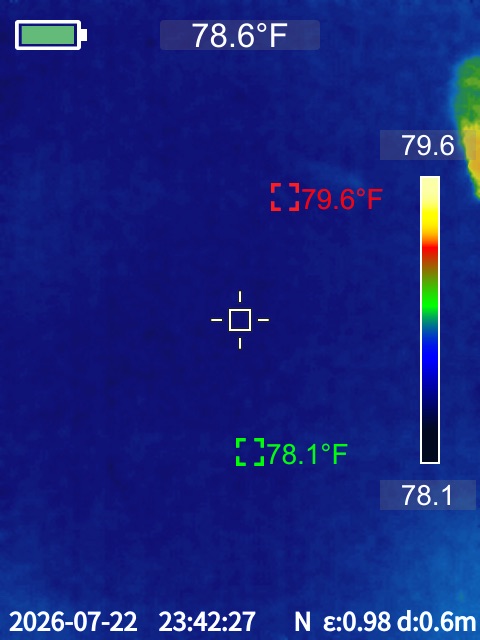
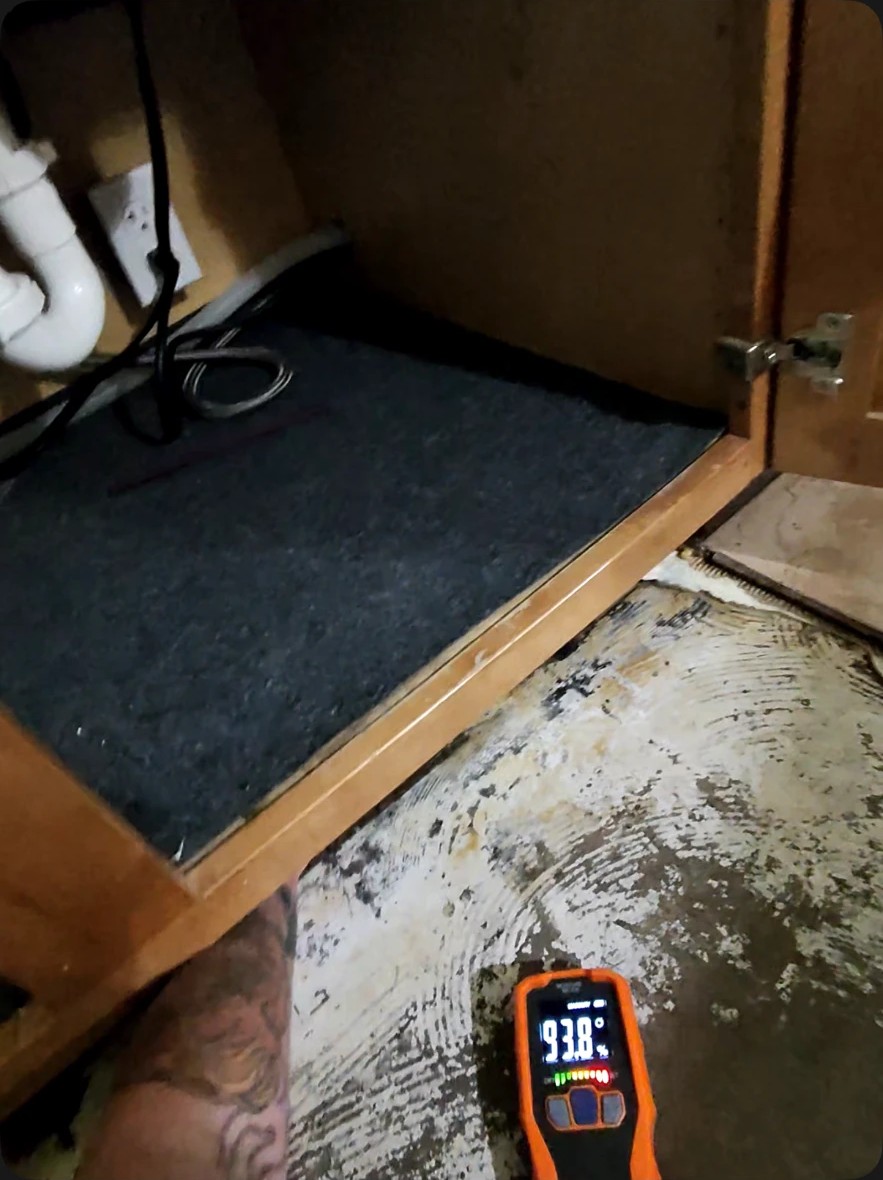
Diagnosis first, every time — camera in the pipe, gauge on the line, eyes on the actual system, not a guess. For a slab leak, that means thermal imaging to find where the temperature contrast under the slab points to the leak, followed by tracing and pinpointing before anyone cuts concrete — one cut, not a search pattern. For a sewer backup, that means a camera inspection showing exactly what’s failed and where, not a shot-in-the-dark repair. Every finding gets documented, because — and this matters more here than almost anywhere else in the job — that documentation is also your insurance evidence file. More on that next.

The Missing Step
Protect Your Insurance Claim — The Step Nobody Else in This Market Explains
I went looking at every emergency plumber page in Venice and Sarasota before writing this, and not one of them mentions insurance. That’s a real gap, because Florida law and most insurance policies expect you to do specific things in the first hour of a plumbing emergency — and doing them wrong, or in the wrong order, can genuinely cost you coverage.
The law is actually clear on this. Florida’s Homeowner Claims Bill of Rights (Fla. Stat. §627.7142) tells you directly to “make and document emergency repairs that are necessary to prevent further damage,” and to “keep the damaged property, if feasible, keep all receipts, and take photographs or video of damage before and after any repairs.” In other words: stop the water, document everything, and don’t throw anything away.
Citizens Property Insurance is even more specific. Their guidance states plainly that “your adjuster must inspect your home and authorize any permanent tear out, removal or repair of items, before they are completed.” Emergency mitigation — stopping the water, isolating the failed line, a temporary repair to prevent further damage — is expected and covered. Starting permanent repairs before your claim is reported and your adjuster has inspected is where people lose coverage they were otherwise entitled to. Citizens also offers a no-deductible Emergency Water Removal Service; if you skip it, out-of-network mitigation is capped at $3,000, and accidental discharge coverage caps at $10,000 without it.
So which comes first, the plumber or the insurance company? Practically, both, almost simultaneously. Stop the water. Photograph the source and every affected area before anything is moved, cut, or thrown away — wide shots and close-ups, timestamps intact. Report the claim before any claim-related repair work begins. Keep every receipt. Preserve the failed component and any damaged materials for the adjuster to see. A licensed plumber who documents the mitigation and holds off on unauthorized permanent tear-out is protecting your claim, not slowing down your repair.
The documentation checklist worth keeping by the door:
- Photos and video of the source and every affected area, before anything is moved or cut
- The failed part itself (pipe section, hose, fitting, tank) — keep it, don’t discard it
- The time the failure was discovered and the time the water was shut off
- Every receipt for temporary or emergency work
- The claim number, obtained before any claim-related repair begins
- Your plumber’s written findings — and camera video, if the job included one
- A dated log of every call and every visit
When we run a camera inspection as part of diagnosing your emergency, you get that recorded video delivered within 24-48 hours — which is exactly the kind of documentation an adjuster wants to see. That’s not an upsell; it’s the same diagnostic step we’d do anyway, just handed to you as part of your claim file.
A note on this section: it explains what the law and common insurance practice say, sourced from Florida statute and Citizens’ own published guidance — it isn’t legal advice, and for anything claim-specific, your adjuster or an attorney is the final word.
Condos
If You’re in a Condo — Whose Problem Is This?
Venice has a large condo population, and a midnight leak raises a question single-family homeowners don’t have to answer: is this my responsibility or the association’s?
Florida law (§718.111(11)) puts specific things on the unit owner’s side for insurance purposes — personal property, floor/wall/ceiling coverings, electrical fixtures, appliances, water heaters, cabinets, and countertops inside your unit. But responsibility for the failure itself isn’t only about whose insurance pays — it’s driven by the declaration and the Condominium Act’s maintenance rules. If the source is a common sewer line, pipes serving more than one unit, or lines running through common-element walls, slabs, or chases, the association is generally responsible for that component’s maintenance and repair — and if the association’s deferred maintenance caused the failure, it can owe the interior consequential damage too: drywall, flooring, cabinets, mold remediation.
Practically, at midnight: get the water stopped and documented first, regardless of whose problem it turns out to be. A licensed plumber’s written finding on exactly what failed and where is the evidence that eventually decides unit-owner versus association responsibility — so don’t skip the diagnostic step just because you’re in a hurry to assign blame. Notify your association in writing the same night if there’s any chance the source is a common element, and keep the failed part.
Same caveat as above — this explains the general legal framework, not a ruling on your specific situation. Your association’s declaration and an attorney familiar with it are the final word.
Vacant Homes
Snowbirds and Vacant Homes — the Return-Day Flood
Venice has been ranked the #1 snowbird destination in the country, and roughly 28% of the city’s housing sits vacant for stretches of the year. That combination creates an emergency category almost nobody in this market talks about: the home that sat empty for months and fails the moment someone turns the water back on.
The failure modes are specific and well-documented: rodent-chewed PEX lines that flood the house the instant water pressure returns, water heaters that quietly failed during the summer heat and leaked for weeks before anyone noticed, and washing machine hoses — one of the single most common causes of flood damage in unoccupied homes. There’s a quieter one too: in Florida’s heat, a drain trap can dry out completely in as little as three to four weeks, letting sewer gas back into the house even with nothing actually broken.
If you’re reopening a home that’s been sitting: don’t just crank the main valve open. Open it slowly, halfway at first, and listen for running water you can’t account for. Check under every sink, behind every toilet, and around the water heater before you assume everything’s fine. If you have a property manager or caretaker checking the house periodically, ask specifically whether they’re running water at unused fixtures occasionally — it’s a five-second habit that prevents the driest-trap sewer-gas problem entirely.
Plumbing Detectives LLC Professional Opinion
If a plumber shows up to an emergency call and starts permanent repair work — cutting out drywall, replacing pipe, tearing up flooring — before anyone has photographed the damage or you’ve reported the claim to your carrier, stop and ask why. It might be completely appropriate mitigation. It might also be the exact thing that costs you coverage you were entitled to. A plumber who documents first and explains what’s mitigation versus what’s permanent repair is protecting you; one who just wants the job done fast might be protecting their own schedule instead.
Code
Permits and Emergency Repairs
Yes, this really does come up at midnight — “can you even legally do this tonight?” The Florida Building Code exempts most true emergency work from needing a permit before you start: stopping a leak in a drain, water, soil, waste, or vent pipe, and clearing stoppages or repairing leaks in pipes, valves, or fixtures, as long as it doesn’t involve replacing or rearranging pipes or fixtures. Where an actual emergency replacement is required and does need a permit, Sarasota County’s code follows the state provision requiring the permit application to be submitted the next working business day, not before the repair happens.
For addresses inside Venice city limits specifically, the City of Venice’s own permitting page doesn’t spell out an emergency-repair provision the way the county does — so if your address is inside the city, that’s worth a direct confirmation with the Venice Building Department before assuming the same next-business-day rule applies automatically. Every job we do that requires a permit gets processed through the correct authority, whether that’s the City of Venice or Sarasota County, based on your actual address.
Plumbing Detectives LLC Tips
- Find your meter box and buy a meter key today — the five minutes you spend now saves the ten minutes you’d lose searching for it during an actual flood.
- Photograph everything before you touch anything. Even if it turns out you didn’t need the photos, you can’t go back and take them after the drywall’s already in a dumpster.
- “Multiple fixtures backing up at once” is the tell for a main-line problem. One slow drain is a nuisance; two or three backing up together is not.
- If your home sits empty part of the year, ask whoever checks on it to run water at unused fixtures occasionally — it’s the cheapest prevention against dried-trap sewer gas there is.
Pricing
What Emergency Plumbing Costs — Honestly
Every plumber in this market advertises 24/7 availability. Almost none of them publish what after-hours service actually costs — you find out when the invoice arrives.
What I can tell you plainly: our standard diagnostic is $99, and it’s credited toward the repair if you move forward — not a separate charge on top. A camera inspection runs $325, or $395 with the recorded video delivered to you, which, as covered above, doubles as documentation for an insurance claim if you need it.
After-hours emergency dispatch carries a flat fee, charged in addition to the repair itself: $199 weeknights (6 p.m.–midnight, Monday–Friday), $179 Saturday daytime (8 a.m.–3 p.m.) or $199 Saturday evening (3 p.m.–midnight), and $199 any time Sunday (8 a.m.–midnight). It’s collected upfront by secure payment link the moment your appointment is booked — that’s what actually confirms your slot and gets a technician moving, rather than leaving you to wonder whether a truck is really on the way. That’s not hidden in fine print; it’s the same number our own dispatcher quotes you on the phone.
Why Us
Why Plumbing Detectives LLC
Nearly every plumber in Venice and Sarasota claims 24/7 emergency service. Almost none of them publish a license number on the page making that claim, explain what actually counts as an emergency versus what can wait, or say one word about protecting your insurance claim while they work. We’re a licensed master plumber — CFC1434139, BBB accredited — who diagnoses before cutting into anything, documents what we find as a matter of course, and will tell you honestly when your problem can wait for a normal appointment instead of talking you into an after-hours call you don’t need. If tonight’s emergency turns into something bigger — a slab leak that needs full detection, a sewer line that needs camera inspection and repair, old supply lines that need replacing — that’s one phone number for the whole job. Fully insured.
Slab Leak Detection Venice · Sewer Camera Inspection Venice · Water Heater Replacement Venice · Whole-House Repiping Venice
FAQ
Frequently Asked Questions — Emergency Plumbing in Venice, FL
If you’ve read this far, you know something that no other emergency plumber page in Venice or Sarasota tells you: which of your problems is a real emergency and which can wait, where your shutoff actually is, what Florida law and your insurance policy expect from you in the first hour, and how documentation protects a claim that a rushed repair can quietly destroy. If you’re standing in water right now, call 239-388-3631 for priority scheduling — and if you have even sixty seconds first, take the photos.
Plumbing Detectives LLC | Venice, FL | License CFC1434139 | BBB Accredited
239-388-3631 | plumbingdetectivesfl.com
Serving Venice, Venice Gardens, South Venice, Nokomis, Laurel, Sarasota, Englewood, Wellen Park, North Port, Bradenton, and Bradenton Beach.