
Water Softeners & Water Filtration · Venice Gardens, FL
Water Softeners & Whole-House Water Filtration in Venice Gardens, FL
Sized to your actual tap test, not the county average. Licensed master plumber CFC1434139.
Call Now239-388-3631The call I get from Venice Gardens more than any other goes like this: “I’m on county water, so why is my water heater rumbling like it’s on a well?” Then I pull the aerator off a kitchen faucet that’s a few years old and hold the screen up to the light. White crust, packed solid. Same calcium carbonate as everywhere else in this region — dissolved out of the Floridan Aquifer’s limestone, pumped up from the Venice Gardens well field, and delivered to your house with a lot of it still in there.
My name is Mike Reynolds — owner of Plumbing Detectives LLC, licensed master plumber, CFC1434139, and I live in Venice Gardens myself. This is the water that runs through my own house. Water treatment is a service line I install and service personally, and this page is the honest version of the conversation for this specific neighborhood: what Sarasota County is actually doing to your water before it reaches you, what’s left over when it gets here, what each piece of equipment really does and doesn’t do, and how we size a system to your kitchen tap instead of to a number some website scraped off a county database.
The Chemistry
What’s Actually in Venice Gardens Water
First thing to get straight: Venice Gardens is not on City of Venice water. It’s unincorporated Sarasota County, and your utility is Sarasota County Public Utilities. That matters because the two systems treat water differently, and because most of the “Venice water hardness” numbers online are talking about somebody else’s tap.
Here’s where your water comes from. The county operates the Venice Gardens Water Treatment Plant, drawing from six wells 400 to 700 feet deep into the intermediate and Floridan aquifers, right here in the neighborhood’s well field. That raw groundwater comes up extremely hard — the county’s own reporting has put the raw source north of 1,000 mg/L, and the USGS county-level median for this ZIP reads about 390 mg/L, roughly 22.8 grains per gallon. If you look up 34293 on a water hardness website, that’s the number you’ll see, usually labeled “very hard” in red.
But that number is the water going into the plant, not the water coming out of it. The Venice Gardens plant runs reverse osmosis — the same membrane technology as an under-sink drinking water system, scaled up to a municipal plant. Sarasota County’s own water quality reporting describes the county’s supply as softened down to roughly 120 to 125 mg/L by the time it leaves treatment. That’s about 7 to 7.3 grains per gallon. The county also blends in surface water from the Peace River/Manasota Regional Water Supply Authority and purchased water from Manatee County, so the exact number at your tap moves a little depending on the season and where you sit in the distribution system.
So which is it — 22.8 grains or 7? For the water in your pipes, it’s closer to 7. That’s still “hard” on the water industry’s scale (7 to 10.5 GPG), and it’s still enough to scale a water heater and crust an aerator — I see it every week. But it is not the “very hard” 20-plus-grain water that Venice’s city wellfield customers deal with, and I’m not going to pretend it is to sell you a bigger tank. Anyone quoting you a softener in Venice Gardens off the 390 mg/L aggregator number is sizing to the wrong water.
Two more things the county’s own reporting acknowledges. First, disinfection is chloramine — chlorine bonded to ammonia — which is far more stubborn than plain chlorine, and the cheap carbon filters at the big-box store barely touch it. Removing it takes catalytic carbon. Second, because a large share of the county’s supply comes from lakes and reservoirs, the county openly notes that residents may notice seasonal earthy or musty taste and odor, which it treats with copper sulfate and powdered activated carbon at the plant. If your water tastes different in late summer than it does in February, that’s why — and it’s a filtration question, not a hardness question.
One more wrinkle specific to this ZIP: 34293 is shared with South Venice and part of Wellen Park, and the county sewer and water service boundaries don’t follow the ZIP line. Venice Gardens proper is on county water and sewer. Cross into South Venice and many streets are on private wells and septic, with raw aquifer water — the full 300 to 400-plus mg/L, plus iron and sulfur — and no county treatment at all. Same ZIP code, completely different water. Which is exactly why every estimate starts with an in-home test at your kitchen tap: hardness, chloramine, iron, TDS, and pH, in front of you. The equipment gets sized to your number.
The Damage
What Hard Water Is Doing to Your House Right Now
At 7 grains, the damage is slower than it is on a Venice city tap — but it’s the same mechanism, and Venice Gardens has two things working against it that newer neighborhoods don’t: the age of the housing stock, and the character of RO-treated water.
Your water heater is still ground zero. Dissolved calcium comes out of solution when water is heated, so the tank bottom collects scale (that popping and rumbling) and the anode rod wears faster. It’s why every water heater we install gets the Corro-Protec powered anode upgrade. Slower at 7 grains than at 20 — but a water heater in Venice Gardens sees that water every day for a decade, and it adds up.
Your valve cartridges and appliances scale up on a longer timeline. Shower cartridges, dishwasher solenoids, ice makers, washing machine inlet screens — the same white crust from the aerator, growing inside every small water passage in the house. Cloudy glasses and spotted shower doors are the visible edge of it.
Your copper pipes have their own issue, and this one is unique to RO-treated systems. Reverse osmosis strips most of the dissolved mineral content, and low-mineral water is more aggressive toward metal than mineral-rich water — it will pull the protective scale layer off the inside of a copper line rather than deposit one. Sarasota County’s own water quality reporting notes that softened water can cause pitting in pipes depending on the material. Venice Gardens was built primarily from the 1960s through the mid-1980s, concrete block on slab, and a large share of that stock has original copper supply lines. That’s the one place in this neighborhood where the softening conversation has a second side to it, and I get into it below.
Your skin and laundry feel it less than they would in the city, but they feel it. Soap curds instead of lathering, stiffer towels, more detergent. Not a plumbing failure. Just the daily tax.
The Equipment
The Equipment, Honestly — What Each System Does and Doesn’t Do
Water treatment gets sold as one vague category. It’s four different technologies, and in Venice Gardens the right combination is different from what I’d put in a South Venice well home a mile away.
A salt-based softener removes hardness. Nothing else does. The tank holds resin beads charged with sodium. Calcium and magnesium in your water grab onto the resin harder than sodium does, knock the sodium off, and stay behind — the hardness physically leaves the water. When the resin fills up, the control valve runs a regeneration cycle, usually around 2 a.m., flushing the resin with brine from the salt tank and sending the captured minerals down the drain. Our line is the Safety Zone WC series (WC-100 through WC-500-150) — metered systems, brine tank included, sized from 2-bathroom villas to 8-bathroom homes. Metered means it regenerates on actual water used, not a timer, which is what keeps salt use low. For most Venice Gardens homes on county water, the sizing math lands at the small end of that range — a WC-100 or WC-150 — because you’re removing 7 grains, not 20. I’ll show you the math on the quote.
Whole-house carbon filtration removes chloramine, chlorine, taste, and odor. It does not touch hardness. Our Safety Zone WHF series uses catalytic coconut shell carbon — the grade that actually breaks down chloramine, which is what Sarasota County disinfects with. Two versions: the WHF-NE (non-electric, no drain, no power; install it and change media in five to seven years) and the WHF-A (automatic backwashing, needs power and a drain, rinses itself on schedule and extends media life). In Venice Gardens, carbon is doing a lot of the work: it’s the fix for the county’s own acknowledged seasonal earthy taste and odor, it’s the chloramine solution, and it protects softener resin, which chloramine degrades over time.
The COMBO does both — and in Venice Gardens it’s often the whole answer. Carbon ahead of the softener in one system: the carbon handles chloramine, taste, and odor and shields the resin; the softener takes out the remaining hardness. Two-tank COMBO for larger homes, single-tank all-in-one where space is tight — and space is tight in a lot of Venice Gardens utility closets and condo laundry rooms, which is why the single-tank unit gets specified here more than in most of my service area. For a county-water home at 7 grains with chloramine and seasonal taste issues, this addresses the actual chemistry instead of half of it.
The RO-4 handles the drinking water question. Under-sink reverse osmosis with its own faucet, quick-change cartridges, a storage tank, and an optional mineral cartridge if you prefer the taste. Yes — the county already RO-treats your water at the plant. But that water then travels miles of distribution main and gets chloraminated on the way, picking up disinfection byproducts that a point-of-use RO at your kitchen tap removes again along with sodium and anything else. It’s the honest answer for anyone who wants bottled-water quality at the sink, and it’s the answer to the sodium question for softened water.
Salt-free “conditioners” — including the Crown5 we carry — reduce scale sticking. They do not soften. Template-assisted crystallization changes the hardness minerals’ crystal structure so scale adheres less to pipes and heating elements. The minerals stay in your water; test it after treatment and the hardness reads the same. No salt, no drain, no power. Here’s the part that’s different from my Venice page: the Crown5’s sweet spot is moderate hardness, generally cited around 10 GPG and below — and Venice Gardens’ treated county water, at 7-ish grains, actually sits inside that window. So in this neighborhood I’ll give the Crown5 a real look for a homeowner who wants scale reduction without a salt system, especially in an older copper-piped home where I’m cautious about pulling the last of the mineral content out of already-RO-treated water. I still won’t tell you it does what a softener does, because it doesn’t. But Venice Gardens is one of the few markets I cover where it’s an honest option rather than a compromise.
Straight Answer
“What About the Halo 5?” — The Honest Answer
Homeowners in Venice Gardens ask about the Halo 5 by name constantly — the marketing is everywhere. Here’s what it is: a multi-stage whole-house filtration and conditioning system. Several carbon stages for chlorine, taste, and odor — legitimately good at that — plus a salt-free conditioning stage for scale.
Here’s what it is not: a water softener. The conditioning stage is the same category of technology as the Crown5 above — it inhibits scale adhesion but removes zero hardness. Halo’s own materials acknowledge the minerals remain.
Now, in Venice Gardens specifically, I’ll be more even-handed about it than I am for a city-wellfield customer at 20 grains, for the same reason I gave the Crown5 a fair shake above: at 7 grains of treated county water, conditioning has a real effect, and the filtration side is doing genuinely useful work against chloramine and seasonal taste. So the question isn’t “does it work” — it’s “what are you paying for.” The fair comparison is Halo 5 versus our COMBO: both filter the whole house; the COMBO also actually removes the hardness, and the quote shows you the sizing math. If someone pitched you a Halo 5 as the fix for hard water, ask them to test hardness after installation and put the expected number in writing. In Venice Gardens the honest answer is “about the same as before” — and then you can decide if that’s what you wanted.
Plumbing Detectives LLC Professional Opinion
Before you sign anything for water treatment in Venice Gardens, ask the salesperson one question: “What hardness number are you sizing this to?” If the answer is 390 mg/L, 22 grains, or anything close to it, they pulled it off a website and never tested your tap — Sarasota County already removed most of that at the plant, and you’re being sold capacity you’ll never use. If the answer is “we don’t need to test, it’s Florida,” walk. Your number should be tested in your kitchen, in front of you, and the grain capacity on the quote should follow from it with the math shown. In this neighborhood, a correctly sized system is usually a smaller system than what’s being pitched — and that’s a savings you’re entitled to.
The Math
How We Size a System — The Actual Math
Sizing isn’t a mystery, and Venice Gardens is the best example in my service area of why the test matters.
Daily grain load = people in the home × roughly 75 gallons per person per day × tested hardness in GPG.
A four-person Venice Gardens household on county water, testing at 7.3 GPG: 4 × 75 × 7.3 = about 2,190 grains per day. Multiply by seven for a weekly regeneration target — roughly 15,300 grains — and a WC-100-class unit covers that with wide margin, regenerating every couple of weeks on a metered valve. A retired couple in a 2-bath villa lands even smaller. That’s a modest, efficient, inexpensive system.
Now the same four-person household two streets over in South Venice on a private well testing at 22.8 GPG: 4 × 75 × 22.8 = 6,840 grains per day, about 47,900 a week — that’s WC-250 territory, and likely pre-treatment for iron ahead of it. Three times the capacity, meaningfully more money, same ZIP code.
That’s the whole argument for the in-home test in one paragraph. Undersized systems regenerate constantly and burn salt; oversized systems waste money up front and regenerate too rarely for resin health. Sized to your actual number, you buy salt a few times a year and forget the thing is there.
Local Context
Venice Gardens Specifically — Old Copper, RO Water, and the Condo Sections
Three things make a Venice Gardens install different from the rest of my service area.
The housing stock and its pipes. Venice Gardens is one of the oldest intact residential neighborhoods I work in — roughly 5,800 parcels, mostly concrete block on slab, built from the 1960s through the mid-1980s with a smaller 1990s wave. That timeline maps directly onto pipe risk. Pre-1975 homes commonly have original cast iron drain lines and galvanized steel supply lines, now 50 to 65 years old. 1975 to mid-80s homes are mostly copper supply, 40-plus years in. The late-70s through early-90s builds fall inside the polybutylene window — gray flexible plastic that fails, not “might fail” — and anything built before 1986 may have lead solder at copper joints. Why does this belong on a water treatment page? Because I don’t put a softener on a house without knowing what it’s feeding. A galvanized supply line sheds rust into a new softener’s resin. And RO-treated water that’s been softened further is at the low-mineral, more-aggressive end of the spectrum going into 50-year-old copper — which is why, in an older Venice Gardens home, I’ll often plumb a kitchen cold bypass, keep the conditioning honest, and talk to you about whether the supply lines are the bigger problem than the water. Sometimes the right first move in a 1968 Venice Gardens house is a repipe, and the softener comes after. I’ll tell you that straight.
The RO plant reframe. A lot of Venice Gardens homeowners assume “the county already does reverse osmosis” means home treatment is redundant. It isn’t, but it does change what you need. The county’s job is bulk municipal treatment to a safe, legal standard; it delivers water at 7-ish grains, chloraminated, with seasonal taste issues the county itself acknowledges. Think of the plant as handling the first 80 percent. Your home system handles the last mile — the part that actually determines whether your water heater lasts 8 years or 14, and whether your coffee tastes like the reservoir in September. In practice that means the filtration side (carbon for chloramine and taste) carries more weight here than in the city, and the softening side is sized smaller.
The condo sections. Most of Venice Gardens is single-family with no mandatory HOA, which keeps installs simple. The Venice Gardens II and III condo sections are a different job. Condo installs mean association sign-off before any work, confirming who controls the shutoff for your unit, finding a code-compliant drain for regeneration discharge in a laundry closet that was never designed for it, and working out salt delivery and storage in a shared building instead of a garage. It also usually means a single-tank COMBO or a compact WC unit rather than a two-tank system, because the space isn’t there. I plan every condo quote around those constraints from the first visit — not as a surprise after the equipment shows up.
And the sewer question, briefly: Venice Gardens proper is on county sewer through the Venice Gardens Water Reclamation Facility on Venice East Boulevard, so regeneration brine discharge is a normal drain connection here — not the septic-routing design problem it is across the boundary in South Venice. The service line doesn’t follow the ZIP, so I confirm it per address.
The Work
Installation — What a Proper Job Looks Like
The tee order is the design. Irrigation and outdoor hose bibs tee off before the treatment equipment — you don’t pay salt and capacity to soften the lawn, and in a canal-front Venice Gardens lot with real irrigation demand that’s a meaningful chunk of your water. The kitchen cold line can bypass the softener so drinking water stays unsoftened, or feeds the RO-4. Carbon goes ahead of the softener. Then the treated line feeds the water heater and the rest of the house. Wrong tee order is the most common defect I find in handyman installs.
Almost nobody in Venice Gardens has a softener loop. Newer construction gets a pre-plumbed loop in the garage. Venice Gardens is 1960s-through-80s slab construction, and the overwhelming majority of homes here have no loop — which means cutting the main line and building the connection. On a slab home with 50-year-old copper, that is exactly the work you want a licensed plumber doing under his own license, not a water-treatment salesman’s subcontractor. I’ve opened up enough of these walls to know what’s behind them.
Florida garages are brutal on equipment. Heat and UV degrade valve heads and tanks in direct sun. Placement, shading, and drainage get planned, not improvised — and in a condo laundry closet, ventilation gets checked too.
Drains get air gaps. Period. The regeneration discharge and the brine tank overflow are two separate lines, each with a proper air gap — that’s backflow protection 101, the same cross-connection principle I’ve written about elsewhere on this site. A drain line jammed directly into a standpipe with no gap is a code violation and a contamination path.
Permits: cutting into the potable supply is plumbing work under my license, permitted where Sarasota County Planning and Development Services requires it — same standard as every other service on this site. If a treatment company tells you no license or permit is involved in cutting your main line, that tells you exactly who they’re planning to send.
Plumbing Detectives LLC Tips
Look up 34293 on a water hardness website and you’ll see 390 mg/L. Now unscrew a faucet aerator and look at the screen. That crust is real — but it’s 7-grain crust, not 22-grain crust. The difference is a couple thousand dollars of equipment you don’t need.
If your water tastes earthy or musty in late summer and fine in winter, that’s the county’s reservoir blend, not your pipes. It’s a carbon filtration fix — a softener won’t touch it.
Built before 1986? Before I quote a softener, I want to know what your supply lines are made of. In a lot of Venice Gardens homes the honest first conversation is about the copper, not the water.
In the Venice Gardens II and III condos, ask your association about shutoff access and drain location before I come out — it saves a second trip, and I’ll plan a compact unit around what your closet actually has.
Pricing
What This Costs — Honest Context
Equipment spans a real range: whole-house catalytic carbon filtration starts around the mid-$1,000s installed at the small end; properly sized salt softeners run in the mid-$2,000s to mid-$3,000s range; COMBO filtration-plus-softening systems run higher; the RO-4 at the kitchen sink is the most affordable single upgrade in the lineup. Here’s the Venice Gardens-specific note: because treated county water tests around 7 grains rather than 20, most homes in this neighborhood size to the bottom of the softener range — and a single-tank COMBO frequently costs less installed than the oversized two-tank setup you’d be quoted off the aggregator number. Condo installs, older-copper considerations, and any private-well pre-treatment at the ZIP edge move numbers up from there.
What I won’t do is quote your house off this page. The number depends on your tested water, your home’s size and age, whether there’s a loop (there usually isn’t here), and whether you’re in a condo section. The estimate starts with the free in-home water test — call 239-388-3631. You’ll see your numbers, the sizing math, and the equipment tiers side by side before you decide anything.
Why Us
Why Plumbing Detectives LLC
Most water treatment in this market is sold by treatment companies — commission salespeople, subcontracted installs, equipment priced like a car, and a hardness number pulled off a website. Most plumbers, meanwhile, will install a softener but can’t tell you why chloramine needs catalytic carbon, what RO-treated water does to 1970s copper, or why a Venice Gardens quote should be smaller than a Venice one.
We’re the overlap: a licensed master plumber who lives in this neighborhood, stocks the equipment, does the water test personally, shows the sizing math, cuts the main line under his own license and permit, and services what he installs. If your Venice Gardens house needs more than a softener — a slab leak located before it takes out the floor, a cast iron drain line camera-inspected, or the original supply lines replaced with Uponor PEX-A — that’s one phone number too. Slab Leak Detection in Venice Gardens · Whole-House Repiping in Venice Gardens · Sewer Line Repair in Venice Gardens. License CFC1434139. Fully insured.
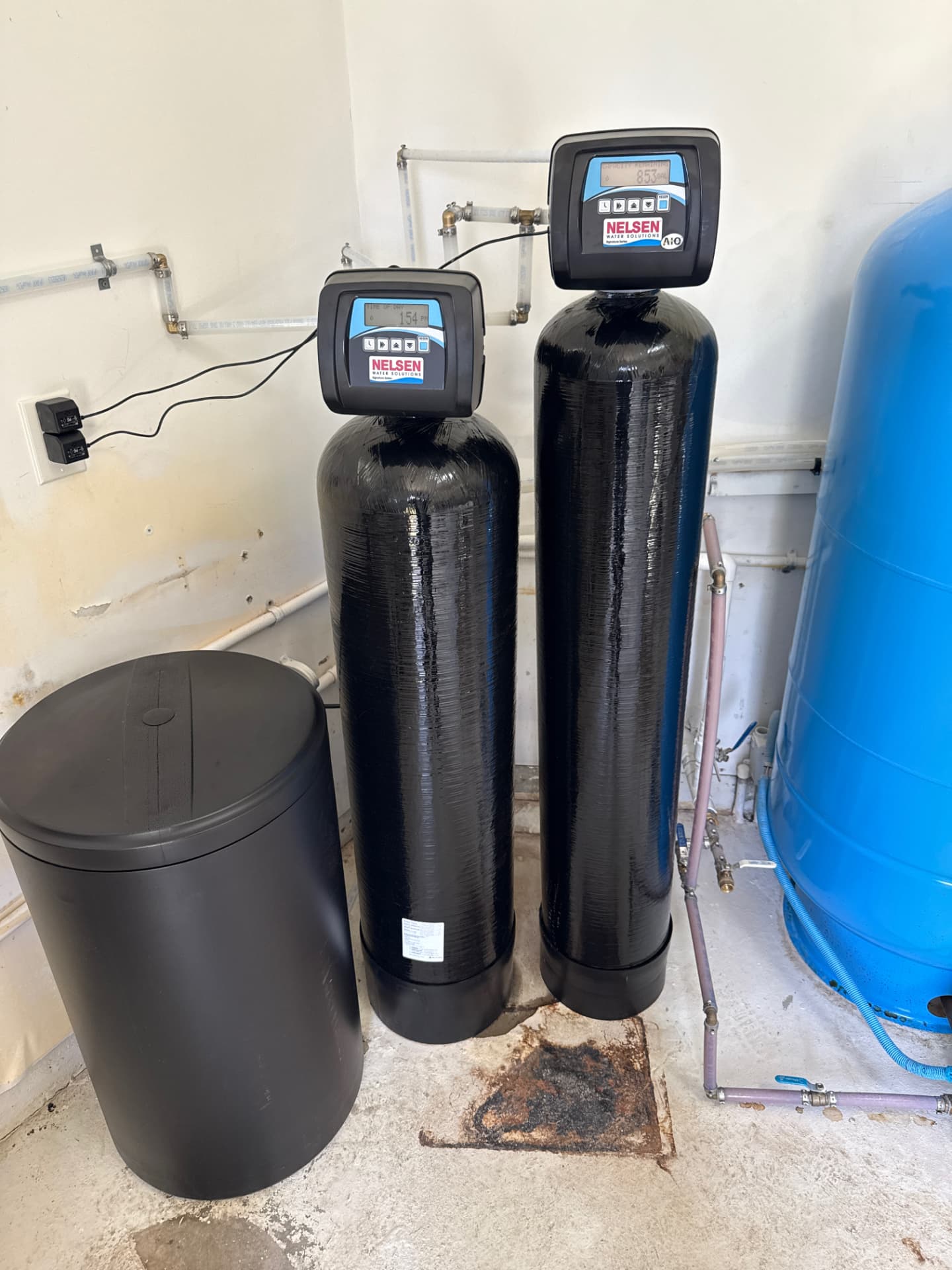
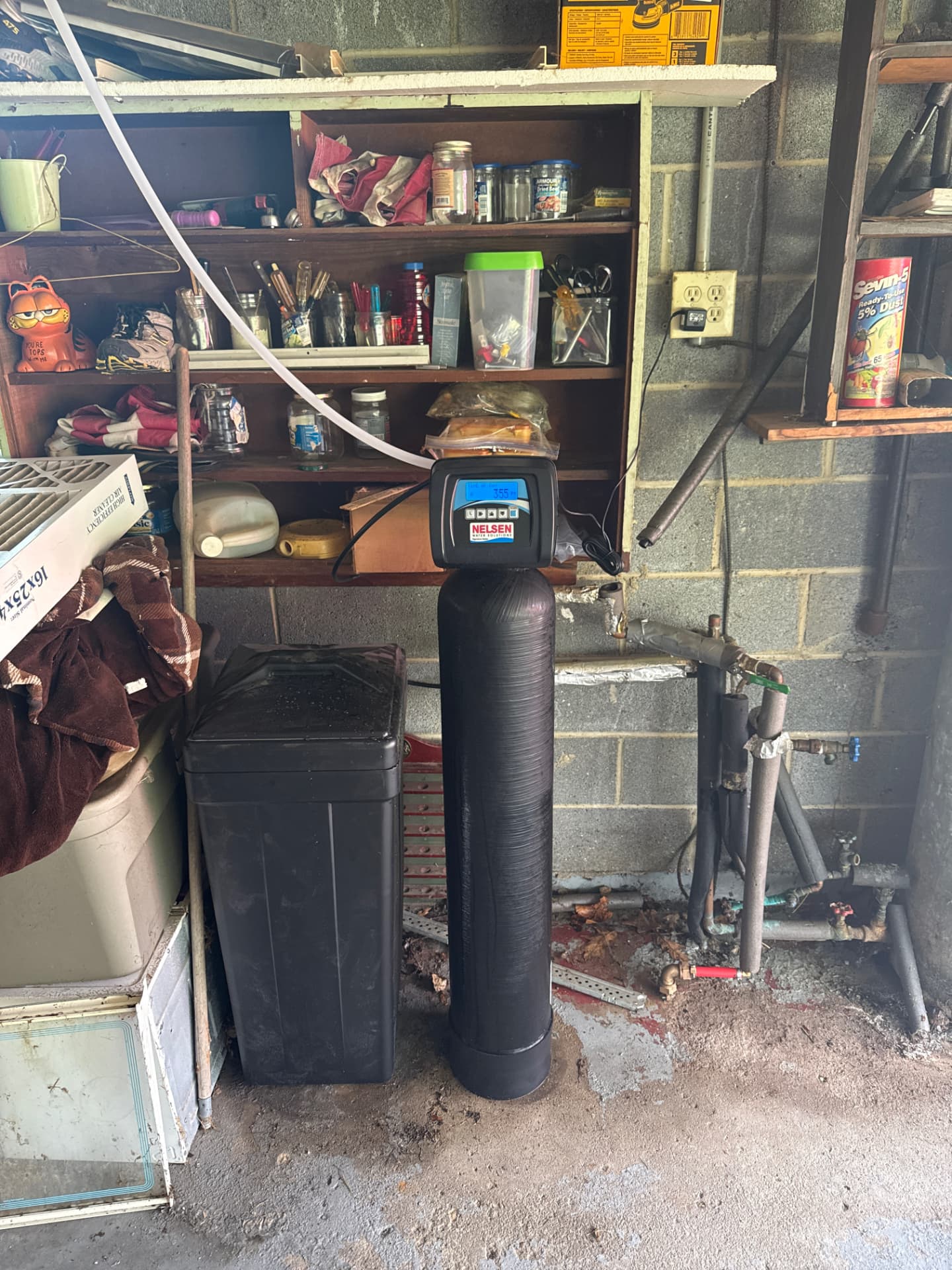
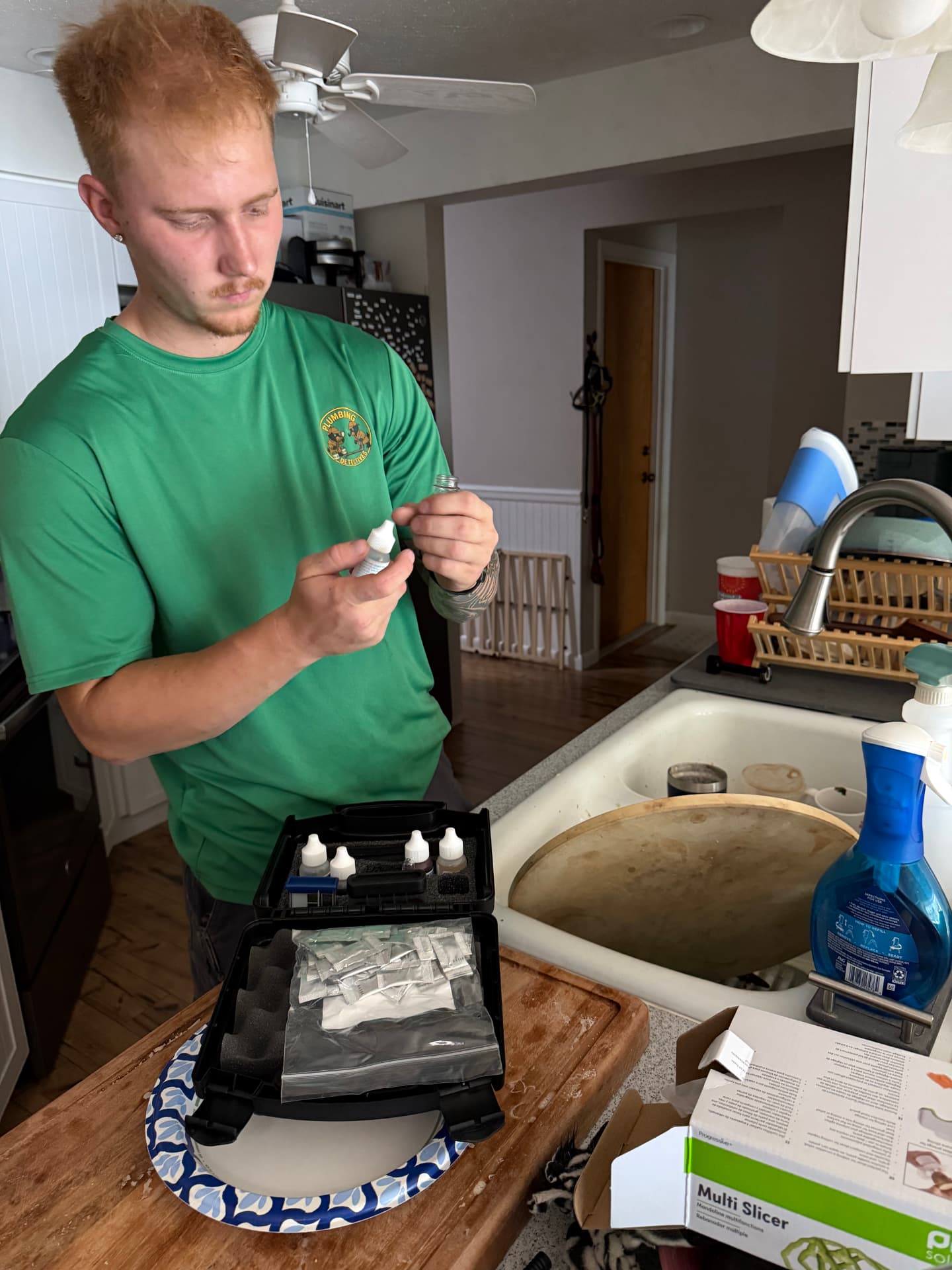
Photo slots awaiting Mike’s job-site images.
Answers
Frequently Asked Questions — Water Softeners in Venice Gardens, FL
If you’ve read this far, you now know something most people selling water treatment in Venice Gardens don’t: your water gets reverse-osmosis treated before it reaches you, it arrives at about 7 grains rather than 22, chloramine needs catalytic carbon, the seasonal taste comes from the reservoir blend, and in a 1970s copper-piped house the softening conversation has two sides. If you want your actual numbers — hardness, chloramine, iron, TDS, at your own kitchen tap — call 239-388-3631 and we’ll start with the free water test. You’ll see the math and the tiers before you spend a dollar, and in this neighborhood the right system is usually smaller than the one you were about to be sold.
Plumbing Detectives LLC | Venice, FL | License CFC1434139
239-388-3631 | plumbingdetectivesfl.com
Serving Venice, Venice Gardens, South Venice, Nokomis, Laurel, Sarasota, Englewood, Wellen Park, North Port, Bradenton, and Bradenton Beach.