Water Heater Repair in Venice, FL
No hot water this morning. A puddle under the tank. A rumble from the garage. Hot water that comes and goes, or a tankless unit flashing a code you've never seen. Every one of those is a reason to look at the actual unit and its connections before anyone decides whether it's a repair or a replacement.
I'm Mike Reynolds, owner of Plumbing Detectives LLC and a licensed master plumber, license CFC1434139. Water heater repair in Venice starts the same way all of my work starts: with a diagnosis of the equipment in front of me, a plain explanation of what I found, and your approval before any work beyond that diagnosis begins. If the heater can be repaired sensibly, that's what I recommend. If it can't, I'll tell you why and point you to the right next step instead of guessing.
Call 239-388-3631 to talk through what your water heater is doing.
What I Repair
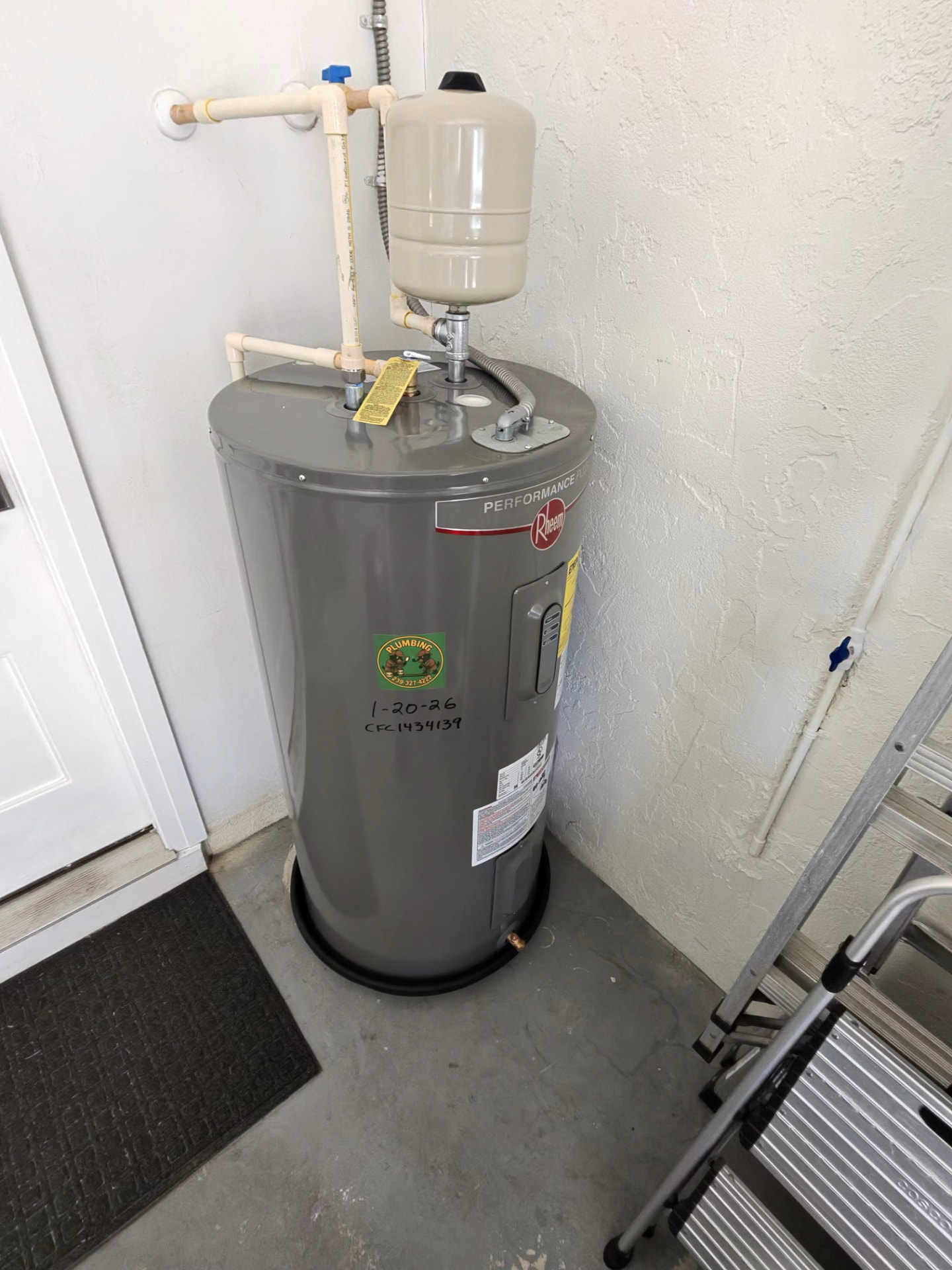
Plumbing Detectives repairs standard electric tank water heaters, natural-gas and propane tank water heaters, gas and electric tankless units, and heat-pump (hybrid) water heaters. Gas tank heaters are less common around here than electric, but they're part of the work. Commercial water heaters can be evaluated case by case depending on the equipment and the property.
What I can safely and appropriately repair on a given unit depends on the on-site diagnosis, the access around the heater, the condition of the equipment, and whether the right part is available. Depending on what the inspection shows, the work can include:
- Electric heating elements, thermostats, and high-limit (ECO) diagnosis.
- Tank-gas pilot, ignition, thermocouple, thermopile, and gas-control work.
- Temperature-and-pressure relief valve replacement, and investigation of why a valve is discharging.
- Shutoffs, flexible supply connections, dielectric connections, and drain-valve service.
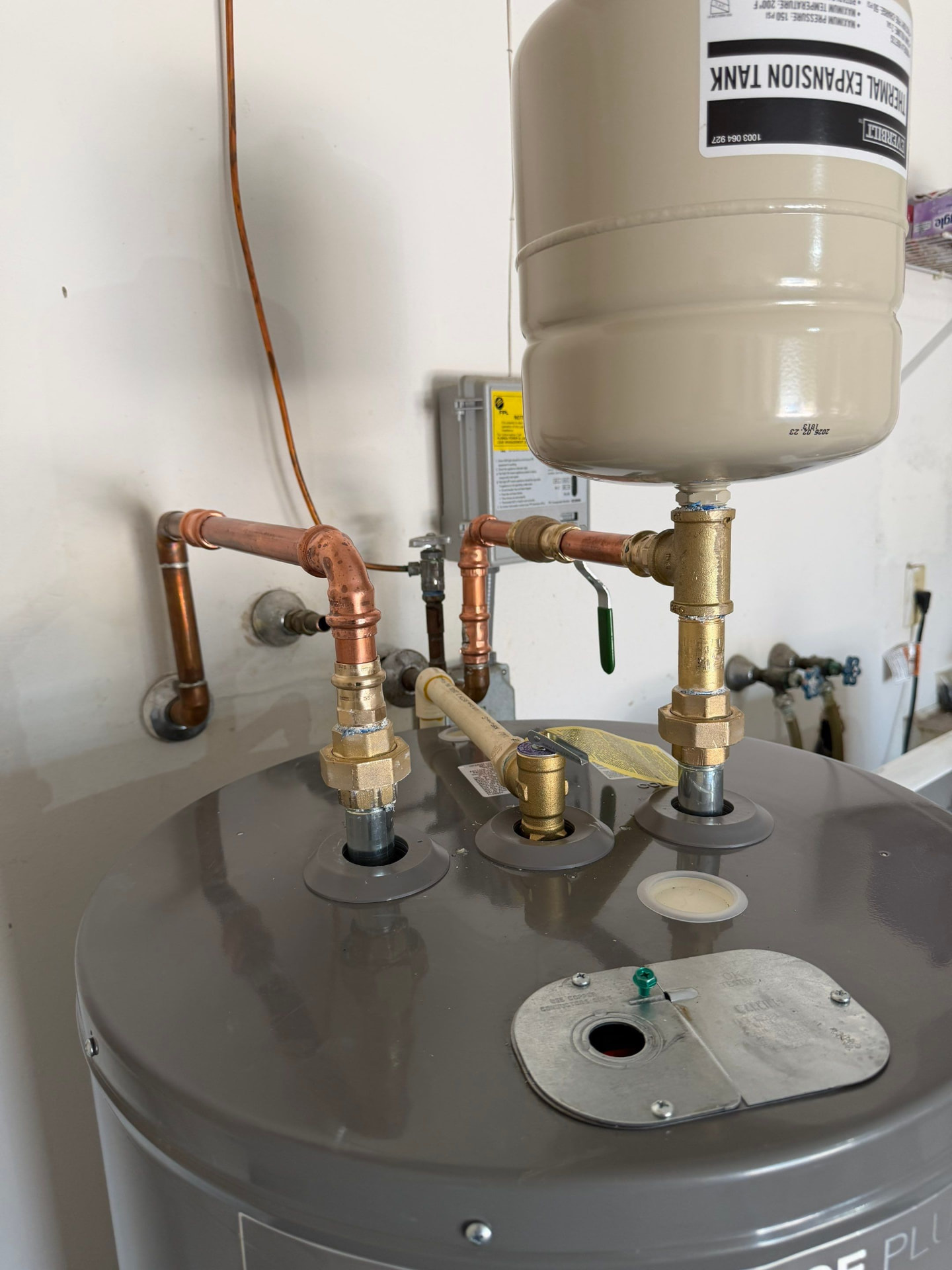
- Expansion-tank replacement or addition where the system calls for it.
- Anode-rod options, discussed case by case based on the unit's design, age, and condition.
- Sediment flush or descaling on tank and tankless equipment when appropriate.
- Pan and pan-drain work.
- Tankless and hybrid units: diagnose the unit, explain the findings, and recommend an approved repair path where one is appropriate.
Electrical problems outside the water heater itself — a panel issue, a branch-circuit defect, or house wiring — get referred to an electrician. I'll tell you when that's what the evidence points to.
Common Water Heater Problems That Need an On-Site Diagnosis
Every symptom below has more than one possible cause, and some are a straightforward repair while others are not. The phone call tells me what you're experiencing; the visit tells me why.
No hot water at all
On an electric tank, this can be an element, a thermostat, a tripped high-limit, or a wiring problem at the unit. On a gas tank, it can be the pilot, the ignition system, a thermocouple or thermopile, or the gas control. On a tankless or hybrid unit, it can be an ignition or sensor fault, a flow or filter issue, or a control error. Most of these are repairable when the part is available and the unit is otherwise sound.
Water on the floor
Where the water is coming from matters more than how much there is. A leak at an accessible connection, a supply line, a shutoff, a drain valve, or the relief valve is usually a repair. A leak from the tank body itself is not a repair — that's a replacement conversation, and I'll explain why in the next section. Telling those two apart is exactly what the visit is for.
Hot water that runs out fast, rumbles, or pops
Reduced capacity and noise from a tank can point to sediment, a failing dip tube, a bad lower element, or a thermostat that isn't doing its job. Which one it is determines whether a flush, a part, or a bigger conversation is the right answer.
Relief valve discharging
A temperature-and-pressure relief valve that's dripping or running is telling you something about pressure, temperature, or the valve itself. I look at all three rather than just swapping the valve and hoping.
Tankless error codes and intermittent hot water
Tankless and hybrid units report faults in their own language. The code is a starting point, not a diagnosis. I confirm what the unit is actually doing at the time of service before recommending anything.
An obsolete unit or a part that isn't made anymore
Sometimes the diagnosis is clear but the part isn't available, or the unit is old enough that sourcing it isn't practical. That's not an automatic replacement, but it is a repair-versus-replacement discussion, and I'd rather have it with you honestly than install something that won't hold.
Repair or Replacement: How I Separate the Two
A repair page that never says "replace" isn't being straight with you, and one that pushes replacement at every turn isn't either. Here's how the decision gets made.
A verified leak from the tank body is replacement work. There's no repair for a tank that has failed. When I confirm the water is coming from the tank itself and not from a fitting or valve above it, the honest answer is a new unit, and my Water Heater Replacement page explains how that process works.
A severely corroded or damaged tank body is a judgment call that usually lands on replacement. I show you what I'm looking at and explain why.
An obsolete unit or an unavailable part opens a discussion, not a verdict. Sometimes there's a workable path; sometimes there isn't. You'll hear both sides.
A safety finding comes first. If I find an unsafe gas, combustion, venting, or gas-supply condition, that gets addressed as a safety issue before any routine repair proceeds.
Everything else comes down to four questions. What's the condition of the unit? Is there a safe repair path? Is the right part available? And is the repair practical for that unit in that condition? When the answers say repair, I repair it. When they say replace, I say so and tell you why. No formula, no scare tactic, and no decision made for you.
What Happens During a Repair Visit
Look at the accessible unit and connections
I assess the heater, its supply and relief connections, the shutoffs, the pan and drain where present, and whatever the symptoms point to — visually and with the diagnostic checks the equipment calls for.
Explain what I found
You hear what's causing the problem, what I couldn't determine if something's out of reach, and what the practical options are.
Put added work in a clear scope
If the repair involves more than the diagnosis, you get a clear, written scope describing what the work is and what it involves before it starts. Repair and replacement are described as their own scopes, never bundled.
Get your approval
Nothing beyond the diagnosis happens until you've approved it.
Complete the approved work and check operation
When the needed part is available and the unit is otherwise sound, a repair such as an element or thermostat can sometimes be completed during the visit. When it can't, I explain what's needed and how the repair will be finished.
Urgent Water Heater Problems
Some water heater problems can wait for a normal appointment. An active leak or a house with no hot water often can't.
Plumbing Detectives offers 24/7 service for urgent water-heater problems when available. Scheduling and repair scope depend on the situation, access, parts, and current availability. Call 239-388-3631, tell me what's happening, and I'll tell you what I can do.
If you smell gas, leave the area and call 911 or the gas utility from a safe location.
Water Quality, Anodes, and Expansion Tanks
People often ask whether the water here is what killed their heater. Condition and equipment determine the recommendation, not a blanket rule about local water. Sediment, anode wear, and pressure conditions vary from house to house, and I evaluate what's actually going on in your unit rather than assuming.
Anode options are discussed case by case based on the unit's design, age, and condition. Some units are good candidates for anode service; others aren't, and I'll tell you which yours is. If you'd like to understand what an anode does and why it wears, my article on water heater anode rods in Southwest Florida covers it in plain language. Expansion tanks are handled the same way: when the system needs one, or has one that's failed, that's part of the repair conversation.
If a repair isn't the right answer and you're weighing a new unit, my Water Heater Installation page explains how I approach a new tank installation, and my Tankless Water Heater Installation page covers tankless.

Frequently Asked Questions
Not Sure If It's a Repair or a Replacement?
Not sure whether your water heater needs a repair or something more? Call Plumbing Detectives LLC at 239-388-3631. An active leak or no hot water is a good reason to call right away; anything else, I'm glad to talk through and schedule a look at the actual unit.