
Toilet Installation in Venice, FL
A toilet install sounds simple until it isn't — wrong rough-in, a cast iron flange that's had it, or a shutoff valve that snaps the second you touch it. I check all three before I ever quote you a model.
Call Now239-388-3631I've been in enough Venice bathrooms to know the difference between a straightforward one-hour swap and a job that turns into flange repair and a subfloor conversation. The house tells me which one I'm walking into before I even pull the old toilet — here's how, and what I actually do about it.
By ZIP Code
Your House's Age Tells Me What I'm Walking Into
Venice isn't one housing market, it's three, and they call for different things:
34285
Venice Island, downtown, Golden Beach
Mostly built in the 1960s, and the median resident here is 70 years old. This is 10-inch rough-in territory, cast iron flanges, and — honestly — comfort-height toilets should be the default recommendation here, not the upsell.
34293
South Venice, Venice Gardens, the Wellen corridor
A mix, skewing 2000s with a strong 1970s pocket underneath. I'm ready for either a clean PVC flange or a corroded cast iron one depending on which decade your section of the neighborhood went up in.
34292
East Venice, Jacaranda, Venetian Golf
Mostly 1990s and 1980s construction — median resident age 69. Standard 12-inch rough-ins, but often original shutoff valves that haven't been touched since the house was built.
Rough-In
Rough-In Size — The Thing That Gets Skipped at the Box Store
Rough-in is measured from your finished wall to the center of the closet bolts, not from the baseboard. Standard is 12 inches. Older Venice Island homes — especially that 1960s core in 34285 — often run a 10-inch rough-in instead, and there are far fewer 10-inch models to choose from on a shelf.
Here's the problem I see constantly: someone buys a nice one-piece toilet online or at a big box store, gets it home, and it's a 12-inch model going into a 10-inch space. It won't seat flush against the wall. I measure your rough-in before I ever recommend a model — it's a five-minute check that saves you a return trip and a restocking fee.
The Hidden Parts
What's Actually Under Your Old Toilet
The flange. In Sarasota County, virtually every home built before 1972 has cast iron drain pipe under the slab, and the flange itself is often cast iron too. Cast iron corrodes from the inside over 50-60 years, and a cracked flange with serrated edges doesn't just leak — it snags toilet paper and causes repeat backups that have nothing to do with your toilet itself. If you're on Venice Island and you've had recurring clogs nobody can explain, this might be why.
Newer construction (think 34292 in the 2000s) typically has a solvent-welded PVC or ABS flange — a different animal entirely, and usually a much more straightforward fix.
Florida code actually spells out flange requirements precisely: it has to be attached to the drain and anchored to the structure, plastic flanges need to be at least a quarter-inch thick, cast iron flanges need that same thickness with 2 inches of caulking depth, and closet bolts have to be copper alloy — not the corroding steel ones I still find in some older houses.
Flange height matters more than people think. The flange should sit level with your finished floor. When a bathroom gets re-tiled and the flange ends up buried below the new floor, the wrong fix is stacking wax rings to make up the gap — that's a leak waiting to happen. The right fix is a proper extension kit rated for the actual gap, and I carry them.
The shutoff valve. This is the part that turns a simple job into a bigger one. Old multi-turn shutoff valves that haven't been touched in years commonly seize, snap, or start weeping the first time you try to use them — because they've been calcified in one position for a decade. If your house has its original 1970s or '80s stop valve, I plan for replacing it while I'm already in there, rather than hoping it survives being turned.
The Process
How I Actually Install It
- Isolate the water and test the old shutoff first — Before anything gets disconnected, so I know whether that valve is coming with us or not.
- Pull the old toilet and inspect the flange — Material, condition, height relative to the finished floor, and whether the closet bolts are the right material.
- Correct the flange — Repair ring if it's cracked but structurally sound, full replacement if it's corroded through, extension kit if it's sitting too low. Never stacked wax rings.
- Choose the right seal for the flange material — Wax seals for cast iron and older lead drain connections, wax-free seals for newer plastic flanges. The two aren't interchangeable.
- Dry-set the new toilet first — Venice's older tile and terrazzo floors are rarely perfectly flat, so I check for rock and shim with cedar shims before committing to the actual seal.
- Set the bolts snug, not tight — Overtightening closet bolts is the single most common cause of a cracked porcelain base, and it usually doesn't show up as a crack until weeks later.
- New braided stainless supply line — Rated for far higher burst pressure than the plastic lines that come standard on some builder-grade installs, and I'll replace the shutoff valve here too if it's original.
- Caulk the base — but not all the way around — Florida code actually requires caulking where a fixture meets the floor. I caulk the front and sides but deliberately leave the back open. If a seal ever starts to fail, that gap is where you'll see it on the floor first.
- Test everything — Multiple flushes, check the base, the tank bolts, the supply connection, and the shutoff for any weeping before I call it done.
Comfort Height
Comfort Height, and Why I Bring It Up Unprompted in Venice
Standard toilet seat height is around 15-16 inches. Comfort-height models sit at 17-19 inches — easier to sit down on and stand up from, especially for anyone with knee or hip issues. Given that the median resident age in 34285 is 70 and 34292 is 69, I bring this up as a real recommendation, not an accessory upsell, when I'm quoting a replacement in those neighborhoods. It's usually the same price as a standard-height model — the height isn't the expensive part.
Style & Weight
One-Piece vs. Two-Piece, and Why I Mention the Weight
One-piece toilets typically run 80-120 pounds as a single unit. Two-piece toilets break down into a lighter tank and bowl that install separately. If you're planning to DIY this, that weight difference matters — a dropped one-piece bowl on finished tile isn't a small mistake. One-piece toilets have fewer joints and are easier to clean; two-piece units are lighter to handle and the tank-to-bowl gasket is a simple, cheap part to service down the road if it ever needs it.
Permits
The Permit Question Everybody Gets Wrong Right Now
Straight swap of your existing toilet, no pipes or valves being moved around — that's exempt from permitting under Florida's building code. Once the job involves moving the drain, replacing the flange assembly, or repiping the supply line, that crosses into work that typically needs a permit, and the City of Venice or Sarasota County makes the final call on where that line falls for your specific situation.
Here's the part I want to be really clear about: you may have heard about Florida's new law exempting small residential repairs under $7,500 from needing a permit. That exemption explicitly does not apply to plumbing work. If someone tells you a $600 toilet install doesn't need a permit because of that new law, that's not accurate — plumbing was specifically carved out.
Rebate
The Venice Toilet Rebate — Real Numbers
If you're a City of Venice utility customer, the city will credit your water bill for upgrading to a high-efficiency toilet:
| Upgrading from | To | Rebate |
|---|---|---|
| 3.5 gpf | 1.28 gpf | $100 per toilet |
| 1.6 gpf | 1.28 gpf | $40 per toilet |
| 1.6 gpf | 0.8 gpf | $100 per toilet |
Up to two rebates per property, and the city requires the old toilet be permanently disposed of (no reselling it) with photo proof. I'll confirm the current application details with the city's Utilities line before we submit anything on your behalf, since program rules can shift. Sarasota County customers outside city utility service currently don't have an equivalent rebate program.
Separately, a low-flow toilet genuinely saves water — a WaterSense-labeled model uses about 20% less than the federal 1.6 gpf standard, and toilets account for roughly 30% of a home's indoor water use. That adds up over the life of the fixture even before factoring in the city rebate.
Condos
If You Live in a Venice Condo
This is worth spelling out because it trips people up. In most Florida condos, your toilet itself is your fixture and your responsibility — but the shutoff valve, riser, and piping outside your unit are typically common elements the association maintains. Several Venice associations I've worked with require each unit to have its own exterior shutoff valve, and expect owners away for more than 48 hours to shut their water off before leaving — worth checking your own association's handbook on that, since it varies.
Practically, that means: locate your unit's exterior shutoff before we start, and if your interior stop is seized or nonexistent, we coordinate isolating water through that exterior valve instead. Most associations will want a copy of my license and proof of insurance before letting me into the building — I have both ready to go, license CFC1434139.
One more Venice-specific wrinkle: in some associations, water isn't individually metered — the association pays one water bill for the whole building. If that's your situation, a running toilet isn't costing you directly on a bill you'll never see, it's a shared cost the board deals with. Worth fixing regardless, but the "this will save you money" pitch works differently there than in a single-family home.
Pricing
What This Costs
I'll give you a real range instead of making you guess. Final price depends on what we find — rough-in size, flange condition, and whether the shutoff valve needs replacing all factor in:
- Standard toilet installation (customer's toilet already on hand, straightforward swap): typical range in this market runs a few hundred dollars for labor
- Full install including the toilet itself: typically runs several hundred dollars depending on the fixture you choose
- Flange repair, if needed: adds to the job depending on whether it's a repair ring or a full replacement
- Shutoff valve replacement, if the old one won't hold: usually a modest add-on, and honestly one of the cheapest ways to avoid an emergency later
- Subfloor repair, only if we find rot under the flange: priced once we actually see the extent of it
I'll always tell you what I find before doing anything beyond the original scope — no surprise add-ons without a conversation first.
Straight Answers
Straight Answers
Real Work
Why Homeowners Call Me First


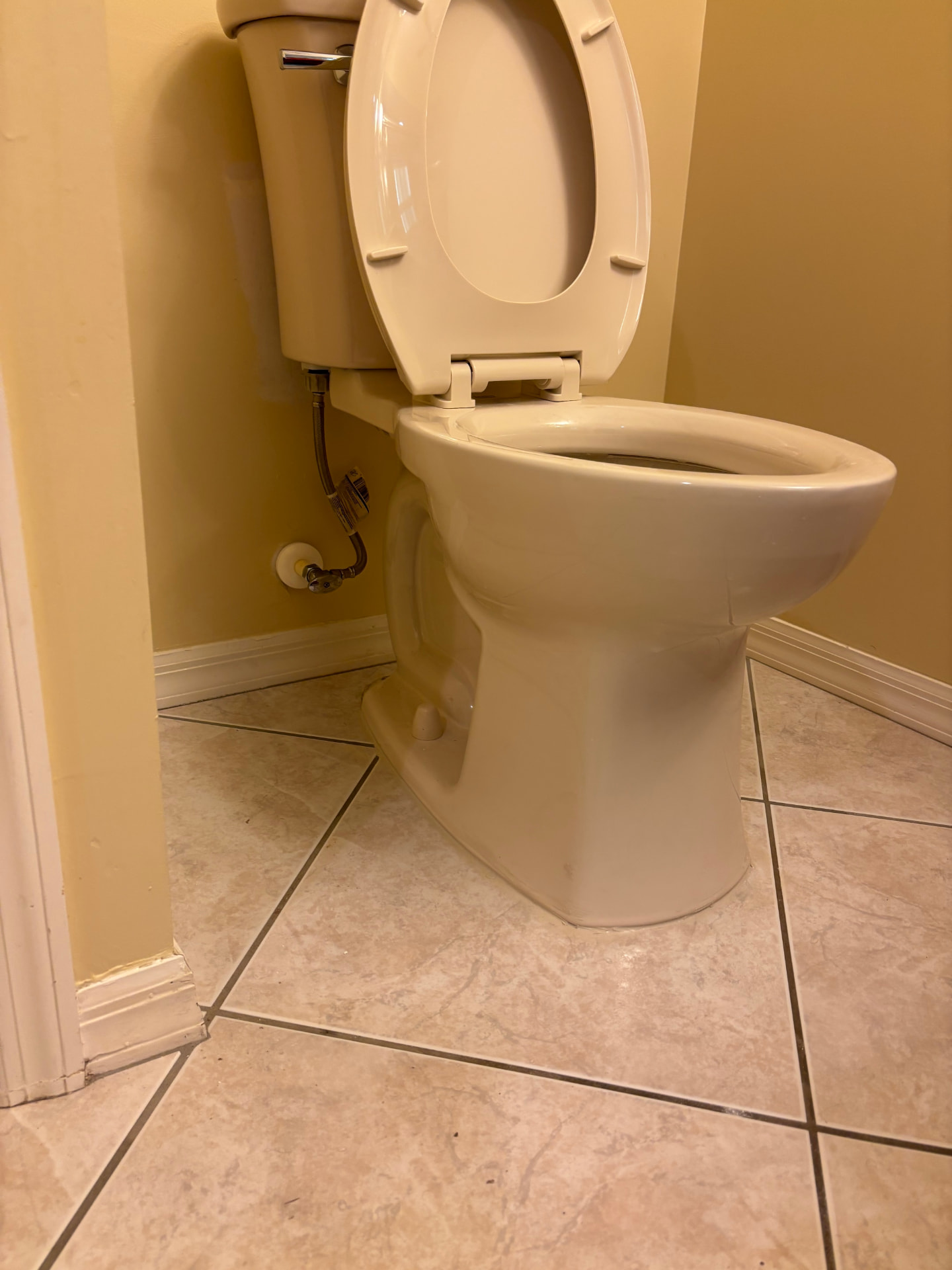
I measure before I quote, I check the flange before I promise a timeline, and I'll tell you straight if your rough-in or your association's rules change the job. If your toilet trouble is actually a sewer line problem hiding behind it, I handle that too — Sewer Line Repair in Venice, FL.
Ready for a toilet install that starts with an actual measurement, not a guess?
Let's get it right the first time.
Call Now239-388-3631