
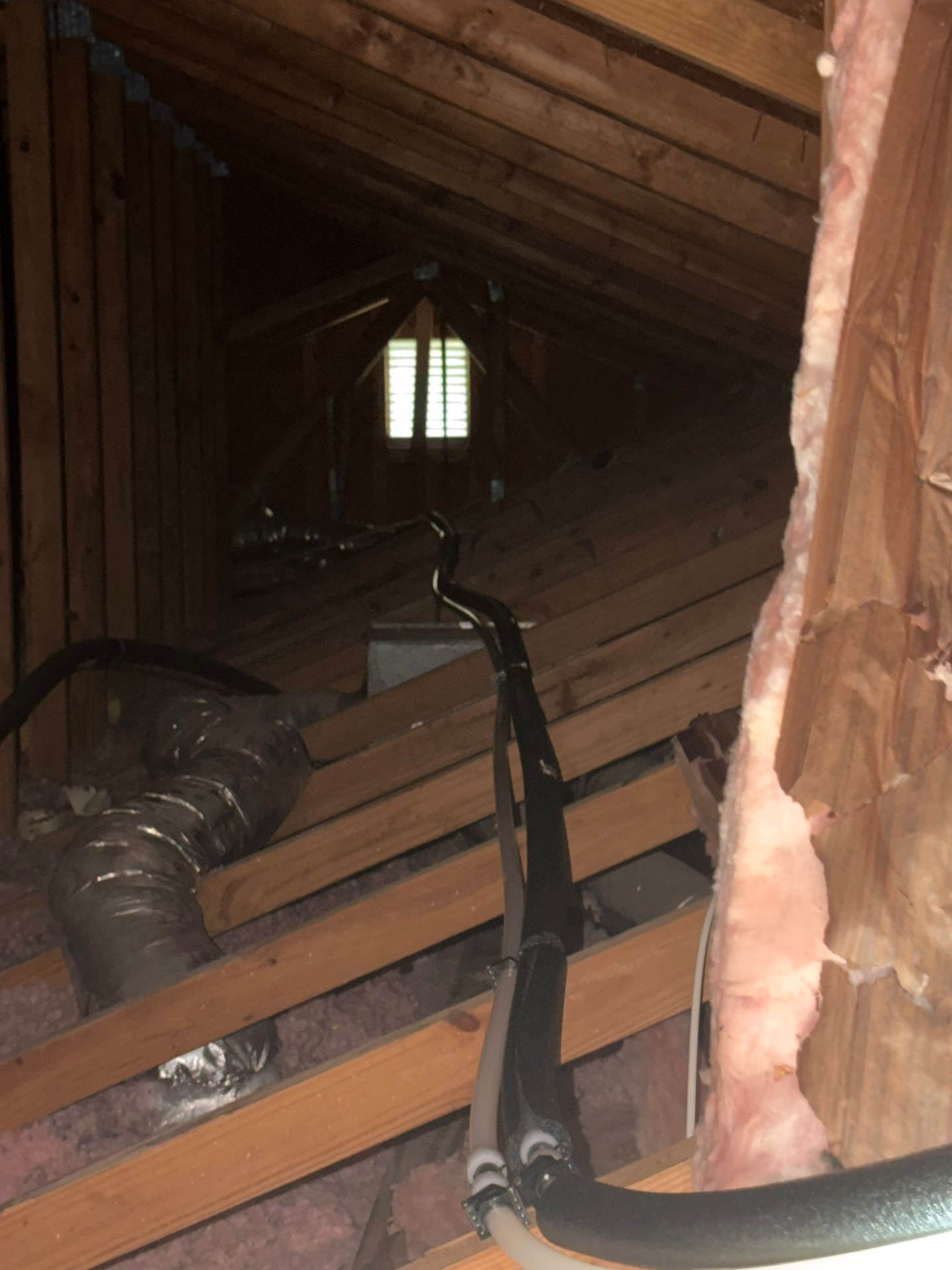
Yes. The water lines in a slab house can be replaced without breaking up the floors. The new piping runs overhead through the attic and drops down inside the walls to each fixture, and the old lines under the slab are taken out of service. That is how I do every whole house repipe.
There are limits, and I'd rather you hear them from me before the estimate than after. Some walls get opened. A kitchen island can be an exception. And this is about water supply lines, not drains. All of that is below.
A Bradenton homeowner on her third slab leak
A Bradenton homeowner called me about a leak under her floor. She had already paid for two slab leak repairs. I found the third one on the hot side.
She assumed the next step was more concrete coming up. I explained that we don't go back under the slab. We go up top, through her attic, and leave the old copper behind. She went with the repipe.
That conversation is why I wrote this. Most people with a slab house think a repipe means jackhammers, dust and new flooring. For the water lines, it usually doesn't. If you're in that area, this is the same work described on our page for whole house repiping in Bradenton.
Is this about water lines or drain lines?
Water lines. A repipe replaces the pressurized hot and cold supply piping that feeds your fixtures.
The drain and sewer pipes under the slab are a separate system. They run on gravity and slope, so they can't be moved to the attic, and a repipe does nothing for a cracked or collapsed drain. If your problem is backups or sewer smell, that's a sewer line repair conversation, and it starts with a camera.
How does the new piping get from outside to every fixture?
It starts at the shutoff valve on the side of the house, comes inside, and goes up into the attic as soon as it can. From there the trunk lines run across the attic and a line drops down inside the wall to each fixture.
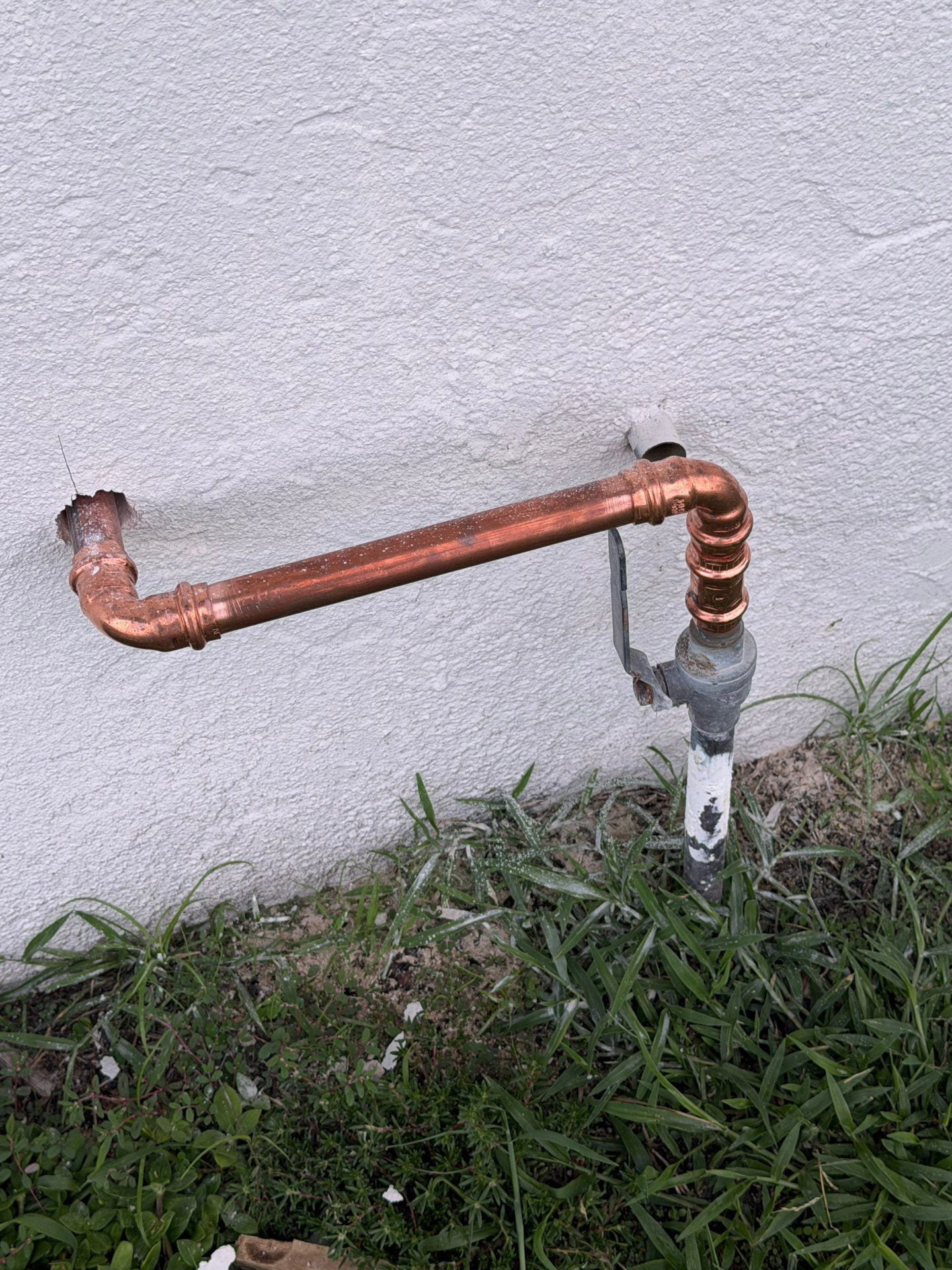
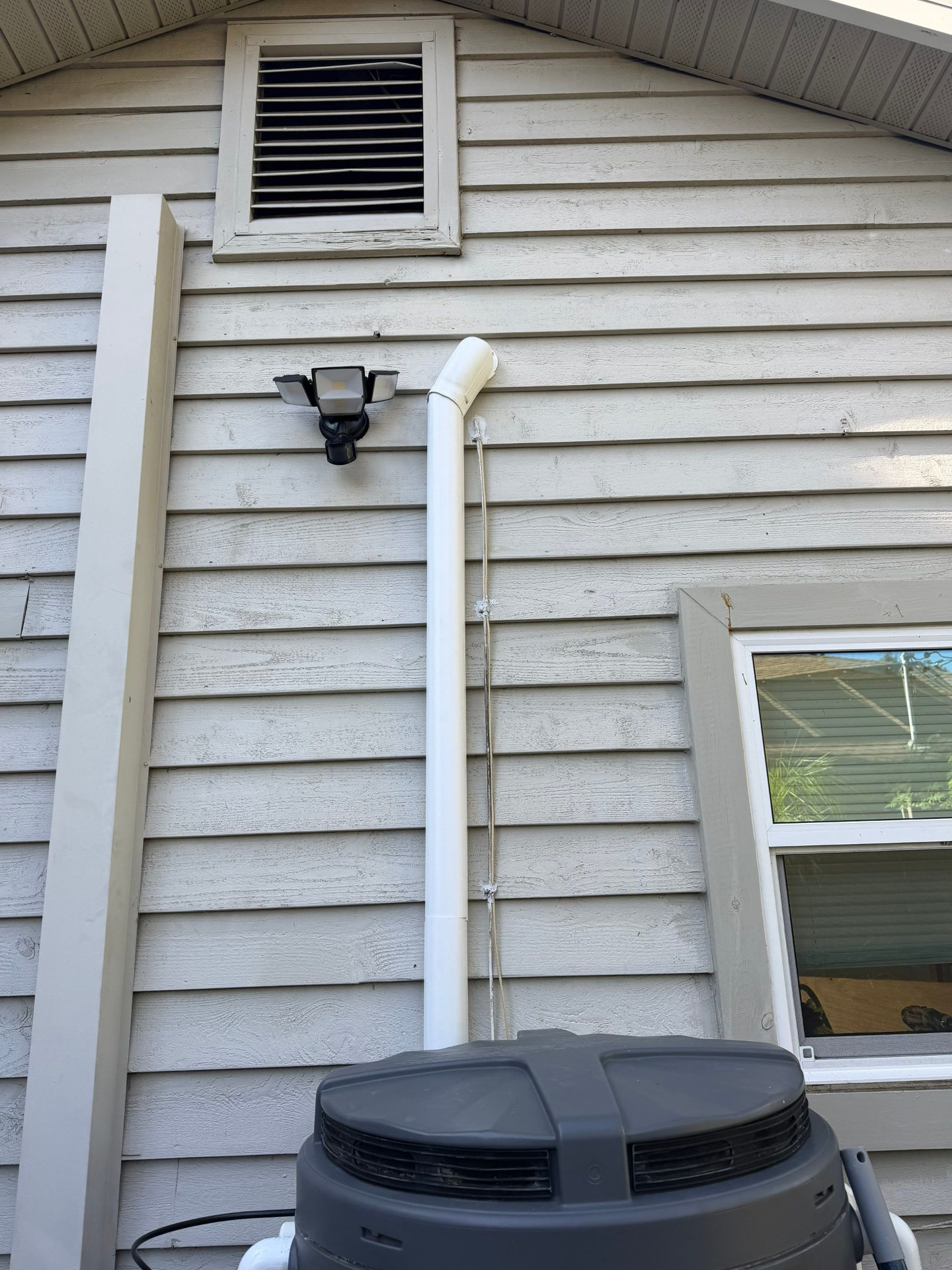
Every house is different, so I go into the attic and check the route before I price anything. I'm looking at how the roof pitches over each bathroom, what's in the way, and where each drop can come down.
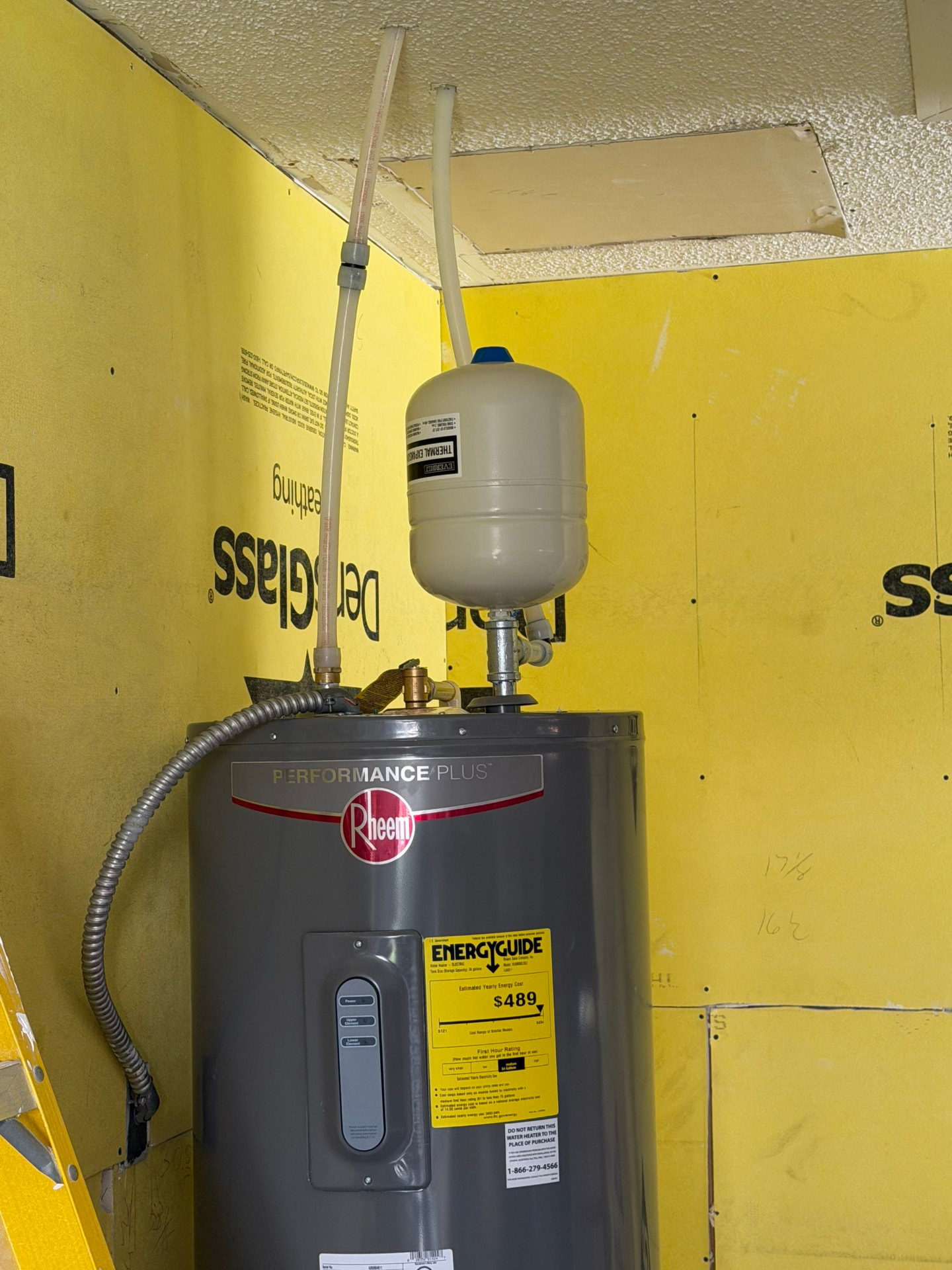
The piping is Uponor PEX-A. Florida's plumbing code recognizes PEX water distribution tubing that meets its listed standards, and it sets the rules for how it's supported and protected: support spacing, steel plates where a line passes close to the face of a stud, and room for the pipe to expand and contract. We keep it out of sunlight and follow the manufacturer's clearances from lights and vents.
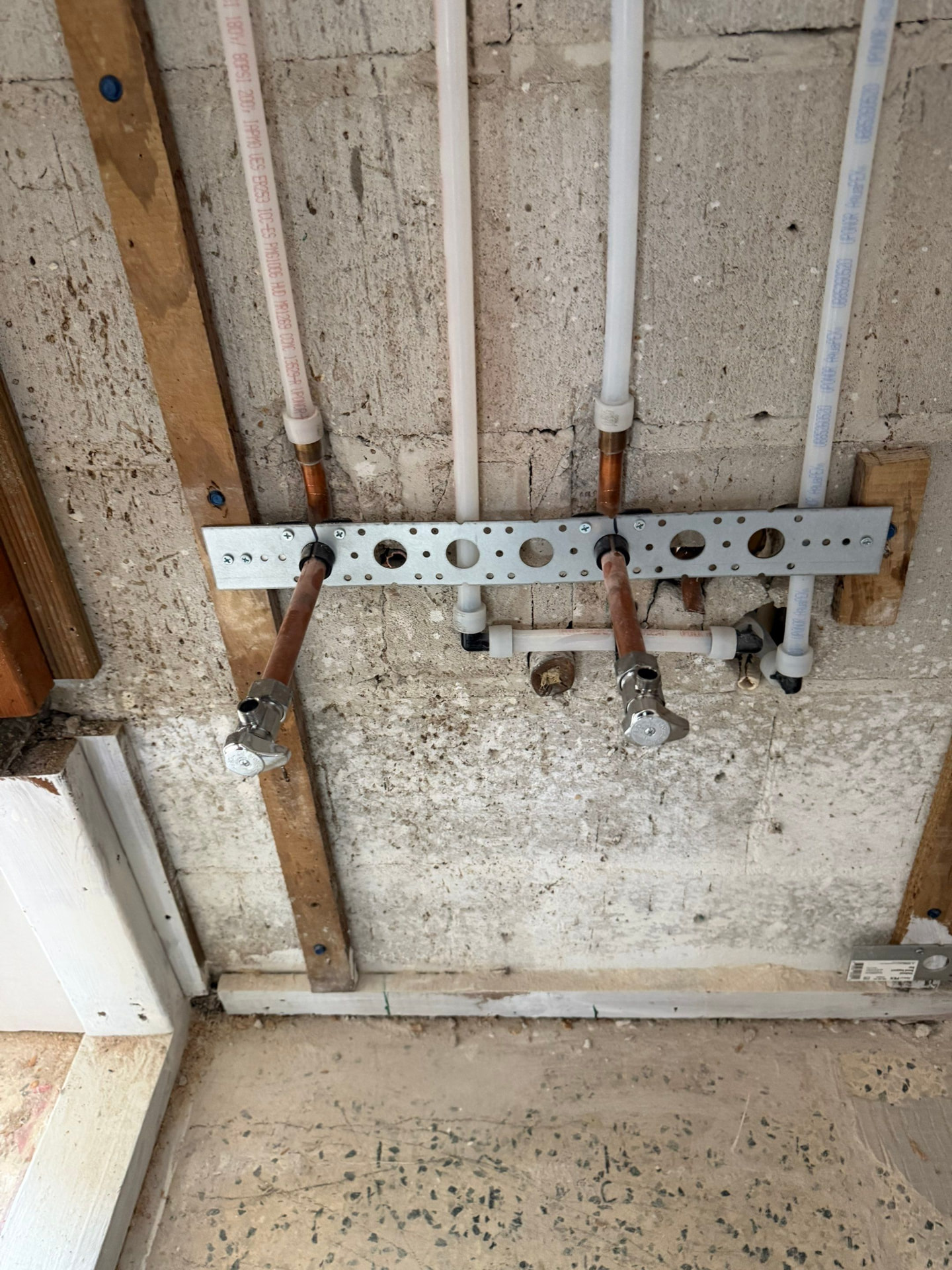
Where does the drywall get opened?
No floor demolition doesn't mean no openings. Here's where they usually are:
- Behind the shower. That's the most common one.
- High on the wall, near the ceiling, above a fixture, so we can drill the top of the wall and get a hand in to feed the line down.
- Low on the wall, where the new line ties in to the fixture.
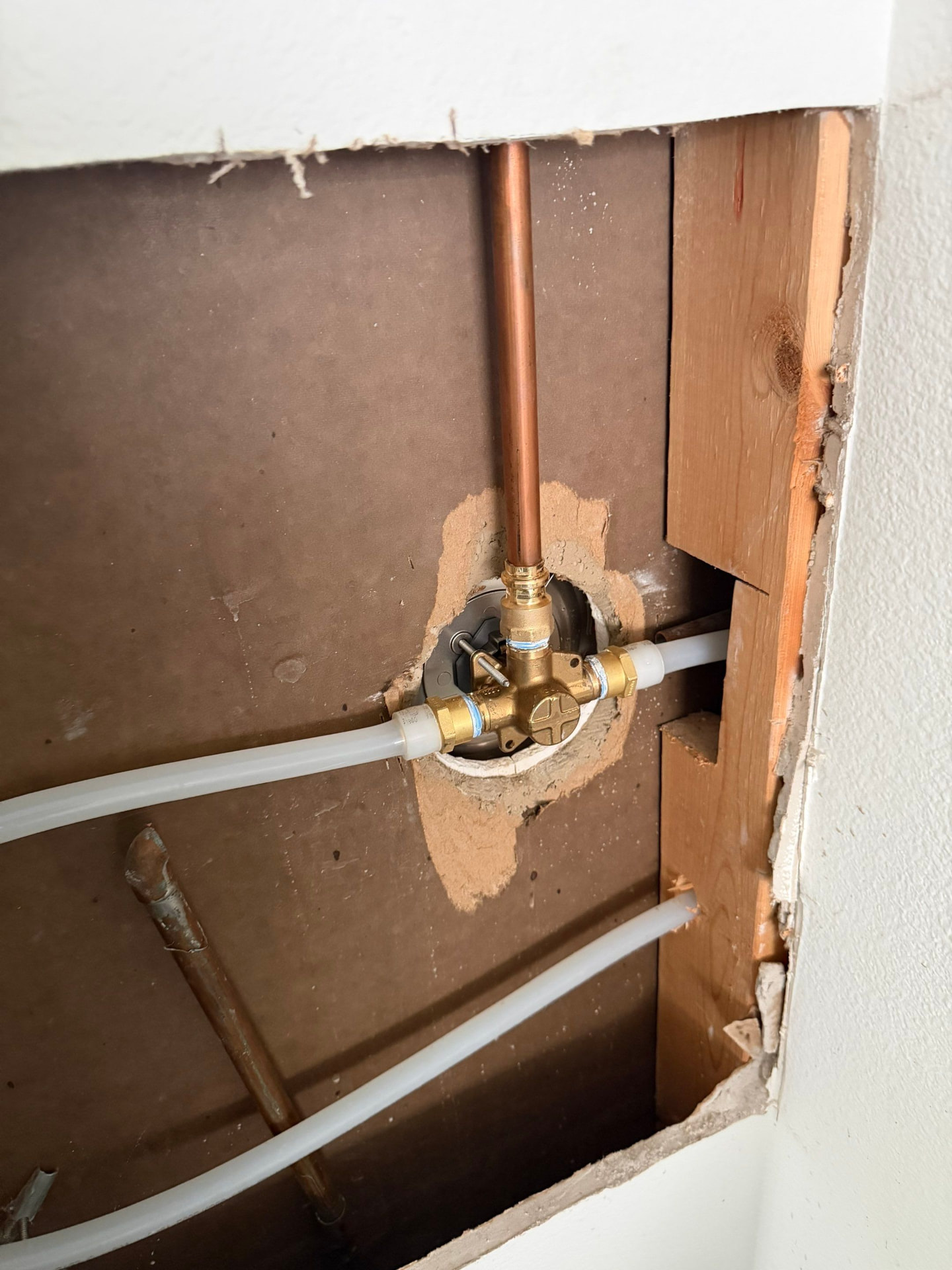
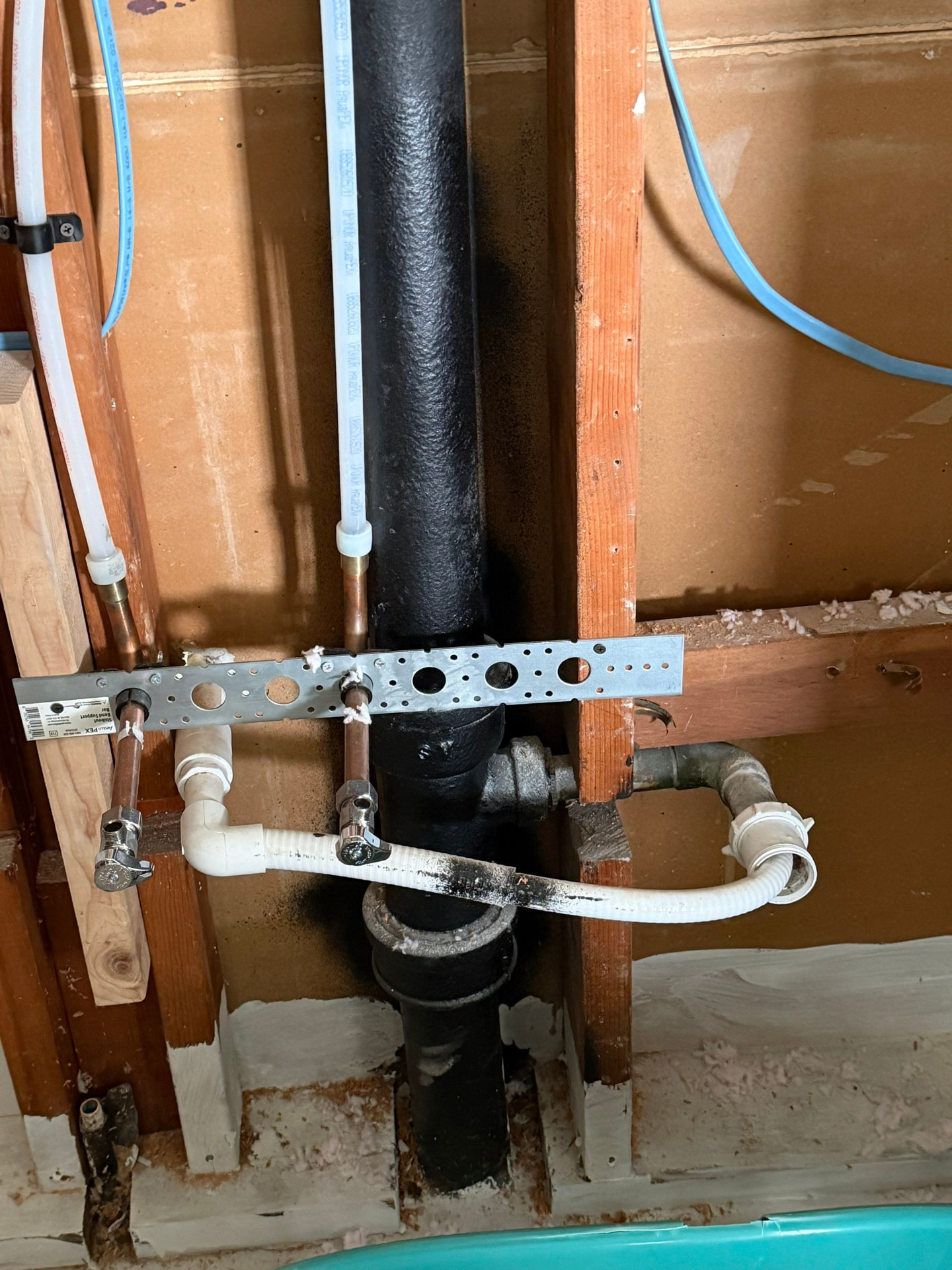
Sometimes we get lucky and fish the line straight down from above with no top cut. Sometimes what's inside that wall means we need the access. I show you each opening at the estimate.
Drywall repair is quoted as its own line. If you accept it, we patch and texture. We don't paint.
What about a kitchen island, hose bibbs and tight attics?
These are the places where the answer isn't always a clean yes.
Kitchen islands. An island has no wall to drop down. On the last one, I was able to route the line around the kitchen and reach it. Other times a small section of floor has to be cut to get to the island. Some situations are unavoidable, and if yours is one of them you'll know before any work starts.
Hose bibbs. Usually the line drops down that exterior wall. When it can't, we take it outside, dig, and run it underground to the hose bibb in schedule 40 PVC.
Low-pitch roofs. Where the roof comes down tight over a fixture, there may be no room to work from above. In that case we open the ceiling at that spot, and the drywall repair is in the quote.
I don't turn houses down. I plan the route and tell you what it takes.
What happens to the old pipes under the slab?
They're taken out of service and left where they are. Before the new tie-ins are made, we disconnect the old system and check everything to confirm nothing in the house is still fed from under the floor. I cut the old copper off at the slab.
After that, no water runs under your floor.
How long does it take, and will I have water?
A typical single-story house is two days, sometimes three depending on inspections. It's usually two of us, with a third person coming in for the drywall.
We run the trunk lines and the drops to every fixture first, while your old system is still working. You have water during that part. The tie-ins come last. Depending on the number of fixtures and the access, the water is usually back on that same day.
Those are what my jobs normally look like, not a promise for a house I haven't seen.
Who handles the permit and inspection?
I pull the permit, and I walk the job with the inspector. A repipe needs a permit in the City of Venice, Sarasota County and Manatee County, and the open work stays open until it's approved.
One thing homeowners don't expect: inspectors are persistent about the hose bibbs being sealed where they come through the wall. We seal them before the inspector asks.
Honest trade-offs of going through the attic
- Some walls get opened, as described above.
- An attic is hot. Water that has been sitting in an attic line picks up that heat, so the cold side can run warm at first on a summer day until fresh water comes through.
- It doesn't fix drains. A repipe is water supply only.
When does a repipe make more sense than fixing one leak?
In my opinion: when it's the third leak in a short period, or even the second, and when the house still has its original copper from the early 90s or before. At that point you're paying for one repair after another on pipe that is telling you what it's going to do.
What I find most in these houses is old copper. Pinhole leaks from pitting in copper are well documented, though no study I know of puts a number on how often it happens here, so take that as what I see in the field.
Don't forget the line outside the house
On one job, the homeowner had been shutting the water off at the backflow in the yard over and over before we got there. We repiped the whole house. When we turned the water back on, the line between the backflow and the valve on the side of the house broke apart. It was old galvanized. The main had never been changed when the backflow went in.
That's why I quote two things: the inside of the house, and the main line coming to it. Most people do the inside only. Sometimes that comes back later.
Estimates, financing and warranty
Estimate. A whole house repipe estimate is free and done in person. I don't quote repipes by phone or text, because I have to see the attic and the walls. If your visit starts as a leak call, the $99 diagnostic is waived when you approve the repipe during that visit.
Financing. Financing is available for larger jobs like a repipe. We go over the options at the estimate, and you don't have to decide on the spot.
Warranty. Repipes carry our 5-year warranty on the piping work, plus the 25-year Uponor manufacturer warranty.
"We protect the home, and we want you to have reliable water throughout it," says Mike Reynolds, owner of Plumbing Detectives. "An over-the-top repipe is the way to go. It's quick, safe and affordable."
Talk to us about your house
Plumbing Detectives LLC does whole house repiping in Venice and across Venice Gardens, Nokomis, Laurel, Sarasota, Englewood, Wellen Park, Bradenton, Bradenton Beach and Lakewood Ranch. If you think the leak is under the floor and you're not sure, start with leak detection.
Call 239-388-3631 to schedule a free in-person repipe estimate.
Plumbing Detectives LLC · FL Certified Plumbing Contractor CFC1434139 · 312 E Venice Avenue, Suite 203, Venice, FL 34285
Sources
- Florida Building Code, Plumbing, 8th Edition (2023), Chapter 6: Section 605.4 and Table 605.4, water distribution pipe
- Florida Building Code, Plumbing, 8th Edition (2023), Chapter 3: Table 308.5, support spacing, and Section 305.6, protection of piping
- Florida Building Code, Existing Building, 8th Edition (2023), Sections 110.1 and 110.3, inspections
- Uponor, Residential Plumbing Installation Guide (attic installation, expansion)
- Uponor, PEX Piping Systems Installation Guide (sunlight exposure, clearances from lights and vents)
- City of Venice, Building Department permitting
- City of Venice, permit guide
- Sarasota County, permit type guide ("Repipe (Confined in Structure)")
- Manatee County, what does and doesn't require a permit ("Re-pipe")
- U.S. Environmental Protection Agency, copper pitting and pinhole leak research