
Drain Cleaning in Venice, FL
A slow drain in a Venice home almost always has a story behind it — the age of the pipe, what's growing near it, or just years of grease going down a kitchen sink. I clean the drain and tell you which story you're actually in.
Call Now239-388-3631Right Now
If This Is Happening Right Now
One drain running slow: usually a local clog — hair, grease, or soap scum close to that fixture. Not an emergency, but worth getting ahead of before it stops completely.
Every drain in the house slow at once, or gurgling when another fixture runs: that's a main line problem, not a fixture problem. This one, call me — it means something's restricting the trunk line itself.
Toilet overflowing: shut the water off at the valve behind the toilet first, then call. I'll walk you through it if you need me to.
Sewage smell with no active clog: before you assume the worst, this is very often just a dry trap — a drain that hasn't been used in a while (a guest bath, a laundry room, a house that sat empty over the summer) loses the water seal in its trap and lets sewer gas back up into the room. Running water in that fixture for a minute often clears it completely. If it comes back, that's when to call.
Before I Arrive
What Your House's Age Tells Me Before I Even Get There
Venice Island and the older core of town were built heavily in the 1950s through 1970s, and that means cast iron drain lines. Cast iron has a real lifespan, and Florida's heat and humidity don't do it any favors — problems can start showing up in as little as 20 years here, and by 50-plus years, a lot of these lines are carrying decades of interior rust buildup called tuberculation. That rough, jagged interior surface catches hair, grease, and paper the way smooth pipe never would, which is exactly why some homes get the same drain cleaned every year or two and it clogs again anyway. That's not bad luck — it's the pipe itself.
Homes built from the 1980s on are typically PVC, which doesn't corrode or scale the same way. When a PVC line clogs, it's almost always a usage issue — grease, roots at a joint, or an object — not the pipe wearing out. Knowing your build year tells me most of what I need before I even open my truck.
Equipment
What I Actually Run, and Why
I clean drains mechanically — cable machines, not high-pressure water jetting. In an older cast iron line especially, I'd rather not push pressurized water into a pipe whose wall thickness I can't see yet. Here's what's actually in my truck:
Spartan 300 — my main-line machine, built for 3 to 6 inch lines and capable of running out to 200 feet with an extra drum. It feeds cable in and out under power, with a torque-limiting clutch and a foot switch so I'm controlling it hands-free while I work. I load different cable into it depending on the pipe: inner-core cable for straighter runs where I need more rigidity to push through a tough clog, and no-core cable when a line has tighter bends that heavier cable can't navigate as easily. Same machine, different cable — not two machines.
For the actual cutting or clearing end, I match the head to what I'm dealing with — a cutting blade for roots, a different head for grease buildup, and so on, sized to the pipe.
Milwaukee M12 AIRSNAKE — a compressed-air tool I use on soft, organic clogs in sinks, tubs, showers, and floor drains, where I know the trap and connections are sound. It has variable pressure control, which matters, because on compression fittings or older drain lines I want less pressure, not more. My own rule is stricter than the tool's own design allows for: on cast iron I can't visually confirm is sound, or any line whose condition is unknown, I don't use air pressure at all — I cable it instead. Pressure into a pipe with unknown wall thickness isn't a gamble I take in someone's home.
Milwaukee M12 TRAPSNAKE 6' Toilet Auger — my toilet-specific tool, with a fixed rubber boot that protects porcelain and, when run through its powered driver, electronically controlled RPM and torque so I'm not the reason your toilet cracks. It's built specifically not to scratch the bowl the way a generic snake can.
Kitchen
Kitchen Sink Drains
Most kitchen clogs sit in the P-trap or the branch line just past it, and in Venice specifically, grease is the big local factor. Grease is denser than water and turns solid as it cools — and it bonds especially well to the rough, corroded interior of an older cast iron branch line, the same way it wouldn't on smooth PVC. Combine that with a lot of full-time, home-cooking households here, and the kitchen line is often the first thing that needs regular attention in an older house.
Worth knowing: your garbage disposal doesn't protect you from this. A disposal grinding fine but water still not draining almost always means the buildup is further down the line, not at the disposal itself.
Bathroom
Bathroom Sink, Tub, and Shower Drains
These clogs are almost always hair and soap scum sitting in the first few feet of pipe, right around the stopper mechanism and the trap. On an older tiled shower with the drain buried in a mud-set pan, I use lighter cable and go easy on the fittings — over-torquing a corroded old clamping ring can compromise the waterproofing underneath the tile, which is a much bigger problem than the clog itself.
Toilets
Toilets
About 8 in 10 toilet clogs are just toilet paper and organic waste compacted in the trap — that's what the TRAPSNAKE is built for, and it usually clears in one pass. A hard foreign object behaves differently: it won't dissolve or pass on its own, and needs to be hooked and pulled out rather than pushed through.
One thing worth knowing: if other fixtures are gurgling or backing up at the same time as your toilet, that's not a toilet problem — that's a main line issue showing up at your lowest fixture first.
Main Line
Main Line and Sewer Laterals
This is where Venice's specific geography and landscaping actually matter.
Roots. Ficus — including strangler fig and weeping fig — along with willow, silver maple, and sweetgum are the real offenders for root intrusion into sewer lines here. I want to be straight about something a lot of homeowners assume incorrectly: palms are not the problem. Queen palms and sabal palms have fibrous, non-invasive root systems and rarely cause this kind of issue, even planted close to a line. If you've got palms near your sewer line, that's not what's getting in there.
Cast iron main lines. When every drain in the house is running slow, it's often the main trunk line itself restricted by scale or, in older homes, structural deterioration. This is where cleaning and diagnosis go together — I can tell a lot from what comes back on the cable. Root hairs mean intrusion at a joint. A greasy coating means FOG buildup. Rust flakes and grit, with the head grabbing repeatedly along the run, usually means tuberculated cast iron. If the cable stops hard at the same spot every time and won't pass, that's often a structural issue — an offset joint or a partial collapse — not something a cable can clean through.
Finding your cleanout. On a Florida slab home, there's no basement to run pipe through, so the main line exits through the foundation and the cleanout is typically a white or black capped pipe near the foundation on the side closest to your bathrooms, sometimes with a second one closer to the street. Some 1960s and '70s homes still have an old cast iron cleanout fitting that's corroded into its housing and needs to be cut out and converted to PVC before I can even access the line — that's not unusual, and it's a permanent upgrade, not just a repair.
Honest Assessment
Cast Iron: What Cleaning Can and Can't Fix
I want to be honest with you about this rather than sell you a false promise. Cable cleaning restores flow — that's what it does, every time. What it can't do is reverse decades of interior corrosion in a cast iron line. Here's roughly how I think about it by decade, for a typical Venice-area home:
| Era | Typical condition | What that means |
|---|---|---|
| Built in the 1950s or earlier | Past every published lifespan estimate for cast iron in Florida's climate. | Cleaning manages symptoms; I want to camera it before promising anything long-term. |
| Built in the 1960s | Commonly in the "advanced deterioration" range — heavy scale, sometimes partial structural failure. | A camera tells us what we're really dealing with. |
| Built in the 1970s | The crossover decade. Some lines are still perfectly serviceable with periodic cleaning; others are functionally done. | A camera tells us which one you're in — I won't guess. |
| 1980s and newer (PVC) | Structural failure is rare. | Clogs here are almost always usage, joint, or root related, and cleaning is a genuine, lasting fix. |
Diagnosis
When I Recommend a Camera
I don't push a camera inspection on every call — but I do recommend one when: your home is 40 years or older, the same drain keeps clogging after being professionally cleaned, every drain in the house is sluggish at once, you're getting a persistent sewer odor, or the line has a history of chemical drain cleaner use. A camera shows me exactly what's happening inside the pipe — roots at a joint, a grease-coated run, tuberculated cast iron, an offset — instead of both of us guessing.
Chemical Cleaners
The Honest Answer on Drano and Similar Products
I get asked this constantly, so here's the straight version instead of a blanket "never use it."
Used once on a drain that's still moving slowly, and flushed on the label's schedule, a lye-based cleaner isn't going to destroy modern PVC — even a national competitor's own technical materials concede that much. The real risk shows up when a drain is fully stopped, which is exactly when most people reach for it. With nowhere to flow, the chemical pools in one spot, and the reaction generates heat well above what PVC and rubber gaskets are rated to handle sitting still for hours — and people often leave it sitting overnight instead of the 15-30 minutes on the label.
In an older Venice home's cast iron line, that heat and caustic exposure doesn't cause the corrosion that's already there, but it does accelerate it — on a pipe where corrosion is already the actual problem. And it does nothing at all for roots, a belly in the line, or an offset joint.
One more thing worth knowing: if a drain's been chemically treated recently, tell me when you call. Standing caustic water is a real safety issue for whoever's about to put their hands and a cable into that line.
Seasonal
Before You Head North, and When You Get Back
Venice is one of the most seasonal markets in Florida, and an empty house for months does something specific to your drains: traps that aren't used dry out, and sewer gas can start coming up through sinks, tubs, and floor drains that haven't seen water in a while. It's usually not a real clog — just an empty trap.
Before you leave for the season: run water through every drain in the house one more time, including guest baths and the laundry room.
When you return: if a drain smells off or seems sluggish after months away, run water in it for a minute before assuming something's actually wrong. If you're coming back to a pre-1980 home and it's been a while since the line was inspected, that's also a good time for me to camera the main and make sure nothing shifted while the house sat quiet.
Pricing
What This Costs
Final price depends on which drain, how far the line runs, and whether a camera inspection makes sense. Typical ranges in this market:
- Single fixture drain (sink, tub, shower): generally the most affordable call, usually done in under an hour
- Toilet clearing: similar range, often quicker
- Main line clearing: more involved given the length and access, priced based on what we find
- Camera inspection: priced as a real diagnostic tool, not a bait-and-switch add-on — worth it on any pre-1980 home or a recurring clog
I'll always tell you upfront if I think a camera makes sense before we spend money cleaning a line that might need more than cleaning.
Straight Answers
Straight Answers
Real Work
Why Homeowners Call Me First


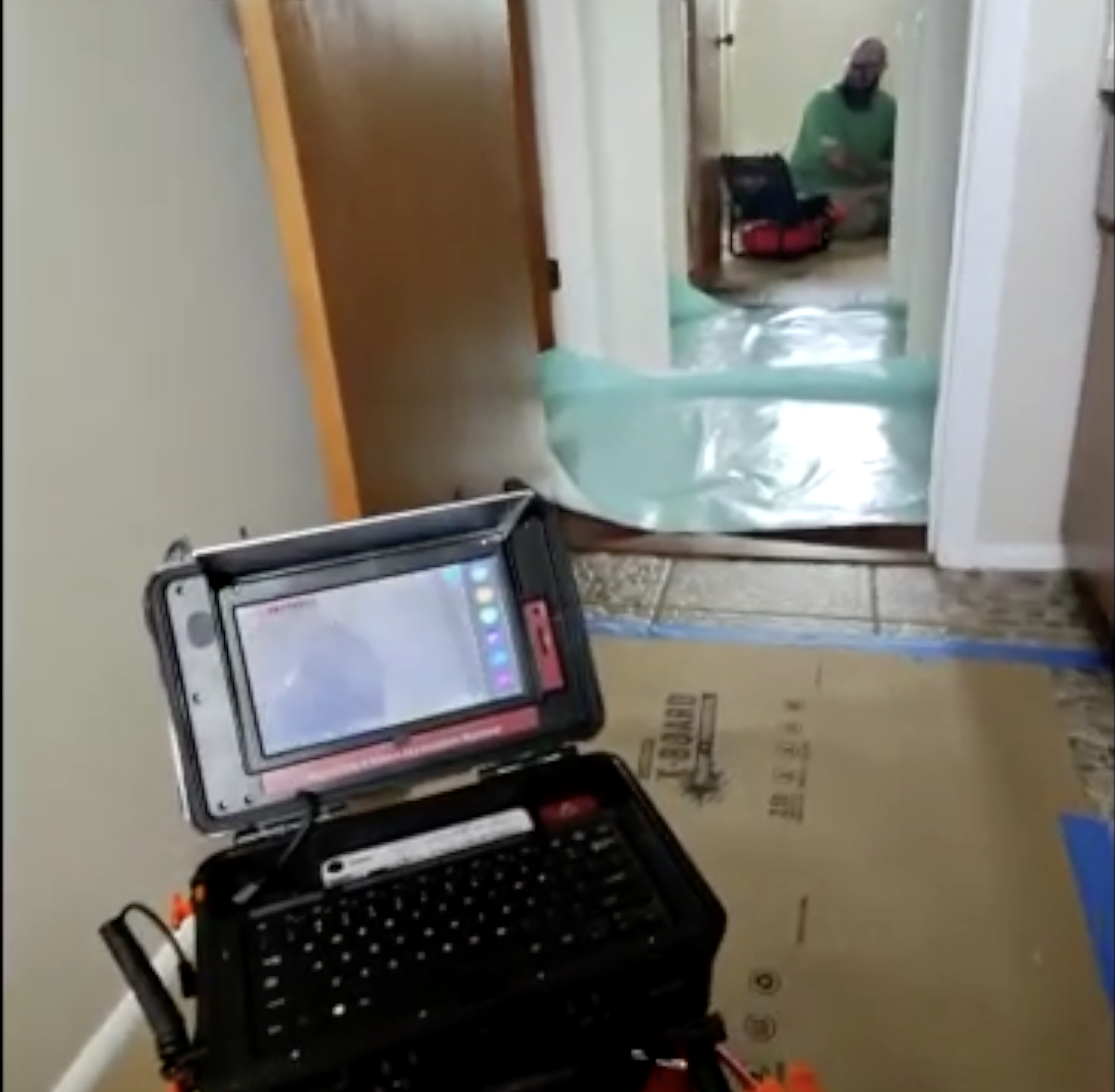
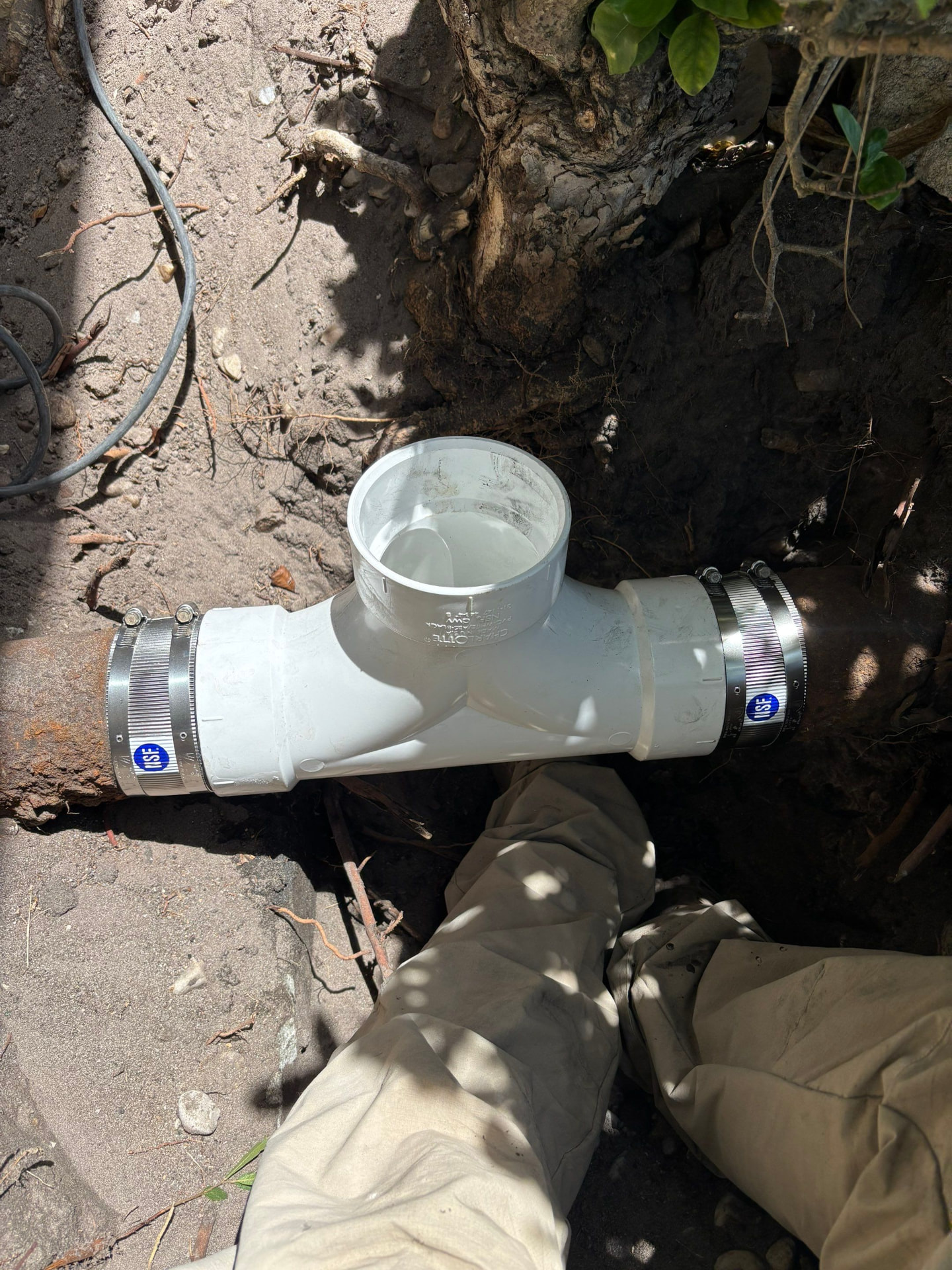
I clean mechanically, I tell you honestly when a drain problem is really a pipe problem, and I don't guess on a 50-year-old cast iron line when a camera can tell us for sure. If what starts as a drain call turns into a sewer line conversation, I handle that too — Sewer Line Repair in Venice, FL.
Slow drain, backed-up main line, or just due for a check before season?
Let's get it moving.
Call Now239-388-3631